Downloaded 35 times



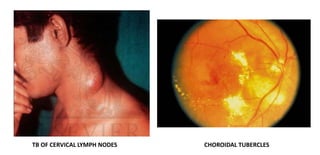


This document provides an overview of tuberculosis (TB) including what it is, how it is caused and transmitted, types of TB, symptoms, diagnosis, treatment, and the role of pharmacists. TB is caused by bacteria in the Mycobacterium family, most commonly Mycobacterium tuberculosis, and results in the formation of granulomas in infected tissues. It can affect the lungs or other organs. Symptoms vary depending on the site of infection but may include cough, fever, night sweats, and weight loss. Diagnosis involves tests like chest x-rays, sputum smears, and the Mantoux skin test. Treatment requires a multi-drug regimen to prevent resistance, and pharmacists can help with adherence


