Sexually Transmitted Diseases Services Dr. Russell Waddell Internal Medicine Service Royal Adelaide Hospital Syphilis Presentation Manifestations PLHIV Treatment
How Syphilis Causes Disease (Pathophysiology) Treponema pallidum  penetrates intact mucous membranes or microscopic dermal abrasions and within hours enters lymphatics and blood to spread throughout the body. It attaches to the endothelial lining of blood vessels causing inflammation - endarteritis. Later there can be a hyper-sensitivity response to the organism resulting in gummatous lesions and necrosis
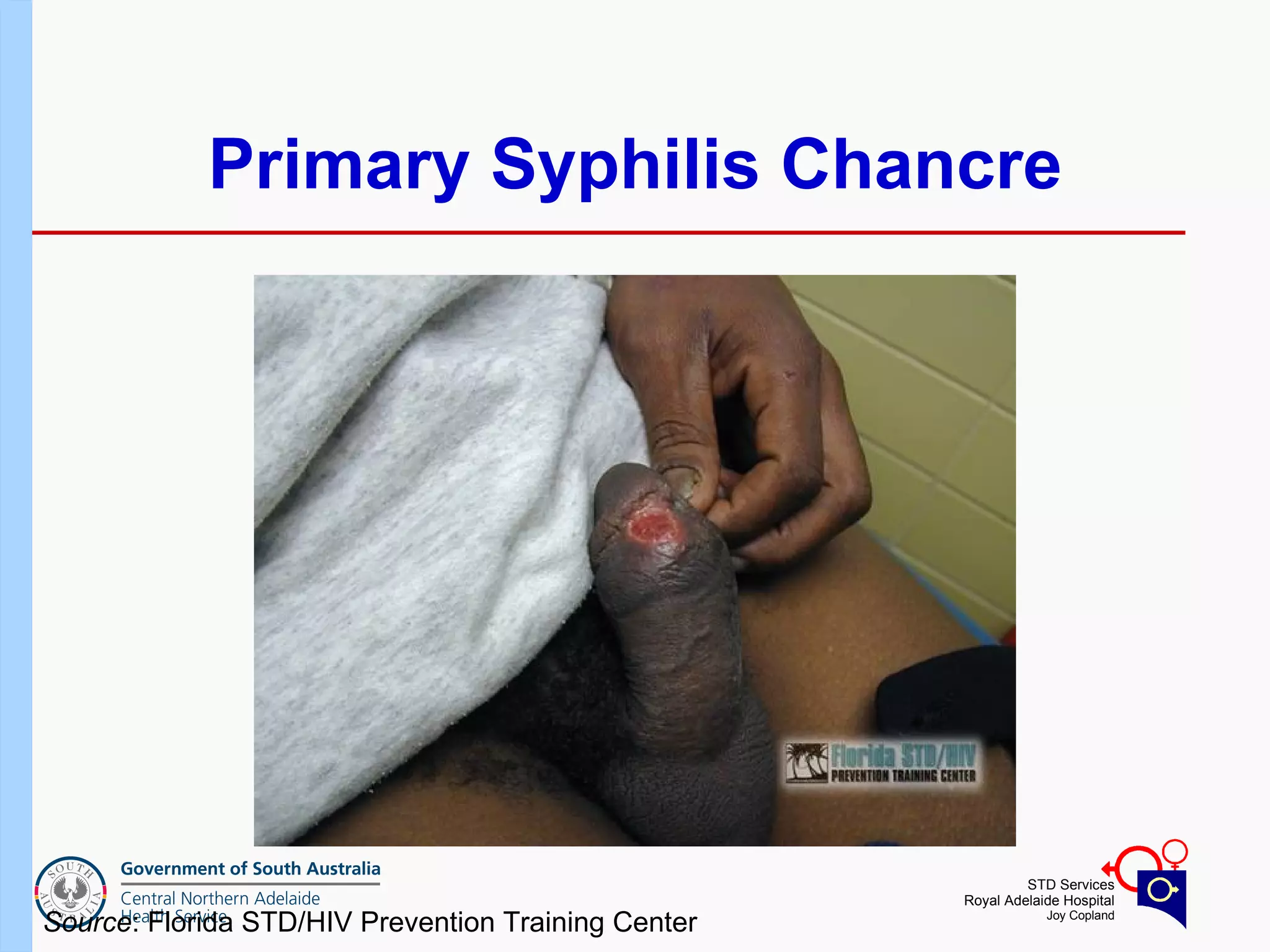
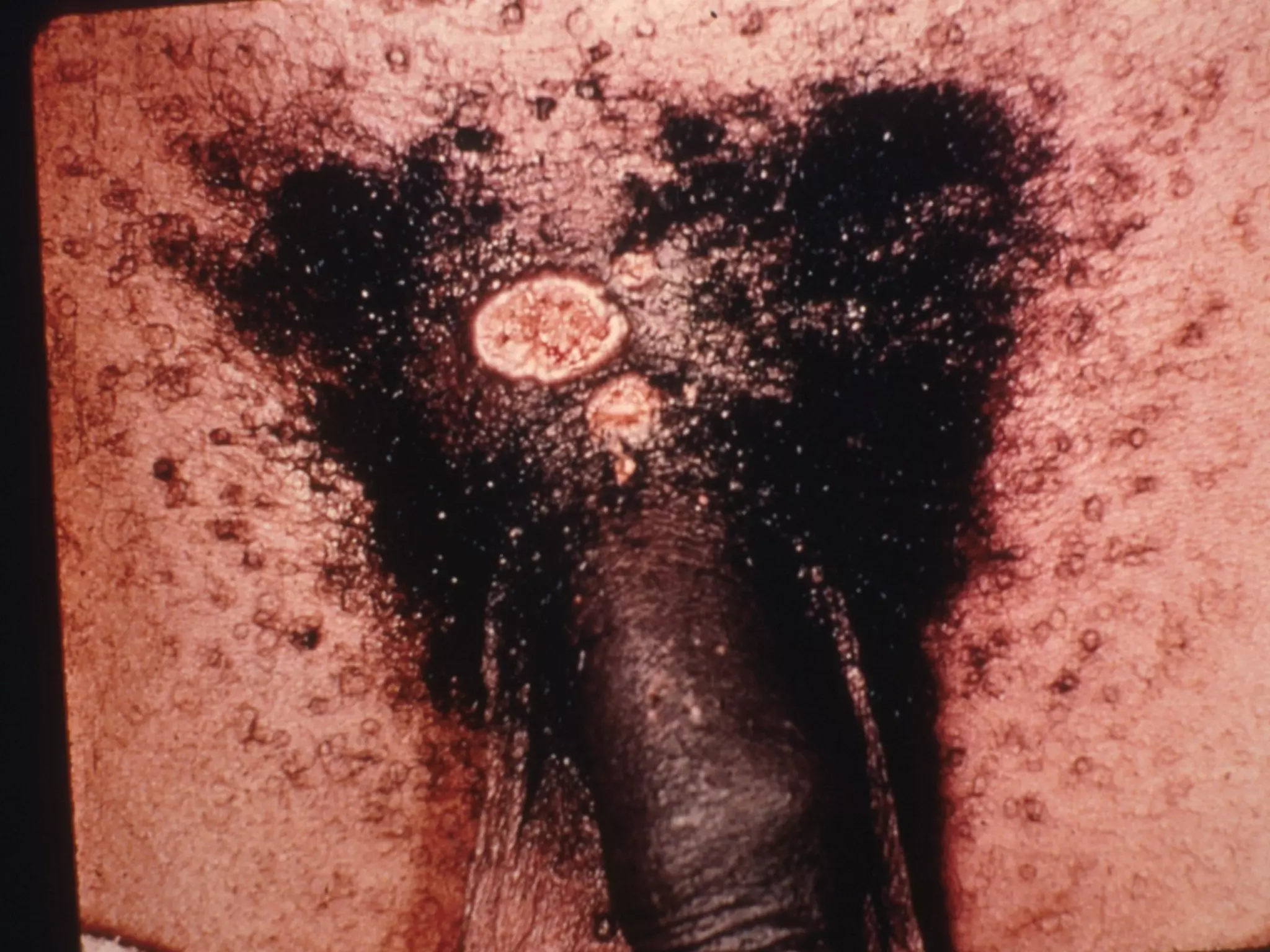
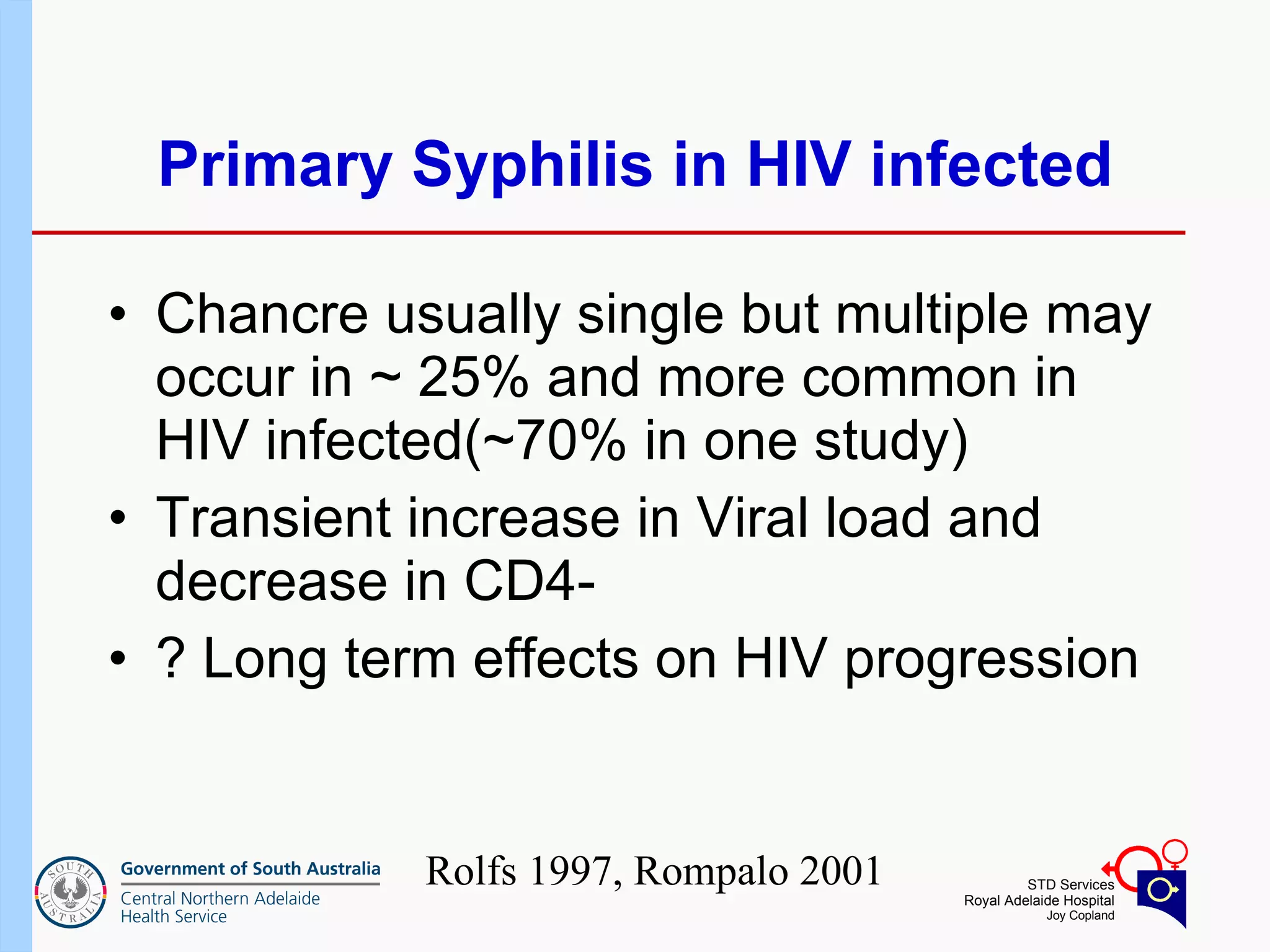
Primary Syphilis - Clinical Manifestations  Incubation:  9 - 90 days (average 21 days) Chancre  Early:  macule/papule    erodes  Late:  clean based, painless, indurated ulcer with smooth firm borders  Unnoticed in 15-30% of patients  Resolves in 1-5 weeks  HIGHLY INFECTIOUS
Primary Syphilis Chancre Source : Florida STD/HIV Prevention Training Center
 
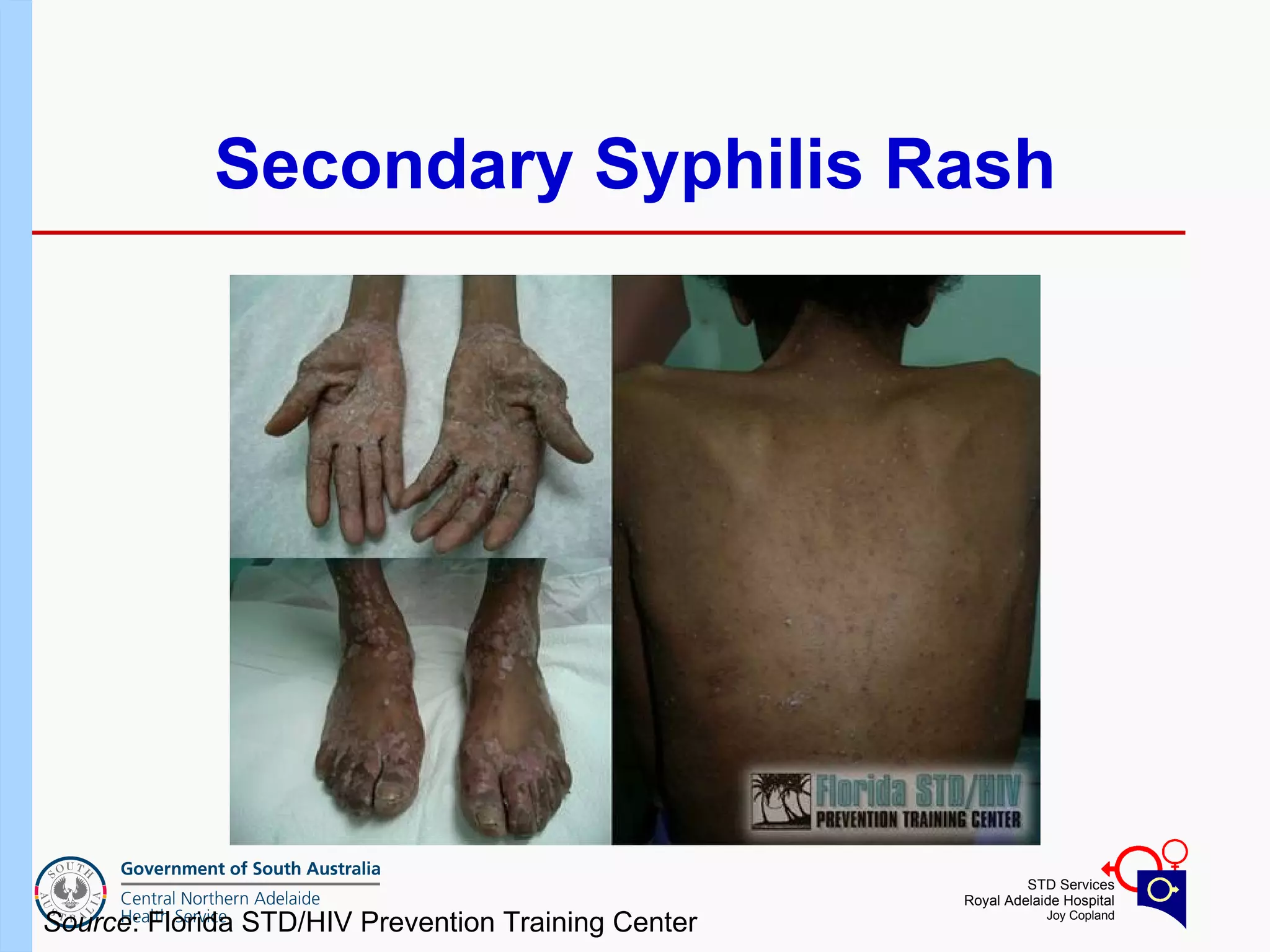
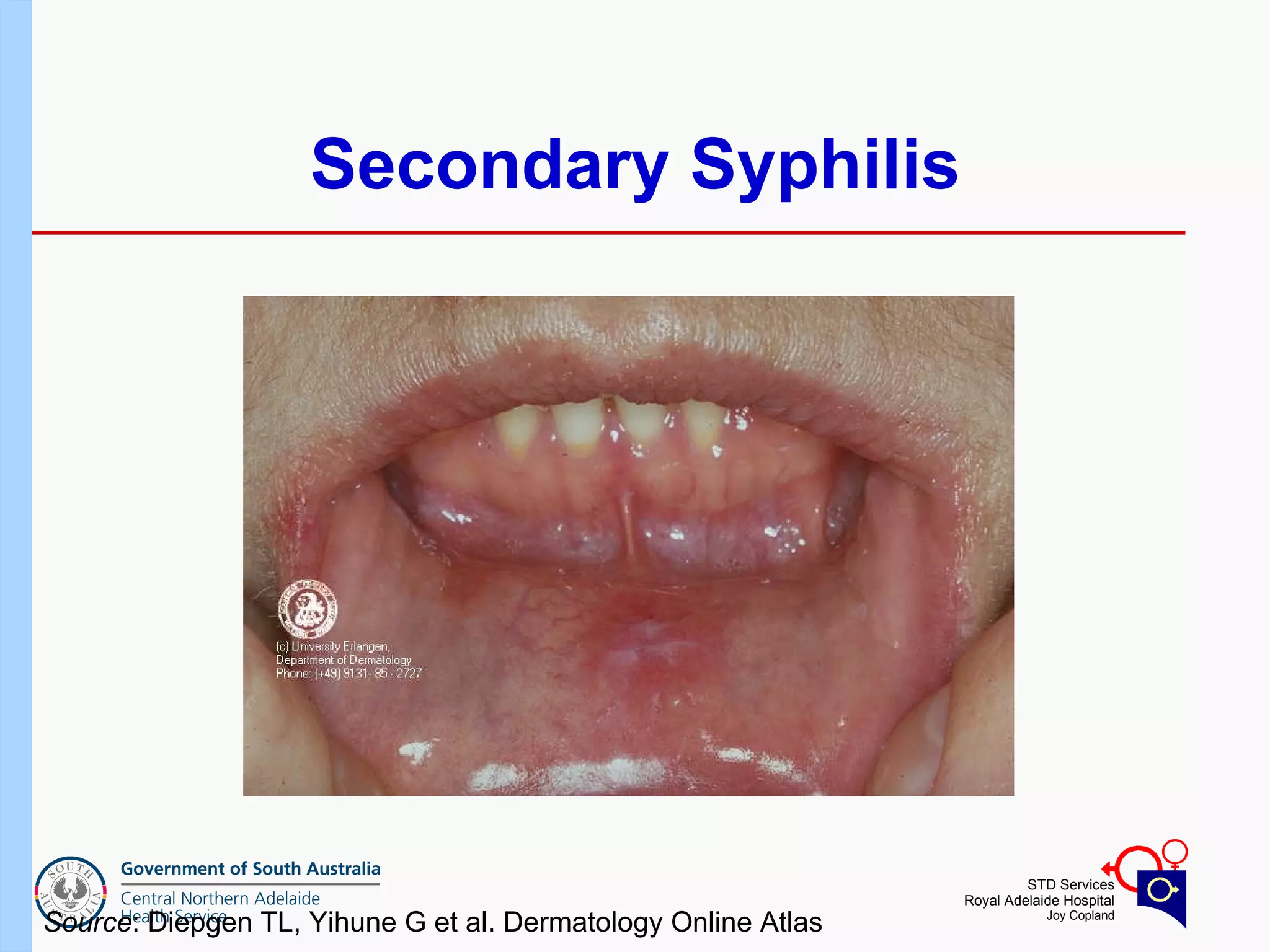
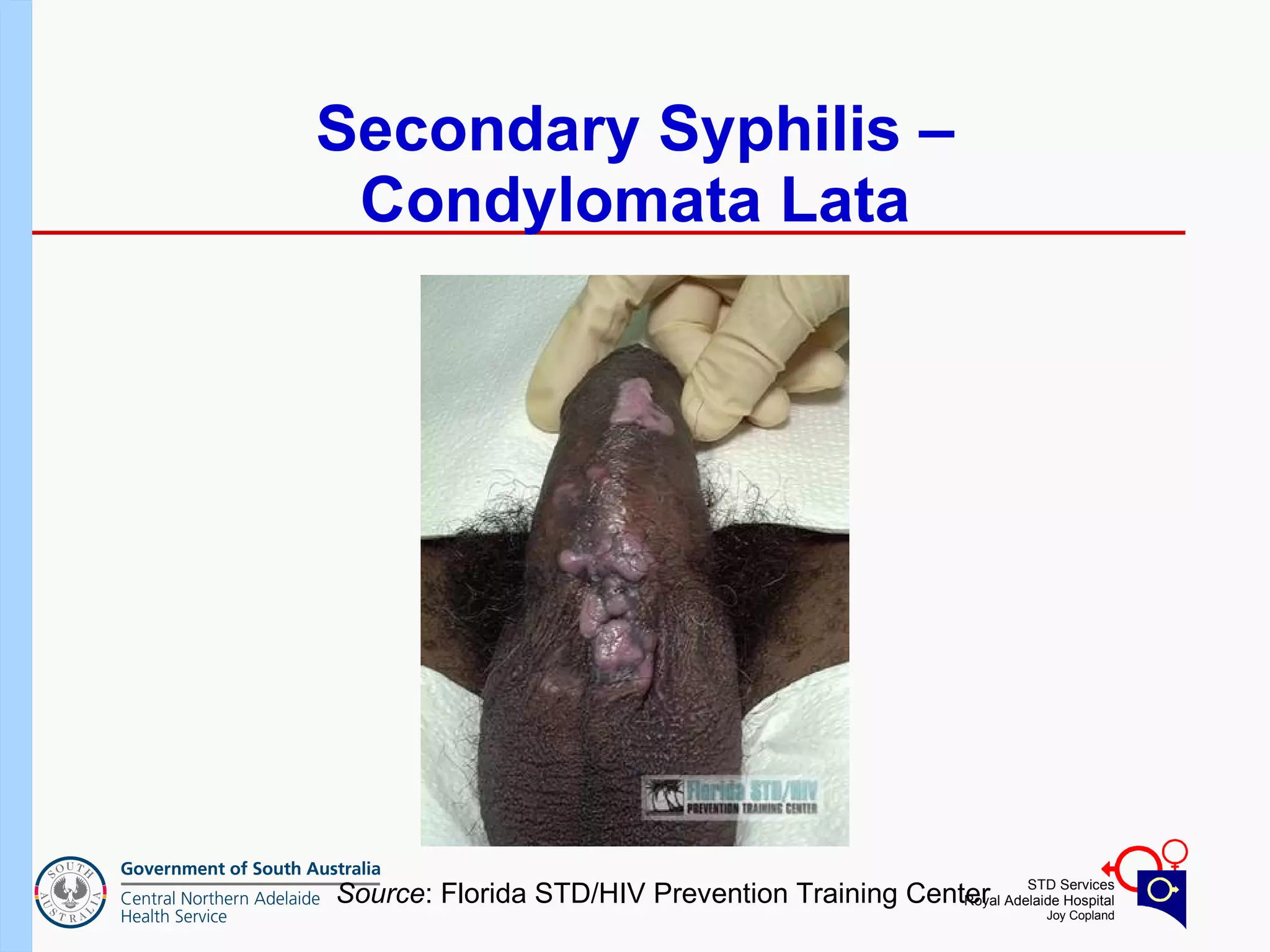
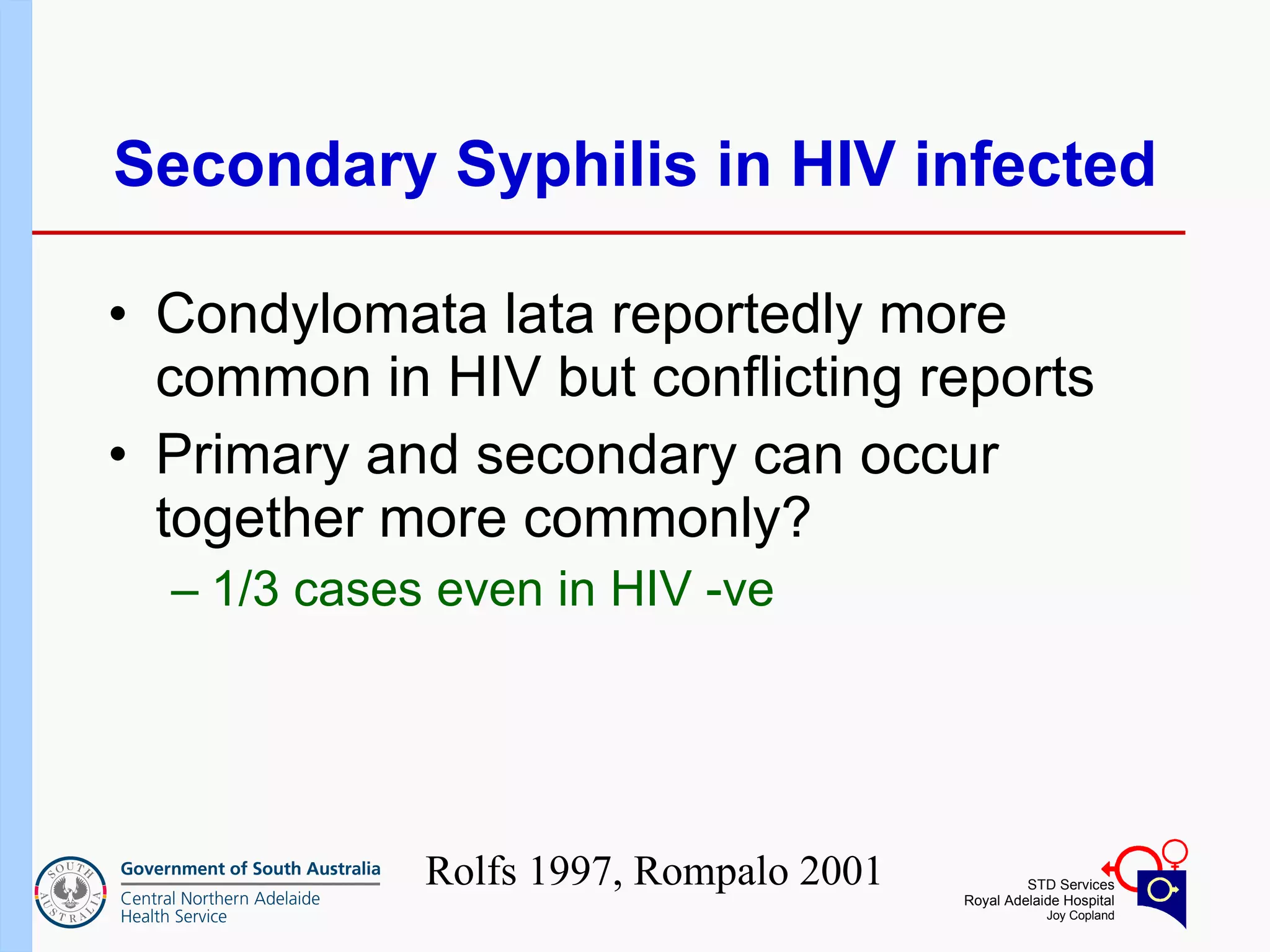
Secondary Syphilis - Clinical Manifestations  Represents haematogenous dissemination of spirochetes that occurs at the time of initial infection Usually 2-8 weeks after chancre appears  Findings:  rash - whole body (includes palms/soles)  mucous patches  condylomata lata –lumps in moist areas of the genitals  HIGHLY INFECTIOUS  constitutional symptoms – fever, swollen lymph nodes, enlarged liver  & spleen Sn/Sx resolve in 2-10 weeks
Secondary Syphilis Rash Source : Florida STD/HIV Prevention Training Center
Secondary Syphilis Source : Diepgen TL, Yihune G et al. Dermatology Online Atlas
Secondary Syphilis – Condylomata Lata Source : Florida STD/HIV Prevention Training Center
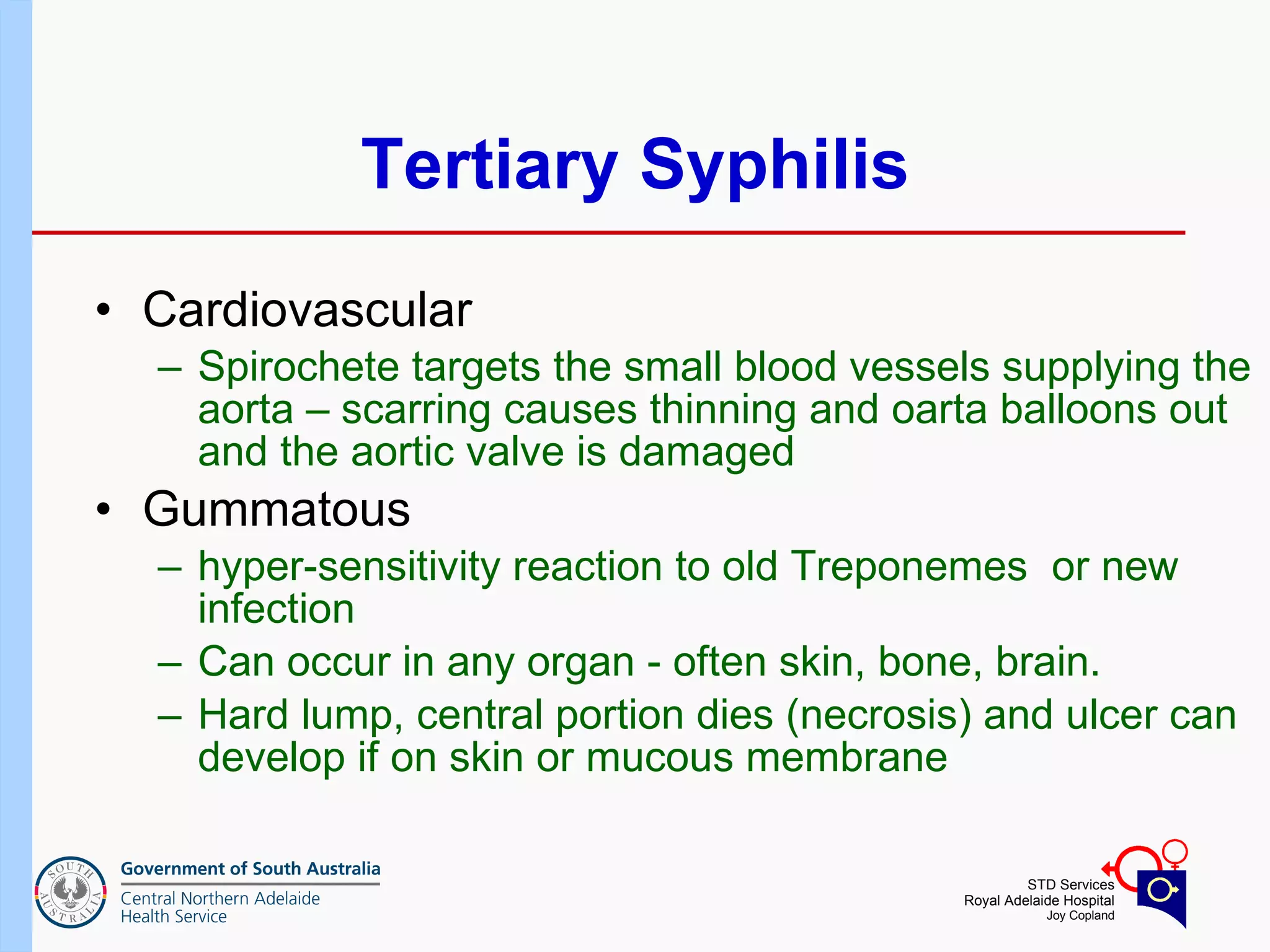
Tertiary Syphilis Cardiovascular Spirochete targets the small blood vessels supplying the aorta – scarring causes thinning and oarta balloons out and the aortic valve is damaged Gummatous hyper-sensitivity reaction to old Treponemes  or new infection  Can occur in any organ - often skin, bone, brain. Hard lump, central portion dies (necrosis) and ulcer can develop if on skin or mucous membrane
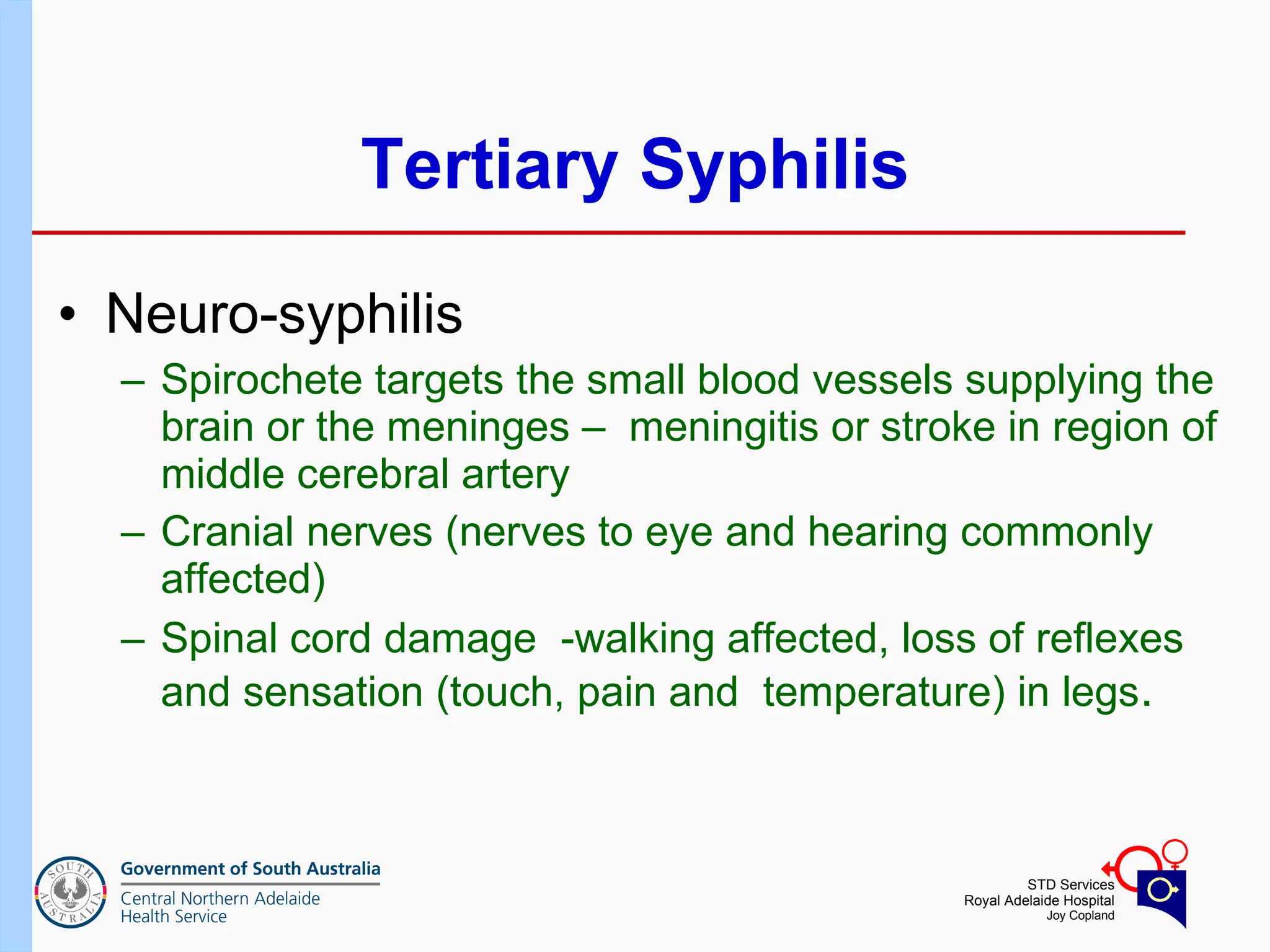
Tertiary Syphilis Neuro-syphilis Spirochete targets the small blood vessels supplying the brain or the meninges –  meningitis or stroke in region of middle cerebral artery  Cranial nerves (nerves to eye and hearing commonly affected) Spinal cord damage  -walking affected, loss of reflexes and sensation (touch, pain and  temperature) in legs .
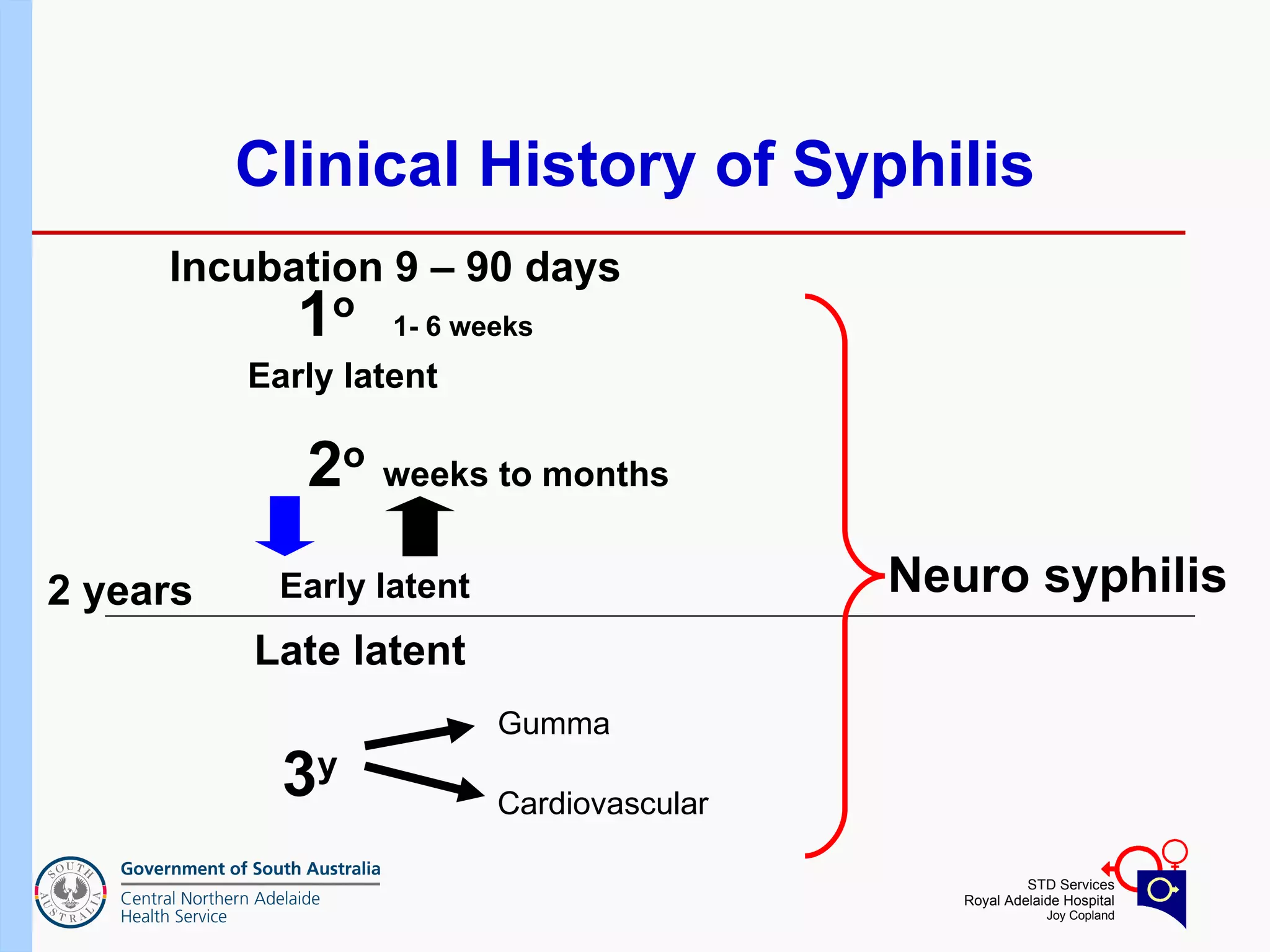
Clinical History of Syphilis 1 o  1- 6 weeks 2 o   weeks to months 3 y Early latent Early latent Late latent 2 years Incubation 9 – 90 days Neuro syphilis Gumma Cardiovascular
Primary Syphilis in HIV infected Chancre usually single but multiple may occur in  ~ 25% and more common in HIV infected(~70% in one study)  Transient increase in Viral load and decrease in CD4-  ? Long term effects on HIV progression Rolfs 1997, Rompalo 2001
Secondary Syphilis in HIV infected Condylomata lata reportedly more common in HIV but conflicting reports Primary and secondary can occur together more commonly? 1/3 cases even in HIV -ve Rolfs 1997, Rompalo 2001
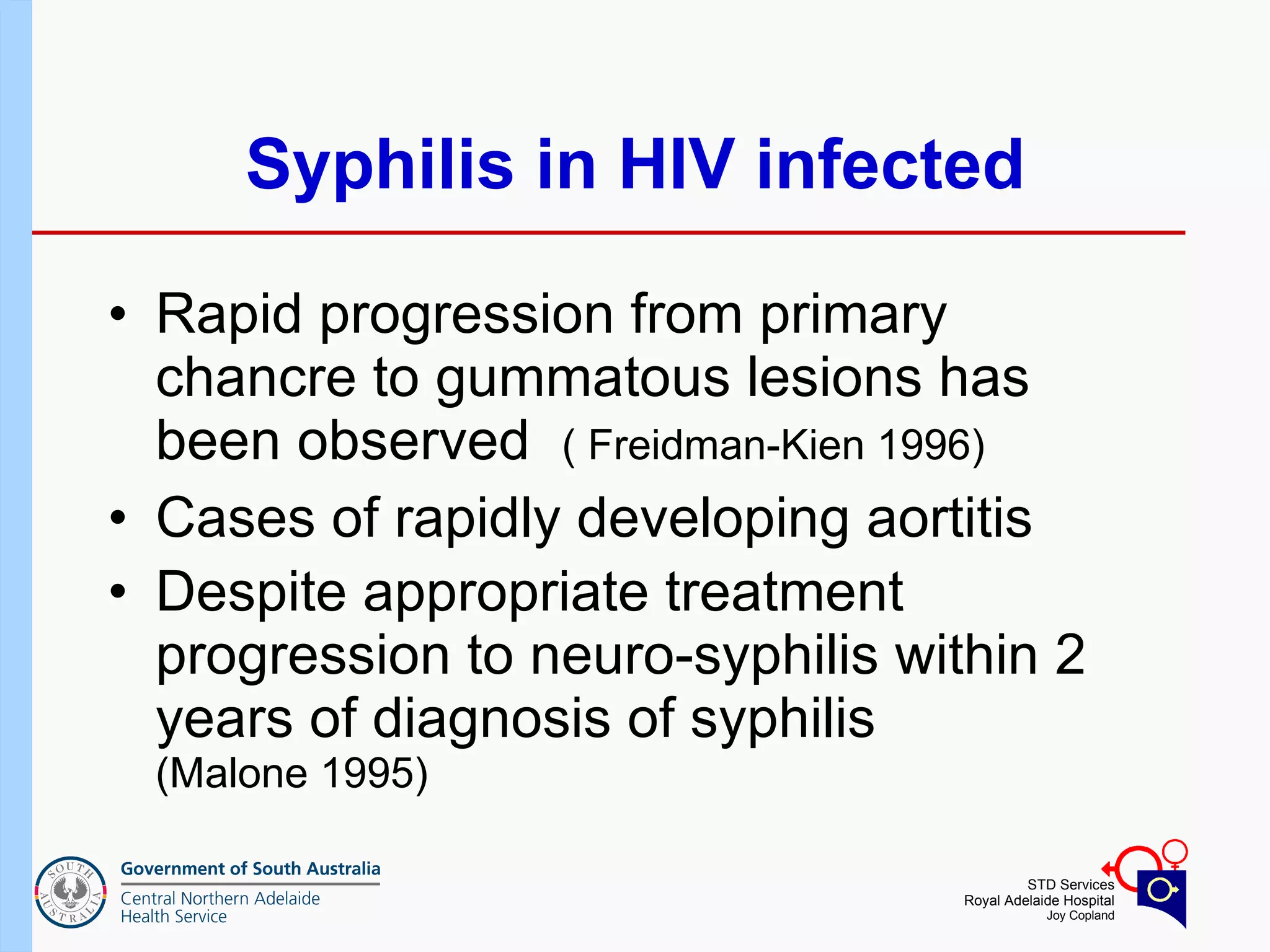
Syphilis in HIV infected Rapid progression from primary chancre to gummatous lesions has been observed  ( Freidman-Kien 1996) Cases of rapidly developing aortitis  Despite appropriate treatment progression to neuro-syphilis within 2 years of diagnosis of syphilis  (Malone 1995)
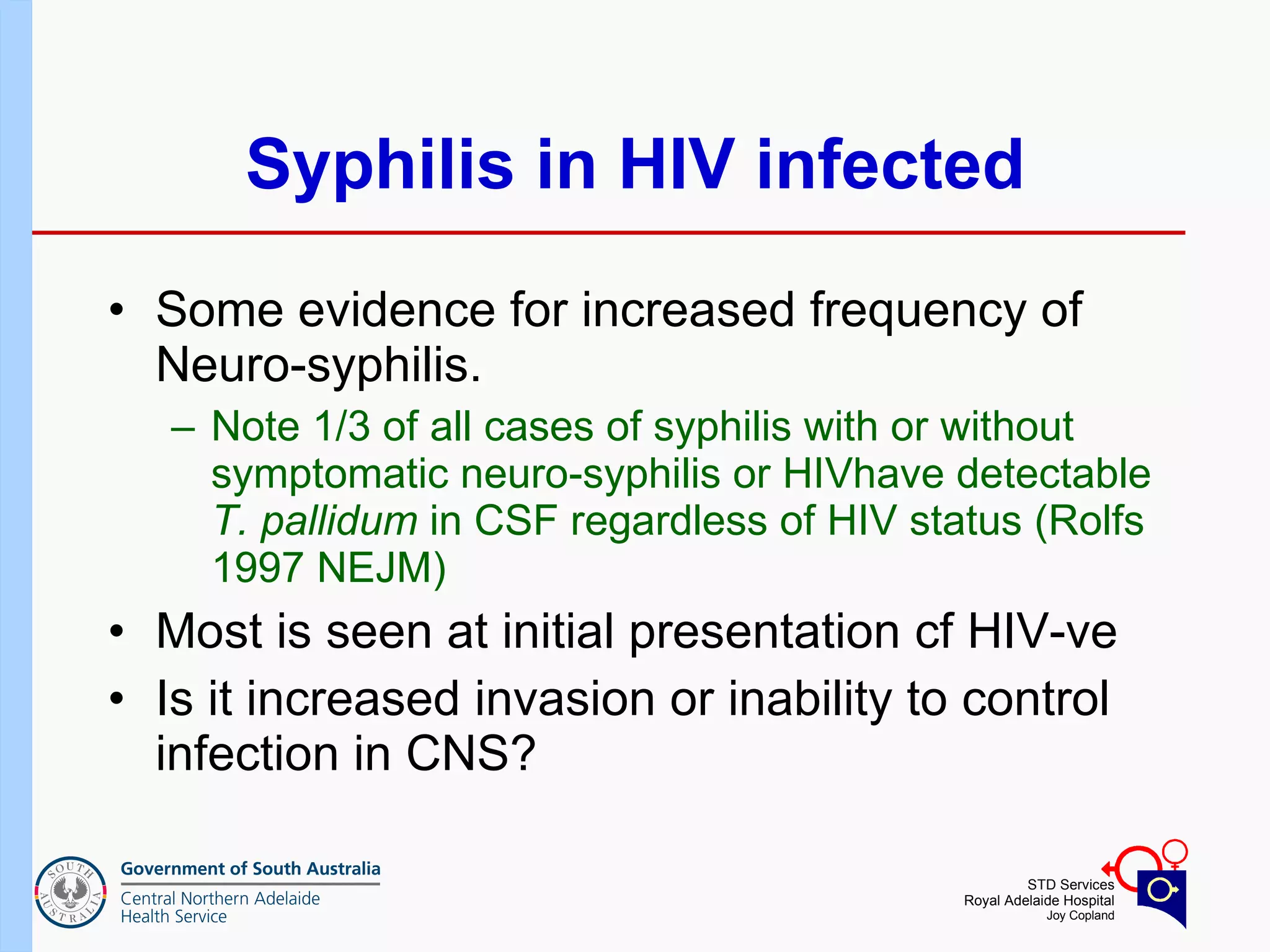
Syphilis in HIV infected Some evidence for increased frequency of Neuro-syphilis.  Note 1/3 of all cases of syphilis with or without symptomatic neuro-syphilis or HIVhave detectable  T. pallidum  in CSF regardless of HIV status (Rolfs 1997 NEJM) Most is seen at initial presentation cf HIV-ve Is it increased invasion or inability to control infection in CNS?
Syphilis in HIV infected Detection of  T pallidum  in CSF is common in early syphilis (HIV+ & HIV -) and does not predict symptomatic neuro-syphilis  Detection of  T pallidum  in CSF is not more common in HIV infected and is not predictive of symptomatic neuro-syphilis. Early aggressive evaluation of CSF in HIV infected persons may not be a useful guide to therapy HIV positive with or without neuro-syphilis are likely to have higher CSF WBC counts and CSF protein levels Rolfs 1997
Syphilis Serology and HIV infection In a minority of cases, serology may be unreliable:  HIV can cause false positive RPR/VDRL (1-6% Rusnak J JID 1994) False-negative RPR/VDRL have been occasionally reported. RPR/VDRL titre tends to be lower in primary syphilis RPR/VDRL titres are statistically significantly higher in secondary syphilis,  Titres decline more slowly with treatment
Treatment Host immune response important  60-70% of untreated individuals go through life without developing late complications 1/3 RPR becomes negative after 20+ years without treatment  Asymptomatic neuro-syphilis:  response to near useless treatment (CSF-Kohlmer WR became non reactive) 5-25 cells  85%  responded to treatment 25-100 cells  65% responded to treatment 100+ cells 45% responded to treatment
Treatment  (USA,  Clinic275 ) Early syphilis (epidemiologic, primary, secondary and early latent) (1) Benzathine penicillin G 2.4 MU i.m. single dose Late latent, cardiovascular and gummatous syphilis and treatment failures (1) Benzathine penicillin 2.4 MU i.m. weekly for two weeks (three doses)  Neurosyphilis  (early or late) Aqueous crystalline penicillin G 18–24 million units per day, administered as 3–4 million units IV every 4 hours or continuous infusion, for 10–14 days
Treatment Penicillin allergy  –  desensitize and treat as above Missed doses in course of weekly therapy   the appropriate course of action is unclear.  Pharmacologic considerations suggest that an interval of 10–14 days between doses of benzathine penicillin might be acceptable before restarting the sequence of injections.
Syphilis Treatment and HIV JARISCH-HERXHEIMER REACTION Fever and muscle aches  following penicillin therapy for syphilis.  Cause not clear often attributed to sudden release of toxins from the dying and dead treponemes? Reported more frequently in HIV infected patients (26%v12%)
Early syphilis:  Alternative  Treatment  regimens ( 1) Procaine penicillin G 600 000 units i.m. daily for 10 days (III, B) (2) Doxycycline 100 mg PO b.d.  14 days (III, B) (3) Azithromycin  2 g PO stat  (1b, B) (4)Azithromycin  500 mg daily  10 days (II, B) (5) Erythromycin 500 mg PO q.d.s.  14 days (III, B) (6) Ceftriaxone 500 mg i.m. daily  10 days  (7) Amoxycillin  500 mg PO q.d.s. plus Probenecid 500 mg q.d.s.  14 days (III, B)
Alternative Treatment Late latent, cardiovascular and gummatous syphilis (1) Procaine penicillin 600,000 units i.m. o.d. for 17 days (III, B) (2) Doxycycline  100 mg PO b.d. for 28 days (IV, C) (3) Amoxycillin 2 g PO t.d.s. plus probenecid 500 mg q.d.s. for 28 days. (III, C)
Alternative Treatment Neurosyphilis  (1) Procaine penicillin   1.8–2.4 MU i.m. o.d. plus probenecid 500 mg PO q.d.s. for 17 days (2) Benzyl penicillin  18–24 MU daily, given as 3–4 MU i.m. every four hours for 17 days (III, C ) (3) Doxycycline 200 mg PO b.d. for 28 days (IV, C) (4) Amoxycillin 2 g PO t.d.s. plus probenecid 500 mg PO q.d.s. for 28 days  (IV, C) (5) Ceftriaxone  2 g i.m. (with lidocaine as diluent) or i.v. (with water for injection as diluent) for 10–14 days (IV, C)
Symptomatic neurosyphilis Conventional therapy is effective for the vast majority of immuno-competent patients with asymptomatic CNS involvement in primary and secondary syphilis.
Syphilis the great mimic  You cannot keep a good disease down
Epidemiological Treatment Epidemiological Treatment   Defined as treatment for  early syphilis  after  Clinical examination and assessment of level of risk   ( contact primary:-  46–60% infected )  and  collection of diagnostic tests  (serology, swabs PCR, fluid for darkfield) but  before the results are available
Epidemiological Treatment Sexual transmission of T. pallidum  occurs only when muco-cutaneous syphilitic lesions are present uncommon after the first year of infection For identification of at-risk sexual partners, the periods before treatment are (USA) 3 months plus duration of symptoms for primary syphilis,  6 months plus duration of symptoms for secondary syphilis,  1 year for early latent syphilis
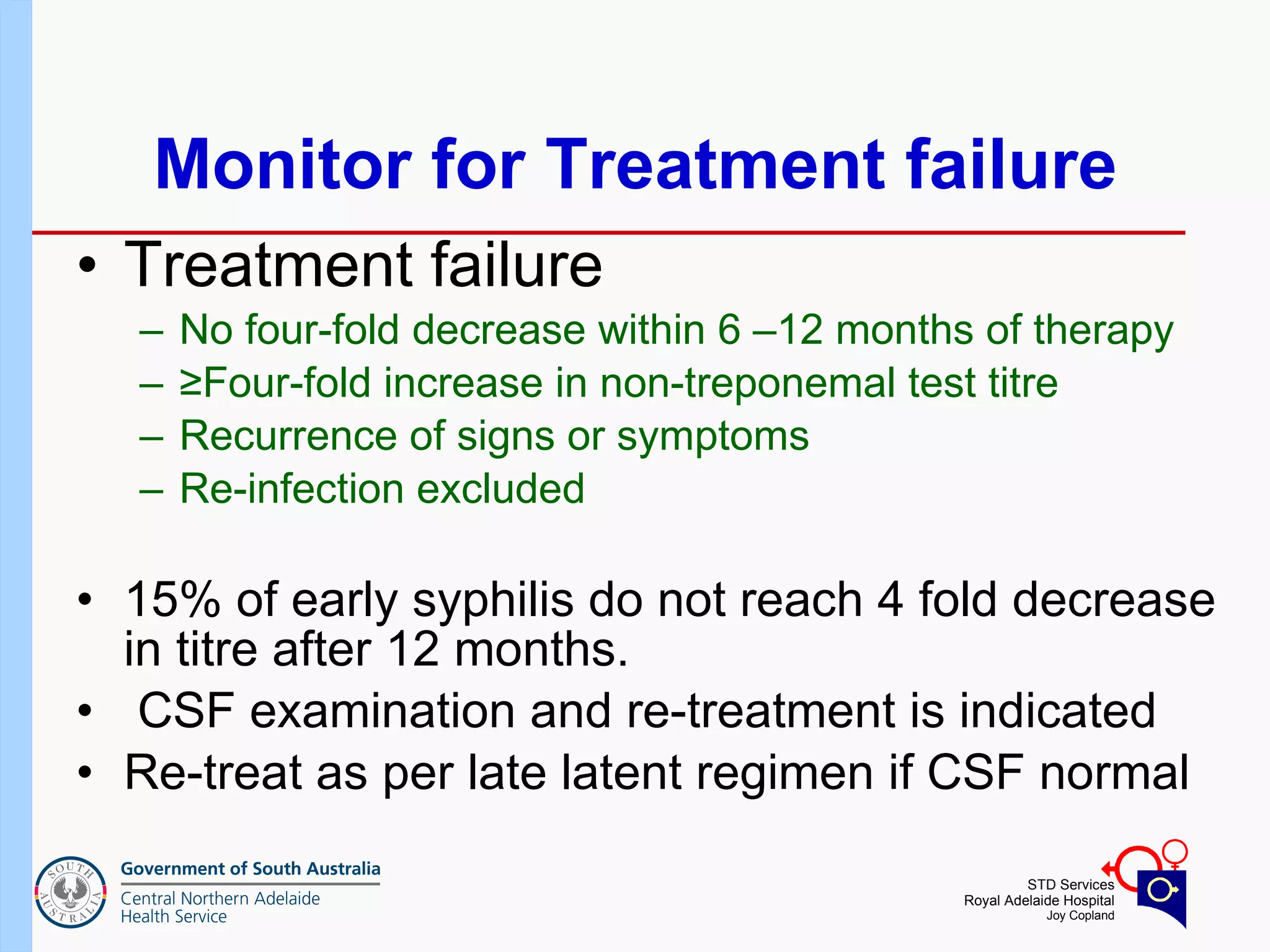
Monitor for Treatment failure Treatment failure No four-fold decrease within 6 –12 months of therapy  ≥ Four-fold increase in non-treponemal test titre Recurrence of signs or symptoms Re-infection excluded 15% of early syphilis do not reach 4 fold decrease in titre after 12 months. CSF examination and re-treatment is indicated Re-treat as per late latent regimen if CSF normal
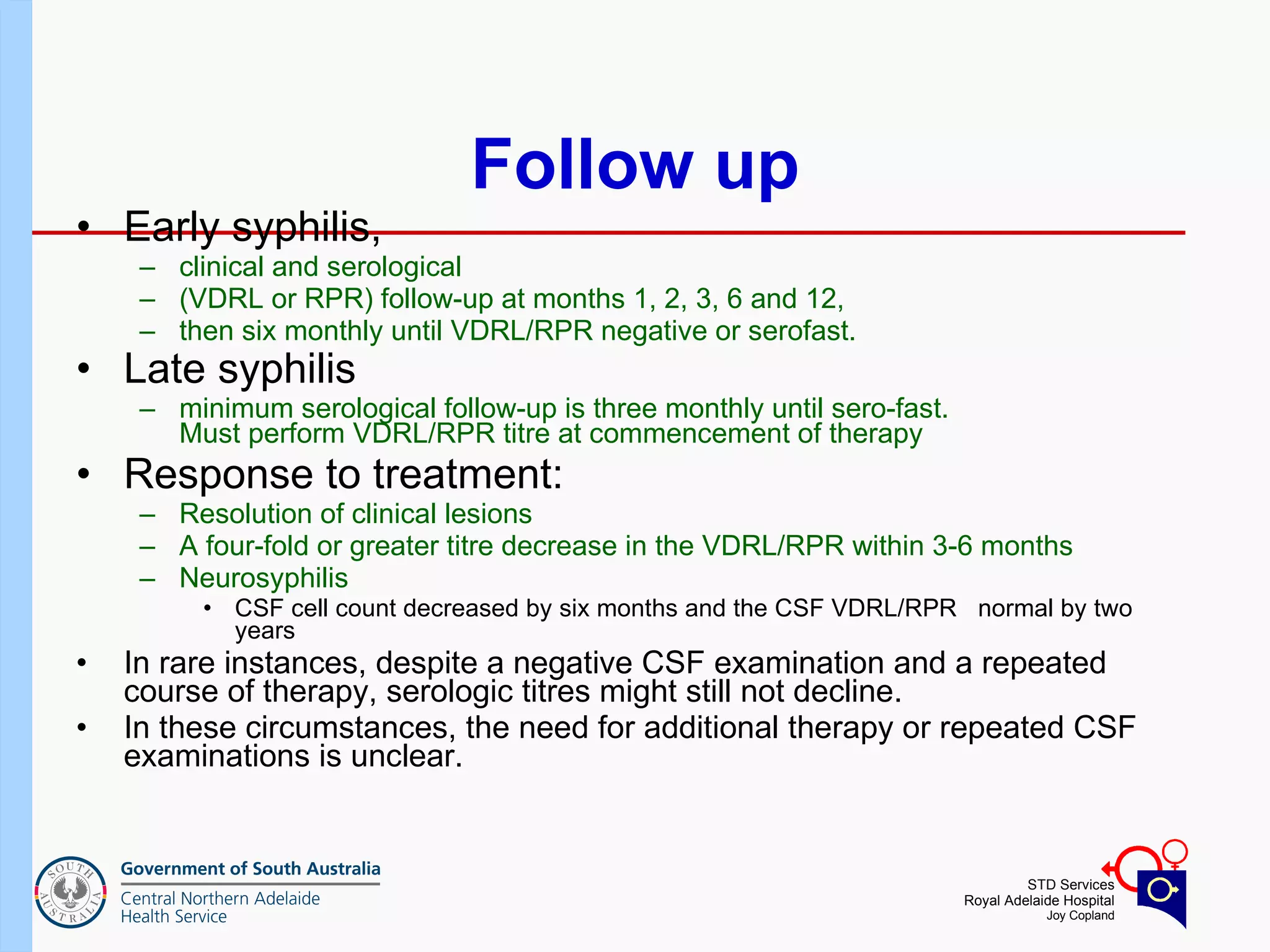
Follow up Early syphilis,   clinical and serological  (VDRL or RPR) follow-up at months 1, 2, 3, 6 and 12,  then six monthly until VDRL/RPR negative or serofast. Late syphilis   minimum serological follow-up is three monthly until sero-fast. Must perform VDRL/RPR titre at commencement of therapy Response to treatment: Resolution of clinical lesions A four-fold or greater titre decrease in the VDRL/RPR within 3-6 months Neurosyphilis CSF cell count decreased by six months and the CSF VDRL/RPR  normal by two years In rare instances, despite a negative CSF examination and a repeated course of therapy, serologic titres might still not decline.  In these circumstances, the need for additional therapy or repeated CSF examinations is unclear.
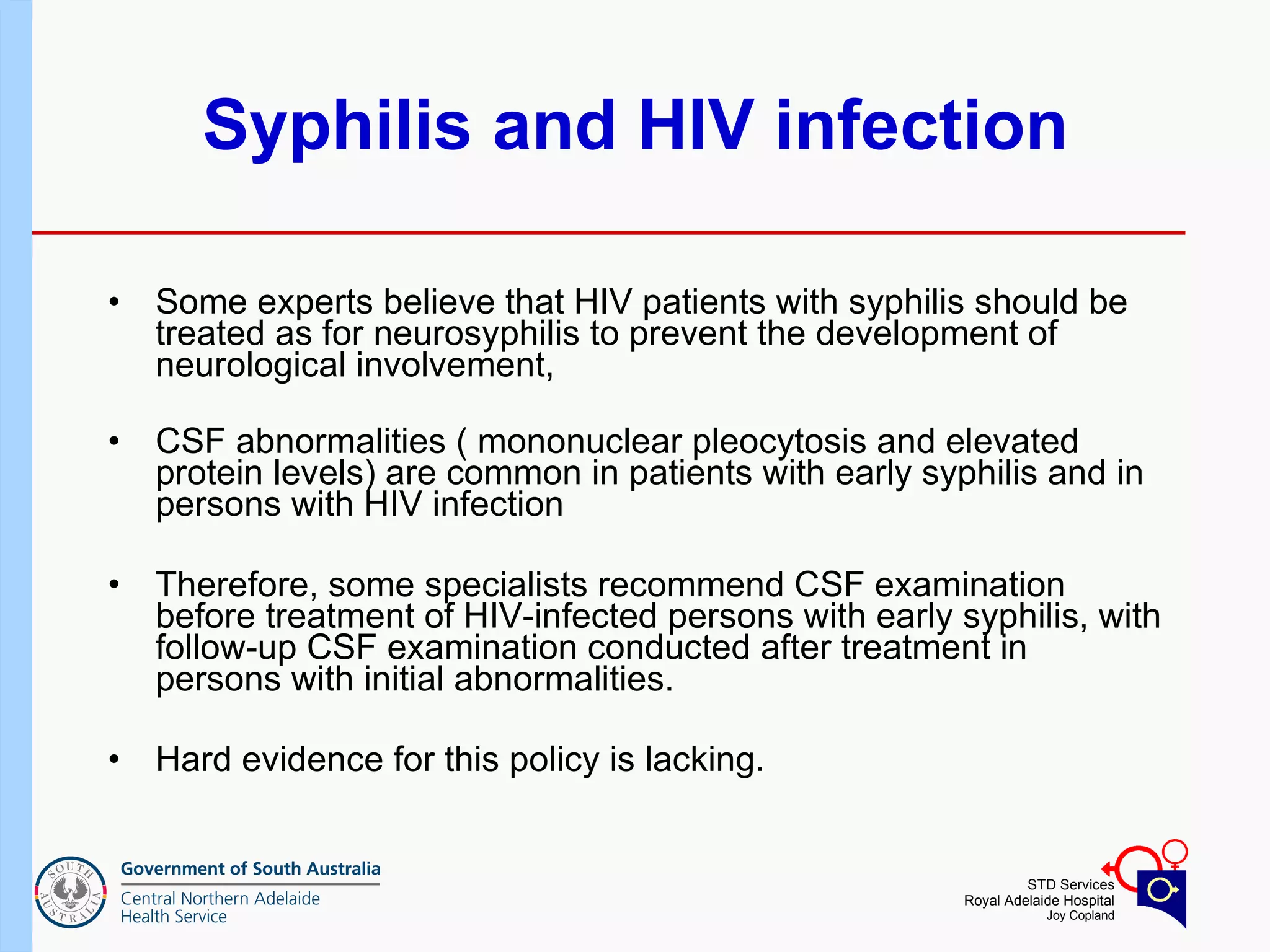
Syphilis and HIV infection Some experts believe that HIV patients with syphilis should be treated as for neurosyphilis to prevent the development of neurological involvement, CSF abnormalities ( mononuclear pleocytosis and elevated protein levels) are common in patients with early syphilis and in persons with HIV infection Therefore, some specialists recommend CSF examination before treatment of HIV-infected persons with early syphilis, with follow-up CSF examination conducted after treatment in persons with initial abnormalities. Hard evidence for this policy is lacking.
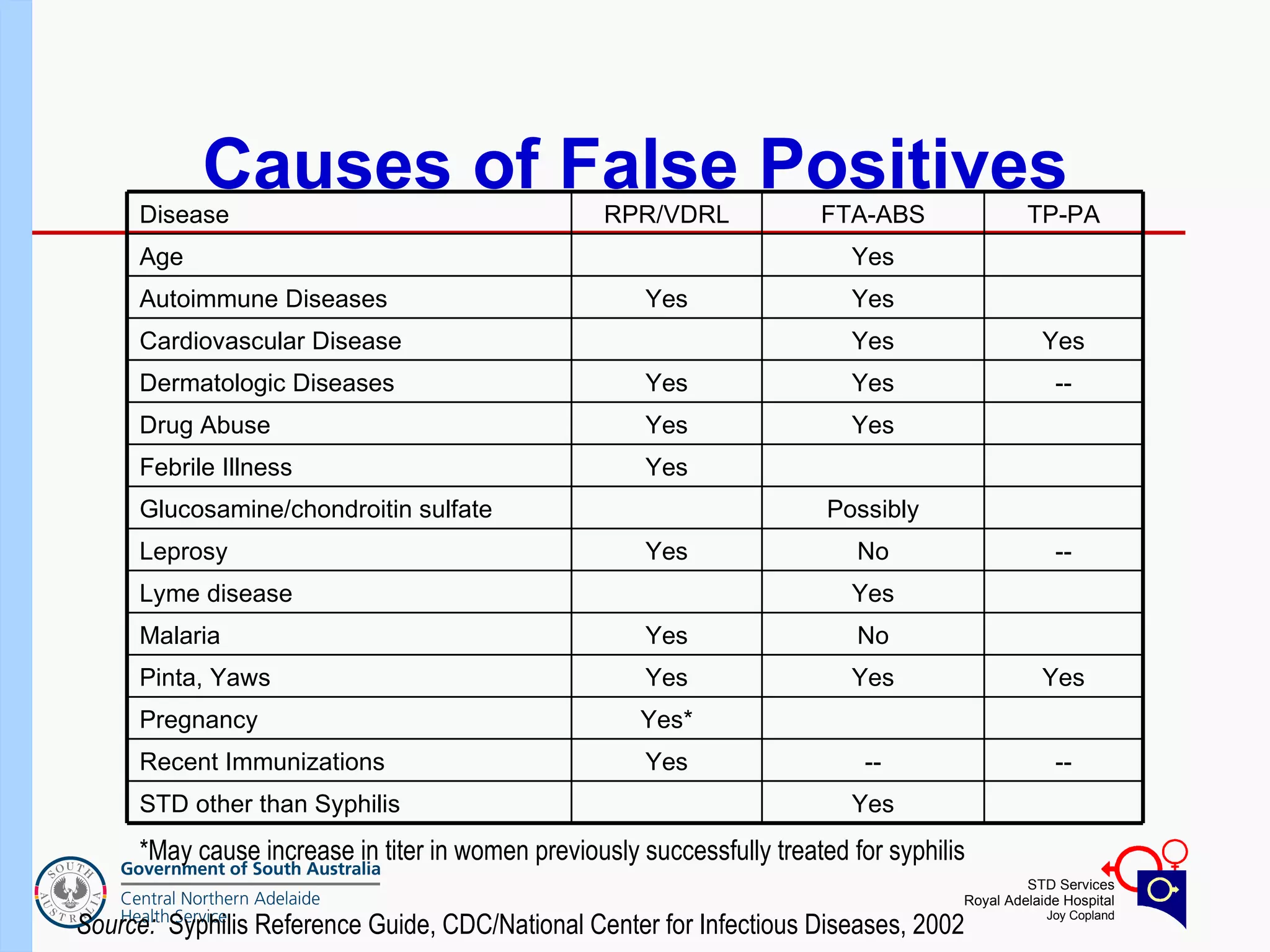
Causes of False Positives Source:   Syphilis Reference Guide, CDC/National Center for Infectious Diseases, 2002 *May cause increase in titer in women previously successfully treated for syphilis TP-PA FTA-ABS RPR/VDRL Disease Yes -- Yes No Yes No Possibly Yes Yes Yes Yes Yes STD other than Syphilis -- Yes Recent Immunizations Yes* Pregnancy Yes Yes Pinta, Yaws Yes Malaria Lyme disease -- Yes Leprosy Glucosamine/chondroitin sulfate Yes Febrile Illness Yes Drug Abuse -- Yes Dermatologic Diseases Yes Cardiovascular Disease Yes Autoimmune Diseases Age
Serological Tests in Untreated Syphilis   *FTA-ABS and TP-PA are generally considered  equally sensitive in the primary stage of disease. 100 100 93 EIA 73 98 (95-100) 100 86 (77-99) RPR 94 97 (97-100) 100 76 (69-90) TPPA* 96 100 100 84 (70-100) FTA-ABS* 71 (37-94) 95 (88-100) 100 78 (74-87) VDRL Tertiary Latent Secondary Primary Test Stage of Disease (Percent Positive [Range])

Russell Waddell: Syphilis Presentation and Treatment

  • 1.
    Sexually Transmitted DiseasesServices Dr. Russell Waddell Internal Medicine Service Royal Adelaide Hospital Syphilis Presentation Manifestations PLHIV Treatment
  • 2.
    How Syphilis CausesDisease (Pathophysiology) Treponema pallidum penetrates intact mucous membranes or microscopic dermal abrasions and within hours enters lymphatics and blood to spread throughout the body. It attaches to the endothelial lining of blood vessels causing inflammation - endarteritis. Later there can be a hyper-sensitivity response to the organism resulting in gummatous lesions and necrosis
  • 3.
    Primary Syphilis -Clinical Manifestations Incubation: 9 - 90 days (average 21 days) Chancre Early: macule/papule  erodes Late: clean based, painless, indurated ulcer with smooth firm borders Unnoticed in 15-30% of patients Resolves in 1-5 weeks HIGHLY INFECTIOUS
  • 4.
    Primary Syphilis ChancreSource : Florida STD/HIV Prevention Training Center
  • 5.
  • 6.
    Secondary Syphilis -Clinical Manifestations Represents haematogenous dissemination of spirochetes that occurs at the time of initial infection Usually 2-8 weeks after chancre appears Findings: rash - whole body (includes palms/soles) mucous patches condylomata lata –lumps in moist areas of the genitals HIGHLY INFECTIOUS constitutional symptoms – fever, swollen lymph nodes, enlarged liver & spleen Sn/Sx resolve in 2-10 weeks
  • 7.
    Secondary Syphilis RashSource : Florida STD/HIV Prevention Training Center
  • 8.
    Secondary Syphilis Source: Diepgen TL, Yihune G et al. Dermatology Online Atlas
  • 9.
    Secondary Syphilis –Condylomata Lata Source : Florida STD/HIV Prevention Training Center
  • 10.
    Tertiary Syphilis CardiovascularSpirochete targets the small blood vessels supplying the aorta – scarring causes thinning and oarta balloons out and the aortic valve is damaged Gummatous hyper-sensitivity reaction to old Treponemes or new infection Can occur in any organ - often skin, bone, brain. Hard lump, central portion dies (necrosis) and ulcer can develop if on skin or mucous membrane
  • 11.
    Tertiary Syphilis Neuro-syphilisSpirochete targets the small blood vessels supplying the brain or the meninges – meningitis or stroke in region of middle cerebral artery Cranial nerves (nerves to eye and hearing commonly affected) Spinal cord damage -walking affected, loss of reflexes and sensation (touch, pain and temperature) in legs .
  • 12.
    Clinical History ofSyphilis 1 o 1- 6 weeks 2 o weeks to months 3 y Early latent Early latent Late latent 2 years Incubation 9 – 90 days Neuro syphilis Gumma Cardiovascular
  • 13.
    Primary Syphilis inHIV infected Chancre usually single but multiple may occur in ~ 25% and more common in HIV infected(~70% in one study) Transient increase in Viral load and decrease in CD4- ? Long term effects on HIV progression Rolfs 1997, Rompalo 2001
  • 14.
    Secondary Syphilis inHIV infected Condylomata lata reportedly more common in HIV but conflicting reports Primary and secondary can occur together more commonly? 1/3 cases even in HIV -ve Rolfs 1997, Rompalo 2001
  • 15.
    Syphilis in HIVinfected Rapid progression from primary chancre to gummatous lesions has been observed ( Freidman-Kien 1996) Cases of rapidly developing aortitis Despite appropriate treatment progression to neuro-syphilis within 2 years of diagnosis of syphilis (Malone 1995)
  • 16.
    Syphilis in HIVinfected Some evidence for increased frequency of Neuro-syphilis. Note 1/3 of all cases of syphilis with or without symptomatic neuro-syphilis or HIVhave detectable T. pallidum in CSF regardless of HIV status (Rolfs 1997 NEJM) Most is seen at initial presentation cf HIV-ve Is it increased invasion or inability to control infection in CNS?
  • 17.
    Syphilis in HIVinfected Detection of T pallidum in CSF is common in early syphilis (HIV+ & HIV -) and does not predict symptomatic neuro-syphilis Detection of T pallidum in CSF is not more common in HIV infected and is not predictive of symptomatic neuro-syphilis. Early aggressive evaluation of CSF in HIV infected persons may not be a useful guide to therapy HIV positive with or without neuro-syphilis are likely to have higher CSF WBC counts and CSF protein levels Rolfs 1997
  • 18.
    Syphilis Serology andHIV infection In a minority of cases, serology may be unreliable: HIV can cause false positive RPR/VDRL (1-6% Rusnak J JID 1994) False-negative RPR/VDRL have been occasionally reported. RPR/VDRL titre tends to be lower in primary syphilis RPR/VDRL titres are statistically significantly higher in secondary syphilis, Titres decline more slowly with treatment
  • 19.
    Treatment Host immuneresponse important 60-70% of untreated individuals go through life without developing late complications 1/3 RPR becomes negative after 20+ years without treatment Asymptomatic neuro-syphilis: response to near useless treatment (CSF-Kohlmer WR became non reactive) 5-25 cells 85% responded to treatment 25-100 cells 65% responded to treatment 100+ cells 45% responded to treatment
  • 20.
    Treatment (USA, Clinic275 ) Early syphilis (epidemiologic, primary, secondary and early latent) (1) Benzathine penicillin G 2.4 MU i.m. single dose Late latent, cardiovascular and gummatous syphilis and treatment failures (1) Benzathine penicillin 2.4 MU i.m. weekly for two weeks (three doses) Neurosyphilis (early or late) Aqueous crystalline penicillin G 18–24 million units per day, administered as 3–4 million units IV every 4 hours or continuous infusion, for 10–14 days
  • 21.
    Treatment Penicillin allergy – desensitize and treat as above Missed doses in course of weekly therapy the appropriate course of action is unclear. Pharmacologic considerations suggest that an interval of 10–14 days between doses of benzathine penicillin might be acceptable before restarting the sequence of injections.
  • 22.
    Syphilis Treatment andHIV JARISCH-HERXHEIMER REACTION Fever and muscle aches following penicillin therapy for syphilis. Cause not clear often attributed to sudden release of toxins from the dying and dead treponemes? Reported more frequently in HIV infected patients (26%v12%)
  • 23.
    Early syphilis: Alternative Treatment regimens ( 1) Procaine penicillin G 600 000 units i.m. daily for 10 days (III, B) (2) Doxycycline 100 mg PO b.d. 14 days (III, B) (3) Azithromycin 2 g PO stat (1b, B) (4)Azithromycin 500 mg daily 10 days (II, B) (5) Erythromycin 500 mg PO q.d.s. 14 days (III, B) (6) Ceftriaxone 500 mg i.m. daily 10 days (7) Amoxycillin 500 mg PO q.d.s. plus Probenecid 500 mg q.d.s. 14 days (III, B)
  • 24.
    Alternative Treatment Latelatent, cardiovascular and gummatous syphilis (1) Procaine penicillin 600,000 units i.m. o.d. for 17 days (III, B) (2) Doxycycline 100 mg PO b.d. for 28 days (IV, C) (3) Amoxycillin 2 g PO t.d.s. plus probenecid 500 mg q.d.s. for 28 days. (III, C)
  • 25.
    Alternative Treatment Neurosyphilis (1) Procaine penicillin 1.8–2.4 MU i.m. o.d. plus probenecid 500 mg PO q.d.s. for 17 days (2) Benzyl penicillin 18–24 MU daily, given as 3–4 MU i.m. every four hours for 17 days (III, C ) (3) Doxycycline 200 mg PO b.d. for 28 days (IV, C) (4) Amoxycillin 2 g PO t.d.s. plus probenecid 500 mg PO q.d.s. for 28 days (IV, C) (5) Ceftriaxone 2 g i.m. (with lidocaine as diluent) or i.v. (with water for injection as diluent) for 10–14 days (IV, C)
  • 26.
    Symptomatic neurosyphilis Conventionaltherapy is effective for the vast majority of immuno-competent patients with asymptomatic CNS involvement in primary and secondary syphilis.
  • 27.
    Syphilis the greatmimic You cannot keep a good disease down
  • 28.
    Epidemiological Treatment EpidemiologicalTreatment Defined as treatment for early syphilis after Clinical examination and assessment of level of risk ( contact primary:- 46–60% infected ) and collection of diagnostic tests (serology, swabs PCR, fluid for darkfield) but before the results are available
  • 29.
    Epidemiological Treatment Sexualtransmission of T. pallidum occurs only when muco-cutaneous syphilitic lesions are present uncommon after the first year of infection For identification of at-risk sexual partners, the periods before treatment are (USA) 3 months plus duration of symptoms for primary syphilis, 6 months plus duration of symptoms for secondary syphilis, 1 year for early latent syphilis
  • 30.
    Monitor for Treatmentfailure Treatment failure No four-fold decrease within 6 –12 months of therapy ≥ Four-fold increase in non-treponemal test titre Recurrence of signs or symptoms Re-infection excluded 15% of early syphilis do not reach 4 fold decrease in titre after 12 months. CSF examination and re-treatment is indicated Re-treat as per late latent regimen if CSF normal
  • 31.
    Follow up Earlysyphilis, clinical and serological (VDRL or RPR) follow-up at months 1, 2, 3, 6 and 12, then six monthly until VDRL/RPR negative or serofast. Late syphilis minimum serological follow-up is three monthly until sero-fast. Must perform VDRL/RPR titre at commencement of therapy Response to treatment: Resolution of clinical lesions A four-fold or greater titre decrease in the VDRL/RPR within 3-6 months Neurosyphilis CSF cell count decreased by six months and the CSF VDRL/RPR normal by two years In rare instances, despite a negative CSF examination and a repeated course of therapy, serologic titres might still not decline. In these circumstances, the need for additional therapy or repeated CSF examinations is unclear.
  • 32.
    Syphilis and HIVinfection Some experts believe that HIV patients with syphilis should be treated as for neurosyphilis to prevent the development of neurological involvement, CSF abnormalities ( mononuclear pleocytosis and elevated protein levels) are common in patients with early syphilis and in persons with HIV infection Therefore, some specialists recommend CSF examination before treatment of HIV-infected persons with early syphilis, with follow-up CSF examination conducted after treatment in persons with initial abnormalities. Hard evidence for this policy is lacking.
  • 33.
    Causes of FalsePositives Source: Syphilis Reference Guide, CDC/National Center for Infectious Diseases, 2002 *May cause increase in titer in women previously successfully treated for syphilis TP-PA FTA-ABS RPR/VDRL Disease Yes -- Yes No Yes No Possibly Yes Yes Yes Yes Yes STD other than Syphilis -- Yes Recent Immunizations Yes* Pregnancy Yes Yes Pinta, Yaws Yes Malaria Lyme disease -- Yes Leprosy Glucosamine/chondroitin sulfate Yes Febrile Illness Yes Drug Abuse -- Yes Dermatologic Diseases Yes Cardiovascular Disease Yes Autoimmune Diseases Age
  • 34.
    Serological Tests inUntreated Syphilis *FTA-ABS and TP-PA are generally considered equally sensitive in the primary stage of disease. 100 100 93 EIA 73 98 (95-100) 100 86 (77-99) RPR 94 97 (97-100) 100 76 (69-90) TPPA* 96 100 100 84 (70-100) FTA-ABS* 71 (37-94) 95 (88-100) 100 78 (74-87) VDRL Tertiary Latent Secondary Primary Test Stage of Disease (Percent Positive [Range])