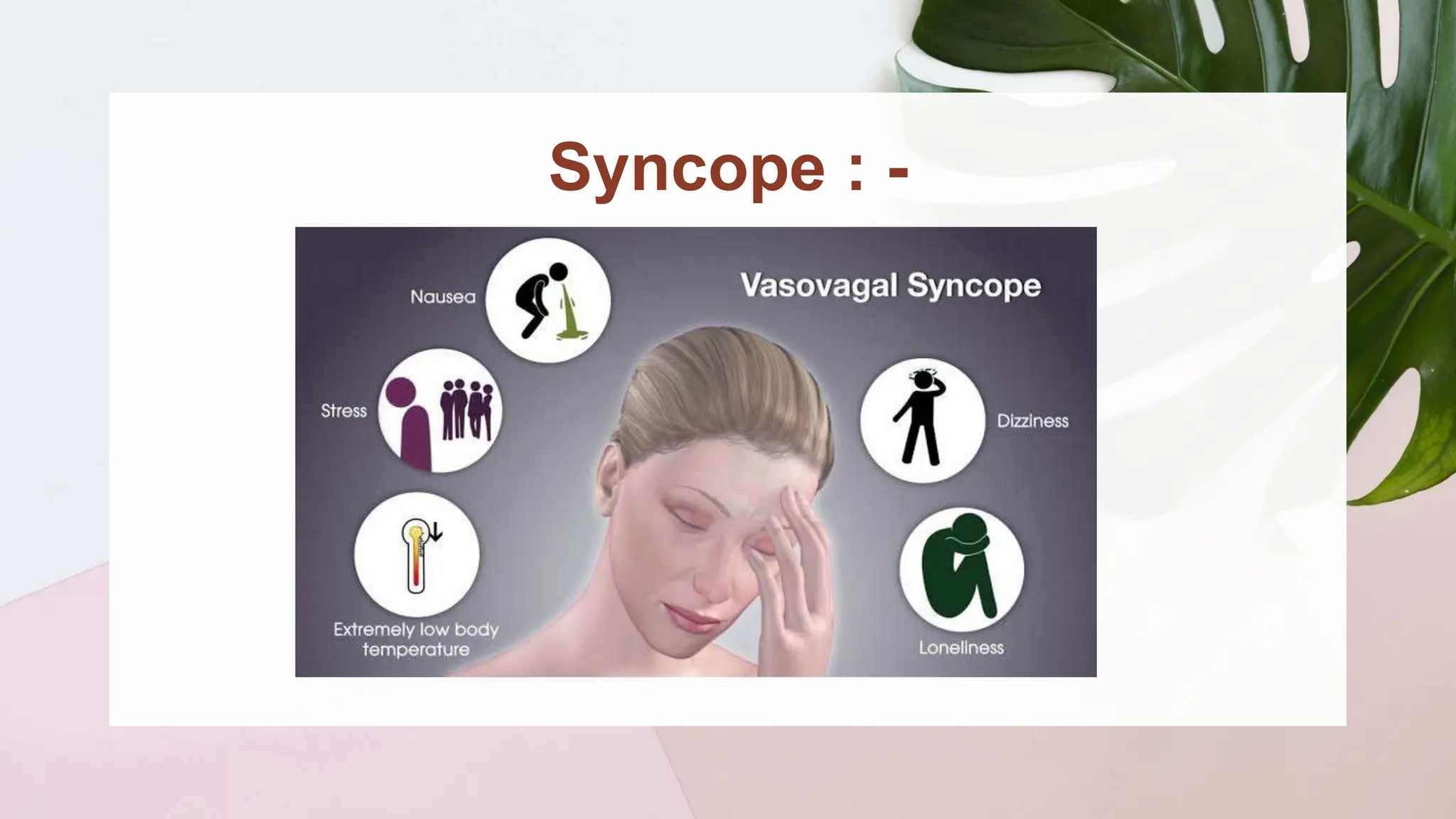
Syncope : -
Syncope
- syncope is the medical term for fainting or passing
out
- It is caused by a temporary drop in the amount of
blood that flow to the brain
- Syncope can happen if you have a sudden drop in
blood pressure a drop in heart rate or changes in the
amount of blood in areas of your body
Warning sign of a fainting spell
• Dizziness
• Turning pale
• Ringing in your ears
• Blurring vision
• Warm and sweating
• Nausea
Types : -
1.Vasocagal syncope
2.Postural syncope
3.Cardiac syncope
4.Neurologic syncope
1. Vasovagal syncope :-
> it is also known as cardio
neurogenic
syncope
> vasovagalsyncope is the most
common
type of syncope, it is caused by
sudde-
- en bp. Cause a drop in blood blood
Blood flow to the brain
2. Postural syncope :- postural syncope is also
called postural hypotension.
> postural syncope in caused by sudden drop in
blood pressure due to a quick change in position
Such as from lying down to standing certain
medication and can lead to this condition .
> in this condition systolic pressure drop 20 mmHg
Diastolic 10mmHg drop
3. Cardiac syncope : - cardiac syncope is caused
By a heart or blood vessel condition that affect
Blood flow to the brain.
 This condition can include heart disease valvular
disease, aortic stenosis.
 If you have cardiac syncope it is important to
To see a cardiologist for proper treatment .
4. Neurologic syncope : -
>. Neurologic syncope is caused by a neurological
Condition such as seizures, stroke, ischemic
Attack
Causes : -
€. Exact causes is unknown
€. Low blood pressure’s
€. Heart beat irregular
€. Dehydration
€. Anxiety
Symptoms of syncope : -
1. Blacking out
2. Feeling light headache
3. Dizziness
4. Specially after eating or exercising
5. Headhache
Investigation : -
1. History collection
2. Physical examination
3. Chest x ray
4. Blood sampling
5. CT scan brain
Treatment : -
1. Taking medication or making change to medication
you already take
2. Wearing support garment or compression to
improve blood circulation
3. Making changes to your diet your doctor
Doctor suggest that you eat small frequent
meal eat more salt , drink more fluids avoid
alcohol
And caffeine
syncope, definition, types, causes, treatment.pptx

syncope, definition, types, causes, treatment.pptx

  • 1.
  • 2.
    Syncope - syncope isthe medical term for fainting or passing out - It is caused by a temporary drop in the amount of blood that flow to the brain - Syncope can happen if you have a sudden drop in blood pressure a drop in heart rate or changes in the amount of blood in areas of your body
  • 3.
    Warning sign ofa fainting spell • Dizziness • Turning pale • Ringing in your ears • Blurring vision • Warm and sweating • Nausea
  • 4.
    Types : - 1.Vasocagalsyncope 2.Postural syncope 3.Cardiac syncope 4.Neurologic syncope 1. Vasovagal syncope :- > it is also known as cardio neurogenic syncope > vasovagalsyncope is the most common type of syncope, it is caused by sudde- - en bp. Cause a drop in blood blood Blood flow to the brain
  • 5.
    2. Postural syncope:- postural syncope is also called postural hypotension. > postural syncope in caused by sudden drop in blood pressure due to a quick change in position Such as from lying down to standing certain medication and can lead to this condition . > in this condition systolic pressure drop 20 mmHg Diastolic 10mmHg drop
  • 6.
    3. Cardiac syncope: - cardiac syncope is caused By a heart or blood vessel condition that affect Blood flow to the brain.  This condition can include heart disease valvular disease, aortic stenosis.  If you have cardiac syncope it is important to To see a cardiologist for proper treatment .
  • 7.
    4. Neurologic syncope: - >. Neurologic syncope is caused by a neurological Condition such as seizures, stroke, ischemic Attack
  • 8.
    Causes : - €.Exact causes is unknown €. Low blood pressure’s €. Heart beat irregular €. Dehydration €. Anxiety
  • 9.
    Symptoms of syncope: - 1. Blacking out 2. Feeling light headache 3. Dizziness 4. Specially after eating or exercising 5. Headhache
  • 10.
    Investigation : - 1.History collection 2. Physical examination 3. Chest x ray 4. Blood sampling 5. CT scan brain
  • 11.
    Treatment : - 1.Taking medication or making change to medication you already take 2. Wearing support garment or compression to improve blood circulation 3. Making changes to your diet your doctor Doctor suggest that you eat small frequent meal eat more salt , drink more fluids avoid alcohol And caffeine