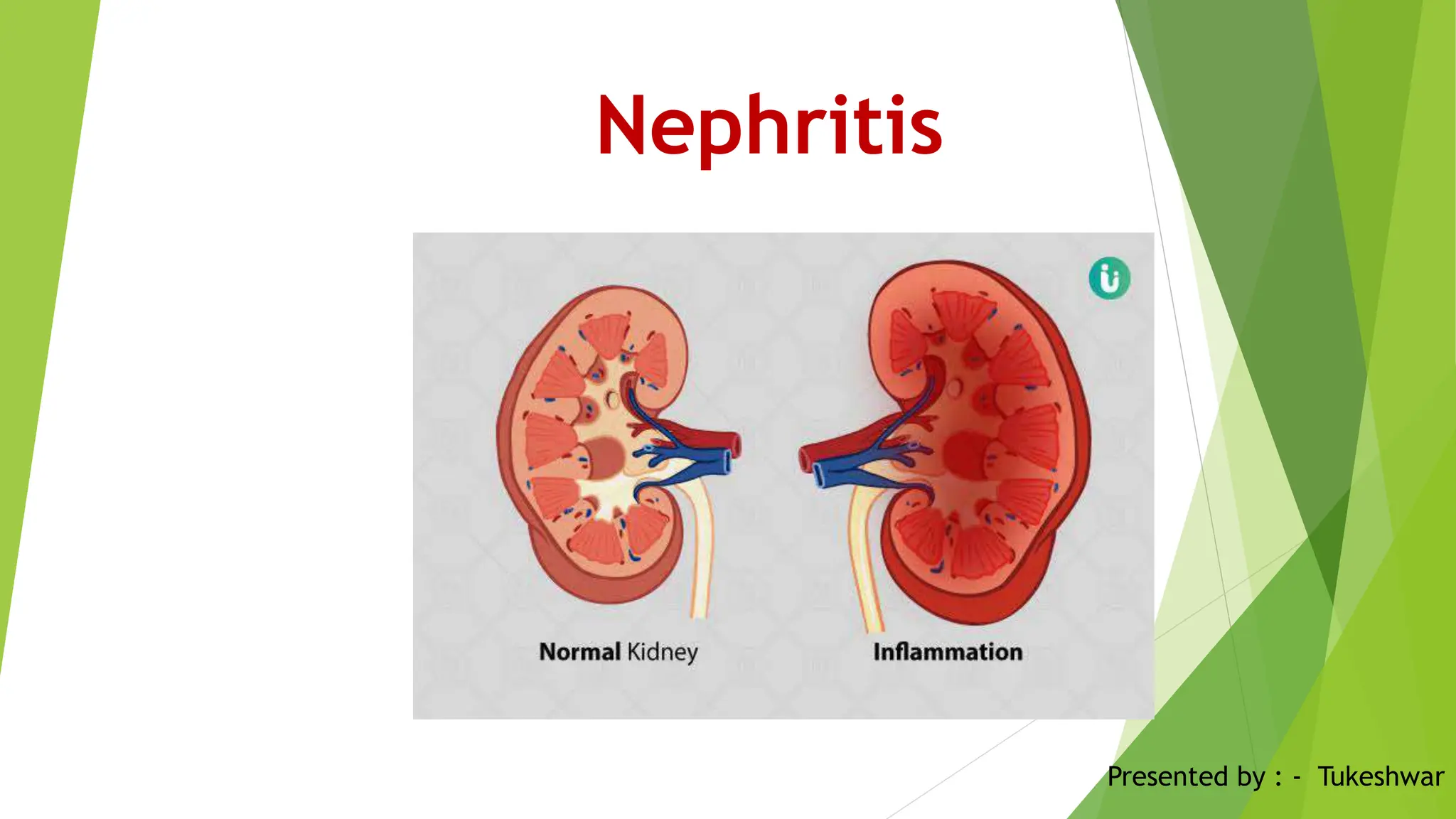
Nephritis
Presented by : - Tukeshwar
Definition : -
A condition in which the tissues in the
kidney become inflamed and have
problems filtering waste from the blood.
Nephritis may be caused by infection,
inflammatory conditions
Types of nephritis : -
1.Acute nephritis
2. Chronic nephritis
1. Acute nephritis : -
 Acute nephritis is most commonly caused by hypersensitivity to
drug therapy like analgesic or aspirin Cyclosporine
 It is used for treatment of certain immune disease anti cancer
drugs and medicine to treat depression Such as lithium
2. Chronic nephritis : -
 Chronic nephritis can similarly be due to a very large no of causes
including high blood pressure or hypertension polycystic disease of the
kidney high blood calcium deposit in the kidney and Uric acid deposit in
the kidney lead and intoxication
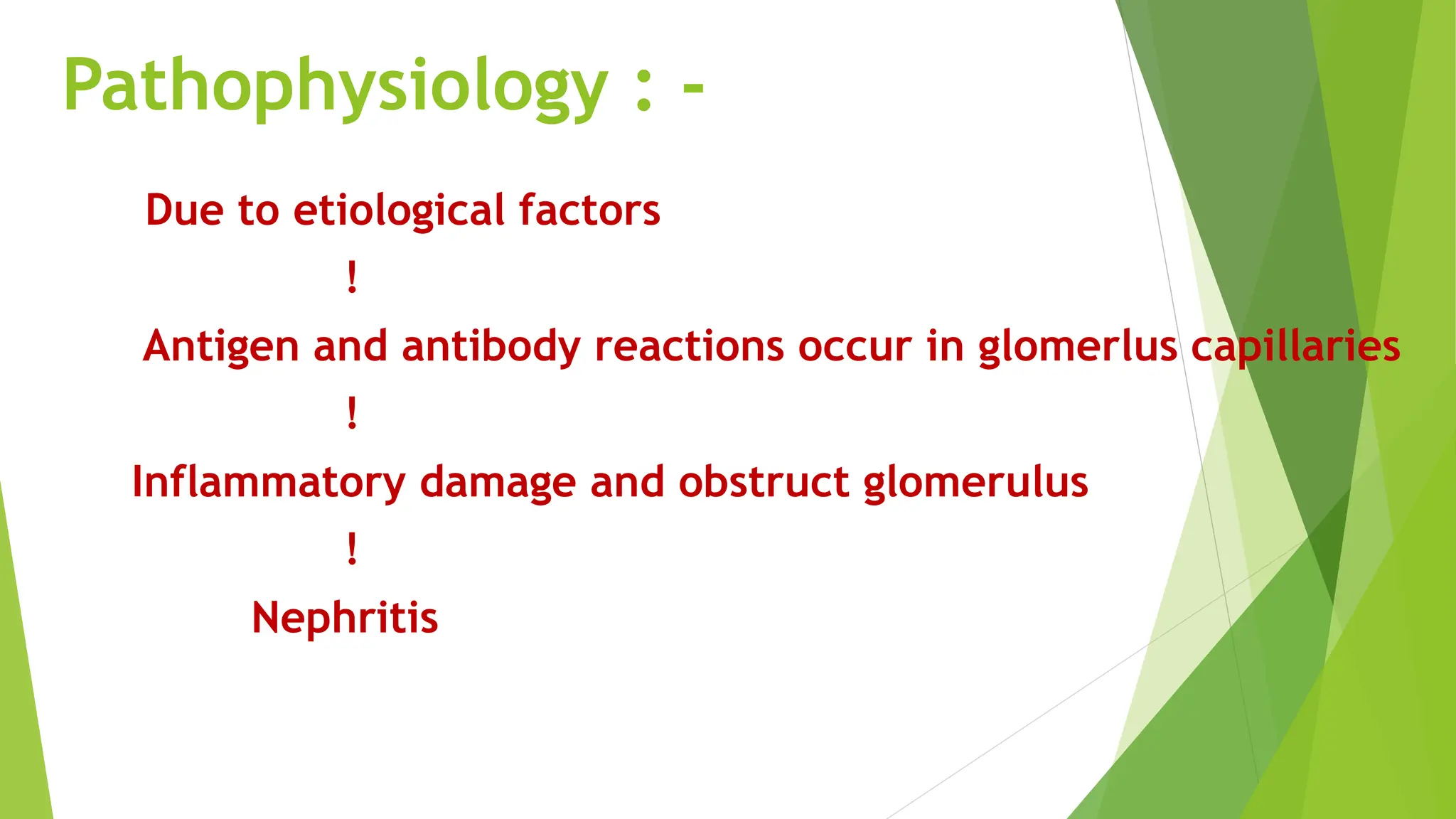
Pathophysiology : -
Due to etiological factors
!
Antigen and antibody reactions occur in glomerlus capillaries
!
Inflammatory damage and obstruct glomerulus
!
Nephritis
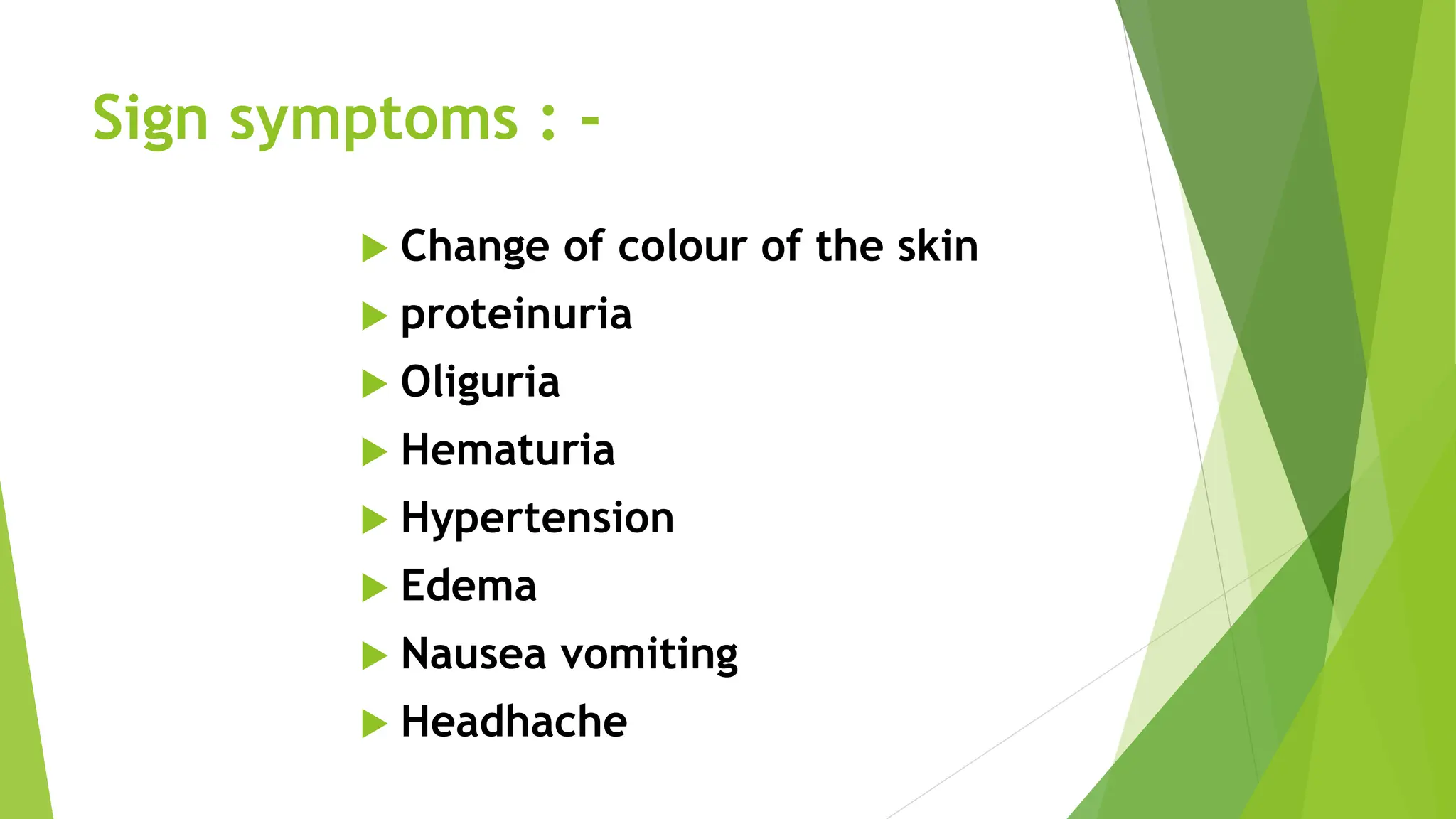
Sign symptoms : -
 Change of colour of the skin
 proteinuria
 Oliguria
 Hematuria
 Hypertension
 Edema
 Nausea vomiting
 Headhache
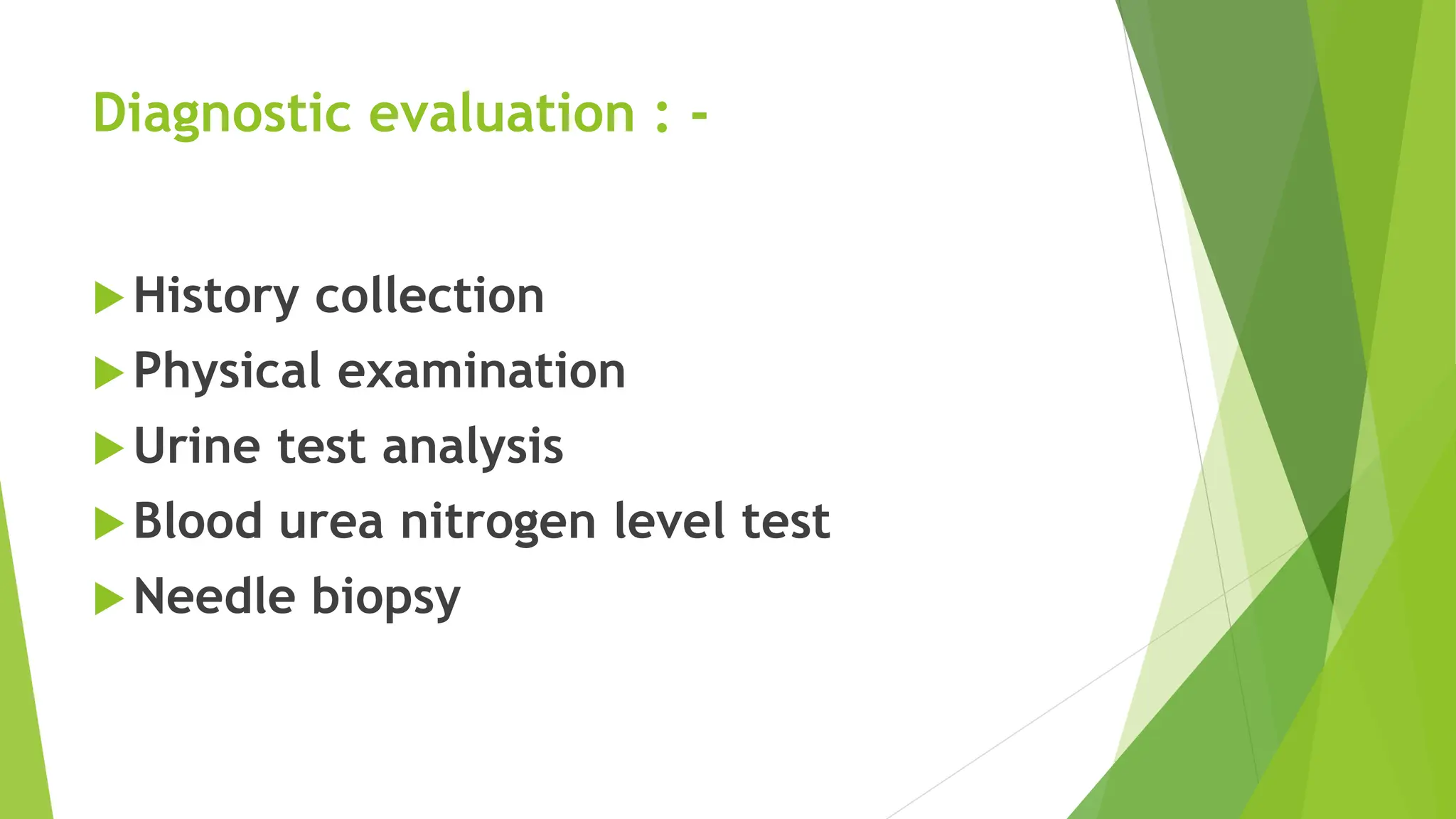
Diagnostic evaluation : -
History collection
Physical examination
Urine test analysis
Blood urea nitrogen level test
Needle biopsy
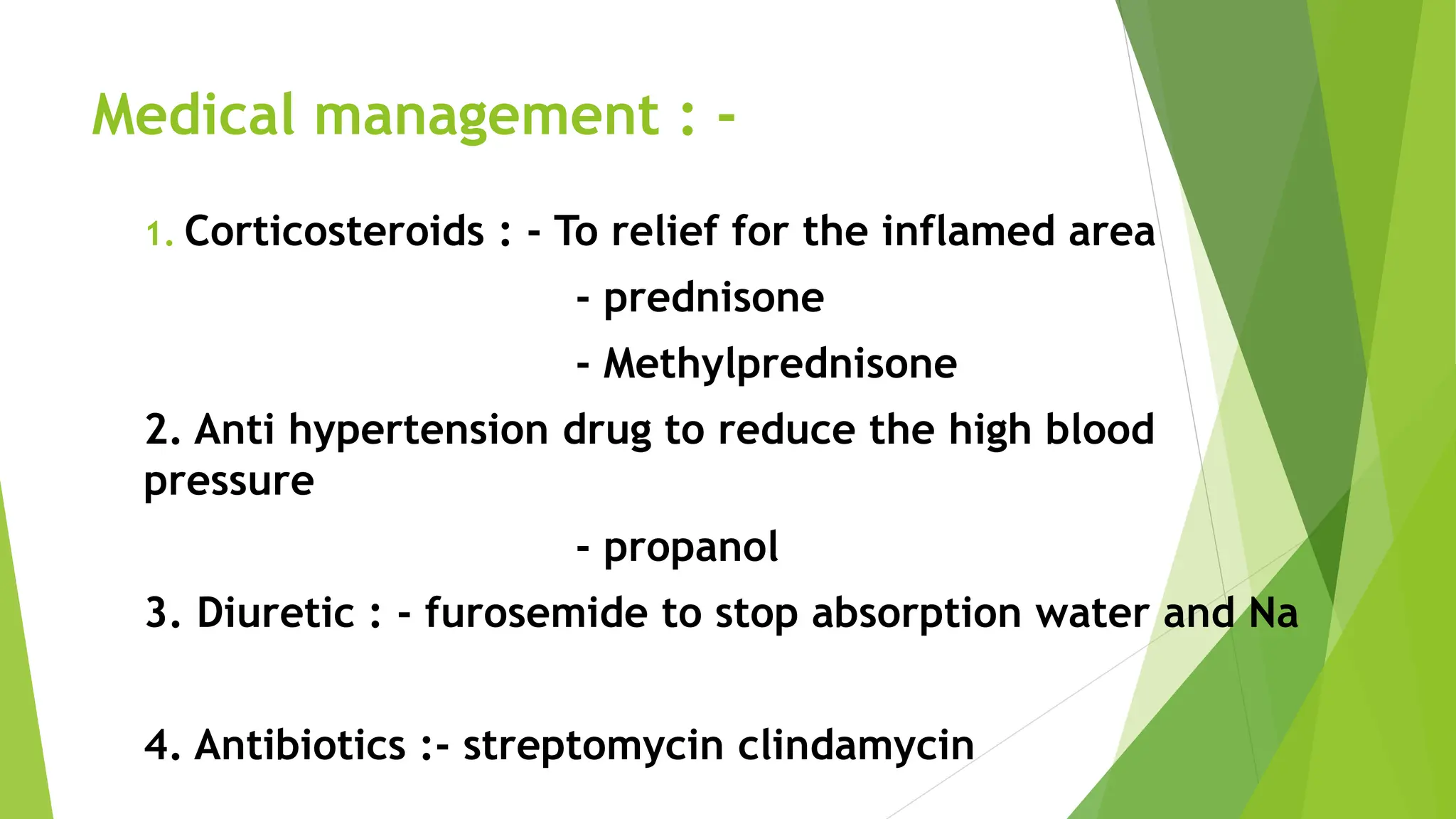
Medical management : -
1. Corticosteroids : - To relief for the inflamed area
- prednisone
- Methylprednisone
2. Anti hypertension drug to reduce the high blood
pressure
- propanol
3. Diuretic : - furosemide to stop absorption water and Na
4. Antibiotics :- streptomycin clindamycin
Nursing management : -
 Monitor the vital sign
 Monitor the intake and output
 Instruct the patient to avoid irritant that affect urinary tract
 Avoid the exposing the patient to person with infection
Prevention : -
 Maintaining healthy weight
 Quite smoking
 Keeping blood sugar and blood pressure within healthy limit
 Keep exercise regularly
Nephritis  slide share ,ppt.pptx definition , types , sign symptom, Pathophysiology

Nephritis slide share ,ppt.pptx definition , types , sign symptom, Pathophysiology

  • 1.
  • 2.
    Definition : - Acondition in which the tissues in the kidney become inflamed and have problems filtering waste from the blood. Nephritis may be caused by infection, inflammatory conditions
  • 3.
    Types of nephritis: - 1.Acute nephritis 2. Chronic nephritis
  • 4.
    1. Acute nephritis: -  Acute nephritis is most commonly caused by hypersensitivity to drug therapy like analgesic or aspirin Cyclosporine  It is used for treatment of certain immune disease anti cancer drugs and medicine to treat depression Such as lithium 2. Chronic nephritis : -  Chronic nephritis can similarly be due to a very large no of causes including high blood pressure or hypertension polycystic disease of the kidney high blood calcium deposit in the kidney and Uric acid deposit in the kidney lead and intoxication
  • 5.
    Pathophysiology : - Dueto etiological factors ! Antigen and antibody reactions occur in glomerlus capillaries ! Inflammatory damage and obstruct glomerulus ! Nephritis
  • 6.
    Sign symptoms :-  Change of colour of the skin  proteinuria  Oliguria  Hematuria  Hypertension  Edema  Nausea vomiting  Headhache
  • 7.
    Diagnostic evaluation :- History collection Physical examination Urine test analysis Blood urea nitrogen level test Needle biopsy
  • 8.
    Medical management :- 1. Corticosteroids : - To relief for the inflamed area - prednisone - Methylprednisone 2. Anti hypertension drug to reduce the high blood pressure - propanol 3. Diuretic : - furosemide to stop absorption water and Na 4. Antibiotics :- streptomycin clindamycin
  • 9.
    Nursing management :-  Monitor the vital sign  Monitor the intake and output  Instruct the patient to avoid irritant that affect urinary tract  Avoid the exposing the patient to person with infection
  • 10.
    Prevention : - Maintaining healthy weight  Quite smoking  Keeping blood sugar and blood pressure within healthy limit  Keep exercise regularly