GEOMORPHIC AND STRUCTURAL
STUDY OF SONA PASS AND LAL
BAKHAR AREA NEAR HUB RIVER

Hafiz Uzair Ahmed Khan
SEQUENCE


Objectives of the study



Brief description of various geological features
marked on the image



Methodology



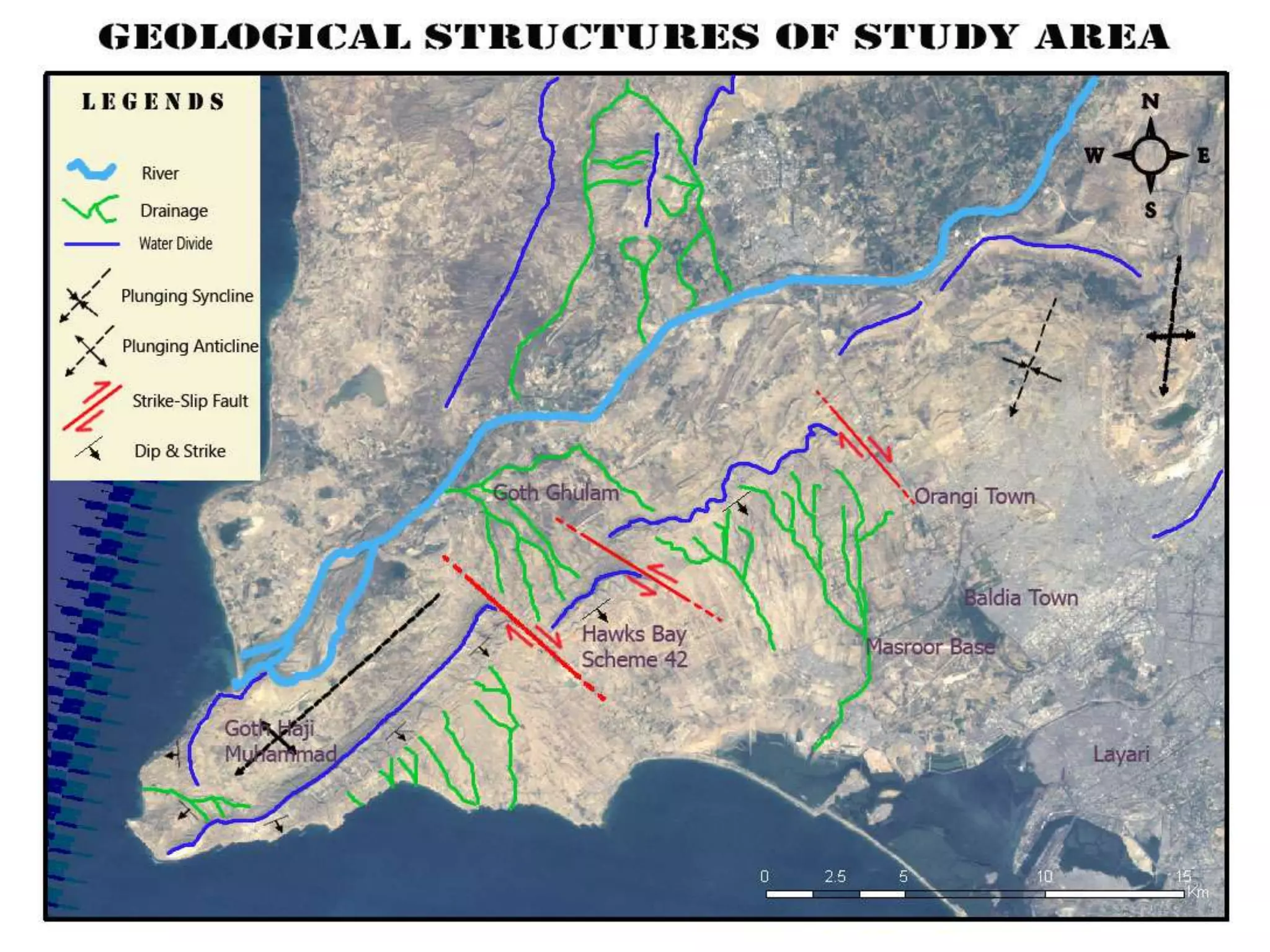
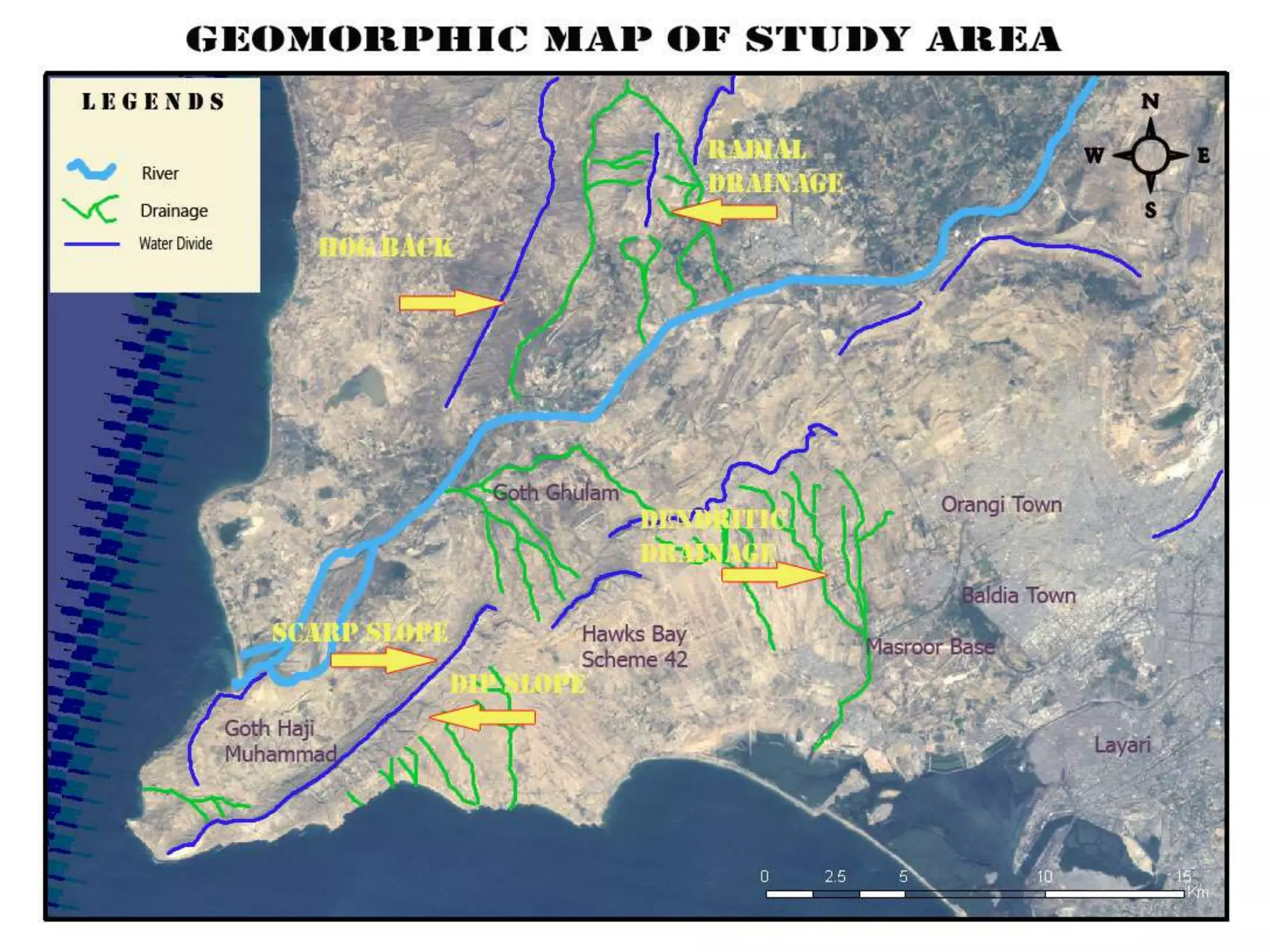
Geological and geomorphic map of the study
area



Result and conclusion
OBJECTIVE


Identify the following structures on satellite
image:






Normal, reverse, and lateral faults
Synclines and anticlines, both non-plunging and
plunging.
State the direction of plunge where relevant.
The axis of a fold.



To mark major Geomorphological structures.



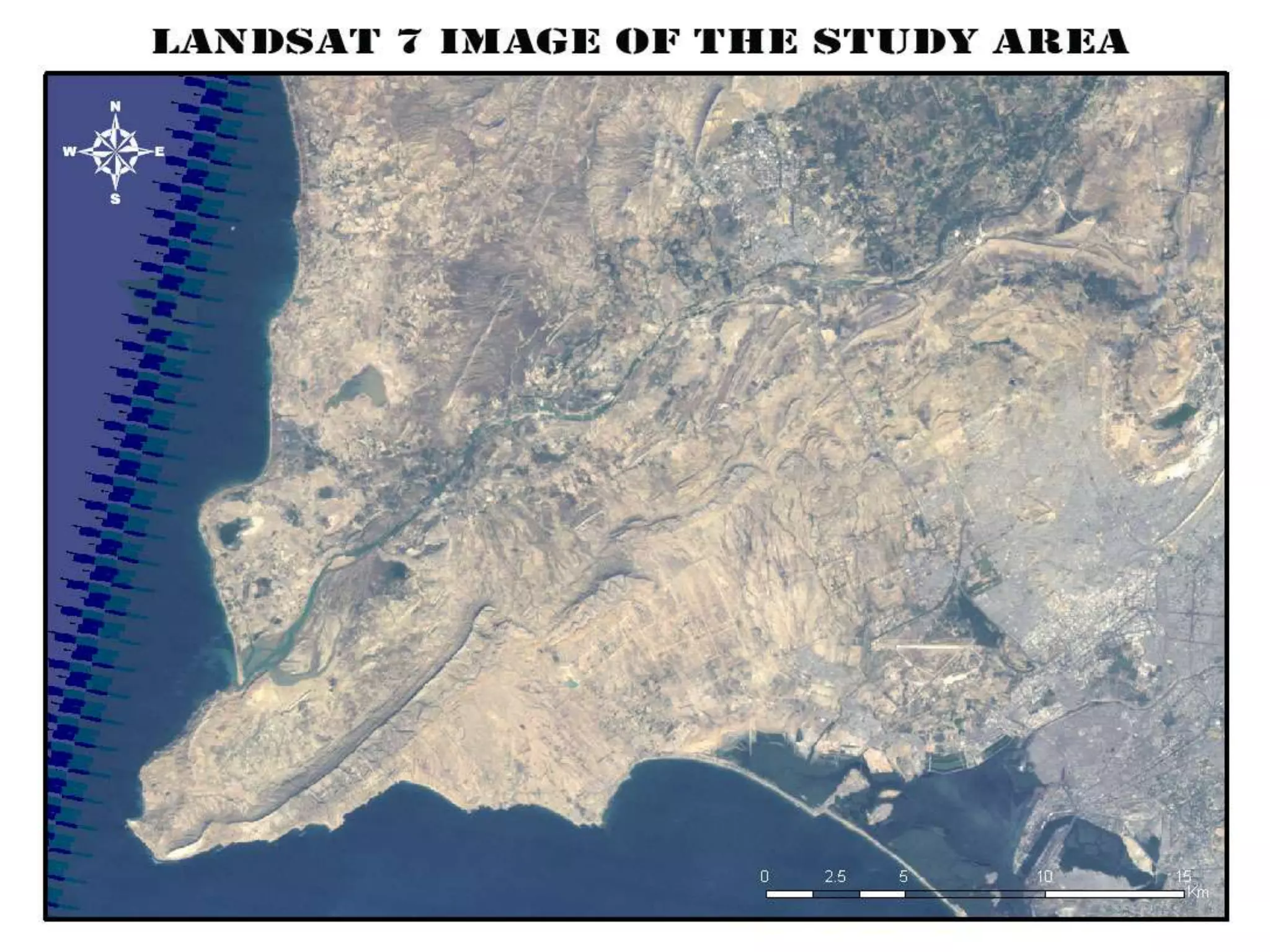
Use of Landsat 7 imagery for above studies.
STUDY AREA
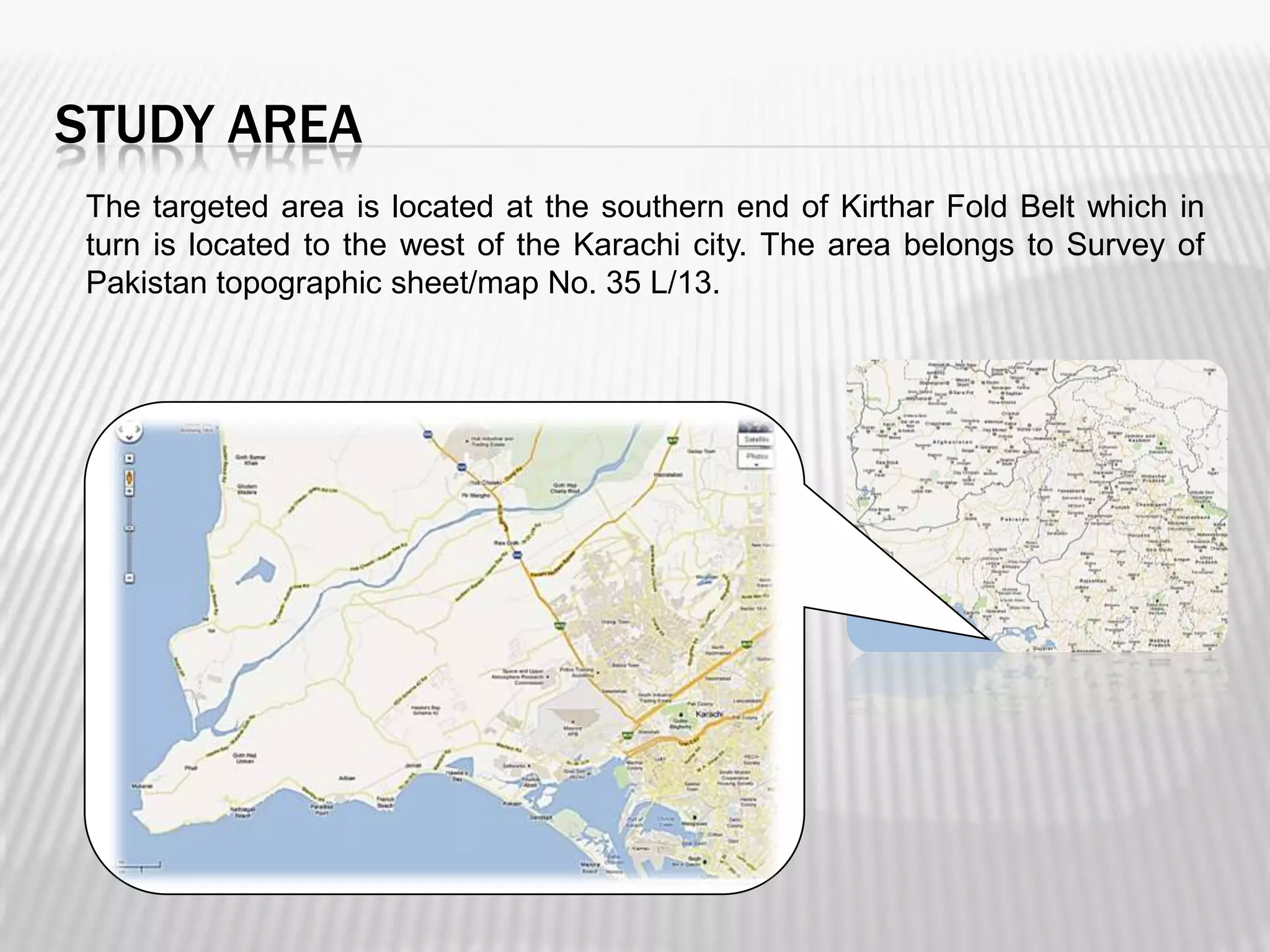
The targeted area is located at the southern end of Kirthar Fold Belt which in
turn is located to the west of the Karachi city. The area belongs to Survey of
Pakistan topographic sheet/map No. 35 L/13.
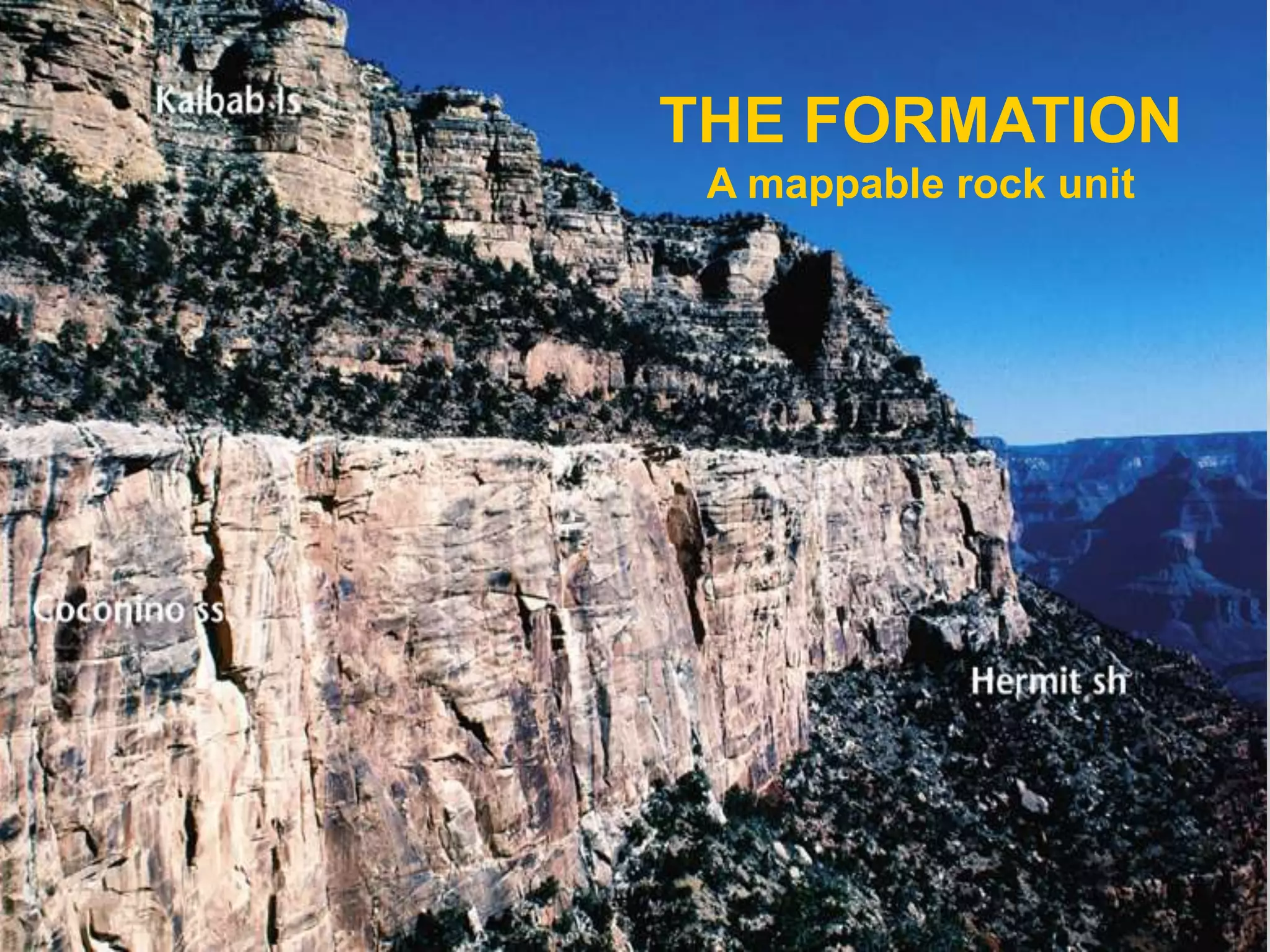
THE FORMATION
A mappable rock unit
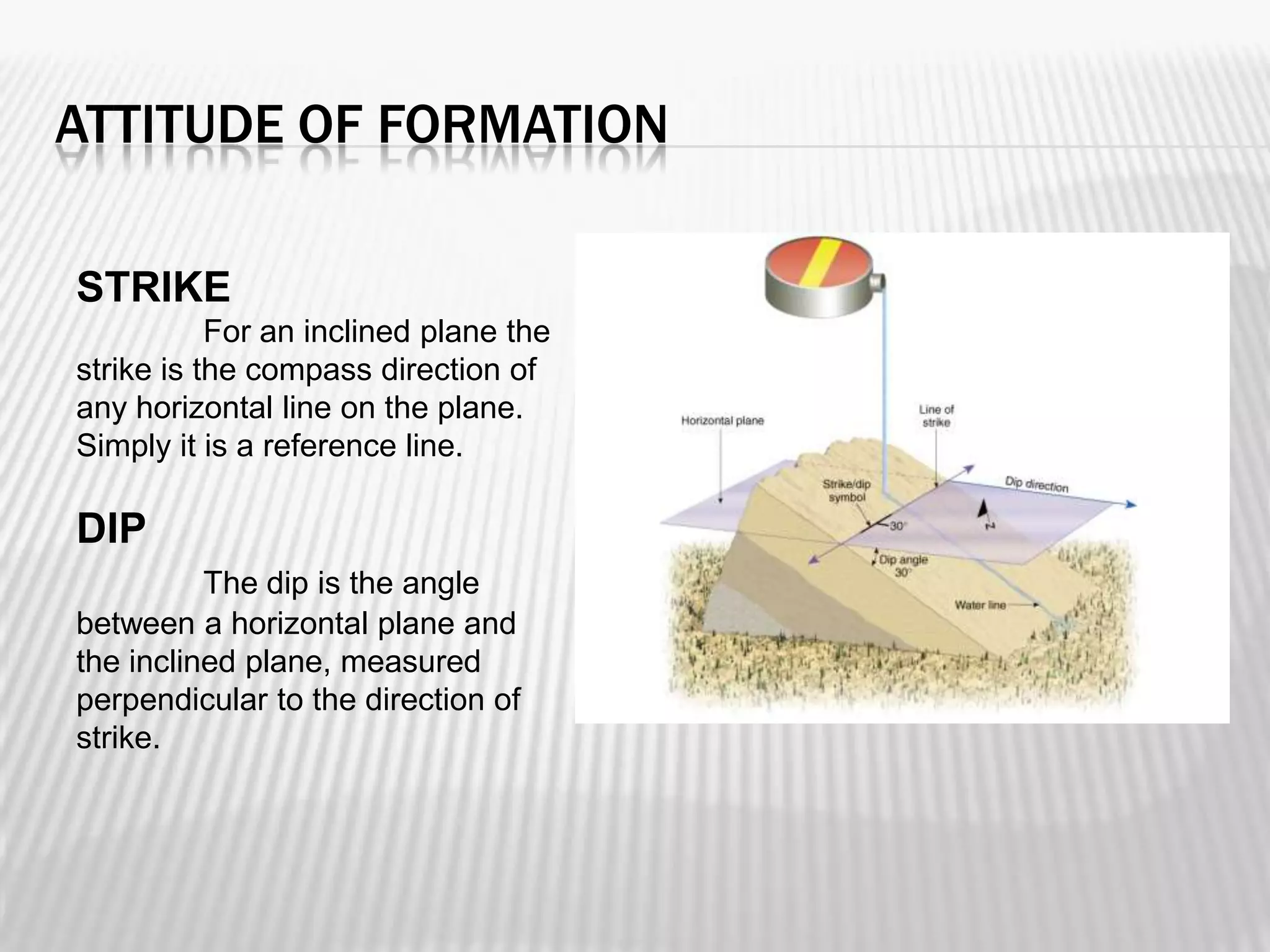
ATTITUDE OF FORMATION
STRIKE
For an inclined plane the
strike is the compass direction of
any horizontal line on the plane.
Simply it is a reference line.

DIP
The dip is the angle
between a horizontal plane and
the inclined plane, measured
perpendicular to the direction of
strike.
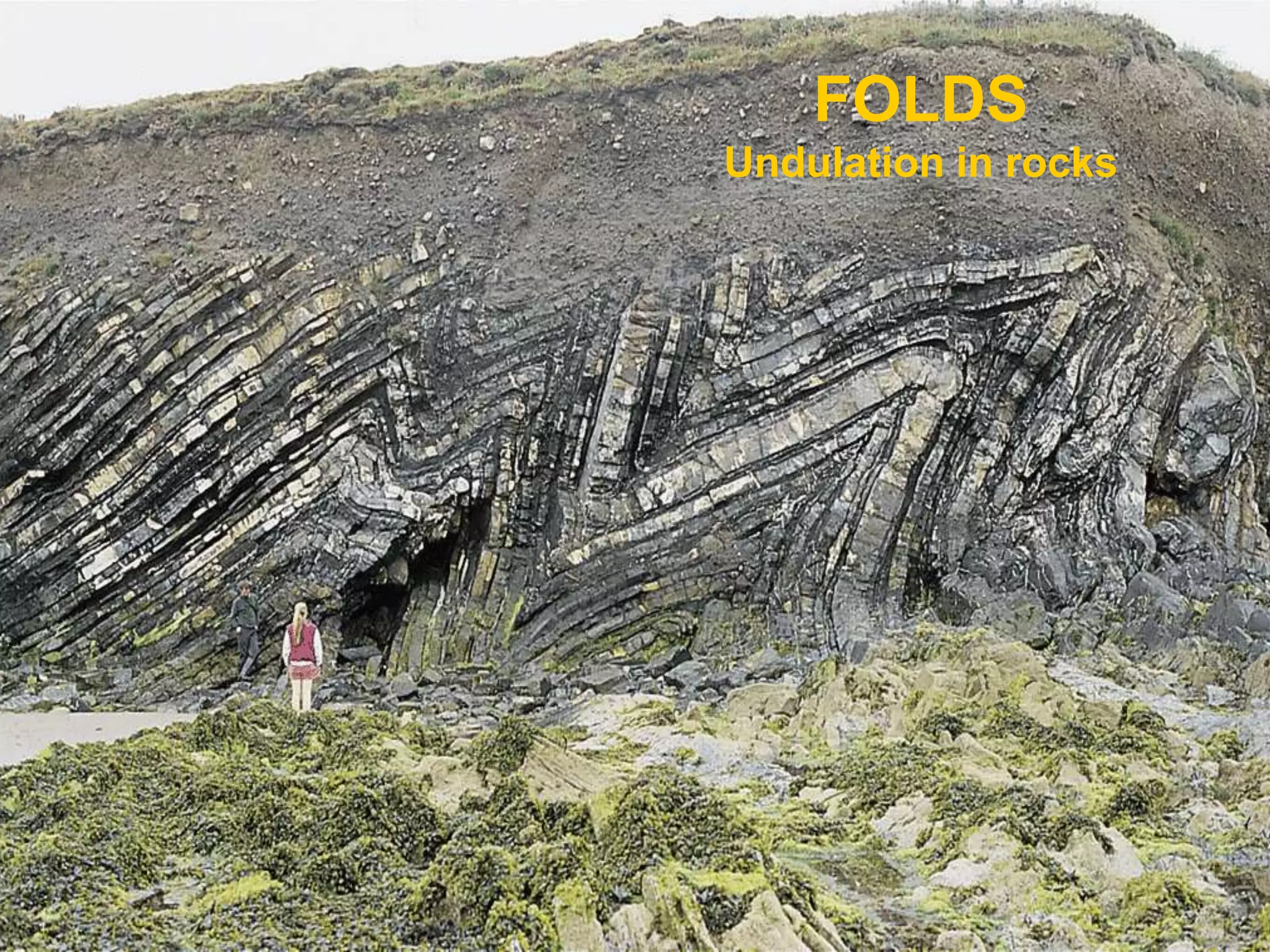
FOLDS
Undulation in rocks
FOLDS


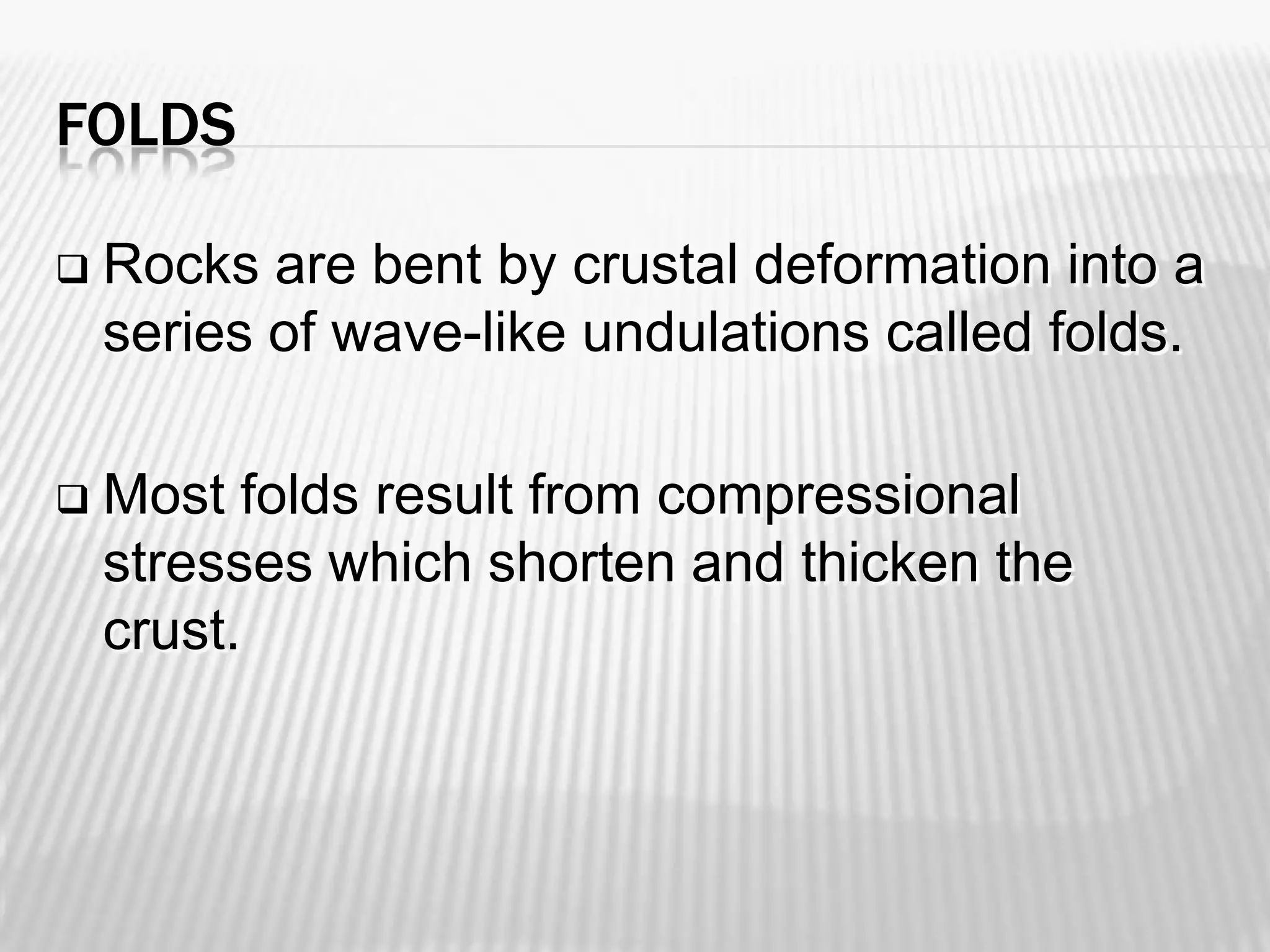
Rocks are bent by crustal deformation into a
series of wave-like undulations called folds.



Most folds result from compressional
stresses which shorten and thicken the
crust.
COMMON TYPES OF FOLDS




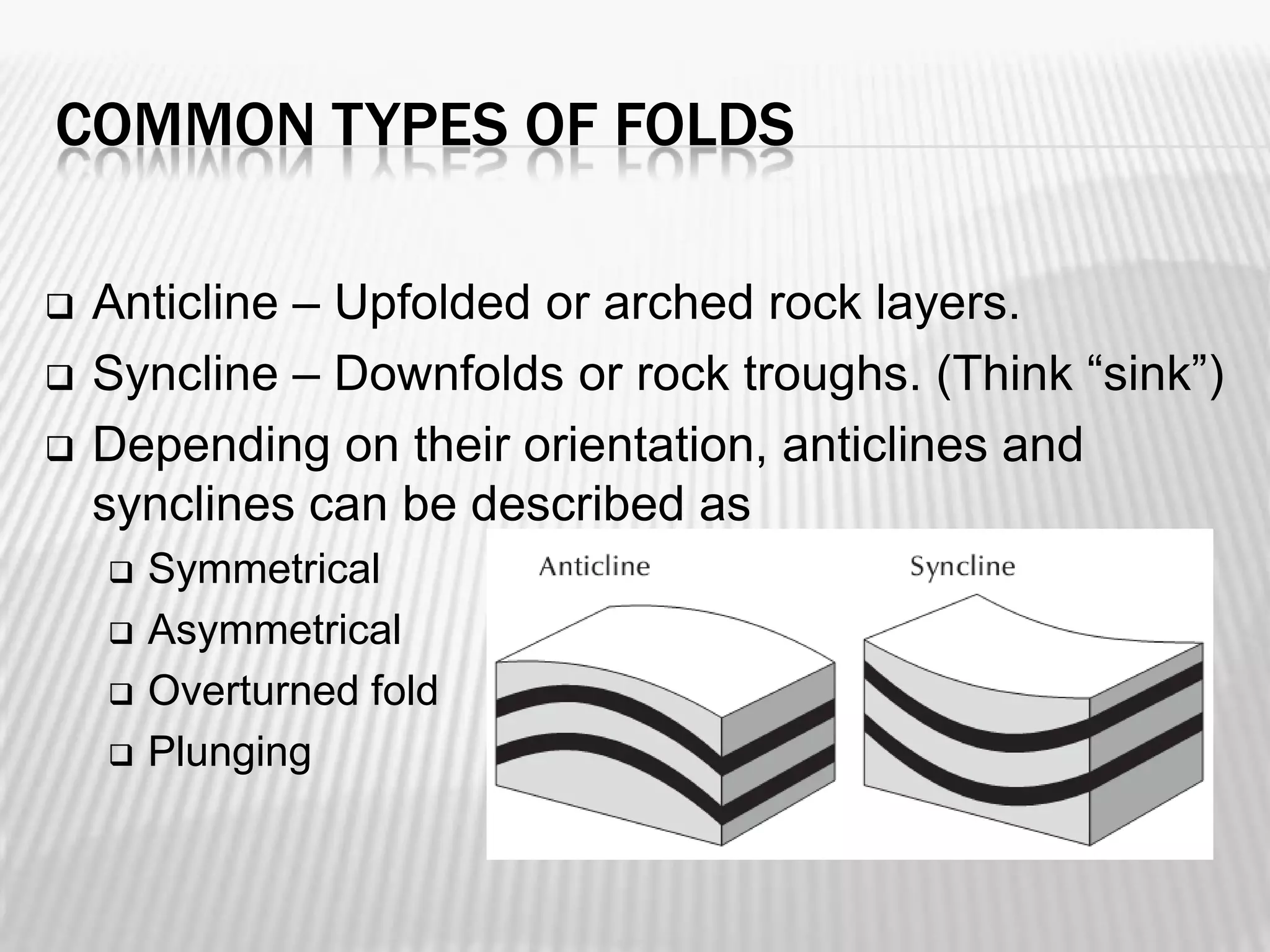
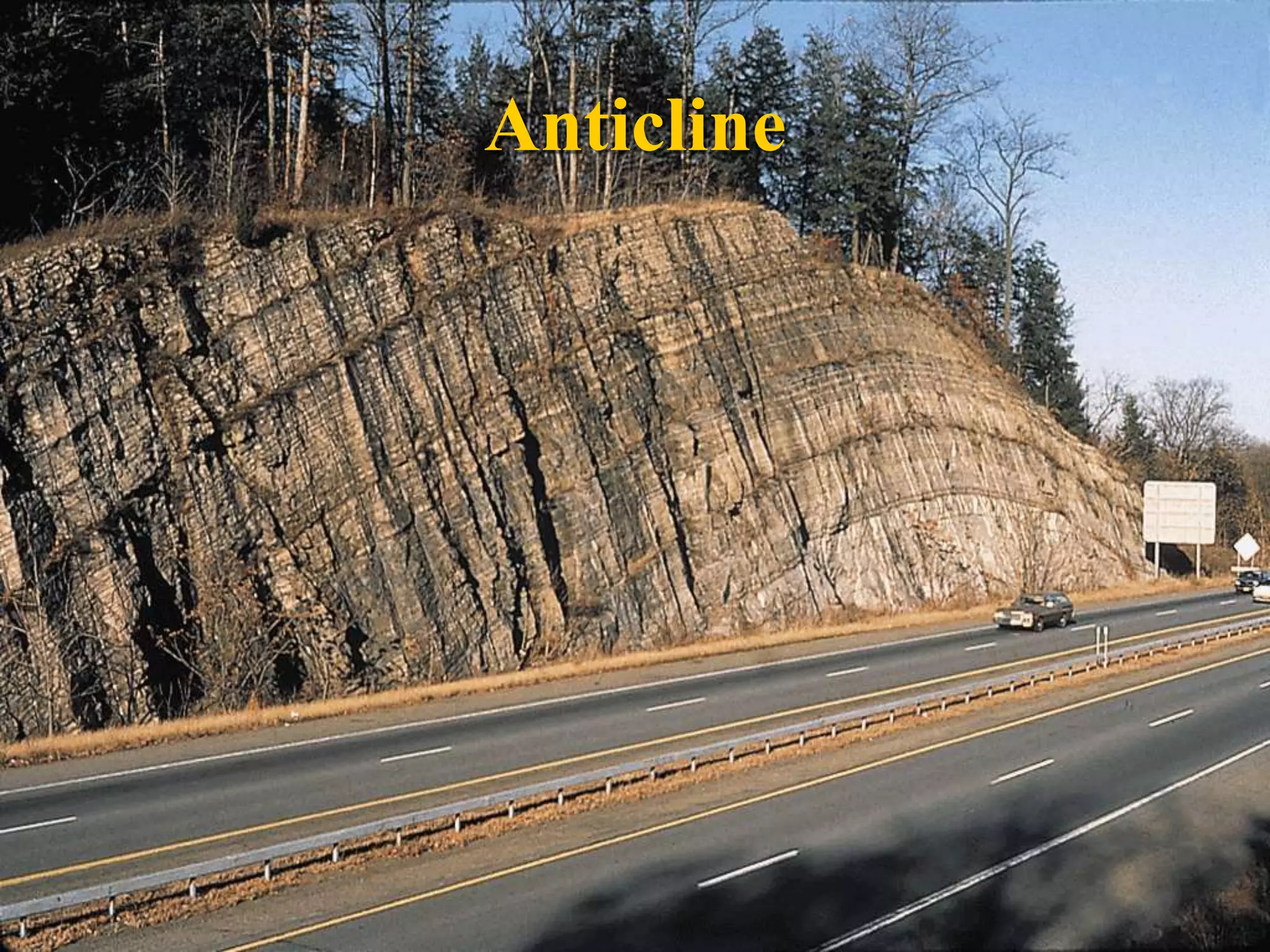
Anticline – Upfolded or arched rock layers.
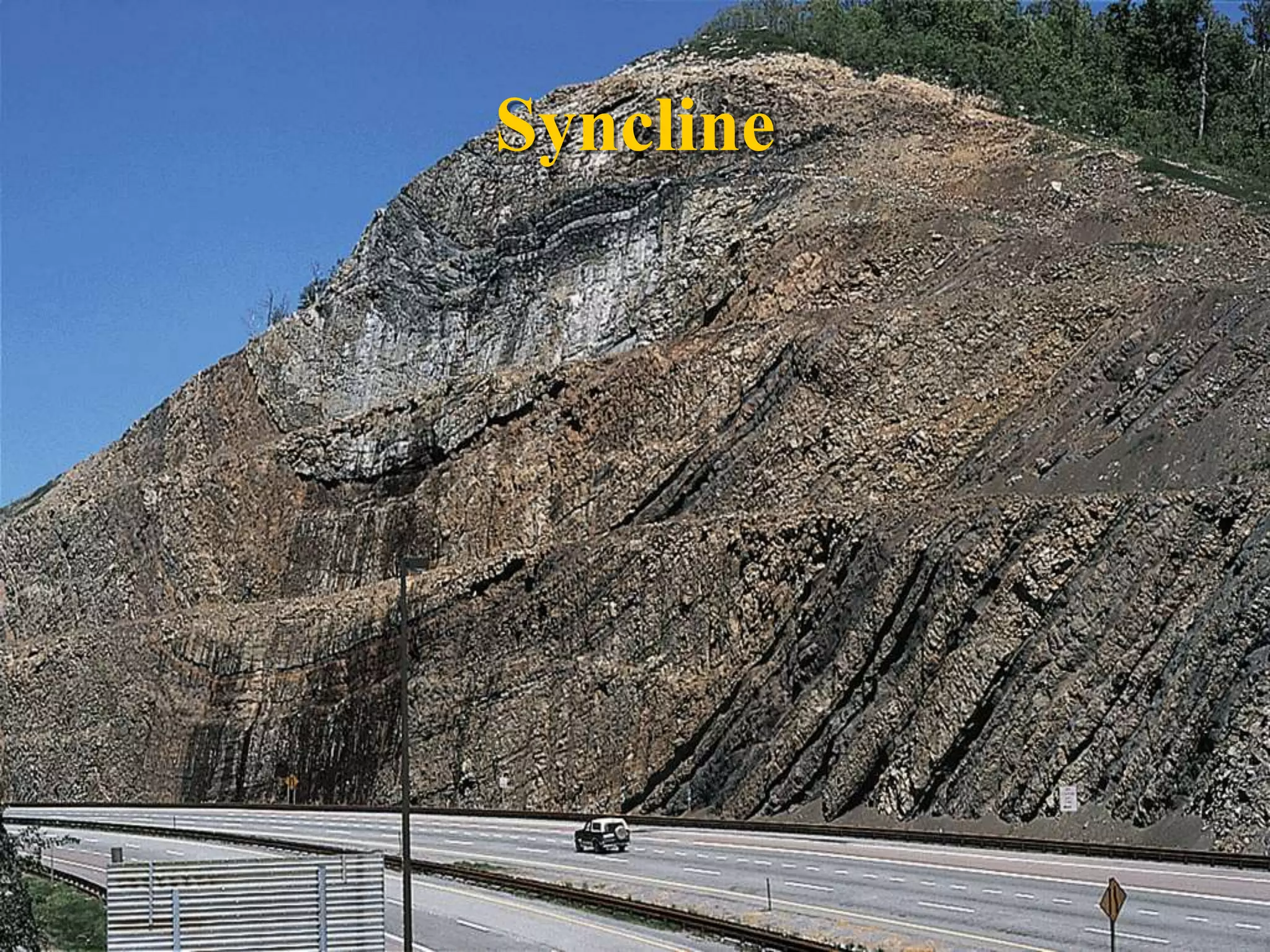
Syncline – Downfolds or rock troughs. (Think “sink”)
Depending on their orientation, anticlines and
synclines can be described as





Symmetrical
Asymmetrical
Overturned fold
Plunging
Anticline
Syncline
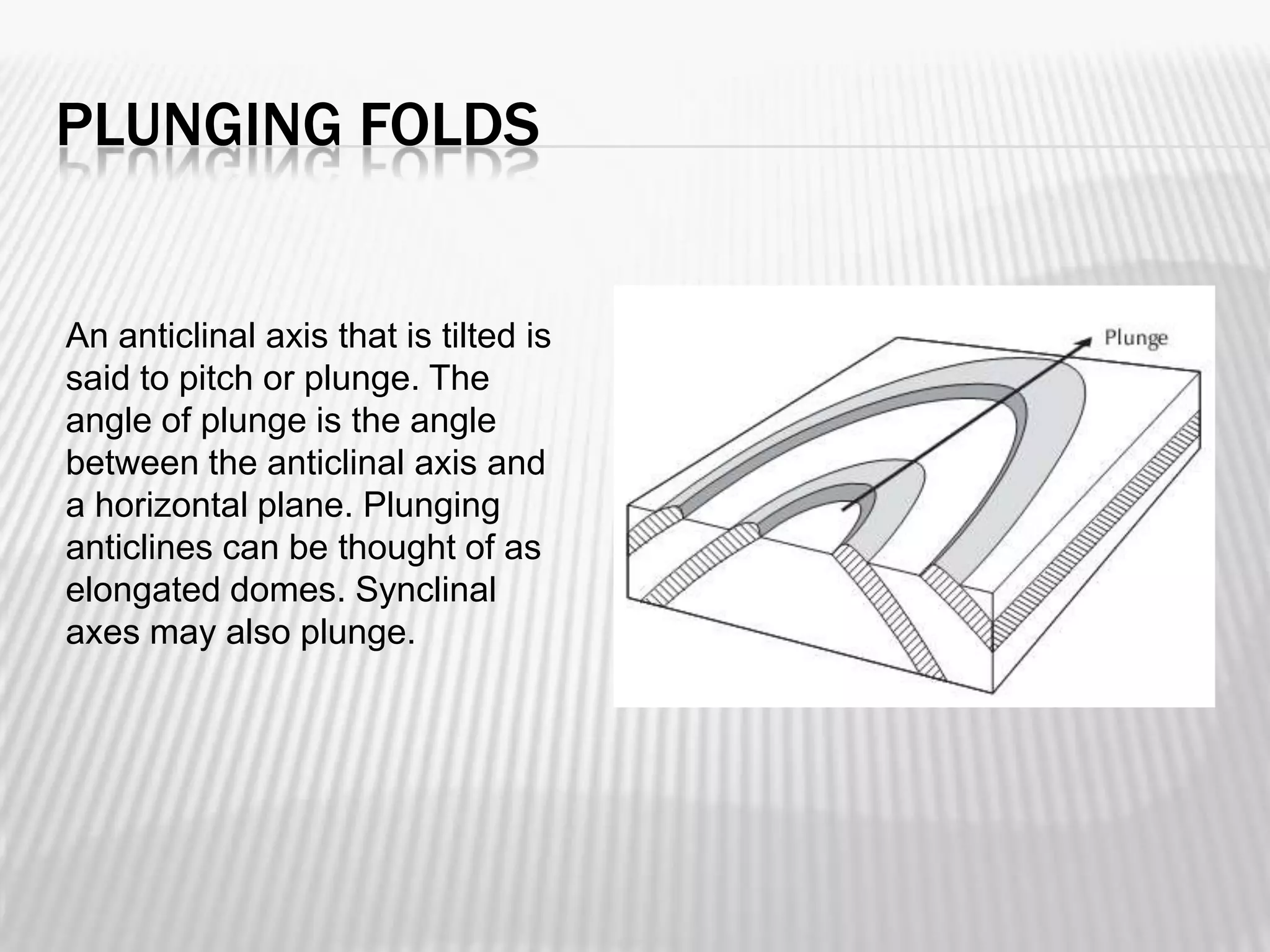
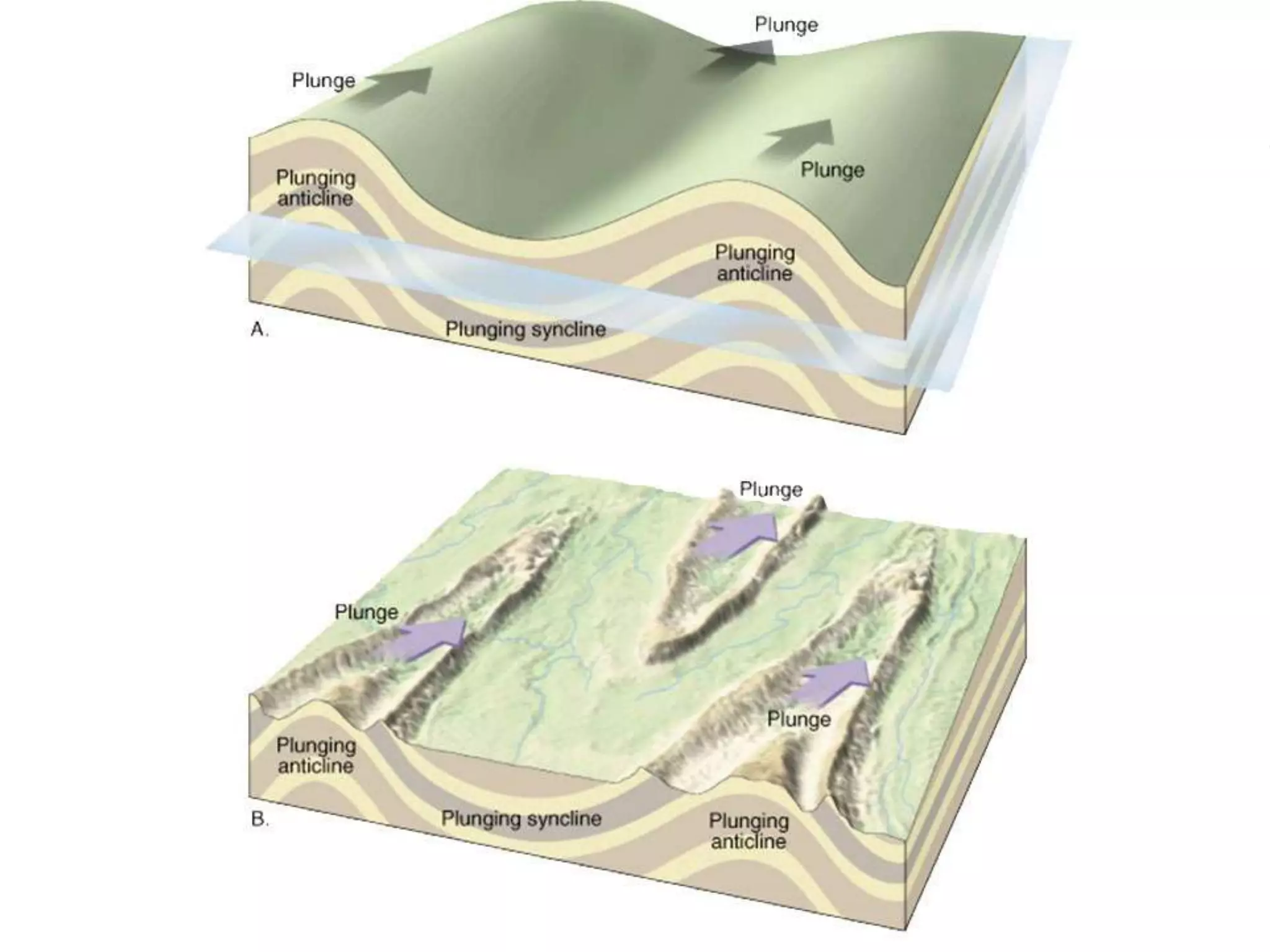
PLUNGING FOLDS

An anticlinal axis that is tilted is
said to pitch or plunge. The
angle of plunge is the angle
between the anticlinal axis and
a horizontal plane. Plunging
anticlines can be thought of as
elongated domes. Synclinal
axes may also plunge.
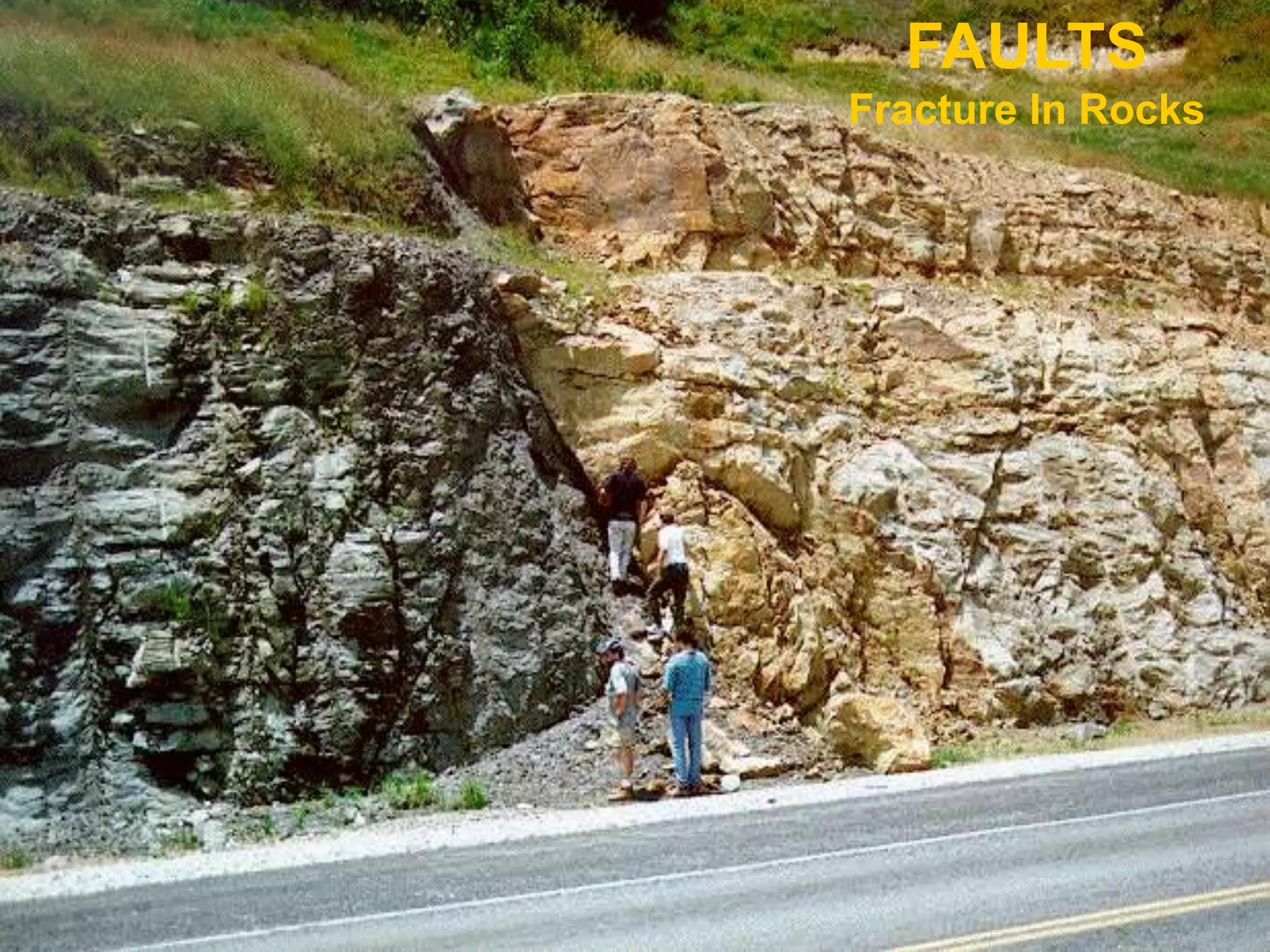
FAULTS
Fracture In Rocks
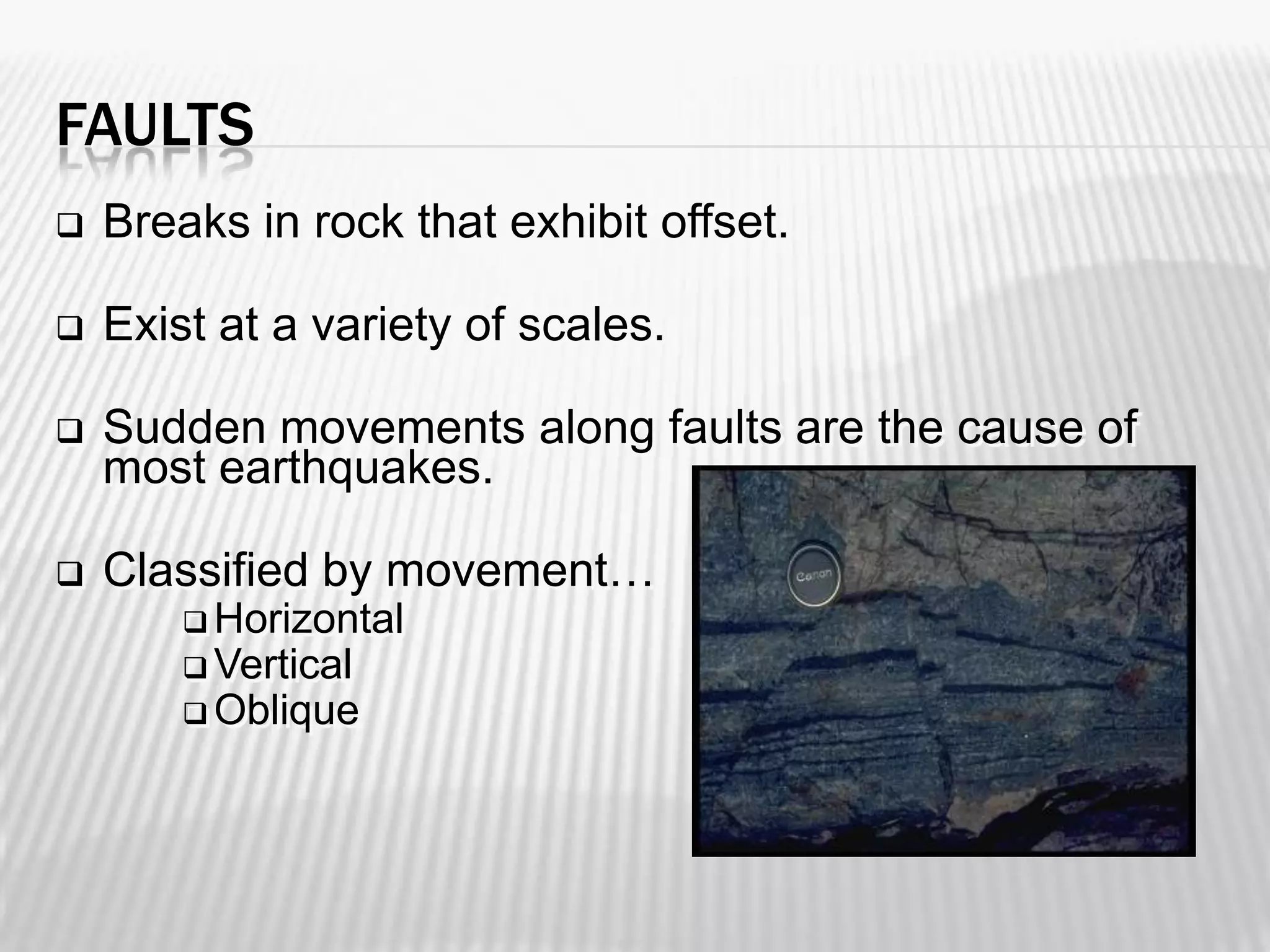
FAULTS


Breaks in rock that exhibit offset.



Exist at a variety of scales.



Sudden movements along faults are the cause of
most earthquakes.



Classified by movement…
 Horizontal
 Vertical
 Oblique
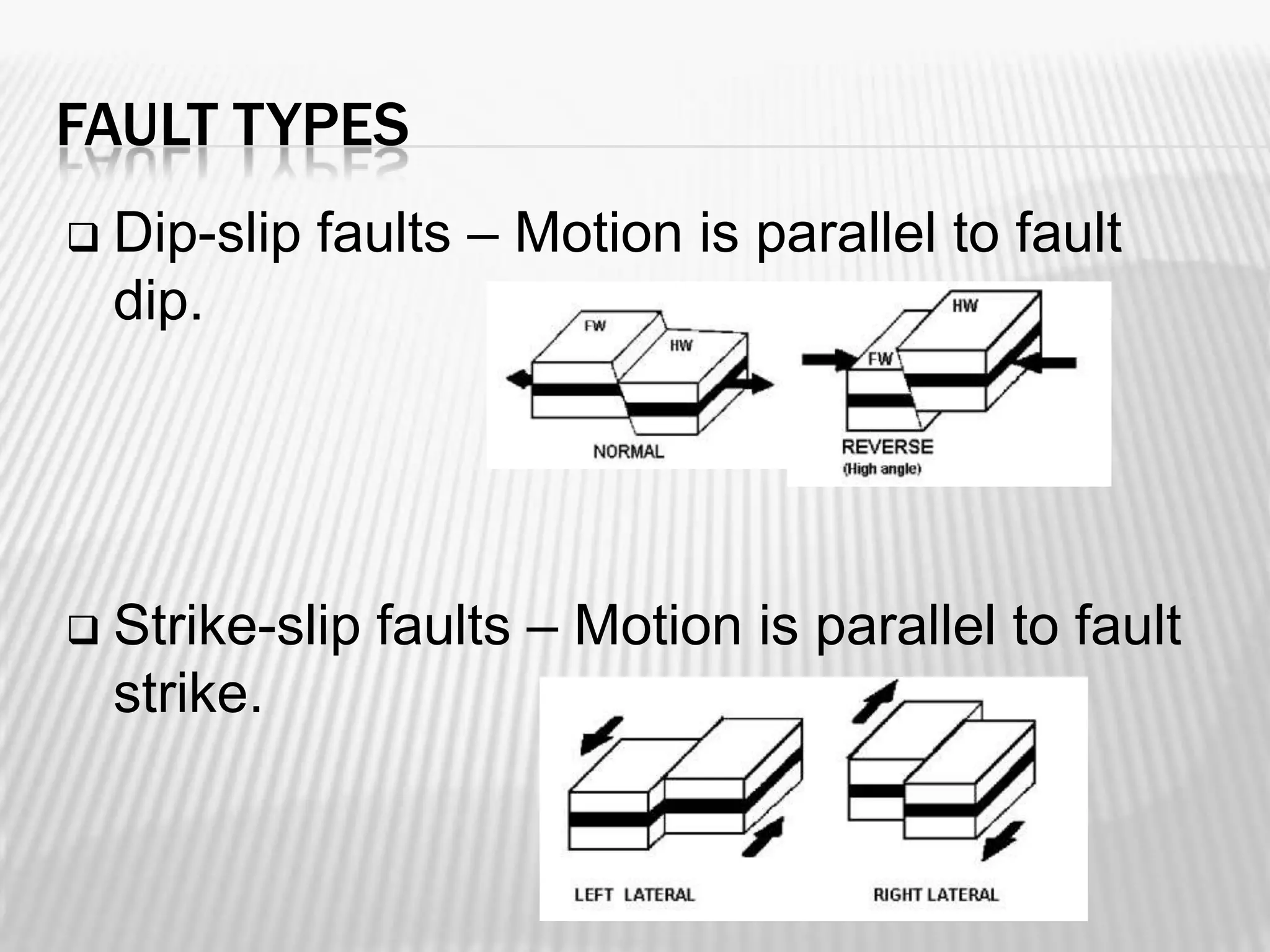
FAULT TYPES


Dip-slip faults – Motion is parallel to fault
dip.



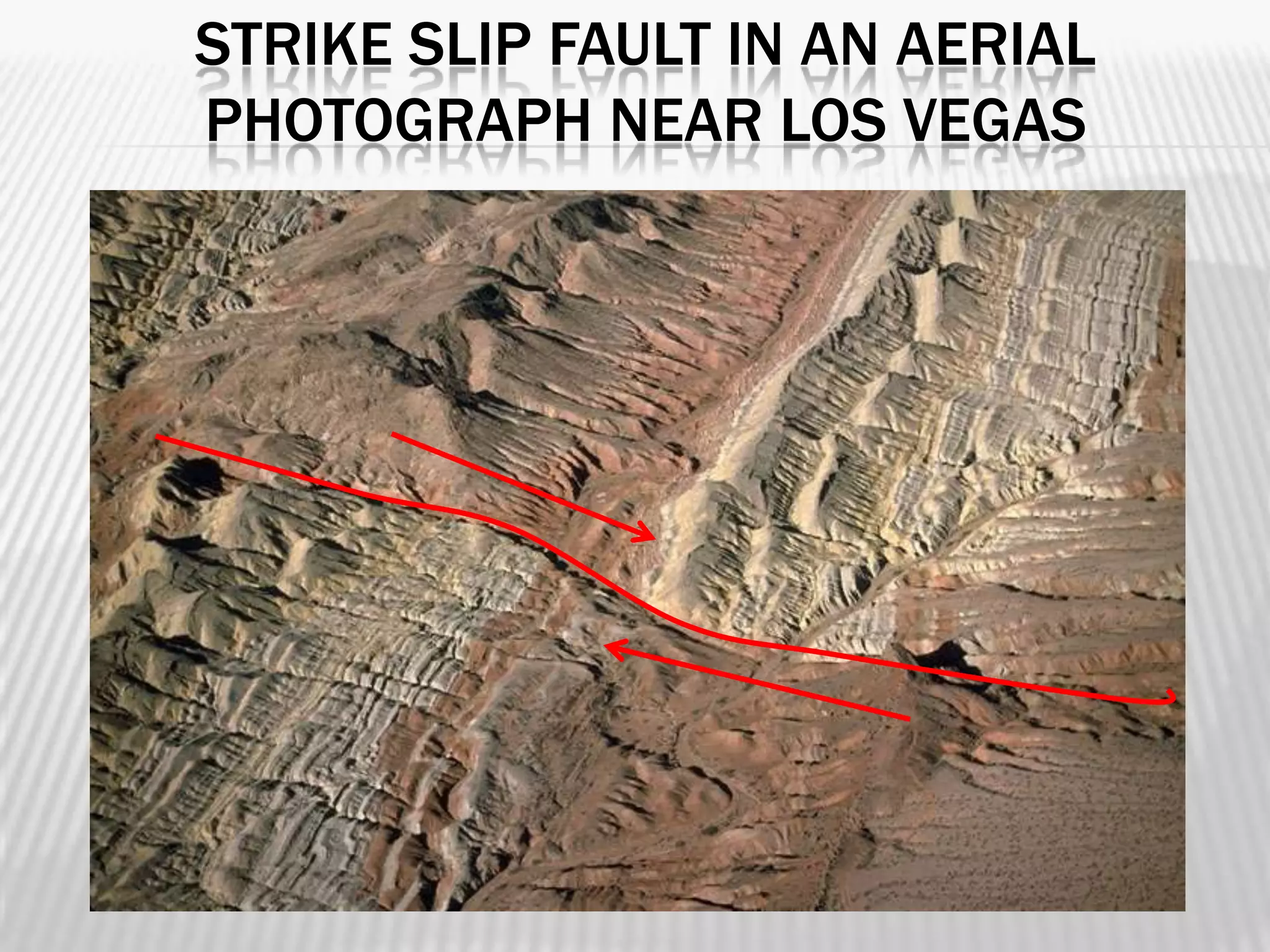
Strike-slip faults – Motion is parallel to fault
strike.
STRIKE SLIP FAULT IN AN AERIAL
PHOTOGRAPH NEAR LOS VEGAS
IMPORTANCE OF GEOLOGICAL STRUCTURES


Economic Geology









Petroleum Geology
Mining Geology

Faults are permeable zones for hydrothermal fluids
Veins of minerals occupy faults and fractures
It effect the stability of human engineered structures
Earthquakes: by combination of Geology and
Geomorphology
Steep slopes are potential collapse and Landslide
hazards
METHODOLOGY


Geologic Structures are visually interpreted after
studying the tectonics of the area.



Strike slip faults are evident due to the displacement
of ridges.



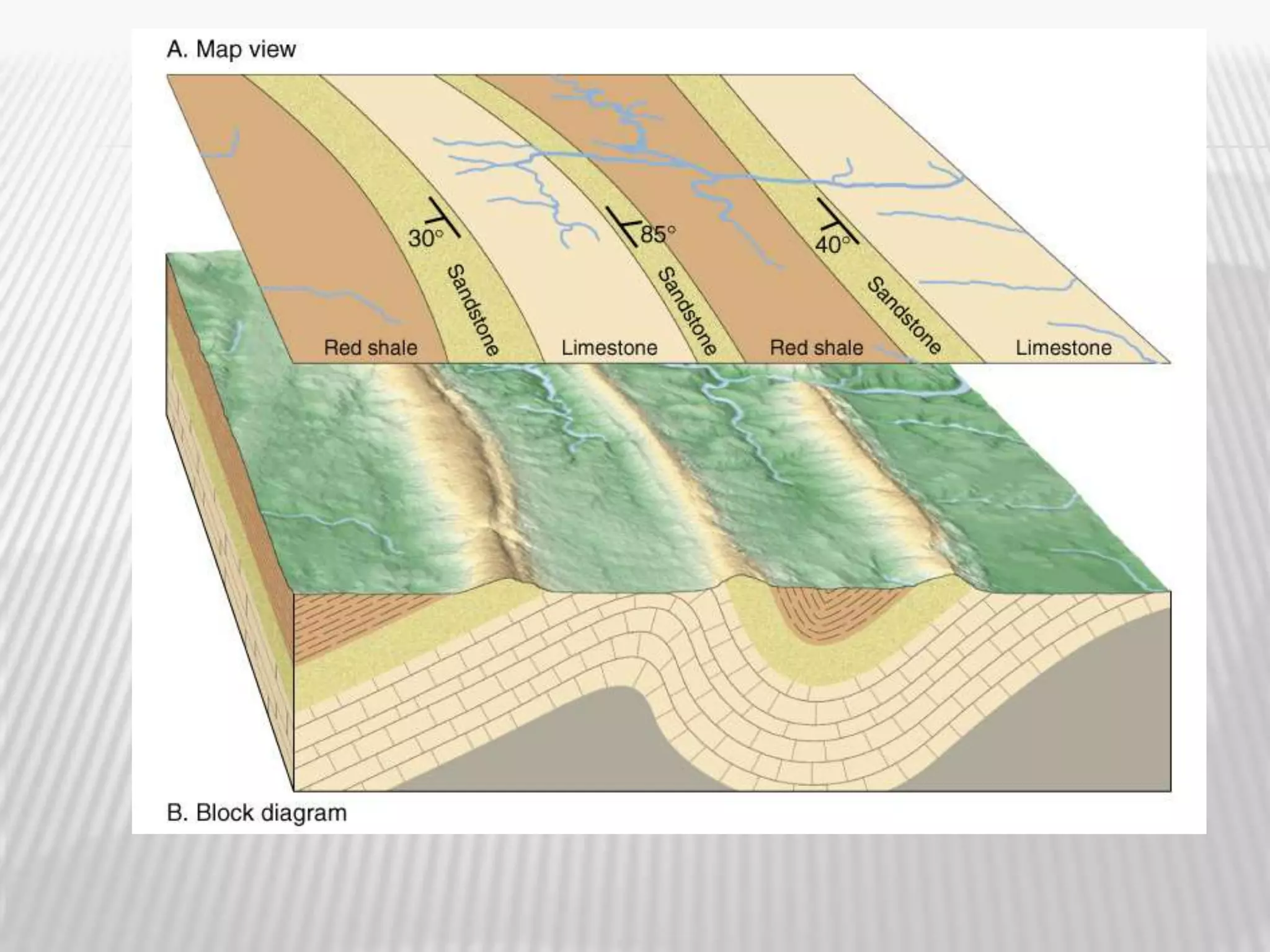
Folds are marked with the help of attitude of
formations.



Different types of ridges are marked on the basis of
slope angle.



All the observable Geologic and Geomorphic features
are marked on the satellite image.
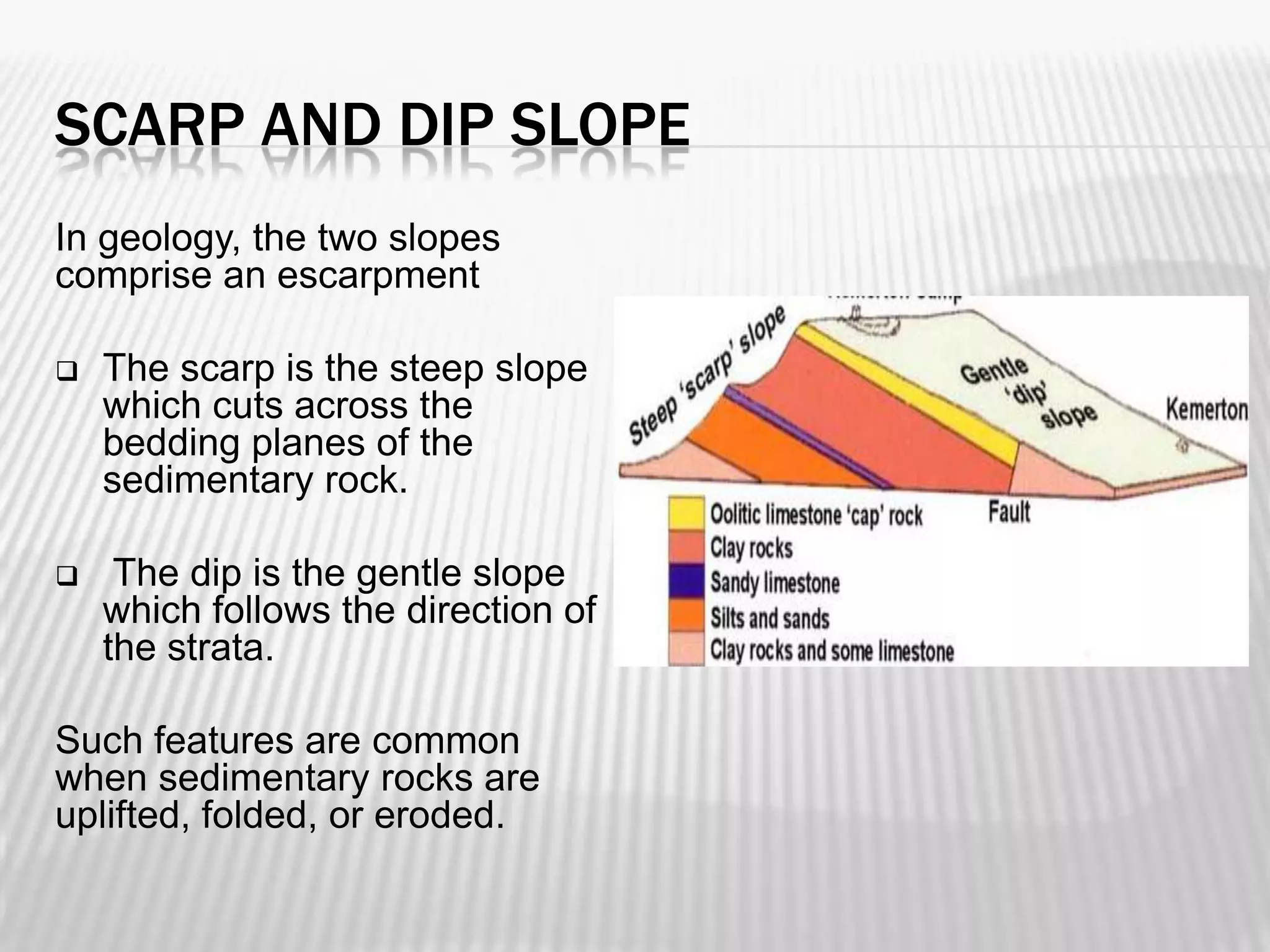
SCARP AND DIP SLOPE
In geology, the two slopes
comprise an escarpment


The scarp is the steep slope
which cuts across the
bedding planes of the
sedimentary rock.



The dip is the gentle slope
which follows the direction of
the strata.

Such features are common
when sedimentary rocks are
uplifted, folded, or eroded.
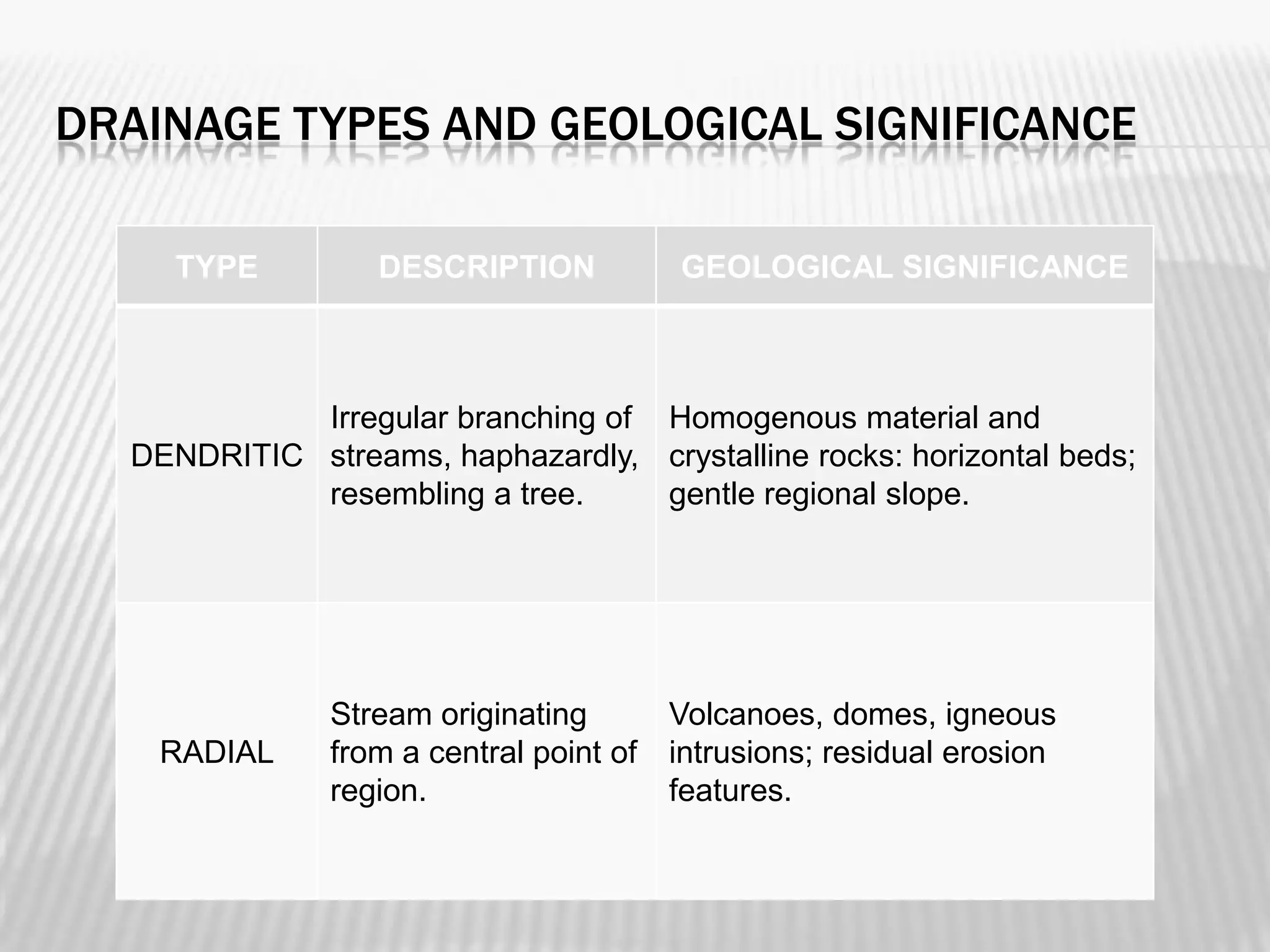
DRAINAGE TYPES AND GEOLOGICAL SIGNIFICANCE
TYPE

DESCRIPTION

GEOLOGICAL SIGNIFICANCE

Irregular branching of Homogenous material and
DENDRITIC streams, haphazardly, crystalline rocks: horizontal beds;
resembling a tree.
gentle regional slope.

RADIAL

Stream originating
from a central point of
region.

Volcanoes, domes, igneous
intrusions; residual erosion
features.
TYPES OF RIDGES
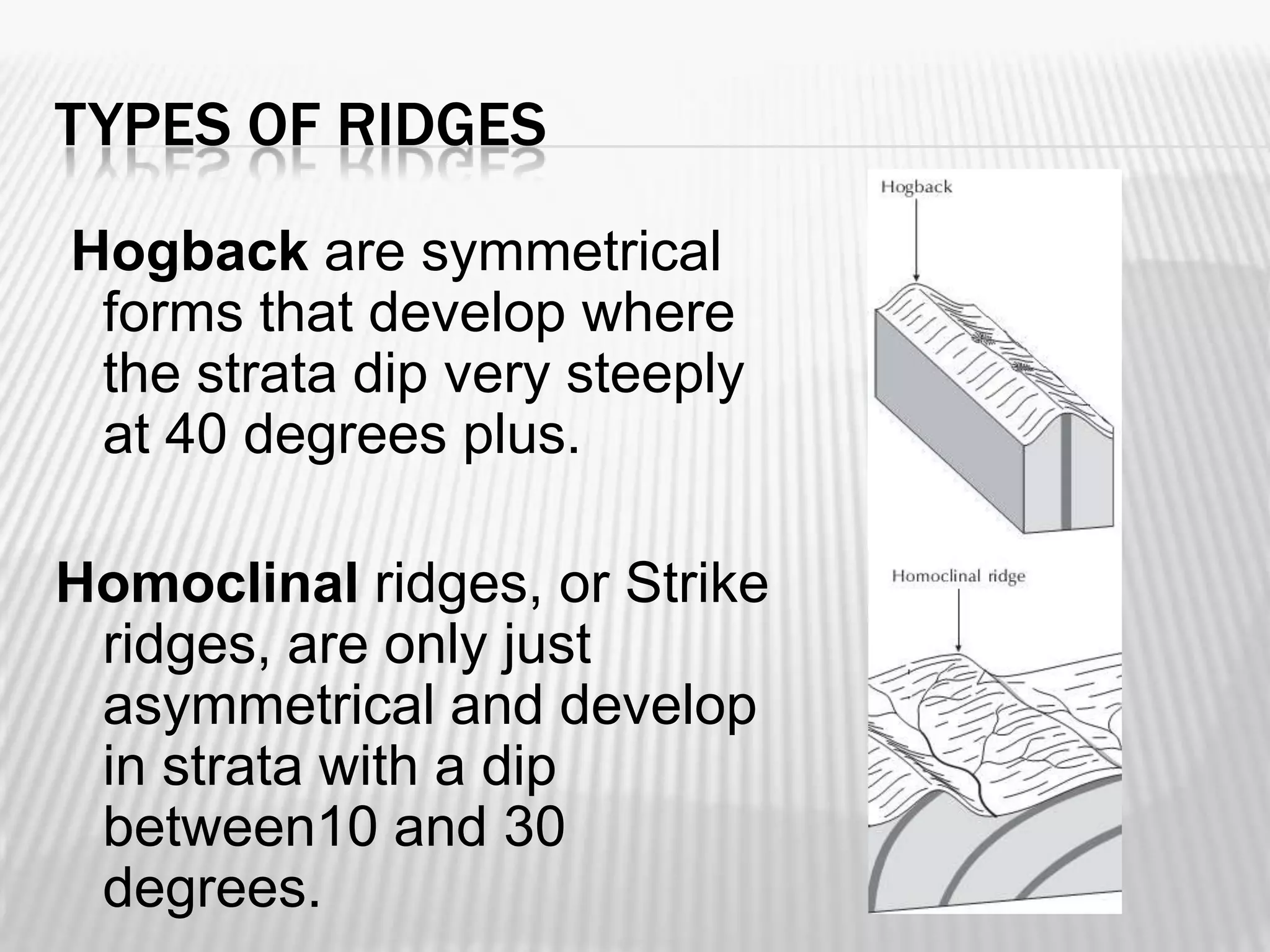
Hogback are symmetrical
forms that develop where
the strata dip very steeply
at 40 degrees plus.

Homoclinal ridges, or Strike
ridges, are only just
asymmetrical and develop
in strata with a dip
between10 and 30
degrees.
RESULT AND CONCLUSION


Landsat data revealed to be capable of
depicting large scale geological and
geomorphic structure.



Small scale geologic features e.g. beds, --------are not visible on the image.



Topographic data is essential for detail
geomorphic studies.

Structural Geology and Geomorphology through Remote Sensing

  • 1.
    GEOMORPHIC AND STRUCTURAL STUDYOF SONA PASS AND LAL BAKHAR AREA NEAR HUB RIVER Hafiz Uzair Ahmed Khan
  • 2.
    SEQUENCE  Objectives of thestudy  Brief description of various geological features marked on the image  Methodology  Geological and geomorphic map of the study area  Result and conclusion
  • 3.
    OBJECTIVE  Identify the followingstructures on satellite image:     Normal, reverse, and lateral faults Synclines and anticlines, both non-plunging and plunging. State the direction of plunge where relevant. The axis of a fold.  To mark major Geomorphological structures.  Use of Landsat 7 imagery for above studies.
  • 4.
    STUDY AREA The targetedarea is located at the southern end of Kirthar Fold Belt which in turn is located to the west of the Karachi city. The area belongs to Survey of Pakistan topographic sheet/map No. 35 L/13.
  • 5.
  • 6.
    ATTITUDE OF FORMATION STRIKE Foran inclined plane the strike is the compass direction of any horizontal line on the plane. Simply it is a reference line. DIP The dip is the angle between a horizontal plane and the inclined plane, measured perpendicular to the direction of strike.
  • 8.
  • 9.
    FOLDS  Rocks are bentby crustal deformation into a series of wave-like undulations called folds.  Most folds result from compressional stresses which shorten and thicken the crust.
  • 10.
    COMMON TYPES OFFOLDS    Anticline – Upfolded or arched rock layers. Syncline – Downfolds or rock troughs. (Think “sink”) Depending on their orientation, anticlines and synclines can be described as     Symmetrical Asymmetrical Overturned fold Plunging
  • 11.
  • 12.
  • 13.
    PLUNGING FOLDS An anticlinalaxis that is tilted is said to pitch or plunge. The angle of plunge is the angle between the anticlinal axis and a horizontal plane. Plunging anticlines can be thought of as elongated domes. Synclinal axes may also plunge.
  • 15.
  • 16.
    FAULTS  Breaks in rockthat exhibit offset.  Exist at a variety of scales.  Sudden movements along faults are the cause of most earthquakes.  Classified by movement…  Horizontal  Vertical  Oblique
  • 17.
    FAULT TYPES  Dip-slip faults– Motion is parallel to fault dip.  Strike-slip faults – Motion is parallel to fault strike.
  • 18.
    STRIKE SLIP FAULTIN AN AERIAL PHOTOGRAPH NEAR LOS VEGAS
  • 19.
    IMPORTANCE OF GEOLOGICALSTRUCTURES  Economic Geology        Petroleum Geology Mining Geology Faults are permeable zones for hydrothermal fluids Veins of minerals occupy faults and fractures It effect the stability of human engineered structures Earthquakes: by combination of Geology and Geomorphology Steep slopes are potential collapse and Landslide hazards
  • 20.
    METHODOLOGY  Geologic Structures arevisually interpreted after studying the tectonics of the area.  Strike slip faults are evident due to the displacement of ridges.  Folds are marked with the help of attitude of formations.  Different types of ridges are marked on the basis of slope angle.  All the observable Geologic and Geomorphic features are marked on the satellite image.
  • 23.
    SCARP AND DIPSLOPE In geology, the two slopes comprise an escarpment  The scarp is the steep slope which cuts across the bedding planes of the sedimentary rock.  The dip is the gentle slope which follows the direction of the strata. Such features are common when sedimentary rocks are uplifted, folded, or eroded.
  • 24.
    DRAINAGE TYPES ANDGEOLOGICAL SIGNIFICANCE TYPE DESCRIPTION GEOLOGICAL SIGNIFICANCE Irregular branching of Homogenous material and DENDRITIC streams, haphazardly, crystalline rocks: horizontal beds; resembling a tree. gentle regional slope. RADIAL Stream originating from a central point of region. Volcanoes, domes, igneous intrusions; residual erosion features.
  • 25.
    TYPES OF RIDGES Hogbackare symmetrical forms that develop where the strata dip very steeply at 40 degrees plus. Homoclinal ridges, or Strike ridges, are only just asymmetrical and develop in strata with a dip between10 and 30 degrees.
  • 27.
    RESULT AND CONCLUSION  Landsatdata revealed to be capable of depicting large scale geological and geomorphic structure.  Small scale geologic features e.g. beds, --------are not visible on the image.  Topographic data is essential for detail geomorphic studies.