GEOLOGICAL CRITERIA IN EXPLORATION
CONTENTS
 INTRODUCTION
 GEOLOGICAL CRITERIA IN EXPLORATION
Stratigraphic criteria
Structural criteria
Lithological criteria
Magmatogenic criteria
Metamorphogenic criteria
Geomorphological criteria
Paleogeographical criteria
Paleoclimatoic criteria
Historical criteria
 CONCLUSION
INTRODUCTION
 Activities which are involved in establishing a mineral
deposit through geological, geophysical and geochemical
methods is called as exploration geology.
 Those activities include prospecting followed by planning
and development. At the beginning of the exploration
certain processes are done for detailed study of the
required area which helps to know about the ore deposits
without loosing more money and time, which is known as
geologic criteria.
GEOLOGICAL CRITERIA IN
EXPLORATION
It is impossible to examine each and every detail of the
rocks or ground in search for ore deposits during exploration,
because it is waste of time and money.
For all those tests it takes a lot of time and it is expensive
and if at the end there is noting then all the money and time
used for the study of the ground will be useless.
 To reduce the loss of time and money Geological criteria is
introduced, Which is an indirect method for investigating the
details of ground.
There are different criteria according to the branch of science in which it is
employed. Which are
Stratigraphic criteria
Structural criteria
Lithological criteria
Magmatogenic criteria
Metamorphogenic criteria
Geomorphological criteria
Paleogeographical criteria
Paleoclimatoic criteria
Historical criteria
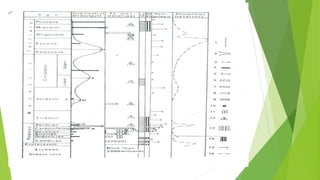
STRATIGRAPHIC CRITERIA
If a mineral deposit is associated with certain
paleontologically or well defined horizon then it is referred
as Stratigraphic criteria.
It helps to determine the occurrence and mapping of the
area where the ore deposits are situated. And this relation is
sustained all over the globe hence it is very important.
Deposits of coal, uranium, phosphates, placer deposits are
commonly restricted to several definite stratigraphic
horizon, generally sedimentary deposits originates during
period of waning stage of orogenic activity.
STRUCTURAL CRITERIA
Structural criteria is an another important criteria in
mineral exploration.
 Certain mineral deposits are confined by geographic,
geological and tectonic features which will help us to
understand the occurrence and exploration of ore deposits,
and it is referred as structural criteria.
Most of those kind of ore deposits are related to subduction
zone. When subduction zone goes under the continental
masses rocks melt which are containing many ore
constituents and forms ore deposits there.
Eg:
porphyry type of Cu, Mo, Pb, Zn, Au, Ag deposits of
western parts of South America, in parts of Peru, Chili,
Columbia are of subduction zone origin.
Bituminous coals are generally confined to folded regions.
Oil and gas deposits are generally associated with
anticlines.
LITHOLOGICAL CRITERIA
Occurrence of ore deposits can be depend on the surrounding lithology, those
type of deposits are referred to lithological criteria. Some of the sedimentary
deposits are usually overlaid or underlaid by particular type of rocks.
Eg:
Oolitic manganese ore is underlined by siliceous sediments.
In the case of endogenous mineral deposits lithology of the rocks are very
important.
Tin, muscovite, lithium, tungsten, gold, beryl, gemstones etc. are
associated with intermediate and acid rocks like syenite, granite, granodiorite
etc.
Deposits of copper, nickel, cobalt, silver, arsenic and apatite are formed in
basic rocks like gabbro, norite, diorite etc.
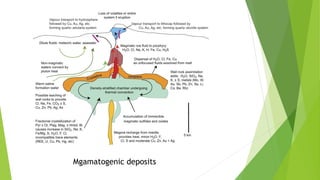
MAGMATOGENIC CRITERIA
Ore deposits and igneous rocks are very much related to
each other in many ways like
 Both igneous rocks and many ore deposits are formed at
similar depth,
 Similar grade of metamorphism,
 Association with sills and dykes,
Relationship in the chemistry of trace elements,
Same age of deposition and parent intrusion.
Because of all these reasons magmatic criteria is important
in exploration.
Mgamatogenic deposits
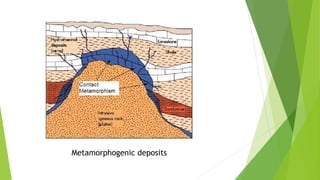
METAMORPHOGENIC CRITERIA
Metamorphogenic deposits are formed by the action of non
magmatic derivation. Hence certain deposits are formed only
in certain facies, metamorphogenic criteria is important in
exploration.
Eg:
Rocks of green schist facies may contain deposits of
amorphous graphite and asbestos.
Metamorphogenic deposits
GEOMORPHOLOGICAL CRITERIA
This criteria is especially useful for placer deposits for the
presence of heavy minerals, gold and even radioactive
minerals. It depends on the geomorphology of the ore
deposit.
Eg:
Sinkholes may have the presence of gypsum or limestone
deposits.
PALEOGEOGRAPHICAL CRITERIA
Mineral deposits of surficial origin are related to ancient
relief forms like
Peneplain,residual deposits of weathering.
Swarms, lakes and rivers may contain platform gold
deposits
Coastal planes contain uranium and cupper bearing
sandstone.
Palaeogeographical factors that are significant in the prospecting for
mineral resource include
 Climate
 Ancient drainage patterns
 The form of shore line
 The direction of current in the area of accumulation.
PALEOCLIMATIC CRITERIA
This criteria is useful mostly in the case of ore deposits
related to weathering. If we know the position of equator
and movement of continents in various geologic period then
we can find the areas of intensive weathering where ore
deposits can be occur.
Zones of humid climate forms deposits of laterite placer.
 kaolin deposits in the carboniferous formations of breccia
and bauxite deposits, palaeoclimatic sedimentary rocks.
HISTORICAL CRITERIA
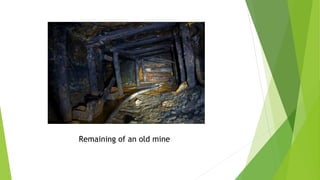
This criteria depends on the history. It includes report on
ancient mining activity, old mine working, archaeological
activity, relict of ore dressing, smelting and local names, old
writings about ore deposits. Ancient mining were mainly for
Gold, Copper, silver etc.
Remaining of an old mine
CONCLUSION
 Geological criteria is an indirect method of locating and
examining the ore deposits.
 Geological criteria are very helpful and important in
exploration. It helps to save money as well as time. There
are various criteria according to the branch of science it
deals.
 More than one criteria may be employed in the search for
economic mineral deposits.
REFERENCE
 Geological Methods in Mineral Exploration and
Mining(Second Edition) - Roger Marjoribanks – 2010
 www.Wikipedia.com
 Explorationgeology.com
 www.googleimages.com
THANKYOU…

Geological criteria in exploration

  • 1.
  • 2.
    CONTENTS  INTRODUCTION  GEOLOGICALCRITERIA IN EXPLORATION Stratigraphic criteria Structural criteria Lithological criteria Magmatogenic criteria Metamorphogenic criteria Geomorphological criteria Paleogeographical criteria Paleoclimatoic criteria Historical criteria  CONCLUSION
  • 3.
    INTRODUCTION  Activities whichare involved in establishing a mineral deposit through geological, geophysical and geochemical methods is called as exploration geology.  Those activities include prospecting followed by planning and development. At the beginning of the exploration certain processes are done for detailed study of the required area which helps to know about the ore deposits without loosing more money and time, which is known as geologic criteria.
  • 4.
    GEOLOGICAL CRITERIA IN EXPLORATION Itis impossible to examine each and every detail of the rocks or ground in search for ore deposits during exploration, because it is waste of time and money. For all those tests it takes a lot of time and it is expensive and if at the end there is noting then all the money and time used for the study of the ground will be useless.  To reduce the loss of time and money Geological criteria is introduced, Which is an indirect method for investigating the details of ground.
  • 5.
    There are differentcriteria according to the branch of science in which it is employed. Which are Stratigraphic criteria Structural criteria Lithological criteria Magmatogenic criteria Metamorphogenic criteria Geomorphological criteria Paleogeographical criteria Paleoclimatoic criteria Historical criteria
  • 6.
    STRATIGRAPHIC CRITERIA If amineral deposit is associated with certain paleontologically or well defined horizon then it is referred as Stratigraphic criteria. It helps to determine the occurrence and mapping of the area where the ore deposits are situated. And this relation is sustained all over the globe hence it is very important.
  • 7.
    Deposits of coal,uranium, phosphates, placer deposits are commonly restricted to several definite stratigraphic horizon, generally sedimentary deposits originates during period of waning stage of orogenic activity.
  • 9.
    STRUCTURAL CRITERIA Structural criteriais an another important criteria in mineral exploration.  Certain mineral deposits are confined by geographic, geological and tectonic features which will help us to understand the occurrence and exploration of ore deposits, and it is referred as structural criteria.
  • 10.
    Most of thosekind of ore deposits are related to subduction zone. When subduction zone goes under the continental masses rocks melt which are containing many ore constituents and forms ore deposits there. Eg: porphyry type of Cu, Mo, Pb, Zn, Au, Ag deposits of western parts of South America, in parts of Peru, Chili, Columbia are of subduction zone origin. Bituminous coals are generally confined to folded regions. Oil and gas deposits are generally associated with anticlines.
  • 12.
    LITHOLOGICAL CRITERIA Occurrence ofore deposits can be depend on the surrounding lithology, those type of deposits are referred to lithological criteria. Some of the sedimentary deposits are usually overlaid or underlaid by particular type of rocks. Eg: Oolitic manganese ore is underlined by siliceous sediments. In the case of endogenous mineral deposits lithology of the rocks are very important. Tin, muscovite, lithium, tungsten, gold, beryl, gemstones etc. are associated with intermediate and acid rocks like syenite, granite, granodiorite etc. Deposits of copper, nickel, cobalt, silver, arsenic and apatite are formed in basic rocks like gabbro, norite, diorite etc.
  • 13.
    MAGMATOGENIC CRITERIA Ore depositsand igneous rocks are very much related to each other in many ways like  Both igneous rocks and many ore deposits are formed at similar depth,  Similar grade of metamorphism,  Association with sills and dykes, Relationship in the chemistry of trace elements, Same age of deposition and parent intrusion. Because of all these reasons magmatic criteria is important in exploration.
  • 14.
  • 15.
    METAMORPHOGENIC CRITERIA Metamorphogenic depositsare formed by the action of non magmatic derivation. Hence certain deposits are formed only in certain facies, metamorphogenic criteria is important in exploration. Eg: Rocks of green schist facies may contain deposits of amorphous graphite and asbestos.
  • 16.
  • 17.
    GEOMORPHOLOGICAL CRITERIA This criteriais especially useful for placer deposits for the presence of heavy minerals, gold and even radioactive minerals. It depends on the geomorphology of the ore deposit. Eg: Sinkholes may have the presence of gypsum or limestone deposits.
  • 18.
    PALEOGEOGRAPHICAL CRITERIA Mineral depositsof surficial origin are related to ancient relief forms like Peneplain,residual deposits of weathering. Swarms, lakes and rivers may contain platform gold deposits Coastal planes contain uranium and cupper bearing sandstone.
  • 19.
    Palaeogeographical factors thatare significant in the prospecting for mineral resource include  Climate  Ancient drainage patterns  The form of shore line  The direction of current in the area of accumulation.
  • 20.
    PALEOCLIMATIC CRITERIA This criteriais useful mostly in the case of ore deposits related to weathering. If we know the position of equator and movement of continents in various geologic period then we can find the areas of intensive weathering where ore deposits can be occur. Zones of humid climate forms deposits of laterite placer.  kaolin deposits in the carboniferous formations of breccia and bauxite deposits, palaeoclimatic sedimentary rocks.
  • 21.
    HISTORICAL CRITERIA This criteriadepends on the history. It includes report on ancient mining activity, old mine working, archaeological activity, relict of ore dressing, smelting and local names, old writings about ore deposits. Ancient mining were mainly for Gold, Copper, silver etc.
  • 22.
  • 23.
    CONCLUSION  Geological criteriais an indirect method of locating and examining the ore deposits.  Geological criteria are very helpful and important in exploration. It helps to save money as well as time. There are various criteria according to the branch of science it deals.  More than one criteria may be employed in the search for economic mineral deposits.
  • 24.
    REFERENCE  Geological Methodsin Mineral Exploration and Mining(Second Edition) - Roger Marjoribanks – 2010  www.Wikipedia.com  Explorationgeology.com  www.googleimages.com
  • 25.