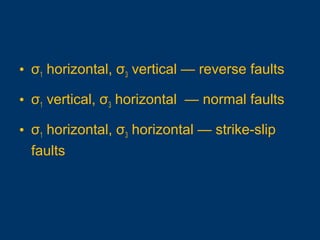
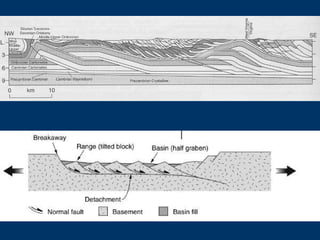
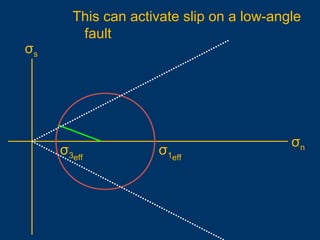
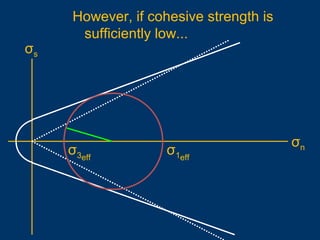
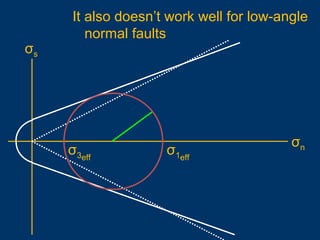
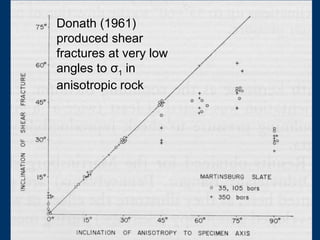
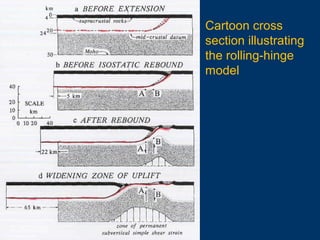
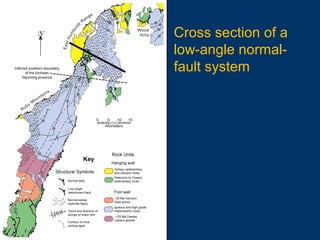
Anderson's theory of faulting predicts that the orientation of faults depends on the principal stresses. It assumes reverse faults dip at 30 degrees, normal faults dip at 60 degrees, and strike-slip faults are vertical. However, exceptions like low-angle normal faults exist. Pore fluid pressure or pre-existing weaknesses in the rock can allow faults to form at shallower angles. The rolling-hinge model also explains how low-angle normal faults can develop.