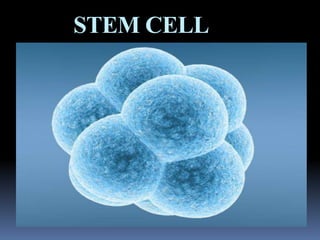
STEM CELL
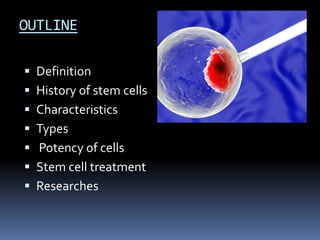
OUTLINE
 Definition
 History of stem cells
 Characteristics
 Types
 Potency of cells
 Stem cell treatment
 Researches
• A cell that has the ability to continuously
divide and differentiate (develop) into various
other kind(s) of cells/tissues.
1998 - Researchers first extract stem cells from
human embryos
1999 - First Successful human transplant of
insulin-making cells .
2001 - President Bush restricts federal funding for
embryonic stem-cell research.
2004 - Ballot measure for $3 Billion bond for stem
cells
Stem Cell History
Stem Cell Characteristics
• ‘Blank cells’ (unspecialized)
• Capable of dividing and renewing themselves
for long periods of time
• Have the potential to give rise to specialized cell
types
 Pluripotent stem
cells derived from the
inner cell mass of a
blastocyst, an early-stage
preimplantation embryo.
Embryonic stem
cells
ADULT STEM CELL:
BONEMARROW:-
Found in spongy bone where blood cells form
Used to replace damaged or destroyed bone
marrow with healthy bone marrow stem cells.
treat patients diagnosed with leukemia,
aplastic anemia, and
lymphomas.
BLISTERS
PRESENT SOON
AFTERTHE BIRTH
DEB
Dystrophic(scarring)
Epidermolysis(destruction
of skin)
Bullosa (blistering)
Multipotent ,
“Adult”, stem cells
have been isolated
from a variety of
human tissues
Human stem cells can also be used to test new
drugs and in medical treatments that now
require organ donors.The need for organ donors
currently outweighs the available supply
Technical Challenges:-
• Source - Cell lines may have mutations.
• Delivery to target areas
• Prevention of rejection
• Suppressing tumors
Q. Why is Stem Cell Research So
Important to All of Us?
Stem cells can replace diseased or damaged
cells
Stem cells allow us to study development and
genetics
Stem cells can be used to test different
substances (drugs and chemicals)
University of Queensland researchers have used
stem cells to develop mini-kidney in lab
Q. Why the Controversy Over Stem
cells?
• Embryonic Stem cells are derived from extra
blastocysts that would otherwise be discarded
following IVF.
• Extracting stem cells destroys the developing
blastocyst (embryo).
Misconceptions
Men and women who donate their embryos do
not know that their embryos are used for research.
Fact:The embryos used in scientific research are
donated with written and informed
consent(permission) by the donors.
If the embryos were not used in stem cell research
they would have been used to make children.
Fact:The embryos left over from IVF are
discarded.
04 September 2008 (Injections of hope)
Doctors Promote Offshore Stem Cell Shots, but
Some Patients Cry Foul
Brain-damaged three-year old patient was treated in
a clinic of Bahamas with fetal stem cells for 25,000$.
When he returned home the child began have
seizures and was still unable to walk and talk.
Desperate patients, spending high amount of money,
risk their life with offshore stem cell injections provided
by doctors promising false hopes.
?
Stem cells

Stem cells

  • 1.
  • 2.
    OUTLINE  Definition  Historyof stem cells  Characteristics  Types  Potency of cells  Stem cell treatment  Researches
  • 4.
    • A cellthat has the ability to continuously divide and differentiate (develop) into various other kind(s) of cells/tissues.
  • 5.
    1998 - Researchersfirst extract stem cells from human embryos 1999 - First Successful human transplant of insulin-making cells . 2001 - President Bush restricts federal funding for embryonic stem-cell research. 2004 - Ballot measure for $3 Billion bond for stem cells Stem Cell History
  • 6.
    Stem Cell Characteristics •‘Blank cells’ (unspecialized) • Capable of dividing and renewing themselves for long periods of time • Have the potential to give rise to specialized cell types
  • 7.
     Pluripotent stem cellsderived from the inner cell mass of a blastocyst, an early-stage preimplantation embryo.
  • 10.
  • 14.
  • 15.
    BONEMARROW:- Found in spongybone where blood cells form Used to replace damaged or destroyed bone marrow with healthy bone marrow stem cells. treat patients diagnosed with leukemia, aplastic anemia, and lymphomas.
  • 17.
  • 23.
    Multipotent , “Adult”, stemcells have been isolated from a variety of human tissues
  • 25.
    Human stem cellscan also be used to test new drugs and in medical treatments that now require organ donors.The need for organ donors currently outweighs the available supply
  • 27.
    Technical Challenges:- • Source- Cell lines may have mutations. • Delivery to target areas • Prevention of rejection • Suppressing tumors
  • 28.
    Q. Why isStem Cell Research So Important to All of Us? Stem cells can replace diseased or damaged cells Stem cells allow us to study development and genetics Stem cells can be used to test different substances (drugs and chemicals)
  • 34.
    University of Queenslandresearchers have used stem cells to develop mini-kidney in lab
  • 36.
    Q. Why theControversy Over Stem cells? • Embryonic Stem cells are derived from extra blastocysts that would otherwise be discarded following IVF. • Extracting stem cells destroys the developing blastocyst (embryo).
  • 37.
    Misconceptions Men and womenwho donate their embryos do not know that their embryos are used for research. Fact:The embryos used in scientific research are donated with written and informed consent(permission) by the donors. If the embryos were not used in stem cell research they would have been used to make children. Fact:The embryos left over from IVF are discarded.
  • 38.
    04 September 2008(Injections of hope) Doctors Promote Offshore Stem Cell Shots, but Some Patients Cry Foul Brain-damaged three-year old patient was treated in a clinic of Bahamas with fetal stem cells for 25,000$. When he returned home the child began have seizures and was still unable to walk and talk. Desperate patients, spending high amount of money, risk their life with offshore stem cell injections provided by doctors promising false hopes.
  • 40.