• Stem cells definition
• Specialties of stem cells
• Types of stem cells
• Basic Uses of stem cells
-Sakshi Sharma
What are stem cells?
An undifferentiated mass of cells which forms
various cells of the same or different kind.
The simple but complex cells of any organism
which differentiates into different cells and has
the ability to self-renewal i.e. can differentiate
again into themselves.
These cells are capable of forming the entire
body.
These cells produce, repair and replace
damaged tissues.
SPECIALTIES OF STEM CELLS
o Potent cells i.e. capable of differentiating into
other cell types.
o Present at very few locations and are very less
in quantity.
o In spite of its less quantity, it is capable of
completing the daily required amount cells.
o A single cell can turn into one or more types of
cells who may or may not vary in the site of
maturation and function.
o These forms specialized cells in adults.
•On an average there are 37 trillion cells in human
body and of it 0.0002% are adult stem cells which
is ≈744 million.
•Stem cells are also known as blank cells as they
are not specialized for producing a particular
type of cells.
Unlike other cells, stem cells does not follow Hay
Flick’s limit; so they divide for infinite periods in
a culture.
Certain stem cells from different cell lineages
convert to another cell of different lineage. This
phenomenon is called as "transdifferentiation".
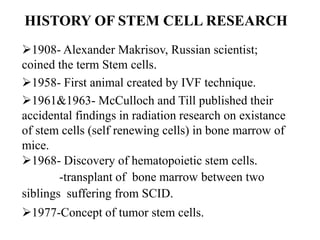
HISTORY OF STEM CELL RESEARCH
1908- Alexander Makrisov, Russian scientist;
coined the term Stem cells.
1958- First animal created by IVF technique.
1961&1963- McCulloch and Till published their
accidental findings in radiation research on existance
of stem cells (self renewing cells) in bone marrow of
mice.
1968- Discovery of hematopoietic stem cells.
-transplant of bone marrow between two
siblings suffering from SCID.
1977-Concept of tumor stem cells.
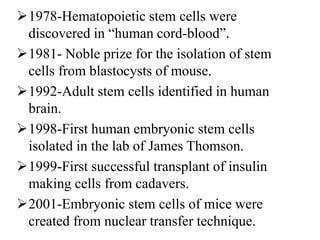
1978-Hematopoietic stem cells were
discovered in “human cord-blood”.
1981- Noble prize for the isolation of stem
cells from blastocysts of mouse.
1992-Adult stem cells identified in human
brain.
1998-First human embryonic stem cells
isolated in the lab of James Thomson.
1999-First successful transplant of insulin
making cells from cadavers.
2001-Embryonic stem cells of mice were
created from nuclear transfer technique.
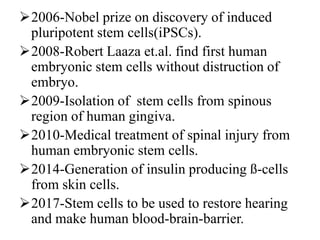
2006-Nobel prize on discovery of induced
pluripotent stem cells(iPSCs).
2008-Robert Laaza et.al. find first human
embryonic stem cells without distruction of
embryo.
2009-Isolation of stem cells from spinous
region of human gingiva.
2010-Medical treatment of spinal injury from
human embryonic stem cells.
2014-Generation of insulin producing ß-cells
from skin cells.
2017-Stem cells to be used to restore hearing
and make human blood-brain-barrier.
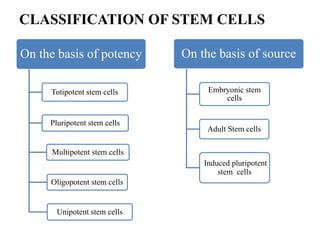
CLASSIFICATION OF STEM CELLS
On the basis of potency
Totipotent stem cells
Pluripotent stem cells
Multipotent stem cells
Oligopotent stem cells
Unipotent stem cells
On the basis of source
Embryonic stem
cells
Adult Stem cells
Induced pluripotent
stem cells
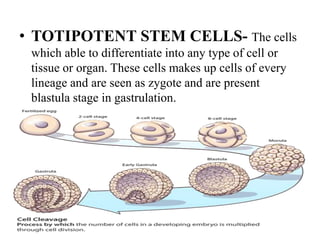
• TOTIPOTENT STEM CELLS- The cells
which able to differentiate into any type of cell or
tissue or organ. These cells makes up cells of every
lineage and are seen as zygote and are present
blastula stage in gastrulation.
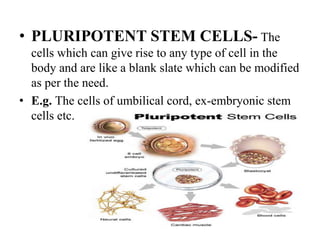
• PLURIPOTENT STEM CELLS- The
cells which can give rise to any type of cell in the
body and are like a blank slate which can be modified
as per the need.
• E.g. The cells of umbilical cord, ex-embryonic stem
cells etc.
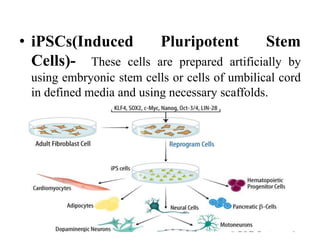
• iPSCs(Induced Pluripotent Stem
Cells)- These cells are prepared artificially by
using embryonic stem cells or cells of umbilical cord
in defined media and using necessary scaffolds.
•
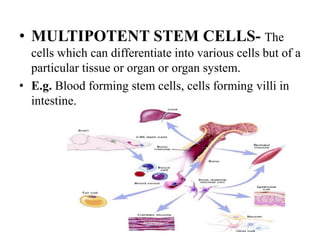
• MULTIPOTENT STEM CELLS- The
cells which can differentiate into various cells but of a
particular tissue or organ or organ system.
• E.g. Blood forming stem cells, cells forming villi in
intestine.
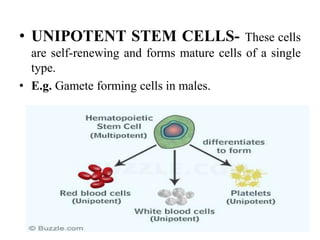
• UNIPOTENT STEM CELLS- These cells
are self-renewing and forms mature cells of a single
type.
• E.g. Gamete forming cells in males.
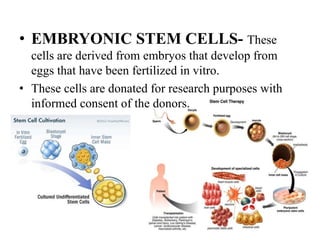
• EMBRYONIC STEM CELLS- These
cells are derived from embryos that develop from
eggs that have been fertilized in vitro.
• These cells are donated for research purposes with
informed consent of the donors.
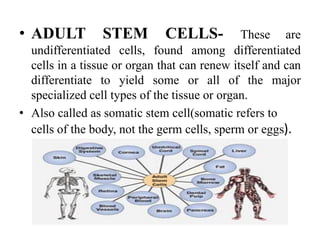
• ADULT STEM CELLS- These are
undifferentiated cells, found among differentiated
cells in a tissue or organ that can renew itself and can
differentiate to yield some or all of the major
specialized cell types of the tissue or organ.
• Also called as somatic stem cell(somatic refers to
cells of the body, not the germ cells, sperm or eggs).
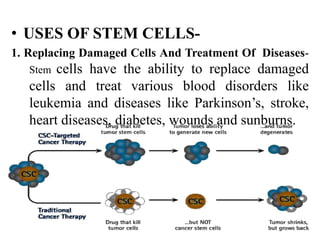
• USES OF STEM CELLS-
1. Replacing Damaged Cells And Treatment Of Diseases-
Stem cells have the ability to replace damaged
cells and treat various blood disorders like
leukemia and diseases like Parkinson’s, stroke,
heart diseases, diabetes, wounds and sunburns.
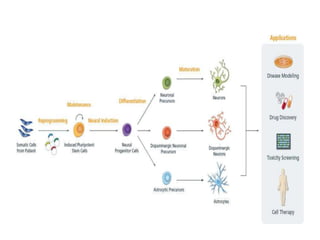
2. Studying Disease- Stem cells, either carrying the
disease gene or engineered to contain disease genes,
offer a viable alternative which could be used to
model disease processes in the laboratory, and
understanding what goes wrong.
For example- Making models of cancer and tumors
from stem cell lines.
3. Resource For Testing New Medical Treatments- New
medications could be tested for safety on specialized
cells generated from stem cell lines for reducing the
need for animal testing.
For example-Cancer cell lines, are used to screen
potential anti-tumor drugs.
An overview:Stem cells

An overview:Stem cells

  • 1.
    • Stem cellsdefinition • Specialties of stem cells • Types of stem cells • Basic Uses of stem cells -Sakshi Sharma
  • 2.
    What are stemcells? An undifferentiated mass of cells which forms various cells of the same or different kind. The simple but complex cells of any organism which differentiates into different cells and has the ability to self-renewal i.e. can differentiate again into themselves. These cells are capable of forming the entire body. These cells produce, repair and replace damaged tissues.
  • 3.
    SPECIALTIES OF STEMCELLS o Potent cells i.e. capable of differentiating into other cell types. o Present at very few locations and are very less in quantity. o In spite of its less quantity, it is capable of completing the daily required amount cells. o A single cell can turn into one or more types of cells who may or may not vary in the site of maturation and function. o These forms specialized cells in adults.
  • 4.
    •On an averagethere are 37 trillion cells in human body and of it 0.0002% are adult stem cells which is ≈744 million. •Stem cells are also known as blank cells as they are not specialized for producing a particular type of cells. Unlike other cells, stem cells does not follow Hay Flick’s limit; so they divide for infinite periods in a culture. Certain stem cells from different cell lineages convert to another cell of different lineage. This phenomenon is called as "transdifferentiation".
  • 5.
    HISTORY OF STEMCELL RESEARCH 1908- Alexander Makrisov, Russian scientist; coined the term Stem cells. 1958- First animal created by IVF technique. 1961&1963- McCulloch and Till published their accidental findings in radiation research on existance of stem cells (self renewing cells) in bone marrow of mice. 1968- Discovery of hematopoietic stem cells. -transplant of bone marrow between two siblings suffering from SCID. 1977-Concept of tumor stem cells.
  • 6.
    1978-Hematopoietic stem cellswere discovered in “human cord-blood”. 1981- Noble prize for the isolation of stem cells from blastocysts of mouse. 1992-Adult stem cells identified in human brain. 1998-First human embryonic stem cells isolated in the lab of James Thomson. 1999-First successful transplant of insulin making cells from cadavers. 2001-Embryonic stem cells of mice were created from nuclear transfer technique.
  • 7.
    2006-Nobel prize ondiscovery of induced pluripotent stem cells(iPSCs). 2008-Robert Laaza et.al. find first human embryonic stem cells without distruction of embryo. 2009-Isolation of stem cells from spinous region of human gingiva. 2010-Medical treatment of spinal injury from human embryonic stem cells. 2014-Generation of insulin producing ß-cells from skin cells. 2017-Stem cells to be used to restore hearing and make human blood-brain-barrier.
  • 8.
    CLASSIFICATION OF STEMCELLS On the basis of potency Totipotent stem cells Pluripotent stem cells Multipotent stem cells Oligopotent stem cells Unipotent stem cells On the basis of source Embryonic stem cells Adult Stem cells Induced pluripotent stem cells
  • 9.
    • TOTIPOTENT STEMCELLS- The cells which able to differentiate into any type of cell or tissue or organ. These cells makes up cells of every lineage and are seen as zygote and are present blastula stage in gastrulation.
  • 10.
    • PLURIPOTENT STEMCELLS- The cells which can give rise to any type of cell in the body and are like a blank slate which can be modified as per the need. • E.g. The cells of umbilical cord, ex-embryonic stem cells etc.
  • 11.
    • iPSCs(Induced PluripotentStem Cells)- These cells are prepared artificially by using embryonic stem cells or cells of umbilical cord in defined media and using necessary scaffolds. •
  • 12.
    • MULTIPOTENT STEMCELLS- The cells which can differentiate into various cells but of a particular tissue or organ or organ system. • E.g. Blood forming stem cells, cells forming villi in intestine.
  • 13.
    • UNIPOTENT STEMCELLS- These cells are self-renewing and forms mature cells of a single type. • E.g. Gamete forming cells in males.
  • 14.
    • EMBRYONIC STEMCELLS- These cells are derived from embryos that develop from eggs that have been fertilized in vitro. • These cells are donated for research purposes with informed consent of the donors.
  • 15.
    • ADULT STEMCELLS- These are undifferentiated cells, found among differentiated cells in a tissue or organ that can renew itself and can differentiate to yield some or all of the major specialized cell types of the tissue or organ. • Also called as somatic stem cell(somatic refers to cells of the body, not the germ cells, sperm or eggs).
  • 16.
    • USES OFSTEM CELLS- 1. Replacing Damaged Cells And Treatment Of Diseases- Stem cells have the ability to replace damaged cells and treat various blood disorders like leukemia and diseases like Parkinson’s, stroke, heart diseases, diabetes, wounds and sunburns.
  • 17.
    2. Studying Disease-Stem cells, either carrying the disease gene or engineered to contain disease genes, offer a viable alternative which could be used to model disease processes in the laboratory, and understanding what goes wrong. For example- Making models of cancer and tumors from stem cell lines. 3. Resource For Testing New Medical Treatments- New medications could be tested for safety on specialized cells generated from stem cell lines for reducing the need for animal testing. For example-Cancer cell lines, are used to screen potential anti-tumor drugs.