SRI JAYDEV
COLLEGE OF
EDUCATION AND
TECHNOLOGY
Seminar on
STEM CELL
Presented by:-
Manish Ku. Dash
+3 3rd yr. Sc. (Zool.)
Roll:- BS-12-004
 Stem cells can be defined simply as cells which
are not specialized in any tissue or organ.
 In other words, stem cells have not differentiated
into other cell types to form tissues or organ.
 They are the basic cells to develop into cells
which specialized in certain functions.
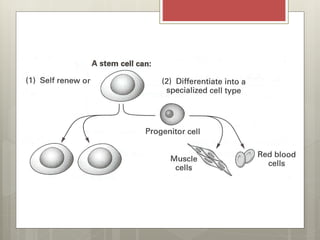
 Another distinguishing characteristics of stem cells
is their ability to undergo division, giving rise to
more stem cells.
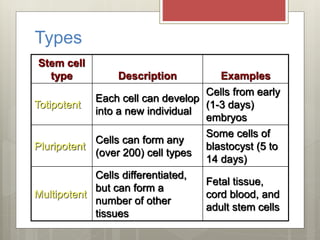
Types
Stem cell
type Description Examples
Totipotent
Each cell can develop
into a new individual
Cells from early
(1-3 days)
embryos
Pluripotent
Cells can form any
(over 200) cell types
Some cells of
blastocyst (5 to
14 days)
Multipotent
Cells differentiated,
but can form a
number of other
tissues
Fetal tissue,
cord blood, and
adult stem cells
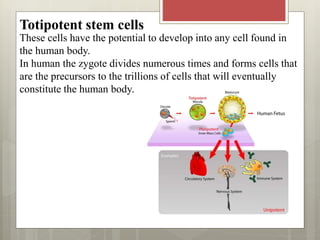
These cells have the potential to develop into any cell found in
the human body.
In human the zygote divides numerous times and forms cells that
are the precursors to the trillions of cells that will eventually
constitute the human body.
Totipotent stem cells
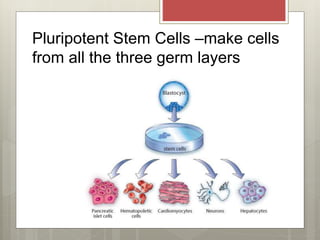
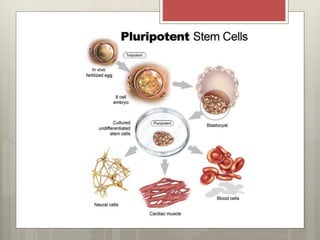
Pluripotent Stem Cells –make cells
from all the three germ layers
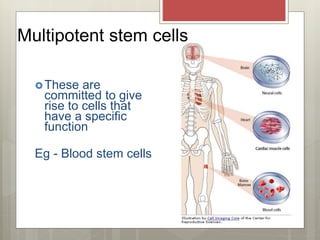
Multipotent stem cells
These are
committed to give
rise to cells that
have a specific
function
Eg - Blood stem cells
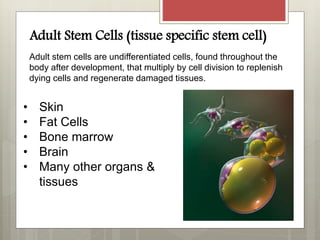
• Skin
• Fat Cells
• Bone marrow
• Brain
• Many other organs &
tissues
Adult Stem Cells (tissue specific stem cell)
Adult stem cells are undifferentiated cells, found throughout the
body after development, that multiply by cell division to replenish
dying cells and regenerate damaged tissues.
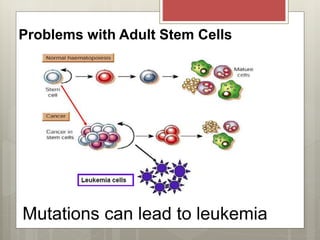
Mutations can lead to leukemia
Problems with Adult Stem Cells
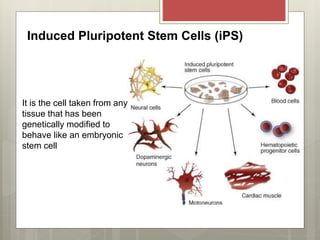
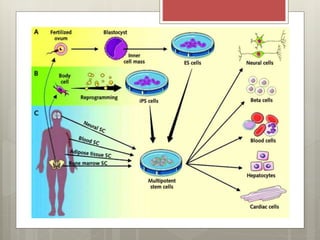
Induced Pluripotent Stem Cells (iPS)
It is the cell taken from any
tissue that has been
genetically modified to
behave like an embryonic
stem cell
Fact And Fiction
 All stem cells can give rise to every cell in the
body.
Fiction:- Only Pluripotent stem cells can make any
cell in the body.
These includes:-embryonic stem cells, iPS cells &
embryonic stem cells made using SCNT (Somatic
cell nuclear transfer)
*Tissue(adult) stem cells are multipotent & can
usually only make the tissue from which they are
derived.
 All stem cell research destroys embryos.
Fiction. Only the acquisition of hESC results in
the destruction of embryos. Embryonic stem
cells made from both excess IVF embryos and
those made via SCNT result in the destruction
of an embryo, which is legal under license in
Australia.
 A pluripotent stem cell can give rise to every
cell in the body, except for placental cells.
Fact. An example of pluripotent stem cells are
hESC.
 Tissue stem cells come only from adults.
Fiction. Adult or tissue stem cells come from
specialised tissue. Children also have specialised
tissues which contain adult stem cells. These stem
cells are often referred to as multipotent stem cells as
they have a more restricted ability to grow into other
cell types.
 IVF embryos cannot be made just to produce
stem cells.
Fact. The creation of a human embryo is to be for
the express purpose of making a life and assisting a
couple to have a baby. IVF embryos that are no
longer required by a couple for infertility treatment
can be donated to research. Australian scientists
have been able to use donated IVF embryos for
stem cell generation since 2002.
 Spare organs can be grown in a dish.
Fiction. Although this sounds useful for research and
transplant purposes, this currently cannot be done.
Organs are very complex structures made up of
many different types of cells. At present scientists
are trying to better understand how to grow each
type of cell from stem cells and are yet to be able to
coordinate the complex development required to
make an organ.
Stem cell concept
Stem cell concept

Stem cell concept

  • 1.
    SRI JAYDEV COLLEGE OF EDUCATIONAND TECHNOLOGY Seminar on STEM CELL Presented by:- Manish Ku. Dash +3 3rd yr. Sc. (Zool.) Roll:- BS-12-004
  • 2.
     Stem cellscan be defined simply as cells which are not specialized in any tissue or organ.  In other words, stem cells have not differentiated into other cell types to form tissues or organ.  They are the basic cells to develop into cells which specialized in certain functions.  Another distinguishing characteristics of stem cells is their ability to undergo division, giving rise to more stem cells.
  • 4.
    Types Stem cell type DescriptionExamples Totipotent Each cell can develop into a new individual Cells from early (1-3 days) embryos Pluripotent Cells can form any (over 200) cell types Some cells of blastocyst (5 to 14 days) Multipotent Cells differentiated, but can form a number of other tissues Fetal tissue, cord blood, and adult stem cells
  • 6.
    These cells havethe potential to develop into any cell found in the human body. In human the zygote divides numerous times and forms cells that are the precursors to the trillions of cells that will eventually constitute the human body. Totipotent stem cells
  • 7.
    Pluripotent Stem Cells–make cells from all the three germ layers
  • 9.
    Multipotent stem cells Theseare committed to give rise to cells that have a specific function Eg - Blood stem cells
  • 10.
    • Skin • FatCells • Bone marrow • Brain • Many other organs & tissues Adult Stem Cells (tissue specific stem cell) Adult stem cells are undifferentiated cells, found throughout the body after development, that multiply by cell division to replenish dying cells and regenerate damaged tissues.
  • 11.
    Mutations can leadto leukemia Problems with Adult Stem Cells
  • 12.
    Induced Pluripotent StemCells (iPS) It is the cell taken from any tissue that has been genetically modified to behave like an embryonic stem cell
  • 15.
    Fact And Fiction All stem cells can give rise to every cell in the body. Fiction:- Only Pluripotent stem cells can make any cell in the body. These includes:-embryonic stem cells, iPS cells & embryonic stem cells made using SCNT (Somatic cell nuclear transfer) *Tissue(adult) stem cells are multipotent & can usually only make the tissue from which they are derived.
  • 16.
     All stemcell research destroys embryos. Fiction. Only the acquisition of hESC results in the destruction of embryos. Embryonic stem cells made from both excess IVF embryos and those made via SCNT result in the destruction of an embryo, which is legal under license in Australia.
  • 17.
     A pluripotentstem cell can give rise to every cell in the body, except for placental cells. Fact. An example of pluripotent stem cells are hESC.
  • 18.
     Tissue stemcells come only from adults. Fiction. Adult or tissue stem cells come from specialised tissue. Children also have specialised tissues which contain adult stem cells. These stem cells are often referred to as multipotent stem cells as they have a more restricted ability to grow into other cell types.
  • 19.
     IVF embryoscannot be made just to produce stem cells. Fact. The creation of a human embryo is to be for the express purpose of making a life and assisting a couple to have a baby. IVF embryos that are no longer required by a couple for infertility treatment can be donated to research. Australian scientists have been able to use donated IVF embryos for stem cell generation since 2002.
  • 20.
     Spare organscan be grown in a dish. Fiction. Although this sounds useful for research and transplant purposes, this currently cannot be done. Organs are very complex structures made up of many different types of cells. At present scientists are trying to better understand how to grow each type of cell from stem cells and are yet to be able to coordinate the complex development required to make an organ.