STEM CELLS
-Sejul Jaiswal
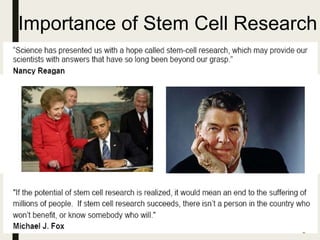
Importance of Stem Cell Research
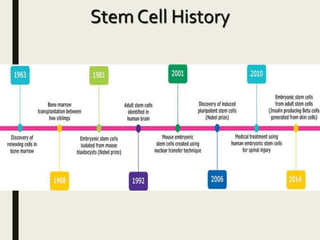
Stem Cell History
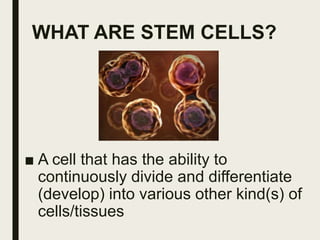
WHAT ARE STEM CELLS?
■ A cell that has the ability to
continuously divide and differentiate
(develop) into various other kind(s) of
cells/tissues
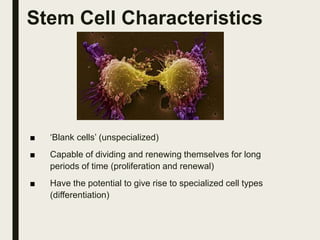
Stem Cell Characteristics
■ ‘Blank cells’ (unspecialized)
■ Capable of dividing and renewing themselves for long
periods of time (proliferation and renewal)
■ Have the potential to give rise to specialized cell types
(differentiation)
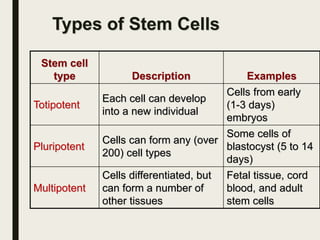
Types of Stem Cells
Stem cell
type Description Examples
Totipotent
Each cell can develop
into a new individual
Cells from early
(1-3 days)
embryos
Pluripotent
Cells can form any (over
200) cell types
Some cells of
blastocyst (5 to 14
days)
Multipotent
Cells differentiated, but
can form a number of
other tissues
Fetal tissue, cord
blood, and adult
stem cells
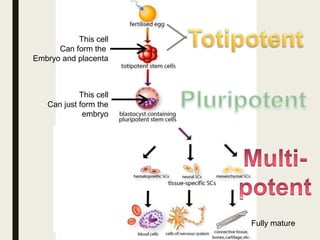
This cell
Can form the
Embryo and placenta
This cell
Can just form the
embryo
Fully mature
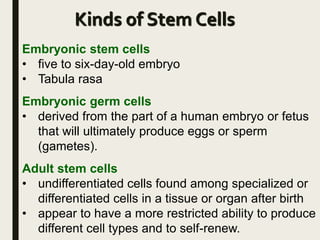
Kinds of Stem Cells
Embryonic stem cells
• five to six-day-old embryo
• Tabula rasa
Embryonic germ cells
• derived from the part of a human embryo or fetus
that will ultimately produce eggs or sperm
(gametes).
Adult stem cells
• undifferentiated cells found among specialized or
differentiated cells in a tissue or organ after birth
• appear to have a more restricted ability to produce
different cell types and to self-renew.
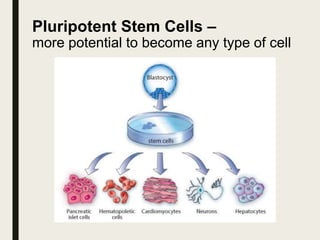
Pluripotent Stem Cells –
more potential to become any type of cell
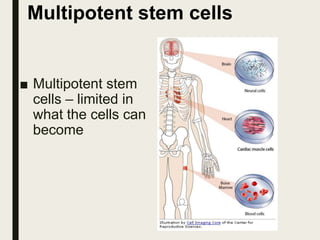
Multipotent stem cells
■ Multipotent stem
cells – limited in
what the cells can
become
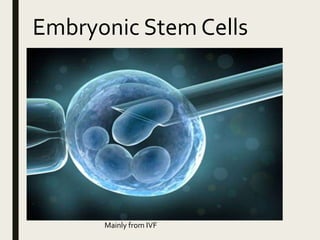
Embryonic Stem Cells
Mainly from IVF
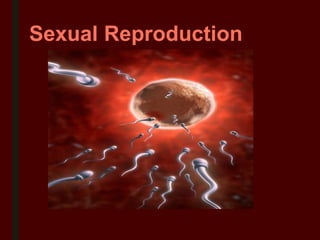
Sexual Reproduction
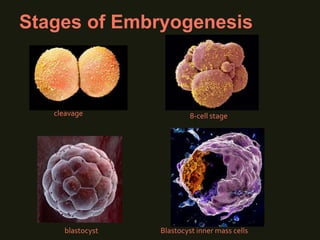
Stages of Embryogenesis
blastocyst Blastocyst inner mass cells
8-cell stage
cleavage
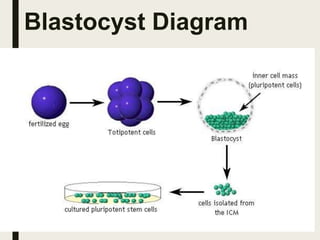
Blastocyst Diagram
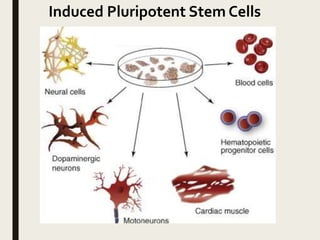
Induced Pluripotent Stem Cells
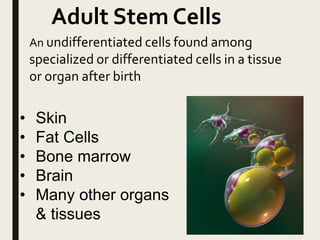
• Skin
• Fat Cells
• Bone marrow
• Brain
• Many other organs
& tissues
Adult Stem Cells
An undifferentiated cells found among
specialized or differentiated cells in a tissue
or organ after birth
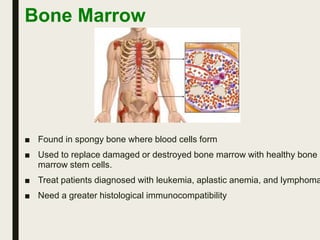
Bone Marrow
■ Found in spongy bone where blood cells form
■ Used to replace damaged or destroyed bone marrow with healthy bone
marrow stem cells.
■ Treat patients diagnosed with leukemia, aplastic anemia, and lymphoma
■ Need a greater histological immunocompatibility
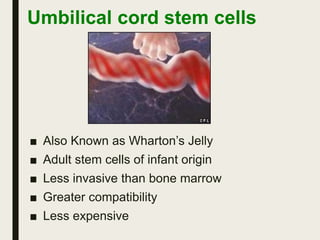
Umbilical cord stem cells
■ Also Known as Wharton’s Jelly
■ Adult stem cells of infant origin
■ Less invasive than bone marrow
■ Greater compatibility
■ Less expensive
Umbilical cord stem cells
Three important functions:
1. Plasticity: Potential to change into other
cell types like nerve cells
2. Homing: To travel to the site of tissue
damage
3. Engraftment: To unite with other tissues
Stem Cell Applications
• Tissue repair
- nerve, heart, muscle, organ, skin
• Cancers
• Autoimmune diseases
- diabetes, rheumatoid arthritis, MS
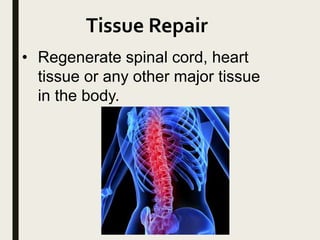
Tissue Repair
• Regenerate spinal cord, heart
tissue or any other major tissue
in the body.
Replace Skin
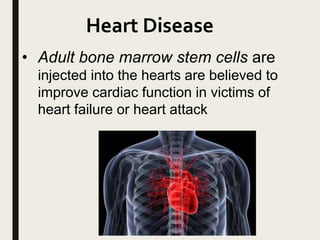
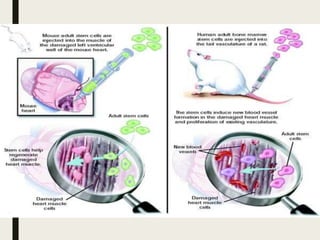
Heart Disease
• Adult bone marrow stem cells are
injected into the hearts are believed to
improve cardiac function in victims of
heart failure or heart attack
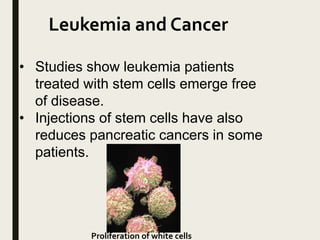
Leukemia and Cancer
• Studies show leukemia patients
treated with stem cells emerge free
of disease.
• Injections of stem cells have also
reduces pancreatic cancers in some
patients.
Proliferation of white cells
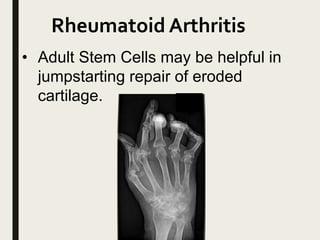
Rheumatoid Arthritis
• Adult Stem Cells may be helpful in
jumpstarting repair of eroded
cartilage.
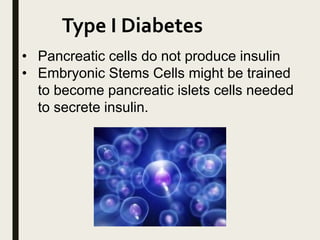
Type I Diabetes
• Pancreatic cells do not produce insulin
• Embryonic Stems Cells might be trained
to become pancreatic islets cells needed
to secrete insulin.
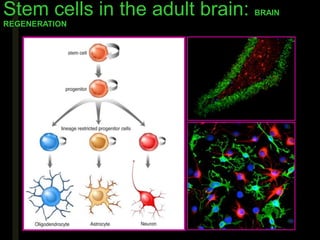
Stem cells in the adult brain: BRAIN
REGENERATION
Technical Challenges
■ Source - Cell lines may have
mutations
■ Delivery to target areas
■ Prevention of rejection
■ Suppressing tumors
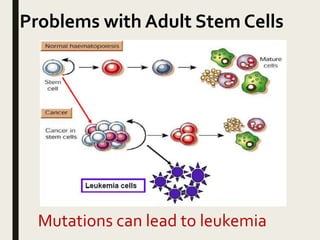
Mutations can lead to leukemia
Problems with Adult Stem Cells
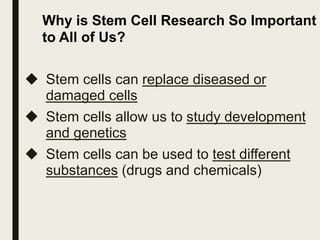
Why is Stem Cell Research So Important
to All of Us?
 Stem cells can replace diseased or
damaged cells
 Stem cells allow us to study development
and genetics
 Stem cells can be used to test different
substances (drugs and chemicals)
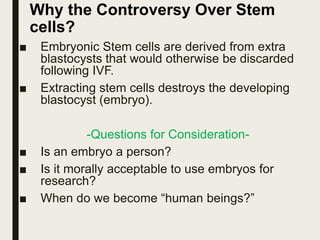
Why the Controversy Over Stem
cells?
■ Embryonic Stem cells are derived from extra
blastocysts that would otherwise be discarded
following IVF.
■ Extracting stem cells destroys the developing
blastocyst (embryo).
-Questions for Consideration-
■ Is an embryo a person?
■ Is it morally acceptable to use embryos for
research?
■ When do we become “human beings?”
Stem Cells by Sejul Jaiswal.ppt

Stem Cells by Sejul Jaiswal.ppt

  • 1.
  • 2.
    Importance of StemCell Research
  • 3.
  • 4.
    WHAT ARE STEMCELLS? ■ A cell that has the ability to continuously divide and differentiate (develop) into various other kind(s) of cells/tissues
  • 5.
    Stem Cell Characteristics ■‘Blank cells’ (unspecialized) ■ Capable of dividing and renewing themselves for long periods of time (proliferation and renewal) ■ Have the potential to give rise to specialized cell types (differentiation)
  • 6.
    Types of StemCells Stem cell type Description Examples Totipotent Each cell can develop into a new individual Cells from early (1-3 days) embryos Pluripotent Cells can form any (over 200) cell types Some cells of blastocyst (5 to 14 days) Multipotent Cells differentiated, but can form a number of other tissues Fetal tissue, cord blood, and adult stem cells
  • 7.
    This cell Can formthe Embryo and placenta This cell Can just form the embryo Fully mature
  • 8.
    Kinds of StemCells Embryonic stem cells • five to six-day-old embryo • Tabula rasa Embryonic germ cells • derived from the part of a human embryo or fetus that will ultimately produce eggs or sperm (gametes). Adult stem cells • undifferentiated cells found among specialized or differentiated cells in a tissue or organ after birth • appear to have a more restricted ability to produce different cell types and to self-renew.
  • 9.
    Pluripotent Stem Cells– more potential to become any type of cell
  • 10.
    Multipotent stem cells ■Multipotent stem cells – limited in what the cells can become
  • 11.
  • 12.
  • 13.
    Stages of Embryogenesis blastocystBlastocyst inner mass cells 8-cell stage cleavage
  • 14.
  • 15.
  • 16.
    • Skin • FatCells • Bone marrow • Brain • Many other organs & tissues Adult Stem Cells An undifferentiated cells found among specialized or differentiated cells in a tissue or organ after birth
  • 17.
    Bone Marrow ■ Foundin spongy bone where blood cells form ■ Used to replace damaged or destroyed bone marrow with healthy bone marrow stem cells. ■ Treat patients diagnosed with leukemia, aplastic anemia, and lymphoma ■ Need a greater histological immunocompatibility
  • 18.
    Umbilical cord stemcells ■ Also Known as Wharton’s Jelly ■ Adult stem cells of infant origin ■ Less invasive than bone marrow ■ Greater compatibility ■ Less expensive
  • 19.
    Umbilical cord stemcells Three important functions: 1. Plasticity: Potential to change into other cell types like nerve cells 2. Homing: To travel to the site of tissue damage 3. Engraftment: To unite with other tissues
  • 20.
    Stem Cell Applications •Tissue repair - nerve, heart, muscle, organ, skin • Cancers • Autoimmune diseases - diabetes, rheumatoid arthritis, MS
  • 22.
    Tissue Repair • Regeneratespinal cord, heart tissue or any other major tissue in the body.
  • 23.
  • 24.
    Heart Disease • Adultbone marrow stem cells are injected into the hearts are believed to improve cardiac function in victims of heart failure or heart attack
  • 26.
    Leukemia and Cancer •Studies show leukemia patients treated with stem cells emerge free of disease. • Injections of stem cells have also reduces pancreatic cancers in some patients. Proliferation of white cells
  • 27.
    Rheumatoid Arthritis • AdultStem Cells may be helpful in jumpstarting repair of eroded cartilage.
  • 28.
    Type I Diabetes •Pancreatic cells do not produce insulin • Embryonic Stems Cells might be trained to become pancreatic islets cells needed to secrete insulin.
  • 29.
    Stem cells inthe adult brain: BRAIN REGENERATION
  • 30.
    Technical Challenges ■ Source- Cell lines may have mutations ■ Delivery to target areas ■ Prevention of rejection ■ Suppressing tumors
  • 31.
    Mutations can leadto leukemia Problems with Adult Stem Cells
  • 32.
    Why is StemCell Research So Important to All of Us?  Stem cells can replace diseased or damaged cells  Stem cells allow us to study development and genetics  Stem cells can be used to test different substances (drugs and chemicals)
  • 33.
    Why the ControversyOver Stem cells? ■ Embryonic Stem cells are derived from extra blastocysts that would otherwise be discarded following IVF. ■ Extracting stem cells destroys the developing blastocyst (embryo). -Questions for Consideration- ■ Is an embryo a person? ■ Is it morally acceptable to use embryos for research? ■ When do we become “human beings?”