Downloaded 270 times

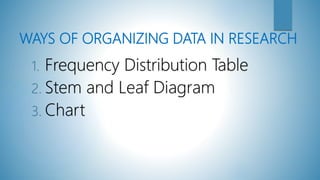
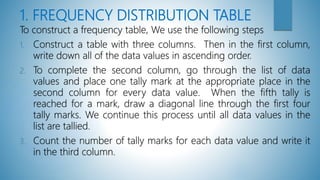
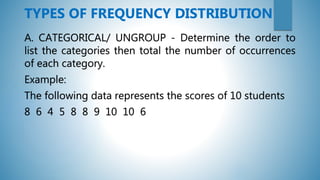
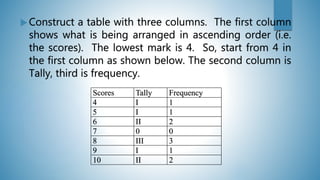
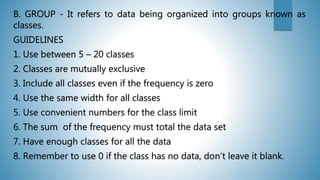
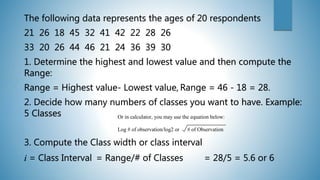
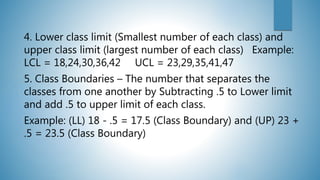
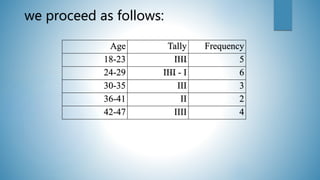
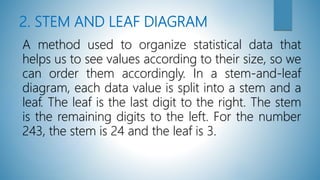
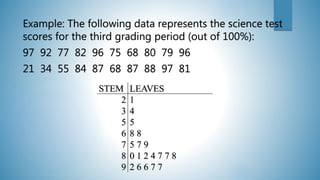
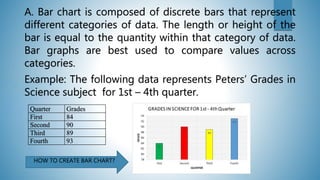
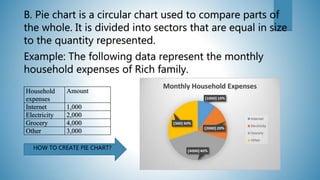
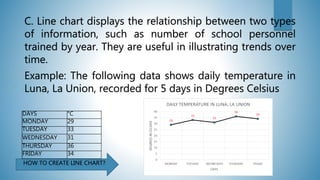
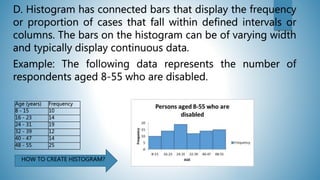
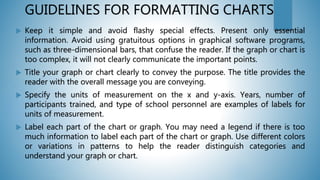

This document discusses different methods for organizing data in research. It describes data organization as the process of structuring collected factual information in a way that is accepted by the scientific community. Proper data organization is important for research because it allows facts to be represented in context and helps researchers answer questions and hypotheses. The document then explains three common ways to organize data: frequency distribution tables, stem-and-leaf diagrams, and different types of charts including bar charts, pie charts, line charts, and histograms. Guidelines are provided for constructing each of these data organization methods.


