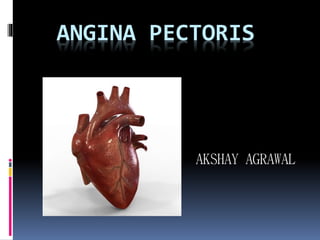
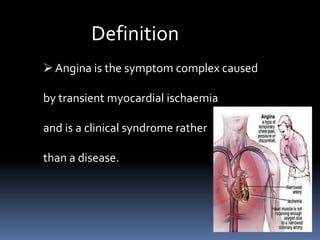
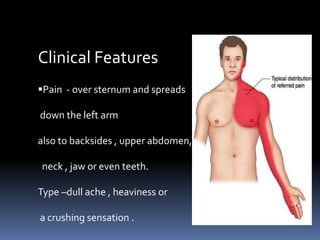
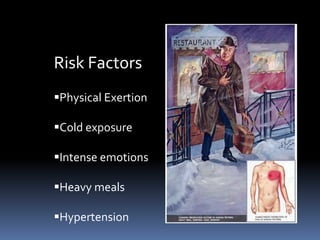
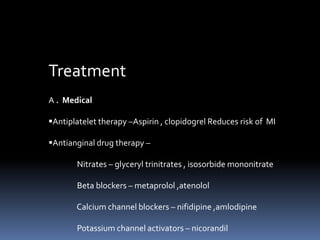
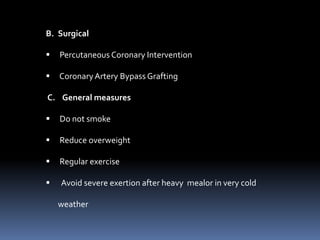
This document provides an overview of angina pectoris (chest pain). It defines angina as a clinical syndrome caused by transient myocardial ischemia due to an imbalance between oxygen supply and demand in the heart. Angina is common in middle-aged and older adults and can be classified as stable, Prinzmetal's variant, or unstable. It is caused by conditions that limit blood supply to the heart like atherosclerosis or coronary artery spasm. Symptoms include chest pain and shortness of breath. Risk factors include physical exertion, smoking, and hypertension. Treatment involves medications to relieve symptoms and improve blood flow as well as procedures like stents or bypass surgery.