PRESENTED BY,
Mrs. Rijo Lijo
Lecturer
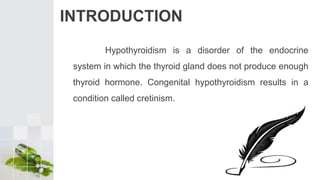
HYPOTHYROIDISM
INTRODUCTION
Hypothyroidism is a disorder of the endocrine
system in which the thyroid gland does not produce enough
thyroid hormone. Congenital hypothyroidism results in a
condition called cretinism.
INCIDENCE
In India, a population-based study done in
Cochin estimated the prevalence of hypothyroidism to be
3.9% In women, the prevalence rate was higher (11.4%)
whereas it was 6.2% in men.
ETIOLOGY
 Autoimmune disease. The most common cause of hypo
thyroidism is an autoimmune disorder known as Hashim
oto's thyroiditis.
 Over response to hyperthyroidism treatment
(Anti thyroid drugs).
 Thyroid surgery.
 Radiation therapy.
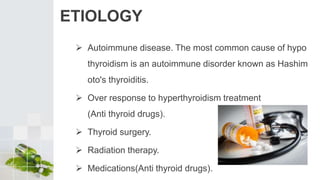
 Medications(Anti thyroid drugs).
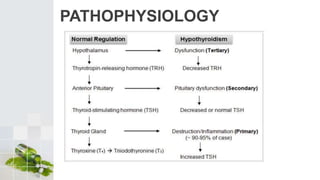
PATHOPHYSIOLOGY
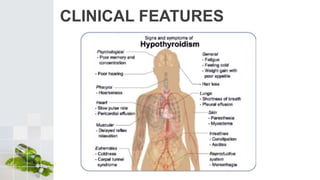
CLINICAL FEATURES
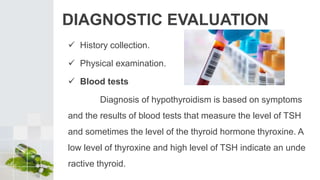
DIAGNOSTIC EVALUATION
 History collection.
 Physical examination.
 Blood tests
Diagnosis of hypothyroidism is based on symptoms
and the results of blood tests that measure the level of TSH
and sometimes the level of the thyroid hormone thyroxine. A
low level of thyroxine and high level of TSH indicate an unde
ractive thyroid.
MANAGEMENT
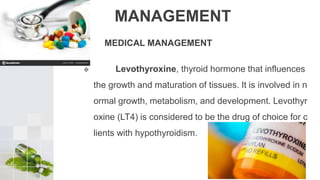
MEDICAL MANAGEMENT
 Levothyroxine, thyroid hormone that influences
the growth and maturation of tissues. It is involved in n
ormal growth, metabolism, and development. Levothyr
oxine (LT4) is considered to be the drug of choice for c
lients with hypothyroidism.
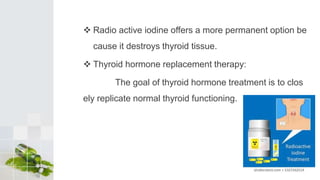
 Radio active iodine offers a more permanent option be
cause it destroys thyroid tissue.
 Thyroid hormone replacement therapy:
The goal of thyroid hormone treatment is to clos
ely replicate normal thyroid functioning.
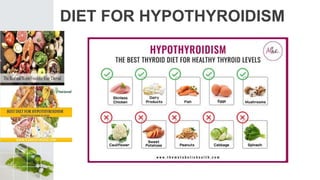
DIET FOR HYPOTHYROIDISM
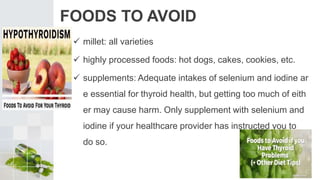
FOODS TO AVOID
 millet: all varieties
 highly processed foods: hot dogs, cakes, cookies, etc.
 supplements: Adequate intakes of selenium and iodine ar
e essential for thyroid health, but getting too much of eith
er may cause harm. Only supplement with selenium and
iodine if your healthcare provider has instructed you to
do so.
NURSING MANAGEMENT
 Monitor vital signs.
 Monitor daily weight.
 Maintain intake and output chart.
 Observe for edema.
 Monitor the intake of iodine.
 Assist with self care activities.
 If the patient is hyponatremia, hypersonic saline may b
e infused.
 Provide measures to promote heat.
 Encourage increased intake of fluid.
 Provide foods high in fiber.
 Monitor bowel function.
 Explain the necessity of long term follow up to the patie
nt and family.
COMPLICATIONS
 Goiter.
 Heart problems.
 Peripheral neuropathy.
 Myxedema.
 Infertility.
 Birth defects.
EVIDENCE BASED RESEARCH
 A meta-analysis of randomized, placebo- controlled st
udies has shown benefits of selenium on both thyroid
antibody titers and mood in Hashimoto's patients.
 In a study it is found out that soy foods, or isoflavones
adversely affect thyroid function
Hypothyroidism

Hypothyroidism

  • 1.
    PRESENTED BY, Mrs. RijoLijo Lecturer HYPOTHYROIDISM
  • 2.
    INTRODUCTION Hypothyroidism is adisorder of the endocrine system in which the thyroid gland does not produce enough thyroid hormone. Congenital hypothyroidism results in a condition called cretinism.
  • 3.
    INCIDENCE In India, apopulation-based study done in Cochin estimated the prevalence of hypothyroidism to be 3.9% In women, the prevalence rate was higher (11.4%) whereas it was 6.2% in men.
  • 4.
    ETIOLOGY  Autoimmune disease.The most common cause of hypo thyroidism is an autoimmune disorder known as Hashim oto's thyroiditis.  Over response to hyperthyroidism treatment (Anti thyroid drugs).  Thyroid surgery.  Radiation therapy.  Medications(Anti thyroid drugs).
  • 5.
  • 6.
  • 7.
  • 8.
    DIAGNOSTIC EVALUATION  Historycollection.  Physical examination.  Blood tests Diagnosis of hypothyroidism is based on symptoms and the results of blood tests that measure the level of TSH and sometimes the level of the thyroid hormone thyroxine. A low level of thyroxine and high level of TSH indicate an unde ractive thyroid.
  • 9.
    MANAGEMENT MEDICAL MANAGEMENT  Levothyroxine,thyroid hormone that influences the growth and maturation of tissues. It is involved in n ormal growth, metabolism, and development. Levothyr oxine (LT4) is considered to be the drug of choice for c lients with hypothyroidism.
  • 10.
     Radio activeiodine offers a more permanent option be cause it destroys thyroid tissue.  Thyroid hormone replacement therapy: The goal of thyroid hormone treatment is to clos ely replicate normal thyroid functioning.
  • 11.
  • 12.
    FOODS TO AVOID millet: all varieties  highly processed foods: hot dogs, cakes, cookies, etc.  supplements: Adequate intakes of selenium and iodine ar e essential for thyroid health, but getting too much of eith er may cause harm. Only supplement with selenium and iodine if your healthcare provider has instructed you to do so.
  • 13.
    NURSING MANAGEMENT  Monitorvital signs.  Monitor daily weight.  Maintain intake and output chart.  Observe for edema.  Monitor the intake of iodine.  Assist with self care activities.
  • 14.
     If thepatient is hyponatremia, hypersonic saline may b e infused.  Provide measures to promote heat.  Encourage increased intake of fluid.  Provide foods high in fiber.  Monitor bowel function.  Explain the necessity of long term follow up to the patie nt and family.
  • 15.
    COMPLICATIONS  Goiter.  Heartproblems.  Peripheral neuropathy.  Myxedema.  Infertility.  Birth defects.
  • 16.
    EVIDENCE BASED RESEARCH A meta-analysis of randomized, placebo- controlled st udies has shown benefits of selenium on both thyroid antibody titers and mood in Hashimoto's patients.  In a study it is found out that soy foods, or isoflavones adversely affect thyroid function