Internal Medicine
Renal failure
‫الصحت‬ ‫معهد‬‫العالي‬
‫المادة‬ ‫مدرس‬
‫م‬.‫إختصاص‬ ‫جامعي‬
‫الوهاب‬ ‫عبد‬ ‫نزار‬ ‫صـالح‬
‫تمـريض‬ ‫علــوم‬ ‫ماجـستير‬
Salah Nazar Abdulwahhab  M.Sc. Nursing
www.slideshare.net
1
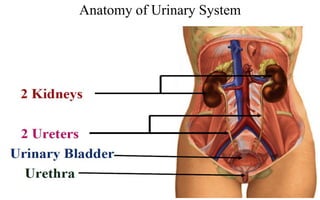
Anatomy of Urinary System
2
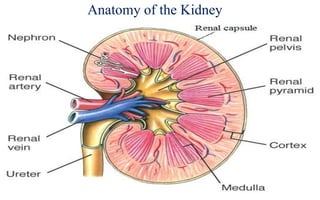
Anatomy of the Kidney
3
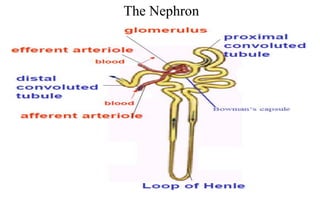
The Nephron
4
Functions of the Kidneys
A – maintaining ACID-base balance
W – maintaining WATER balance
E – ELECTROLYTE balance
T – TOXIN removal
B – BLOOD Pressure control
E – making ERYTHROPOIETIN [85% kidney, 15% Liver]
D – Vitamin D metabolism
5
Renal failure
Definition: kidneys fail to remove metabolic end-products
from the blood and Inability regulate the fluid, electrolyte, and
pH balance of the body.
The kidney contains about (1 million nephrons)
Types of Renal failure
1. Acute Renal Failure (ARF)
2. Chronic Renal Failure (CRF)
6
Acute Renal Failure (ARF)
Definition: is a sudden rapid deterioration of kidney functions
that is sometimes reversible
Chronic Renal Failure or End Stage Renal Disease (ESRD)
Definition: progressive, irreversible deterioration in
renal functions where the body is unable to maintain
metabolic, fluid, and electrolyte balance
7
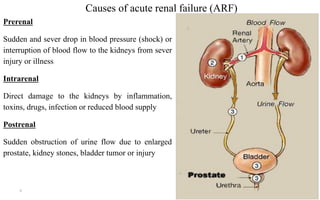
Causes of acute renal failure (ARF)
Prerenal
Sudden and sever drop in blood pressure (shock) or
interruption of blood flow to the kidneys from sever
injury or illness
Intrarenal
Direct damage to the kidneys by inflammation,
toxins, drugs, infection or reduced blood supply
Postrenal
Sudden obstruction of urine flow due to enlarged
prostate, kidney stones, bladder tumor or injury
8
Common causes of chronic renal failure (ESRD)
1. Diabetes mellitus
2. Hypertension
3. Recurrent or untreated Urinary tract infection
4. Genetic diseases (diseases you are born with), such as polycystic kidney disease
5. Autoimmune diseases, such as lupus
6. Obstructions
7. Heart attack [Not enough blood flowing to the kidneys]
8. Prolonged renal ischemia
9. Illegal drug use and drug abuse
10. Lack of fluid volume in the body
11. Nephrotic syndrome
12. Glomerulonephritis
13. Certain medications
9
Glomerular Filtration Rate (GFR)
• Glomerular Filtration Rate (GFR): is a test used to check how
well the kidneys are working. Specifically, it estimates how much
blood passes through the glomeruli each minute. Glomeruli are the
tiny filters in the kidneys that filter waste from the blood.
• Normal Results: According to the National Kidney Foundation,
normal results range [from 90 to 120 ml/min/1.73 m2], older
people have lower than normal GFR levels, because GFR decreases
with age.10
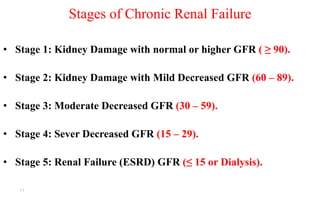
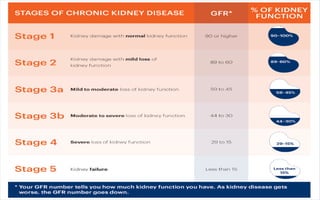
Stages of Chronic Renal Failure
• Stage 1: Kidney Damage with normal or higher GFR ( ≥ 90).
• Stage 2: Kidney Damage with Mild Decreased GFR (60 – 89).
• Stage 3: Moderate Decreased GFR (30 – 59).
• Stage 4: Sever Decreased GFR (15 – 29).
• Stage 5: Renal Failure (ESRD) GFR (≤ 15 or Dialysis).
11
12
Clinical Manifestations of RF
1. Cardiovascular: (Arrhythmias, disturbance in BP., Pulse rapid & bounding).
2. Respiratory : (Dyspnea, Crackles, Tachypnea, pain, thick sputum, shortness of breath, engorged neck veins, Ammonia
odor in breath)
3. Mental & Neurologic Status: (Lethargy, Tremors, Memory loss, Confusion, fatigue, seizures, burning of soles of feet).
4. Musculoskeletal: (Muscle spasms; Weakness, loss of muscle strength, bone fractures, foot drop).
5. Genitourinary: (Oliguria; Anuria; abnormal urine color, clarity & smell).
6. GI: (Moist tongue & increased saliva, Dry mucous membranes, N&V, metallic taste, mouth ulcerations, anorexia,
hiccups, constipation or diarrhea, Metabolic acidosis).
7. Integumentary: (Pallor, Dry, flaky skin, Gray-bronze skin colour, Pitting edema, Thinning hair, Thin nails, Pruritus,
Ecchymosis).
8. Hematologic: (Anemia, thrombocytopenia, Hyperkalemia, Calcium and Phosphorus imbalance).
13
Common Treatment
1. Erythropoietin and iron replacement for anemia.
2. Electrolyte Imbalances Medications.
3. Diuretics
4. Anti hypertensive Medications .
5. Vitamin D: helps keep bones strong and healthy.
14
Prevention
1. Consumption adequate water
2. Weight management: maintain health weight
3. Stop smoke
4. Controlling blood sugar: keep blood sugar within normal range
5. Controlling lipids and cholesterol levels
6. Controlling blood pressure: keep blood pressure within normal range
15
Thank You
16

Renal failure

  • 1.
    Internal Medicine Renal failure ‫الصحت‬‫معهد‬‫العالي‬ ‫المادة‬ ‫مدرس‬ ‫م‬.‫إختصاص‬ ‫جامعي‬ ‫الوهاب‬ ‫عبد‬ ‫نزار‬ ‫صـالح‬ ‫تمـريض‬ ‫علــوم‬ ‫ماجـستير‬ Salah Nazar Abdulwahhab M.Sc. Nursing www.slideshare.net 1
  • 2.
  • 3.
  • 4.
  • 5.
    Functions of theKidneys A – maintaining ACID-base balance W – maintaining WATER balance E – ELECTROLYTE balance T – TOXIN removal B – BLOOD Pressure control E – making ERYTHROPOIETIN [85% kidney, 15% Liver] D – Vitamin D metabolism 5
  • 6.
    Renal failure Definition: kidneysfail to remove metabolic end-products from the blood and Inability regulate the fluid, electrolyte, and pH balance of the body. The kidney contains about (1 million nephrons) Types of Renal failure 1. Acute Renal Failure (ARF) 2. Chronic Renal Failure (CRF) 6
  • 7.
    Acute Renal Failure(ARF) Definition: is a sudden rapid deterioration of kidney functions that is sometimes reversible Chronic Renal Failure or End Stage Renal Disease (ESRD) Definition: progressive, irreversible deterioration in renal functions where the body is unable to maintain metabolic, fluid, and electrolyte balance 7
  • 8.
    Causes of acuterenal failure (ARF) Prerenal Sudden and sever drop in blood pressure (shock) or interruption of blood flow to the kidneys from sever injury or illness Intrarenal Direct damage to the kidneys by inflammation, toxins, drugs, infection or reduced blood supply Postrenal Sudden obstruction of urine flow due to enlarged prostate, kidney stones, bladder tumor or injury 8
  • 9.
    Common causes ofchronic renal failure (ESRD) 1. Diabetes mellitus 2. Hypertension 3. Recurrent or untreated Urinary tract infection 4. Genetic diseases (diseases you are born with), such as polycystic kidney disease 5. Autoimmune diseases, such as lupus 6. Obstructions 7. Heart attack [Not enough blood flowing to the kidneys] 8. Prolonged renal ischemia 9. Illegal drug use and drug abuse 10. Lack of fluid volume in the body 11. Nephrotic syndrome 12. Glomerulonephritis 13. Certain medications 9
  • 10.
    Glomerular Filtration Rate(GFR) • Glomerular Filtration Rate (GFR): is a test used to check how well the kidneys are working. Specifically, it estimates how much blood passes through the glomeruli each minute. Glomeruli are the tiny filters in the kidneys that filter waste from the blood. • Normal Results: According to the National Kidney Foundation, normal results range [from 90 to 120 ml/min/1.73 m2], older people have lower than normal GFR levels, because GFR decreases with age.10
  • 11.
    Stages of ChronicRenal Failure • Stage 1: Kidney Damage with normal or higher GFR ( ≥ 90). • Stage 2: Kidney Damage with Mild Decreased GFR (60 – 89). • Stage 3: Moderate Decreased GFR (30 – 59). • Stage 4: Sever Decreased GFR (15 – 29). • Stage 5: Renal Failure (ESRD) GFR (≤ 15 or Dialysis). 11
  • 12.
  • 13.
    Clinical Manifestations ofRF 1. Cardiovascular: (Arrhythmias, disturbance in BP., Pulse rapid & bounding). 2. Respiratory : (Dyspnea, Crackles, Tachypnea, pain, thick sputum, shortness of breath, engorged neck veins, Ammonia odor in breath) 3. Mental & Neurologic Status: (Lethargy, Tremors, Memory loss, Confusion, fatigue, seizures, burning of soles of feet). 4. Musculoskeletal: (Muscle spasms; Weakness, loss of muscle strength, bone fractures, foot drop). 5. Genitourinary: (Oliguria; Anuria; abnormal urine color, clarity & smell). 6. GI: (Moist tongue & increased saliva, Dry mucous membranes, N&V, metallic taste, mouth ulcerations, anorexia, hiccups, constipation or diarrhea, Metabolic acidosis). 7. Integumentary: (Pallor, Dry, flaky skin, Gray-bronze skin colour, Pitting edema, Thinning hair, Thin nails, Pruritus, Ecchymosis). 8. Hematologic: (Anemia, thrombocytopenia, Hyperkalemia, Calcium and Phosphorus imbalance). 13
  • 14.
    Common Treatment 1. Erythropoietinand iron replacement for anemia. 2. Electrolyte Imbalances Medications. 3. Diuretics 4. Anti hypertensive Medications . 5. Vitamin D: helps keep bones strong and healthy. 14
  • 15.
    Prevention 1. Consumption adequatewater 2. Weight management: maintain health weight 3. Stop smoke 4. Controlling blood sugar: keep blood sugar within normal range 5. Controlling lipids and cholesterol levels 6. Controlling blood pressure: keep blood pressure within normal range 15
  • 16.