Download to read offline
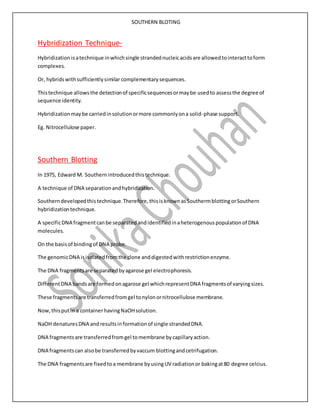
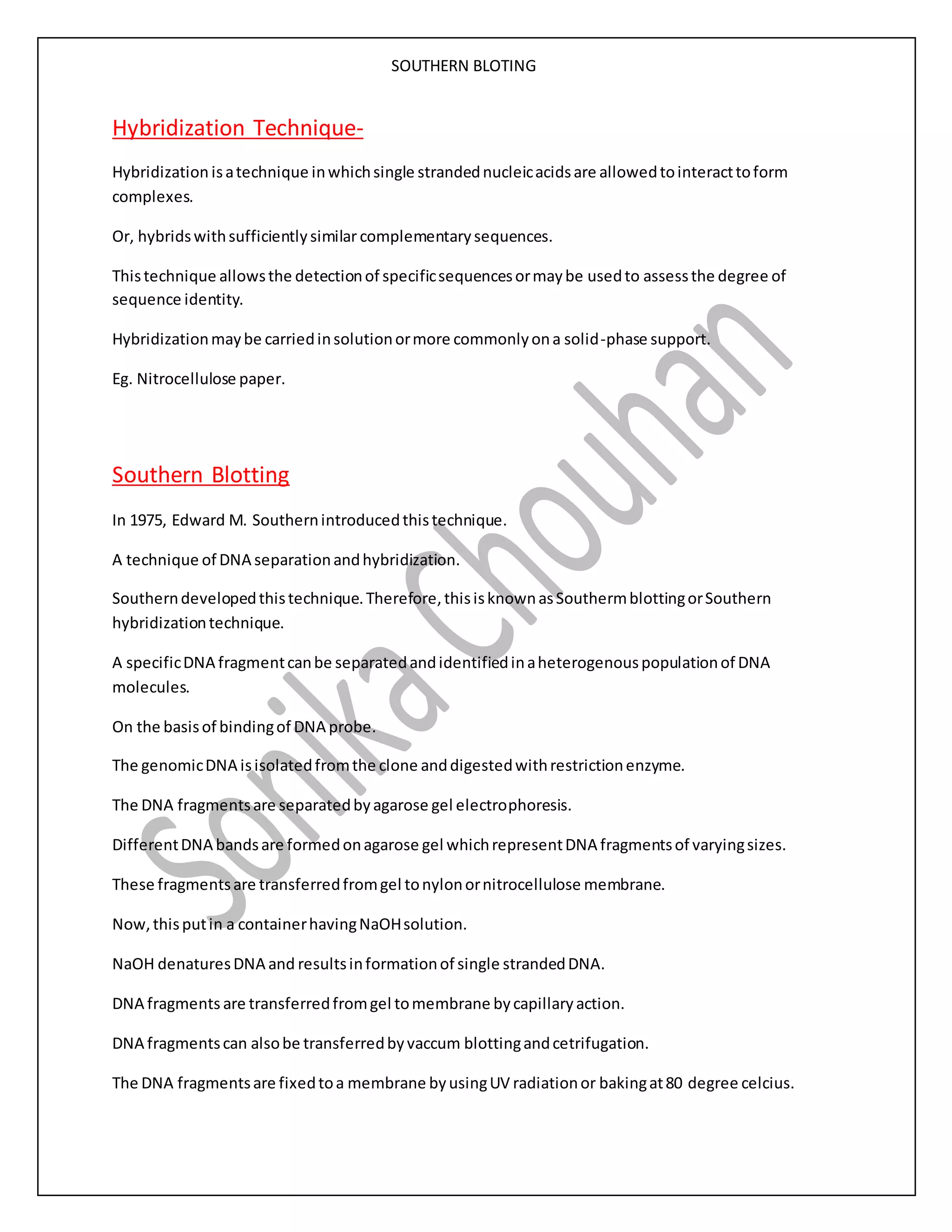
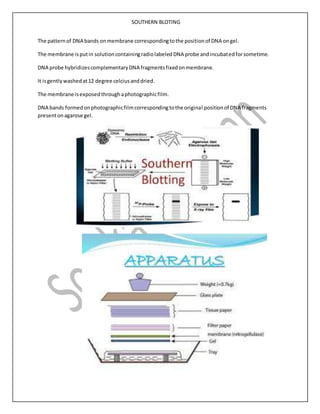
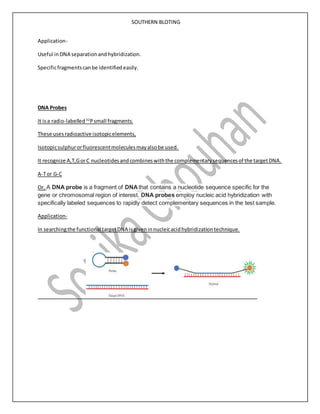

Southern blotting is a technique developed by Edward Southern in 1975 that allows for the detection and identification of specific DNA fragments within a mixture. It involves separating genomic DNA fragments via agarose gel electrophoresis, transferring them to a membrane, and using a radioactively labeled probe to hybridize to complementary DNA sequences fixed on the membrane. The membrane is then exposed to film, revealing bands that correspond to the original DNA fragment positions and allowing specific fragments to be easily identified. Southern blotting finds application in DNA separation and hybridization experiments to search for functional target DNA sequences.


