PCR based Gene cloning , Positional
Cloning
Submitted By-
BIPASHA DATTA
M. sc. (Agri.)
Dept. of Genetics and Plant
Breeding
JAU, Junagadh
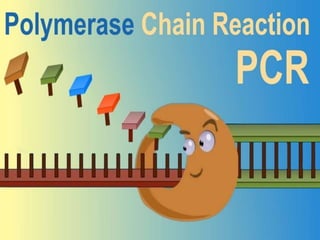
PCR Based
GENE CLONING
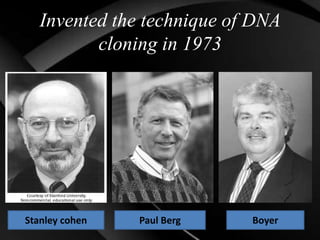
Invented the technique of DNA
cloning in 1973
Stanley cohen Paul Berg Boyer
GENE CLONING
• Clone-From the Greek word- Klon, a twig.
• The term gene cloning can be defined as the
isolation and amplification of an individual
gene sequence .
Cloning technology involves the construction of
novel DNA molecules by joining DNA sequences
from different sources.
The product is often described as Recombinant
DNA.
How is DNA cloned?
• Cell based DNA cloning • Cell-free DNA cloning (PCR)
Cell free DNA cloning (PCR)
• Developed in the mid 1980s.
• Kary Mullis - Nobel prize (1993).
• Revolutionized molecular biology
• DNA fragments can amplified in large amounts.
• In vitro technique.
What do we need for PCR?
• DNA
• Sequence information
• Oligo nucleotide primers
• Nucleotides
• Heat stable DNA polymerase
• Taq (thermus aquaticus)
PROCEDURE
Amplification of selected region from a complex
DNA mixture is carried out in vitro by the
DNA polymerase l from Thermus aquaticus, a
bacterium that lives in hot springs
This amplification is achieved by a repetitive
series of cycles involving three steps :
1. Denaturation of a template DNA duplex by
heating at 94-96⁰C.
2. Annealing of oligonucleotide primers to the
target sequences of separated DNA strands at
55-68⁰C.
3. DNA synthesis from the 3’-OH end of each
primer by DNA polymerase at 72⁰C.
STEPS FOLLOWED IN PCR
• PCR can also be used to amplify unknown DNA
sequences that lie outside the boundary of
known sequences for primer pairs can be
designed. This is referred to as Inverse PCR.
• Combining the process of cDNA synthesis by
reverse transcriptase and PCR amplification
into a single application leads to Reverse
transcriptase PCR (RT -PCR).
ADVANTAGES
• Production of large amounts of identical DNA
molecules at a time.
• Quick and simple.
• Extremely sensitive technique.
• The DNA need not be pure for amplification
provided the sample does not contain
contaminants that inhibit Taq polymerase.
PROBLEMS
• PCR is a very sensitive technique and is prone
to generating false signals.
• Nucleotide sequence of at least the boundary
regions must be known so that oligonucleotide
primers can bind and synthesize the DNA.
POSITIONAL CLONING
• Positional cloning is a laboratory technique used to
locate the position of a disease-associated gene along
the chromosome.
• This approach works even when little or no
information is available about the biochemical basis
of the disease.
• Positional cloning is used in conjunction with linkage
analysis.
Positional Cloning
Sib pairs Chromosome Region Association Study
Genetics
Genomics
Physical Mapping/
Sequencing
Candidate Gene Selection/
Polymorphism Detection
Mutation Characterization/
Functional Annotation
Association study: Uses
• Pharmacogenetics - genotyping clinically relevant samples
(toxicity vs efficacy)
• Insurance purposes - contentious, but likely at some point
• Candidate genes for specific diseases - common practice in
medicine/genetics
• Positional cloning - the most frequent source of new loci at present
• Genome-wide association - with 2-3 million SNPs, can search
whole genome exhaustively
THANKYOU

Pcr based gene cloning

  • 1.
    PCR based Genecloning , Positional Cloning Submitted By- BIPASHA DATTA M. sc. (Agri.) Dept. of Genetics and Plant Breeding JAU, Junagadh
  • 2.
  • 3.
    Invented the techniqueof DNA cloning in 1973 Stanley cohen Paul Berg Boyer
  • 4.
    GENE CLONING • Clone-Fromthe Greek word- Klon, a twig. • The term gene cloning can be defined as the isolation and amplification of an individual gene sequence .
  • 5.
    Cloning technology involvesthe construction of novel DNA molecules by joining DNA sequences from different sources. The product is often described as Recombinant DNA.
  • 6.
    How is DNAcloned? • Cell based DNA cloning • Cell-free DNA cloning (PCR)
  • 7.
    Cell free DNAcloning (PCR) • Developed in the mid 1980s. • Kary Mullis - Nobel prize (1993). • Revolutionized molecular biology • DNA fragments can amplified in large amounts. • In vitro technique.
  • 8.
    What do weneed for PCR? • DNA • Sequence information • Oligo nucleotide primers • Nucleotides • Heat stable DNA polymerase • Taq (thermus aquaticus)
  • 10.
    PROCEDURE Amplification of selectedregion from a complex DNA mixture is carried out in vitro by the DNA polymerase l from Thermus aquaticus, a bacterium that lives in hot springs
  • 11.
    This amplification isachieved by a repetitive series of cycles involving three steps : 1. Denaturation of a template DNA duplex by heating at 94-96⁰C. 2. Annealing of oligonucleotide primers to the target sequences of separated DNA strands at 55-68⁰C. 3. DNA synthesis from the 3’-OH end of each primer by DNA polymerase at 72⁰C.
  • 12.
  • 13.
    • PCR canalso be used to amplify unknown DNA sequences that lie outside the boundary of known sequences for primer pairs can be designed. This is referred to as Inverse PCR. • Combining the process of cDNA synthesis by reverse transcriptase and PCR amplification into a single application leads to Reverse transcriptase PCR (RT -PCR).
  • 14.
    ADVANTAGES • Production oflarge amounts of identical DNA molecules at a time. • Quick and simple. • Extremely sensitive technique. • The DNA need not be pure for amplification provided the sample does not contain contaminants that inhibit Taq polymerase.
  • 15.
    PROBLEMS • PCR isa very sensitive technique and is prone to generating false signals. • Nucleotide sequence of at least the boundary regions must be known so that oligonucleotide primers can bind and synthesize the DNA.
  • 16.
    POSITIONAL CLONING • Positionalcloning is a laboratory technique used to locate the position of a disease-associated gene along the chromosome. • This approach works even when little or no information is available about the biochemical basis of the disease. • Positional cloning is used in conjunction with linkage analysis.
  • 17.
    Positional Cloning Sib pairsChromosome Region Association Study Genetics Genomics Physical Mapping/ Sequencing Candidate Gene Selection/ Polymorphism Detection Mutation Characterization/ Functional Annotation
  • 18.
    Association study: Uses •Pharmacogenetics - genotyping clinically relevant samples (toxicity vs efficacy) • Insurance purposes - contentious, but likely at some point • Candidate genes for specific diseases - common practice in medicine/genetics • Positional cloning - the most frequent source of new loci at present • Genome-wide association - with 2-3 million SNPs, can search whole genome exhaustively
  • 19.