

Submitted To –
Dept.of Biotechnology
Presented By –
Sonika Chouhan
M.Sc. II Sem
 Introduction
 Major Histocompatibility factor (MHC)
 Class I MHC molecule
 Class II MHC molecule
 Endogenous antigen
 Exogenous antigen
 Role of antigen presenting cells (APCs)
 Processing and presentation pathway
 The cytosolic pathway for endogenous antigen
 The endocytic pathway for exogenous pathway
 The process by which antigen presenting cells digest proteins
from inside or outside the cell.
 It display the resulting antigenic peptide fragments on the cell
surface MHC molecules for recognition by T cells is central to
the body’s ability to detect signs of infection or abnormal
growth.
 Antigen recognition by the T cells and B cells require
appropriate and processed antigens displayed on the cleft of
different MHC molecules.
 The B cells & T cells recognizes antigen process by different
pathways.
 The B cell recognizes the soluble form antigens like – protein ,
nucleic acid , some lipids and small amount chemical .
 T cells recognizes mainly protein as antigen.
 T cells recognizes whether Ag is in cytosol or in vesicular
system .
 T cells require the Ag should degraded in small peptides
(process called Ag processing).
 Then associated with MHC molecule intracellular then
peptide- MHC complex is displayed on cell surface ( process
called Ag presentation).
 Ag processing splits the protein into small fragments
or subunits about 8-10 aa and present them to T cells
.
 The cell presenting the Ag peptide acts as single
information about the origin of cell and pathway by
which the Ag processed and on MHC class I or II
molecule.
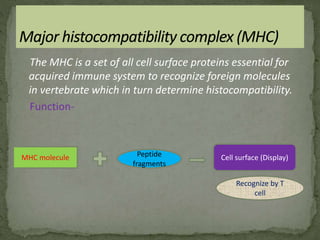
The MHC is a set of all cell surface proteins essential for
acquired immune system to recognize foreign molecules
in vertebrate which in turn determine histocompatibility.
Function-
MHC molecule Peptide
fragments
Cell surface (Display)
Recognize by T
cell
 It contain a large alpha
associated with beta2
microglobulin molecule
form heterodimer
 Alpha chain consists of
three extracellular domain
(a1,a2,a3)
 The class I MHC molecule
higher conc. Found on B
cells , T cell
&macrophages
 It consists of two
polypeptide chain alpha &
beta.
 Each contain external
domain (a1,a2)(b1,b2).
 The distal domain of both
form the Ag binding cleft
for processed Ag.
Class I MHC Molecule Class II MHC Molecule
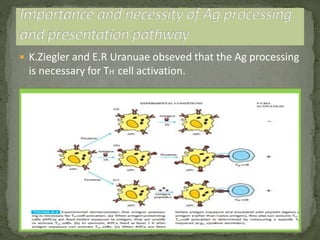
 K.Ziegler and E.R Uranuae obseved that the Ag processing
is necessary for TH cell activation.
 Almost all nucleated cells express class I MHC
molecule and
 Displayed the processed Ag to CD8+ Tc cells
 These are also referred as target cells.
 Class II MHC molecule display processed Ag to CD4+
TH cells .
 These are referred as antigen presenting cells (APCs).
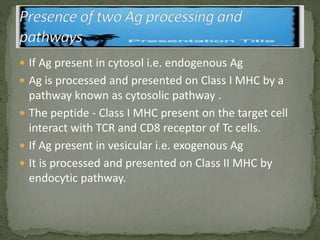
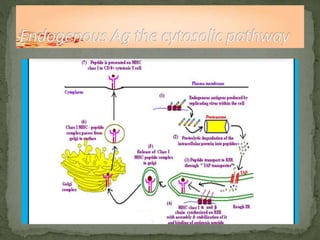
 If Ag present in cytosol i.e. endogenous Ag
 Ag is processed and presented on Class I MHC by a
pathway known as cytosolic pathway .
 The peptide - Class I MHC present on the target cell
interact with TCR and CD8 receptor of Tc cells.
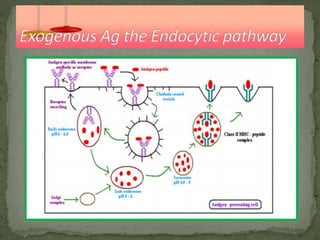
 If Ag present in vesicular i.e. exogenous Ag
 It is processed and presented on Class II MHC by
endocytic pathway.
 Pathogen and Ag need to be partially degraded into
peptides before they before they bind MHC
molecules and are presented on the surface of an
APC.
 Newly synthesized MHC molecule either the
endocytic (MHC class II) , cytosolic (MHC class I) and
bind the Ag derived protein to the cell surface.
 Kuby Immunology
 Life – The science of biology.
Antigen processing and presentation

Antigen processing and presentation

  • 1.
    Submitted To – Dept.ofBiotechnology Presented By – Sonika Chouhan M.Sc. II Sem
  • 2.
     Introduction  MajorHistocompatibility factor (MHC)  Class I MHC molecule  Class II MHC molecule  Endogenous antigen  Exogenous antigen  Role of antigen presenting cells (APCs)  Processing and presentation pathway  The cytosolic pathway for endogenous antigen  The endocytic pathway for exogenous pathway
  • 3.
     The processby which antigen presenting cells digest proteins from inside or outside the cell.  It display the resulting antigenic peptide fragments on the cell surface MHC molecules for recognition by T cells is central to the body’s ability to detect signs of infection or abnormal growth.  Antigen recognition by the T cells and B cells require appropriate and processed antigens displayed on the cleft of different MHC molecules.
  • 4.
     The Bcells & T cells recognizes antigen process by different pathways.  The B cell recognizes the soluble form antigens like – protein , nucleic acid , some lipids and small amount chemical .  T cells recognizes mainly protein as antigen.  T cells recognizes whether Ag is in cytosol or in vesicular system .  T cells require the Ag should degraded in small peptides (process called Ag processing).  Then associated with MHC molecule intracellular then peptide- MHC complex is displayed on cell surface ( process called Ag presentation).
  • 5.
     Ag processingsplits the protein into small fragments or subunits about 8-10 aa and present them to T cells .  The cell presenting the Ag peptide acts as single information about the origin of cell and pathway by which the Ag processed and on MHC class I or II molecule.
  • 6.
    The MHC isa set of all cell surface proteins essential for acquired immune system to recognize foreign molecules in vertebrate which in turn determine histocompatibility. Function- MHC molecule Peptide fragments Cell surface (Display) Recognize by T cell
  • 7.
     It containa large alpha associated with beta2 microglobulin molecule form heterodimer  Alpha chain consists of three extracellular domain (a1,a2,a3)  The class I MHC molecule higher conc. Found on B cells , T cell &macrophages  It consists of two polypeptide chain alpha & beta.  Each contain external domain (a1,a2)(b1,b2).  The distal domain of both form the Ag binding cleft for processed Ag. Class I MHC Molecule Class II MHC Molecule
  • 8.
     K.Ziegler andE.R Uranuae obseved that the Ag processing is necessary for TH cell activation.
  • 9.
     Almost allnucleated cells express class I MHC molecule and  Displayed the processed Ag to CD8+ Tc cells  These are also referred as target cells.  Class II MHC molecule display processed Ag to CD4+ TH cells .  These are referred as antigen presenting cells (APCs).
  • 10.
     If Agpresent in cytosol i.e. endogenous Ag  Ag is processed and presented on Class I MHC by a pathway known as cytosolic pathway .  The peptide - Class I MHC present on the target cell interact with TCR and CD8 receptor of Tc cells.  If Ag present in vesicular i.e. exogenous Ag  It is processed and presented on Class II MHC by endocytic pathway.
  • 14.
     Pathogen andAg need to be partially degraded into peptides before they before they bind MHC molecules and are presented on the surface of an APC.  Newly synthesized MHC molecule either the endocytic (MHC class II) , cytosolic (MHC class I) and bind the Ag derived protein to the cell surface.
  • 15.
     Kuby Immunology Life – The science of biology.