Downloaded 2,361 times
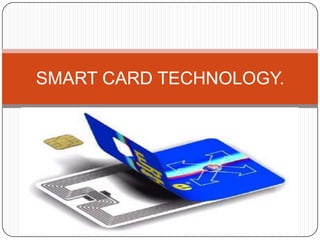


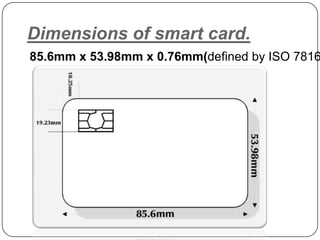


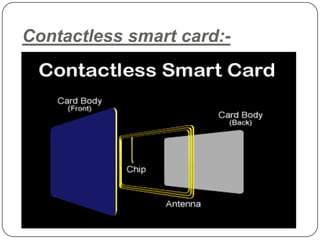


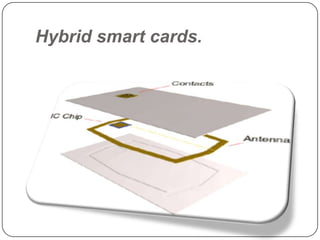


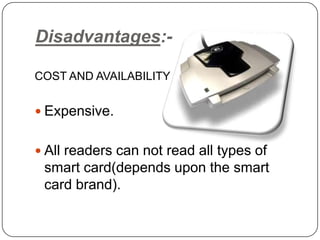


Smart cards are plastic cards with embedded microchips that can store and process data. They come in various types, including contact cards that must be inserted into a reader, contactless cards that communicate via radio frequency, and dual-interface cards that can be used either way. Smart cards provide secure storage of identification, banking, medical, and other important user information and enable faster transactions. They are defined by international standards for dimensions, communication protocols, and more. While offering benefits like security, portability, and flexibility, smart cards also have drawbacks including higher costs and limited reader compatibility compared to traditional cards.


