PRESENTED BY:
SANJIV KUMAR YADAV
MBA-1ST YEAR(2ND SEM.)
 MEANING OF SIX SIGMA
 HISTORY OF SIX SIGMA
 IMPLEMENTATIN OF SIX SIGMA
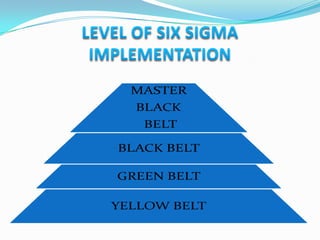
 LEVEL OF SIX SIGMA
 DIMAC
 DMADV
Six Sigma relies heavily on advanced statistical methods that
complement and reduce the process and product variations.
It is a new way of doing business that would eliminate the
existing defects efficiently and would prevent defects from
occurring
Motorola company that invented Six Sigma.
The term “Six Sigma” was coined by Bill Smith, an
 engineer with Motorola
Late 1970s - Motorola started experimenting with
 problem solving through statistical analysis
1987 - Motorola officially launched it’s Six Sigma
 program
Motorola saved more than $ 15 billion in the first 10
 years of its Six Sigma effort
Motorola saved $17 billion from 1986 to 2004, reflecting
hundreds of individual successes in all Motorola business
areas including:

• Sales and marketing
• Product design
• Manufacturing
• Customer service
• Transactional processes
• Supply chain management
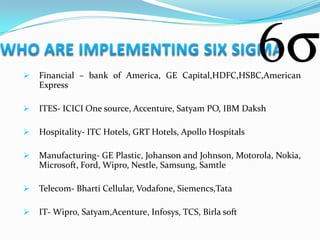
   Financial – bank of America, GE Capital,HDFC,HSBC,American
    Express

   ITES- ICICI One source, Accenture, Satyam PO, IBM Daksh

   Hospitality- ITC Hotels, GRT Hotels, Apollo Hospitals

   Manufacturing- GE Plastic, Johanson and Johnson, Motorola, Nokia,
    Microsoft, Ford, Wipro, Nestle, Samsung, Samtle

   Telecom- Bharti Cellular, Vodafone, Siemencs,Tata

   IT- Wipro, Satyam,Acenture, Infosys, TCS, Birla soft
CONTINUE…
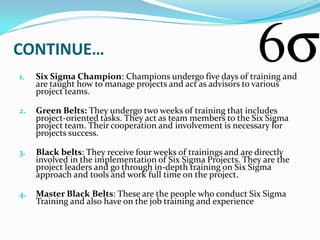
1.   Six Sigma Champion: Champions undergo five days of training and
     are taught how to manage projects and act as advisors to various
     project teams.

2.   Green Belts: They undergo two weeks of training that includes
     project-oriented tasks. They act as team members to the Six Sigma
     project team. Their cooperation and involvement is necessary for
     projects success.

3.   Black belts: They receive four weeks of trainings and are directly
     involved in the implementation of Six Sigma Projects. They are the
     project leaders and go through in-depth training on Six Sigma
     approach and tools and work full time on the project.

4.   Master Black Belts: These are the people who conduct Six Sigma
     Training and also have on the job training and experience
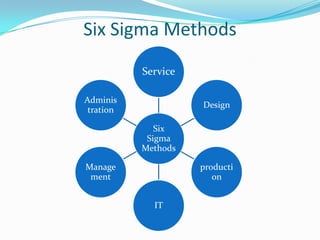
Six Sigma Methods
           Service

Adminis
                     Design
 tration

              Six
            Sigma
           Methods

Manage               producti
 ment                   on


             IT
APPROACHES OF SIX SIGMA

THIS IS ORGANIZATIONAL BASED

THIS IS BASED ON CUSTOMER NEEDS AND
SATIFACTIONS
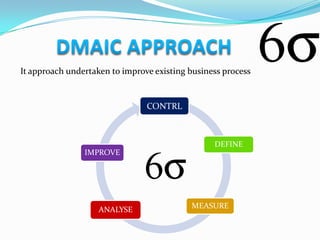
It approach undertaken to improve existing business process


                                CONTRL


                                                 DEFINE
                IMPROVE


                    ANALYSE                MEASURE
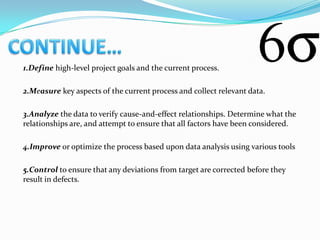
1.Define high-level project goals and the current process.

2.Measure key aspects of the current process and collect relevant data.

3.Analyze the data to verify cause-and-effect relationships. Determine what the
relationships are, and attempt to ensure that all factors have been considered.

4.Improve or optimize the process based upon data analysis using various tools

5.Control to ensure that any deviations from target are corrected before they
result in defects.
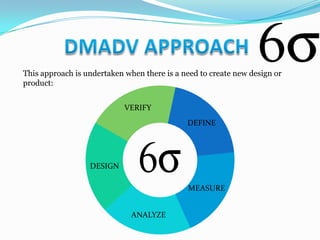
This approach is undertaken when there is a need to create new design or
product:


                            VERIFY
                                             DEFINE


                  DESIGN

                                             MEASURE


                              ANALYZE
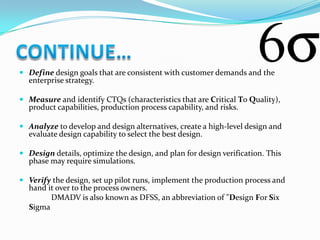
 Define design goals that are consistent with customer demands and the
  enterprise strategy.

 Measure and identify CTQs (characteristics that are Critical To Quality),
  product capabilities, production process capability, and risks.

 Analyze to develop and design alternatives, create a high-level design and
  evaluate design capability to select the best design.

 Design details, optimize the design, and plan for design verification. This
  phase may require simulations.

 Verify the design, set up pilot runs, implement the production process and
  hand it over to the process owners.
        DMADV is also known as DFSS, an abbreviation of "Design For Six
  Sigma
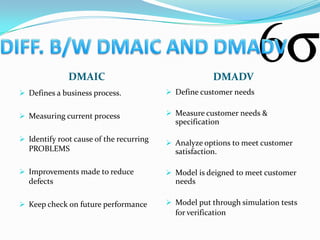
DMAIC                                  DMADV
 Defines a business process.             Define customer needs


 Measuring current process               Measure customer needs &
                                           specification

 Identify root cause of the recurring
                                          Analyze options to meet customer
  PROBLEMS                                 satisfaction.

 Improvements made to reduce             Model is deigned to meet customer
  defects                                  needs

 Keep check on future performance        Model put through simulation tests
                                           for verification
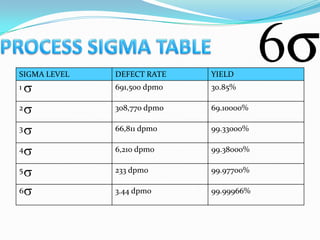
SIGMA LEVEL   DEFECT RATE    YIELD
1             691,500 dpmo   30.85%

2             308,770 dpmo   69.10000%

3             66,811 dpmo    99.33000%

4             6,210 dpmo     99.38000%

5             233 dpmo       99.97700%

6             3.44 dpmo      99.99966%
THANK YOU

six sigma ppt

  • 1.
    PRESENTED BY: SANJIV KUMARYADAV MBA-1ST YEAR(2ND SEM.)
  • 2.
     MEANING OFSIX SIGMA  HISTORY OF SIX SIGMA  IMPLEMENTATIN OF SIX SIGMA  LEVEL OF SIX SIGMA  DIMAC  DMADV
  • 3.
    Six Sigma reliesheavily on advanced statistical methods that complement and reduce the process and product variations. It is a new way of doing business that would eliminate the existing defects efficiently and would prevent defects from occurring
  • 4.
    Motorola company thatinvented Six Sigma. The term “Six Sigma” was coined by Bill Smith, an engineer with Motorola Late 1970s - Motorola started experimenting with problem solving through statistical analysis 1987 - Motorola officially launched it’s Six Sigma program Motorola saved more than $ 15 billion in the first 10 years of its Six Sigma effort
  • 5.
    Motorola saved $17billion from 1986 to 2004, reflecting hundreds of individual successes in all Motorola business areas including: • Sales and marketing • Product design • Manufacturing • Customer service • Transactional processes • Supply chain management
  • 6.
    Financial – bank of America, GE Capital,HDFC,HSBC,American Express  ITES- ICICI One source, Accenture, Satyam PO, IBM Daksh  Hospitality- ITC Hotels, GRT Hotels, Apollo Hospitals  Manufacturing- GE Plastic, Johanson and Johnson, Motorola, Nokia, Microsoft, Ford, Wipro, Nestle, Samsung, Samtle  Telecom- Bharti Cellular, Vodafone, Siemencs,Tata  IT- Wipro, Satyam,Acenture, Infosys, TCS, Birla soft
  • 8.
    CONTINUE… 1. Six Sigma Champion: Champions undergo five days of training and are taught how to manage projects and act as advisors to various project teams. 2. Green Belts: They undergo two weeks of training that includes project-oriented tasks. They act as team members to the Six Sigma project team. Their cooperation and involvement is necessary for projects success. 3. Black belts: They receive four weeks of trainings and are directly involved in the implementation of Six Sigma Projects. They are the project leaders and go through in-depth training on Six Sigma approach and tools and work full time on the project. 4. Master Black Belts: These are the people who conduct Six Sigma Training and also have on the job training and experience
  • 9.
    Six Sigma Methods Service Adminis Design tration Six Sigma Methods Manage producti ment on IT
  • 10.
    APPROACHES OF SIXSIGMA  THIS IS ORGANIZATIONAL BASED  THIS IS BASED ON CUSTOMER NEEDS AND SATIFACTIONS
  • 11.
    It approach undertakento improve existing business process CONTRL DEFINE IMPROVE ANALYSE MEASURE
  • 12.
    1.Define high-level projectgoals and the current process. 2.Measure key aspects of the current process and collect relevant data. 3.Analyze the data to verify cause-and-effect relationships. Determine what the relationships are, and attempt to ensure that all factors have been considered. 4.Improve or optimize the process based upon data analysis using various tools 5.Control to ensure that any deviations from target are corrected before they result in defects.
  • 13.
    This approach isundertaken when there is a need to create new design or product: VERIFY DEFINE DESIGN MEASURE ANALYZE
  • 14.
     Define designgoals that are consistent with customer demands and the enterprise strategy.  Measure and identify CTQs (characteristics that are Critical To Quality), product capabilities, production process capability, and risks.  Analyze to develop and design alternatives, create a high-level design and evaluate design capability to select the best design.  Design details, optimize the design, and plan for design verification. This phase may require simulations.  Verify the design, set up pilot runs, implement the production process and hand it over to the process owners. DMADV is also known as DFSS, an abbreviation of "Design For Six Sigma
  • 15.
    DMAIC DMADV  Defines a business process.  Define customer needs  Measuring current process  Measure customer needs & specification  Identify root cause of the recurring  Analyze options to meet customer PROBLEMS satisfaction.  Improvements made to reduce  Model is deigned to meet customer defects needs  Keep check on future performance  Model put through simulation tests for verification
  • 16.
    SIGMA LEVEL DEFECT RATE YIELD 1 691,500 dpmo 30.85% 2 308,770 dpmo 69.10000% 3 66,811 dpmo 99.33000% 4 6,210 dpmo 99.38000% 5 233 dpmo 99.97700% 6 3.44 dpmo 99.99966%
  • 18.