Quality 
According to Quality Guru Juran, Quality is 
fitness for use. 
Quality is a perceptual, conditional, and 
somewhat subjective attribute and may be 
understood differently by different people. 
Jim Relay defines Quality in his book 
‘Production & Operation’ that Quality is 
about meeting the needs and expectations 
of customers.
7 Tools of Quality 
 Check Sheet 
 Histogram 
 Pareto Chart 
 Cause & Effect diagram 
 Control Chart 
 Scatter Diagram 
 Flow Chart
Check Sheet 
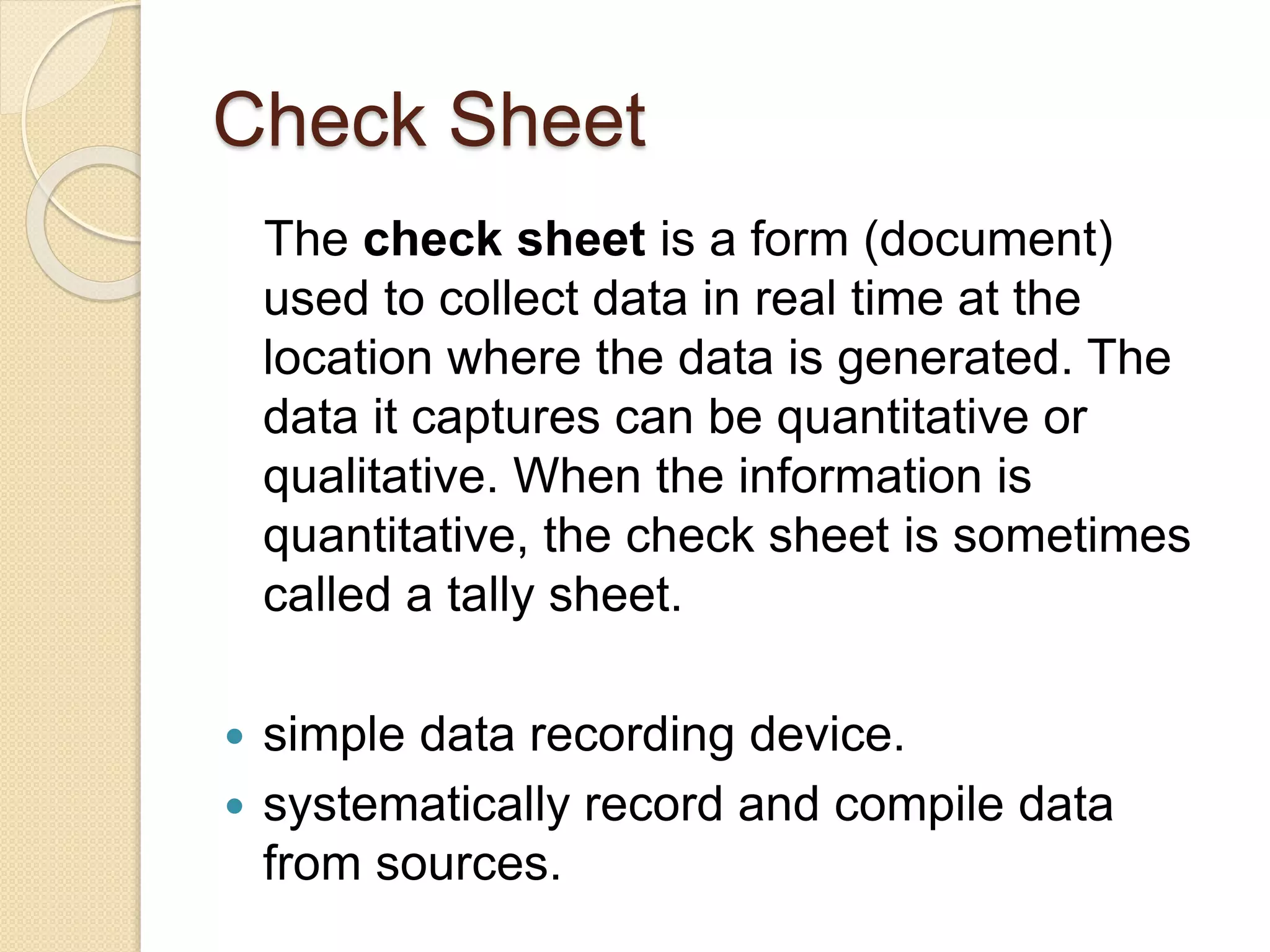
The check sheet is a form (document) 
used to collect data in real time at the 
location where the data is generated. The 
data it captures can be quantitative or 
qualitative. When the information is 
quantitative, the check sheet is sometimes 
called a tally sheet. 
 simple data recording device. 
 systematically record and compile data 
from sources.
Check Sheet 
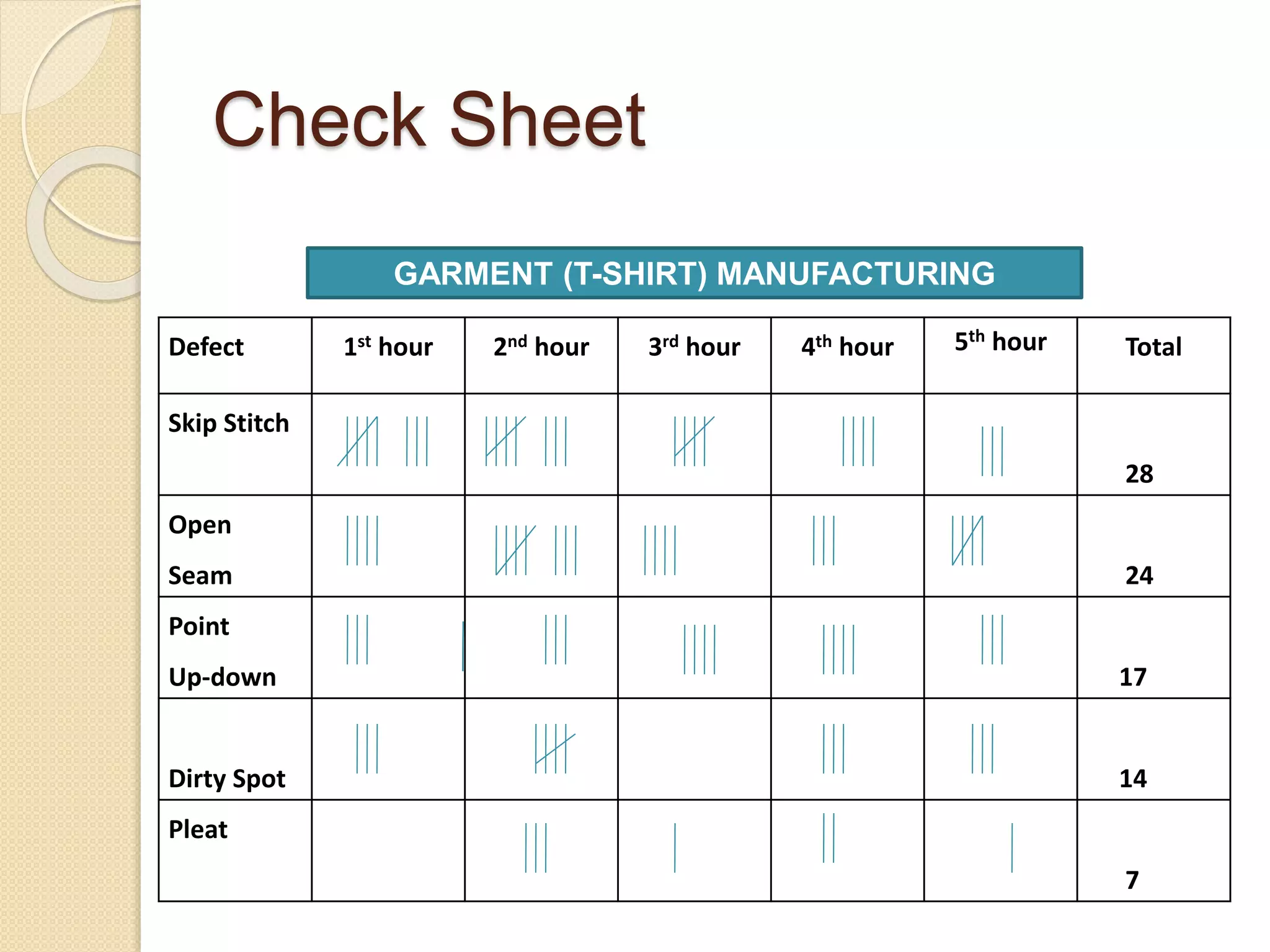
Defect 1st hour 2nd hour 3rd hour 4th hour 5th hour Total 
Skip Stitch 
28 
Open 
Seam 24 
Point 
Up-down 17 
Dirty Spot 14 
Pleat 
7 
GARMENT (T-SHIRT) MANUFACTURING
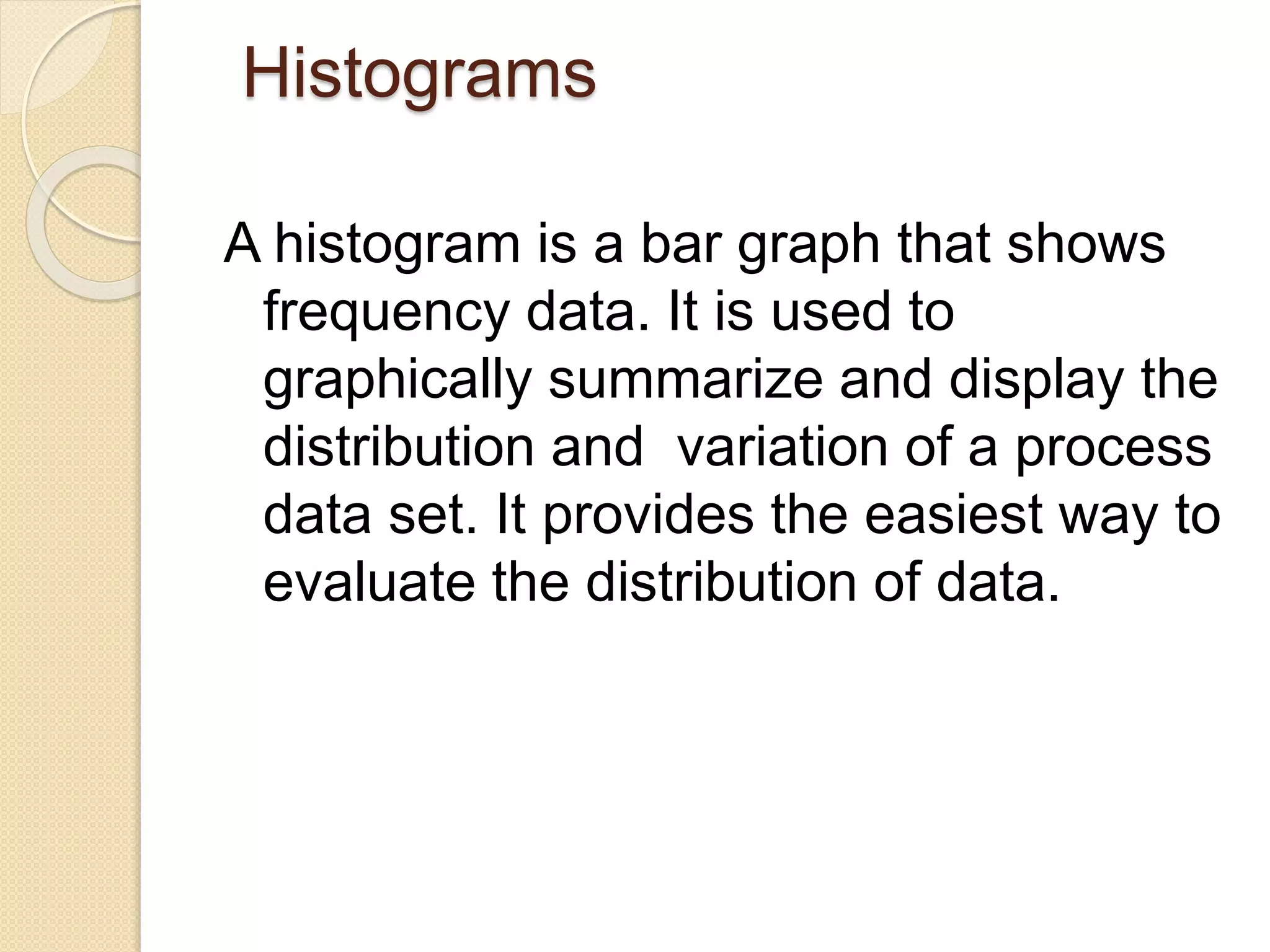
Histograms 
A histogram is a bar graph that shows 
frequency data. It is used to 
graphically summarize and display the 
distribution and variation of a process 
data set. It provides the easiest way to 
evaluate the distribution of data.
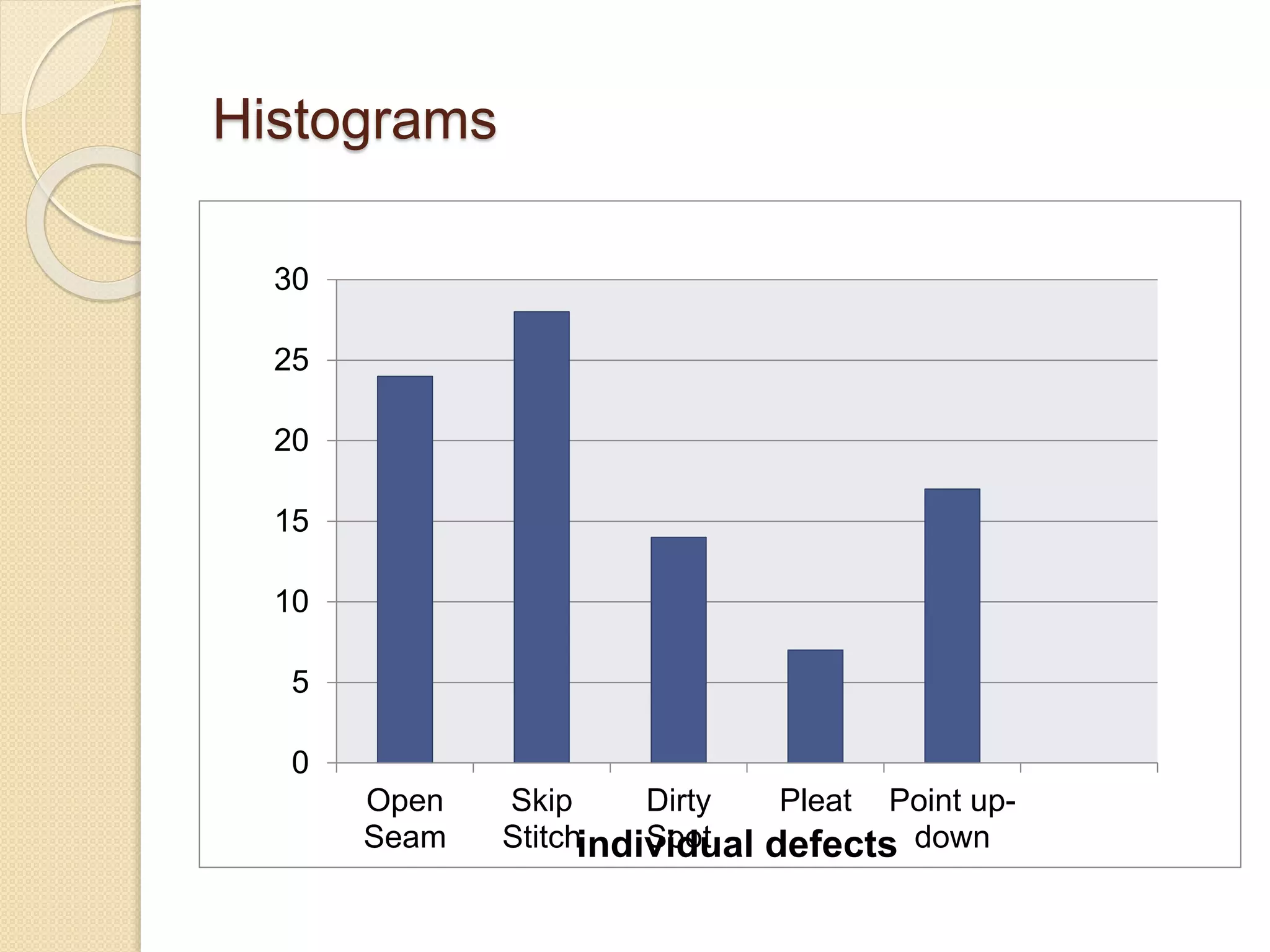
Histograms 
30 
25 
20 
15 
10 
5 
0 
Open 
Seam 
Skip 
Stitch 
Dirty 
Spot 
Pleat Point up-individual 
defects down
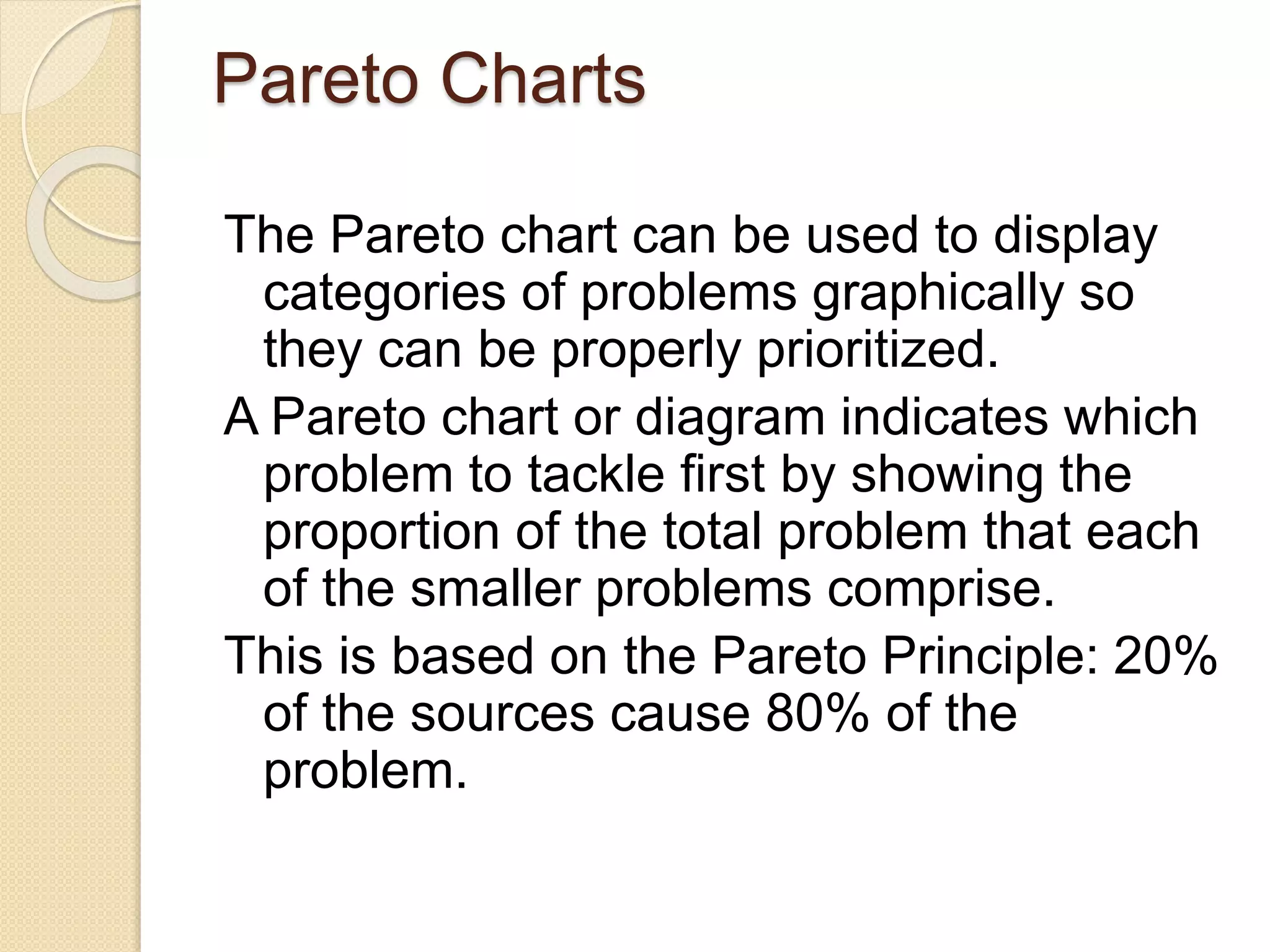
Pareto Charts 
The Pareto chart can be used to display 
categories of problems graphically so 
they can be properly prioritized. 
A Pareto chart or diagram indicates which 
problem to tackle first by showing the 
proportion of the total problem that each 
of the smaller problems comprise. 
This is based on the Pareto Principle: 20% 
of the sources cause 80% of the 
problem.
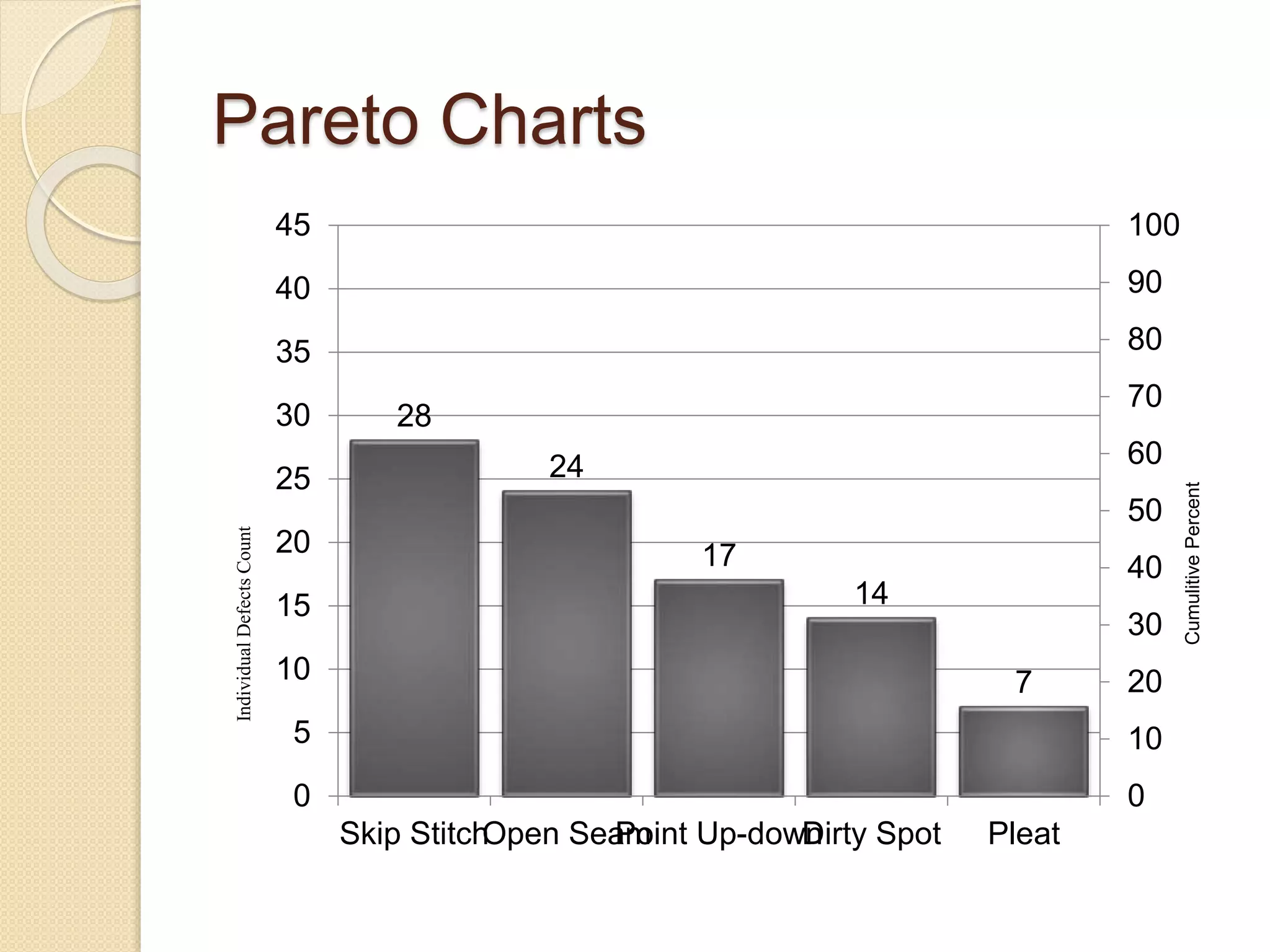
Pareto Charts 
28 
24 
17 
14 
7 
100 
90 
80 
70 
60 
50 
40 
30 
20 
10 
0 
45 
40 
35 
30 
25 
20 
15 
10 
5 
0 
Skip StitchOpen Seam Point Up-downDirty Spot Pleat 
Individual Defects Count 
Cumulitive Percent
Cause and Effect Diagrams 
One analysis tool is the Cause and 
Effect or Fishbone diagram. These are 
also called Ishikawa diagrams 
because Kaoru Ishikawa developed 
them in 1943. They are called 
fishbone diagrams since they 
resemble one with the long spine and 
various connecting branches.
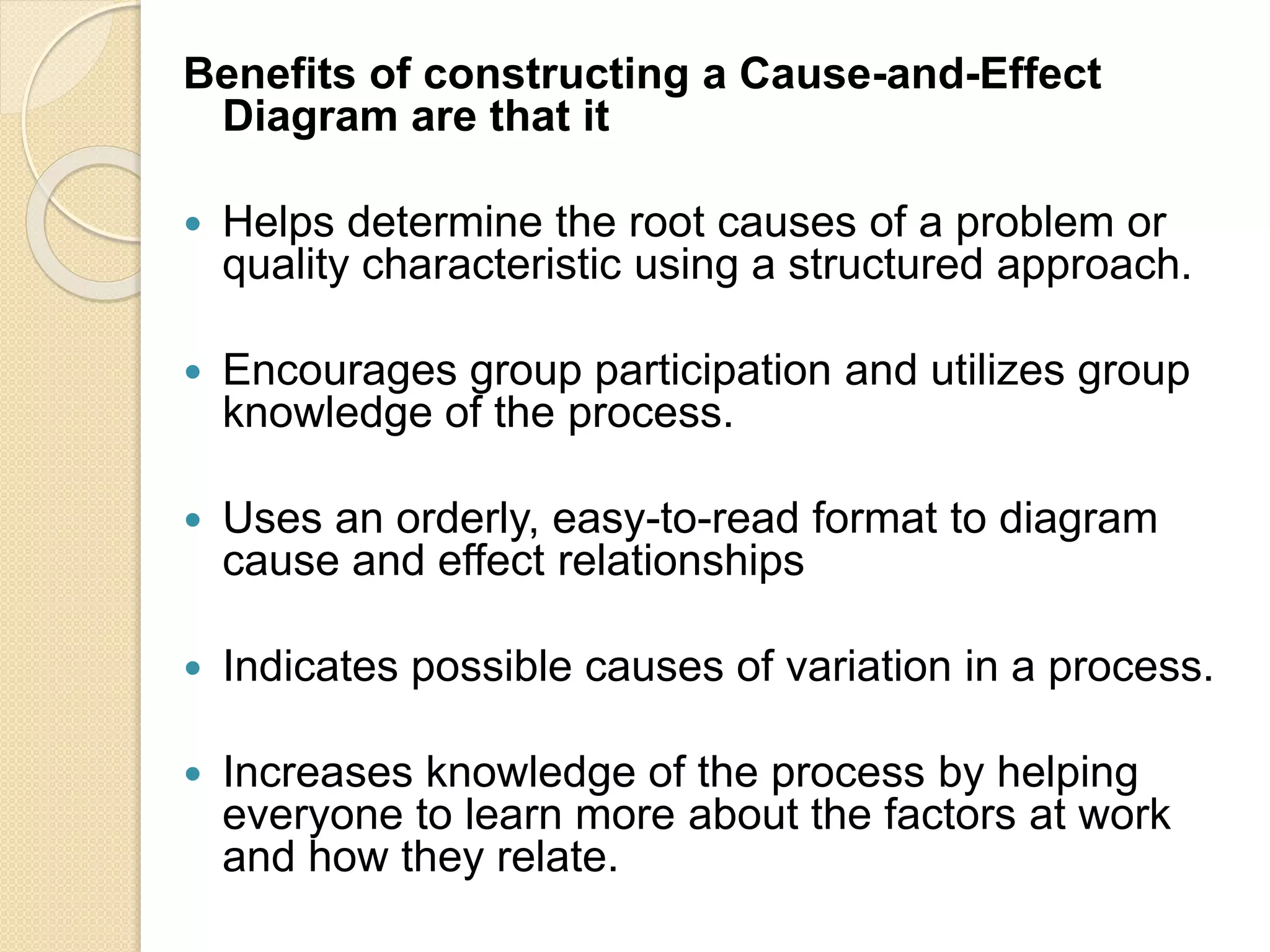
Benefits of constructing a Cause-and-Effect 
Diagram are that it 
 Helps determine the root causes of a problem or 
quality characteristic using a structured approach. 
 Encourages group participation and utilizes group 
knowledge of the process. 
 Uses an orderly, easy-to-read format to diagram 
cause and effect relationships 
 Indicates possible causes of variation in a process. 
 Increases knowledge of the process by helping 
everyone to learn more about the factors at work 
and how they relate.
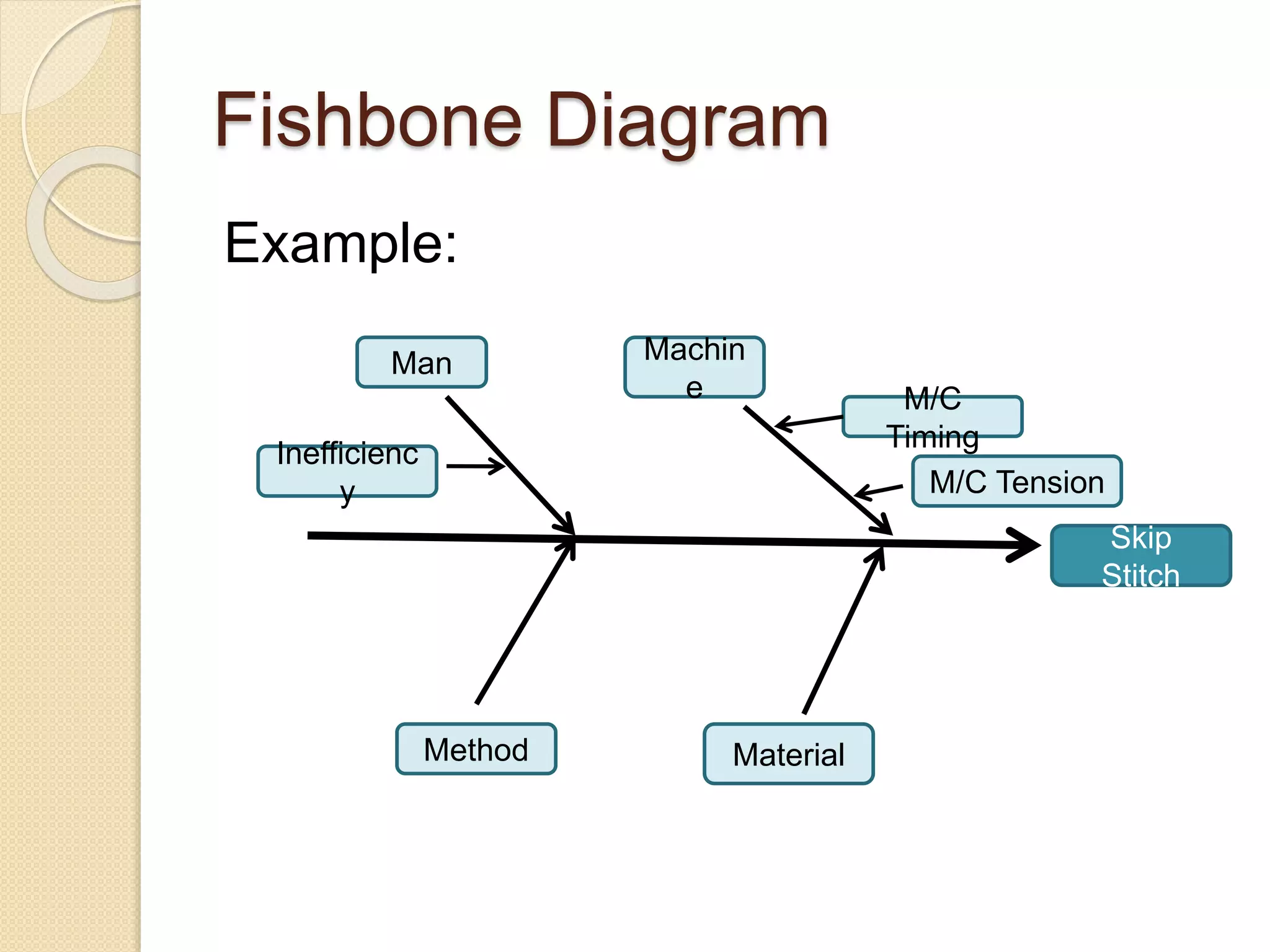
Fishbone Diagram 
Example: 
Man Machin 
e 
Method Material 
M/C 
Timing 
M/C Tension 
Inefficienc 
y 
Skip 
Stitch
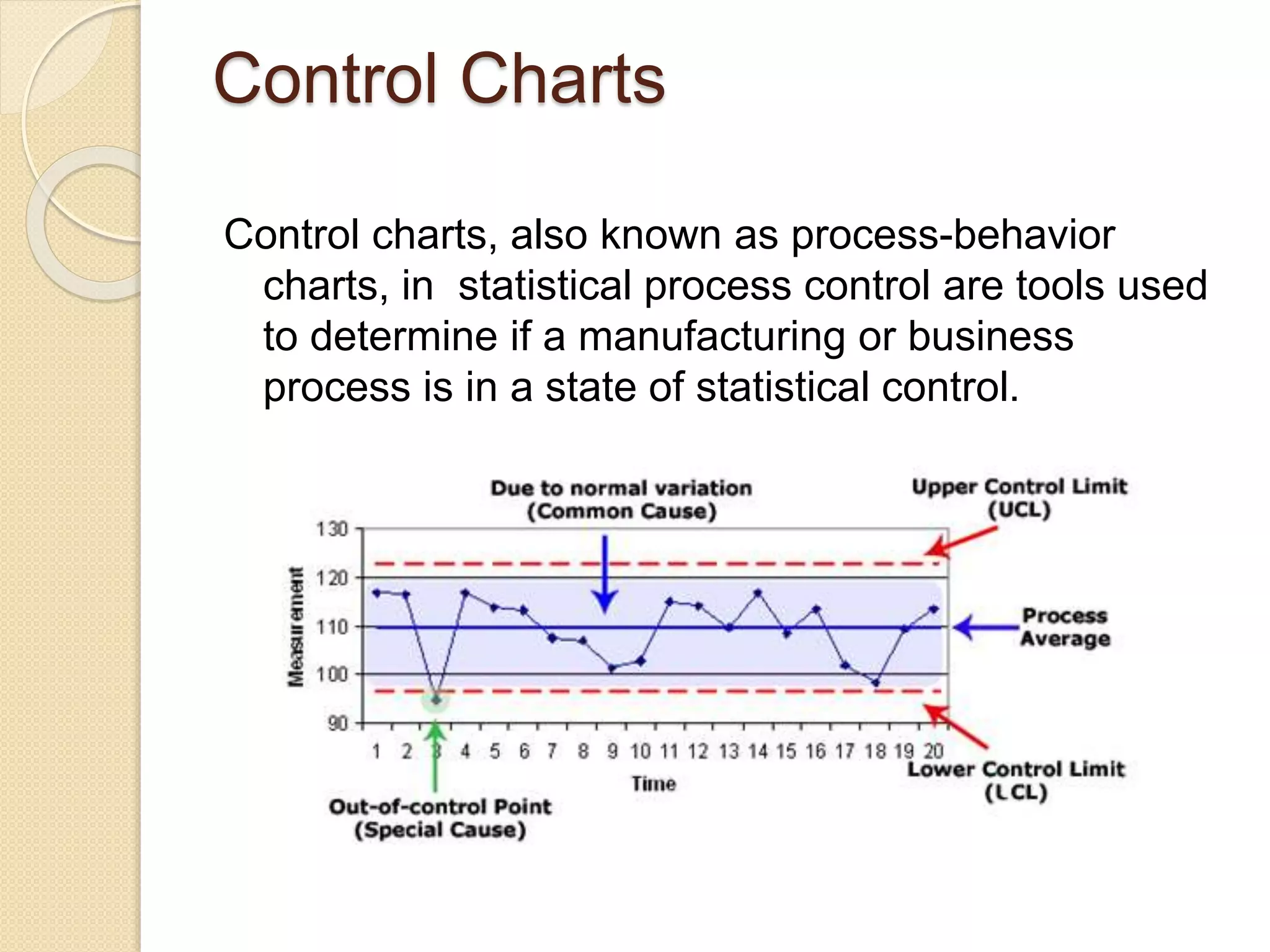
Control Charts 
Control charts, also known as process-behavior 
charts, in statistical process control are tools used 
to determine if a manufacturing or business 
process is in a state of statistical control.
Scatter Diagrams 
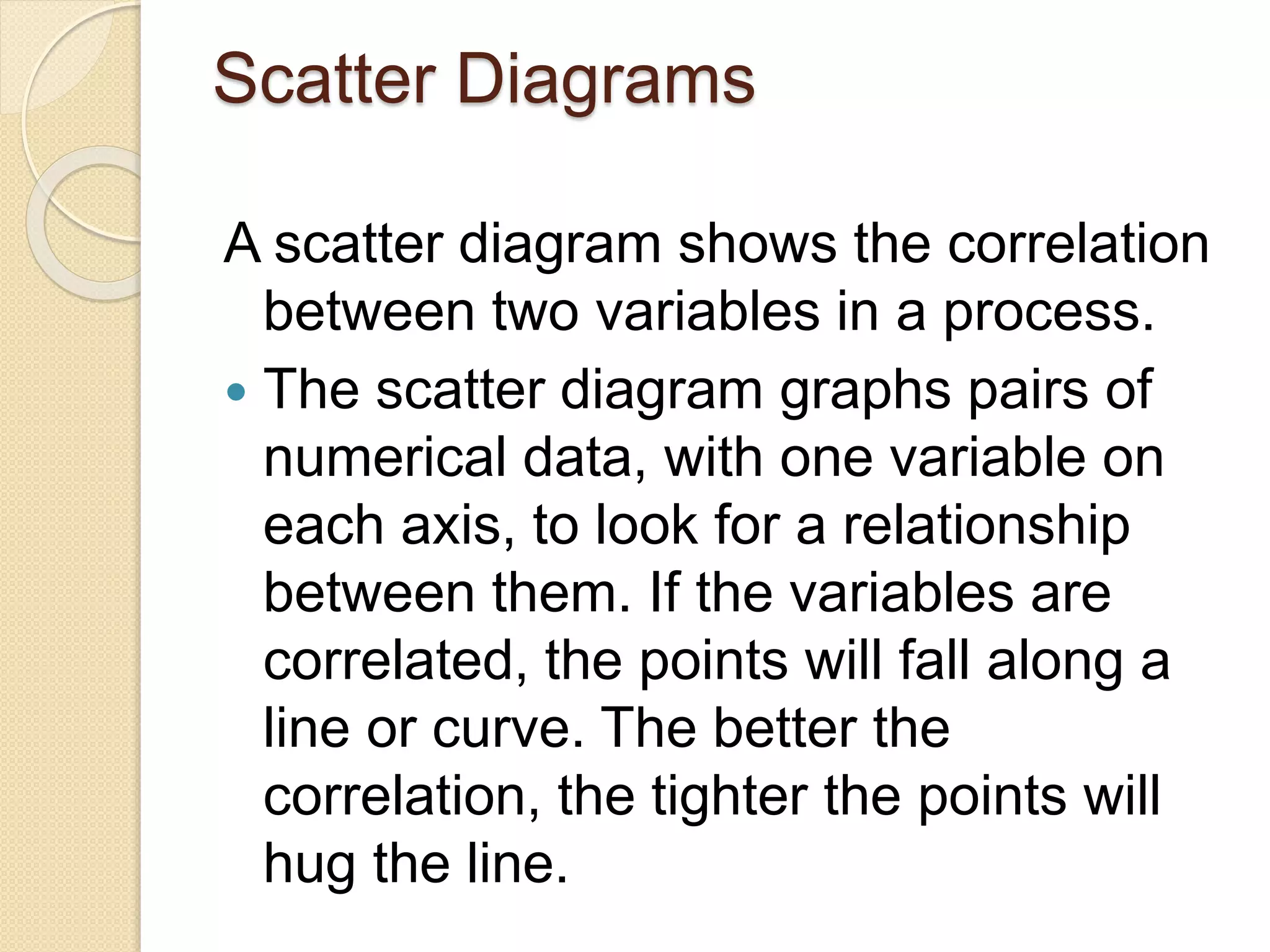
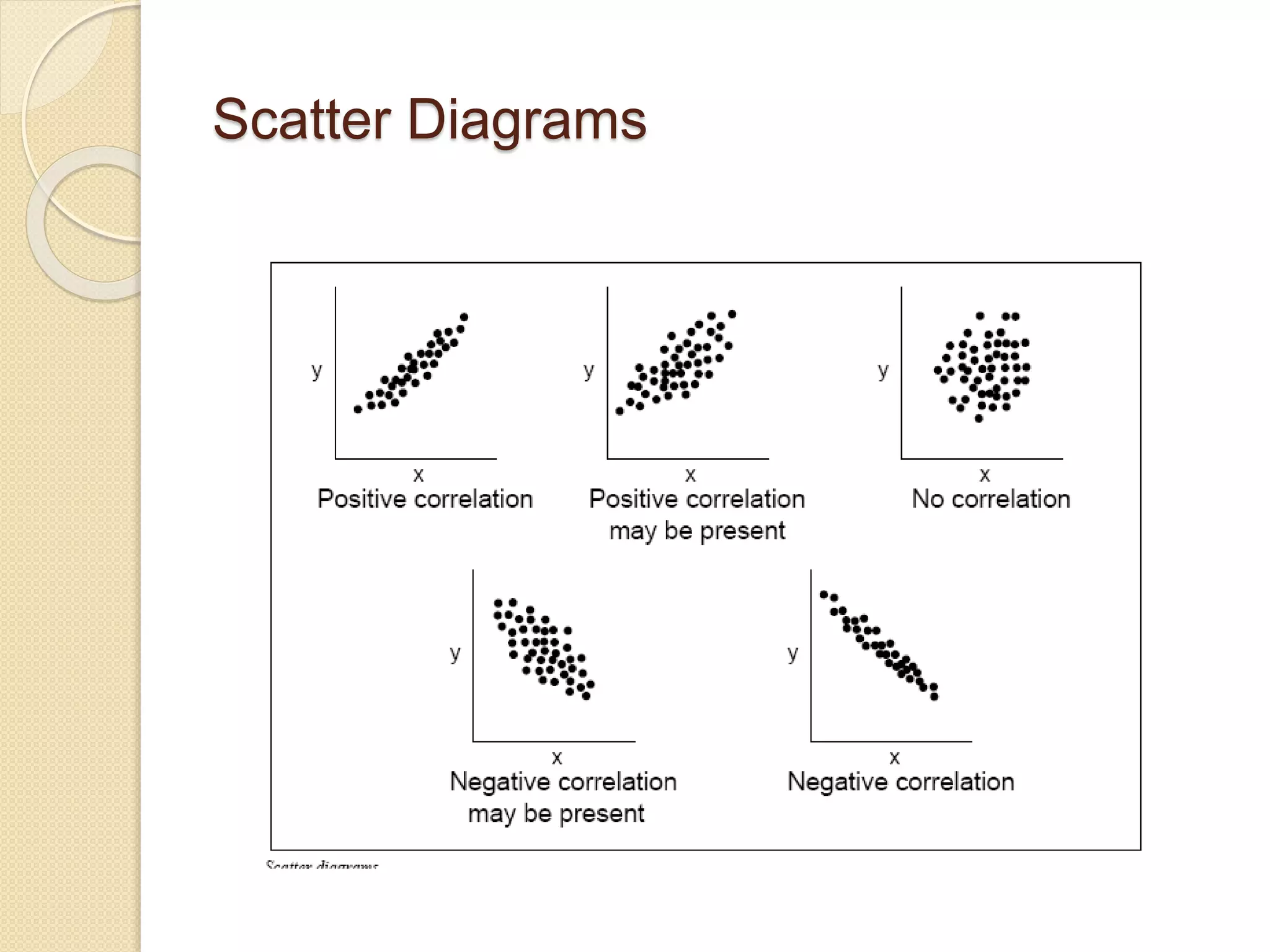
A scatter diagram shows the correlation 
between two variables in a process. 
 The scatter diagram graphs pairs of 
numerical data, with one variable on 
each axis, to look for a relationship 
between them. If the variables are 
correlated, the points will fall along a 
line or curve. The better the 
correlation, the tighter the points will 
hug the line.
Scatter Diagrams
Flow Charts 
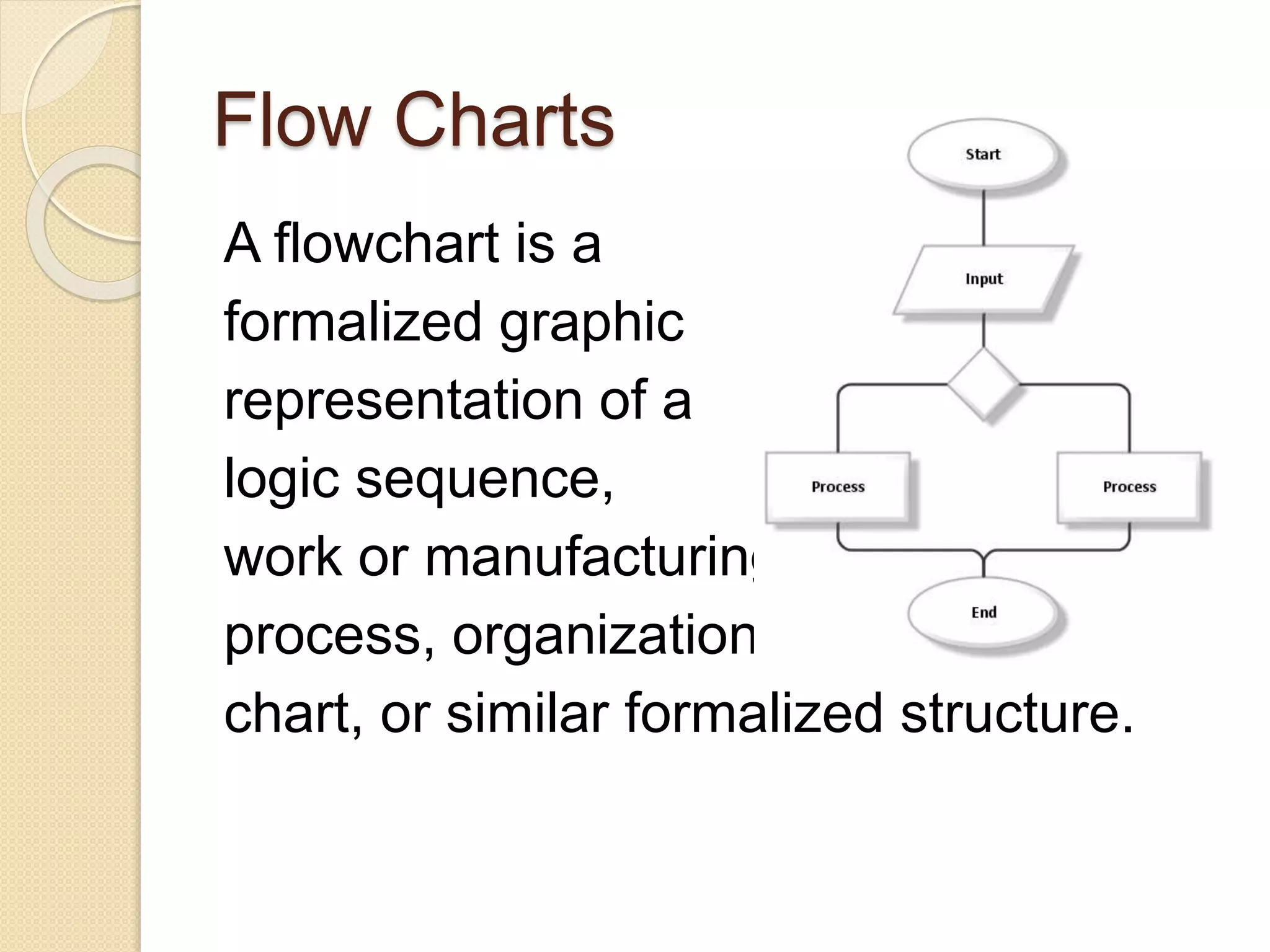
A flowchart is a 
formalized graphic 
representation of a 
logic sequence, 
work or manufacturing 
process, organization 
chart, or similar formalized structure.
THANK YOU

7 tools of quality

  • 2.
    Quality According toQuality Guru Juran, Quality is fitness for use. Quality is a perceptual, conditional, and somewhat subjective attribute and may be understood differently by different people. Jim Relay defines Quality in his book ‘Production & Operation’ that Quality is about meeting the needs and expectations of customers.
  • 3.
    7 Tools ofQuality  Check Sheet  Histogram  Pareto Chart  Cause & Effect diagram  Control Chart  Scatter Diagram  Flow Chart
  • 4.
    Check Sheet Thecheck sheet is a form (document) used to collect data in real time at the location where the data is generated. The data it captures can be quantitative or qualitative. When the information is quantitative, the check sheet is sometimes called a tally sheet.  simple data recording device.  systematically record and compile data from sources.
  • 5.
    Check Sheet Defect1st hour 2nd hour 3rd hour 4th hour 5th hour Total Skip Stitch 28 Open Seam 24 Point Up-down 17 Dirty Spot 14 Pleat 7 GARMENT (T-SHIRT) MANUFACTURING
  • 6.
    Histograms A histogramis a bar graph that shows frequency data. It is used to graphically summarize and display the distribution and variation of a process data set. It provides the easiest way to evaluate the distribution of data.
  • 7.
    Histograms 30 25 20 15 10 5 0 Open Seam Skip Stitch Dirty Spot Pleat Point up-individual defects down
  • 8.
    Pareto Charts ThePareto chart can be used to display categories of problems graphically so they can be properly prioritized. A Pareto chart or diagram indicates which problem to tackle first by showing the proportion of the total problem that each of the smaller problems comprise. This is based on the Pareto Principle: 20% of the sources cause 80% of the problem.
  • 9.
    Pareto Charts 28 24 17 14 7 100 90 80 70 60 50 40 30 20 10 0 45 40 35 30 25 20 15 10 5 0 Skip StitchOpen Seam Point Up-downDirty Spot Pleat Individual Defects Count Cumulitive Percent
  • 10.
    Cause and EffectDiagrams One analysis tool is the Cause and Effect or Fishbone diagram. These are also called Ishikawa diagrams because Kaoru Ishikawa developed them in 1943. They are called fishbone diagrams since they resemble one with the long spine and various connecting branches.
  • 11.
    Benefits of constructinga Cause-and-Effect Diagram are that it  Helps determine the root causes of a problem or quality characteristic using a structured approach.  Encourages group participation and utilizes group knowledge of the process.  Uses an orderly, easy-to-read format to diagram cause and effect relationships  Indicates possible causes of variation in a process.  Increases knowledge of the process by helping everyone to learn more about the factors at work and how they relate.
  • 12.
    Fishbone Diagram Example: Man Machin e Method Material M/C Timing M/C Tension Inefficienc y Skip Stitch
  • 13.
    Control Charts Controlcharts, also known as process-behavior charts, in statistical process control are tools used to determine if a manufacturing or business process is in a state of statistical control.
  • 14.
    Scatter Diagrams Ascatter diagram shows the correlation between two variables in a process.  The scatter diagram graphs pairs of numerical data, with one variable on each axis, to look for a relationship between them. If the variables are correlated, the points will fall along a line or curve. The better the correlation, the tighter the points will hug the line.
  • 15.
  • 16.
    Flow Charts Aflowchart is a formalized graphic representation of a logic sequence, work or manufacturing process, organization chart, or similar formalized structure.
  • 17.