Introduction to Six Sigma


            Methodology and
            symbol of quality
Contents :

   What is Six Sigma?
   Why Six Sigma?
   Six Sigma to Defect Levels
   Six Sigma Phases : Define, Measure,
    Analyze, Improve and Control
   Tools and Key Roles for Six Sigma
Six Sigma : An Overview

   Sigma is a statistical concept that represents
    the amount of variation present in a process
    relative to customer requirements or
    specifications.
   A statistical concept that measures a
    process in terms of defects – at the six
    sigma level, there 3.4 defects per million
    opportunities
   Commonly denoted as 6σ, 6 Sigma, or 6s
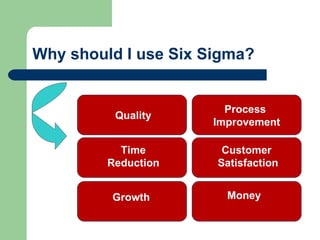
Why should I use Six Sigma?


                       Process
          Quality
                     Improvement

           Time        Customer
         Reduction    Satisfaction


         Growth        Money
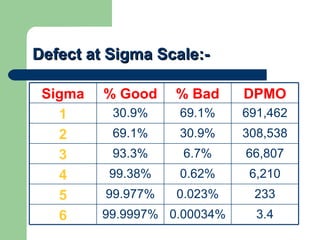
Defect at Sigma Scale:-

 Sigma   % Good    % Bad     DPMO
   1      30.9%    69.1%     691,462
   2      69.1%    30.9%     308,538
   3      93.3%     6.7%     66,807
   4     99.38%    0.62%      6,210
   5     99.977%   0.023%     233
   6     99.9997% 0.00034%     3.4
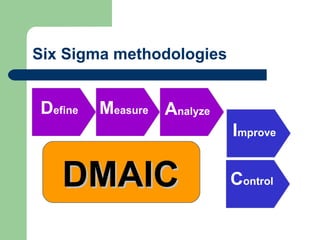
Six Sigma methodologies


Define   Measure Analyze
                           Improve

   DMAIC                   Control
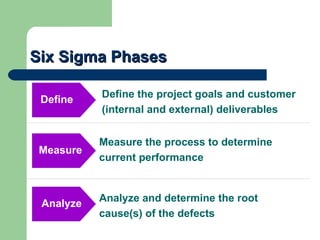
Six Sigma Phases

Define      Define the project goals and customer
  Define
  Define    (internal and external) deliverables


            Measure the process to determine
  Measure
            current performance


            Analyze and determine the root
  Analyze
            cause(s) of the defects
Six Sigma Phases

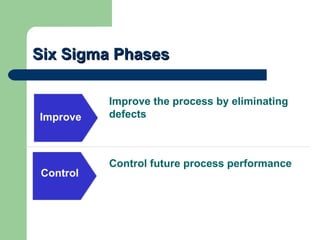
          Improve the process by eliminating
Improve   defects


          Control future process performance
Control
Tools for Six Sigma

•   Balanced Scorecard
•   Stakeholder Analysis
•   Force Field Analysis
•   Cause & Effect Diagram
•   Affinity Diagram
•   SIPOC Diagram.
•   Minitab:- Statistical and Process Management Software for
    Six Sigma and Quality Improvement.
Key Roles for Six Sigma

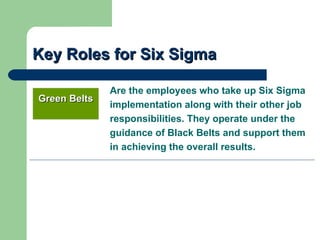
              Are the employees who take up Six Sigma
Green Belts
              implementation along with their other job
              responsibilities. They operate under the
              guidance of Black Belts and support them
              in achieving the overall results.
Key Roles for Six Sigma

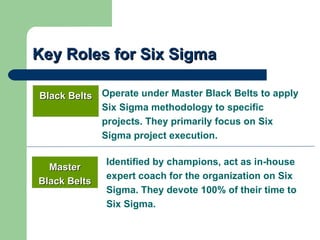
Black Belts Operate under Master Black Belts to apply
            Six Sigma methodology to specific
            projects. They primarily focus on Six
            Sigma project execution.

              Identified by champions, act as in-house
  Master
              expert coach for the organization on Six
Black Belts
              Sigma. They devote 100% of their time to
              Six Sigma.
Key Roles for Six Sigma

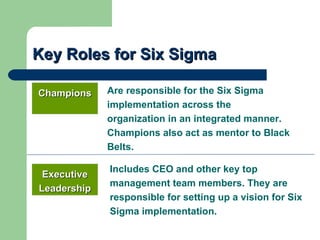
Champions    Are responsible for the Six Sigma
             implementation across the
             organization in an integrated manner.
             Champions also act as mentor to Black
             Belts.

             Includes CEO and other key top
 Executive
             management team members. They are
Leadership
             responsible for setting up a vision for Six
             Sigma implementation.
 Thank   You

Presentation introduction to six sigma

  • 1.
    Introduction to SixSigma Methodology and symbol of quality
  • 2.
    Contents :  What is Six Sigma?  Why Six Sigma?  Six Sigma to Defect Levels  Six Sigma Phases : Define, Measure, Analyze, Improve and Control  Tools and Key Roles for Six Sigma
  • 3.
    Six Sigma :An Overview  Sigma is a statistical concept that represents the amount of variation present in a process relative to customer requirements or specifications.  A statistical concept that measures a process in terms of defects – at the six sigma level, there 3.4 defects per million opportunities  Commonly denoted as 6σ, 6 Sigma, or 6s
  • 4.
    Why should Iuse Six Sigma? Process Quality Improvement Time Customer Reduction Satisfaction Growth Money
  • 5.
    Defect at SigmaScale:- Sigma % Good % Bad DPMO 1 30.9% 69.1% 691,462 2 69.1% 30.9% 308,538 3 93.3% 6.7% 66,807 4 99.38% 0.62% 6,210 5 99.977% 0.023% 233 6 99.9997% 0.00034% 3.4
  • 6.
    Six Sigma methodologies Define Measure Analyze Improve DMAIC Control
  • 7.
    Six Sigma Phases Define Define the project goals and customer Define Define (internal and external) deliverables Measure the process to determine Measure current performance Analyze and determine the root Analyze cause(s) of the defects
  • 8.
    Six Sigma Phases Improve the process by eliminating Improve defects Control future process performance Control
  • 9.
    Tools for SixSigma • Balanced Scorecard • Stakeholder Analysis • Force Field Analysis • Cause & Effect Diagram • Affinity Diagram • SIPOC Diagram. • Minitab:- Statistical and Process Management Software for Six Sigma and Quality Improvement.
  • 10.
    Key Roles forSix Sigma Are the employees who take up Six Sigma Green Belts implementation along with their other job responsibilities. They operate under the guidance of Black Belts and support them in achieving the overall results.
  • 11.
    Key Roles forSix Sigma Black Belts Operate under Master Black Belts to apply Six Sigma methodology to specific projects. They primarily focus on Six Sigma project execution. Identified by champions, act as in-house Master expert coach for the organization on Six Black Belts Sigma. They devote 100% of their time to Six Sigma.
  • 12.
    Key Roles forSix Sigma Champions Are responsible for the Six Sigma implementation across the organization in an integrated manner. Champions also act as mentor to Black Belts. Includes CEO and other key top Executive management team members. They are Leadership responsible for setting up a vision for Six Sigma implementation.
  • 13.