PRESENTED BY:-
AAKRITI GFT/115201
SURBHI SUMAN GEC/115416
INTRODUCTION
Quality
Quality is a dynamic state associated with
products, services, people, processes and
environments that meets or exceeds expectations
of customer.
Quality Management
It is an approach to doing business that attempts to
maximize the competitiveness of an organization
through the continual improvement of the quality
of its products, services, people, processes and
environments.
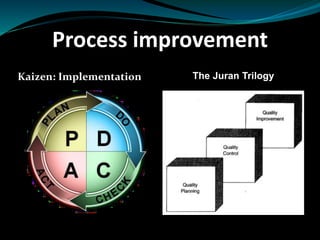
Process improvement
Kaizen: Implementation The Juran Trilogy
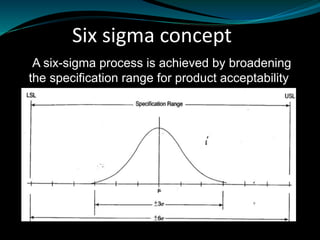
Six sigma concept
A six-sigma process is achieved by broadening
the specification range for product acceptability
ROLE OF QUALITY MANAGEMENT
 Increase the customer satisfaction.
 Increase the production of processes.
 Decrease the risk in any process involved.
 To determine the areas of improvement and
document them.
 Ensure that procedures conform to legislations.
 Develop new plans to improve the existing quality
system.
Conclusion
 Encourages a strategic approach to management at
the operational level.
 Provides high return on investment through
improving efficiency.
 Improves competitiveness and flexibility for a
whole organization.
 Increases the customer satisfaction through
continuous improvement, involving all employees
in the organization.
Thanks
Any Queries????

Quality management ppt

  • 1.
  • 2.
    INTRODUCTION Quality Quality is adynamic state associated with products, services, people, processes and environments that meets or exceeds expectations of customer. Quality Management It is an approach to doing business that attempts to maximize the competitiveness of an organization through the continual improvement of the quality of its products, services, people, processes and environments.
  • 4.
  • 5.
    Six sigma concept Asix-sigma process is achieved by broadening the specification range for product acceptability
  • 7.
    ROLE OF QUALITYMANAGEMENT  Increase the customer satisfaction.  Increase the production of processes.  Decrease the risk in any process involved.  To determine the areas of improvement and document them.  Ensure that procedures conform to legislations.  Develop new plans to improve the existing quality system.
  • 8.
    Conclusion  Encourages astrategic approach to management at the operational level.  Provides high return on investment through improving efficiency.  Improves competitiveness and flexibility for a whole organization.  Increases the customer satisfaction through continuous improvement, involving all employees in the organization.
  • 9.