Meaning of TQM
Total Quality management is defined as a continuous
effort by the management as well as employees of a
particular organization to ensure long term customer
loyalty and customer satisfaction.
Total quality management ensures that every single
employee is working towards the improvement of
work culture, processes, services, systems and so on
to ensure long term success.
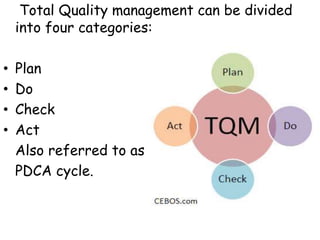
Total Quality management can be divided
into four categories:
• Plan
• Do
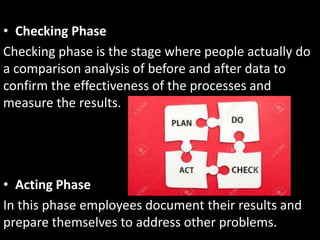
• Check
• Act
Also referred to as
PDCA cycle.
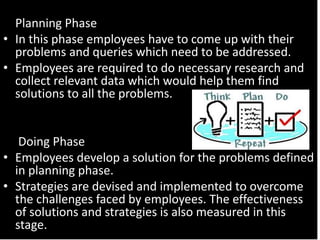
Planning Phase
• In this phase employees have to come up with their
problems and queries which need to be addressed.
• Employees are required to do necessary research and
collect relevant data which would help them find
solutions to all the problems.
Doing Phase
• Employees develop a solution for the problems defined
in planning phase.
• Strategies are devised and implemented to overcome
the challenges faced by employees. The effectiveness
of solutions and strategies is also measured in this
stage.
• Checking Phase
Checking phase is the stage where people actually do
a comparison analysis of before and after data to
confirm the effectiveness of the processes and
measure the results.
• Acting Phase
In this phase employees document their results and
prepare themselves to address other problems.
Elements of TQM
The success of total quality management depends on
following
• Foundation
• Building Bricks
• Binding Mortar
• Roof
FOUNDATION includes:
Ethics - Ethics is an individual’s understanding of
what is good and bad at the workplace.
Integrity - Integrity refers to honesty, values and an
individual’s sincerity at workplace.
Trust - Trust improves relationship among employees
and eventually helps in better decision making which
further helps in implementing total quality management
successfully.
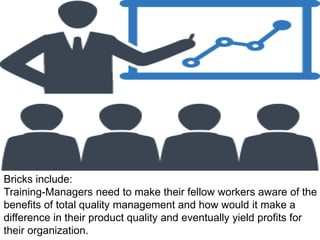
Bricks include:
Training-Managers need to make their fellow workers aware of the
benefits of total quality management and how would it make a
difference in their product quality and eventually yield profits for
their organization.
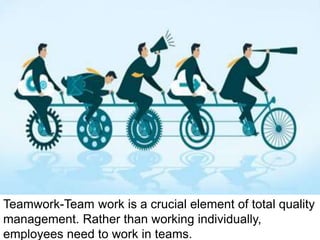
Teamwork-Team work is a crucial element of total quality
management. Rather than working individually,
employees need to work in teams.
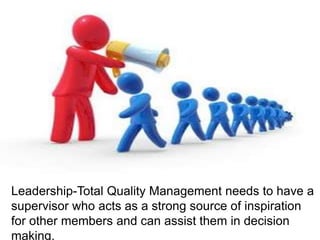
Leadership-Total Quality Management needs to have a
supervisor who acts as a strong source of inspiration
for other members and can assist them in decision
making.
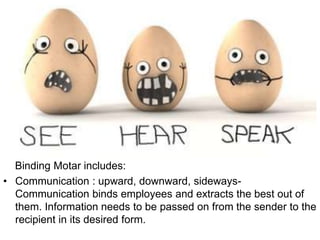
Binding Motar includes:
• Communication : upward, downward, sideways-
Communication binds employees and extracts the best out of
them. Information needs to be passed on from the sender to the
recipient in its desired form.
Roof:
Recognition- Recognition is the most
important factor which acts as a
catalyst and drives employees to
work hard as a team and deliver
their lever best.
Every individual is hungry for
appreciation and recognition.
BENEFITS OF TQM
Advantages unique to TQM
1.It makes a company a leader and not follower.
2.TQM creates goal direction connection between
customer, management and workers. Everyone is
motivated to contribute.
3.It makes the company more sensitive to customer
needs
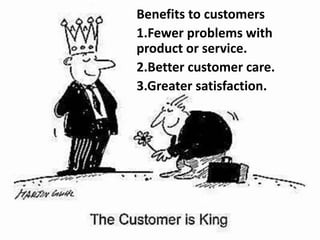
Benefits to customers
1.Fewer problems with
product or service.
2.Better customer care.
3.Greater satisfaction.
Produce quality
work the first
time
Involves designing products or services that meet or
exceed the customer's expectations.
This involves the product itself, its functionality,
attributes, convenience and even the means by which
the information about a product is received by a
client.
Focus on the
customer
Have a strategic
approach to
improvement
Processes are developed and tested to ensure the
product or service's quality.
This also involves making sure suppliers offer
quality supplies needed to produce products.
Continuously
Always analyzing the way work is being
performed to determine if more effective or
efficient ways are possible, making
improvements and striving for excellence all
the time.
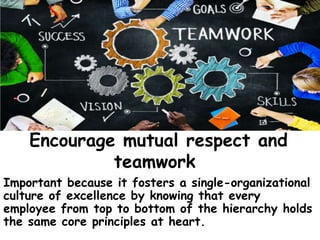
Encourage mutual respect and
teamwork
Important because it fosters a single-organizational
culture of excellence by knowing that every
employee from top to bottom of the hierarchy holds
the same core principles at heart.
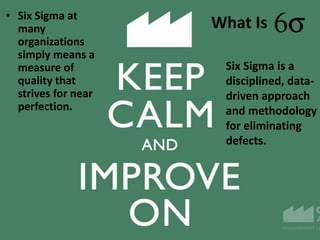
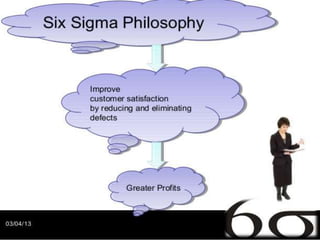
What Is• Six Sigma at
many
organizations
simply means a
measure of
quality that
strives for near
perfection.
Six Sigma is a
disciplined, data-
driven approach
and methodology
for eliminating
defects.
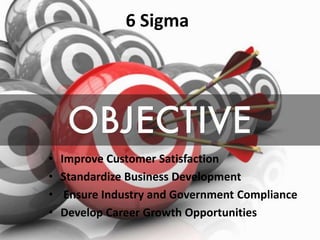
6 Sigma
• Improve Customer Satisfaction
• Standardize Business Development
• Ensure Industry and Government Compliance
• Develop Career Growth Opportunities
6 Sigma Methodology
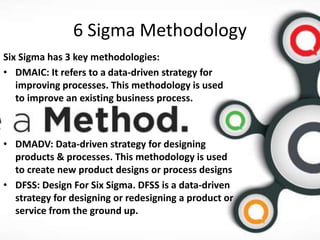
Six Sigma has 3 key methodologies:
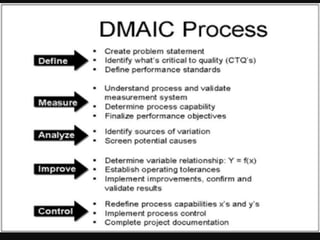
• DMAIC: It refers to a data-driven strategy for
improving processes. This methodology is used
to improve an existing business process.
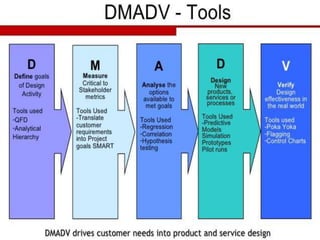
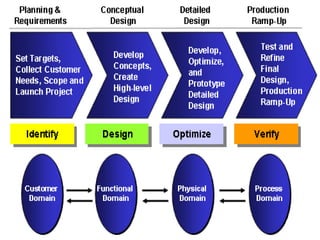
• DMADV: Data-driven strategy for designing
products & processes. This methodology is used
to create new product designs or process designs
• DFSS: Design For Six Sigma. DFSS is a data-driven
strategy for designing or redesigning a product or
service from the ground up.
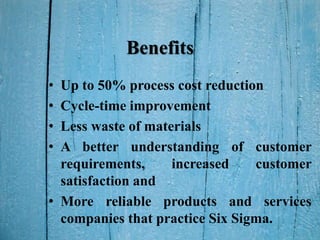
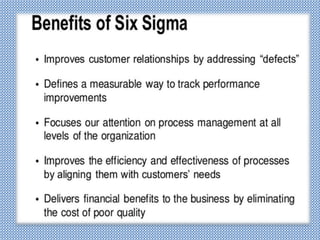
Benefits
• Up to 50% process cost reduction
• Cycle-time improvement
• Less waste of materials
• A better understanding of customer
requirements, increased customer
satisfaction and
• More reliable products and services
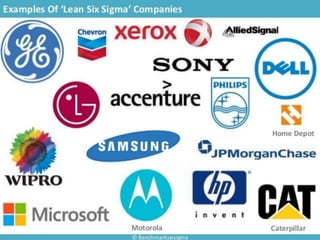
companies that practice Six Sigma.
It is acknowledged that Six Sigma can be
costly to implement and can take several
years before a company begins to see
bottom-line results. Texas Instruments,
Scientific-Atlanta, General Electric, and
Allied Signal are a few of the
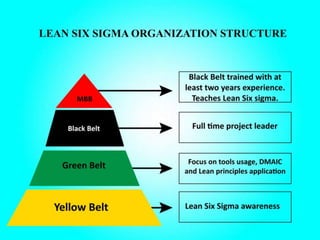
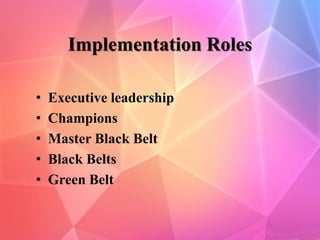
Implementation Roles
• Executive leadership
• Champions
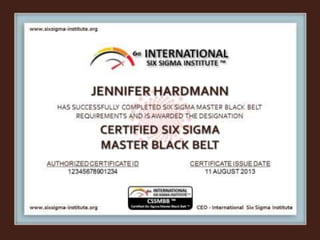
• Master Black Belt
• Black Belts
• Green Belt
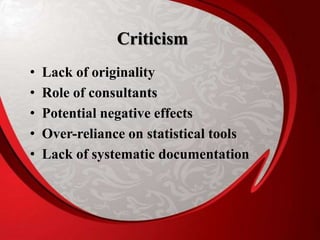
Criticism
• Lack of originality
• Role of consultants
• Potential negative effects
• Over-reliance on statistical tools
• Lack of systematic documentation
Total Quality Management & 6 Sigma

Total Quality Management & 6 Sigma

  • 2.
    Meaning of TQM TotalQuality management is defined as a continuous effort by the management as well as employees of a particular organization to ensure long term customer loyalty and customer satisfaction. Total quality management ensures that every single employee is working towards the improvement of work culture, processes, services, systems and so on to ensure long term success.
  • 3.
    Total Quality managementcan be divided into four categories: • Plan • Do • Check • Act Also referred to as PDCA cycle.
  • 4.
    Planning Phase • Inthis phase employees have to come up with their problems and queries which need to be addressed. • Employees are required to do necessary research and collect relevant data which would help them find solutions to all the problems. Doing Phase • Employees develop a solution for the problems defined in planning phase. • Strategies are devised and implemented to overcome the challenges faced by employees. The effectiveness of solutions and strategies is also measured in this stage.
  • 5.
    • Checking Phase Checkingphase is the stage where people actually do a comparison analysis of before and after data to confirm the effectiveness of the processes and measure the results. • Acting Phase In this phase employees document their results and prepare themselves to address other problems.
  • 6.
    Elements of TQM Thesuccess of total quality management depends on following • Foundation • Building Bricks • Binding Mortar • Roof
  • 7.
    FOUNDATION includes: Ethics -Ethics is an individual’s understanding of what is good and bad at the workplace.
  • 8.
    Integrity - Integrityrefers to honesty, values and an individual’s sincerity at workplace.
  • 10.
    Trust - Trustimproves relationship among employees and eventually helps in better decision making which further helps in implementing total quality management successfully.
  • 11.
    Bricks include: Training-Managers needto make their fellow workers aware of the benefits of total quality management and how would it make a difference in their product quality and eventually yield profits for their organization.
  • 12.
    Teamwork-Team work isa crucial element of total quality management. Rather than working individually, employees need to work in teams.
  • 13.
    Leadership-Total Quality Managementneeds to have a supervisor who acts as a strong source of inspiration for other members and can assist them in decision making.
  • 14.
    Binding Motar includes: •Communication : upward, downward, sideways- Communication binds employees and extracts the best out of them. Information needs to be passed on from the sender to the recipient in its desired form.
  • 15.
    Roof: Recognition- Recognition isthe most important factor which acts as a catalyst and drives employees to work hard as a team and deliver their lever best. Every individual is hungry for appreciation and recognition.
  • 16.
    BENEFITS OF TQM Advantagesunique to TQM 1.It makes a company a leader and not follower. 2.TQM creates goal direction connection between customer, management and workers. Everyone is motivated to contribute. 3.It makes the company more sensitive to customer needs
  • 17.
    Benefits to customers 1.Fewerproblems with product or service. 2.Better customer care. 3.Greater satisfaction.
  • 19.
  • 20.
    Involves designing productsor services that meet or exceed the customer's expectations. This involves the product itself, its functionality, attributes, convenience and even the means by which the information about a product is received by a client. Focus on the customer
  • 21.
    Have a strategic approachto improvement Processes are developed and tested to ensure the product or service's quality. This also involves making sure suppliers offer quality supplies needed to produce products.
  • 22.
    Continuously Always analyzing theway work is being performed to determine if more effective or efficient ways are possible, making improvements and striving for excellence all the time.
  • 23.
    Encourage mutual respectand teamwork Important because it fosters a single-organizational culture of excellence by knowing that every employee from top to bottom of the hierarchy holds the same core principles at heart.
  • 27.
    What Is• SixSigma at many organizations simply means a measure of quality that strives for near perfection. Six Sigma is a disciplined, data- driven approach and methodology for eliminating defects.
  • 28.
    6 Sigma • ImproveCustomer Satisfaction • Standardize Business Development • Ensure Industry and Government Compliance • Develop Career Growth Opportunities
  • 29.
    6 Sigma Methodology SixSigma has 3 key methodologies: • DMAIC: It refers to a data-driven strategy for improving processes. This methodology is used to improve an existing business process. • DMADV: Data-driven strategy for designing products & processes. This methodology is used to create new product designs or process designs • DFSS: Design For Six Sigma. DFSS is a data-driven strategy for designing or redesigning a product or service from the ground up.
  • 40.
    Benefits • Up to50% process cost reduction • Cycle-time improvement • Less waste of materials • A better understanding of customer requirements, increased customer satisfaction and • More reliable products and services companies that practice Six Sigma.
  • 41.
    It is acknowledgedthat Six Sigma can be costly to implement and can take several years before a company begins to see bottom-line results. Texas Instruments, Scientific-Atlanta, General Electric, and Allied Signal are a few of the
  • 42.
    Implementation Roles • Executiveleadership • Champions • Master Black Belt • Black Belts • Green Belt
  • 43.
    Criticism • Lack oforiginality • Role of consultants • Potential negative effects • Over-reliance on statistical tools • Lack of systematic documentation