GOOD AFTERNOON
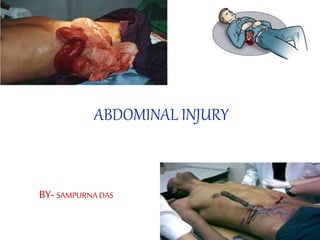
ABDOMINAL INJURY
BY- SAMPURNA DAS
5
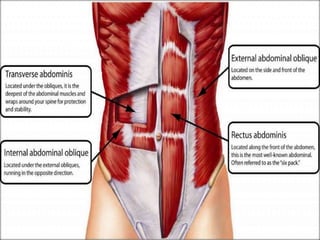
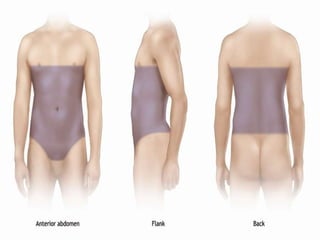
๏ƒ˜Anterior abdomen
๏ƒ˜Flank
๏ƒ˜Back
๏ƒ˜Intraperitoneal space contents
๏ƒ˜Retroperitoneal space contents
๏ƒ˜Pelvic cavity contents
Background Anatomy
โ€ข Anterior abdomen:
Trans-nipple line, Anterior axillary lines,
Inguinal ligaments and Symphysis pubis.
โ€ข Flank:
Anterior and posterior axillary line;
Sixth intercostal to iliac crest.
โ€ข Back:
Posterior axillary line; Tip of scapula to
Iliac crest.
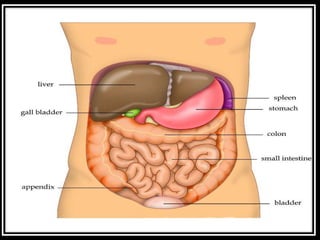
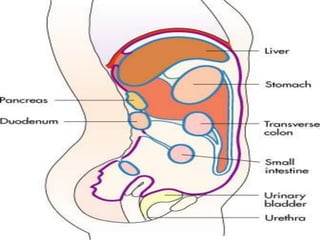
โ€ข Upper Peritoneal cavity
Covered by lower aspect of bony thorax. Includes Diaphragm, Liver,
Spleen, Stomach, Transverse colon.
โ€ข Lower Peritoneal cavity:
Small bowel Ascending and Descending colon, Sigmoid colon
โ€ข Retroperitoneal space:
A Potential space Behind โ€œtrueโ€ abdominal cavity
Abdominal Aorta, Inferior vena cava, Parts of Duodenum, Pancreas,
kidneys, Ureters and posterior aspects of Ascending and Descending
colons
โ€ข Pelvic cavity:
Rectum, Bladder, iliac vessels and Internal genitalia in women.
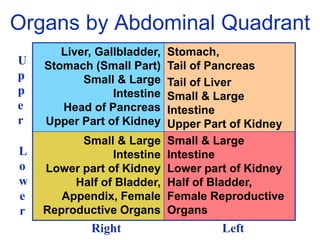
Organs by Abdominal Quadrant
Small & Large
Intestine
Lower part of Kidney
Half of Bladder,
Female Reproductive
Organs
Small & Large
Intestine
Lower part of Kidney
Half of Bladder,
Appendix, Female
Reproductive Organs
Stomach,
Tail of Pancreas
Tail of Liver
Small & Large
Intestine
Upper Part of Kidney
Liver, Gallbladder,
Stomach (Small Part)
Small & Large
Intestine
Head of Pancreas
Upper Part of Kidney
U
p
p
e
r
L
o
w
e
r
Right Left
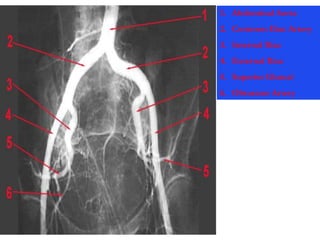
Vascular Anatomy
1. Abdominal Aorta
2. Common Iliac Artery
3. Internal Iliac
4. External Iliac
5. Superior Gluteal
6. Obturator Artery
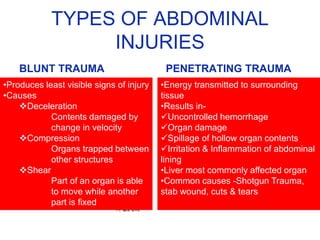
TYPES OF ABDOMINAL
INJURIES
BLUNT TRAUMA PENETRATING TRAUMA
โ€ขEnergy transmitted to surrounding
tissue
โ€ขResults in-
๏ƒผUncontrolled hemorrhage
๏ƒผOrgan damage
๏ƒผSpillage of hollow organ contents
๏ƒผIrritation & Inflammation of abdominal
lining
โ€ขLiver most commonly affected organ
โ€ขCommon causes -Shotgun Trauma,
stab wound, cuts & tears
โ€ขProduces least visible signs of injury
โ€ขCauses
๏ถDeceleration
Contents damaged by
change in velocity
๏ถCompression
Organs trapped between
other structures
๏ถShear
Part of an organ is able
to move while another
part is fixed
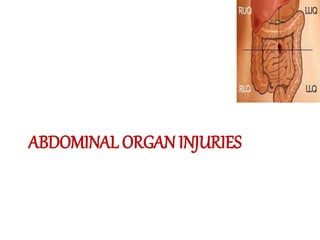
ABDOMINAL ORGAN INJURIES
DIAPHRAGMATIC INJURY
DESCRIPTIONS
โ€ข Partially protected by bony
structures, diaphragm is
commonly injured by
penetrating trauma
(Automobile deceleration may
lead to rapid rise in intra-
abdominal pressure and a
burst injury
โ€ข Diaphragmatic tear usually
indicates multi-organ
involvement
CLINICAL MANIFESTATIONS
โ€ข Decreased breath sounds
โ€ข Abdominal peristalsis heard
in thorax
โ€ข Acute chest pain and
shortness of breath may
indicate diaphragmatic tear
โ€ข May be hard to diagnose
because of multisystem
trauma or the liver may
"plug" the defect and mask it
ESOPHAGEAL INJURY
DESCRIPTIONS
โ€ข Penetrating injury is more
common than blunt injury
โ€ข May be caused by knives,
bullets, foreign body
obstruction
โ€ข May be caused by iatrogenic
perforation
โ€ข May be associated with
cervical spine injury
CLINICAL MANIFESTATIONS
โ€ข Pain at site of perforation
โ€ข Fever
โ€ข Difficulty swallowing
โ€ข Cervical tenderness
โ€ข Peritoneal irritation
STOMACH INJURY
DESCRIPTIONS
โ€ข Penetrating injury is
more common than blunt
injury; in one-third of
patients, both the
anterior and the posterior
walls are penetrated
โ€ข May occur as a
complication from
cardiopulmonary
resuscitation or from
gastric dilation
CLINICAL MANIFESTATIONS
โ€ข Epigastric pain
โ€ข Epigastric tenderness
โ€ข Signs of peritonitis
โ€ข Bloody gastric
drainage
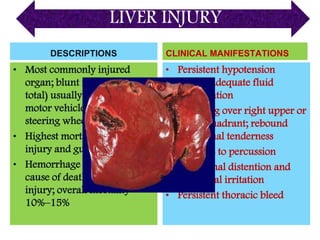
LIVER INJURY
DESCRIPTIONS
โ€ข Most commonly injured
organ; blunt injuries (70% of
total) usually occur from
motor vehicle crashes and
steering wheel trauma
โ€ข Highest mortality from blunt
injury and gunshot wound
โ€ข Hemorrhage is most common
cause of death from liver
injury; overall mortality
10%โ€“15%
CLINICAL MANIFESTATIONS
โ€ข Persistent hypotension
despite adequate fluid
resuscitation
โ€ข Guarding over right upper or
lower quadrant; rebound
abdominal tenderness
โ€ข Dullness to percussion
โ€ข Abdominal distention and
peritoneal irritation
โ€ข Persistent thoracic bleed
SPLEEN INJURY
DESCRIPTIONS
โ€ข Most commonly injured
organ with blunt abdominal
trauma
โ€ข Injured in penetrating
trauma of the left upper
quadrant
CLINICAL MANIFESTATIONS
โ€ข Hypotension, tachycardia,
shortness of breath
โ€ข Peritoneal irritation
โ€ข Abdominal wall tenderness
โ€ข Left upper quadrant pain
โ€ข Fixed dullness to percussion
in left flank; dullness to
percussion in right flank that
disappears with change of
position
PANCREAS INJURY
DESCRIPTIONS
โ€ข Most often penetrating injury
(gunshot wounds at close
range)
โ€ข Blunt injury from
deceleration; injury from
steering wheel
โ€ข Often associated (40%) with
other organ damage (liver,
spleen, vessels)
CLINICAL MANIFESTATIONS
โ€ข Pain over pancreas
โ€ข Paralytic ileus
โ€ข Symptoms may occur late
(after 24 hr); epigastric pain
radiating to back; nausea,
vomiting
โ€ข Tenderness to deep palpation
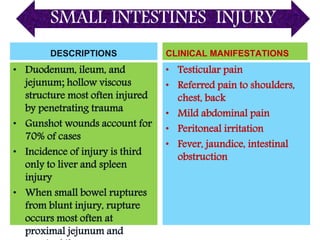
SMALL INTESTINES INJURY
DESCRIPTIONS
โ€ข Duodenum, ileum, and
jejunum; hollow viscous
structure most often injured
by penetrating trauma
โ€ข Gunshot wounds account for
70% of cases
โ€ข Incidence of injury is third
only to liver and spleen
injury
โ€ข When small bowel ruptures
from blunt injury, rupture
occurs most often at
proximal jejunum and
CLINICAL MANIFESTATIONS
โ€ข Testicular pain
โ€ข Referred pain to shoulders,
chest, back
โ€ข Mild abdominal pain
โ€ข Peritoneal irritation
โ€ข Fever, jaundice, intestinal
obstruction
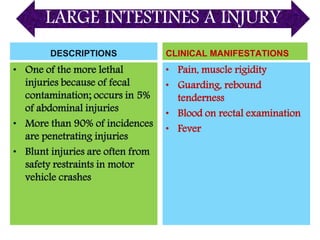
LARGE INTESTINES A INJURY
DESCRIPTIONS
โ€ข One of the more lethal
injuries because of fecal
contamination; occurs in 5%
of abdominal injuries
โ€ข More than 90% of incidences
are penetrating injuries
โ€ข Blunt injuries are often from
safety restraints in motor
vehicle crashes
CLINICAL MANIFESTATIONS
โ€ข Pain, muscle rigidity
โ€ข Guarding, rebound
tenderness
โ€ข Blood on rectal examination
โ€ข Fever
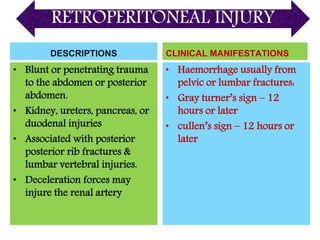
RETROPERITONEAL INJURY
DESCRIPTIONS
โ€ข Blunt or penetrating trauma
to the abdomen or posterior
abdomen.
โ€ข Kidney, ureters, pancreas, or
duodenal injuries
โ€ข Associated with posterior
posterior rib fractures &
lumbar vertebral injuries.
โ€ข Deceleration forces may
injure the renal artery
CLINICAL MANIFESTATIONS
โ€ข Haemorrhage usually from
pelvic or lumbar fractures:
โ€ข Gray turnerโ€™s sign โ€“ 12
hours or later
โ€ข cullenโ€™s sign โ€“ 12 hours or
later
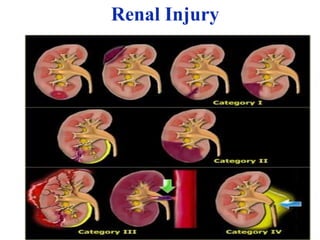
Renal Injury
.
Classification of Injury
โ€ข Grade I : Contusion or Subcapsular
Hematoma
โ€ข Grade II: Non Expanding Hematoma, <1
cm deep ,no extravasation
โ€ข Grade III: Laceration >1cm with urinary
Extravasation
โ€ข Grade IV: Parenchymal Laceration
โ€ข Grade V: Renovascular injury
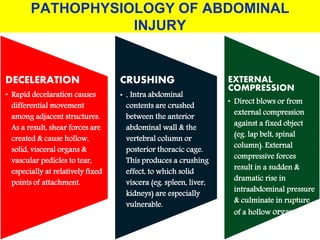
PATHOPHYSIOLOGY OF ABDOMINAL
INJURY
DECELERATION
โ€ข Rapid decelaration causes
differential movement
among adjacent structures.
As a result, shear forces are
created & cause hollow,
solid, visceral organs &
vascular pedicles to tear,
especially at relatively fixed
points of attachment.
CRUSHING
โ€ข . Intra abdominal
contents are crushed
between the anterior
abdominal wall & the
vertebral column or
posterior thoracic cage.
This produces a crushing
effect, to which solid
viscera (eg. spleen, liver,
kidneys) are especially
vulnerable.
EXTERNAL
COMPRESSION
โ€ข Direct blows or from
external compression
against a fixed object
(eg. lap belt, spinal
column). External
compressive forces
result in a sudden &
dramatic rise in
intraabdominal pressure
& culminate in rupture
of a hollow organ .
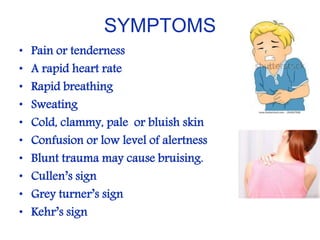
SYMPTOMS
โ€ข Pain or tenderness
โ€ข A rapid heart rate
โ€ข Rapid breathing
โ€ข Sweating
โ€ข Cold, clammy, pale or bluish skin
โ€ข Confusion or low level of alertness
โ€ข Blunt trauma may cause bruising.
โ€ข Cullenโ€™s sign
โ€ข Grey turnerโ€™s sign
โ€ข Kehrโ€™s sign
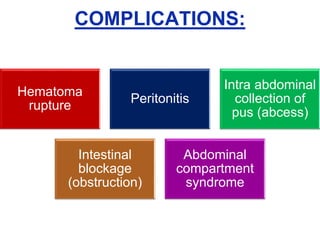
COMPLICATIONS:
Hematoma
rupture
Peritonitis
Intra abdominal
collection of
pus (abcess)
Intestinal
blockage
(obstruction)
Abdominal
compartment
syndrome
DIAGNOSTIC STUDIES
HISTORY TAKING
AMPLE History
โ€ข A: Allergy
โ€ข M: Medications
โ€ข P: Past medical history
โ€ข L: Last meal
โ€ข E: Event - What happened
General Examination : Relating to
hemodynamic stability (Vital Signs)
Abdominal findings:
โ€ข Inspection :
For abdominal distension
For contusions or abrasions
Lap belt ecchymosis
Mesenteric, Bowel, and Lumbar spine injuries
Periumblical (Cullen sign) and
Flank (Grey Turner Sign) ecchymosis โ€“
Retroperitoneal hematoma
PHYSICAL EXAMINATION
โ€ข Palpation :
For tenderness, guarding and/or rigidity,
rebound tenderness โ€“ hemoperitoneum
โ€ข Percussion :
Dullness/ shifting dullness
Intraabdominal collection
โ€ข Auscultation : Where to auscultate &
What to listen for??? All four quadrants
for the +/- nce of bowel sounds
PHYSICAL EXAMINATION cont.
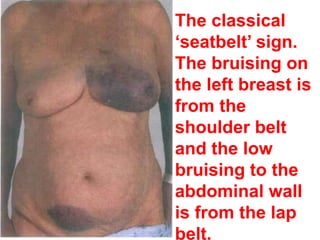
The classical
โ€˜seatbeltโ€™ sign.
The bruising on
the left breast is
from the
shoulder belt
and the low
bruising to the
abdominal wall
is from the lap
belt.
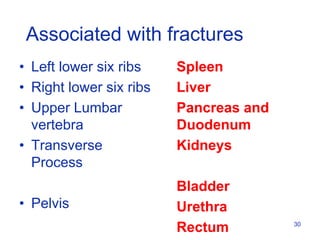
โ€ข Left lower six ribs
โ€ข Right lower six ribs
โ€ข Upper Lumbar
vertebra
โ€ข Transverse
Process
โ€ข Pelvis
Spleen
Liver
Pancreas and
Duodenum
Kidneys
Bladder
Urethra
Rectum 30
Associated with fractures
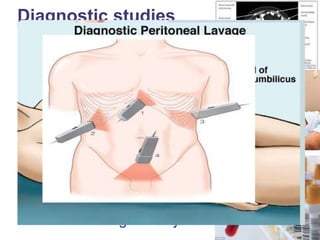
Diagnostic studies
โ€ข CECT
โ€ข FAST
โ€ข DPL
โ€ข Complete blood count
โ€ข Blood glucose determination
โ€ข Urinanalysis
โ€ข Coagulation profile
โ€ข Blood grouping, typing &
cross matching
โ€ข Arterial blood gas analysis
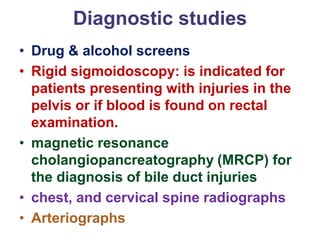
Diagnostic studies
โ€ข Drug & alcohol screens
โ€ข Rigid sigmoidoscopy: is indicated for
patients presenting with injuries in the
pelvis or if blood is found on rectal
examination.
โ€ข magnetic resonance
cholangiopancreatography (MRCP) for
the diagnosis of bile duct injuries
โ€ข chest, and cervical spine radiographs
โ€ข Arteriographs
COLLABORATIVE MANAGEMENT
Initial Assessment and Resuscitation
Primary survey
Identification & treatment of life threatening
conditions
โ€ข Airway , with cervical spine precautions
โ€ข Breathing
โ€ข Circulation
โ€ข Disability
โ€ข Exposure
Emergency Care
โ€ข I V fluids
โ€ข Control external bleeding
โ€ข Dressing of wounds
โ€ข Protect eviscerated organs with a sterile
dressing
โ€ข Stabilize an impaled object in place
โ€ข Give high flow oxygen
โ€ข Immobilize the patient with a fractured pelvis
โ€ข Keep the patient warm
โ€ข Analgesics
MANGEMENT BASED ON ORGANS
โ€ข DIAPHRAGMATIC TEARS :
๏ถ repaired surgically to prevent visceral
herniation in later years.
โ€ข ESOPHAGEAL INJURY:
๏ถ gastric decompression with a nasogastric
tube, antibiotic therapy
๏ถ surgical repair of the esophageal tear.
โ€ข GASTRIC INJURY:
๏ถpartial gastrectomy may be needed if
extensive injury has occurred.
MANGEMENT BASED ON ORGANS
โ€ข LIVER INJURY
๏ถ managed nonoperatively or operatively, depending on
the degree of injury and the amount of bleeding.
๏ถ Albumin transfusion
๏ถ Blood glucose regulation
โ€ข SPLEEN INJURY
โ€ข splenectomy is the treatment of choice when the
patient is markedly hemodynamically unstable, or
when the spleen is totally macerated.
MANGEMENT BASED ON ORGANS
โ€ข PANCREATIC INJURY :
๏ถdepends on the degree of pancreatic
damage, but drainage of the area is usually
necessary to prevent pancreatic fistula
formation and surrounding tissue damage
from pancreatic enzymes.
โ€ข SMALL AND LARGE BOWEL :
๏ถPerforation or lacerations are managed by
surgical exploration and repair.
๏ถColostomy
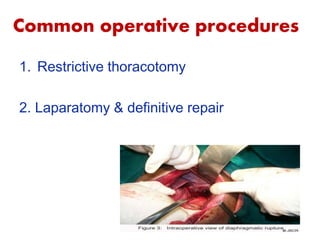
Common operative procedures
1. Restrictive thoracotomy
2. Laparatomy & definitive repair
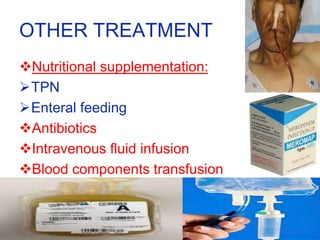
OTHER TREATMENT
๏ถNutritional supplementation:
๏ƒ˜TPN
๏ƒ˜Enteral feeding
๏ถAntibiotics
๏ถIntravenous fluid infusion
๏ถBlood components transfusion
NURSING MANAGEMENT
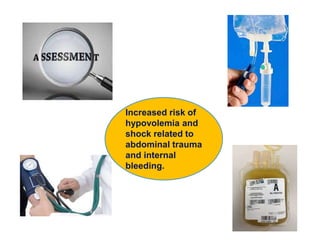
Increased risk of
hypovolemia and
shock related to
abdominal trauma
and internal
bleeding.
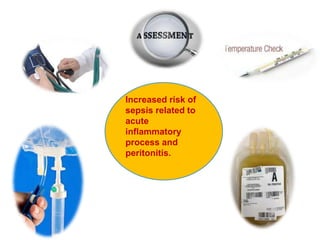
Increased risk of
sepsis related to
acute
inflammatory
process and
peritonitis.
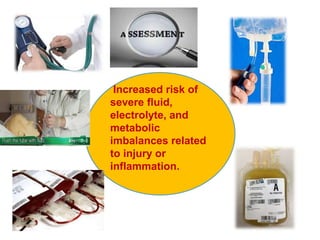
Increased risk of
severe fluid,
electrolyte, and
metabolic
imbalances related
to injury or
inflammation.
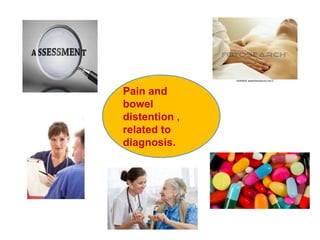
Pain and
bowel
distention ,
related to
diagnosis.
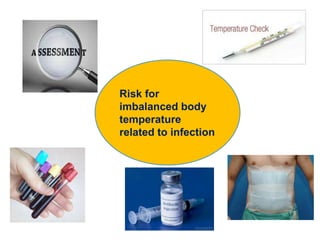
Risk for
imbalanced body
temperature
related to infection
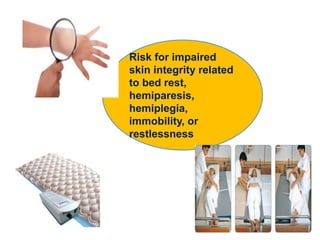
Risk for impaired
skin integrity related
to bed rest,
hemiparesis,
hemiplegia,
immobility, or
restlessness
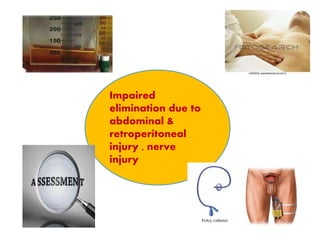
Impaired
elimination due to
abdominal &
retroperitoneal
injury , nerve
injury
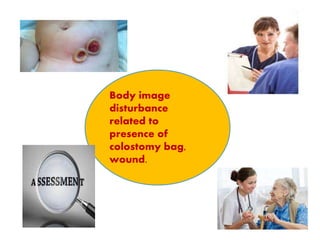
Body image
disturbance
related to
presence of
colostomy bag,
wound.
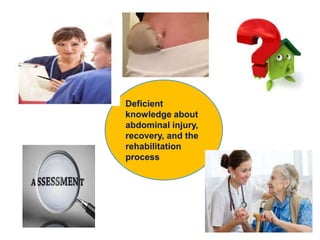
Deficient
knowledge about
abdominal injury,
recovery, and the
rehabilitation
process
Anxiety
related to the
symptoms of
disease and
fear of death.
Thank
Youโ€ฆ

Abdominal injury

  • 1.
  • 2.
  • 5.
    5 ๏ƒ˜Anterior abdomen ๏ƒ˜Flank ๏ƒ˜Back ๏ƒ˜Intraperitoneal spacecontents ๏ƒ˜Retroperitoneal space contents ๏ƒ˜Pelvic cavity contents Background Anatomy
  • 6.
    โ€ข Anterior abdomen: Trans-nippleline, Anterior axillary lines, Inguinal ligaments and Symphysis pubis. โ€ข Flank: Anterior and posterior axillary line; Sixth intercostal to iliac crest. โ€ข Back: Posterior axillary line; Tip of scapula to Iliac crest.
  • 7.
    โ€ข Upper Peritonealcavity Covered by lower aspect of bony thorax. Includes Diaphragm, Liver, Spleen, Stomach, Transverse colon. โ€ข Lower Peritoneal cavity: Small bowel Ascending and Descending colon, Sigmoid colon โ€ข Retroperitoneal space: A Potential space Behind โ€œtrueโ€ abdominal cavity Abdominal Aorta, Inferior vena cava, Parts of Duodenum, Pancreas, kidneys, Ureters and posterior aspects of Ascending and Descending colons โ€ข Pelvic cavity: Rectum, Bladder, iliac vessels and Internal genitalia in women.
  • 8.
    Organs by AbdominalQuadrant Small & Large Intestine Lower part of Kidney Half of Bladder, Female Reproductive Organs Small & Large Intestine Lower part of Kidney Half of Bladder, Appendix, Female Reproductive Organs Stomach, Tail of Pancreas Tail of Liver Small & Large Intestine Upper Part of Kidney Liver, Gallbladder, Stomach (Small Part) Small & Large Intestine Head of Pancreas Upper Part of Kidney U p p e r L o w e r Right Left
  • 9.
    Vascular Anatomy 1. AbdominalAorta 2. Common Iliac Artery 3. Internal Iliac 4. External Iliac 5. Superior Gluteal 6. Obturator Artery
  • 10.
    TYPES OF ABDOMINAL INJURIES BLUNTTRAUMA PENETRATING TRAUMA โ€ขEnergy transmitted to surrounding tissue โ€ขResults in- ๏ƒผUncontrolled hemorrhage ๏ƒผOrgan damage ๏ƒผSpillage of hollow organ contents ๏ƒผIrritation & Inflammation of abdominal lining โ€ขLiver most commonly affected organ โ€ขCommon causes -Shotgun Trauma, stab wound, cuts & tears โ€ขProduces least visible signs of injury โ€ขCauses ๏ถDeceleration Contents damaged by change in velocity ๏ถCompression Organs trapped between other structures ๏ถShear Part of an organ is able to move while another part is fixed
  • 11.
  • 12.
    DIAPHRAGMATIC INJURY DESCRIPTIONS โ€ข Partiallyprotected by bony structures, diaphragm is commonly injured by penetrating trauma (Automobile deceleration may lead to rapid rise in intra- abdominal pressure and a burst injury โ€ข Diaphragmatic tear usually indicates multi-organ involvement CLINICAL MANIFESTATIONS โ€ข Decreased breath sounds โ€ข Abdominal peristalsis heard in thorax โ€ข Acute chest pain and shortness of breath may indicate diaphragmatic tear โ€ข May be hard to diagnose because of multisystem trauma or the liver may "plug" the defect and mask it
  • 13.
    ESOPHAGEAL INJURY DESCRIPTIONS โ€ข Penetratinginjury is more common than blunt injury โ€ข May be caused by knives, bullets, foreign body obstruction โ€ข May be caused by iatrogenic perforation โ€ข May be associated with cervical spine injury CLINICAL MANIFESTATIONS โ€ข Pain at site of perforation โ€ข Fever โ€ข Difficulty swallowing โ€ข Cervical tenderness โ€ข Peritoneal irritation
  • 14.
    STOMACH INJURY DESCRIPTIONS โ€ข Penetratinginjury is more common than blunt injury; in one-third of patients, both the anterior and the posterior walls are penetrated โ€ข May occur as a complication from cardiopulmonary resuscitation or from gastric dilation CLINICAL MANIFESTATIONS โ€ข Epigastric pain โ€ข Epigastric tenderness โ€ข Signs of peritonitis โ€ข Bloody gastric drainage
  • 15.
    LIVER INJURY DESCRIPTIONS โ€ข Mostcommonly injured organ; blunt injuries (70% of total) usually occur from motor vehicle crashes and steering wheel trauma โ€ข Highest mortality from blunt injury and gunshot wound โ€ข Hemorrhage is most common cause of death from liver injury; overall mortality 10%โ€“15% CLINICAL MANIFESTATIONS โ€ข Persistent hypotension despite adequate fluid resuscitation โ€ข Guarding over right upper or lower quadrant; rebound abdominal tenderness โ€ข Dullness to percussion โ€ข Abdominal distention and peritoneal irritation โ€ข Persistent thoracic bleed
  • 16.
    SPLEEN INJURY DESCRIPTIONS โ€ข Mostcommonly injured organ with blunt abdominal trauma โ€ข Injured in penetrating trauma of the left upper quadrant CLINICAL MANIFESTATIONS โ€ข Hypotension, tachycardia, shortness of breath โ€ข Peritoneal irritation โ€ข Abdominal wall tenderness โ€ข Left upper quadrant pain โ€ข Fixed dullness to percussion in left flank; dullness to percussion in right flank that disappears with change of position
  • 17.
    PANCREAS INJURY DESCRIPTIONS โ€ข Mostoften penetrating injury (gunshot wounds at close range) โ€ข Blunt injury from deceleration; injury from steering wheel โ€ข Often associated (40%) with other organ damage (liver, spleen, vessels) CLINICAL MANIFESTATIONS โ€ข Pain over pancreas โ€ข Paralytic ileus โ€ข Symptoms may occur late (after 24 hr); epigastric pain radiating to back; nausea, vomiting โ€ข Tenderness to deep palpation
  • 18.
    SMALL INTESTINES INJURY DESCRIPTIONS โ€ขDuodenum, ileum, and jejunum; hollow viscous structure most often injured by penetrating trauma โ€ข Gunshot wounds account for 70% of cases โ€ข Incidence of injury is third only to liver and spleen injury โ€ข When small bowel ruptures from blunt injury, rupture occurs most often at proximal jejunum and CLINICAL MANIFESTATIONS โ€ข Testicular pain โ€ข Referred pain to shoulders, chest, back โ€ข Mild abdominal pain โ€ข Peritoneal irritation โ€ข Fever, jaundice, intestinal obstruction
  • 19.
    LARGE INTESTINES AINJURY DESCRIPTIONS โ€ข One of the more lethal injuries because of fecal contamination; occurs in 5% of abdominal injuries โ€ข More than 90% of incidences are penetrating injuries โ€ข Blunt injuries are often from safety restraints in motor vehicle crashes CLINICAL MANIFESTATIONS โ€ข Pain, muscle rigidity โ€ข Guarding, rebound tenderness โ€ข Blood on rectal examination โ€ข Fever
  • 20.
    RETROPERITONEAL INJURY DESCRIPTIONS โ€ข Bluntor penetrating trauma to the abdomen or posterior abdomen. โ€ข Kidney, ureters, pancreas, or duodenal injuries โ€ข Associated with posterior posterior rib fractures & lumbar vertebral injuries. โ€ข Deceleration forces may injure the renal artery CLINICAL MANIFESTATIONS โ€ข Haemorrhage usually from pelvic or lumbar fractures: โ€ข Gray turnerโ€™s sign โ€“ 12 hours or later โ€ข cullenโ€™s sign โ€“ 12 hours or later
  • 21.
    Renal Injury . Classification ofInjury โ€ข Grade I : Contusion or Subcapsular Hematoma โ€ข Grade II: Non Expanding Hematoma, <1 cm deep ,no extravasation โ€ข Grade III: Laceration >1cm with urinary Extravasation โ€ข Grade IV: Parenchymal Laceration โ€ข Grade V: Renovascular injury
  • 22.
    PATHOPHYSIOLOGY OF ABDOMINAL INJURY DECELERATION โ€ขRapid decelaration causes differential movement among adjacent structures. As a result, shear forces are created & cause hollow, solid, visceral organs & vascular pedicles to tear, especially at relatively fixed points of attachment. CRUSHING โ€ข . Intra abdominal contents are crushed between the anterior abdominal wall & the vertebral column or posterior thoracic cage. This produces a crushing effect, to which solid viscera (eg. spleen, liver, kidneys) are especially vulnerable. EXTERNAL COMPRESSION โ€ข Direct blows or from external compression against a fixed object (eg. lap belt, spinal column). External compressive forces result in a sudden & dramatic rise in intraabdominal pressure & culminate in rupture of a hollow organ .
  • 23.
    SYMPTOMS โ€ข Pain ortenderness โ€ข A rapid heart rate โ€ข Rapid breathing โ€ข Sweating โ€ข Cold, clammy, pale or bluish skin โ€ข Confusion or low level of alertness โ€ข Blunt trauma may cause bruising. โ€ข Cullenโ€™s sign โ€ข Grey turnerโ€™s sign โ€ข Kehrโ€™s sign
  • 24.
    COMPLICATIONS: Hematoma rupture Peritonitis Intra abdominal collection of pus(abcess) Intestinal blockage (obstruction) Abdominal compartment syndrome
  • 25.
  • 26.
    HISTORY TAKING AMPLE History โ€ขA: Allergy โ€ข M: Medications โ€ข P: Past medical history โ€ข L: Last meal โ€ข E: Event - What happened
  • 27.
    General Examination :Relating to hemodynamic stability (Vital Signs) Abdominal findings: โ€ข Inspection : For abdominal distension For contusions or abrasions Lap belt ecchymosis Mesenteric, Bowel, and Lumbar spine injuries Periumblical (Cullen sign) and Flank (Grey Turner Sign) ecchymosis โ€“ Retroperitoneal hematoma PHYSICAL EXAMINATION
  • 28.
    โ€ข Palpation : Fortenderness, guarding and/or rigidity, rebound tenderness โ€“ hemoperitoneum โ€ข Percussion : Dullness/ shifting dullness Intraabdominal collection โ€ข Auscultation : Where to auscultate & What to listen for??? All four quadrants for the +/- nce of bowel sounds PHYSICAL EXAMINATION cont.
  • 29.
    The classical โ€˜seatbeltโ€™ sign. Thebruising on the left breast is from the shoulder belt and the low bruising to the abdominal wall is from the lap belt.
  • 30.
    โ€ข Left lowersix ribs โ€ข Right lower six ribs โ€ข Upper Lumbar vertebra โ€ข Transverse Process โ€ข Pelvis Spleen Liver Pancreas and Duodenum Kidneys Bladder Urethra Rectum 30 Associated with fractures
  • 31.
    Diagnostic studies โ€ข CECT โ€ขFAST โ€ข DPL โ€ข Complete blood count โ€ข Blood glucose determination โ€ข Urinanalysis โ€ข Coagulation profile โ€ข Blood grouping, typing & cross matching โ€ข Arterial blood gas analysis
  • 32.
    Diagnostic studies โ€ข Drug& alcohol screens โ€ข Rigid sigmoidoscopy: is indicated for patients presenting with injuries in the pelvis or if blood is found on rectal examination. โ€ข magnetic resonance cholangiopancreatography (MRCP) for the diagnosis of bile duct injuries โ€ข chest, and cervical spine radiographs โ€ข Arteriographs
  • 33.
  • 34.
    Initial Assessment andResuscitation Primary survey Identification & treatment of life threatening conditions โ€ข Airway , with cervical spine precautions โ€ข Breathing โ€ข Circulation โ€ข Disability โ€ข Exposure
  • 35.
    Emergency Care โ€ข IV fluids โ€ข Control external bleeding โ€ข Dressing of wounds โ€ข Protect eviscerated organs with a sterile dressing โ€ข Stabilize an impaled object in place โ€ข Give high flow oxygen โ€ข Immobilize the patient with a fractured pelvis โ€ข Keep the patient warm โ€ข Analgesics
  • 36.
    MANGEMENT BASED ONORGANS โ€ข DIAPHRAGMATIC TEARS : ๏ถ repaired surgically to prevent visceral herniation in later years. โ€ข ESOPHAGEAL INJURY: ๏ถ gastric decompression with a nasogastric tube, antibiotic therapy ๏ถ surgical repair of the esophageal tear. โ€ข GASTRIC INJURY: ๏ถpartial gastrectomy may be needed if extensive injury has occurred.
  • 37.
    MANGEMENT BASED ONORGANS โ€ข LIVER INJURY ๏ถ managed nonoperatively or operatively, depending on the degree of injury and the amount of bleeding. ๏ถ Albumin transfusion ๏ถ Blood glucose regulation โ€ข SPLEEN INJURY โ€ข splenectomy is the treatment of choice when the patient is markedly hemodynamically unstable, or when the spleen is totally macerated.
  • 38.
    MANGEMENT BASED ONORGANS โ€ข PANCREATIC INJURY : ๏ถdepends on the degree of pancreatic damage, but drainage of the area is usually necessary to prevent pancreatic fistula formation and surrounding tissue damage from pancreatic enzymes. โ€ข SMALL AND LARGE BOWEL : ๏ถPerforation or lacerations are managed by surgical exploration and repair. ๏ถColostomy
  • 39.
    Common operative procedures 1.Restrictive thoracotomy 2. Laparatomy & definitive repair
  • 40.
    OTHER TREATMENT ๏ถNutritional supplementation: ๏ƒ˜TPN ๏ƒ˜Enteralfeeding ๏ถAntibiotics ๏ถIntravenous fluid infusion ๏ถBlood components transfusion
  • 41.
  • 42.
    Increased risk of hypovolemiaand shock related to abdominal trauma and internal bleeding.
  • 43.
    Increased risk of sepsisrelated to acute inflammatory process and peritonitis.
  • 44.
    Increased risk of severefluid, electrolyte, and metabolic imbalances related to injury or inflammation.
  • 45.
  • 46.
  • 47.
    Risk for impaired skinintegrity related to bed rest, hemiparesis, hemiplegia, immobility, or restlessness
  • 48.
    Impaired elimination due to abdominal& retroperitoneal injury , nerve injury
  • 49.
  • 50.
  • 51.
    Anxiety related to the symptomsof disease and fear of death.
  • 53.