PREVIOUS YEAR QUESTIONS
3 MARKERS:
1)Types of shock? [2]
2)Management of Haemoragic shock?
3)Hypovolemic shock?
5 MARKERS:
1)Anaphylactic shock?
2)Septic shock?
10 MARKERS:
1)Define and classify shock. Discuss clinical features and management of hypovolemic
shock? [2]
2)Classify shock. Discussin detail management of hypovolemic shock due to massive
haemorrhage?
SHOCK
• State of poor perfusion with impaired cellular metabolism
manifestating with severe pathophysiology abnormalities
• Due to circulatory collapse and tissue hypoxia
• Normal aerobic metabolism is not maintained due to hypoperfusion
• Shock is meant by inadequate perfusion to maintain normal organ
function
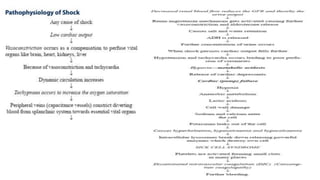
• At cellular level hypoxia causes change of normal aerobic to
anaerobic metabolism causing lactic acidosis
• Intracellular potassium is released into circulation
……continued
• Lysosomes from cells get released into blood causing cell lysis
• Hypoxia and acidosis through complements release free oxygen
radicals
• Cytokines which damage capillary endothelium
• Eventually cardiovascular, respiratory, renal, endocrine and GIT will
be affected presenting as systemic features
Shock may be hypovolaemic, cardiogenic,
obstructive,
distributive or of endocrine variety.
STAGES OF SHOCK
EFFECTS OF SHOCK
• Heart: Low perfusion
• low venous return
• decreased cardiac output
• hypotension
• tachycardia.
• Persistent shock causes hypoxia
• release of myocardial depressants leading to further cardiac damage.
• Lung: Interstitial oedema
• decreased gaseous exchange
• pulmonary arteriovenous shunting
• tachypnoea
• Adult/Acute respiratorydistress syndrome (ARDS) and pulmonary oedema.
• Metabolic:
• leads to hypoxia
• activates anaerobic metabolism leading to lactic acidosis.
• ADH is released - increases the reabsorption of water from renal
tubules.
• hormones released are ACTH, prostaglandins, histamine,
bradykinin, and serotonin to compensate the effects of shock to
increase the perfusion of vital organs like heart, brain and lungs.
• Cellular changes
• occur in persistent shock due to release of lysosomal enzymes
• alters the cell membrane permeability causing cell
death—sick cell syndrome
• Sympathetic overactivity - alters the microcirculation leading to
capillary dysfunction.
Brain perfusion, when decreases the patient becomes drowsy. Brain
is the last organ to get underperfused in shock.
Kidneys: GFR decreases and tubular reabsorption of salt and water
increases for compensatory response.
• severe cases tubularnecrosis sets in leading into irreversible damage.
Blood: Alteration in cellular components including platelets leads
toDisseminated intravascular coagulation (DIC).
• causes bleedingfrom all organs.
• Gastrointestinal tract: Mucosal ischaemia develops causing bleeding
from GIT
• aggravated by DIC.
• Hepatic ischaemia - into increased enzyme level
• Types of Shock
1. Vasovagal Shock - sudden dilatation of peripheral and splanchnic vessels
• Causing reduced cardiac output and shock.
• life-threatening
• due to hypoxia.
2. Neurogenic Shock - due to spinal cord injury,
• causes dilatation of splanchnic vessels.
• safely be treated with vasoconstrictor drugs to bring up the blood
pressure.
• will be bradycardia, hypotension, arrhythmias, and decreased cardiac
output.
• Blood pressure control
• oxygen delivery
• maintenance of haemodynamics,
• Airway
• fluid therapy
• intravenous methylprednisolone therapy should be done. Dopamine and
or phenylephrine (α agonist)
can be used.
3. Hypovolaemic Shock—most common type Haemorrhage, may be due
to injury to the liver, spleen, bone
fractures, haemothorax, vascular injury, severe bleeding on table during
surgeries of thyroid, liver, portal vein or major vessels.
• Vomiting, diarrhoea due to any causes
• 4. cardiogenic Shock - circulatory failure causing diminished
forward flow leading into tissue hypoxia in the setting of
adequate intravascular volume with systolic blood pressure
<90 mmHg for 30 minutes
• commonly seen in acute MI with a mortality >50%.
• develops within 24 hours of MI
• 50% of left ventricular wall is damaged by infarction.
• leads to pulmonary oedema and severe hypoxia.
• Ischaemic necrosis of left ventricular wall causes failure of
pump
Diagnosis - ECG ,Echocardiography ,arterial blood gas
analysi s ,cardiac enzymes ,PCWP electrolyte estimation
(hypokalaemia and hypomagnesaemia are common) are the
essential investigations
• Management
Proper oxygenation with intubation
• ventilator support
• Cardioversion
• antiarrhythmic drug
• correction of electrolytes
• avoiding fluid overload
• prevention of pulmonary oedema as immediate
measures.
• Dobutamine (β1 receptor agonist) - used to raise
cardiac output provided there is adequate preload
and intravascular volume (it is
peripheral vasodilator and reduces BP)
• Dopamine - preferred in patients with hypotension.
• may increase peripheral resistance and heart rate
worsening cardiac ischaemia.
• Often both dopamine and dobutamine combination
may be required.
• Careful judicial use of epinephrine, norepinephrine,
phosphodiesterase inhibitors (amrinone, milrinone)
are often needed.
•
Anticoagulants ,aspirin , Thrombolytics are given.
• b blockers, nitrates (nitroglycerine causes
coronary arterial dilatation), ACE inhibitors
are also used.
• Intra-aortic balloon pump (IABP) - as a
mechanical circulatory support to raise
cardiac
output and coronary blood flow.
• Relief of pain
• preserving of remaining myocardium and
its function
• maintaining adequate preload,
oxygenation, minimizing
sympathetic stimulation
• correction of electrolytes should be the
priorities.
• Percutaneous transluminal coronary
angioplasty (PTCA) and coronary artery
bypass graft (CABG) are the final choices.
• 5. cardiac compression Shock - due to pericardial tamponade of any cause or kinking
of great vessels, massive pulmonary embolism, tension pneumothorax, air embolism causes
obstructive shock with reduced preload to heart.
• Acute massive pulmonary embolism from a thrombus or an air
embolism (50 ml of air)
• obstructing more than 50% of pulmonary vasculature leads to severe shock and sudden death
• Tachycardia
• Hypotension
• pulmonary oedema
• raised JVP, gallop rhythm are the features.
6. Septic Shock - due to gram-positive organisms, gram negative organisms, fungi, viruses or protozoal
origin.
• Gram-negative septicaemia/gram-negative septic shock is called as endotoxic shock.
• Commonly seen in strangulated intestines, peritonitis, gastrointestinal fistulas, biliary and
urinaryinfections, pancreatitis, major surgical wounds, diabetic and crush injuries.
• Septic shock - a vasodilatory shock wherein there is peripheral vasodilatation causing
hypotension which is
resistant to vasopressors.
• due to toxin induced release of isoform of nitric oxide synthetase from the vessel wall
• causes sustained prolonged release of high levels on nitric oxide.
•
Magnitude of infection is quantified as:
•
1. Sepsis - fever, tachycardia, leucocytosis
•
2. Severe sepsis - low tissue perfusion with organ dysfunction (lactic acidosis, dysfunction of
liver,
kidney, lungs)
•
3. Septic shock - systemic hypotension
• severe organ dysfunction
• maldistribution of blood flow
• shunting in microcirculation.
• Stages of septic shock
a. Hyperdynamic (warm) shock:
• reversible stage.
• Patient is still having inflammatory response
• presents with fever, tachycardia, and tachypnoea.
• Pyrogenic response is still intact.
• Patient should be treated properly at this stage.
• Based on blood culture, urine culture higher antibiotics like third generation cephalosporins, aminoglycosides,
metronidazole are started.
• underlying cause is treated like draining the pus, laparotomy for peritonitis, etc.
• Ventilatory support with ICU monitoring may prevent the patient
b. Hypodynamic hypovolaemic septic shock (cold septic shock):
• pyrogenic response is lost
• decompensated shock.
• an irreversible stage along with MODS with anuria
• respiratory failure (cyanosis)
• Jaundice (liver failure)
• cardiac depression
• pulmonary oedema,
• hypoxia,
• drowsiness, eventually coma and death occurs (Irreversible stage).
• Treatment of septic shock
Correction of fluid and electrolyte by crystalloids
• Blood transfusion. Perfusion is important.
• antibiotics—third generation cephalosporins/ aminoglycosides.
• Treat the cause or focus—drainage of an abscess; laparotomy for peritonitis; resection of gangrenous bowel;
wound excision.
• Pus/urine/discharge/bile/blood culture and sensitivity for antibiotics.
• Critical care, oxygen, ventilator support, dobutamine/ dopamine/noradrenaline to maintain blood pressure and
urine output.
• Activated C protein prevents the release of inflammatory mediators
• blocks the effects of these mediators on cellular function.
• Monitoring the patient by pulse oximetry, cardiac status, urine output, arterial blood gas analysis.
• Short-term (one or two doses) high dose steroid therapy to control
• protect cells from effects of endotoxaemia.
• improves cardiac, renal and lung functions
• Single dose of methylprednisolone or dexamethasone
• often may be repeated again after 4 hours is said to be effective in endotoxic shock
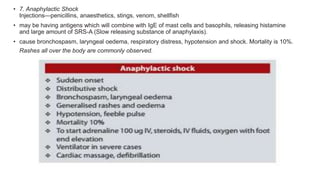
• 7. Anaphylactic Shock
Injections—penicillins, anaesthetics, stings, venom, shellfish
• may be having antigens which will combine with IgE of mast cells and basophils, releasing histamine
and large amount of SRS-A (Slow releasing substance of anaphylaxis).
• cause bronchospasm, laryngeal oedema, respiratory distress, hypotension and shock. Mortality is 10%.
Rashes all over the body are commonly observed.
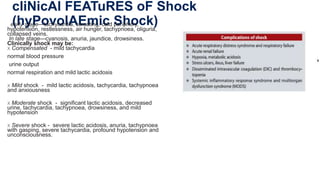
cliNicAl FEATuRES oF Shock
(hyPovolAEmic Shock)
early stage—tachycardia, sweating, cold periphery,
hypotension, restlessness, air hunger, tachypnoea, oliguria,
collapsed veins.
In late stage—cyanosis, anuria, jaundice, drowsiness.
Clinically shock may be:
x Compensated - mild tachycardia
normal blood pressure
urine output
normal respiration and mild lactic acidosis
x Mild shock - mild lactic acidosis, tachycardia, tachypnoea
and anxiousness
x Moderate shock - significant lactic acidosis, decreased
urine, tachycardia, tachypnoea, drowsiness, and mild
hypotension
x Severe shock - severe lactic acidosis, anuria, tachypnoea
with gasping, severe tachycardia, profound hypotension and
unconsciousness.
ASSESSmENT, iNvESTiGATioNS AND
moNiToRiNG
x Regular monitoring with blood pressure, pulse, heart rate, respiratory rate, urine output
measurement (hourly) should be done.
Pulse oximetry should be used
x Central venous pressure (CVP—only have gross assessment)
pulmonary capillary wedge pressure (PCWP—an accurate assessment of left ventricular
function) monitoring should be done.
ICU care is needed during monitor period
But both CVP and PCWP are not accurate method of assessing tissue perfusion
x Complete blood count, ESR, pH assessment, serum electrolyte estimation, chest x-ray
Serum lactate estimation is an important prognostic factor
x USG , CT/MRI of the location of the pathology of the septic focus should be done
x Blood urea, serum creatinine, liver function tests, prothrombin time (PT), activated partial
thromboplastin time (APTT), ECG
monitoring are also should be done.
x All these tests including platelet count and arterial blood gas analysis (ABG) should be
repeated at regular intervals
Treatment of Shock
x Fluid replacement:
• Blood transfusion is done whenever required.
• Fluid therapy is ideally done with crystalloids like normal saline, Ringer’s lactate, Hartmann’s solution.
• Blood loss should be corrected by blood transfusion only.
• Crystalloids and colloids do not have O2 carrying capacity.
• Hypotonic solutions like dextrose are poor volume expanders
• Dynamic fluid response - studied by infusing 500 ml of fluid rapidly in 10 minutes.
• Responders- show improvement
• transient responders - show improvement temporarily but revert back to original status
• nonresponders will not respond as fluid loss is severe and persistently ongoing
x Inotropic agents( contraction of muscle): Dopamine, dobutamine, adrenaline infusions—mainly in
distributive shock like septic shock
• Correction of acid-base balance:
• Acidosis - 8.4% sodium bicarbonate intravenously
• Steroid -life-saving. 500–1000 mg of hydrocortisone ( improves the perfusion, reduces the capillary Shock)5
• Antibiotics - patients with sepsis
• proper control of blood sugar and ketosis - diabetic patients.
• Catheterisation - measure urine output (30–50 ml/hour )
• Nasal oxygen - improve oxygenation or ventilator support with ICU monitoring has to be done.
• CVP line - perfuse adequately and to monitor fluid balance.
• TPN - given when required.
• PCWP - monitor very critical patient.
• Haemodialysis may be necessary when kidneys are not functioning
• Control pain-using morphine (4 mg IV)
• Ventilator and ICU/critical care management
x Injection ranitidine IV or omeprazole IV or pantoprazole IV
x Activated C protein - beneficial prevents the release and action of inflammatory response
x MAST (military antishock trouser): Provides circumferential external pressure of 40 mmHg.
(It is wrapped around lower limbs and abdomen, and inflated with required pressure.
It redistributes the existing blood and fluid towards centre.
It should be deflated carefully and gradually )
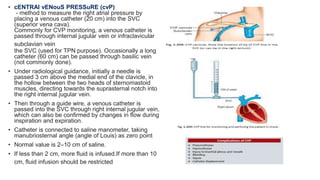
• cENTRAl vENouS PRESSuRE (cvP)
- method to measure the right atrial pressure by
placing a venous catheter (20 cm) into the SVC
(superior vena cava).
Commonly for CVP monitoring, a venous catheter is
passed through internal jugular vein or infraclavicular
subclavian vein
the SVC (used for TPN purpose). Occasionally a long
catheter (60 cm) can be passed through basilic vein
(not commonly done).
• Under radiological guidance, initially a needle is
passed 3 cm above the medial end of the clavicle, in
the hollow between the two heads of sternomastoid
muscles, directing towards the suprasternal notch into
the right internal jugular vein.
• Then through a guide wire, a venous catheter is
passed into the SVC through right internal jugular vein,
which can also be confirmed by changes in flow during
inspiration and expiration.
• Catheter is connected to saline manometer, taking
manubriosternal angle (angle of Louis) as zero point
• Normal value is 2–10 cm of saline.
• If less than 2 cm, more fluid is infused.If more than 10
cm, fluid infusion should be restricted
• PulmoNARy cAPillARy WEDGE PRESSuRE (PcWP)
• better indicator of circulating blood volume and left ventricular function.
• Catheter used is Swan Ganz triple channel pulmonary artery balloon catheter.
• Procedure
Under strict aseptic precaution, using cannula and guide wire
• catheter is passed through internal jugular vein, into the right atrium.
• Balloonis inflated by 1.5 ml of air and then negotiated into pulmonary artery,
until it reaches a small branch and wedges it. Pressure at this point is
called as pulmonary capillary wedge pressure.
• PCWP normally is 8–12 mmHg, considering mid axillary point
as zero reference point.
• After that, balloon is deflated to get pulmonary artery pressure which
is normally 25 mmHg systolic and 10 mmHg diastolic.
•
PCWP catheter can be kept in situ only for 72 hours
• SySTEmic iNFlAmmAToRy RESPoNSE SyNDRomE (SiRS)
- due to variety of causes like infection, pancreatitis, polytrauma, burns, transfusion
reaction, and malignancy
• categorised as infectious cause SIRS or noninfectious cause SIRS.
causes either hyperthermia (>38°C) or hypothermia (<36°C)
tachycardia (pulse >90/ minute); tachypnoea (>20/minute)
total white cell count >12,000/ cu mm, or count <4000/cu mm.
- common pathway in shock due to any cause (trauma, sepsis, endotoxaemia, burns)
- failure of inflammatory localisation with vasodilatation
- increased endothelial permeability with damage
- thrombosis, leucocyte migration and activation
- with release of free radicals
- abnormal arachidonic acid release
- cytokine release, neutrophil sequestration, abnormal
- NO synthesis, complement activation, DIC.
mulTiPlE oRGAN DySFuNcTioN SyNDRomE (moDS)
Progressively becoming irreversible injury of all tissues
Order of involvement of organs in MODS
—lungs → right ventricular failure → liver → kidney.
mortality is higher if kidney and lungs are involved.
occurs in critically ill patient after severe trauma, burns, acute pancreatitis, bleeding and sepsis.
more common in elderly, diabetic, smokers, alcoholics, cirrhosis, malnutrition, patients under steroids and
cytotoxic drugs,
and uraemia.
- Multiple features related to multiple organ dysfunctions are typical.
x Primary MODS - is due to a well defined
Causes like pulmonary contusion, rhabdomyolysis, multiple transfusions
x Secondary MODS - occurs as a result of host response in SIRS
x Management of MODS - critical care in ICU with ventilator support, haemodialysis, transfusions, antibiotics,
proper nutrition in the form of TPN or enteral. MODS stage has got high mortality
• oXyGEN ThERAPy
• Indications
• 1. Chest injuries, any severe haemorrhage.
2. Gas gangrene with toxic haemolysis.
3. Coal gas poisoning.
4. Over morphinisation.
5. Pulmonary embolism and fat embolism.
6. Spontaneous pneumothorax, pulmonary oedema, cardiac infarction, pneumonia, cor pulmonale.
7. Cardiogenic shock and acute bronchitis.
• 27% oxygen is delivered through ventimask (disposable polythene mask) at a rate of 4–6 litres per
minute. Oxygen is also given along with positive pressure ventilation.
• hyPERBARic oXyGEN
• administration of oxygen 1 or 2 atmospheres above the atmospheric pressure in a compression chamber
• increases the arterial oxygen saturation so that oxygen perfusion of tissues will be increased
Indications
1. Carbon monoxide poisoning.
2. Tetanus, gas gangrene infections
3. Bedsores, frostbites,
4. Drenching in paralytic bowel.
5. As a radiosensitizer
• complications
x Cerebral gas embolism
x Rupture of tympanic
x Visual defects.
x O2 toxicity.
x CO2 narcosis.
x Respiratory depression
• contraindication
x Asthma/emphysema.
x High fever.
x Chronic sinusitis.
x Viral infection.
x Pregnancy.
•
•
ToPicAl o2 ThERAPy
H2O2 to release nascent oxygen in ulcers and abscess
• cARDiAc ARREST
It is the cessation of the heart. Heart stops contracting.
Causes: All causes for shock
• critical Period
Once heart and lungs stop, brain death occurs in 3 minutes
• a. External cardiac compression (massage): Patient is laid flat on
a hard surface (never on soft surface).
• Manual compression is exerted over the lower sternum using both hands one over
other without bending the elbow at a rate of 60 to 70 per minute
• Rib cage damage during procedure can be very well ignored (Heel of
right hand is placed over the sternum 8 cm above xiphoid process and left hand is
placed over it)
b. Another person at the same time should give mouth to mouth
breathing at a rate of 20 to 30 per minute after clearing the airway
by removing froth and dentures
• . A bag with mask can be used to ventilate using air or oxygen
c. Endotracheal intubation and ventilator support.
d. Injection of 1:10,000 adrenaline and 10% calcium chloride intravenously
e. Sodium bicarbonate 8.4% injection, hydrocortisone injection
f. Defibrillator, if there is ventricular fibrillation
g. Analysis of blood gas (PCO2 and PO2), and serum electrolytes assessment at
repeated intervals
h. Urinary catheterization, Ryle's tube insertion.
i. Monitoring the patient with BP, pulse, respiration, and temperature
chart.
• internal open cardiac massage
- cardiac arrest occurs in the operation theatre
during surgery
• acute tamponade, and acute bilateral
pneumothorax.
• Left side thorax is opened through a lengthy
incision along 4th or 5th intercostal space.
• Initially heart with intact pericardium is
rhythmically compressed and relaxed using left
hand against sternum.
• costal cartilages above and below are cut with a
knife to have a better exposure
• Pericardium is opened in front of the phrenic
nerve.
• Direct cardiac massage is undertaken until heart
regains its function
• later shifted to ventilatory support and critical care.
• Defibrillation Technique (cardioversion)
Apply gelly to the site of electrodes. One
electrode at the base of heart
to the right of the sternum other over the
estimated area of the apex of
the heart. Ensure that nobody is in
contact with the patient. Activate
the defibrillator. Resume ventilation and
ECG monitor immediately.
After that, monitor continuously, correct the
acidosis, catheterise and
observe urine output. Arrange for ICU care.

SHOCK.pptx

  • 1.
    PREVIOUS YEAR QUESTIONS 3MARKERS: 1)Types of shock? [2] 2)Management of Haemoragic shock? 3)Hypovolemic shock? 5 MARKERS: 1)Anaphylactic shock? 2)Septic shock? 10 MARKERS: 1)Define and classify shock. Discuss clinical features and management of hypovolemic shock? [2] 2)Classify shock. Discussin detail management of hypovolemic shock due to massive haemorrhage?
  • 2.
    SHOCK • State ofpoor perfusion with impaired cellular metabolism manifestating with severe pathophysiology abnormalities • Due to circulatory collapse and tissue hypoxia • Normal aerobic metabolism is not maintained due to hypoperfusion • Shock is meant by inadequate perfusion to maintain normal organ function • At cellular level hypoxia causes change of normal aerobic to anaerobic metabolism causing lactic acidosis • Intracellular potassium is released into circulation
  • 3.
    ……continued • Lysosomes fromcells get released into blood causing cell lysis • Hypoxia and acidosis through complements release free oxygen radicals • Cytokines which damage capillary endothelium • Eventually cardiovascular, respiratory, renal, endocrine and GIT will be affected presenting as systemic features
  • 4.
    Shock may behypovolaemic, cardiogenic, obstructive, distributive or of endocrine variety.
  • 6.
  • 7.
    EFFECTS OF SHOCK •Heart: Low perfusion • low venous return • decreased cardiac output • hypotension • tachycardia. • Persistent shock causes hypoxia • release of myocardial depressants leading to further cardiac damage. • Lung: Interstitial oedema • decreased gaseous exchange • pulmonary arteriovenous shunting • tachypnoea • Adult/Acute respiratorydistress syndrome (ARDS) and pulmonary oedema.
  • 8.
    • Metabolic: • leadsto hypoxia • activates anaerobic metabolism leading to lactic acidosis. • ADH is released - increases the reabsorption of water from renal tubules. • hormones released are ACTH, prostaglandins, histamine, bradykinin, and serotonin to compensate the effects of shock to increase the perfusion of vital organs like heart, brain and lungs. • Cellular changes • occur in persistent shock due to release of lysosomal enzymes • alters the cell membrane permeability causing cell death—sick cell syndrome
  • 9.
    • Sympathetic overactivity- alters the microcirculation leading to capillary dysfunction. Brain perfusion, when decreases the patient becomes drowsy. Brain is the last organ to get underperfused in shock. Kidneys: GFR decreases and tubular reabsorption of salt and water increases for compensatory response. • severe cases tubularnecrosis sets in leading into irreversible damage. Blood: Alteration in cellular components including platelets leads toDisseminated intravascular coagulation (DIC). • causes bleedingfrom all organs. • Gastrointestinal tract: Mucosal ischaemia develops causing bleeding from GIT • aggravated by DIC. • Hepatic ischaemia - into increased enzyme level
  • 10.
    • Types ofShock 1. Vasovagal Shock - sudden dilatation of peripheral and splanchnic vessels • Causing reduced cardiac output and shock. • life-threatening • due to hypoxia. 2. Neurogenic Shock - due to spinal cord injury, • causes dilatation of splanchnic vessels. • safely be treated with vasoconstrictor drugs to bring up the blood pressure. • will be bradycardia, hypotension, arrhythmias, and decreased cardiac output. • Blood pressure control • oxygen delivery • maintenance of haemodynamics, • Airway • fluid therapy • intravenous methylprednisolone therapy should be done. Dopamine and or phenylephrine (α agonist) can be used. 3. Hypovolaemic Shock—most common type Haemorrhage, may be due to injury to the liver, spleen, bone fractures, haemothorax, vascular injury, severe bleeding on table during surgeries of thyroid, liver, portal vein or major vessels. • Vomiting, diarrhoea due to any causes • 4. cardiogenic Shock - circulatory failure causing diminished forward flow leading into tissue hypoxia in the setting of adequate intravascular volume with systolic blood pressure <90 mmHg for 30 minutes • commonly seen in acute MI with a mortality >50%. • develops within 24 hours of MI • 50% of left ventricular wall is damaged by infarction. • leads to pulmonary oedema and severe hypoxia. • Ischaemic necrosis of left ventricular wall causes failure of pump Diagnosis - ECG ,Echocardiography ,arterial blood gas analysi s ,cardiac enzymes ,PCWP electrolyte estimation (hypokalaemia and hypomagnesaemia are common) are the essential investigations
  • 11.
    • Management Proper oxygenationwith intubation • ventilator support • Cardioversion • antiarrhythmic drug • correction of electrolytes • avoiding fluid overload • prevention of pulmonary oedema as immediate measures. • Dobutamine (β1 receptor agonist) - used to raise cardiac output provided there is adequate preload and intravascular volume (it is peripheral vasodilator and reduces BP) • Dopamine - preferred in patients with hypotension. • may increase peripheral resistance and heart rate worsening cardiac ischaemia. • Often both dopamine and dobutamine combination may be required. • Careful judicial use of epinephrine, norepinephrine, phosphodiesterase inhibitors (amrinone, milrinone) are often needed. • Anticoagulants ,aspirin , Thrombolytics are given. • b blockers, nitrates (nitroglycerine causes coronary arterial dilatation), ACE inhibitors are also used. • Intra-aortic balloon pump (IABP) - as a mechanical circulatory support to raise cardiac output and coronary blood flow. • Relief of pain • preserving of remaining myocardium and its function • maintaining adequate preload, oxygenation, minimizing sympathetic stimulation • correction of electrolytes should be the priorities. • Percutaneous transluminal coronary angioplasty (PTCA) and coronary artery bypass graft (CABG) are the final choices.
  • 12.
    • 5. cardiaccompression Shock - due to pericardial tamponade of any cause or kinking of great vessels, massive pulmonary embolism, tension pneumothorax, air embolism causes obstructive shock with reduced preload to heart. • Acute massive pulmonary embolism from a thrombus or an air embolism (50 ml of air) • obstructing more than 50% of pulmonary vasculature leads to severe shock and sudden death • Tachycardia • Hypotension • pulmonary oedema • raised JVP, gallop rhythm are the features. 6. Septic Shock - due to gram-positive organisms, gram negative organisms, fungi, viruses or protozoal origin. • Gram-negative septicaemia/gram-negative septic shock is called as endotoxic shock. • Commonly seen in strangulated intestines, peritonitis, gastrointestinal fistulas, biliary and urinaryinfections, pancreatitis, major surgical wounds, diabetic and crush injuries.
  • 14.
    • Septic shock- a vasodilatory shock wherein there is peripheral vasodilatation causing hypotension which is resistant to vasopressors. • due to toxin induced release of isoform of nitric oxide synthetase from the vessel wall • causes sustained prolonged release of high levels on nitric oxide. • Magnitude of infection is quantified as: • 1. Sepsis - fever, tachycardia, leucocytosis • 2. Severe sepsis - low tissue perfusion with organ dysfunction (lactic acidosis, dysfunction of liver, kidney, lungs) • 3. Septic shock - systemic hypotension • severe organ dysfunction • maldistribution of blood flow • shunting in microcirculation.
  • 15.
    • Stages ofseptic shock a. Hyperdynamic (warm) shock: • reversible stage. • Patient is still having inflammatory response • presents with fever, tachycardia, and tachypnoea. • Pyrogenic response is still intact. • Patient should be treated properly at this stage. • Based on blood culture, urine culture higher antibiotics like third generation cephalosporins, aminoglycosides, metronidazole are started. • underlying cause is treated like draining the pus, laparotomy for peritonitis, etc. • Ventilatory support with ICU monitoring may prevent the patient b. Hypodynamic hypovolaemic septic shock (cold septic shock): • pyrogenic response is lost • decompensated shock. • an irreversible stage along with MODS with anuria • respiratory failure (cyanosis) • Jaundice (liver failure) • cardiac depression • pulmonary oedema, • hypoxia, • drowsiness, eventually coma and death occurs (Irreversible stage).
  • 16.
    • Treatment ofseptic shock Correction of fluid and electrolyte by crystalloids • Blood transfusion. Perfusion is important. • antibiotics—third generation cephalosporins/ aminoglycosides. • Treat the cause or focus—drainage of an abscess; laparotomy for peritonitis; resection of gangrenous bowel; wound excision. • Pus/urine/discharge/bile/blood culture and sensitivity for antibiotics. • Critical care, oxygen, ventilator support, dobutamine/ dopamine/noradrenaline to maintain blood pressure and urine output. • Activated C protein prevents the release of inflammatory mediators • blocks the effects of these mediators on cellular function. • Monitoring the patient by pulse oximetry, cardiac status, urine output, arterial blood gas analysis. • Short-term (one or two doses) high dose steroid therapy to control • protect cells from effects of endotoxaemia. • improves cardiac, renal and lung functions • Single dose of methylprednisolone or dexamethasone • often may be repeated again after 4 hours is said to be effective in endotoxic shock
  • 18.
    • 7. AnaphylacticShock Injections—penicillins, anaesthetics, stings, venom, shellfish • may be having antigens which will combine with IgE of mast cells and basophils, releasing histamine and large amount of SRS-A (Slow releasing substance of anaphylaxis). • cause bronchospasm, laryngeal oedema, respiratory distress, hypotension and shock. Mortality is 10%. Rashes all over the body are commonly observed.
  • 19.
    cliNicAl FEATuRES oFShock (hyPovolAEmic Shock) early stage—tachycardia, sweating, cold periphery, hypotension, restlessness, air hunger, tachypnoea, oliguria, collapsed veins. In late stage—cyanosis, anuria, jaundice, drowsiness. Clinically shock may be: x Compensated - mild tachycardia normal blood pressure urine output normal respiration and mild lactic acidosis x Mild shock - mild lactic acidosis, tachycardia, tachypnoea and anxiousness x Moderate shock - significant lactic acidosis, decreased urine, tachycardia, tachypnoea, drowsiness, and mild hypotension x Severe shock - severe lactic acidosis, anuria, tachypnoea with gasping, severe tachycardia, profound hypotension and unconsciousness.
  • 20.
    ASSESSmENT, iNvESTiGATioNS AND moNiToRiNG xRegular monitoring with blood pressure, pulse, heart rate, respiratory rate, urine output measurement (hourly) should be done. Pulse oximetry should be used x Central venous pressure (CVP—only have gross assessment) pulmonary capillary wedge pressure (PCWP—an accurate assessment of left ventricular function) monitoring should be done. ICU care is needed during monitor period But both CVP and PCWP are not accurate method of assessing tissue perfusion x Complete blood count, ESR, pH assessment, serum electrolyte estimation, chest x-ray Serum lactate estimation is an important prognostic factor x USG , CT/MRI of the location of the pathology of the septic focus should be done x Blood urea, serum creatinine, liver function tests, prothrombin time (PT), activated partial thromboplastin time (APTT), ECG monitoring are also should be done. x All these tests including platelet count and arterial blood gas analysis (ABG) should be repeated at regular intervals
  • 21.
  • 22.
    x Fluid replacement: •Blood transfusion is done whenever required. • Fluid therapy is ideally done with crystalloids like normal saline, Ringer’s lactate, Hartmann’s solution. • Blood loss should be corrected by blood transfusion only. • Crystalloids and colloids do not have O2 carrying capacity. • Hypotonic solutions like dextrose are poor volume expanders • Dynamic fluid response - studied by infusing 500 ml of fluid rapidly in 10 minutes. • Responders- show improvement • transient responders - show improvement temporarily but revert back to original status • nonresponders will not respond as fluid loss is severe and persistently ongoing x Inotropic agents( contraction of muscle): Dopamine, dobutamine, adrenaline infusions—mainly in distributive shock like septic shock
  • 23.
    • Correction ofacid-base balance: • Acidosis - 8.4% sodium bicarbonate intravenously • Steroid -life-saving. 500–1000 mg of hydrocortisone ( improves the perfusion, reduces the capillary Shock)5 • Antibiotics - patients with sepsis • proper control of blood sugar and ketosis - diabetic patients. • Catheterisation - measure urine output (30–50 ml/hour ) • Nasal oxygen - improve oxygenation or ventilator support with ICU monitoring has to be done. • CVP line - perfuse adequately and to monitor fluid balance. • TPN - given when required. • PCWP - monitor very critical patient. • Haemodialysis may be necessary when kidneys are not functioning • Control pain-using morphine (4 mg IV) • Ventilator and ICU/critical care management x Injection ranitidine IV or omeprazole IV or pantoprazole IV x Activated C protein - beneficial prevents the release and action of inflammatory response x MAST (military antishock trouser): Provides circumferential external pressure of 40 mmHg. (It is wrapped around lower limbs and abdomen, and inflated with required pressure. It redistributes the existing blood and fluid towards centre. It should be deflated carefully and gradually )
  • 24.
    • cENTRAl vENouSPRESSuRE (cvP) - method to measure the right atrial pressure by placing a venous catheter (20 cm) into the SVC (superior vena cava). Commonly for CVP monitoring, a venous catheter is passed through internal jugular vein or infraclavicular subclavian vein the SVC (used for TPN purpose). Occasionally a long catheter (60 cm) can be passed through basilic vein (not commonly done). • Under radiological guidance, initially a needle is passed 3 cm above the medial end of the clavicle, in the hollow between the two heads of sternomastoid muscles, directing towards the suprasternal notch into the right internal jugular vein. • Then through a guide wire, a venous catheter is passed into the SVC through right internal jugular vein, which can also be confirmed by changes in flow during inspiration and expiration. • Catheter is connected to saline manometer, taking manubriosternal angle (angle of Louis) as zero point • Normal value is 2–10 cm of saline. • If less than 2 cm, more fluid is infused.If more than 10 cm, fluid infusion should be restricted
  • 25.
    • PulmoNARy cAPillARyWEDGE PRESSuRE (PcWP) • better indicator of circulating blood volume and left ventricular function. • Catheter used is Swan Ganz triple channel pulmonary artery balloon catheter. • Procedure Under strict aseptic precaution, using cannula and guide wire • catheter is passed through internal jugular vein, into the right atrium. • Balloonis inflated by 1.5 ml of air and then negotiated into pulmonary artery, until it reaches a small branch and wedges it. Pressure at this point is called as pulmonary capillary wedge pressure. • PCWP normally is 8–12 mmHg, considering mid axillary point as zero reference point. • After that, balloon is deflated to get pulmonary artery pressure which is normally 25 mmHg systolic and 10 mmHg diastolic. • PCWP catheter can be kept in situ only for 72 hours
  • 26.
    • SySTEmic iNFlAmmAToRyRESPoNSE SyNDRomE (SiRS) - due to variety of causes like infection, pancreatitis, polytrauma, burns, transfusion reaction, and malignancy • categorised as infectious cause SIRS or noninfectious cause SIRS. causes either hyperthermia (>38°C) or hypothermia (<36°C) tachycardia (pulse >90/ minute); tachypnoea (>20/minute) total white cell count >12,000/ cu mm, or count <4000/cu mm. - common pathway in shock due to any cause (trauma, sepsis, endotoxaemia, burns) - failure of inflammatory localisation with vasodilatation - increased endothelial permeability with damage - thrombosis, leucocyte migration and activation - with release of free radicals - abnormal arachidonic acid release - cytokine release, neutrophil sequestration, abnormal - NO synthesis, complement activation, DIC.
  • 28.
    mulTiPlE oRGAN DySFuNcTioNSyNDRomE (moDS) Progressively becoming irreversible injury of all tissues Order of involvement of organs in MODS —lungs → right ventricular failure → liver → kidney. mortality is higher if kidney and lungs are involved. occurs in critically ill patient after severe trauma, burns, acute pancreatitis, bleeding and sepsis. more common in elderly, diabetic, smokers, alcoholics, cirrhosis, malnutrition, patients under steroids and cytotoxic drugs, and uraemia. - Multiple features related to multiple organ dysfunctions are typical. x Primary MODS - is due to a well defined Causes like pulmonary contusion, rhabdomyolysis, multiple transfusions x Secondary MODS - occurs as a result of host response in SIRS x Management of MODS - critical care in ICU with ventilator support, haemodialysis, transfusions, antibiotics, proper nutrition in the form of TPN or enteral. MODS stage has got high mortality
  • 29.
    • oXyGEN ThERAPy •Indications • 1. Chest injuries, any severe haemorrhage. 2. Gas gangrene with toxic haemolysis. 3. Coal gas poisoning. 4. Over morphinisation. 5. Pulmonary embolism and fat embolism. 6. Spontaneous pneumothorax, pulmonary oedema, cardiac infarction, pneumonia, cor pulmonale. 7. Cardiogenic shock and acute bronchitis. • 27% oxygen is delivered through ventimask (disposable polythene mask) at a rate of 4–6 litres per minute. Oxygen is also given along with positive pressure ventilation.
  • 30.
    • hyPERBARic oXyGEN •administration of oxygen 1 or 2 atmospheres above the atmospheric pressure in a compression chamber • increases the arterial oxygen saturation so that oxygen perfusion of tissues will be increased Indications 1. Carbon monoxide poisoning. 2. Tetanus, gas gangrene infections 3. Bedsores, frostbites, 4. Drenching in paralytic bowel. 5. As a radiosensitizer • complications x Cerebral gas embolism x Rupture of tympanic x Visual defects. x O2 toxicity. x CO2 narcosis. x Respiratory depression • contraindication x Asthma/emphysema. x High fever. x Chronic sinusitis. x Viral infection. x Pregnancy. •
  • 31.
    • ToPicAl o2 ThERAPy H2O2to release nascent oxygen in ulcers and abscess
  • 32.
    • cARDiAc ARREST Itis the cessation of the heart. Heart stops contracting. Causes: All causes for shock
  • 33.
    • critical Period Onceheart and lungs stop, brain death occurs in 3 minutes
  • 34.
    • a. Externalcardiac compression (massage): Patient is laid flat on a hard surface (never on soft surface). • Manual compression is exerted over the lower sternum using both hands one over other without bending the elbow at a rate of 60 to 70 per minute • Rib cage damage during procedure can be very well ignored (Heel of right hand is placed over the sternum 8 cm above xiphoid process and left hand is placed over it) b. Another person at the same time should give mouth to mouth breathing at a rate of 20 to 30 per minute after clearing the airway by removing froth and dentures • . A bag with mask can be used to ventilate using air or oxygen c. Endotracheal intubation and ventilator support. d. Injection of 1:10,000 adrenaline and 10% calcium chloride intravenously e. Sodium bicarbonate 8.4% injection, hydrocortisone injection f. Defibrillator, if there is ventricular fibrillation g. Analysis of blood gas (PCO2 and PO2), and serum electrolytes assessment at repeated intervals h. Urinary catheterization, Ryle's tube insertion. i. Monitoring the patient with BP, pulse, respiration, and temperature chart.
  • 35.
    • internal opencardiac massage - cardiac arrest occurs in the operation theatre during surgery • acute tamponade, and acute bilateral pneumothorax. • Left side thorax is opened through a lengthy incision along 4th or 5th intercostal space. • Initially heart with intact pericardium is rhythmically compressed and relaxed using left hand against sternum. • costal cartilages above and below are cut with a knife to have a better exposure • Pericardium is opened in front of the phrenic nerve. • Direct cardiac massage is undertaken until heart regains its function • later shifted to ventilatory support and critical care. • Defibrillation Technique (cardioversion) Apply gelly to the site of electrodes. One electrode at the base of heart to the right of the sternum other over the estimated area of the apex of the heart. Ensure that nobody is in contact with the patient. Activate the defibrillator. Resume ventilation and ECG monitor immediately. After that, monitor continuously, correct the acidosis, catheterise and observe urine output. Arrange for ICU care.