SHOCKPATHOPHYSIOLOGY
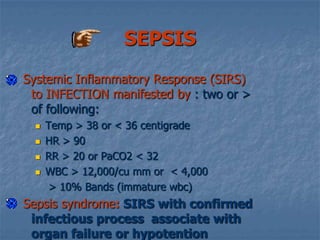
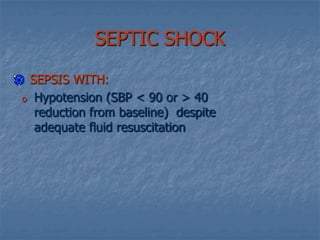
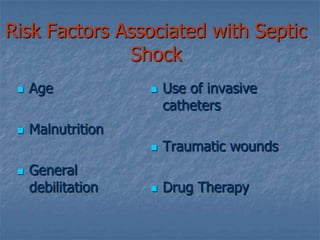
shockShockis a condition in which the cardiovascular system fails to perfuse tissues adequatelyAn impaired cardiac pump, circulatory system, and/or volume can lead to compromised blood flow to tissues
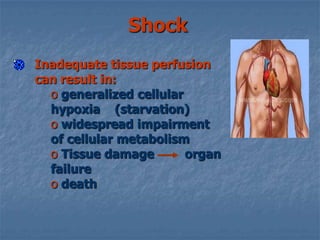
ShockInadequate tissue perfusion can result in: generalized cellular hypoxia    (starvation)
 widespread impairment of cellular metabolism
 Tissue damage  	      organ  failure
 deathPathophysiology of shockImpaired tissue perfusion occurs when an imbalance develops between cellular oxygen supply and cellular oxygen demand.  All Types of shock eventually result in impaired tissue perfusion & the development of acute circulatory failure or shock syndrome.
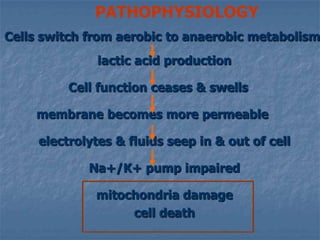
PATHOPHYSIOLOGYCells switch from aerobic to anaerobic metabolism 		lactic acid production Cell function ceases & swells	membrane becomes more permeable	electrolytes & fluids seep in & out of cellNa+/K+ pump impairedmitochondria damagecell death
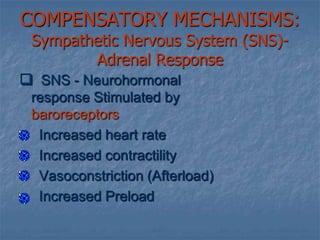
COMPENSATORY MECHANISMS: Sympathetic Nervous System (SNS)-Adrenal Response  SNS - Neurohormonal response Stimulated by baroreceptorsIncreased heart rate     Increased contractility     Vasoconstriction (Afterload)     Increased Preload
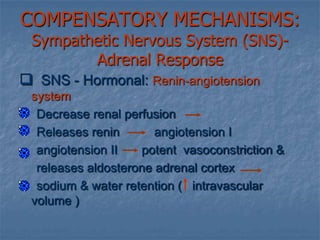
COMPENSATORY MECHANISMS: Sympathetic Nervous System (SNS)-Adrenal Response  SNS - Hormonal: Renin-angiotension systemDecrease renal perfusion     Releases renin 	  angiotension I      angiotension II       potent  vasoconstriction &     releases aldosterone adrenal cortex     sodium & water retention (   intravascular volume )
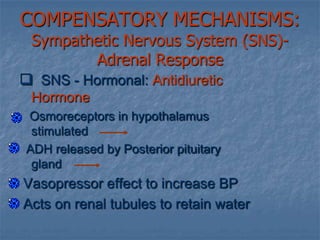
COMPENSATORY MECHANISMS: Sympathetic Nervous System (SNS)-Adrenal Response  SNS - Hormonal: Antidiuretic HormoneOsmoreceptors in hypothalamus stimulated  ADH released by Posterior pituitary gland  Vasopressor effect to increase BP Acts on renal tubules to retain water
COMPENSATORY MECHANISMS: Sympathetic Nervous System (SNS)-Adrenal Response  SNS - Hormonal: Adrenal Cortex  Anterior pituitary releases adrenocorticotropic hormone (ACTH)  Stimulates adrenal Cx to release glucorticoids  Blood sugar increases to meet increased metabolic needs
Failure of Compensatory ResponseDecreased blood flow to the tissues causes  cellular hypoxia
Anaerobic metabolism begins
Cell swelling, mitochondrial disruption, and eventual cell death
If Low Perfusion States persists:IRREVERSIBLE    	     DEATH IMMINENT!!
Stages of Shock❇Initial stage - tissues are under perfused, decreased CO, increased anaerobic metabolism, lactic acid is building❇Compensatory stage - Reversible. SNS activated by low CO, attempting to compensate for the decrease tissue perfusion. ❇Progressive stage - Failingcompensatory mechanisms:           profound vasoconstriction from the SNS ISCHEMIA        Lactic acid production is high 	    metabolic acidosis❇Irreversible or refractory stage - Cellular necrosis and Multiple Organ Dysfunction Syndromemay occur  DEATH IS IMMINENT!!!!
Pathophysiology Systemic Level  Net results of cellular shock:decreased myocardial contractility
systemic lactic acidosis
decreased vascular tone
decrease blood pressure, preload, and cardiac outputClinical Presentation: Generalized ShockVital signs
Hypotensive: (may be WNL or  	 due to compensatory mechanism)
MAP
Tachycardia:  Weak and Thready pulse
Tachypneic :  blow off CO2	 Respiratory alkalosisClinical Presentation: Generalized ShockMental status: (LOC)restless, irritable, apprehensive   unresponsiveDecreased Urine output
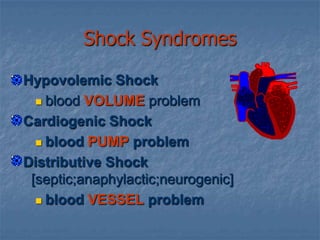
Shock Syndromes Hypovolemic Shockblood VOLUMEproblem Cardiogenic Shockblood PUMP problem Distributive Shock  [septic;anaphylactic;neurogenic]blood VESSEL problem
HYPOVOLEMIC SHOCK Loss of circulating volume “Empty tank ”       decrease tissue perfusion       general   shock response ETIOLOGY: Internal or External fluid lossIntracellular and extracellular compartments Most common causes:HemmorhageDehydration
 External loss of fluid Fluid loss: DehydrationNausea & vomiting, diarrhea, massive diuresis, extensive burns Blood loss: trauma:  blunt and penetratingBLOOD YOU SEEBLOOD YOU DON’T SEE
Internal fluid lossLoss of Intravascular integrityIncreased capillary membrane permeabilityDecreased Colloidal Osmotic Pressure (third spacing)
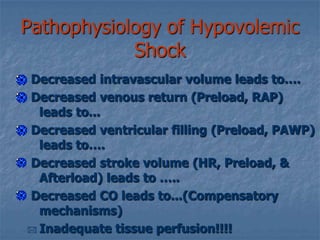
Pathophysiology of Hypovolemic ShockDecreased intravascular volume leads to…. Decreased venous return (Preload, RAP) leads to... Decreased ventricular filling (Preload, PAWP) leads to….  Decreased stroke volume (HR, Preload, & Afterload) leads to ….. Decreased CO leads to...(Compensatory mechanisms)Inadequate tissue perfusion!!!!Assessment & ManagementS/S vary depending on severity of fluid loss:15%[750ml]- compensatory mechanism maintains CO15-30% [750-1500ml- Hypoxemia,  decreased BP & UOP30-40% [1500-2000ml] -Impaired compensation & profound shock along with severe acidosis40-50% - refactory stage: loss of volume= death
Clinical PresentationHypovolemic ShockTachycardia and tachypneaWeak, thready pulsesHypotension Skin cool & clammyMental status changesDecreased urine output: dark & concentrated
Initial Management Hypovolemic ShockManagement goal:Restore circulating volume, tissue perfusion,  & correct cause:Early Recognition- Do not relay on BP! (30% fld loss)Control hemorrhageRestore circulating volumeOptimize oxygen deliveryVasoconstrictor if BP still low after volume loading
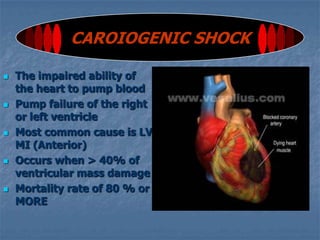
The impaired ability of the heart to pump bloodPump failure of the right or left ventricleMost common cause is LV MI (Anterior)Occurs when > 40% of ventricular mass damageMortality rate of 80 % or MORECAROIOGENIC SHOCK
Cardiogenic Shock : EtiologiesOther causes:Cardiomyopathiestamponadetension pneumothoraxarrhythmiasvalve diseaseMechanical: complications of MI:Papillary Muscle RuptureVentricular aneurysmVentricular septal rupture
Cardiogenic Shock: PathophysiologyImpaired pumping ability of    LV leads to…Decreased stroke volume leads to…..
Decreased CO leads to …..
Decreased BP leads to…..
Compensatory mechanism which may lead to
Decreased tissue perfusion !!!!Cardiogenic Shock: PathophysiologyImpaired pumping ability of LV leads to…Inadequate systolic emptying leads to ...
 Left ventricular filling pressures (preload) leads to...
 Left atrial pressures leads to ….
 Pulmonary capillary pressure leads to  …
Pulmonary interstitial & intraalveolar edema !!!!Clinical PresentationCardiogenic ShockSimilar catecholamine compensation changes in generalized shock & hypovolemic shockMay not show typical tachycardic response :if pt on Beta blockers, in heart block, or if bradycardic in response to nodal tissue ischemiaMean arterial pressure below 70 mmHg compromises coronary perfusion(MAP = SBP + (2) DBP/3)
Clinical PresentationCardiogenic ShockPericardial tamponademuffled heart tones, elevated neck veinsTension pneumothoraxJVD, tracheal deviation, decreased or absent unilateral breath sounds, and chest hyperresonance on affected side
CLINICAL ASSESSMENTPulmonary & Peripheral Edema JVD CO HypotensionTachypnea, Crackles   PaO2  UOP   LOC
MANAGEMENT   Goal of    management :Treat Reversible CausesProtect  ischemic myocardiumImprove tissue perfusionEarly assessment & treatment!!!Optimizing pump by:Increasing myocardial O2 deliveryMaximizing CODecreasing LV workload (Afterload)
MANAGEMENTLimiting/reducing myocardial damage during Myocardial Infarction:Increased pumping action  & decrease workload of the heartInotropic agentsVasoactive drugsIntra-aortic balloon pumpCautious administration of fluidsTransplantationConsider thrombolytics, angioplasty in specific cases
Management Cardiogenic ShockOPTIMIZING PUMP FUNCTION:Pulmonary artery monitoring is a necessity !!Aggressive airway management: Mechanical VentilationJudicious fluid managementVasoactive agentsDobutamineDopamine
Management Cardiogenic ShockOPTIMIZING PUMP FUNCTION (CONT.):Morphine as needed (Decreases preload, anxiety)Cautious use of diuretics in CHFVasodilators as needed for afterload reductionShort acting beta blocker, for refractory tachycardia
Inadequate perfusion of tissues through maldistribution of blood flowIntravascular volume is maldistributed because of alterations in blood vesselsCardiac pump & blood volume are normal but blood is not reaching the tissuesDISTRIBUTIVE SHOCK
Vasogenic/Distributive ShockEtiologiesSeptic Shock (Most Common)Anaphylactic Shock Neurogenic Shock
Anaphylactic ShockA type of distributive shock that results from widespread systemic allergic reaction to an antigenThis hypersensitive reaction isLIFE THREATENING
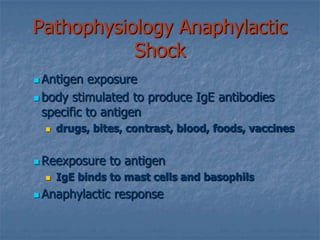
Pathophysiology Anaphylactic ShockAntigen exposurebody stimulated to produce IgE antibodies specific to antigendrugs, bites, contrast, blood, foods, vaccinesReexposure to antigenIgE binds to mast cells and basophilsAnaphylactic response
Anaphylactic ResponseVasodilatationIncreased vascular permeabilityBronchoconstrictionIncreased mucus productionIncreased inflammatory mediators recruitment to sites of antigen interaction
Clinical Presentation Anaphylactic ShockAlmost immediate response to inciting antigenCutaneous manifestationsurticaria, erythema, pruritis, angioedemaRespiratory compromisestridor, wheezing, bronchorrhea, resp. distressCirculatory collapsetachycardia, vasodilation, hypotension
Management Anaphylactic ShockEarly Recognition, treat aggressively AIRWAY SUPPORTIV EPINEPHRINE (open airways)AntihistaminesCorticosteroids IMMEDIATE WITHDRAWAL OF ANTIGEN IF POSSIBLEPREVENTION
Management Anaphylactic ShockJudicious crystalloid administration Vasopressors to maintain organ perfusionPositive inotropesPatient education
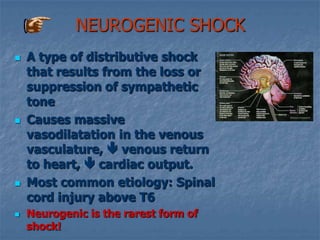
NEUROGENIC SHOCKA type of distributive shock that results from the loss or suppression of sympathetic toneCauses massive vasodilatation in the venous vasculature,  venous return to heart,  cardiac output.Most common etiology: Spinal cord injury above T6 Neurogenic is the rarest form of shock!
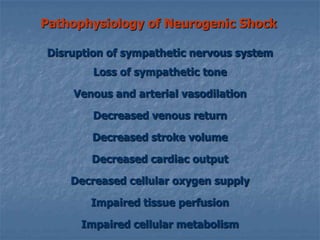
Pathophysiology of Neurogenic ShockDisruption of sympathetic nervous systemLoss of sympathetic toneVenous and arterial vasodilationDecreased venous returnDecreased stroke volumeDecreased cardiac outputDecreased cellular oxygen supplyImpaired tissue perfusionImpaired cellular metabolism
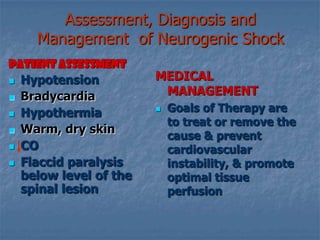
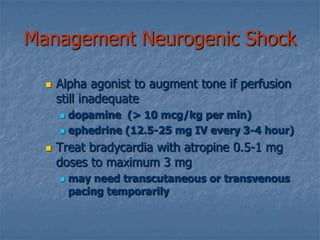
Assessment, Diagnosis and Management  of Neurogenic ShockPATIENT ASSESSMENTHypotensionBradycardiaHypothermiaWarm, dry skinCO Flaccid paralysis below level of the spinal lesionMEDICAL MANAGEMENTGoals of Therapy are to treat or remove the cause & prevent cardiovascular instability, & promote optimal tissue perfusion
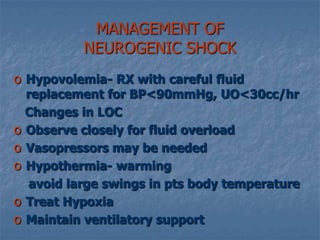
MANAGEMENT OF NEUROGENIC SHOCKHypovolemia- RX with careful fluid replacement for BP   Changes in LOCObserve closely for fluid overload
Vasopressors may be needed
Hypothermia- warming    avoid large swings in pts body temperatureTreat Hypoxia
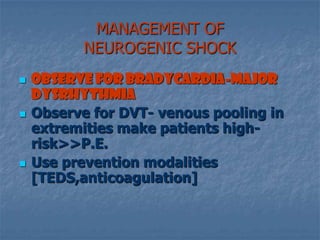
Maintain ventilatory supportMANAGEMENT OF NEUROGENIC SHOCKObserve for Bradycardia-major dysrhythmiaObserve for DVT- venous pooling in extremities make patients high-risk>>P.E.Use prevention modalities [TEDS,anticoagulation]

Shock

  • 1.
  • 2.
    shockShockis a conditionin which the cardiovascular system fails to perfuse tissues adequatelyAn impaired cardiac pump, circulatory system, and/or volume can lead to compromised blood flow to tissues
  • 3.
    ShockInadequate tissue perfusioncan result in: generalized cellular hypoxia (starvation)
  • 4.
    widespread impairmentof cellular metabolism
  • 5.
    Tissue damage organ failure
  • 6.
    deathPathophysiology ofshockImpaired tissue perfusion occurs when an imbalance develops between cellular oxygen supply and cellular oxygen demand. All Types of shock eventually result in impaired tissue perfusion & the development of acute circulatory failure or shock syndrome.
  • 7.
    PATHOPHYSIOLOGYCells switch fromaerobic to anaerobic metabolism lactic acid production Cell function ceases & swells membrane becomes more permeable electrolytes & fluids seep in & out of cellNa+/K+ pump impairedmitochondria damagecell death
  • 8.
    COMPENSATORY MECHANISMS: SympatheticNervous System (SNS)-Adrenal Response SNS - Neurohormonal response Stimulated by baroreceptorsIncreased heart rate Increased contractility Vasoconstriction (Afterload) Increased Preload
  • 9.
    COMPENSATORY MECHANISMS: SympatheticNervous System (SNS)-Adrenal Response SNS - Hormonal: Renin-angiotension systemDecrease renal perfusion Releases renin angiotension I angiotension II potent vasoconstriction & releases aldosterone adrenal cortex sodium & water retention ( intravascular volume )
  • 10.
    COMPENSATORY MECHANISMS: SympatheticNervous System (SNS)-Adrenal Response SNS - Hormonal: Antidiuretic HormoneOsmoreceptors in hypothalamus stimulated ADH released by Posterior pituitary gland Vasopressor effect to increase BP Acts on renal tubules to retain water
  • 11.
    COMPENSATORY MECHANISMS: SympatheticNervous System (SNS)-Adrenal Response SNS - Hormonal: Adrenal Cortex Anterior pituitary releases adrenocorticotropic hormone (ACTH) Stimulates adrenal Cx to release glucorticoids Blood sugar increases to meet increased metabolic needs
  • 12.
    Failure of CompensatoryResponseDecreased blood flow to the tissues causes cellular hypoxia
  • 13.
  • 14.
    Cell swelling, mitochondrialdisruption, and eventual cell death
  • 15.
    If Low PerfusionStates persists:IRREVERSIBLE DEATH IMMINENT!!
  • 16.
    Stages of Shock❇Initialstage - tissues are under perfused, decreased CO, increased anaerobic metabolism, lactic acid is building❇Compensatory stage - Reversible. SNS activated by low CO, attempting to compensate for the decrease tissue perfusion. ❇Progressive stage - Failingcompensatory mechanisms: profound vasoconstriction from the SNS ISCHEMIA Lactic acid production is high metabolic acidosis❇Irreversible or refractory stage - Cellular necrosis and Multiple Organ Dysfunction Syndromemay occur DEATH IS IMMINENT!!!!
  • 17.
    Pathophysiology Systemic Level Net results of cellular shock:decreased myocardial contractility
  • 18.
  • 19.
  • 20.
    decrease blood pressure,preload, and cardiac outputClinical Presentation: Generalized ShockVital signs
  • 21.
    Hypotensive: (may beWNL or due to compensatory mechanism)
  • 22.
  • 23.
    Tachycardia: Weakand Thready pulse
  • 24.
    Tachypneic : blow off CO2 Respiratory alkalosisClinical Presentation: Generalized ShockMental status: (LOC)restless, irritable, apprehensive unresponsiveDecreased Urine output
  • 25.
    Shock Syndromes HypovolemicShockblood VOLUMEproblem Cardiogenic Shockblood PUMP problem Distributive Shock [septic;anaphylactic;neurogenic]blood VESSEL problem
  • 26.
    HYPOVOLEMIC SHOCK Lossof circulating volume “Empty tank ” decrease tissue perfusion general shock response ETIOLOGY: Internal or External fluid lossIntracellular and extracellular compartments Most common causes:HemmorhageDehydration
  • 27.
    External lossof fluid Fluid loss: DehydrationNausea & vomiting, diarrhea, massive diuresis, extensive burns Blood loss: trauma: blunt and penetratingBLOOD YOU SEEBLOOD YOU DON’T SEE
  • 28.
    Internal fluid lossLossof Intravascular integrityIncreased capillary membrane permeabilityDecreased Colloidal Osmotic Pressure (third spacing)
  • 29.
    Pathophysiology of HypovolemicShockDecreased intravascular volume leads to…. Decreased venous return (Preload, RAP) leads to... Decreased ventricular filling (Preload, PAWP) leads to…. Decreased stroke volume (HR, Preload, & Afterload) leads to ….. Decreased CO leads to...(Compensatory mechanisms)Inadequate tissue perfusion!!!!Assessment & ManagementS/S vary depending on severity of fluid loss:15%[750ml]- compensatory mechanism maintains CO15-30% [750-1500ml- Hypoxemia, decreased BP & UOP30-40% [1500-2000ml] -Impaired compensation & profound shock along with severe acidosis40-50% - refactory stage: loss of volume= death
  • 30.
    Clinical PresentationHypovolemic ShockTachycardiaand tachypneaWeak, thready pulsesHypotension Skin cool & clammyMental status changesDecreased urine output: dark & concentrated
  • 31.
    Initial Management HypovolemicShockManagement goal:Restore circulating volume, tissue perfusion, & correct cause:Early Recognition- Do not relay on BP! (30% fld loss)Control hemorrhageRestore circulating volumeOptimize oxygen deliveryVasoconstrictor if BP still low after volume loading
  • 32.
    The impaired abilityof the heart to pump bloodPump failure of the right or left ventricleMost common cause is LV MI (Anterior)Occurs when > 40% of ventricular mass damageMortality rate of 80 % or MORECAROIOGENIC SHOCK
  • 33.
    Cardiogenic Shock :EtiologiesOther causes:Cardiomyopathiestamponadetension pneumothoraxarrhythmiasvalve diseaseMechanical: complications of MI:Papillary Muscle RuptureVentricular aneurysmVentricular septal rupture
  • 34.
    Cardiogenic Shock: PathophysiologyImpairedpumping ability of LV leads to…Decreased stroke volume leads to…..
  • 35.
  • 36.
  • 37.
  • 38.
    Decreased tissue perfusion!!!!Cardiogenic Shock: PathophysiologyImpaired pumping ability of LV leads to…Inadequate systolic emptying leads to ...
  • 39.
    Left ventricularfilling pressures (preload) leads to...
  • 40.
    Left atrialpressures leads to ….
  • 41.
    Pulmonary capillarypressure leads to …
  • 42.
    Pulmonary interstitial &intraalveolar edema !!!!Clinical PresentationCardiogenic ShockSimilar catecholamine compensation changes in generalized shock & hypovolemic shockMay not show typical tachycardic response :if pt on Beta blockers, in heart block, or if bradycardic in response to nodal tissue ischemiaMean arterial pressure below 70 mmHg compromises coronary perfusion(MAP = SBP + (2) DBP/3)
  • 43.
    Clinical PresentationCardiogenic ShockPericardialtamponademuffled heart tones, elevated neck veinsTension pneumothoraxJVD, tracheal deviation, decreased or absent unilateral breath sounds, and chest hyperresonance on affected side
  • 44.
    CLINICAL ASSESSMENTPulmonary &Peripheral Edema JVD CO HypotensionTachypnea, Crackles PaO2 UOP LOC
  • 45.
    MANAGEMENT Goal of management :Treat Reversible CausesProtect ischemic myocardiumImprove tissue perfusionEarly assessment & treatment!!!Optimizing pump by:Increasing myocardial O2 deliveryMaximizing CODecreasing LV workload (Afterload)
  • 46.
    MANAGEMENTLimiting/reducing myocardial damageduring Myocardial Infarction:Increased pumping action & decrease workload of the heartInotropic agentsVasoactive drugsIntra-aortic balloon pumpCautious administration of fluidsTransplantationConsider thrombolytics, angioplasty in specific cases
  • 47.
    Management Cardiogenic ShockOPTIMIZINGPUMP FUNCTION:Pulmonary artery monitoring is a necessity !!Aggressive airway management: Mechanical VentilationJudicious fluid managementVasoactive agentsDobutamineDopamine
  • 48.
    Management Cardiogenic ShockOPTIMIZINGPUMP FUNCTION (CONT.):Morphine as needed (Decreases preload, anxiety)Cautious use of diuretics in CHFVasodilators as needed for afterload reductionShort acting beta blocker, for refractory tachycardia
  • 49.
    Inadequate perfusion oftissues through maldistribution of blood flowIntravascular volume is maldistributed because of alterations in blood vesselsCardiac pump & blood volume are normal but blood is not reaching the tissuesDISTRIBUTIVE SHOCK
  • 50.
    Vasogenic/Distributive ShockEtiologiesSeptic Shock(Most Common)Anaphylactic Shock Neurogenic Shock
  • 51.
    Anaphylactic ShockA typeof distributive shock that results from widespread systemic allergic reaction to an antigenThis hypersensitive reaction isLIFE THREATENING
  • 52.
    Pathophysiology Anaphylactic ShockAntigenexposurebody stimulated to produce IgE antibodies specific to antigendrugs, bites, contrast, blood, foods, vaccinesReexposure to antigenIgE binds to mast cells and basophilsAnaphylactic response
  • 53.
    Anaphylactic ResponseVasodilatationIncreased vascularpermeabilityBronchoconstrictionIncreased mucus productionIncreased inflammatory mediators recruitment to sites of antigen interaction
  • 54.
    Clinical Presentation AnaphylacticShockAlmost immediate response to inciting antigenCutaneous manifestationsurticaria, erythema, pruritis, angioedemaRespiratory compromisestridor, wheezing, bronchorrhea, resp. distressCirculatory collapsetachycardia, vasodilation, hypotension
  • 55.
    Management Anaphylactic ShockEarlyRecognition, treat aggressively AIRWAY SUPPORTIV EPINEPHRINE (open airways)AntihistaminesCorticosteroids IMMEDIATE WITHDRAWAL OF ANTIGEN IF POSSIBLEPREVENTION
  • 56.
    Management Anaphylactic ShockJudiciouscrystalloid administration Vasopressors to maintain organ perfusionPositive inotropesPatient education
  • 57.
    NEUROGENIC SHOCKA typeof distributive shock that results from the loss or suppression of sympathetic toneCauses massive vasodilatation in the venous vasculature,  venous return to heart,  cardiac output.Most common etiology: Spinal cord injury above T6 Neurogenic is the rarest form of shock!
  • 58.
    Pathophysiology of NeurogenicShockDisruption of sympathetic nervous systemLoss of sympathetic toneVenous and arterial vasodilationDecreased venous returnDecreased stroke volumeDecreased cardiac outputDecreased cellular oxygen supplyImpaired tissue perfusionImpaired cellular metabolism
  • 59.
    Assessment, Diagnosis andManagement of Neurogenic ShockPATIENT ASSESSMENTHypotensionBradycardiaHypothermiaWarm, dry skinCO Flaccid paralysis below level of the spinal lesionMEDICAL MANAGEMENTGoals of Therapy are to treat or remove the cause & prevent cardiovascular instability, & promote optimal tissue perfusion
  • 60.
    MANAGEMENT OF NEUROGENICSHOCKHypovolemia- RX with careful fluid replacement for BP Changes in LOCObserve closely for fluid overload
  • 61.
  • 62.
    Hypothermia- warming avoid large swings in pts body temperatureTreat Hypoxia
  • 63.
    Maintain ventilatory supportMANAGEMENTOF NEUROGENIC SHOCKObserve for Bradycardia-major dysrhythmiaObserve for DVT- venous pooling in extremities make patients high-risk>>P.E.Use prevention modalities [TEDS,anticoagulation]