Oxygen Therapy
Dr.Indubala Maurya MD,DNB,MNAMS
Assistant Professor
Dept of Aanesthesia & Critical
Care,MGMCRI
• Definition
• Physiology
– O2 content
– Hypoxia
• Orthobaric Oxygen Therapy
– Indication
– Device for oxygen therapy
• Hyperbaric oxygen therapy
• Side effects of Oxygen Therapy
Why oxygenWhy oxygen
is required foris required for
survival?survival?
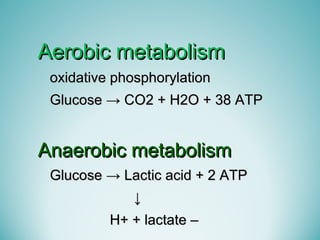
Aerobic metabolismAerobic metabolism
oxidative phosphorylationoxidative phosphorylation
Glucose → CO2 + H2O + 38 ATPGlucose → CO2 + H2O + 38 ATP
Anaerobic metabolismAnaerobic metabolism
Glucose → Lactic acid + 2 ATPGlucose → Lactic acid + 2 ATP
↓↓
H+ + lactate –H+ + lactate –
Anoxia
No oxygen availability in
tissues
Hypoxia
Lack of oxygen availability in
tissues
Hypoxemia
Lack of oxygen in the blood
Basic
s
What is O2 Therapy ?
Oxygen therapy is the administration
of oxygen at concentrations greater
than that in room air to treat or prevent
hypoxia.
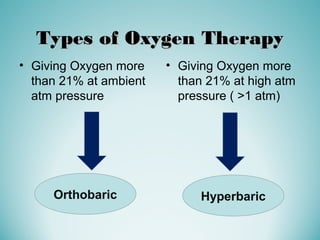
Types of Oxygen TherapyTypes of Oxygen Therapy
• Giving Oxygen more
than 21% at ambient
atm pressure
• Giving Oxygen more
than 21% at high atm
pressure ( >1 atm)
Orthobaric Hyperbaric
Three clinical goals of O2
therapy
1. Treat hypoxia
2. Decrease work of breathing
3. Decrease myocardial Work
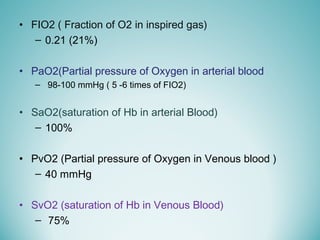
• FIO2 ( Fraction of O2 in inspired gas)
– 0.21 (21%)
• PaO2(Partial pressure of Oxygen in arterial blood
– 98-100 mmHg ( 5 -6 times of FIO2)
• SaO2(saturation of Hb in arterial Blood)
– 100%
• PvO2 (Partial pressure of Oxygen in Venous blood )
– 40 mmHg
• SvO2 (saturation of Hb in Venous Blood)
– 75%
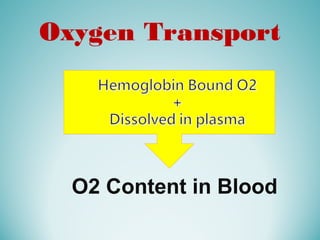
Oxygen Transport
O2 Content in Blood
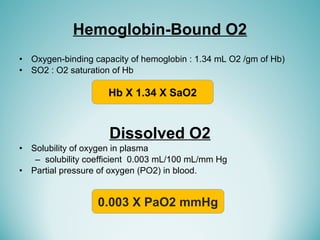
Hemoglobin-Bound O2
• Oxygen-binding capacity of hemoglobin : 1.34 mL O2 /gm of Hb)
• SO2 : O2 saturation of Hb
Dissolved O2
• Solubility of oxygen in plasma
– solubility coefficient 0.003 mL/100 mL/mm Hg
• Partial pressure of oxygen (PO2) in blood.
Hb X 1.34 X SaO2
0.003 X PaO2 mmHg
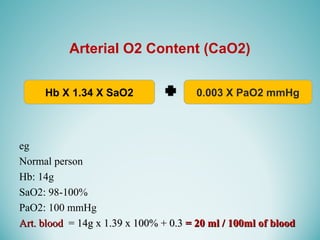
Arterial O2 Content (CaO2)
eg
Normal person
Hb: 14g
SaO2: 98-100%
PaO2: 100 mmHg
Art. bloodArt. blood = 14g x 1.39 x 100% + 0.3= 14g x 1.39 x 100% + 0.3 = 20 ml / 100ml of blood= 20 ml / 100ml of blood
0.003 X PaO2 mmHgHb X 1.34 X SaO2
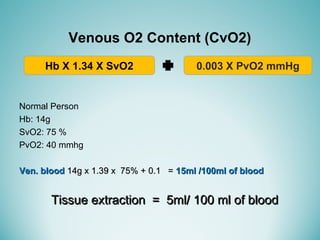
Venous O2 Content (CvO2)
Normal Person
Hb: 14g
SvO2: 75 %
PvO2: 40 mmhg
Ven. bloodVen. blood 14g x 1.39 x 75% + 0.1 =14g x 1.39 x 75% + 0.1 = 15ml /100ml of blood15ml /100ml of blood
Tissue extraction = 5ml/ 100 ml of bloodTissue extraction = 5ml/ 100 ml of blood
Hb X 1.34 X SvO2 0.003 X PvO2 mmHg
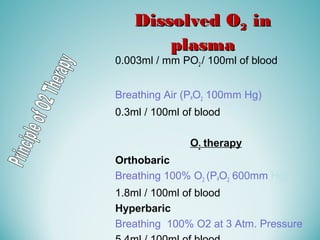
Dissolved ODissolved O22 inin
plasmaplasma
0.003ml / mm PO2 / 100ml of blood
Breathing Air (PaO2 100mm Hg)
0.3ml / 100ml of blood
O2 therapy
Orthobaric
Breathing 100% O2 (PaO2 600mm Hg)
1.8ml / 100ml of blood
Hyperbaric
Breathing 100% O2 at 3 Atm. Pressure
What are the Types ofWhat are the Types of
HypoxiaHypoxia??
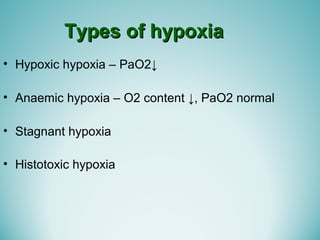
Types of hypoxiaTypes of hypoxia
• Hypoxic hypoxia – PaO2↓
• Anaemic hypoxia – O2 content ↓, PaO2 normal
• Stagnant hypoxia
• Histotoxic hypoxia
Hypoxic hypoxiaHypoxic hypoxia
• Causes
– O2 poor air, hypoxic gas mixture
– High altitude
– Hypoventilation
– Shunts – Septal defects
– Diffusion defects - pneumonia, lobar
collapse
Anaemic hypoxia
• Oxygen carrying capacity of blood is
decreased.
– Anemia :↓ haemoglobin
– Altered haemoglobin
• CO poisoning
• meth / sulph-haemoglobin
Normal Person (breathing 100% O2)
(14gm x 1.34ml ) + 1.8ml = 20.5ml (1.8 is 9% 20.5)
Anaemic patient (breathing 100% O2)
(4gm x 1.34ml )+ 1.8ml = 7.2 ml (1.8 is 25% of 7.2)
Stagnant hypoxia
• Inadequate tissue perfusion
• Generalized:
- Hypovolemia
- Mitral stenosis
- Constrictive pericerditis
- Myocardial ischaemia
• Localized hypo perfusion:
- Arterial obstruction, thrombus,
oedema
Histotoxic hypoxia
• Cells can not utilize the oxygen .
• Electron transfer system of cytochrome
oxidase is paralysed.
• e.g.
– cyanide poisoning
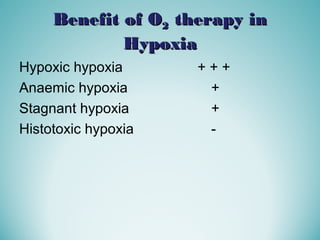
Benefit of OBenefit of O22 therapy intherapy in
HypoxiaHypoxia
Hypoxic hypoxia + + +
Anaemic hypoxia +
Stagnant hypoxia +
Histotoxic hypoxia -
Clinical presentation
of Hypoxia
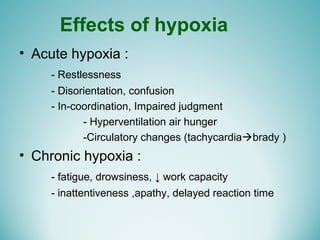
Effects of hypoxia
• Acute hypoxia :
- Restlessness
- Disorientation, confusion
- In-coordination, Impaired judgment
- Hyperventilation air hunger
-Circulatory changes (tachycardiabrady )
• Chronic hypoxia :
- fatigue, drowsiness, ↓ work capacity
- inattentiveness ,apathy, delayed reaction time
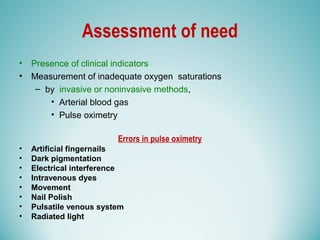
Assessment of need
• Presence of clinical indicators
• Measurement of inadequate oxygen saturations
– by invasive or noninvasive methods,
• Arterial blood gas
• Pulse oximetry
Errors in pulse oximetry
• Artificial fingernails
• Dark pigmentation
• Electrical interference
• Intravenous dyes
• Movement
• Nail Polish
• Pulsatile venous system
• Radiated light
How to assess oxygenation ?
• Arterial blood gases
• PaO2 = 100 mmhg
• Pulse oximetry
• SpO2=98-100%
Oxygen therapy is must wheneverOxygen therapy is must whenever
PaO2 < 60 mmHg or SpO2 < 90 %PaO2 < 60 mmHg or SpO2 < 90 %
FACTORS THAT DETERMINE WHICH SYSTEM
TO USE
1. Patient comfort / acceptance
2. The level of FiO2 that is needed
3. The requirement that the FiO2 be controlled
within a certain range
4. The level of humidification and /or
nebulization
5. Minimal resistance to breathing
6. Efficient & economical use of oxygen
Orthobaric Oxygen therapy
Oxygen therapy devices
Variable performance devices
• No capacity – nasal catheters, cannulae
• Small capacity – masks
• Large capacity – mask with bag
Fixed performance devices
• HAFOE systems (High air flow oxygen enrichment
device
» Venti Mask
• Anaesthesia circuits
• Ventilators
Variable performance device
e.g.
• Nasal cannula
• Simple face mask
• Partial rebreathing mask
• Non - rebreathing mask
FiO2 depends on
•O2 flow
•Patient factors
•Device factors
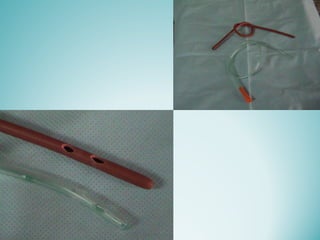
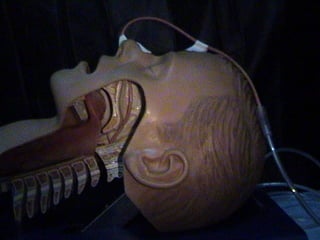
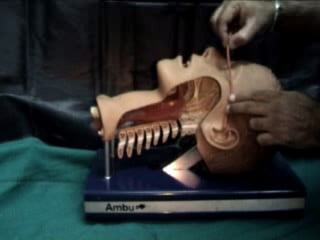
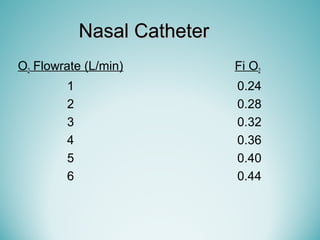
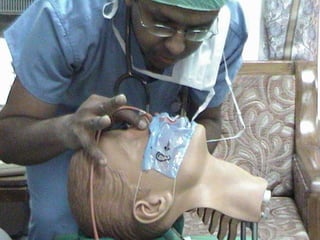
Nasal CatheterNasal Catheter
O2 Flowrate (L/min)
1
2
3
4
5
6
Fi O2
0.24
0.28
0.32
0.36
0.40
0.44
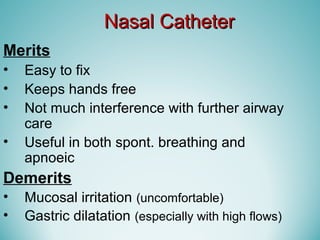
Nasal CatheterNasal Catheter
Merits
• Easy to fix
• Keeps hands free
• Not much interference with further airway
care
• Useful in both spont. breathing and
apnoeic
Demerits
• Mucosal irritation (uncomfortable)
• Gastric dilatation (especially with high flows)
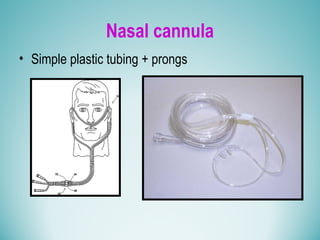
Nasal cannula
• Simple plastic tubing + prongs
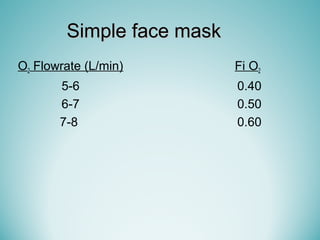
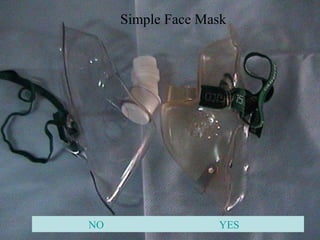
Simple face maskSimple face mask
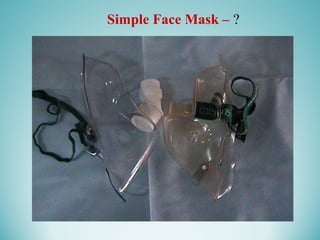
Simple Face Mask – ?
Simple face maskSimple face mask
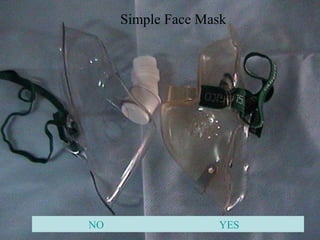
NO YES
Simple Face Mask
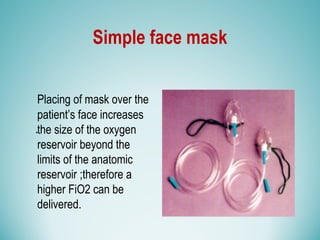
Simple face mask
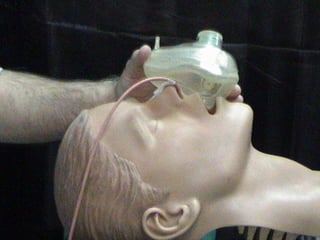
Placing of mask over the
patient’s face increases
the size of the oxygen
reservoir beyond the
limits of the anatomic
reservoir ;therefore a
higher FiO2 can be
delivered.
.
Simple face maskSimple face mask
O2 Flowrate (L/min)
5-6
6-7
7-8
Fi O2
0.40
0.50
0.60
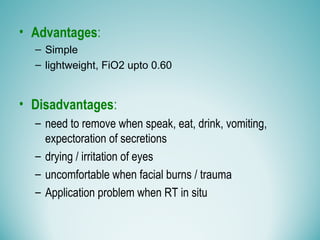
• Advantages:
– Simple
– lightweight, FiO2 upto 0.60
• Disadvantages:
– need to remove when speak, eat, drink, vomiting,
expectoration of secretions
– drying / irritation of eyes
– uncomfortable when facial burns / trauma
– Application problem when RT in situ
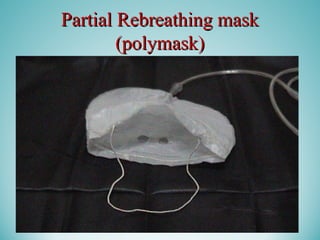
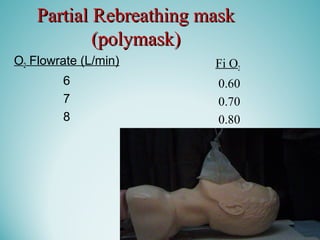
Partial Rebreathing maskPartial Rebreathing mask
(polymask)(polymask)
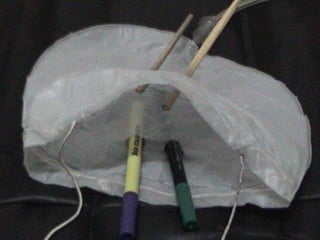
Partial Rebreathing maskPartial Rebreathing mask
(polymask)(polymask)
O2 Flowrate (L/min)
6
7
8
Fi O2
0.60
0.70
0.80
Advantages:
• FiO2 delivered >0.60 is delivered in mod. to
severe hypoxia,
• Exhaled oxygen from anatomic dead space is
conserved.
Disadvantages:
• insufficient flow rate may lead to rebreathing of
CO2,
• Claustrophobia
• drying and irritation of eyes
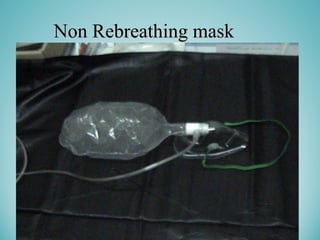
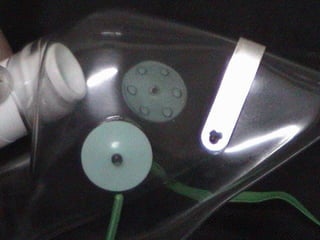
Non Rebreathing maskNon Rebreathing mask
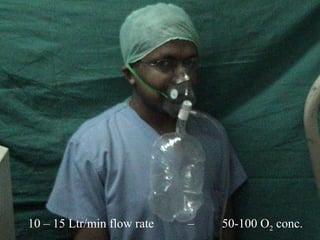
10 – 15 Ltr/min flow rate – 50-100 O2 conc.
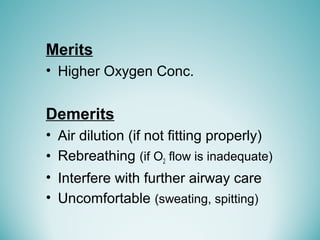
Merits
• Higher Oxygen Conc.
Demerits
• Air dilution (if not fitting properly)
• Rebreathing (if O2 flow is inadequate)
• Interfere with further airway care
• Uncomfortable (sweating, spitting)
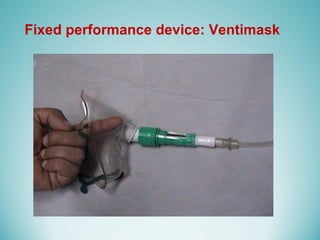
Fixed performance device: Ventimask
Simple face maskSimple face mask
NO YES
Simple Face Mask
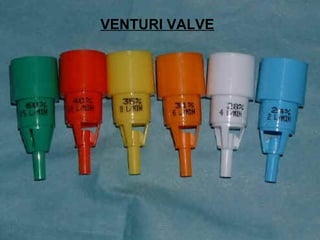
VENTURI VALVE
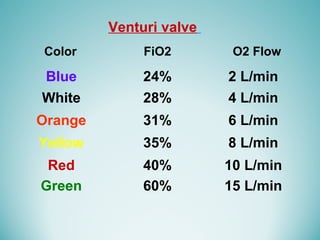
Color FiO2 O2 Flow
Blue 24% 2 L/min
White 28% 4 L/min
Orange 31% 6 L/min
Yellow 35% 8 L/min
Red 40% 10 L/min
Green 60% 15 L/min
Venturi valve
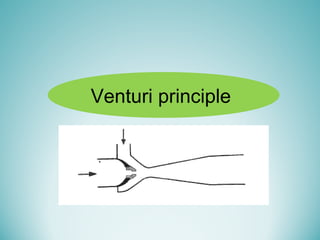
Venturi principle
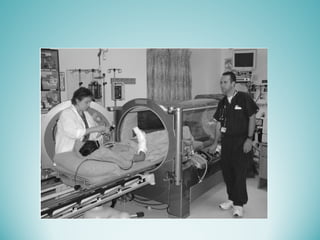
Hyperbaric Oxygen therapy
Hyperbaric oxygen (HBO) exposure (breathing
oxygen at increased ambient pressure, typically 2-
3 atmospheres absolute [ATA]) causes an
increase in PaO2.
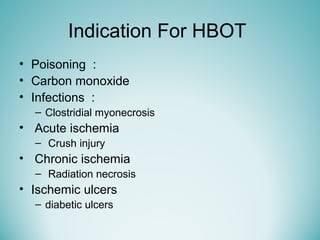
Indication For HBOT
• Poisoning :
• Carbon monoxide
• Infections :
– Clostridial myonecrosis
• Acute ischemia
– Crush injury
• Chronic ischemia
– Radiation necrosis
• Ischemic ulcers
– diabetic ulcers
If conc. of OIf conc. of O22 which a patient is gettingwhich a patient is getting
is not knownis not known
then the situation is similar tothen the situation is similar to
a drug being administereda drug being administered
without knowing the dosewithout knowing the dose
which can do harm if given morewhich can do harm if given more
or provide insufficient effect if given lessor provide insufficient effect if given less
O2 ToxicityO2 Toxicity
Side Effects
• Rentrolental fibroplasia in neonates
• Resp system:
– Loss of surfactant
– Atelactasis
– Hypoventilation in COPD pt
• CNS:
– Convulsion (HBOT)
100% - not more than 12hrs100% - not more than 12hrs
80% - not more than 24hrs80% - not more than 24hrs
60% - not more than 36hrs60% - not more than 36hrs
Oxygen Therapy

Oxygen Therapy

  • 1.
    Oxygen Therapy Dr.Indubala MauryaMD,DNB,MNAMS Assistant Professor Dept of Aanesthesia & Critical Care,MGMCRI
  • 2.
    • Definition • Physiology –O2 content – Hypoxia • Orthobaric Oxygen Therapy – Indication – Device for oxygen therapy • Hyperbaric oxygen therapy • Side effects of Oxygen Therapy
  • 3.
    Why oxygenWhy oxygen isrequired foris required for survival?survival?
  • 4.
    Aerobic metabolismAerobic metabolism oxidativephosphorylationoxidative phosphorylation Glucose → CO2 + H2O + 38 ATPGlucose → CO2 + H2O + 38 ATP Anaerobic metabolismAnaerobic metabolism Glucose → Lactic acid + 2 ATPGlucose → Lactic acid + 2 ATP ↓↓ H+ + lactate –H+ + lactate –
  • 5.
    Anoxia No oxygen availabilityin tissues Hypoxia Lack of oxygen availability in tissues Hypoxemia Lack of oxygen in the blood Basic s
  • 6.
    What is O2Therapy ? Oxygen therapy is the administration of oxygen at concentrations greater than that in room air to treat or prevent hypoxia.
  • 7.
    Types of OxygenTherapyTypes of Oxygen Therapy • Giving Oxygen more than 21% at ambient atm pressure • Giving Oxygen more than 21% at high atm pressure ( >1 atm) Orthobaric Hyperbaric
  • 8.
    Three clinical goalsof O2 therapy 1. Treat hypoxia 2. Decrease work of breathing 3. Decrease myocardial Work
  • 9.
    • FIO2 (Fraction of O2 in inspired gas) – 0.21 (21%) • PaO2(Partial pressure of Oxygen in arterial blood – 98-100 mmHg ( 5 -6 times of FIO2) • SaO2(saturation of Hb in arterial Blood) – 100% • PvO2 (Partial pressure of Oxygen in Venous blood ) – 40 mmHg • SvO2 (saturation of Hb in Venous Blood) – 75%
  • 10.
  • 11.
    Hemoglobin-Bound O2 • Oxygen-bindingcapacity of hemoglobin : 1.34 mL O2 /gm of Hb) • SO2 : O2 saturation of Hb Dissolved O2 • Solubility of oxygen in plasma – solubility coefficient 0.003 mL/100 mL/mm Hg • Partial pressure of oxygen (PO2) in blood. Hb X 1.34 X SaO2 0.003 X PaO2 mmHg
  • 12.
    Arterial O2 Content(CaO2) eg Normal person Hb: 14g SaO2: 98-100% PaO2: 100 mmHg Art. bloodArt. blood = 14g x 1.39 x 100% + 0.3= 14g x 1.39 x 100% + 0.3 = 20 ml / 100ml of blood= 20 ml / 100ml of blood 0.003 X PaO2 mmHgHb X 1.34 X SaO2
  • 13.
    Venous O2 Content(CvO2) Normal Person Hb: 14g SvO2: 75 % PvO2: 40 mmhg Ven. bloodVen. blood 14g x 1.39 x 75% + 0.1 =14g x 1.39 x 75% + 0.1 = 15ml /100ml of blood15ml /100ml of blood Tissue extraction = 5ml/ 100 ml of bloodTissue extraction = 5ml/ 100 ml of blood Hb X 1.34 X SvO2 0.003 X PvO2 mmHg
  • 14.
    Dissolved ODissolved O22inin plasmaplasma 0.003ml / mm PO2 / 100ml of blood Breathing Air (PaO2 100mm Hg) 0.3ml / 100ml of blood O2 therapy Orthobaric Breathing 100% O2 (PaO2 600mm Hg) 1.8ml / 100ml of blood Hyperbaric Breathing 100% O2 at 3 Atm. Pressure
  • 15.
    What are theTypes ofWhat are the Types of HypoxiaHypoxia??
  • 16.
    Types of hypoxiaTypesof hypoxia • Hypoxic hypoxia – PaO2↓ • Anaemic hypoxia – O2 content ↓, PaO2 normal • Stagnant hypoxia • Histotoxic hypoxia
  • 17.
    Hypoxic hypoxiaHypoxic hypoxia •Causes – O2 poor air, hypoxic gas mixture – High altitude – Hypoventilation – Shunts – Septal defects – Diffusion defects - pneumonia, lobar collapse
  • 18.
    Anaemic hypoxia • Oxygencarrying capacity of blood is decreased. – Anemia :↓ haemoglobin – Altered haemoglobin • CO poisoning • meth / sulph-haemoglobin Normal Person (breathing 100% O2) (14gm x 1.34ml ) + 1.8ml = 20.5ml (1.8 is 9% 20.5) Anaemic patient (breathing 100% O2) (4gm x 1.34ml )+ 1.8ml = 7.2 ml (1.8 is 25% of 7.2)
  • 19.
    Stagnant hypoxia • Inadequatetissue perfusion • Generalized: - Hypovolemia - Mitral stenosis - Constrictive pericerditis - Myocardial ischaemia • Localized hypo perfusion: - Arterial obstruction, thrombus, oedema
  • 20.
    Histotoxic hypoxia • Cellscan not utilize the oxygen . • Electron transfer system of cytochrome oxidase is paralysed. • e.g. – cyanide poisoning
  • 21.
    Benefit of OBenefitof O22 therapy intherapy in HypoxiaHypoxia Hypoxic hypoxia + + + Anaemic hypoxia + Stagnant hypoxia + Histotoxic hypoxia -
  • 22.
  • 23.
    Effects of hypoxia •Acute hypoxia : - Restlessness - Disorientation, confusion - In-coordination, Impaired judgment - Hyperventilation air hunger -Circulatory changes (tachycardiabrady ) • Chronic hypoxia : - fatigue, drowsiness, ↓ work capacity - inattentiveness ,apathy, delayed reaction time
  • 24.
    Assessment of need •Presence of clinical indicators • Measurement of inadequate oxygen saturations – by invasive or noninvasive methods, • Arterial blood gas • Pulse oximetry Errors in pulse oximetry • Artificial fingernails • Dark pigmentation • Electrical interference • Intravenous dyes • Movement • Nail Polish • Pulsatile venous system • Radiated light
  • 25.
    How to assessoxygenation ? • Arterial blood gases • PaO2 = 100 mmhg • Pulse oximetry • SpO2=98-100% Oxygen therapy is must wheneverOxygen therapy is must whenever PaO2 < 60 mmHg or SpO2 < 90 %PaO2 < 60 mmHg or SpO2 < 90 %
  • 26.
    FACTORS THAT DETERMINEWHICH SYSTEM TO USE 1. Patient comfort / acceptance 2. The level of FiO2 that is needed 3. The requirement that the FiO2 be controlled within a certain range 4. The level of humidification and /or nebulization 5. Minimal resistance to breathing 6. Efficient & economical use of oxygen
  • 27.
  • 28.
    Oxygen therapy devices Variableperformance devices • No capacity – nasal catheters, cannulae • Small capacity – masks • Large capacity – mask with bag Fixed performance devices • HAFOE systems (High air flow oxygen enrichment device » Venti Mask • Anaesthesia circuits • Ventilators
  • 29.
    Variable performance device e.g. •Nasal cannula • Simple face mask • Partial rebreathing mask • Non - rebreathing mask FiO2 depends on •O2 flow •Patient factors •Device factors
  • 33.
    Nasal CatheterNasal Catheter O2Flowrate (L/min) 1 2 3 4 5 6 Fi O2 0.24 0.28 0.32 0.36 0.40 0.44
  • 34.
    Nasal CatheterNasal Catheter Merits •Easy to fix • Keeps hands free • Not much interference with further airway care • Useful in both spont. breathing and apnoeic Demerits • Mucosal irritation (uncomfortable) • Gastric dilatation (especially with high flows)
  • 37.
    Nasal cannula • Simpleplastic tubing + prongs
  • 38.
    Simple face maskSimpleface mask Simple Face Mask – ?
  • 39.
    Simple face maskSimpleface mask NO YES Simple Face Mask
  • 40.
    Simple face mask Placingof mask over the patient’s face increases the size of the oxygen reservoir beyond the limits of the anatomic reservoir ;therefore a higher FiO2 can be delivered. .
  • 41.
    Simple face maskSimpleface mask O2 Flowrate (L/min) 5-6 6-7 7-8 Fi O2 0.40 0.50 0.60
  • 42.
    • Advantages: – Simple –lightweight, FiO2 upto 0.60 • Disadvantages: – need to remove when speak, eat, drink, vomiting, expectoration of secretions – drying / irritation of eyes – uncomfortable when facial burns / trauma – Application problem when RT in situ
  • 43.
    Partial Rebreathing maskPartialRebreathing mask (polymask)(polymask)
  • 45.
    Partial Rebreathing maskPartialRebreathing mask (polymask)(polymask) O2 Flowrate (L/min) 6 7 8 Fi O2 0.60 0.70 0.80
  • 46.
    Advantages: • FiO2 delivered>0.60 is delivered in mod. to severe hypoxia, • Exhaled oxygen from anatomic dead space is conserved. Disadvantages: • insufficient flow rate may lead to rebreathing of CO2, • Claustrophobia • drying and irritation of eyes
  • 47.
    Non Rebreathing maskNonRebreathing mask
  • 49.
    10 – 15Ltr/min flow rate – 50-100 O2 conc.
  • 50.
    Merits • Higher OxygenConc. Demerits • Air dilution (if not fitting properly) • Rebreathing (if O2 flow is inadequate) • Interfere with further airway care • Uncomfortable (sweating, spitting)
  • 51.
  • 52.
    Simple face maskSimpleface mask NO YES Simple Face Mask
  • 53.
  • 54.
    Color FiO2 O2Flow Blue 24% 2 L/min White 28% 4 L/min Orange 31% 6 L/min Yellow 35% 8 L/min Red 40% 10 L/min Green 60% 15 L/min Venturi valve
  • 55.
  • 56.
    Hyperbaric Oxygen therapy Hyperbaricoxygen (HBO) exposure (breathing oxygen at increased ambient pressure, typically 2- 3 atmospheres absolute [ATA]) causes an increase in PaO2.
  • 57.
    Indication For HBOT •Poisoning : • Carbon monoxide • Infections : – Clostridial myonecrosis • Acute ischemia – Crush injury • Chronic ischemia – Radiation necrosis • Ischemic ulcers – diabetic ulcers
  • 59.
    If conc. ofOIf conc. of O22 which a patient is gettingwhich a patient is getting is not knownis not known then the situation is similar tothen the situation is similar to a drug being administereda drug being administered without knowing the dosewithout knowing the dose which can do harm if given morewhich can do harm if given more or provide insufficient effect if given lessor provide insufficient effect if given less O2 ToxicityO2 Toxicity
  • 60.
    Side Effects • Rentrolentalfibroplasia in neonates • Resp system: – Loss of surfactant – Atelactasis – Hypoventilation in COPD pt • CNS: – Convulsion (HBOT)
  • 61.
    100% - notmore than 12hrs100% - not more than 12hrs 80% - not more than 24hrs80% - not more than 24hrs 60% - not more than 36hrs60% - not more than 36hrs

Editor's Notes

  • #5 Mitochondrial PO2 7.5 – 22.5 mmHg
  • #9 COPD , asthma pt Pt with acute MI
  • #15 By increasing partial pressure of O2 in plasma
  • #18 ASD VSD have a L-R shunt, only when PAH sets in shunt is R – L Portal hypertension
  • #19 Aniline dyes, nitrates in paints or medicines (GTN), Prilocaine Methylene blue (1%) 1-2 mg kg over 5 mins