CPOT / RASS / CAM-ICU
Assessment for pain, agitation and delirium
CPOT / RASS / CAM-ICU
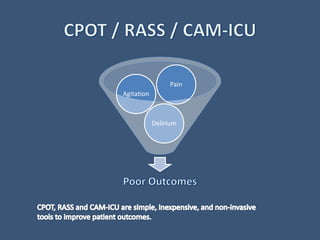
• CPOT, RASS, and CAM-ICU are simple,
inexpensive and non-invasive tools to improve
patient outcomes.
• Pain/Agitation/ Delirium (PAD) assessment will
focus your nursing interventions.
CPOT
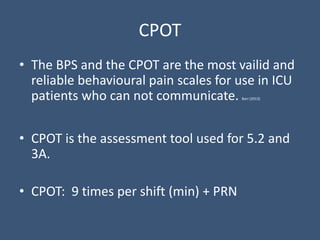
• The BPS and the CPOT are the most vailid and
reliable behavioural pain scales for use in ICU
patients who can not communicate. Barr (2013)
• CPOT is the assessment tool used for 5.2 and
3A.
• CPOT: 9 times per shift (min) + PRN
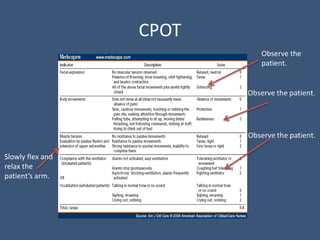
CPOT
Observe the
patient.
Slowly flex and
relax the
patient’s arm.
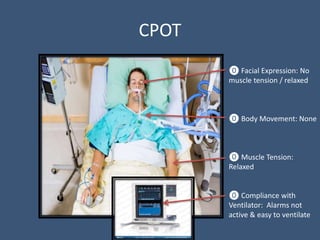
CPOT
⓿ Facial Expression: No
muscle tension / relaxed
⓿ Body Movement: None
⓿ Muscle Tension:
Relaxed
⓿ Compliance with
Ventilator: Alarms not
active & easy to ventilate
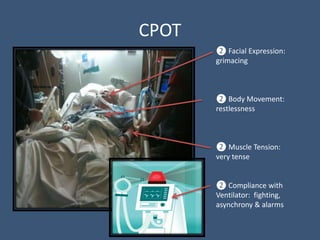
CPOT
❷ Facial Expression:
grimacing
❷ Body Movement:
restlessness
❷ Muscle Tension:
very tense
❷ Compliance with
Ventilator: fighting,
asynchrony & alarms
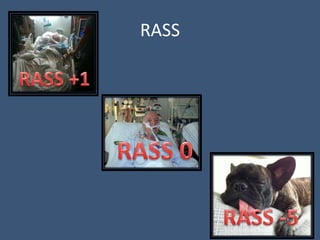
RASS
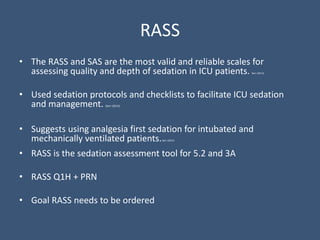
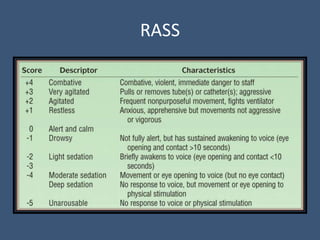
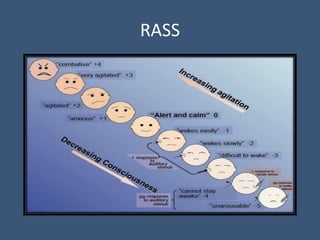
• The RASS and SAS are the most valid and reliable scales for
assessing quality and depth of sedation in ICU patients. Barr (2013)
• Used sedation protocols and checklists to facilitate ICU sedation
and management. Barr (2013)
• Suggests using analgesia first sedation for intubated and
mechanically ventilated patients.Barr (2013)
• RASS is the sedation assessment tool for 5.2 and 3A
• RASS Q1H + PRN
• Goal RASS needs to be ordered
RASS
RASS
RASS
CAM-ICU
• Delirium, as a manifestation of acute brain
dysfunction, is an important independent
predictor of negative clinical outcomes in ICU
patients, including increased mortality,
hospital LOS, cost of care, and long-term
cognitive impairment consistent with a
dementia-like state. Barr (2013)
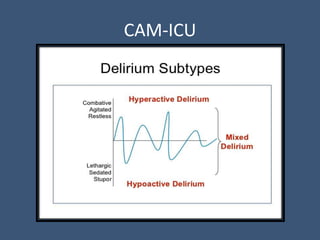
CAM-ICU
• Acute Onset
• Disturbances of consciousness
with reduced ability to focus
• Fluctuates over the course of
the day (i.e. variance in RASS)
• Sleep disturbances
• Hallucinations
• Psychomotor Agitation
• Multifactorial
(withdrawal/chronic disease/
medications/infections/advance
d age/sensory deprivation)
CAM-ICU
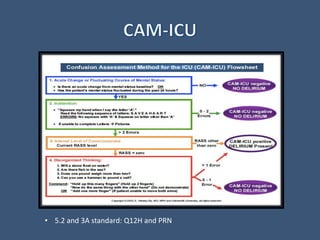
• CAM-ICU assessment is essential to detect
delirium.
• Management of delirium:
– Treat the cause of the delirium
– Sleep
– Antipsychotic
– Manage withdrawal symptoms
• 5.2 and 3A standard: Q12H and PRN
CAM-ICU
• https://www.youtube.com/watch?v=ltd4KYUp
P14
Delirium
Agitation
Pain
Thank you!
References:
• http://www.icudelirium.org/
• http://www.learnicu.org/SiteCollectionDocum
ents/Pain,%20Agitation,%20Delirium.pdf

CPOT / RASS / CAM-ICU

  • 1.
    CPOT / RASS/ CAM-ICU Assessment for pain, agitation and delirium
  • 2.
    CPOT / RASS/ CAM-ICU • CPOT, RASS, and CAM-ICU are simple, inexpensive and non-invasive tools to improve patient outcomes. • Pain/Agitation/ Delirium (PAD) assessment will focus your nursing interventions.
  • 3.
    CPOT • The BPSand the CPOT are the most vailid and reliable behavioural pain scales for use in ICU patients who can not communicate. Barr (2013) • CPOT is the assessment tool used for 5.2 and 3A. • CPOT: 9 times per shift (min) + PRN
  • 4.
    CPOT Observe the patient. Slowly flexand relax the patient’s arm.
  • 5.
    CPOT ⓿ Facial Expression:No muscle tension / relaxed ⓿ Body Movement: None ⓿ Muscle Tension: Relaxed ⓿ Compliance with Ventilator: Alarms not active & easy to ventilate
  • 6.
    CPOT ❷ Facial Expression: grimacing ❷Body Movement: restlessness ❷ Muscle Tension: very tense ❷ Compliance with Ventilator: fighting, asynchrony & alarms
  • 7.
    RASS • The RASSand SAS are the most valid and reliable scales for assessing quality and depth of sedation in ICU patients. Barr (2013) • Used sedation protocols and checklists to facilitate ICU sedation and management. Barr (2013) • Suggests using analgesia first sedation for intubated and mechanically ventilated patients.Barr (2013) • RASS is the sedation assessment tool for 5.2 and 3A • RASS Q1H + PRN • Goal RASS needs to be ordered
  • 8.
  • 9.
  • 10.
  • 11.
    CAM-ICU • Delirium, asa manifestation of acute brain dysfunction, is an important independent predictor of negative clinical outcomes in ICU patients, including increased mortality, hospital LOS, cost of care, and long-term cognitive impairment consistent with a dementia-like state. Barr (2013)
  • 12.
    CAM-ICU • Acute Onset •Disturbances of consciousness with reduced ability to focus • Fluctuates over the course of the day (i.e. variance in RASS) • Sleep disturbances • Hallucinations • Psychomotor Agitation • Multifactorial (withdrawal/chronic disease/ medications/infections/advance d age/sensory deprivation)
  • 13.
  • 14.
    • CAM-ICU assessmentis essential to detect delirium. • Management of delirium: – Treat the cause of the delirium – Sleep – Antipsychotic – Manage withdrawal symptoms
  • 15.
    • 5.2 and3A standard: Q12H and PRN
  • 16.
  • 17.
  • 18.
  • 19.