Prachi S.Kapgate, Payal N. Rathi
Subject:- Cosmetics Science B.Pharm Final Year
Guide :- Chandrashekhar M. Chakole
Bajiraoji Karanjekar College of Pharmacy , Sakoli Dist. Bhandara M. S. – 441802
Rashtrasant Tukadoji Maharaj Nagpur University
Shampoo
 Introduction
 Definition
 Types of Shampoo
 Properties of Shampoo
 Active Ingredients
 Formulations
 References
 Introduction
Hair is made from a Strong structural protein named
Keratin which forms the strength of Hair.
Hair is straightforward in structure made up of root and
shaft.
The root is encased within the hair follicle, submerges into
the skin in slant and closes down to the bulb; whereas the
hair shaft is the portion of the hair seen over the skin.
Hair structure is made up of distinctive layers and
structures.
Hair comprises of two parts:
(a) Follicle (b) Shaft.
The hair follicle is the middle of the natural movement like
hair development, and pigmentation; while the hair shaft is
considered to be dead and is primarily made of protein.
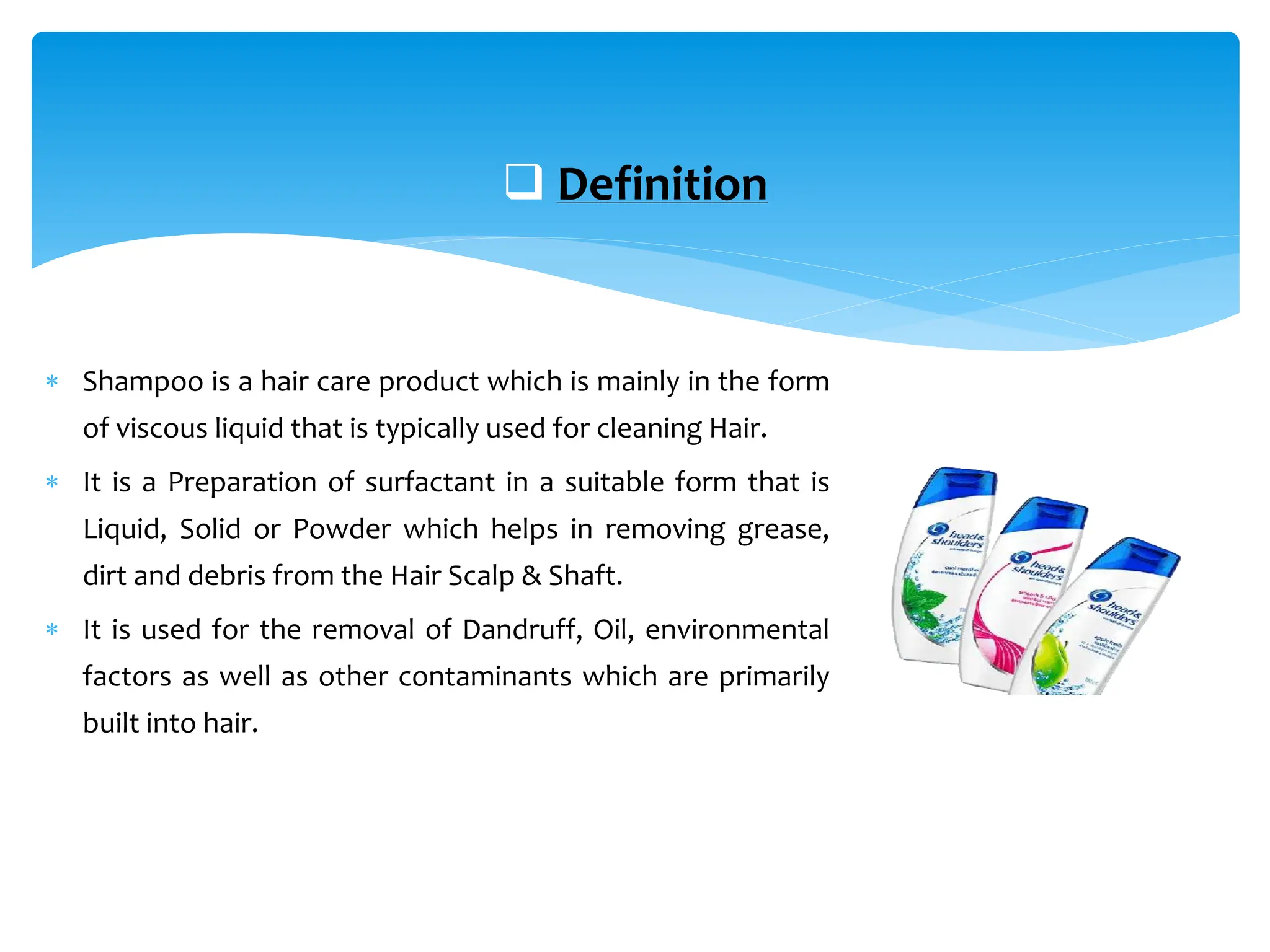
 Shampoo is a hair care product which is mainly in the form
of viscous liquid that is typically used for cleaning Hair.
 It is a Preparation of surfactant in a suitable form that is
Liquid, Solid or Powder which helps in removing grease,
dirt and debris from the Hair Scalp & Shaft.
 It is used for the removal of Dandruff, Oil, environmental
factors as well as other contaminants which are primarily
built into hair.
 Definition
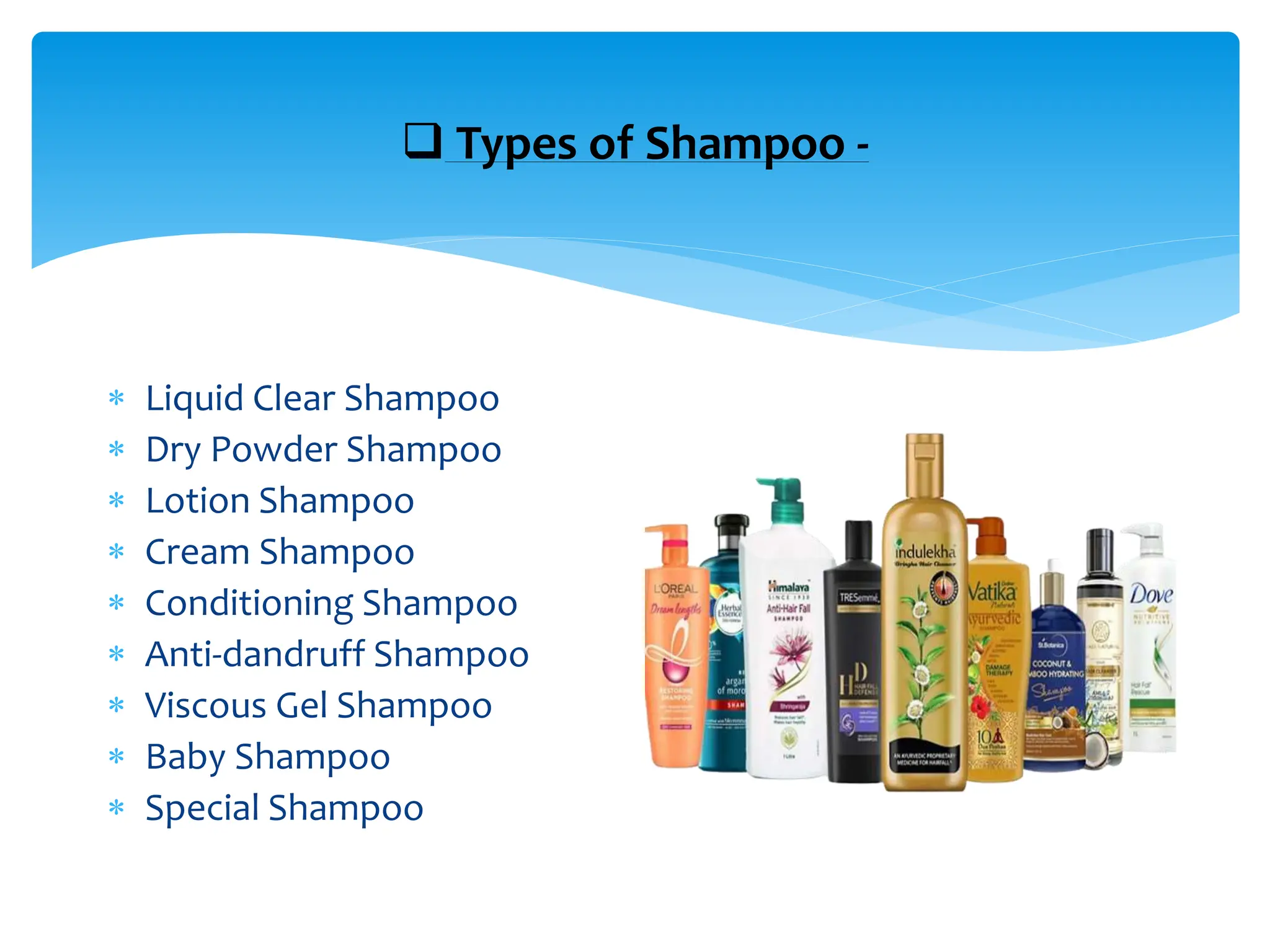
 Types of Shampoo -
 Liquid Clear Shampoo
 Dry Powder Shampoo
 Lotion Shampoo
 Cream Shampoo
 Conditioning Shampoo
 Anti-dandruff Shampoo
 Viscous Gel Shampoo
 Baby Shampoo
 Special Shampoo
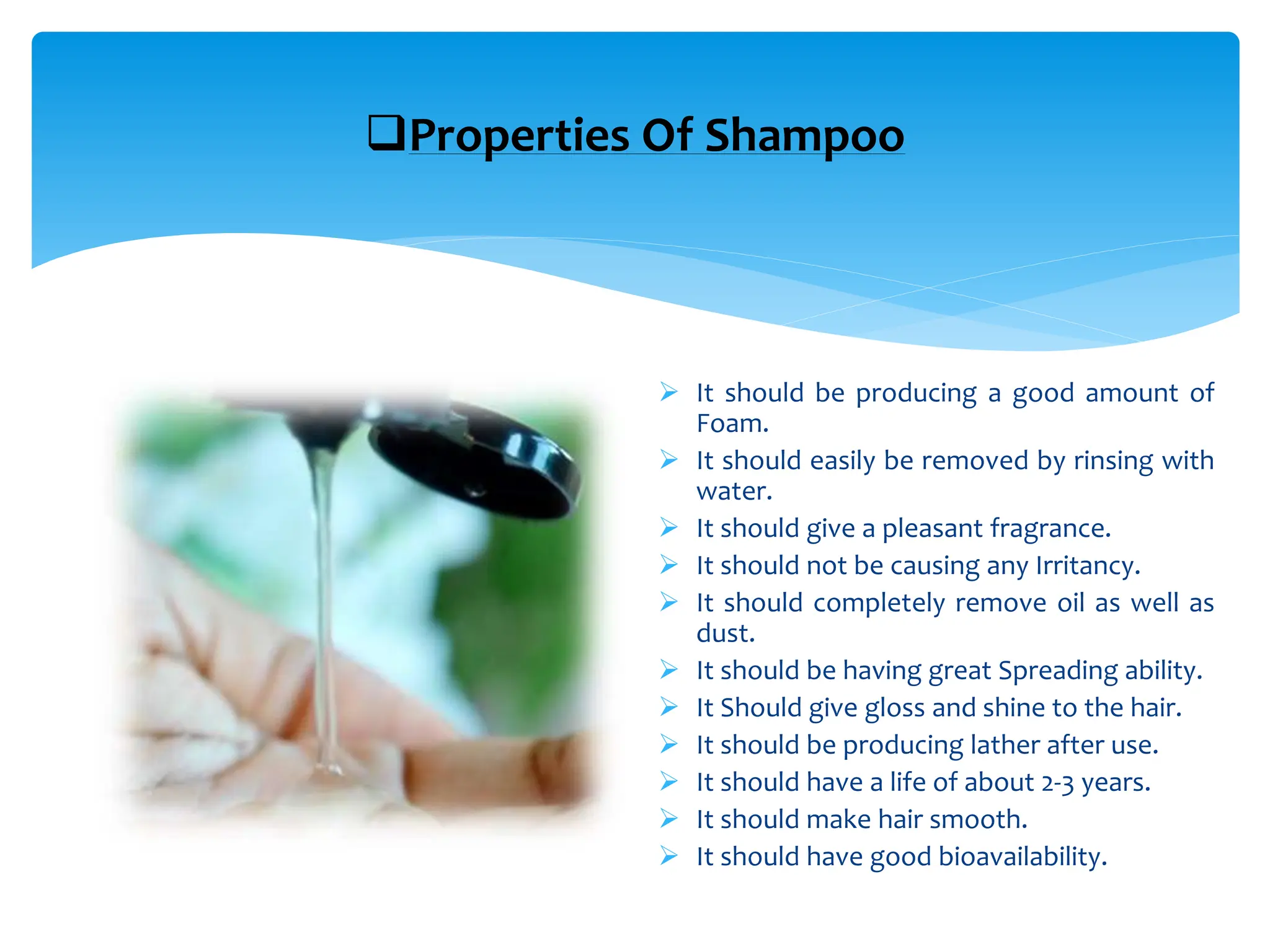
Properties Of Shampoo
 It should be producing a good amount of
Foam.
 It should easily be removed by rinsing with
water.
 It should give a pleasant fragrance.
 It should not be causing any Irritancy.
 It should completely remove oil as well as
dust.
 It should be having great Spreading ability.
 It Should give gloss and shine to the hair.
 It should be producing lather after use.
 It should have a life of about 2-3 years.
 It should make hair smooth.
 It should have good bioavailability.
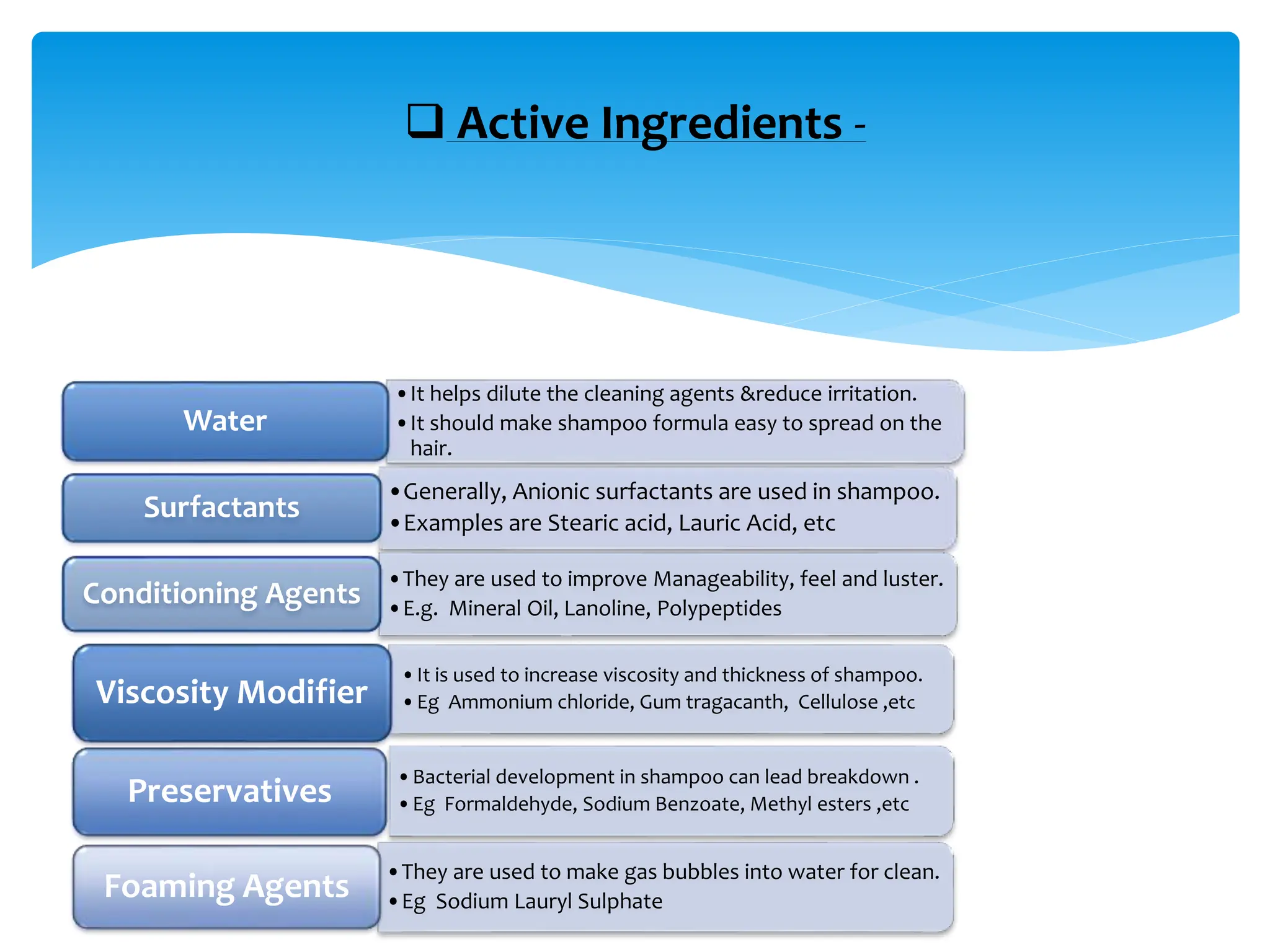
•It helps dilute the cleaning agents &reduce irritation.
•It should make shampoo formula easy to spread on the
hair.
Water
•Generally, Anionic surfactants are used in shampoo.
•Examples are Stearic acid, Lauric Acid, etc
Surfactants
•They are used to improve Manageability, feel and luster.
•E.g. Mineral Oil, Lanoline, Polypeptides
Conditioning Agents
 Active Ingredients -
•It is used to increase viscosity and thickness of shampoo.
•Eg Ammonium chloride, Gum tragacanth, Cellulose ,etc
Viscosity Modifier
•Bacterial development in shampoo can lead breakdown .
•Eg Formaldehyde, Sodium Benzoate, Methyl esters ,etc
Preservatives
•They are used to make gas bubbles into water for clean.
•Eg Sodium Lauryl Sulphate
Foaming Agents
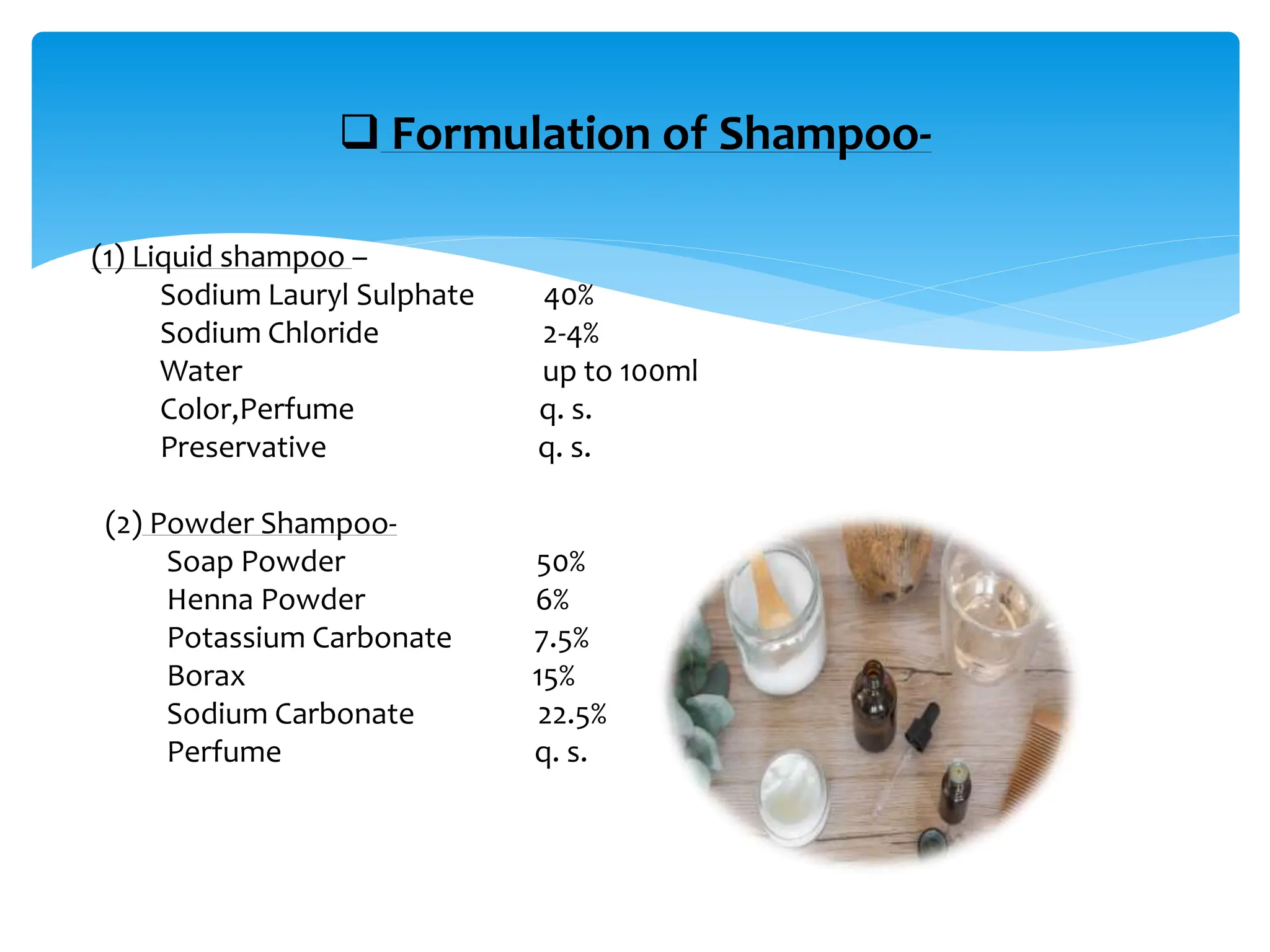
(1) Liquid shampoo –
Sodium Lauryl Sulphate 40%
Sodium Chloride 2-4%
Water up to 100ml
Color,Perfume q. s.
Preservative q. s.
(2) Powder Shampoo-
Soap Powder 50%
Henna Powder 6%
Potassium Carbonate 7.5%
Borax 15%
Sodium Carbonate 22.5%
Perfume q. s.
 Formulation of Shampoo-
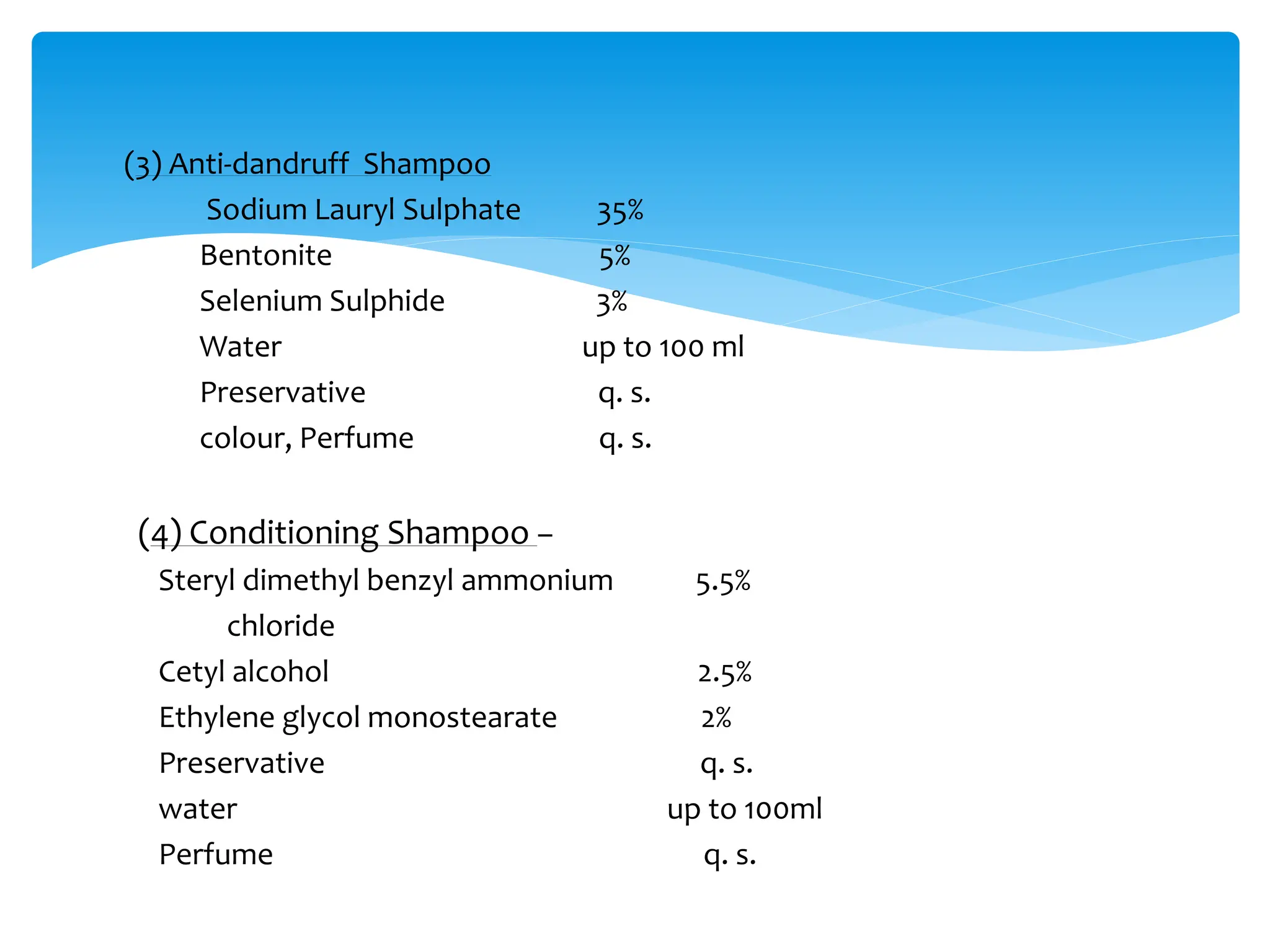
(3) Anti-dandruff Shampoo
Sodium Lauryl Sulphate 35%
Bentonite 5%
Selenium Sulphide 3%
Water up to 100 ml
Preservative q. s.
colour, Perfume q. s.
(4) Conditioning Shampoo –
Steryl dimethyl benzyl ammonium 5.5%
chloride
Cetyl alcohol 2.5%
Ethylene glycol monostearate 2%
Preservative q. s.
water up to 100ml
Perfume q. s.
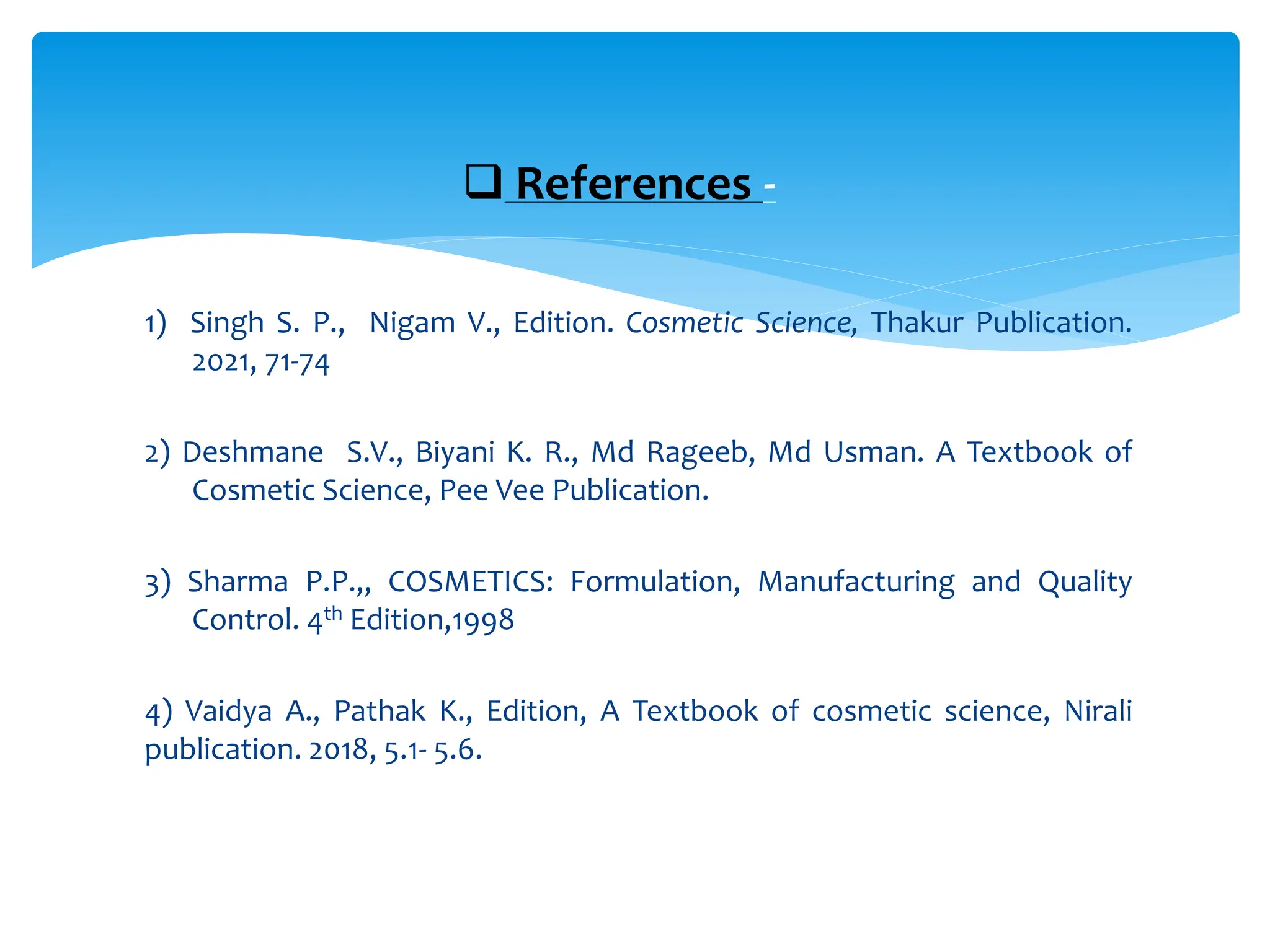
1) Singh S. P., Nigam V., Edition. Cosmetic Science, Thakur Publication.
2021, 71-74
2) Deshmane S.V., Biyani K. R., Md Rageeb, Md Usman. A Textbook of
Cosmetic Science, Pee Vee Publication.
3) Sharma P.P.,, COSMETICS: Formulation, Manufacturing and Quality
Control. 4th Edition,1998
4) Vaidya A., Pathak K., Edition, A Textbook of cosmetic science, Nirali
publication. 2018, 5.1- 5.6.
 References -
SHAMPOO : OVERVIEW OF SHAMPOO AND IT'S TYPES.

SHAMPOO : OVERVIEW OF SHAMPOO AND IT'S TYPES.

  • 1.
    Prachi S.Kapgate, PayalN. Rathi Subject:- Cosmetics Science B.Pharm Final Year Guide :- Chandrashekhar M. Chakole Bajiraoji Karanjekar College of Pharmacy , Sakoli Dist. Bhandara M. S. – 441802 Rashtrasant Tukadoji Maharaj Nagpur University Shampoo
  • 2.
     Introduction  Definition Types of Shampoo  Properties of Shampoo  Active Ingredients  Formulations  References
  • 3.
     Introduction Hair ismade from a Strong structural protein named Keratin which forms the strength of Hair. Hair is straightforward in structure made up of root and shaft. The root is encased within the hair follicle, submerges into the skin in slant and closes down to the bulb; whereas the hair shaft is the portion of the hair seen over the skin. Hair structure is made up of distinctive layers and structures. Hair comprises of two parts: (a) Follicle (b) Shaft. The hair follicle is the middle of the natural movement like hair development, and pigmentation; while the hair shaft is considered to be dead and is primarily made of protein.
  • 4.
     Shampoo isa hair care product which is mainly in the form of viscous liquid that is typically used for cleaning Hair.  It is a Preparation of surfactant in a suitable form that is Liquid, Solid or Powder which helps in removing grease, dirt and debris from the Hair Scalp & Shaft.  It is used for the removal of Dandruff, Oil, environmental factors as well as other contaminants which are primarily built into hair.  Definition
  • 5.
     Types ofShampoo -  Liquid Clear Shampoo  Dry Powder Shampoo  Lotion Shampoo  Cream Shampoo  Conditioning Shampoo  Anti-dandruff Shampoo  Viscous Gel Shampoo  Baby Shampoo  Special Shampoo
  • 6.
    Properties Of Shampoo It should be producing a good amount of Foam.  It should easily be removed by rinsing with water.  It should give a pleasant fragrance.  It should not be causing any Irritancy.  It should completely remove oil as well as dust.  It should be having great Spreading ability.  It Should give gloss and shine to the hair.  It should be producing lather after use.  It should have a life of about 2-3 years.  It should make hair smooth.  It should have good bioavailability.
  • 7.
    •It helps dilutethe cleaning agents &reduce irritation. •It should make shampoo formula easy to spread on the hair. Water •Generally, Anionic surfactants are used in shampoo. •Examples are Stearic acid, Lauric Acid, etc Surfactants •They are used to improve Manageability, feel and luster. •E.g. Mineral Oil, Lanoline, Polypeptides Conditioning Agents  Active Ingredients - •It is used to increase viscosity and thickness of shampoo. •Eg Ammonium chloride, Gum tragacanth, Cellulose ,etc Viscosity Modifier •Bacterial development in shampoo can lead breakdown . •Eg Formaldehyde, Sodium Benzoate, Methyl esters ,etc Preservatives •They are used to make gas bubbles into water for clean. •Eg Sodium Lauryl Sulphate Foaming Agents
  • 8.
    (1) Liquid shampoo– Sodium Lauryl Sulphate 40% Sodium Chloride 2-4% Water up to 100ml Color,Perfume q. s. Preservative q. s. (2) Powder Shampoo- Soap Powder 50% Henna Powder 6% Potassium Carbonate 7.5% Borax 15% Sodium Carbonate 22.5% Perfume q. s.  Formulation of Shampoo-
  • 9.
    (3) Anti-dandruff Shampoo SodiumLauryl Sulphate 35% Bentonite 5% Selenium Sulphide 3% Water up to 100 ml Preservative q. s. colour, Perfume q. s. (4) Conditioning Shampoo – Steryl dimethyl benzyl ammonium 5.5% chloride Cetyl alcohol 2.5% Ethylene glycol monostearate 2% Preservative q. s. water up to 100ml Perfume q. s.
  • 10.
    1) Singh S.P., Nigam V., Edition. Cosmetic Science, Thakur Publication. 2021, 71-74 2) Deshmane S.V., Biyani K. R., Md Rageeb, Md Usman. A Textbook of Cosmetic Science, Pee Vee Publication. 3) Sharma P.P.,, COSMETICS: Formulation, Manufacturing and Quality Control. 4th Edition,1998 4) Vaidya A., Pathak K., Edition, A Textbook of cosmetic science, Nirali publication. 2018, 5.1- 5.6.  References -