Presentation Assignment Topic :-Formulation and preparation of shampoo
SUBJECT :-Industrial Pharmacy - I
MAHARISHI DAYANAND UNIVERSITY
ROHTAK (HARYANA )
DEPARTMENT OF PHARMACEUTICAL SCIENCE
Shampoo
Shampoo is a hair care product that is used for the
removal of oils, dirt, skin particles, dandruff,
environmental pollutants and other contaminants that
are gradually build up in hair.
In terms of Pharmacy :-
A shampoo is a preparation of a surfactant in a suitable form– liquid, solid or
powder – which when used under the specified conditions will
▪ remove surface grease,
▪ dirt, and
▪ skin debris from the hair shaft and scalp without adversely affecting the
user.
Shampoos are of the
following types:-
• Powder Shampoo
• Liquid Shampoo
• Lotion Shampoo
• Cream Shampoo
• Jelly Shampoo
• Aerosol Shampoo
• Specialized Shampoo
Conditioning Shampoo
Anti ‐ dandruff Shampoo
Baby Shampoo
Two layer shampoo
Formulation of Shampoo :-
1. Water
2. Surfactant :- Ammonium lauryl sulphate , Sodium Lauryl
sulphate or sodium laurate sulphate .
3. Foam boosters :- betaines or alkanolamines .
4. Thickeners :- Carboxy methyl cellulose ,NaCl
5. Conditioning agents :- Silicones such as methicone and
quaternary agents.
6. Preservatives :- DMDM hydantoin & Methylparaben
7. Anti dandruff agents :- Selenium sulphides , Inc pyrithone ,
salicylic acid
8. Ph buffers :- Citric acid
9. Aesthetic additives :-
colorants :- Glycerine disterate
Opacifiers :- EDGS
Fragrance :- Limonene , Ethyl isovalerate
Surfactants :-
 Anionic surfactants are mostly used (good foaming properties). The hydrophilic
portion carries a negative charge which results in superior foaming, cleaning
and end result attributes.
 Non‐ionic surfactants have good cleansing properties but do not have sufficient
foaming power.
 Cationic surfactants are toxic and are hence not used. However, they may be
used in low concentration in hair conditioners.
 Ampholytic, being expensive, are generally not used. However, they are mainly
used as secondary surfactants and good hair conditioners.
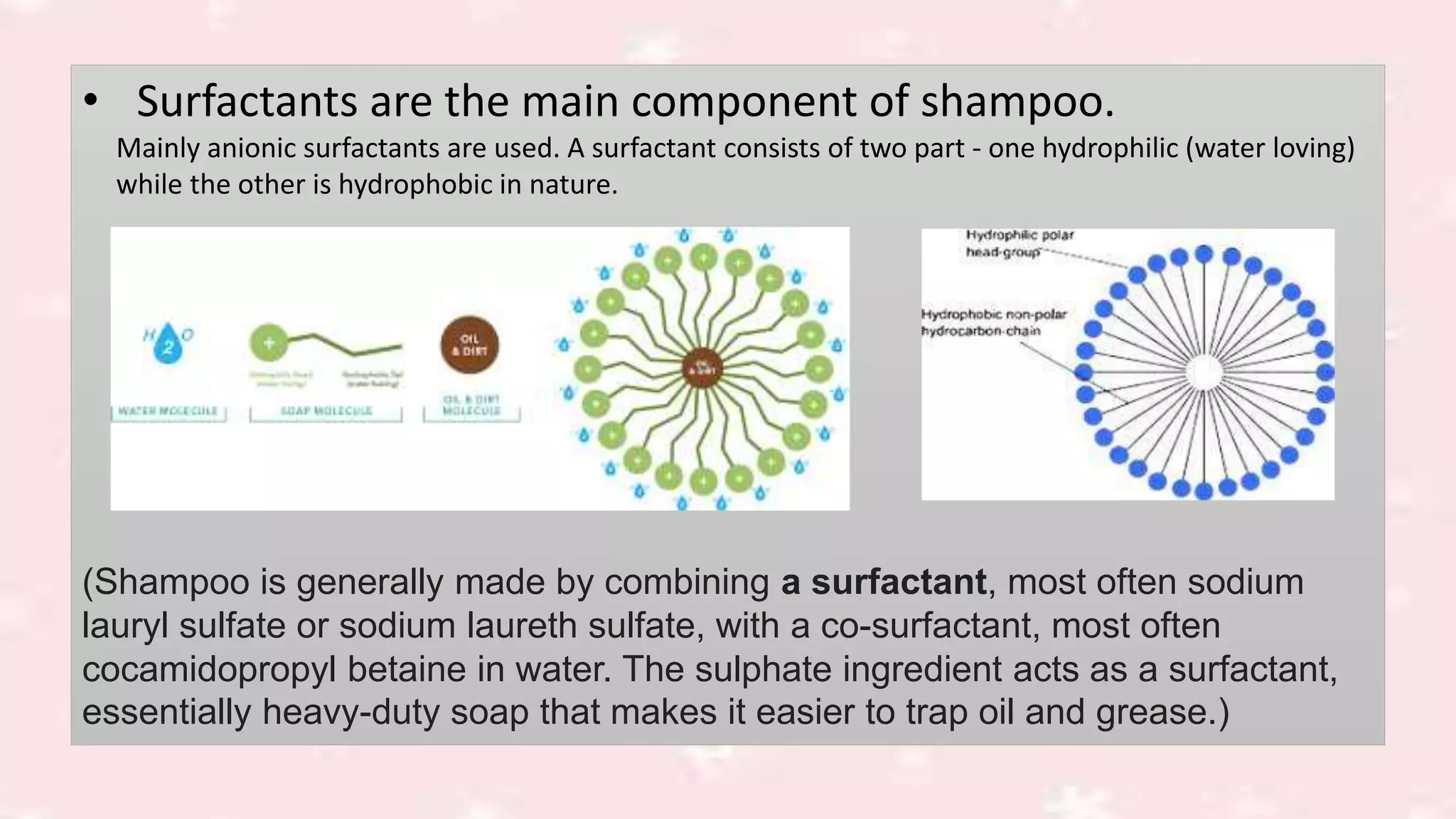
• Surfactants are the main component of shampoo.
Mainly anionic surfactants are used. A surfactant consists of two part ‐ one hydrophilic (water loving)
while the other is hydrophobic in nature.
(Shampoo is generally made by combining a surfactant, most often sodium
lauryl sulfate or sodium laureth sulfate, with a co-surfactant, most often
cocamidopropyl betaine in water. The sulphate ingredient acts as a surfactant,
essentially heavy-duty soap that makes it easier to trap oil and grease.)
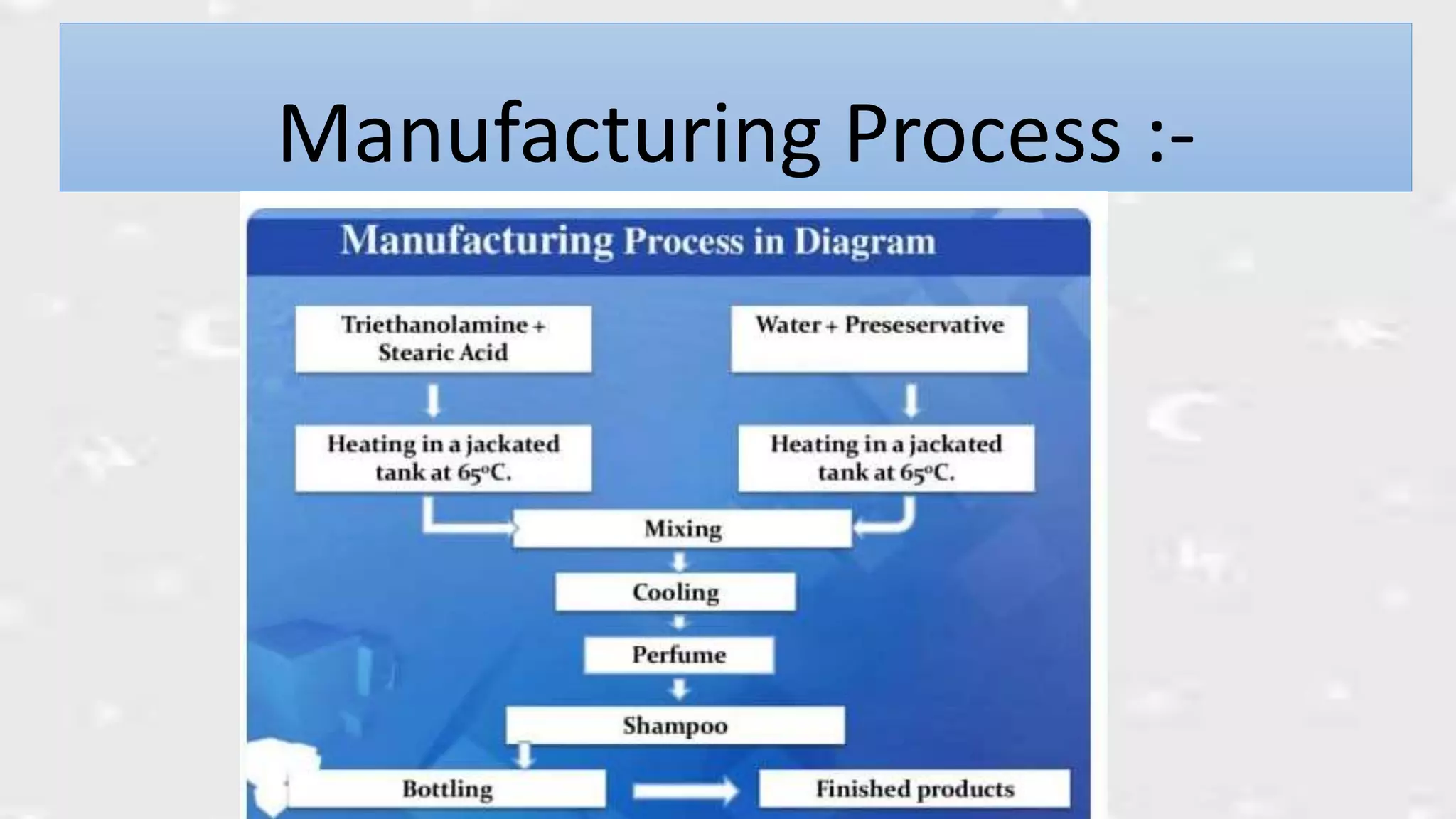
Manufacturing Process :-
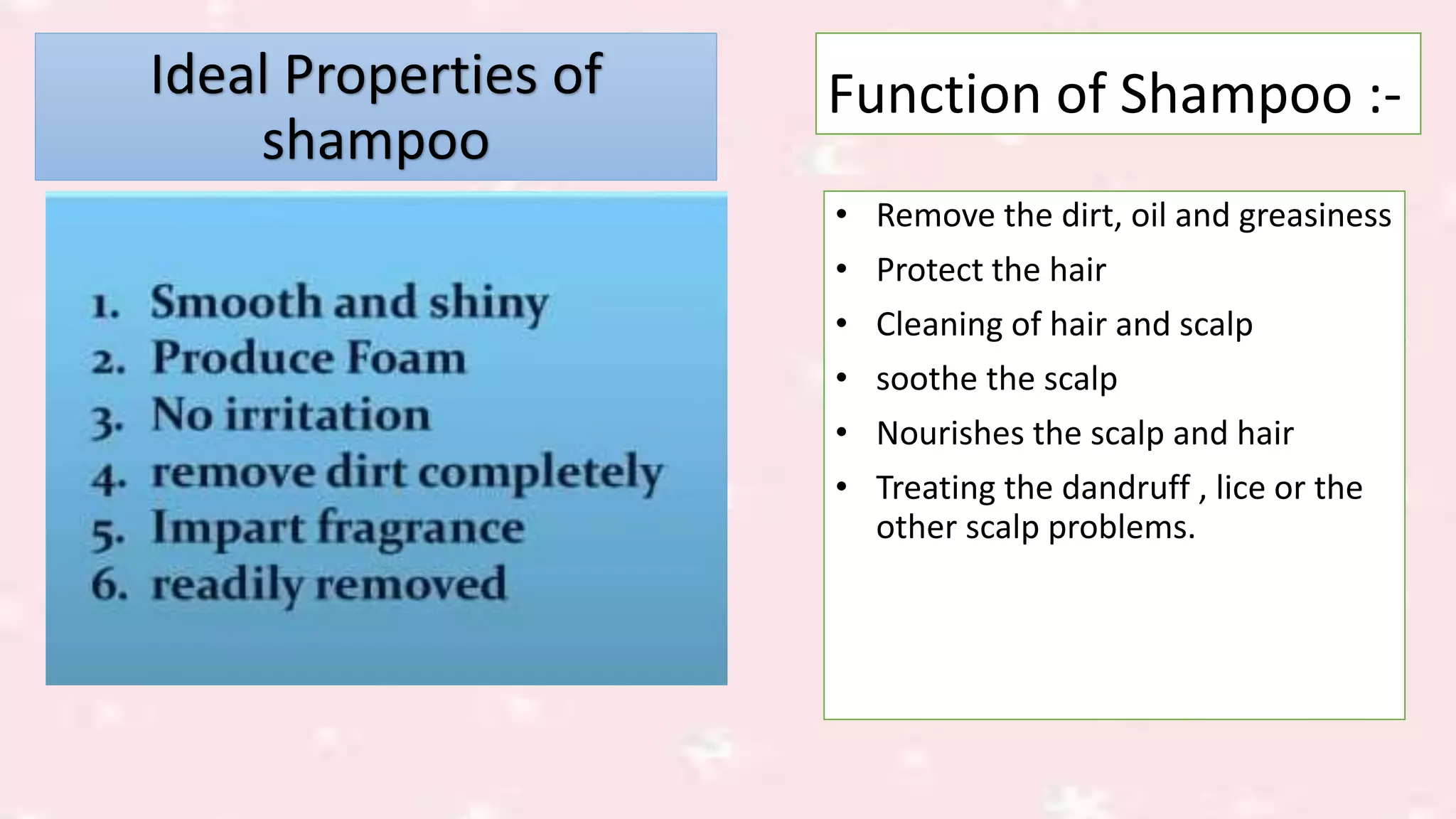
Function of Shampoo :-
• Remove the dirt, oil and greasiness
• Protect the hair
• Cleaning of hair and scalp
• soothe the scalp
• Nourishes the scalp and hair
• Treating the dandruff , lice or the
other scalp problems.
Ideal Properties of
shampoo
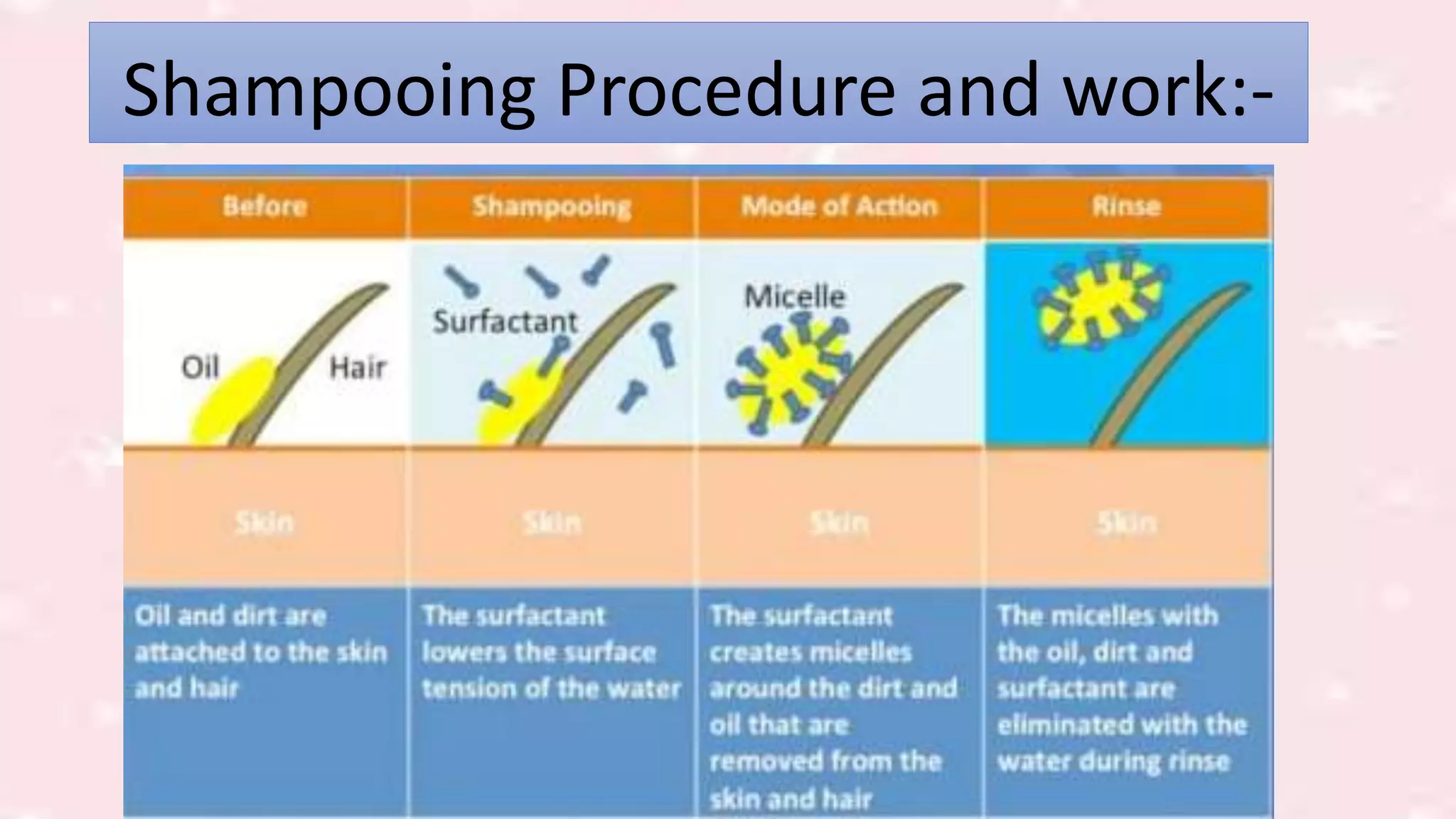
Shampooing Procedure and work:-
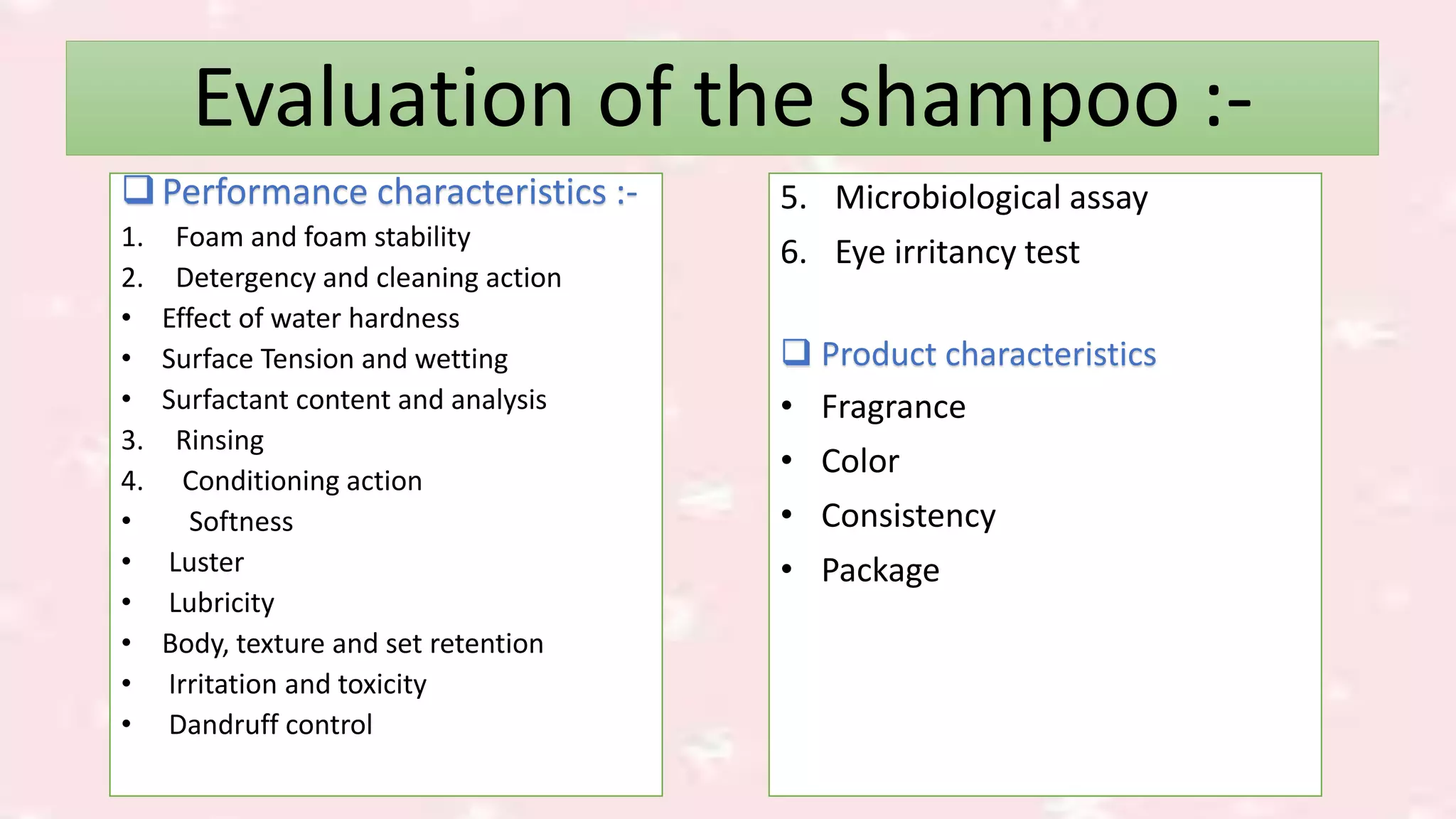
Evaluation of the shampoo :-
5. Microbiological assay
6. Eye irritancy test
 Product characteristics
• Fragrance
• Color
• Consistency
• Package
Performance characteristics :-
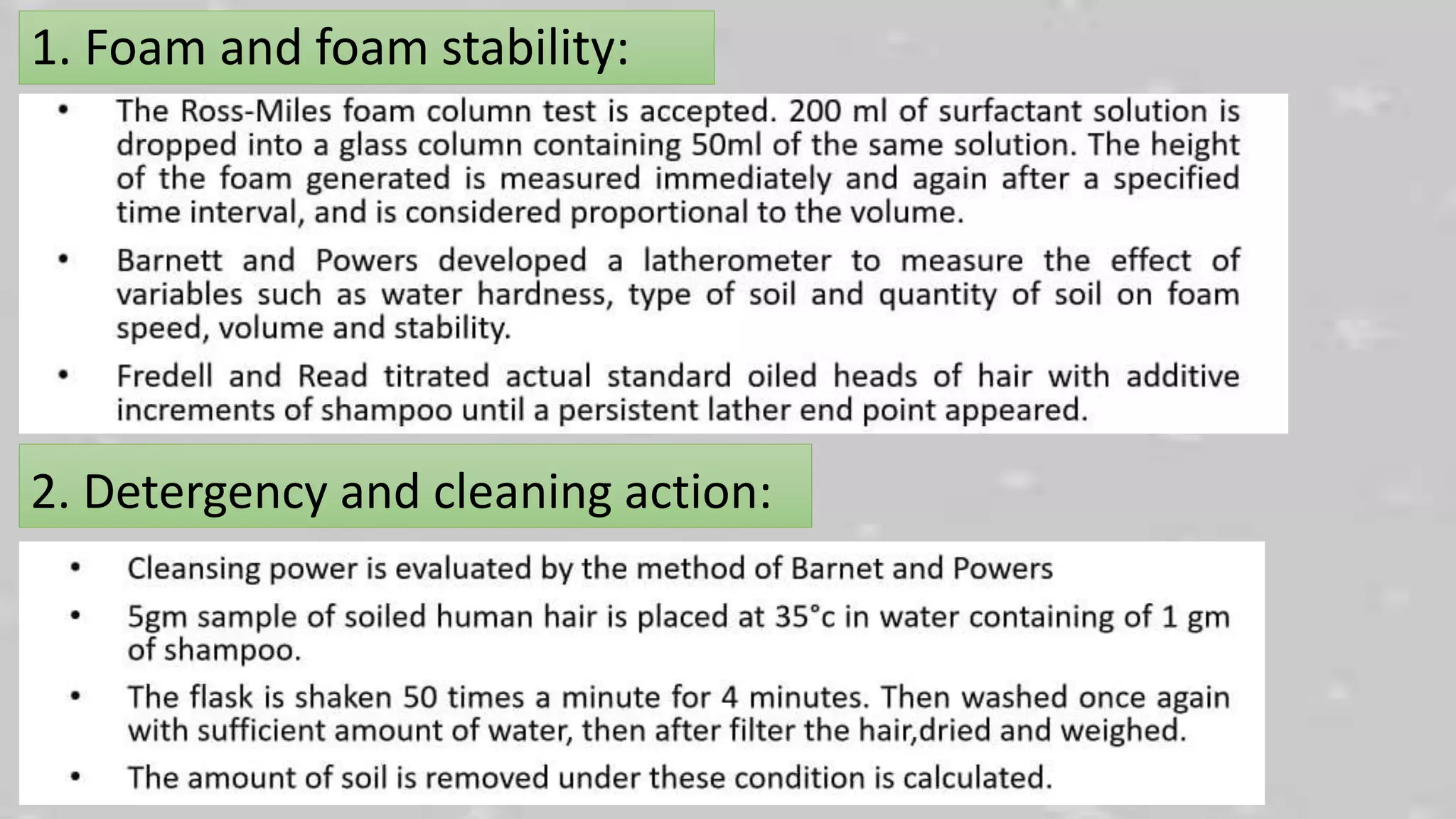
1. Foam and foam stability
2. Detergency and cleaning action
• Effect of water hardness
• Surface Tension and wetting
• Surfactant content and analysis
3. Rinsing
4. Conditioning action
• Softness
• Luster
• Lubricity
• Body, texture and set retention
• Irritation and toxicity
• Dandruff control
1. Foam and foam stability:
2. Detergency and cleaning action:
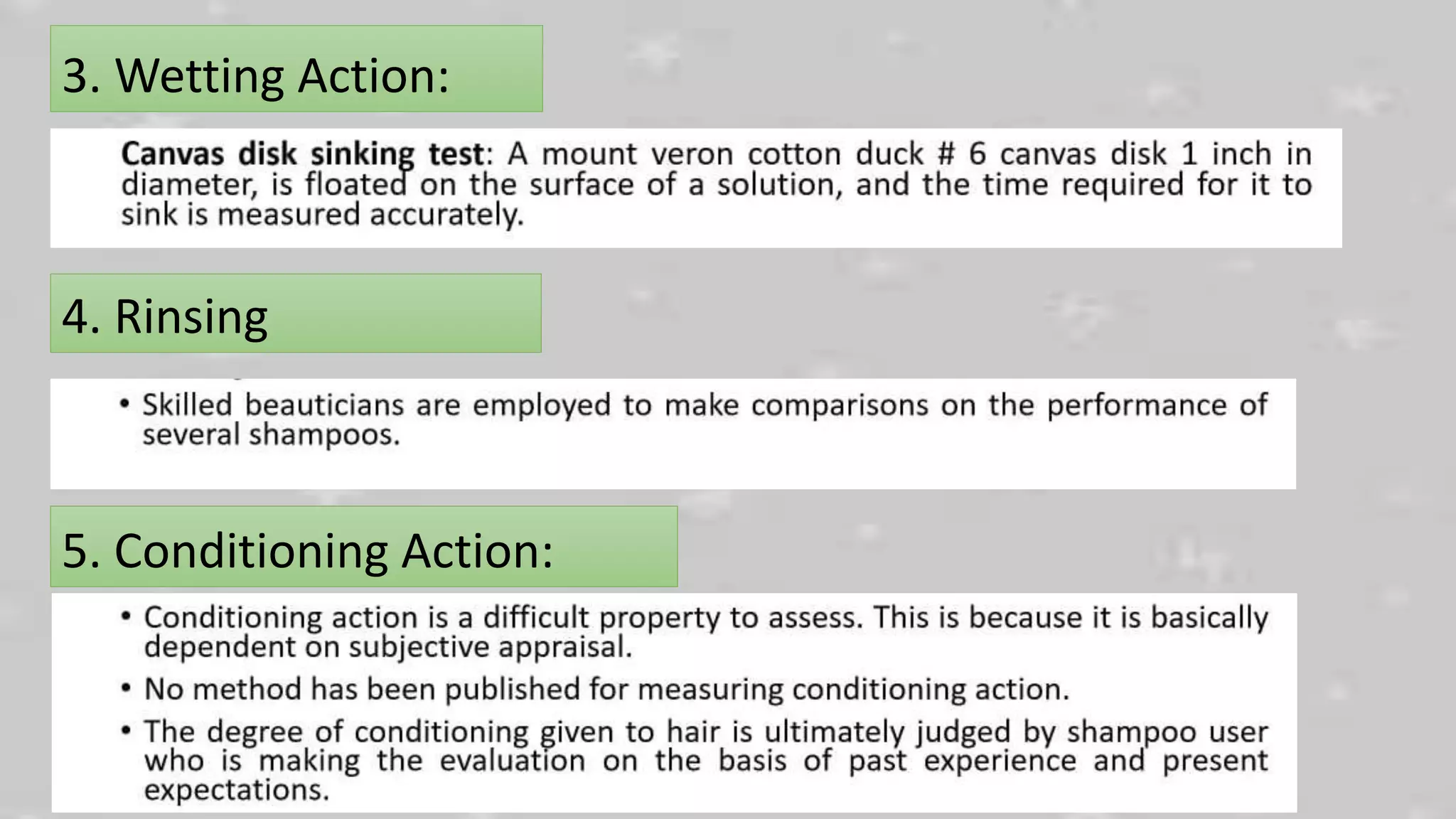
4. Rinsing
• Skilled beauticians are employed to make comparisons on the performance of several shampoos.
5. Conditioning Action:
3. Wetting Action:
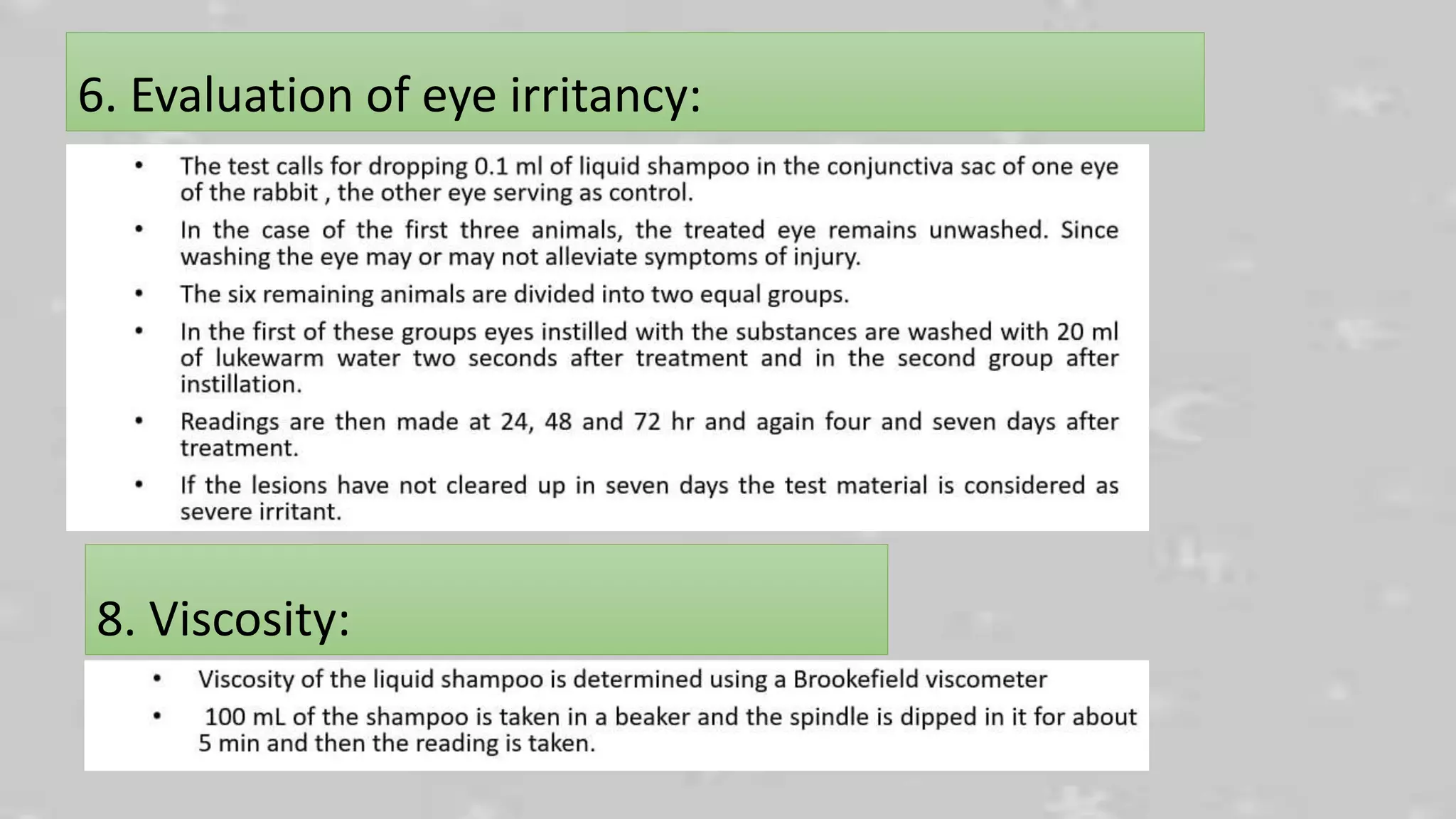
6. Evaluation of eye irritancy:
8. Viscosity:
Requirements of a Shampoo:
1. It should effectively and completely remove dust or soil, excessive sebum
or other fatty substances and loose corneal cells from the hair.
2. It should produce a good amount of foam to satisfy the psychological
requirements of the user.
3. It should be easily removed on rinsing with water.
4. It should leave the hair non ‐dry, soft, lustrous with good manageability
and minimum fly away.
5. It should impart a pleasant fragrances to the hair.
6. It should not cause any side ‐effects / irritation to skin or eye.
7. It should not make the hand rough and chapped.
References :-
• WWW.google.com
• https://www.google.com/search?rlz=1C1VDKB_enIN929IN929&sxsrf=AOae
mvJGC7ONwQbQLGWst2ZktwKnLQXiLA:1642260282752&q=Formulation+of
+shampoo+SlideShare&sa=X&ved=2ahUKEwjxpaCmiLT1AhXzsVYBHUVtD7AQ
1QJ6BAgyEAE
• https://webstor.srmist.edu.in/web_assets/srm_mainsite/files/files/SHAMPO
OS.pdf
• https://www.ncrdsip.com/images/learning-management/10.pdf
• https://www.google.com/search?q=unit+5+cosmetics+in+industrial+phar
macy+notes&rlz=1C1VDKB_enIN929IN929&oq=unit+5+cosmetics+in+indus
trial+pharmacy+notes&aqs=chrome..69i57.10773j0j7&sourceid=chrome&i
e=UTF-8
Preparation and formulation of shampoos

Preparation and formulation of shampoos

  • 1.
    Presentation Assignment Topic:-Formulation and preparation of shampoo SUBJECT :-Industrial Pharmacy - I MAHARISHI DAYANAND UNIVERSITY ROHTAK (HARYANA ) DEPARTMENT OF PHARMACEUTICAL SCIENCE
  • 2.
    Shampoo Shampoo is ahair care product that is used for the removal of oils, dirt, skin particles, dandruff, environmental pollutants and other contaminants that are gradually build up in hair. In terms of Pharmacy :- A shampoo is a preparation of a surfactant in a suitable form– liquid, solid or powder – which when used under the specified conditions will ▪ remove surface grease, ▪ dirt, and ▪ skin debris from the hair shaft and scalp without adversely affecting the user.
  • 3.
    Shampoos are ofthe following types:- • Powder Shampoo • Liquid Shampoo • Lotion Shampoo • Cream Shampoo • Jelly Shampoo • Aerosol Shampoo • Specialized Shampoo Conditioning Shampoo Anti ‐ dandruff Shampoo Baby Shampoo Two layer shampoo Formulation of Shampoo :- 1. Water 2. Surfactant :- Ammonium lauryl sulphate , Sodium Lauryl sulphate or sodium laurate sulphate . 3. Foam boosters :- betaines or alkanolamines . 4. Thickeners :- Carboxy methyl cellulose ,NaCl 5. Conditioning agents :- Silicones such as methicone and quaternary agents. 6. Preservatives :- DMDM hydantoin & Methylparaben 7. Anti dandruff agents :- Selenium sulphides , Inc pyrithone , salicylic acid 8. Ph buffers :- Citric acid 9. Aesthetic additives :- colorants :- Glycerine disterate Opacifiers :- EDGS Fragrance :- Limonene , Ethyl isovalerate
  • 4.
    Surfactants :-  Anionicsurfactants are mostly used (good foaming properties). The hydrophilic portion carries a negative charge which results in superior foaming, cleaning and end result attributes.  Non‐ionic surfactants have good cleansing properties but do not have sufficient foaming power.  Cationic surfactants are toxic and are hence not used. However, they may be used in low concentration in hair conditioners.  Ampholytic, being expensive, are generally not used. However, they are mainly used as secondary surfactants and good hair conditioners.
  • 5.
    • Surfactants arethe main component of shampoo. Mainly anionic surfactants are used. A surfactant consists of two part ‐ one hydrophilic (water loving) while the other is hydrophobic in nature. (Shampoo is generally made by combining a surfactant, most often sodium lauryl sulfate or sodium laureth sulfate, with a co-surfactant, most often cocamidopropyl betaine in water. The sulphate ingredient acts as a surfactant, essentially heavy-duty soap that makes it easier to trap oil and grease.)
  • 6.
  • 7.
    Function of Shampoo:- • Remove the dirt, oil and greasiness • Protect the hair • Cleaning of hair and scalp • soothe the scalp • Nourishes the scalp and hair • Treating the dandruff , lice or the other scalp problems. Ideal Properties of shampoo
  • 8.
  • 9.
    Evaluation of theshampoo :- 5. Microbiological assay 6. Eye irritancy test  Product characteristics • Fragrance • Color • Consistency • Package Performance characteristics :- 1. Foam and foam stability 2. Detergency and cleaning action • Effect of water hardness • Surface Tension and wetting • Surfactant content and analysis 3. Rinsing 4. Conditioning action • Softness • Luster • Lubricity • Body, texture and set retention • Irritation and toxicity • Dandruff control
  • 10.
    1. Foam andfoam stability: 2. Detergency and cleaning action:
  • 11.
    4. Rinsing • Skilledbeauticians are employed to make comparisons on the performance of several shampoos. 5. Conditioning Action: 3. Wetting Action:
  • 12.
    6. Evaluation ofeye irritancy: 8. Viscosity:
  • 13.
    Requirements of aShampoo: 1. It should effectively and completely remove dust or soil, excessive sebum or other fatty substances and loose corneal cells from the hair. 2. It should produce a good amount of foam to satisfy the psychological requirements of the user. 3. It should be easily removed on rinsing with water. 4. It should leave the hair non ‐dry, soft, lustrous with good manageability and minimum fly away. 5. It should impart a pleasant fragrances to the hair. 6. It should not cause any side ‐effects / irritation to skin or eye. 7. It should not make the hand rough and chapped.
  • 14.
    References :- • WWW.google.com •https://www.google.com/search?rlz=1C1VDKB_enIN929IN929&sxsrf=AOae mvJGC7ONwQbQLGWst2ZktwKnLQXiLA:1642260282752&q=Formulation+of +shampoo+SlideShare&sa=X&ved=2ahUKEwjxpaCmiLT1AhXzsVYBHUVtD7AQ 1QJ6BAgyEAE • https://webstor.srmist.edu.in/web_assets/srm_mainsite/files/files/SHAMPO OS.pdf • https://www.ncrdsip.com/images/learning-management/10.pdf • https://www.google.com/search?q=unit+5+cosmetics+in+industrial+phar macy+notes&rlz=1C1VDKB_enIN929IN929&oq=unit+5+cosmetics+in+indus trial+pharmacy+notes&aqs=chrome..69i57.10773j0j7&sourceid=chrome&i e=UTF-8