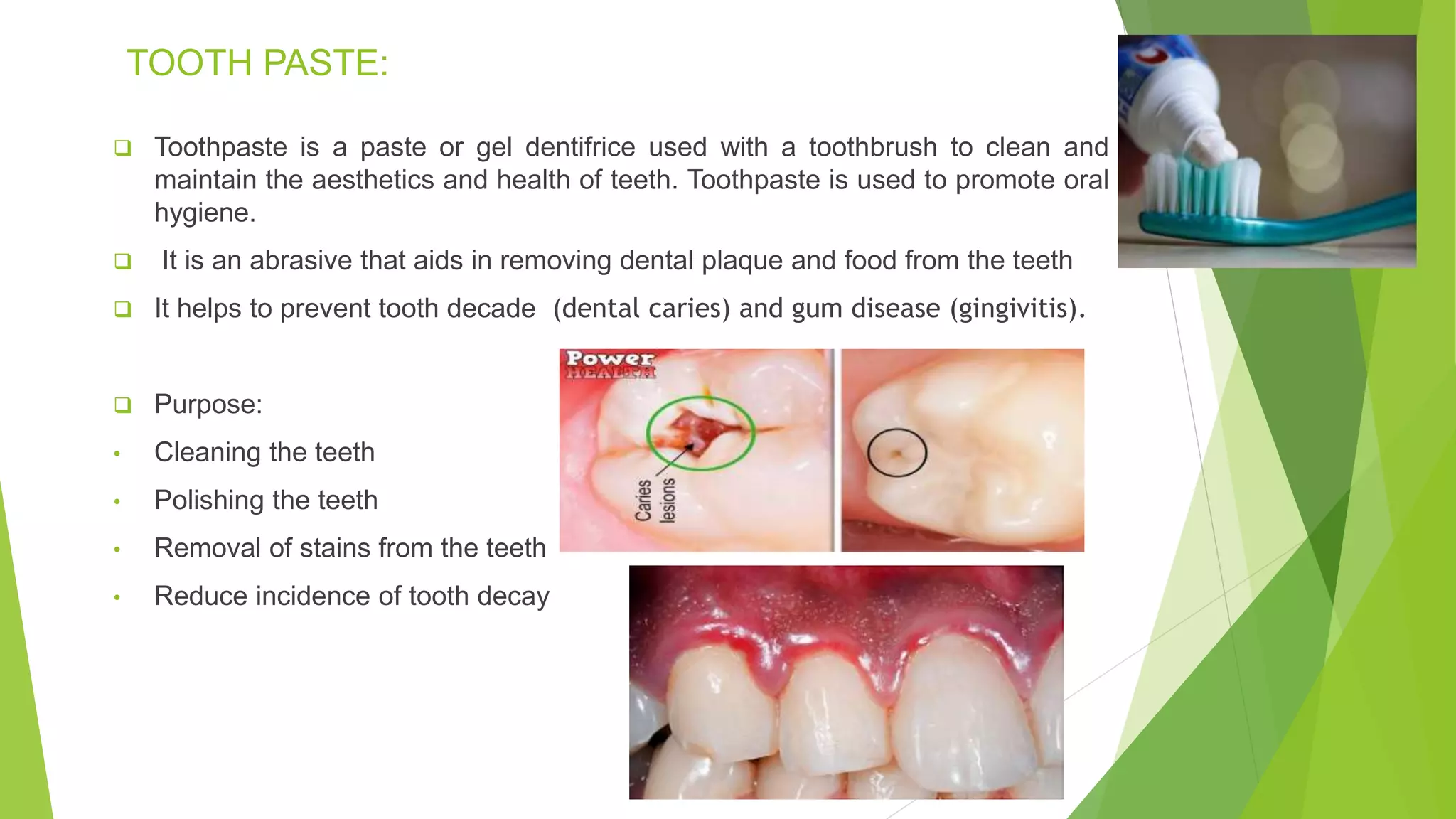
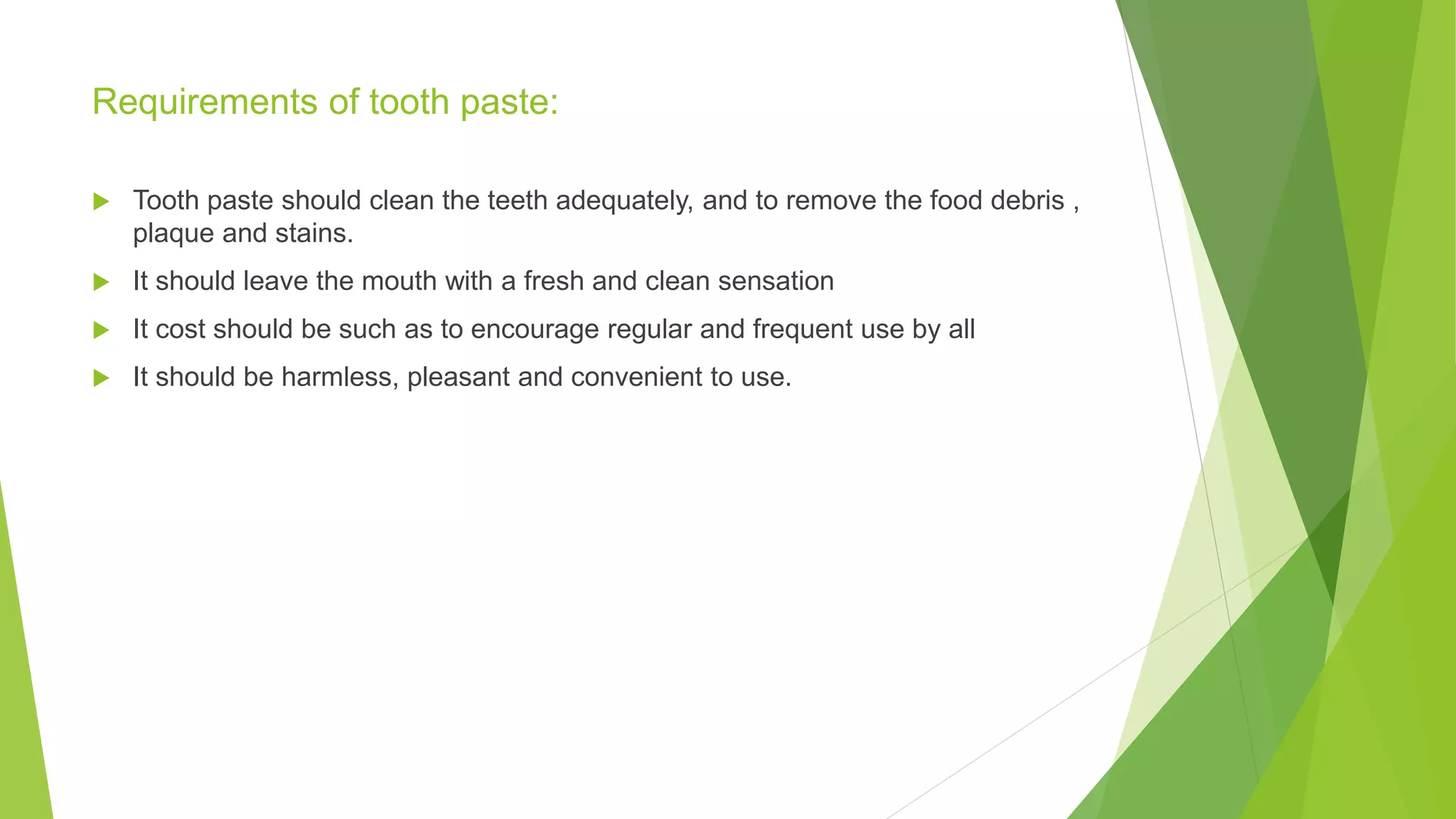
BUILDING BLOCKS FORMULATION OF TOOTH PASTE
UNDER THE GUIDENCE OF SUBMITTED BY
KANCHAN DWIVEDI K.SUSPANDANA
M.PHARM M.PHARMACY II sem
Ass.professor 170218886012
Dept of pharmaceutics
GOKARAJU RANGARAJU COLLEGE OF PHARMACY
BACHUPALLY,HYDERABAD.5000 090.
Contents:
 Introduction
 Requirements of a toothpaste
 Types of toothpaste
 Ingredients
 Formulation of toothpaste
 Conclusion
 References
TOOTH PASTE:
 Toothpaste is a paste or gel dentifrice used with a toothbrush to clean and
maintain the aesthetics and health of teeth. Toothpaste is used to promote oral
hygiene.
 It is an abrasive that aids in removing dental plaque and food from the teeth
 It helps to prevent tooth decade (dental caries) and gum disease (gingivitis).
 Purpose:
• Cleaning the teeth
• Polishing the teeth
• Removal of stains from the teeth
• Reduce incidence of tooth decay
Requirements of tooth paste:
 Tooth paste should clean the teeth adequately, and to remove the food debris ,
plaque and stains.
 It should leave the mouth with a fresh and clean sensation
 It cost should be such as to encourage regular and frequent use by all
 It should be harmless, pleasant and convenient to use.
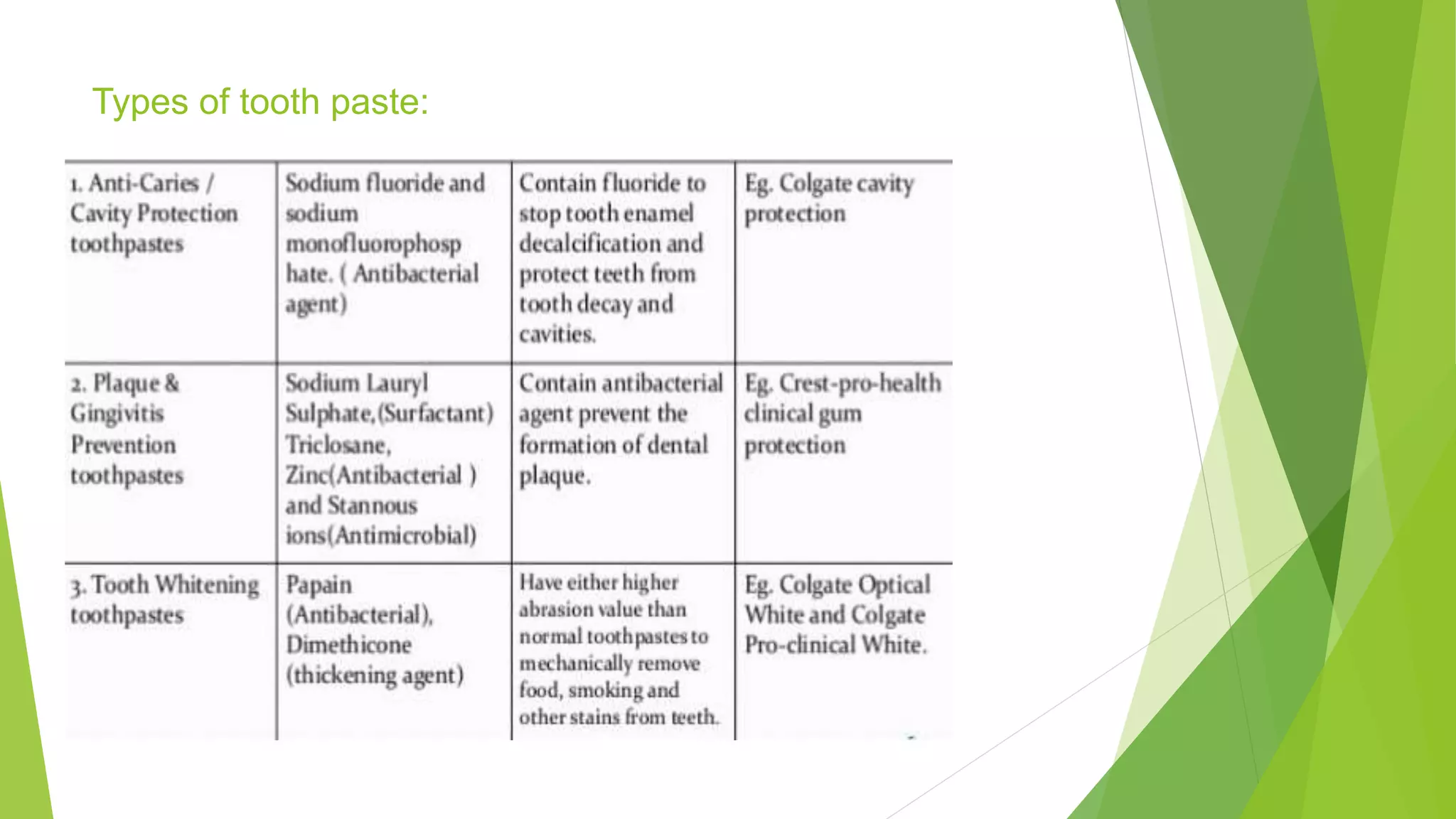
Types of tooth paste:
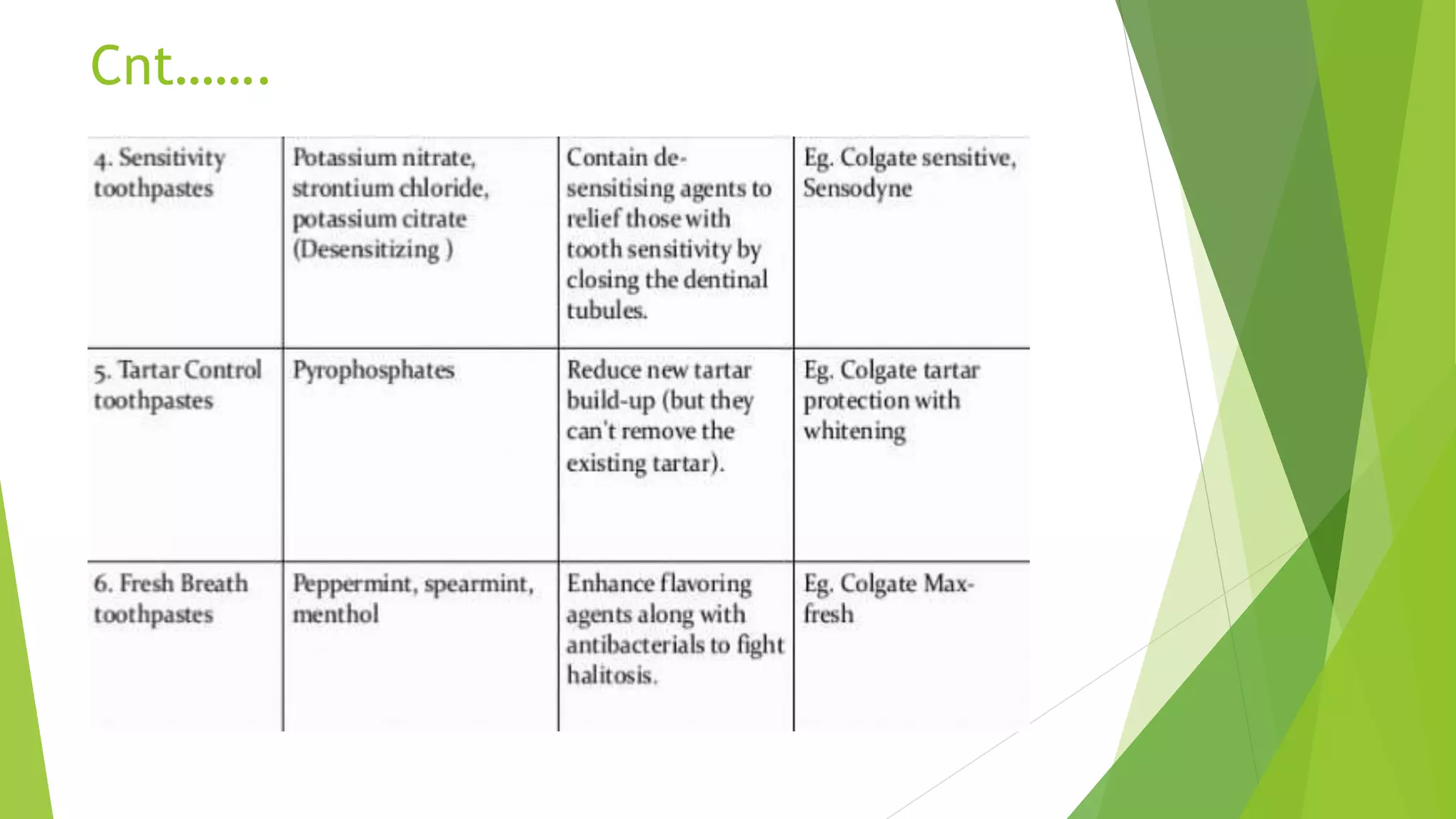
Cnt…….
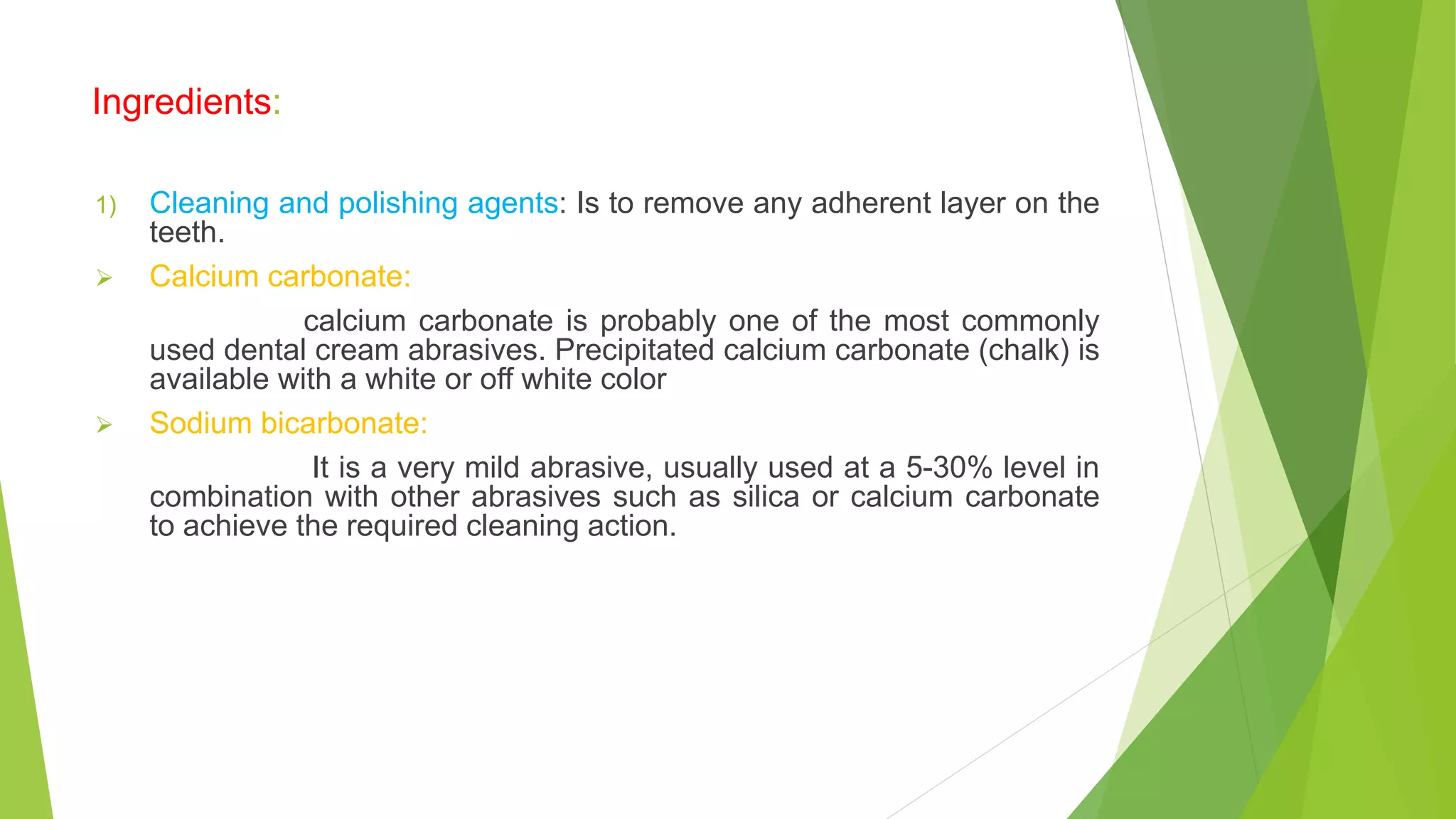
Ingredients:
1) Cleaning and polishing agents: Is to remove any adherent layer on the
teeth.
 Calcium carbonate:
calcium carbonate is probably one of the most commonly
used dental cream abrasives. Precipitated calcium carbonate (chalk) is
available with a white or off white color
 Sodium bicarbonate:
It is a very mild abrasive, usually used at a 5-30% level in
combination with other abrasives such as silica or calcium carbonate
to achieve the required cleaning action.
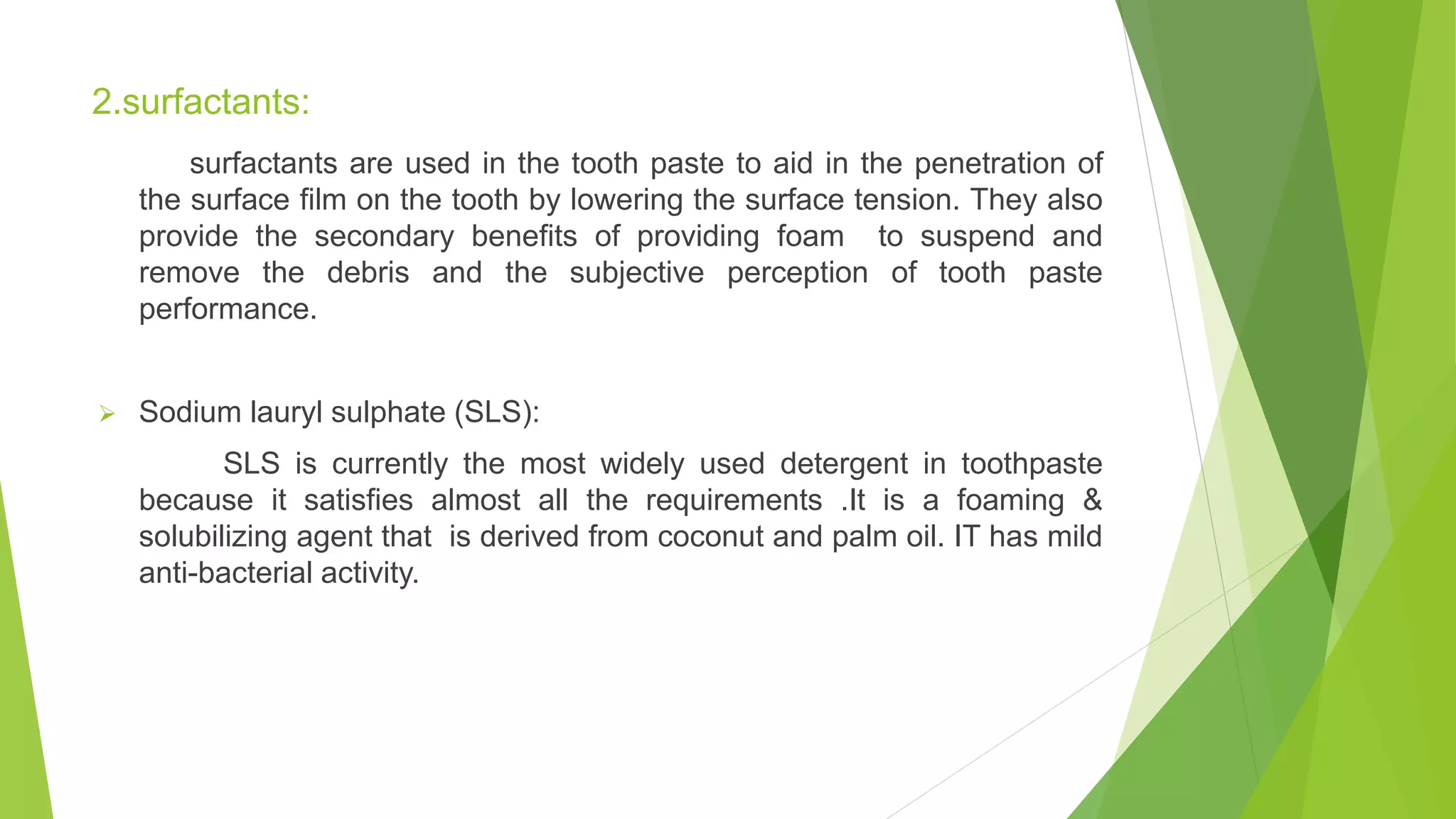
2.surfactants:
surfactants are used in the tooth paste to aid in the penetration of
the surface film on the tooth by lowering the surface tension. They also
provide the secondary benefits of providing foam to suspend and
remove the debris and the subjective perception of tooth paste
performance.
 Sodium lauryl sulphate (SLS):
SLS is currently the most widely used detergent in toothpaste
because it satisfies almost all the requirements .It is a foaming &
solubilizing agent that is derived from coconut and palm oil. IT has mild
anti-bacterial activity.
3. Humectants:
Humectants are used to prevent the paste from drying out
and at the same time they give shine and some plasticity to the paste.
Generally only two major humectants are considered for use in tooth
paste.
 Glycerin:
Glycerin is still the humectant used in greatest bulk quantity in
toothpaste. It is one of the best humectants, producing a shiny,glossy
product It is stable, non-toxic, available from both synthetic and natural
sources, and provides a useful sweetening function to the paste
 Sorbital:
sorbital syrup is also extensively used throughout the industry
and is sometimes considered superior to glycerin depending upon
formulation. It also imparts sweetness, and is a stable humectant.
4.Sweetening agents:
These are important for product acceptance, since the
final product must be neither too sweet nor too bitter. These ingredients
must always be considered in partnership with the flavor because of
their combined impact.
 Sodium saccharin:
This is the sweetening agent in widest commercial use
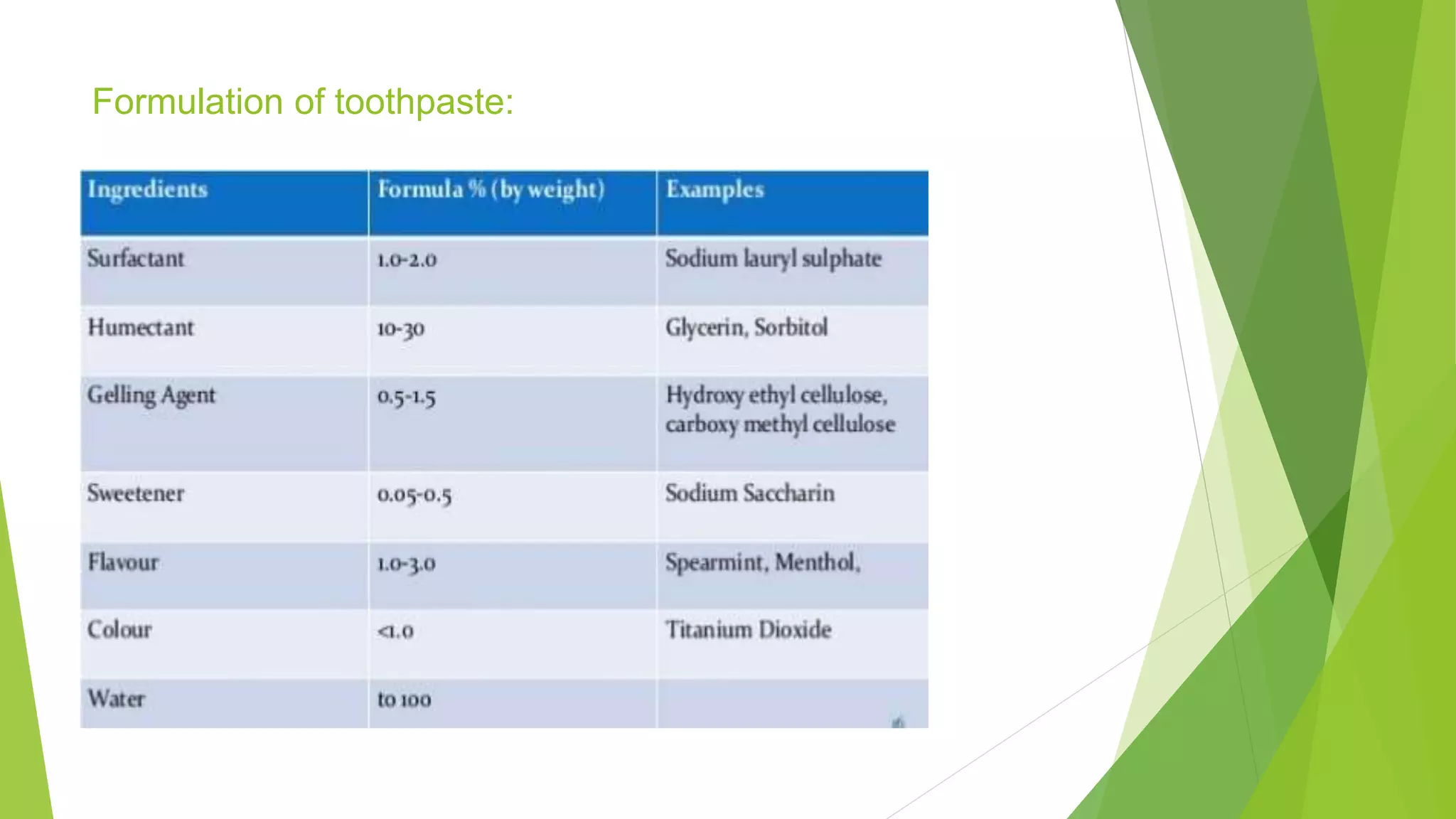
and is generally used at a level 0.05% and 0.5% by weight
5. Flavours':
Flovours are probably the most crucial part of toothpaste
because of consumer preferences. They are also the most proprietary
part of the formulation. Exotic flavors are generally not used mint flavors
tend to predominate
6.Minor ingredients:
This section is intended to cover all additional ingredients
added to the paste to form either a functional or cosmetic aspect.
 Titanium Dioxide:
Titanium dioxide may be added to give additional
whiteness and brilliance to the paste.
7. Colours :
 These are the integral part of the aspect of any toothpaste that may
influence consumer preference and purchase intent.
 A small amount of colour may be added to the paste as a whole to give
it a pastel shade
8. pH regulators:
 Occasionally buffering systems need to be added to the dental cream to
adjust the pH of the final finished product.
Formulation of toothpaste:
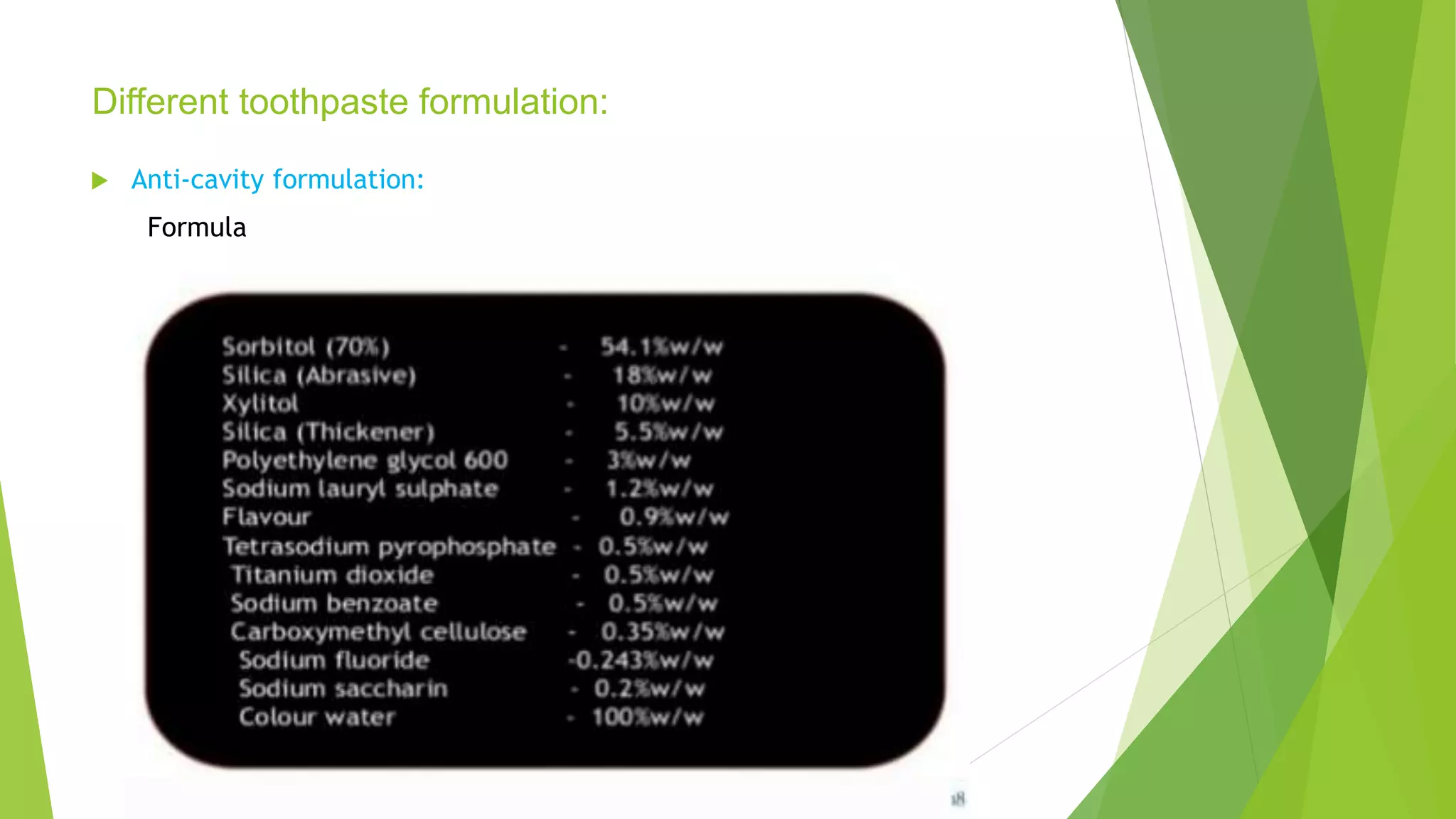
Different toothpaste formulation:
 Anti-cavity formulation:
Formula
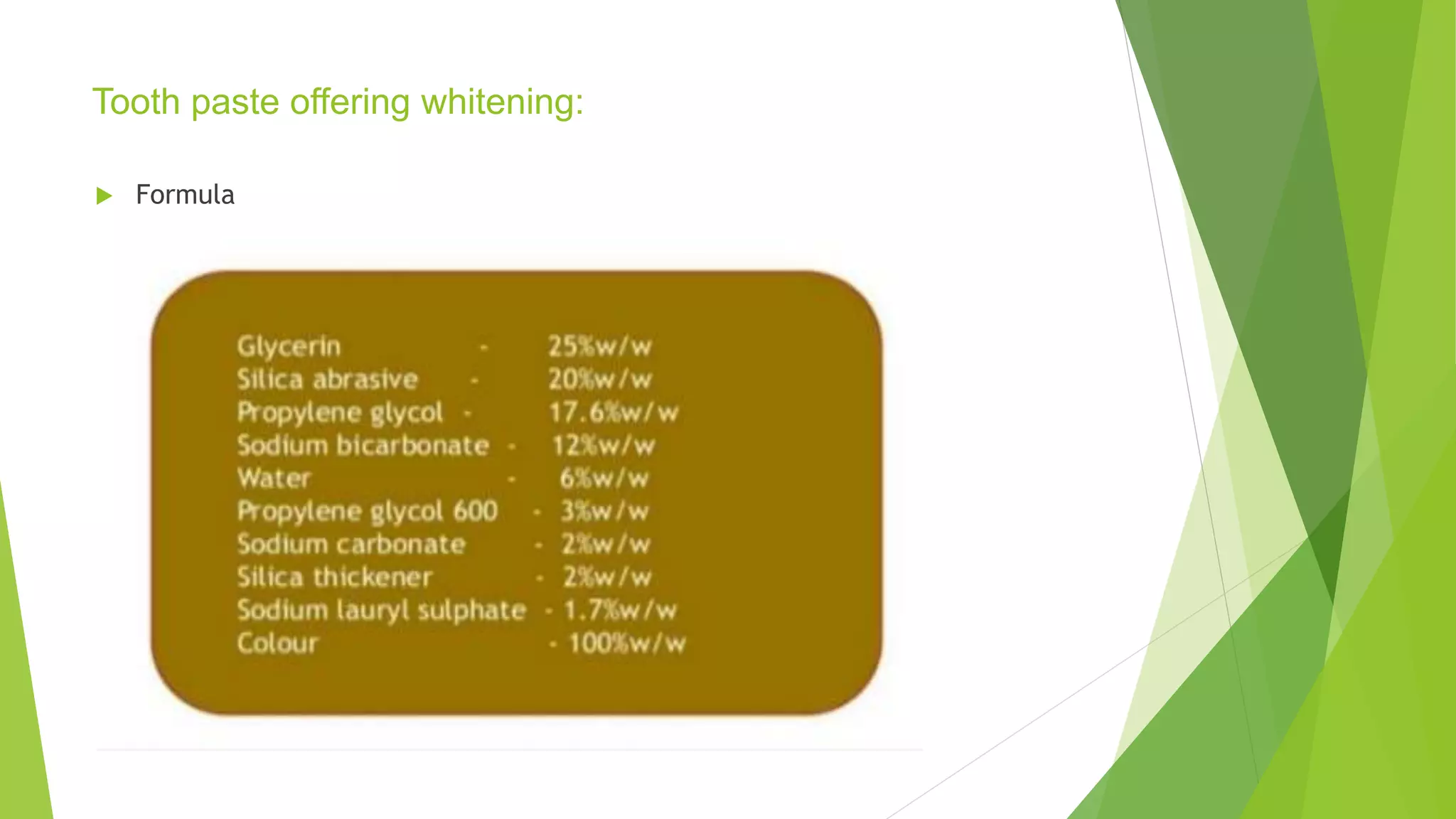
Tooth paste offering whitening:
 Formula
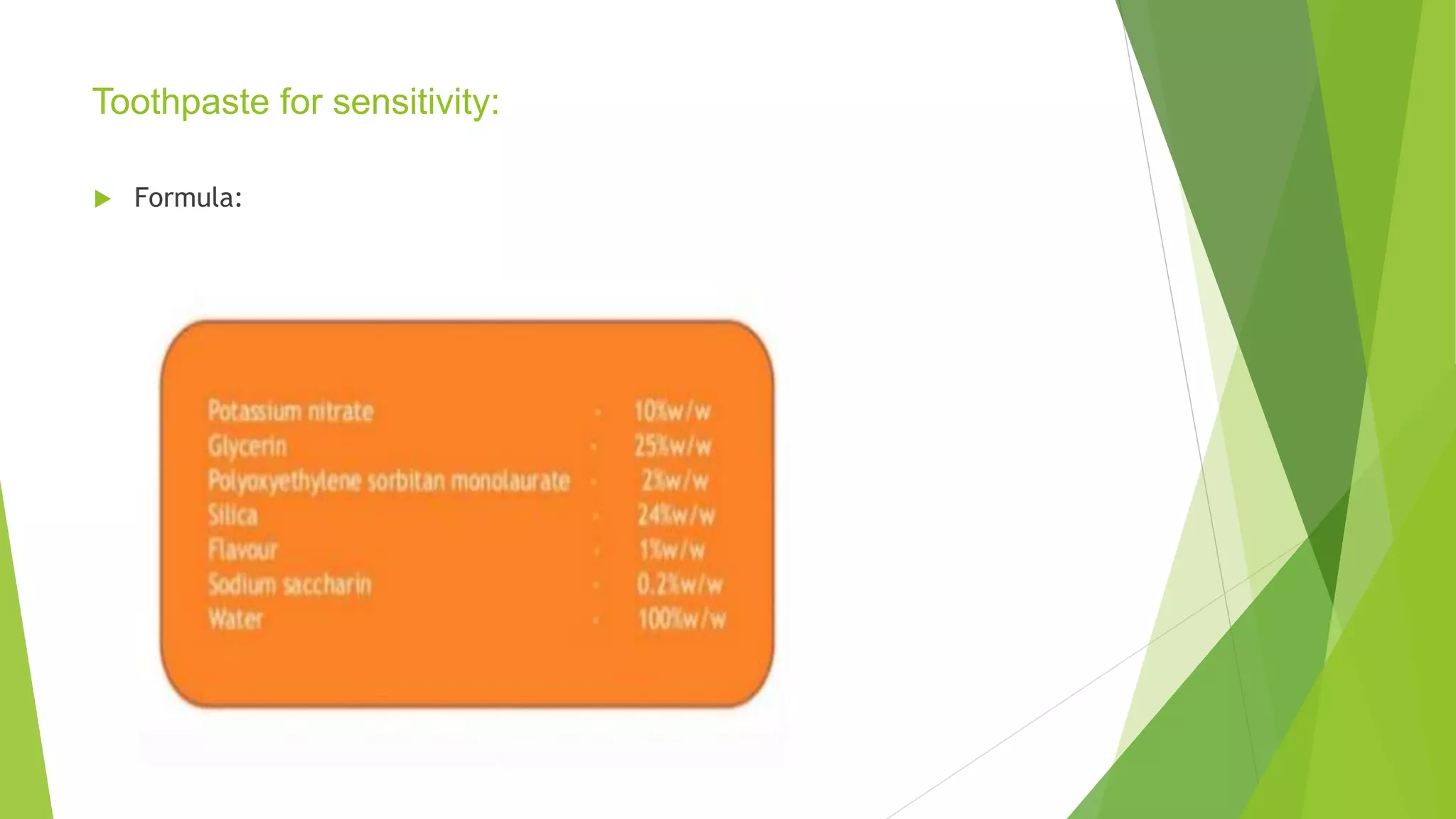
Toothpaste for sensitivity:
 Formula:
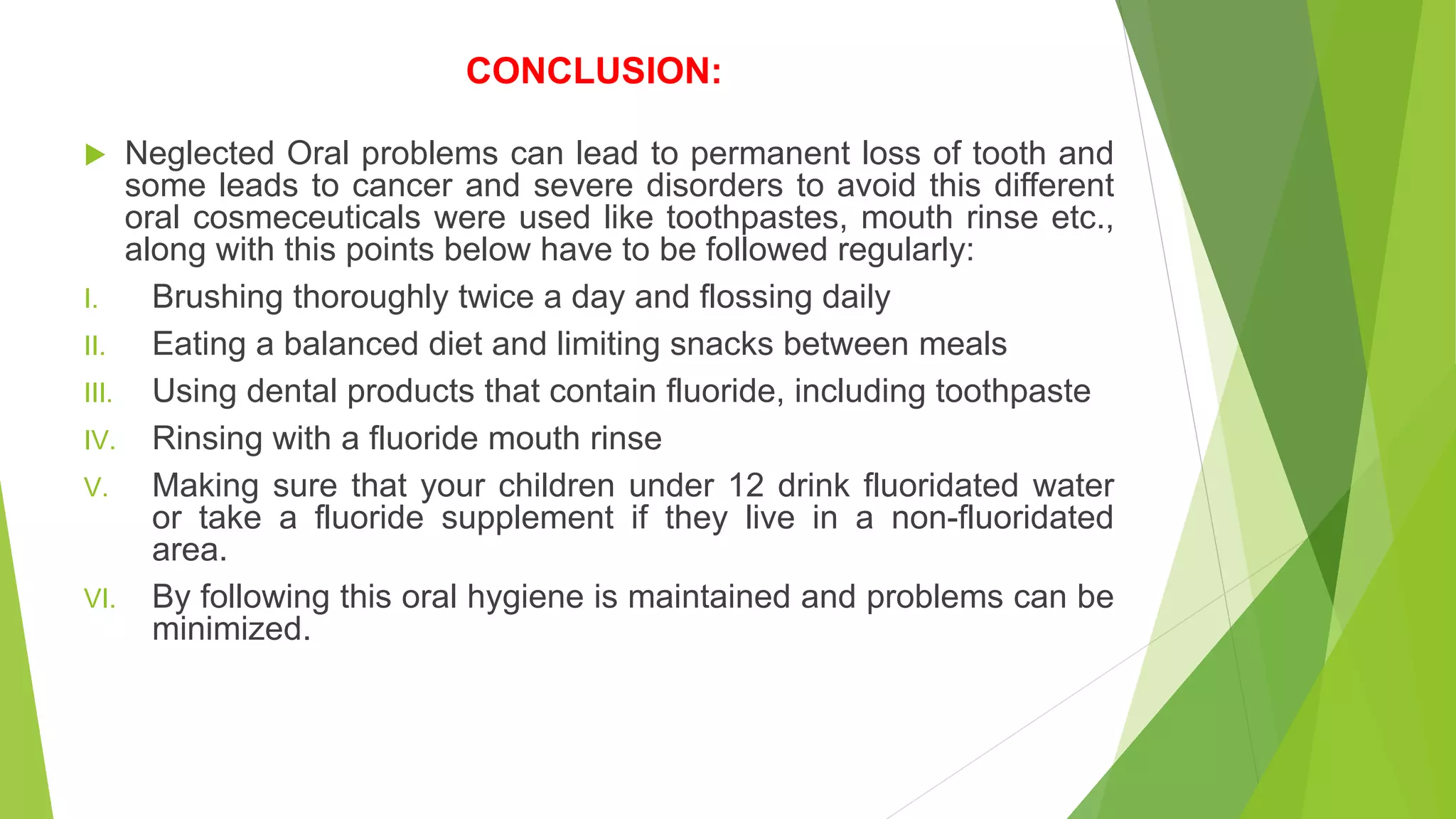
CONCLUSION:
 Neglected Oral problems can lead to permanent loss of tooth and
some leads to cancer and severe disorders to avoid this different
oral cosmeceuticals were used like toothpastes, mouth rinse etc.,
along with this points below have to be followed regularly:
I. Brushing thoroughly twice a day and flossing daily
II. Eating a balanced diet and limiting snacks between meals
III. Using dental products that contain fluoride, including toothpaste
IV. Rinsing with a fluoride mouth rinse
V. Making sure that your children under 12 drink fluoridated water
or take a fluoride supplement if they live in a non-fluoridated
area.
VI. By following this oral hygiene is maintained and problems can be
minimized.
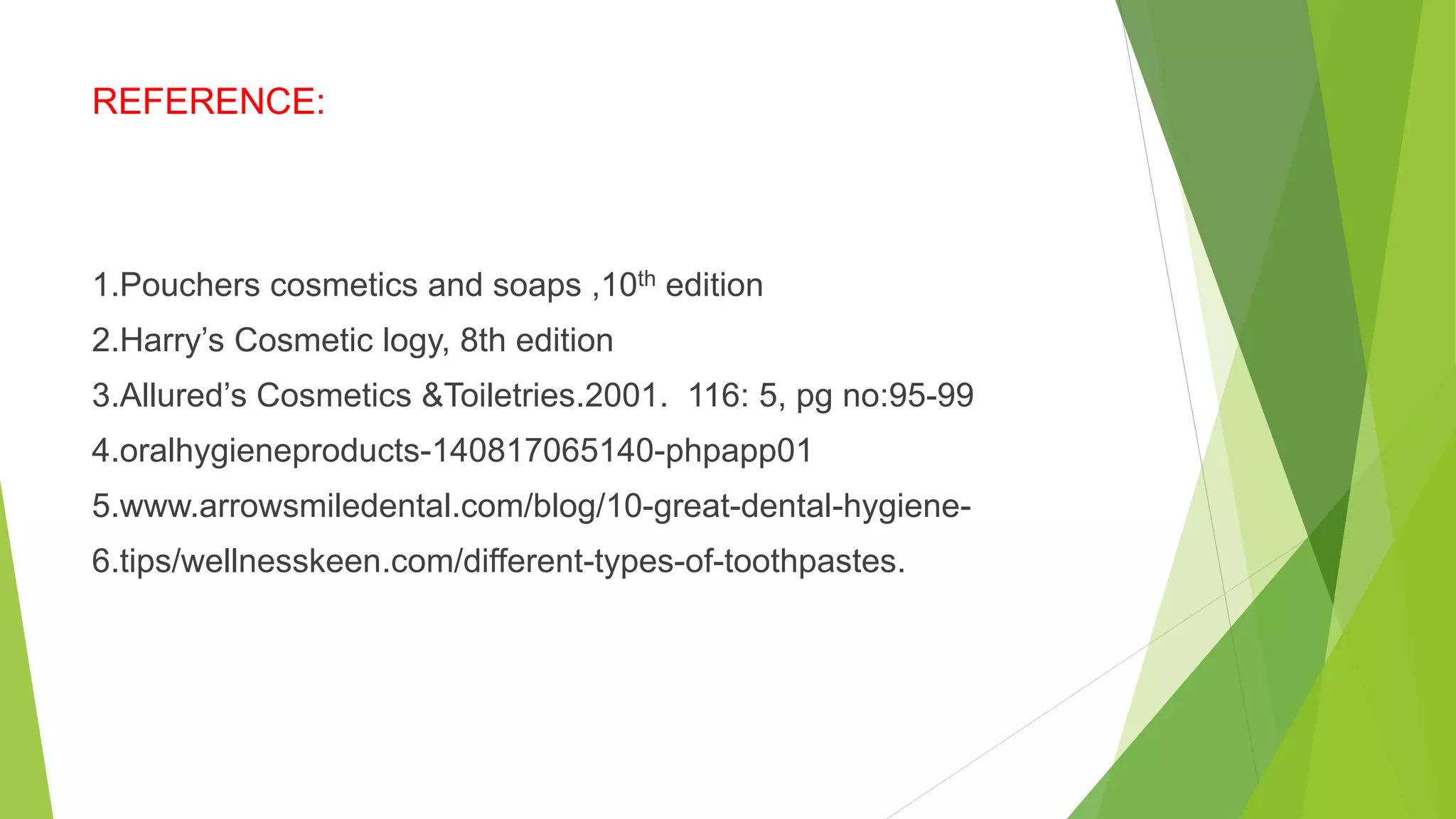
REFERENCE:
1.Pouchers cosmetics and soaps ,10th edition
2.Harry’s Cosmetic logy, 8th edition
3.Allured’s Cosmetics &Toiletries.2001. 116: 5, pg no:95-99
4.oralhygieneproducts-140817065140-phpapp01
5.www.arrowsmiledental.com/blog/10-great-dental-hygiene-
6.tips/wellnesskeen.com/different-types-of-toothpastes.
Tooth paste formulation

Tooth paste formulation

  • 1.
    BUILDING BLOCKS FORMULATIONOF TOOTH PASTE UNDER THE GUIDENCE OF SUBMITTED BY KANCHAN DWIVEDI K.SUSPANDANA M.PHARM M.PHARMACY II sem Ass.professor 170218886012 Dept of pharmaceutics GOKARAJU RANGARAJU COLLEGE OF PHARMACY BACHUPALLY,HYDERABAD.5000 090.
  • 2.
    Contents:  Introduction  Requirementsof a toothpaste  Types of toothpaste  Ingredients  Formulation of toothpaste  Conclusion  References
  • 3.
    TOOTH PASTE:  Toothpasteis a paste or gel dentifrice used with a toothbrush to clean and maintain the aesthetics and health of teeth. Toothpaste is used to promote oral hygiene.  It is an abrasive that aids in removing dental plaque and food from the teeth  It helps to prevent tooth decade (dental caries) and gum disease (gingivitis).  Purpose: • Cleaning the teeth • Polishing the teeth • Removal of stains from the teeth • Reduce incidence of tooth decay
  • 4.
    Requirements of toothpaste:  Tooth paste should clean the teeth adequately, and to remove the food debris , plaque and stains.  It should leave the mouth with a fresh and clean sensation  It cost should be such as to encourage regular and frequent use by all  It should be harmless, pleasant and convenient to use.
  • 5.
  • 6.
  • 7.
    Ingredients: 1) Cleaning andpolishing agents: Is to remove any adherent layer on the teeth.  Calcium carbonate: calcium carbonate is probably one of the most commonly used dental cream abrasives. Precipitated calcium carbonate (chalk) is available with a white or off white color  Sodium bicarbonate: It is a very mild abrasive, usually used at a 5-30% level in combination with other abrasives such as silica or calcium carbonate to achieve the required cleaning action.
  • 8.
    2.surfactants: surfactants are usedin the tooth paste to aid in the penetration of the surface film on the tooth by lowering the surface tension. They also provide the secondary benefits of providing foam to suspend and remove the debris and the subjective perception of tooth paste performance.  Sodium lauryl sulphate (SLS): SLS is currently the most widely used detergent in toothpaste because it satisfies almost all the requirements .It is a foaming & solubilizing agent that is derived from coconut and palm oil. IT has mild anti-bacterial activity.
  • 9.
    3. Humectants: Humectants areused to prevent the paste from drying out and at the same time they give shine and some plasticity to the paste. Generally only two major humectants are considered for use in tooth paste.  Glycerin: Glycerin is still the humectant used in greatest bulk quantity in toothpaste. It is one of the best humectants, producing a shiny,glossy product It is stable, non-toxic, available from both synthetic and natural sources, and provides a useful sweetening function to the paste  Sorbital: sorbital syrup is also extensively used throughout the industry and is sometimes considered superior to glycerin depending upon formulation. It also imparts sweetness, and is a stable humectant.
  • 10.
    4.Sweetening agents: These areimportant for product acceptance, since the final product must be neither too sweet nor too bitter. These ingredients must always be considered in partnership with the flavor because of their combined impact.  Sodium saccharin: This is the sweetening agent in widest commercial use and is generally used at a level 0.05% and 0.5% by weight
  • 11.
    5. Flavours': Flovours areprobably the most crucial part of toothpaste because of consumer preferences. They are also the most proprietary part of the formulation. Exotic flavors are generally not used mint flavors tend to predominate 6.Minor ingredients: This section is intended to cover all additional ingredients added to the paste to form either a functional or cosmetic aspect.  Titanium Dioxide: Titanium dioxide may be added to give additional whiteness and brilliance to the paste.
  • 12.
    7. Colours : These are the integral part of the aspect of any toothpaste that may influence consumer preference and purchase intent.  A small amount of colour may be added to the paste as a whole to give it a pastel shade 8. pH regulators:  Occasionally buffering systems need to be added to the dental cream to adjust the pH of the final finished product.
  • 13.
  • 14.
    Different toothpaste formulation: Anti-cavity formulation: Formula
  • 15.
    Tooth paste offeringwhitening:  Formula
  • 16.
  • 17.
    CONCLUSION:  Neglected Oralproblems can lead to permanent loss of tooth and some leads to cancer and severe disorders to avoid this different oral cosmeceuticals were used like toothpastes, mouth rinse etc., along with this points below have to be followed regularly: I. Brushing thoroughly twice a day and flossing daily II. Eating a balanced diet and limiting snacks between meals III. Using dental products that contain fluoride, including toothpaste IV. Rinsing with a fluoride mouth rinse V. Making sure that your children under 12 drink fluoridated water or take a fluoride supplement if they live in a non-fluoridated area. VI. By following this oral hygiene is maintained and problems can be minimized.
  • 18.
    REFERENCE: 1.Pouchers cosmetics andsoaps ,10th edition 2.Harry’s Cosmetic logy, 8th edition 3.Allured’s Cosmetics &Toiletries.2001. 116: 5, pg no:95-99 4.oralhygieneproducts-140817065140-phpapp01 5.www.arrowsmiledental.com/blog/10-great-dental-hygiene- 6.tips/wellnesskeen.com/different-types-of-toothpastes.