Reproduction and Development
Reproductive system Production of sex cells is controlled by hormones In humans Internal fertilization Internal development
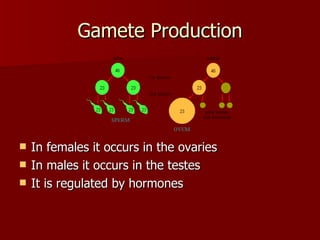
Gamete Production In females it occurs in the ovaries In males it occurs in the testes It is regulated by hormones
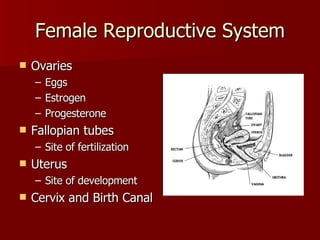
Female Reproductive System Ovaries Eggs Estrogen Progesterone Fallopian tubes Site of fertilization Uterus Site of development Cervix and Birth Canal
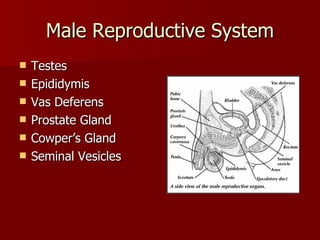
Male Reproductive System Testes Epididymis Vas Deferens Prostate Gland Cowper’s Gland  Seminal Vesicles
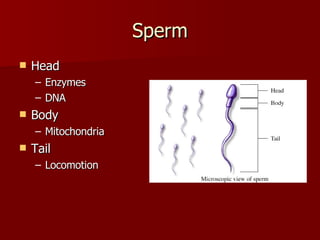
Sperm Head Enzymes DNA Body Mitochondria Tail Locomotion
Hormones  Testosterone: Development of male secondary sex characteristics  Estrogen: Development of female secondary sex characteristics Progesterone: along with estrogen, helps prepare uterine wall for pregnancy. Maintains uterine lining during pregnancy (pregnancy hormone)
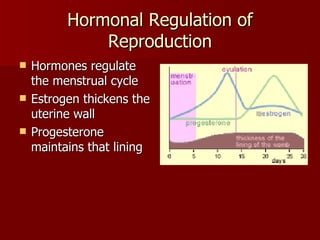
Hormonal Regulation of Reproduction Hormones regulate the menstrual cycle Estrogen thickens the uterine wall Progesterone maintains that lining
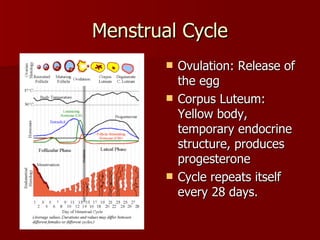
Menstrual Cycle Ovulation: Release of the egg Corpus Luteum: Yellow body, temporary endocrine structure, produces progesterone Cycle repeats itself every 28 days.
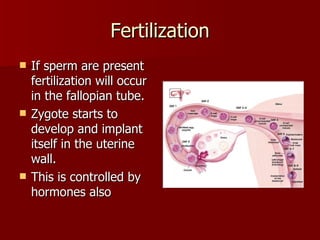
Fertilization If sperm are present fertilization will occur in the fallopian tube. Zygote starts to develop and implant itself in the uterine wall. This is controlled by hormones also
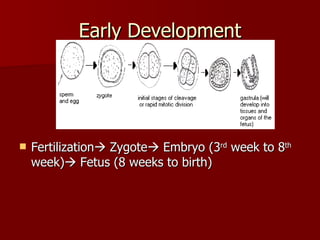
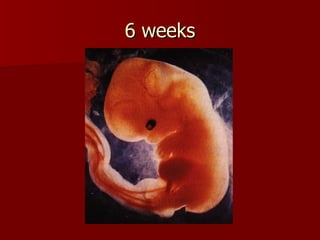
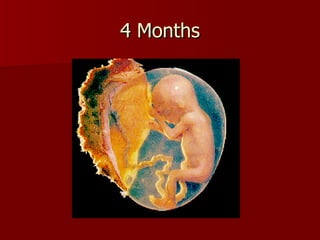
Early Development Fertilization   Zygote   Embryo (3 rd  week to 8 th  week)   Fetus (8 weeks to birth)
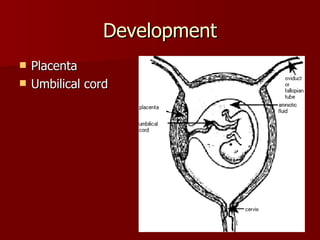
Development Placenta Umbilical cord
6 weeks
4 Months
The First Few Months The first few months are most critical Cells differentiate Organs form Toxins from mother can affect development Alcohol Tobacco Drugs
Development Continues After birth, cell differentiation and development continues to adulthood. During adulthood, structures age. Organism weakens and dies.
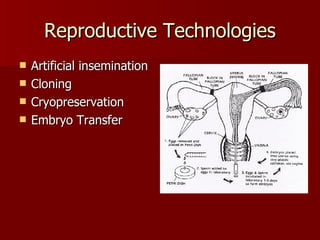
Reproductive Technologies Artificial insemination Cloning Cryopreservation Embryo Transfer

Reproduction And Development