Endocrine System, Nervous System and Homeostatic Control
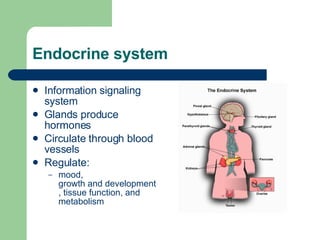
Endocrine system Information signaling system Glands produce hormones Circulate through blood vessels Regulate: mood ,  growth and development ,  tissue function , and  metabolism
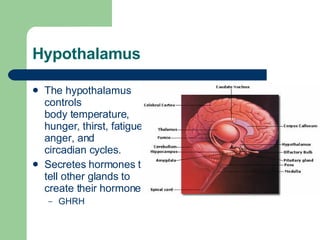
Hypothalamus The hypothalamus controls  body temperature ,  hunger ,  thirst , fatigue, anger, and  circadian cycles . Secretes hormones that tell other glands to create their hormones GHRH
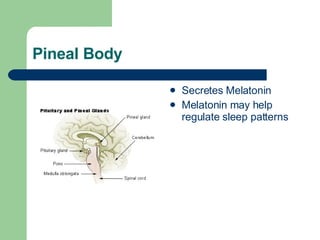
Pineal Body Secretes Melatonin Melatonin may help regulate sleep patterns
Pituitary Gland Growth Blood Pressure Sex Organ Functions Conversion of food into energy Water regulation
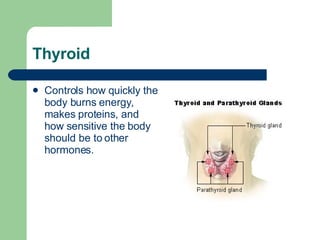
Thyroid Controls how quickly the body burns  energy , makes  proteins , and how sensitive the body should be to other  hormones .
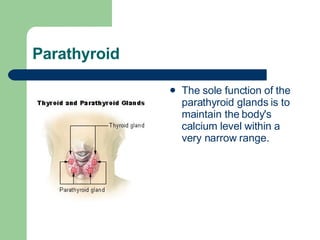
Parathyroid The sole function of the parathyroid glands is to maintain the body's  calcium  level within a very narrow range.
Pancreas Regulates blood sugar by producing Insulin
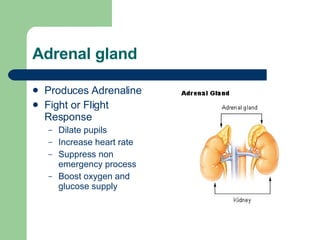
Adrenal gland  Produces Adrenaline Fight or Flight Response Dilate pupils Increase heart rate Suppress non emergency process Boost oxygen and glucose supply
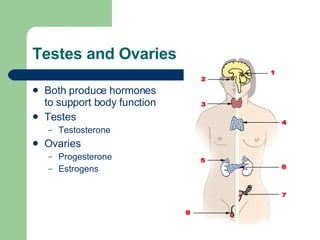
Testes and Ovaries Both produce hormones to support body function Testes Testosterone Ovaries Progesterone Estrogens
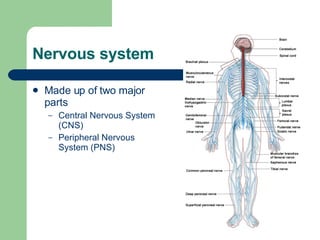
Nervous system Made up of two major parts Central Nervous System (CNS) Peripheral Nervous System (PNS)
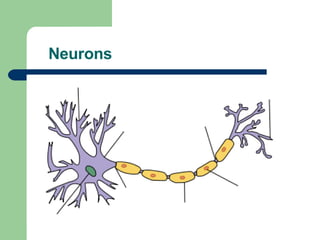
Neurons
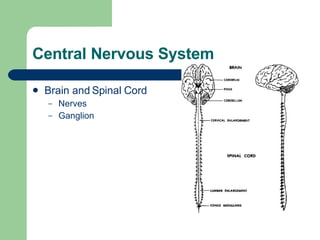
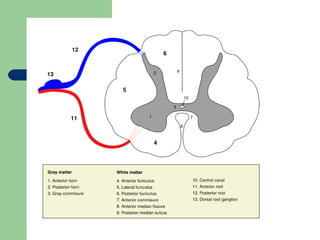
Central Nervous System Brain and Spinal Cord Nerves Ganglion
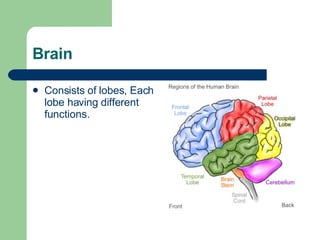
Brain Consists of lobes, Each lobe having different functions.
Function Process information Dictate reactions and behaviors
Peripheral Nervous system Nerves from spinal cord to rest of body Create locomotion Etc…
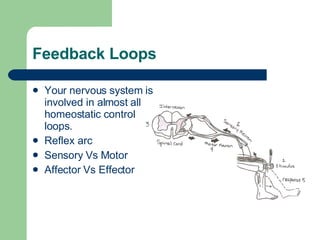
Feedback Loops Your nervous system is involved in almost all homeostatic control loops. Reflex arc Sensory Vs Motor Affector Vs Effector
 
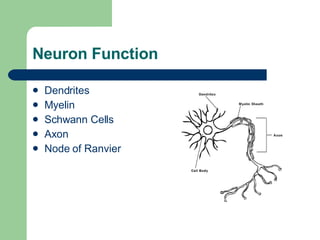
Neuron Function Dendrites Myelin Schwann Cells Axon Node of Ranvier
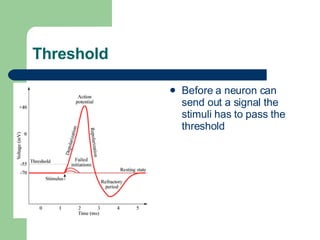
Threshold Before a neuron can send out a signal the stimuli has to pass the threshold
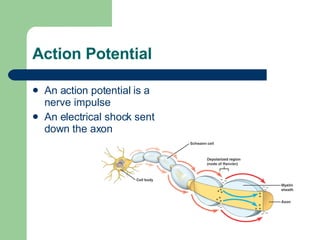
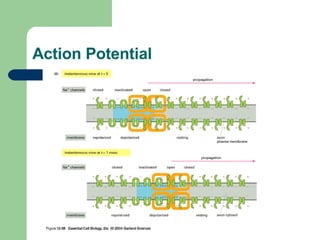
Action Potential  An action potential is a nerve impulse An electrical shock sent down the axon
Action Potential
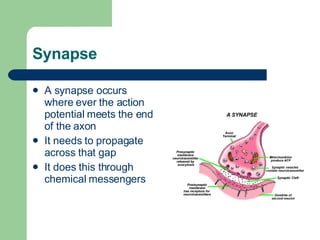
Synapse A synapse occurs where ever the action potential meets the end of the axon It needs to propagate across that gap It does this through chemical messengers
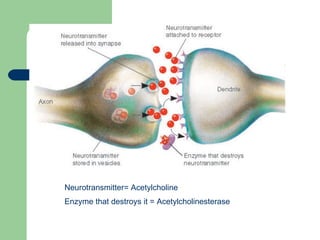
Neurotransmitter= Acetylcholine Enzyme that destroys it = Acetylcholinesterase
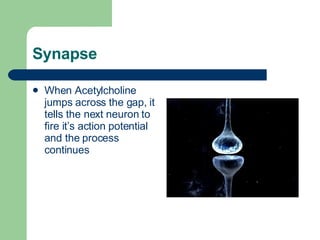
Synapse When Acetylcholine jumps across the gap, it tells the next neuron to fire it’s action potential and the process continues
Homeostasis Summary Homeostasis  is the maintenance of a stable internal state within an organism.  Organisms must respond and maintain homeostasis in relation to many factors. Organisms detect changes in their environment and respond to these changes in a variety of ways.     These changes may occur at the cellular or organism level.

Endocrine System, Nervous System And Homeostatic Control[1]

  • 1.
    Endocrine System, NervousSystem and Homeostatic Control
  • 2.
    Endocrine system Informationsignaling system Glands produce hormones Circulate through blood vessels Regulate: mood , growth and development , tissue function , and metabolism
  • 3.
    Hypothalamus The hypothalamuscontrols body temperature , hunger , thirst , fatigue, anger, and circadian cycles . Secretes hormones that tell other glands to create their hormones GHRH
  • 4.
    Pineal Body SecretesMelatonin Melatonin may help regulate sleep patterns
  • 5.
    Pituitary Gland GrowthBlood Pressure Sex Organ Functions Conversion of food into energy Water regulation
  • 6.
    Thyroid Controls howquickly the body burns energy , makes proteins , and how sensitive the body should be to other hormones .
  • 7.
    Parathyroid The solefunction of the parathyroid glands is to maintain the body's calcium level within a very narrow range.
  • 8.
    Pancreas Regulates bloodsugar by producing Insulin
  • 9.
    Adrenal gland Produces Adrenaline Fight or Flight Response Dilate pupils Increase heart rate Suppress non emergency process Boost oxygen and glucose supply
  • 10.
    Testes and OvariesBoth produce hormones to support body function Testes Testosterone Ovaries Progesterone Estrogens
  • 11.
    Nervous system Madeup of two major parts Central Nervous System (CNS) Peripheral Nervous System (PNS)
  • 12.
  • 13.
    Central Nervous SystemBrain and Spinal Cord Nerves Ganglion
  • 14.
    Brain Consists oflobes, Each lobe having different functions.
  • 15.
    Function Process informationDictate reactions and behaviors
  • 16.
    Peripheral Nervous systemNerves from spinal cord to rest of body Create locomotion Etc…
  • 17.
    Feedback Loops Yournervous system is involved in almost all homeostatic control loops. Reflex arc Sensory Vs Motor Affector Vs Effector
  • 18.
  • 19.
    Neuron Function DendritesMyelin Schwann Cells Axon Node of Ranvier
  • 20.
    Threshold Before aneuron can send out a signal the stimuli has to pass the threshold
  • 21.
    Action Potential An action potential is a nerve impulse An electrical shock sent down the axon
  • 22.
  • 23.
    Synapse A synapseoccurs where ever the action potential meets the end of the axon It needs to propagate across that gap It does this through chemical messengers
  • 24.
    Neurotransmitter= Acetylcholine Enzymethat destroys it = Acetylcholinesterase
  • 25.
    Synapse When Acetylcholinejumps across the gap, it tells the next neuron to fire it’s action potential and the process continues
  • 26.
    Homeostasis Summary Homeostasis is the maintenance of a stable internal state within an organism. Organisms must respond and maintain homeostasis in relation to many factors. Organisms detect changes in their environment and respond to these changes in a variety of ways.    These changes may occur at the cellular or organism level.