Unit 10 The Human Body
Ch. 39 Endocrine & Reproductive
Systems
The Endocrine System
 The endocrine system is made up of
glands that release their products into the
bloodstream
 These products deliver messages
throughout the body
Hormones
 Hormones - chemicals released in 1 part
of the body, that travel through the
bloodstream, & affect activities of cells in
other parts of the body; “chemical
messengers”
 Target cells (receptor cells) - cells that
have receptors for a particular hormone
Glands
 A gland is an organ that produces &
releases a substance, or secretion
 Exocrine glands - release their secretions
(hormones) through ducts (tubes), directly
to the organs that use them
Glands
 Endocrine glands - release their secretions
(hormones) directly into the bloodstream
Major Endocrine Glands
Hormone Action
 Steroid hormones:
 Because they are lipids, they
can cross cell membranes,
passing directly into the
cytoplasm & the nuclei of
target cells
Hormone Action
 Nonsteroid hormones:
 They generally cannot pass
through the cell membrane of
their target cells
Prostaglandins
 Prostaglandins - modified fatty acids that
produce cells, affecting other nearby cells
& tissues (“local hormones”)
 Ex.) some cause smooth muscle tissue to
contract
Control of the Endocrine
System
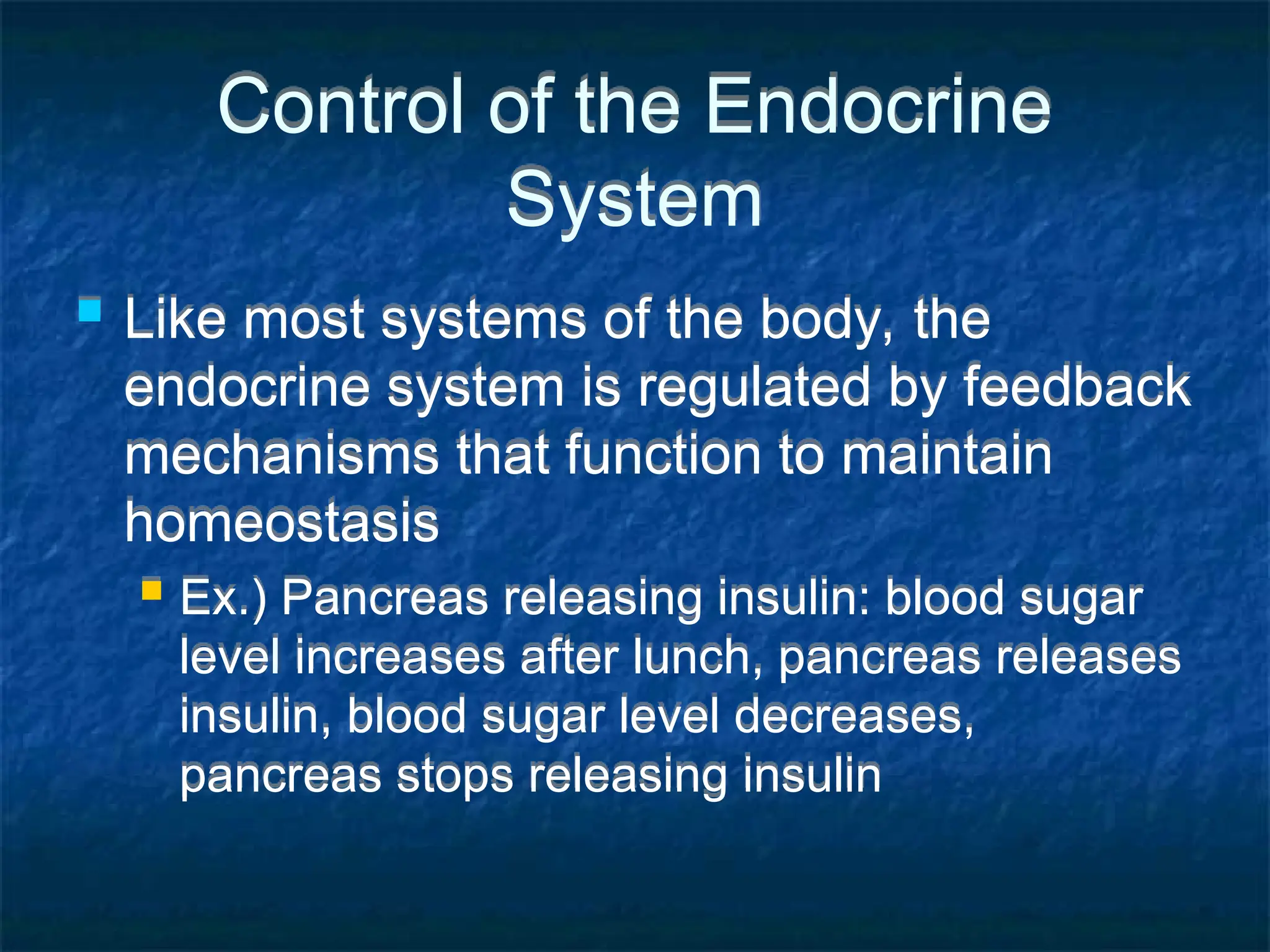
 Like most systems of the body, the
endocrine system is regulated by feedback
mechanisms that function to maintain
homeostasis
 Ex.) Pancreas releasing insulin: blood sugar
level increases after lunch, pancreas releases
insulin, blood sugar level decreases,
pancreas stops releasing insulin
Human Endocrine Glands
 The human endocrine system regulates a
wide variety of activities
 Any improper functioning of an endocrine
gland may result in a disease or disorder
Human Endocrine Glands
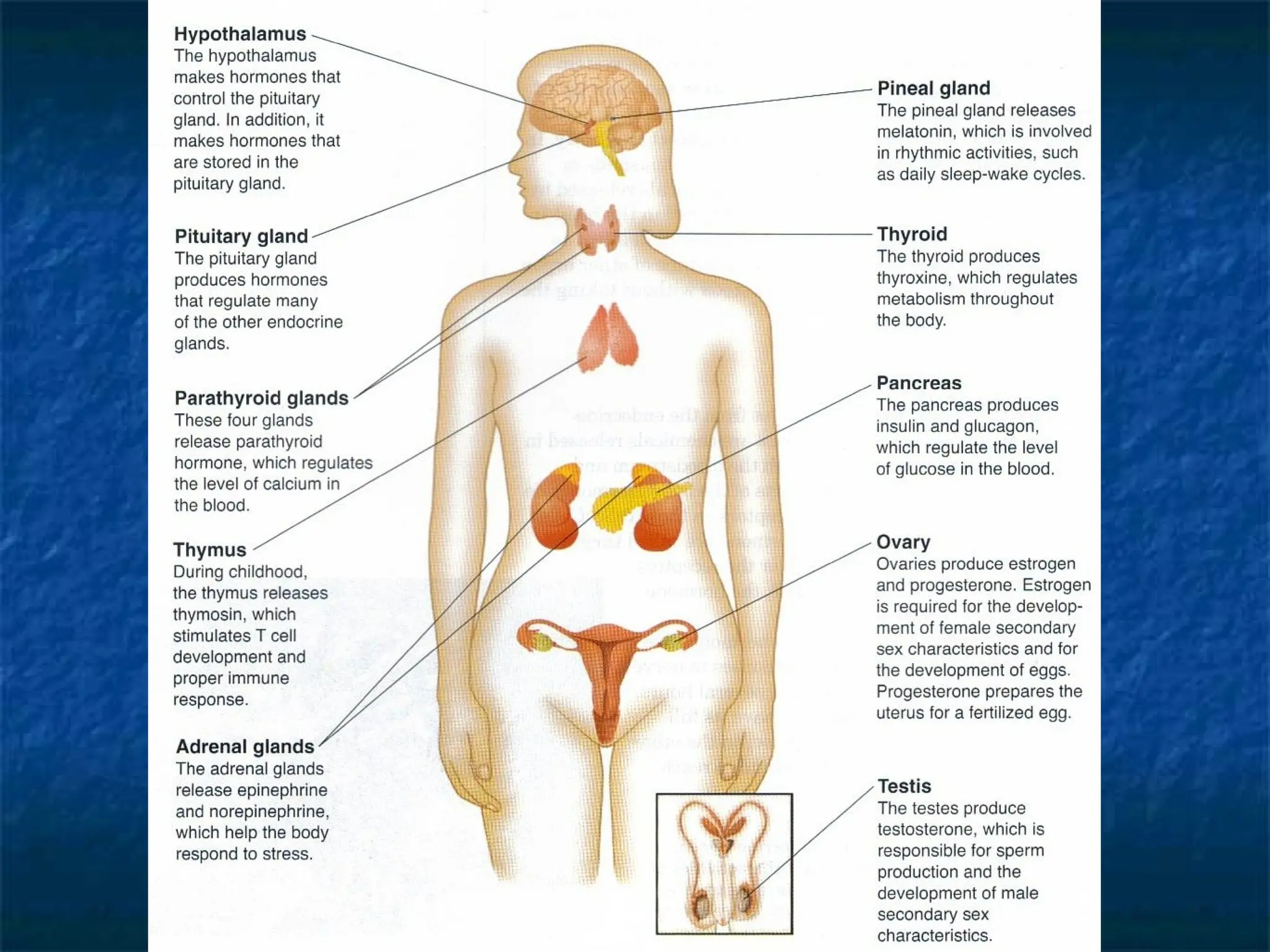
 The major glands of the endocrine system
are: the pituitary gland, the hypothalamus,
the thyroid gland, the parathyroid glands,
the adrenal glands, the pancreas, & the
reproductive glands
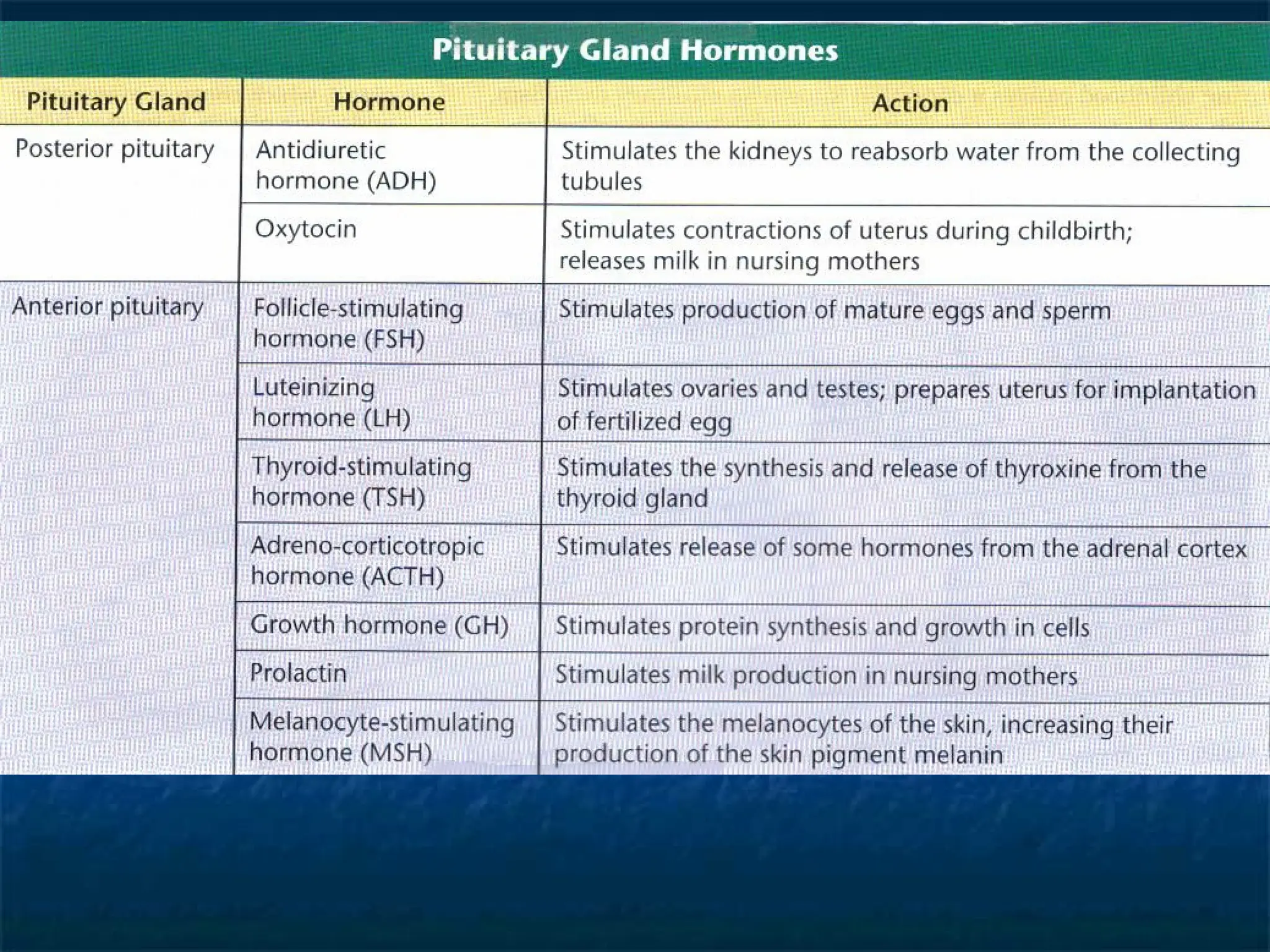
Pituitary Gland
 Pituitary gland - divided into 2 parts:
anterior & posterior; it secretes 9
hormones that directly regulate many body
functions & controls the actions of several
other endocrine glands
Pituitary Gland Hormones
Hypothalamus
 The hypothalamus controls the secretions
of the pituitary gland
 The close connection between the
hypothalamus & the pituitary gland, means
that the nervous & endocrine systems can
act together to help coordinate body
activities
Thyroid Gland
 The thyroid gland has the major role in
regulating the body’s metabolism
 Releases thyroxin which increases
metabolism, & cellular
respiration
Thyroid Gland
 Unable to produce thyroxin produces
condition known as cretinism
 2 effects of cretinism are dwarfism &
severe mental retardation
 Can be prevented by adding small
amounts of iodine to table salt
Parathyroid Glands
 The 4 parathyroid glands are found on the
back surface of the thyroid gland
 Hormones from the thyroid gland & the
parathyroid glands act to maintain
homeostasis of calcium levels in the blood
Adrenal Glands
 There are 2 adrenal glands that sit on top
of the kidneys, like little hats
 The adrenal glands release hormones that
help the body prepare for & deal with
stress
Adrenal Glands
 The 2 hormones secreted by the adrenal
glands are: epinephrine and
norepinephrine
 The hormones produce the “fight or flight”
response to stress
Pancreas
 The pancreas has both exocrine &
endocrine functions
 It is a digestive gland whose enzymes help
break down food
 However, different cells in the pancreas
release hormones into the blood
Pancreas
 Insulin & glucagon are released from the
pancreas to help keep the blood glucose level
stable
 Insulin stimulates liver cells to remove sugar
from the blood & store it as glycogen
 Glucagon stimulates the liver to break down
stored glycogen & release sugar back into the
blood
Pancreas
 Diabetes mellitus - when the pancreas
does not produce insulin
 There are 2 types of diabetes, Type I and
Type II
 Type I requires daily injections of insulin,
due to the fact that the body produces no
insulin
Pancreas
 Type II develops in people after the
age of 40, produces normal insulin but
cells don’t respond properly to the
hormone
 Usually controlled through diet,
exercise, & medication taken orally
Reproductive Glands
 The gonads are the body’s reproductive
glands
 They serve 2 important functions: the
production of gametes & the secretion of
sex hormones
Reproductive Glands
 The female gonads are the ovaries - which
produce eggs, & the hormones estrogen &
progesterone
 The male gonads are the testes - which
produce sperm, & the hormone
testosterone
The Reproductive System
 Reproduction is the formation of new
individuals
 If any other system of the body failed, the
result would be fatal, not the case with the
reproductive system
 Reproduction is important for continuation
of the species, but not for that organism to
survive
Sexual Development
 For the 1st 6 weeks of development, male
& female embryos are identical
 During the 7th week, primary reproductive
organs begin to develop
 Hormones produced by those organs
(gonads), will determine whether the
embryo develops physically into a male or
female
Sexual Development
 Neither the testes nor the ovaries are
capable of producing active reproductive
cells until puberty
 Puberty - a period of rapid growth & sexual
maturation, when the reproductive system
becomes fully functional
The Male Reproductive System
 The main function of the male reproductive
system is to produce & deliver sperm
 Scrotum - external sac that holds the
gonads, (external to reduce heat so sperm
won’t die)
 Seminiferous tubules - tiny tubules tightly
coiled where the sperm are produced
The Male Reproductive System
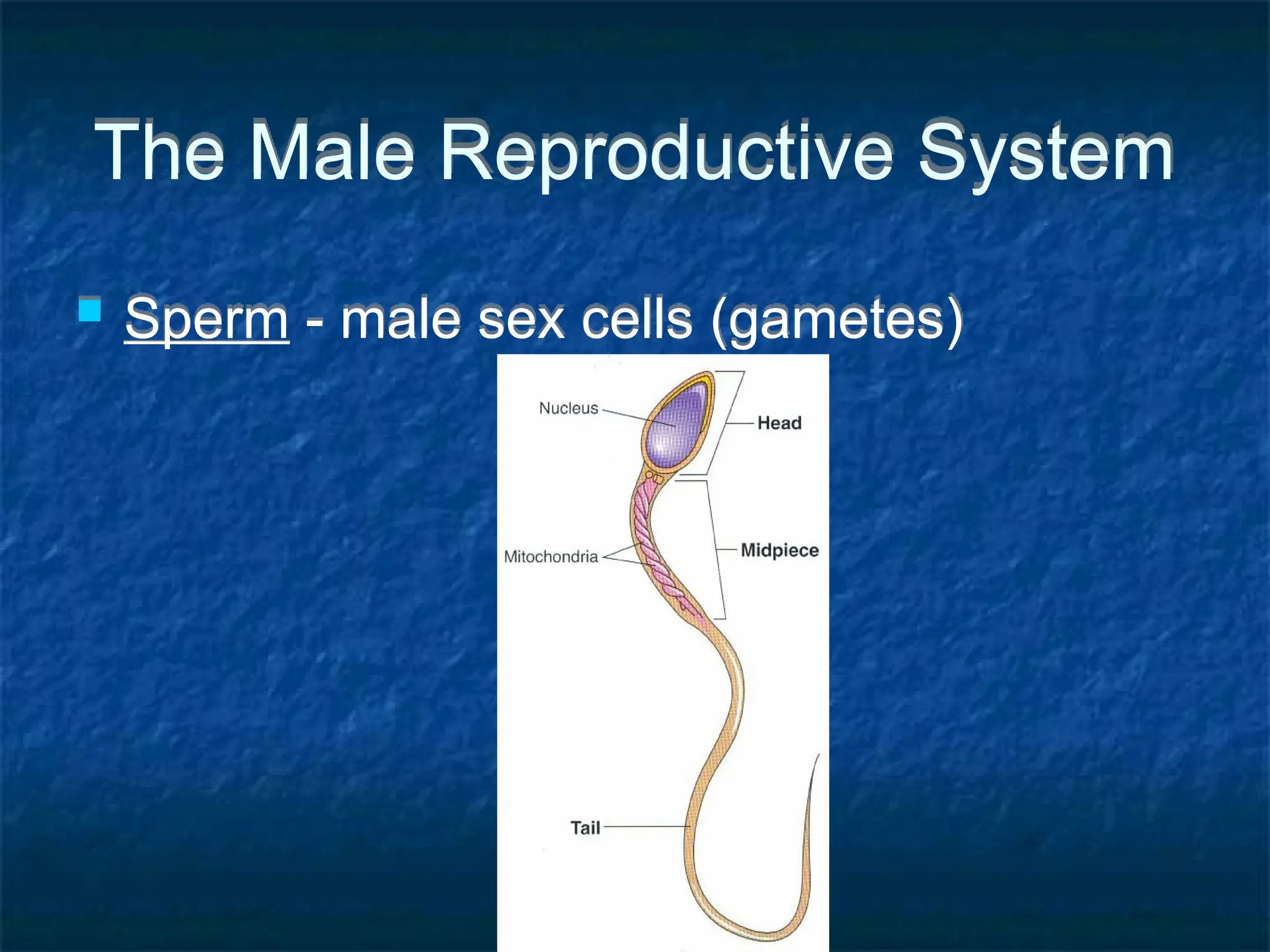
 Sperm - male sex cells (gametes)
The Male Reproductive System
 Epididymis - structure that sperm move
into, to mature & be stored until released
 Vas deferens - tube that carries sperm
from the epididymis, to the urethra, to be
released
 Penis - urethra carries sperm out of body
through the penis
The Male Reproductive System
The Female Reproductive
System
 The main function of the female
reproductive system is to produce ova
(eggs)
 In addition, the female reproductive
system prepares the female’s body to
nourish a developing embryo
The Female Reproductive
System
 Follicles - each ovary contains 400,000
clusters of cells surrounding a single egg,
to help it mature
 Ovulation - when a follicle has completely
matured, its egg is released
The Female Reproductive
System
 Egg - female sex cells (gametes)
 Fallopian tubes - tube from each ovary,
that carries the egg to the uterus
The Female Reproductive
System
 Uterus - location of egg a couple days
after ovulation, where embryo develops if
fertilization takes place
 Cervix - the outer end of the uterus
 Vagina - a canal that leads to the outside
of the body
The Female Reproductive
System
The Menstrual Cycle
 Menstrual cycle - when an egg develops &
is released from an ovary
 The menstrual cycle has 4 phases:
follicular phase, ovulation, luteal phase, &
menstruation
The Menstrual Cycle
 The Follicular Phase
 Development of an egg
 Ovulation
 Lasts 3-4 days, a mature egg
is released into 1 of the
fallopian tubes
The Menstrual Cycle
 Luteal Phase
 The remaining ruptured follicle, which
continues to release hormones
 Menstruation - when the lining of the
uterus sheds, lasts about 3-7 days (period)
Sexually Transmitted Diseases
 Sexually transmitted diseases - diseases
spread from 1 person to another through
sexual contact
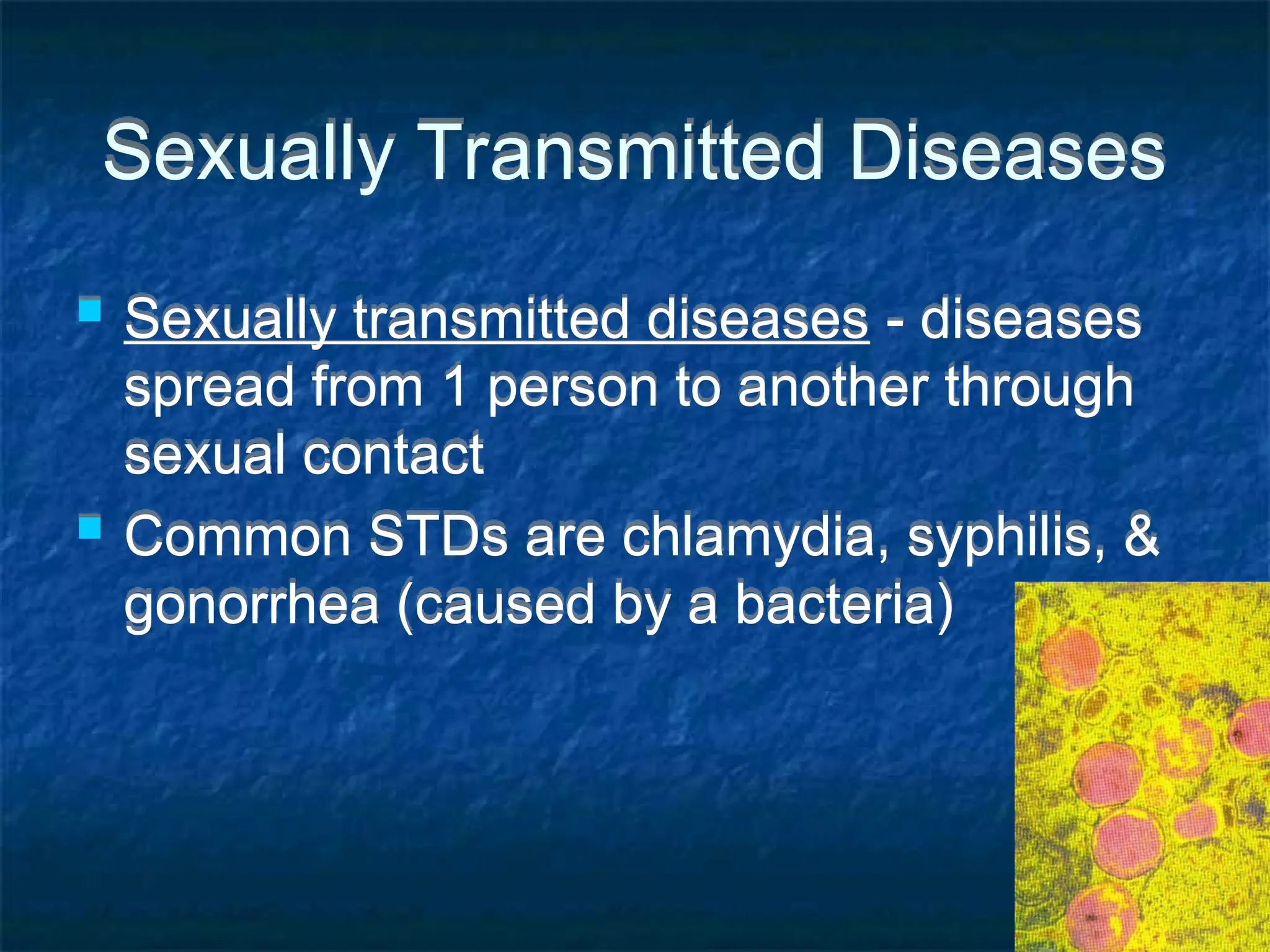
 Common STDs are chlamydia, syphilis, &
gonorrhea (caused by a bacteria)
Sexually Transmitted Diseases
 Others caused by viruses include: HIV,
hepatitis B, genital herpes, & genital warts
Fertilization
 When an egg is fertilized, the process of
human development begins
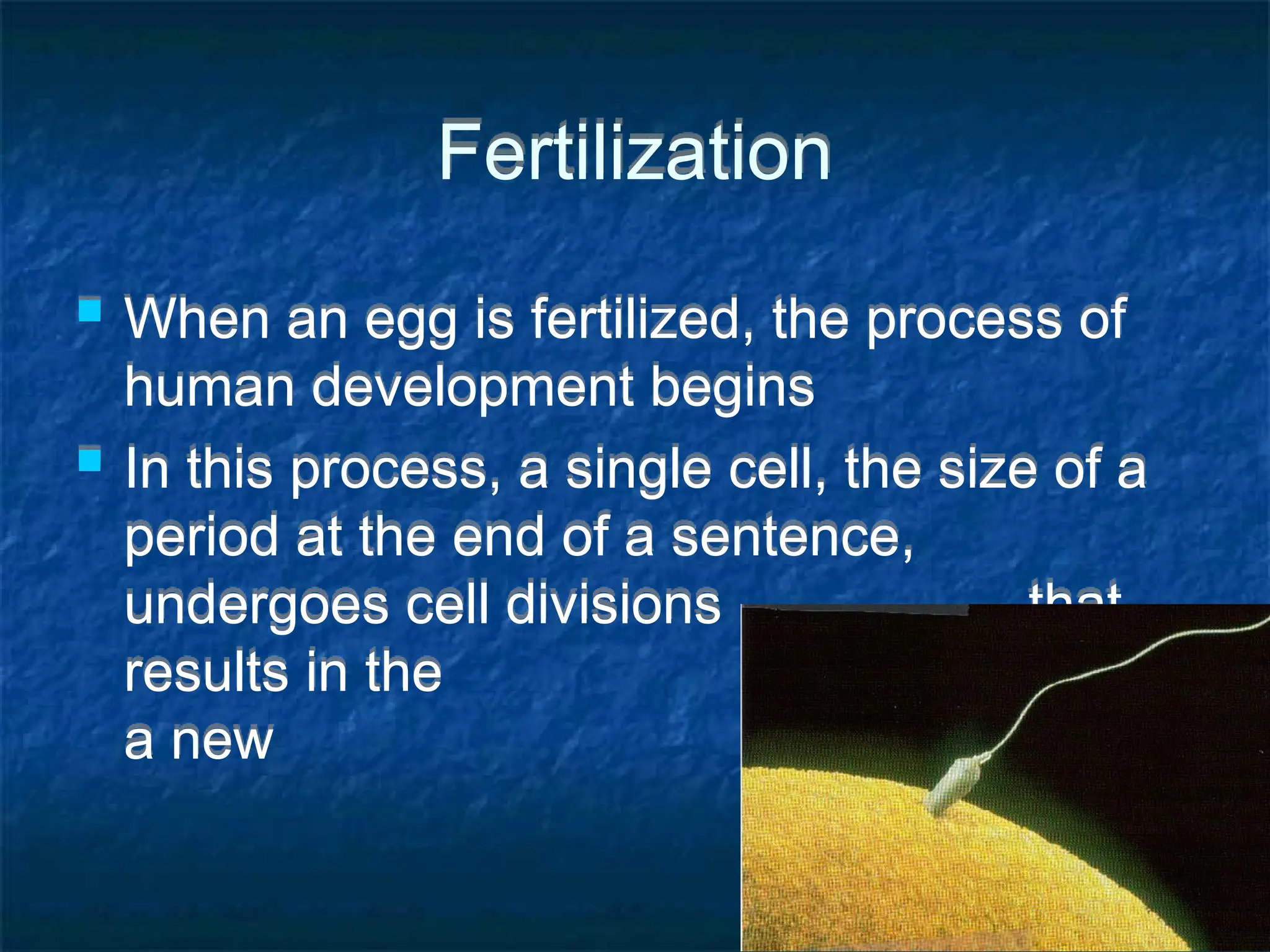
 In this process, a single cell, the size of a
period at the end of a sentence,
undergoes cell divisions that
results in the formation of
a new human being
Fertilization
 Fertilization - the process of a sperm
joining an egg, usually occurs in the
fallopian tube
 Zygote - a fertilized egg
Early Development
 The stages of early development include:
implantation, gastrulation, & neurulation
 Implantation - when the blastocyst
implants itself in the uterine wall
 At this point, cells differentiate - develop
into specific types of tissues in the body
Early Development
 Gastrulation - the formation of 3 cell
layers; the beginning of all of the organs &
tissues of the embryo will form from these
3 layers
Early Development
 Neurulation - the development of the
nervous system, occurs shortly after
gastrulation
Early Development
 Placenta - connections between mother &
developing embryo
 The embryo needs a supply of nutrients &
oxygen, & a way to get rid of carbon
dioxide & wastes
 Nutrients & oxygen diffuse from the
mother’s blood into the baby’s blood
Early Development
 At the same time, carbon dioxide &
metabolic wastes diffuse from the baby’s
blood into the mother’s blood, to be
excreted
 The placenta is the embryo’s organ of
respiration, nourishment, & excretion
The Placenta
Early Development
 Fetus - after 8 weeks of development, the
embryo is then called a fetus
 The umbilical cord connects the fetus to
the placenta
 Pregnancy, is divided into 3 trimesters,
during the 3rd, the organ systems mature,
& the fetus grows in size & mass
Later Development
Childbirth
 After 9 months, the fetus is ready for birth
 Oxytocin, a hormone released from the
pituitary gland, causes contractions to
begin
 The contractions become more frequent &
powerful
Childbirth
 The cervix opening expands until it is large
enough for the baby’s head to pass
through
 Contractions of the uterus force the baby
out through the vagina

Chapter 39 Butterfly Biology Complete PPT

  • 1.
    Unit 10 TheHuman Body Ch. 39 Endocrine & Reproductive Systems
  • 2.
    The Endocrine System The endocrine system is made up of glands that release their products into the bloodstream  These products deliver messages throughout the body
  • 3.
    Hormones  Hormones -chemicals released in 1 part of the body, that travel through the bloodstream, & affect activities of cells in other parts of the body; “chemical messengers”  Target cells (receptor cells) - cells that have receptors for a particular hormone
  • 4.
    Glands  A glandis an organ that produces & releases a substance, or secretion  Exocrine glands - release their secretions (hormones) through ducts (tubes), directly to the organs that use them
  • 5.
    Glands  Endocrine glands- release their secretions (hormones) directly into the bloodstream
  • 6.
  • 7.
    Hormone Action  Steroidhormones:  Because they are lipids, they can cross cell membranes, passing directly into the cytoplasm & the nuclei of target cells
  • 8.
    Hormone Action  Nonsteroidhormones:  They generally cannot pass through the cell membrane of their target cells
  • 9.
    Prostaglandins  Prostaglandins -modified fatty acids that produce cells, affecting other nearby cells & tissues (“local hormones”)  Ex.) some cause smooth muscle tissue to contract
  • 10.
    Control of theEndocrine System  Like most systems of the body, the endocrine system is regulated by feedback mechanisms that function to maintain homeostasis  Ex.) Pancreas releasing insulin: blood sugar level increases after lunch, pancreas releases insulin, blood sugar level decreases, pancreas stops releasing insulin
  • 11.
    Human Endocrine Glands The human endocrine system regulates a wide variety of activities  Any improper functioning of an endocrine gland may result in a disease or disorder
  • 12.
    Human Endocrine Glands The major glands of the endocrine system are: the pituitary gland, the hypothalamus, the thyroid gland, the parathyroid glands, the adrenal glands, the pancreas, & the reproductive glands
  • 13.
    Pituitary Gland  Pituitarygland - divided into 2 parts: anterior & posterior; it secretes 9 hormones that directly regulate many body functions & controls the actions of several other endocrine glands
  • 14.
  • 15.
    Hypothalamus  The hypothalamuscontrols the secretions of the pituitary gland  The close connection between the hypothalamus & the pituitary gland, means that the nervous & endocrine systems can act together to help coordinate body activities
  • 16.
    Thyroid Gland  Thethyroid gland has the major role in regulating the body’s metabolism  Releases thyroxin which increases metabolism, & cellular respiration
  • 17.
    Thyroid Gland  Unableto produce thyroxin produces condition known as cretinism  2 effects of cretinism are dwarfism & severe mental retardation  Can be prevented by adding small amounts of iodine to table salt
  • 18.
    Parathyroid Glands  The4 parathyroid glands are found on the back surface of the thyroid gland  Hormones from the thyroid gland & the parathyroid glands act to maintain homeostasis of calcium levels in the blood
  • 19.
    Adrenal Glands  Thereare 2 adrenal glands that sit on top of the kidneys, like little hats  The adrenal glands release hormones that help the body prepare for & deal with stress
  • 20.
    Adrenal Glands  The2 hormones secreted by the adrenal glands are: epinephrine and norepinephrine  The hormones produce the “fight or flight” response to stress
  • 21.
    Pancreas  The pancreashas both exocrine & endocrine functions  It is a digestive gland whose enzymes help break down food  However, different cells in the pancreas release hormones into the blood
  • 22.
    Pancreas  Insulin &glucagon are released from the pancreas to help keep the blood glucose level stable  Insulin stimulates liver cells to remove sugar from the blood & store it as glycogen  Glucagon stimulates the liver to break down stored glycogen & release sugar back into the blood
  • 23.
    Pancreas  Diabetes mellitus- when the pancreas does not produce insulin  There are 2 types of diabetes, Type I and Type II  Type I requires daily injections of insulin, due to the fact that the body produces no insulin
  • 24.
    Pancreas  Type IIdevelops in people after the age of 40, produces normal insulin but cells don’t respond properly to the hormone  Usually controlled through diet, exercise, & medication taken orally
  • 25.
    Reproductive Glands  Thegonads are the body’s reproductive glands  They serve 2 important functions: the production of gametes & the secretion of sex hormones
  • 26.
    Reproductive Glands  Thefemale gonads are the ovaries - which produce eggs, & the hormones estrogen & progesterone  The male gonads are the testes - which produce sperm, & the hormone testosterone
  • 27.
    The Reproductive System Reproduction is the formation of new individuals  If any other system of the body failed, the result would be fatal, not the case with the reproductive system  Reproduction is important for continuation of the species, but not for that organism to survive
  • 28.
    Sexual Development  Forthe 1st 6 weeks of development, male & female embryos are identical  During the 7th week, primary reproductive organs begin to develop  Hormones produced by those organs (gonads), will determine whether the embryo develops physically into a male or female
  • 29.
    Sexual Development  Neitherthe testes nor the ovaries are capable of producing active reproductive cells until puberty  Puberty - a period of rapid growth & sexual maturation, when the reproductive system becomes fully functional
  • 30.
    The Male ReproductiveSystem  The main function of the male reproductive system is to produce & deliver sperm  Scrotum - external sac that holds the gonads, (external to reduce heat so sperm won’t die)  Seminiferous tubules - tiny tubules tightly coiled where the sperm are produced
  • 31.
    The Male ReproductiveSystem  Sperm - male sex cells (gametes)
  • 32.
    The Male ReproductiveSystem  Epididymis - structure that sperm move into, to mature & be stored until released  Vas deferens - tube that carries sperm from the epididymis, to the urethra, to be released  Penis - urethra carries sperm out of body through the penis
  • 33.
  • 34.
    The Female Reproductive System The main function of the female reproductive system is to produce ova (eggs)  In addition, the female reproductive system prepares the female’s body to nourish a developing embryo
  • 35.
    The Female Reproductive System Follicles - each ovary contains 400,000 clusters of cells surrounding a single egg, to help it mature  Ovulation - when a follicle has completely matured, its egg is released
  • 36.
    The Female Reproductive System Egg - female sex cells (gametes)  Fallopian tubes - tube from each ovary, that carries the egg to the uterus
  • 37.
    The Female Reproductive System Uterus - location of egg a couple days after ovulation, where embryo develops if fertilization takes place  Cervix - the outer end of the uterus  Vagina - a canal that leads to the outside of the body
  • 38.
  • 39.
    The Menstrual Cycle Menstrual cycle - when an egg develops & is released from an ovary  The menstrual cycle has 4 phases: follicular phase, ovulation, luteal phase, & menstruation
  • 40.
    The Menstrual Cycle The Follicular Phase  Development of an egg  Ovulation  Lasts 3-4 days, a mature egg is released into 1 of the fallopian tubes
  • 41.
    The Menstrual Cycle Luteal Phase  The remaining ruptured follicle, which continues to release hormones  Menstruation - when the lining of the uterus sheds, lasts about 3-7 days (period)
  • 43.
    Sexually Transmitted Diseases Sexually transmitted diseases - diseases spread from 1 person to another through sexual contact  Common STDs are chlamydia, syphilis, & gonorrhea (caused by a bacteria)
  • 44.
    Sexually Transmitted Diseases Others caused by viruses include: HIV, hepatitis B, genital herpes, & genital warts
  • 45.
    Fertilization  When anegg is fertilized, the process of human development begins  In this process, a single cell, the size of a period at the end of a sentence, undergoes cell divisions that results in the formation of a new human being
  • 46.
    Fertilization  Fertilization -the process of a sperm joining an egg, usually occurs in the fallopian tube  Zygote - a fertilized egg
  • 47.
    Early Development  Thestages of early development include: implantation, gastrulation, & neurulation  Implantation - when the blastocyst implants itself in the uterine wall  At this point, cells differentiate - develop into specific types of tissues in the body
  • 48.
    Early Development  Gastrulation- the formation of 3 cell layers; the beginning of all of the organs & tissues of the embryo will form from these 3 layers
  • 49.
    Early Development  Neurulation- the development of the nervous system, occurs shortly after gastrulation
  • 50.
    Early Development  Placenta- connections between mother & developing embryo  The embryo needs a supply of nutrients & oxygen, & a way to get rid of carbon dioxide & wastes  Nutrients & oxygen diffuse from the mother’s blood into the baby’s blood
  • 51.
    Early Development  Atthe same time, carbon dioxide & metabolic wastes diffuse from the baby’s blood into the mother’s blood, to be excreted  The placenta is the embryo’s organ of respiration, nourishment, & excretion
  • 52.
  • 53.
    Early Development  Fetus- after 8 weeks of development, the embryo is then called a fetus  The umbilical cord connects the fetus to the placenta  Pregnancy, is divided into 3 trimesters, during the 3rd, the organ systems mature, & the fetus grows in size & mass
  • 54.
  • 55.
    Childbirth  After 9months, the fetus is ready for birth  Oxytocin, a hormone released from the pituitary gland, causes contractions to begin  The contractions become more frequent & powerful
  • 56.
    Childbirth  The cervixopening expands until it is large enough for the baby’s head to pass through  Contractions of the uterus force the baby out through the vagina