Respiratory System
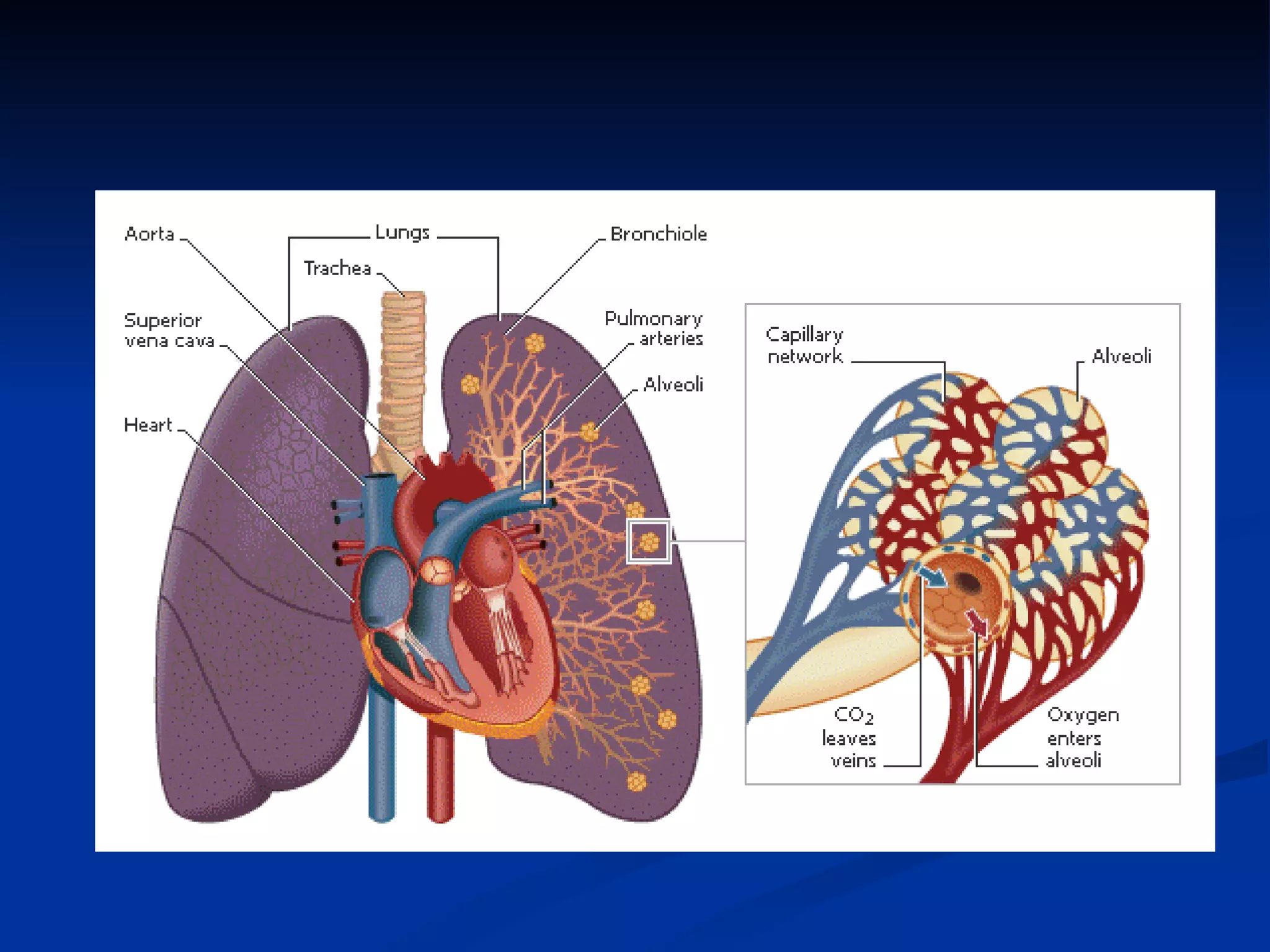
Function To exchange gases with the surrounding environment O 2  in, CO 2  out
Mechanism CO 2  is a waste product of cellular respiration It is carried in the blood as a Carbonate (carbonic acid) The medulla oblongata keeps track of blood acidity
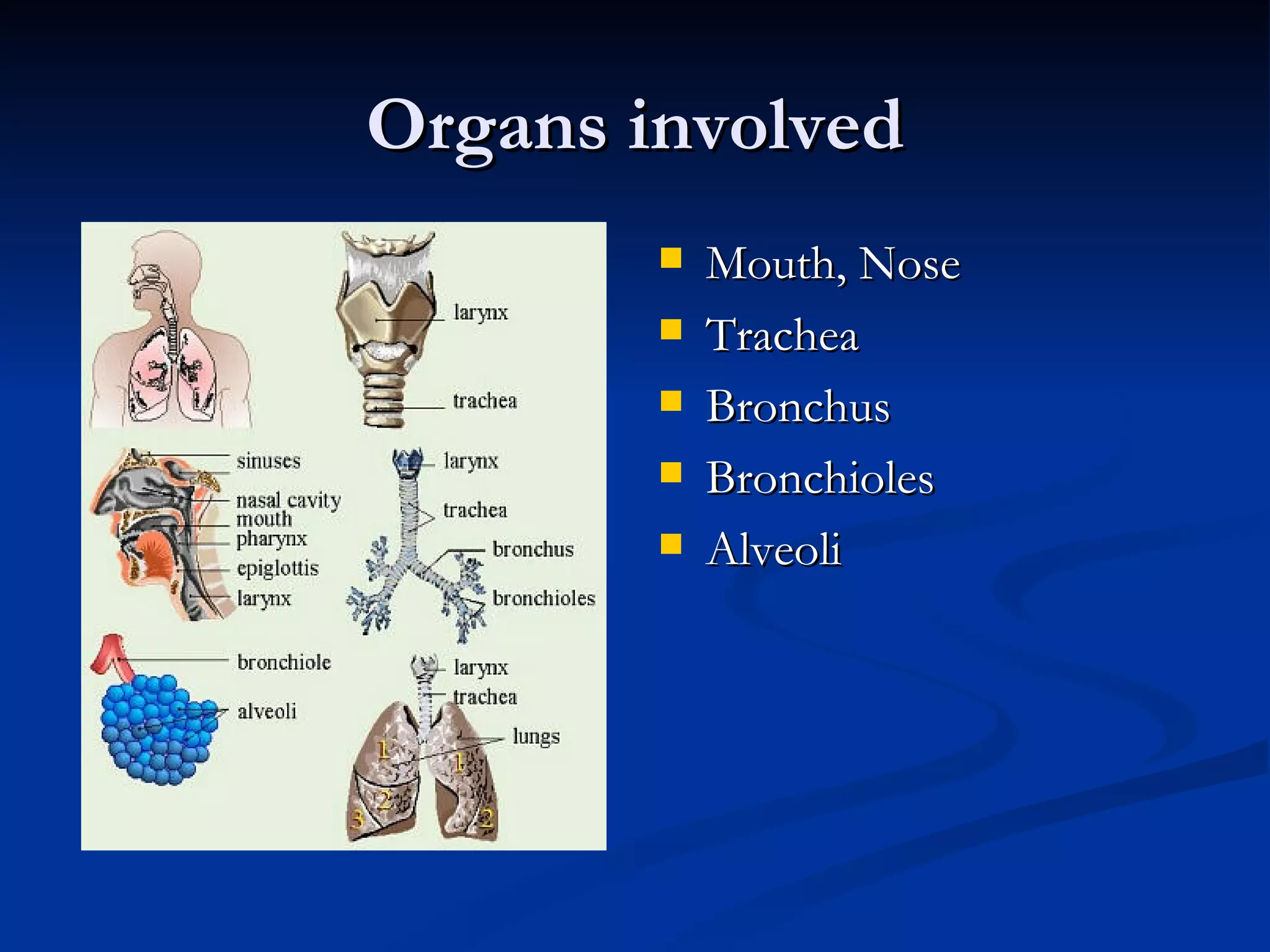
Organs involved Mouth, Nose Trachea Bronchus Bronchioles Alveoli
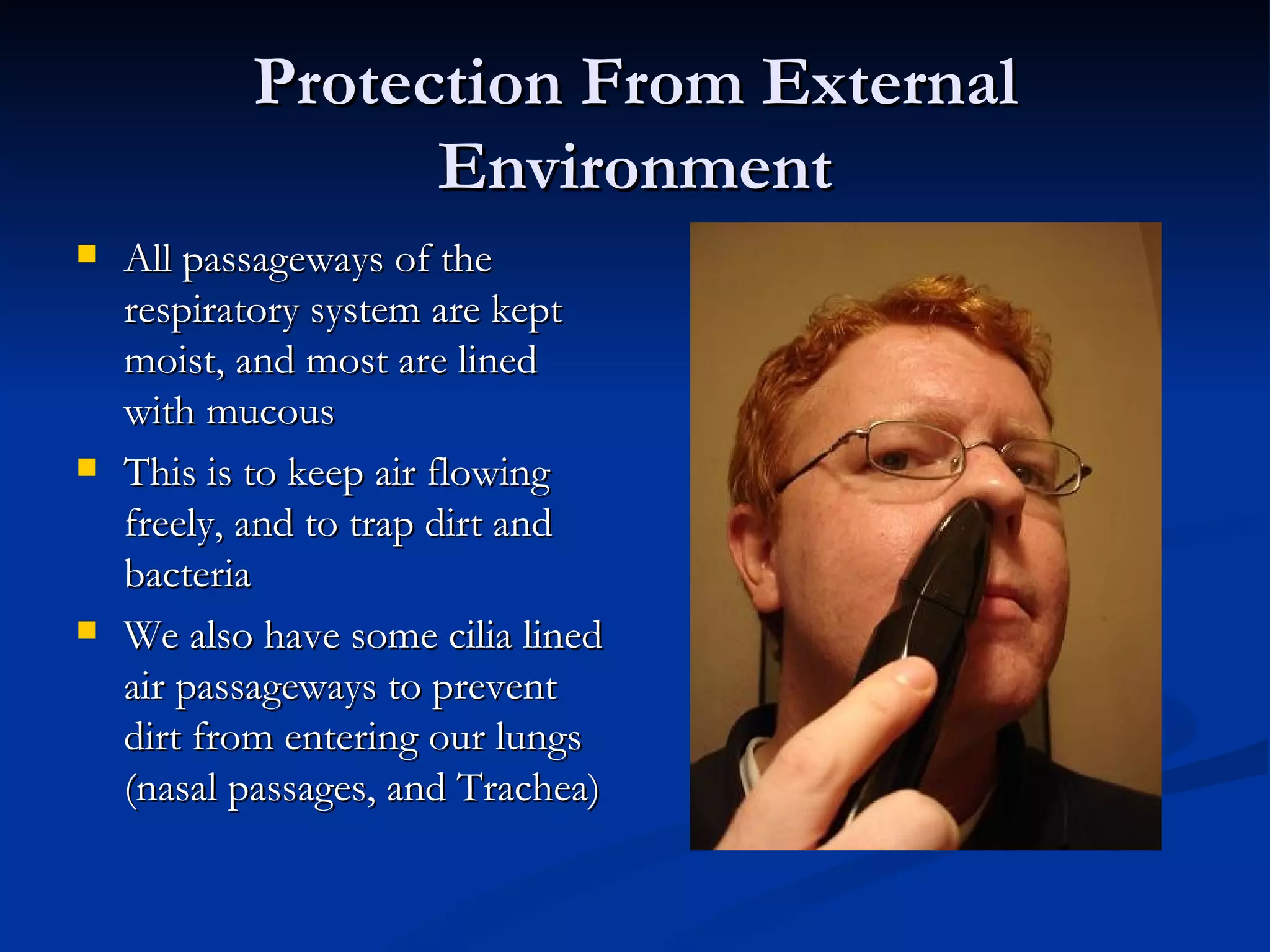
Protection From External Environment All passageways of the respiratory system are kept moist, and most are lined with mucous This is to keep air flowing freely, and to trap dirt and bacteria We also have some cilia lined air passageways to prevent dirt from entering our lungs (nasal passages, and Trachea)
How does it work? Lungs are not muscles Diaphragm is Diaphragm contracts Ribcage expands Lungs expand Air rushes in to fill up empty space
How does it work? Exhaling is generally a passive process Diaphragm relaxes  Lungs compress Forces out air You can also use the muscles around your ribcage to constrict your chest more, expelling more air
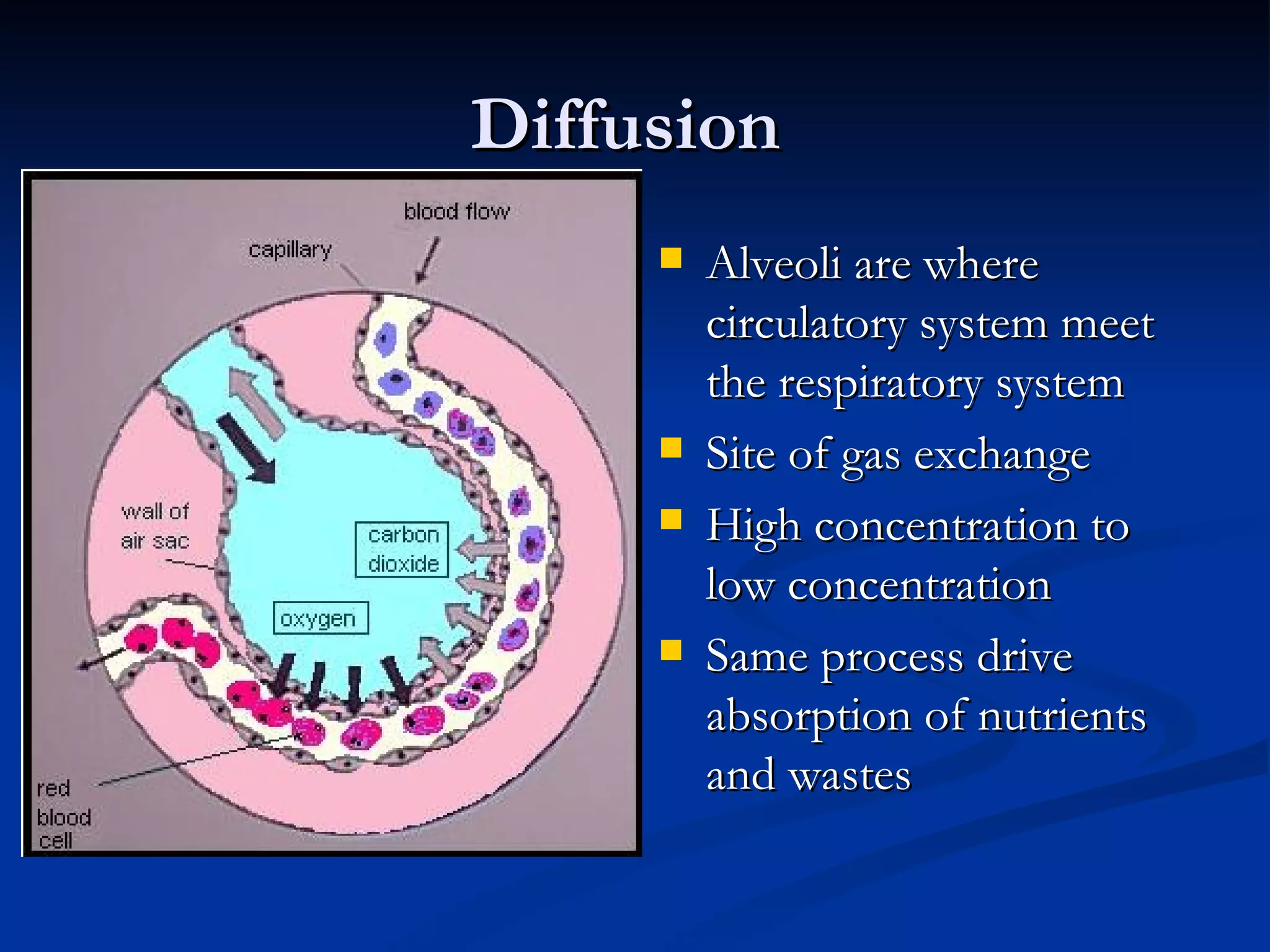
Diffusion Confusion Alveoli are to the respiratory system like villi to the digestive system, and like the nephron to the excretory system INCREASED SURFACE AREA LEADS TO MORE GAS EXCHANGE!!
 
Diffusion  Alveoli are where circulatory system meet the respiratory system Site of gas exchange High concentration to low concentration Same process drive absorption of nutrients and wastes
Homeostatic Control Feedback loops Increased muscular activity leads to more cellular respiration Increased cellular respiration leads to increased levels of Carbon Dioxide in the blood Leads to high acid levels Triggers Medulla Medulla sends signal to increase respiratory rate
Disorders Bronchitis Asthma COPD Emphysema Lung Cancer Others…..
Immune System Pathogens can get into the body Lymph system and Circulatory system
Immunity The ability of an organism to resist foreign organisms or invaders which enter its body. 
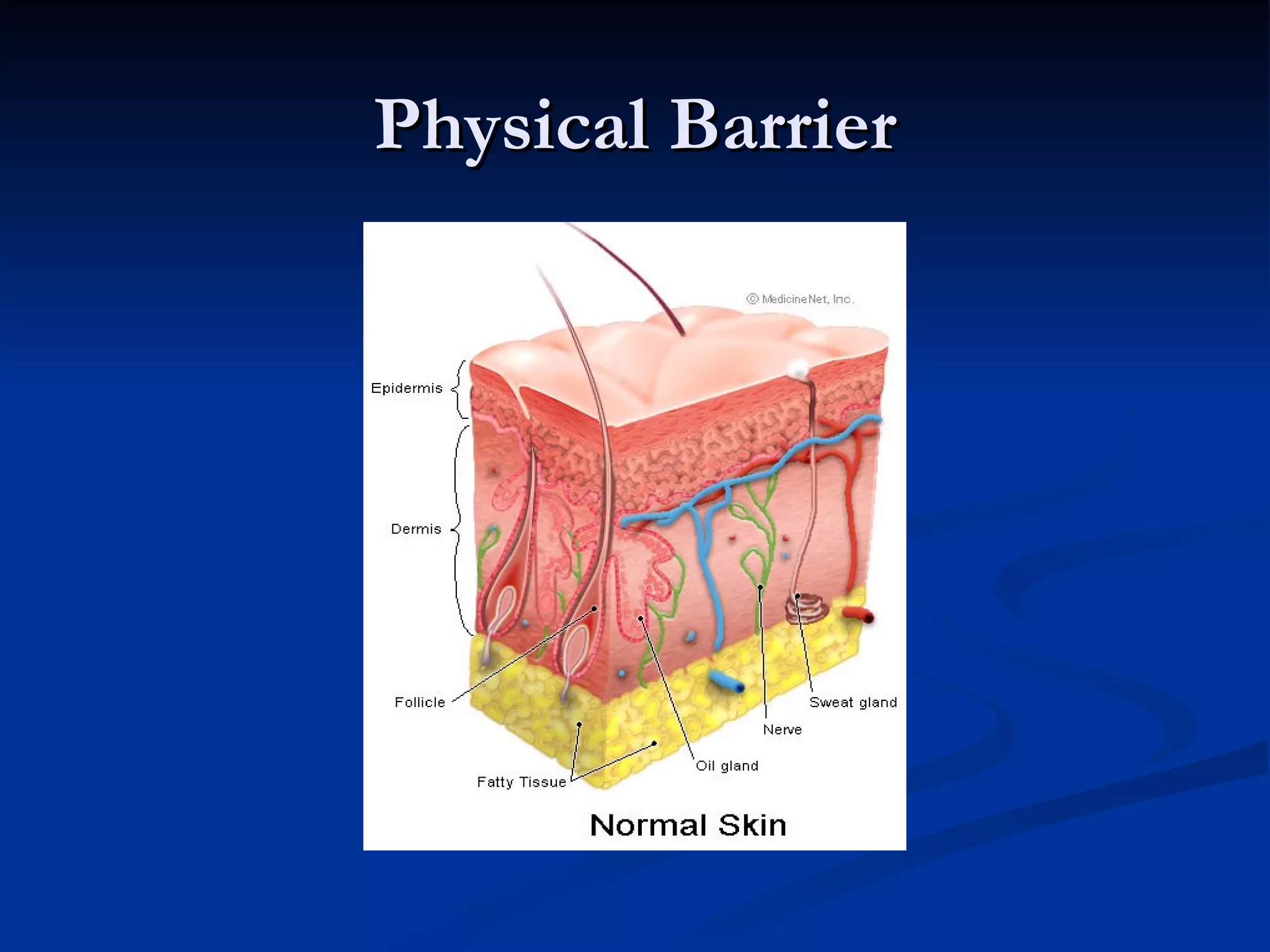
Layered Defense Humans have three layers of protection against pathogens 1- Physical barrier 2- Innate immune response 3- Adaptive immune response
Physical Barrier
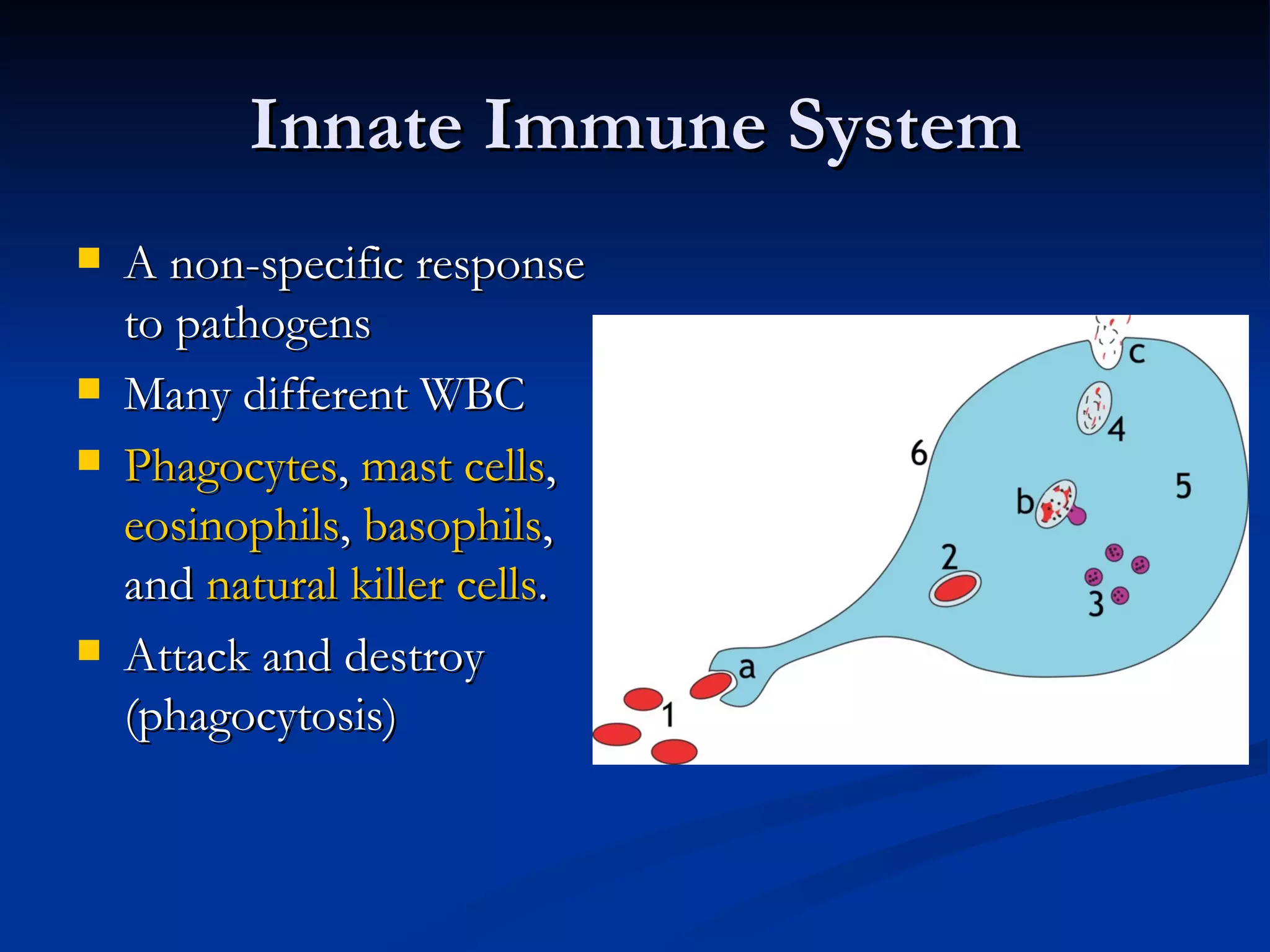
Innate Immune System A non-specific response to pathogens Many different WBC  Phagocytes ,  mast cells ,  eosinophils ,  basophils , and  natural killer cells .  Attack and destroy (phagocytosis)
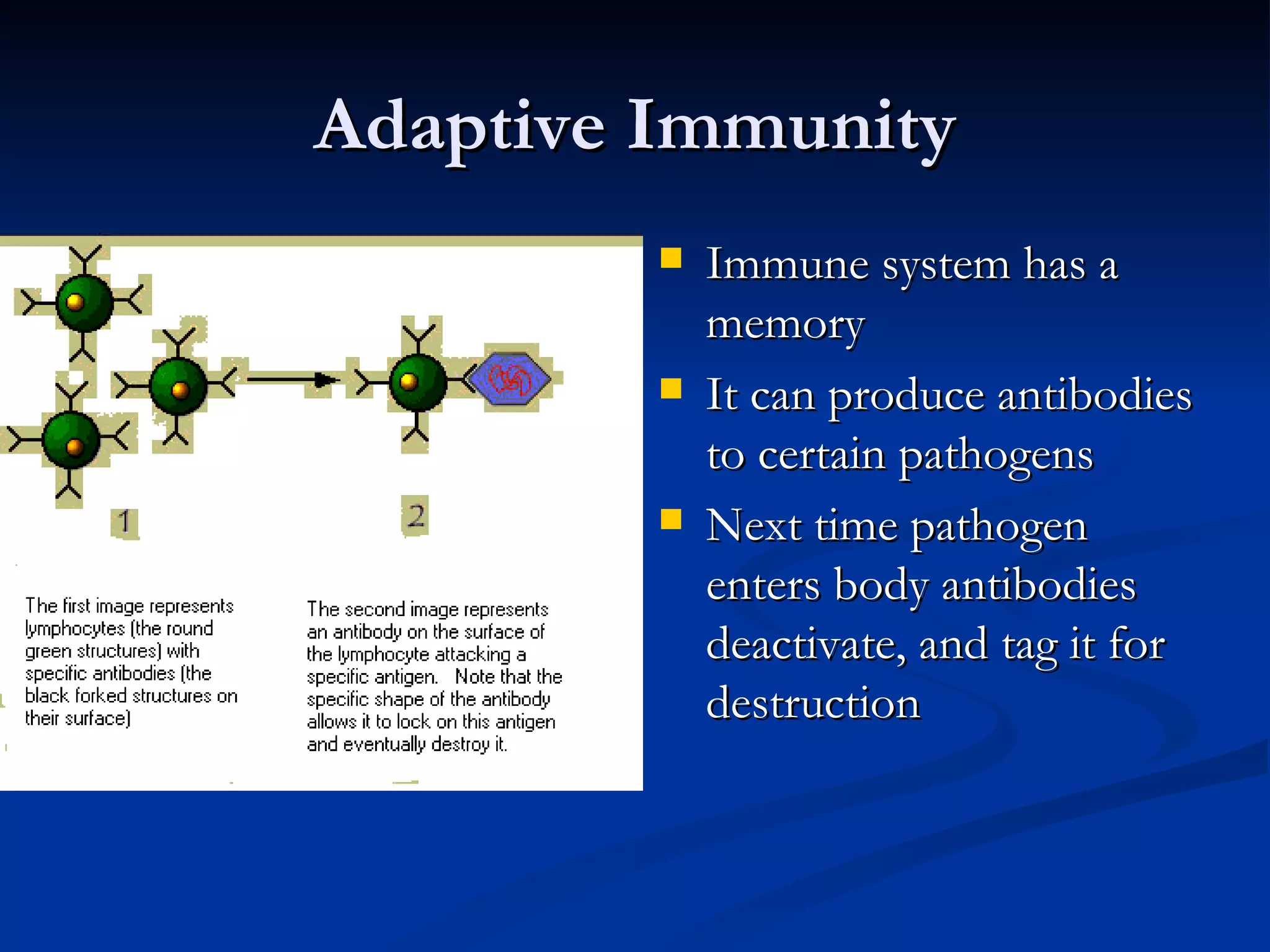
Adaptive Immunity Immune system has a memory It can produce antibodies to certain pathogens Next time pathogen enters body antibodies deactivate, and tag it for destruction
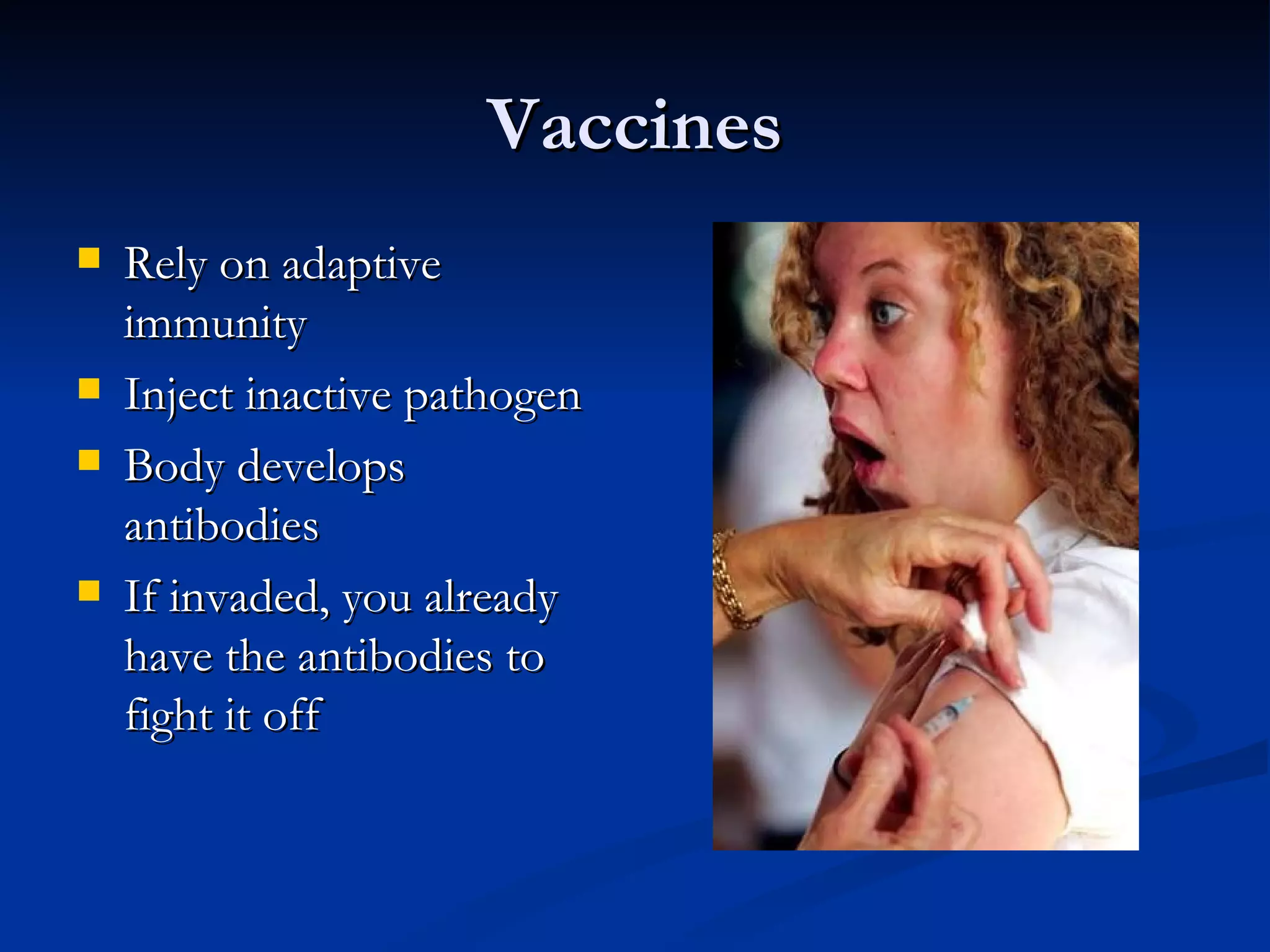
Vaccines Rely on adaptive immunity Inject inactive pathogen Body develops antibodies If invaded, you already have the antibodies to fight it off
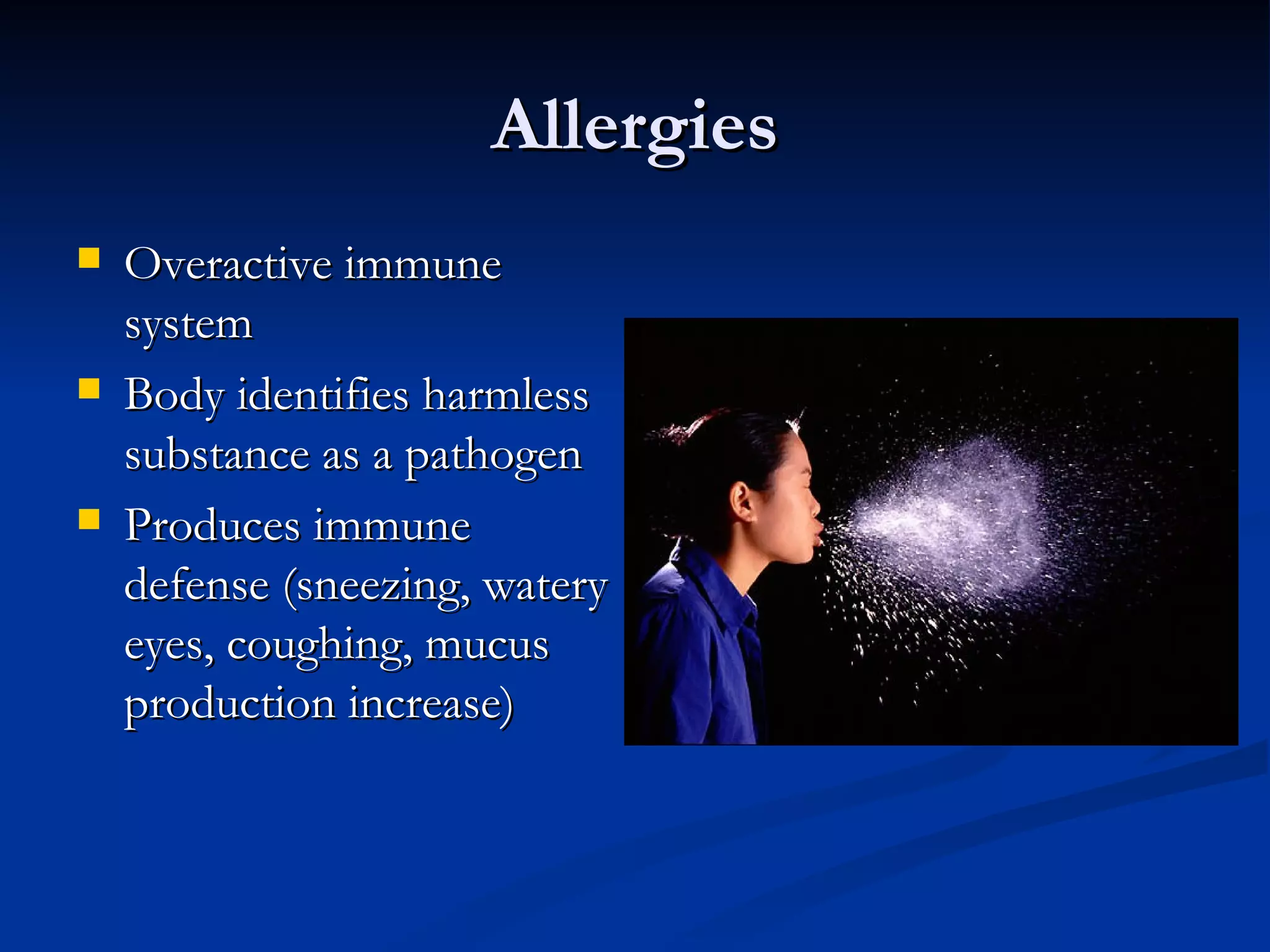
Allergies Overactive immune system Body identifies harmless substance as a pathogen Produces immune defense (sneezing, watery eyes, coughing, mucus production increase)
Autoimmune Diseases Disease in which the immune system targets it’s own body cells for destruction http:// en.wikipedia.org/wiki/List_of_autoimmune_diseases
AIDS Acquired Immune Defiency AIDS  is a viral disease which destroys the ability of the immune system to produce antibodies, so the afflicted individual is unable to cope with infections and cancer cells which arise within the body.

Respiratory System

  • 1.
  • 2.
    Function To exchangegases with the surrounding environment O 2 in, CO 2 out
  • 3.
    Mechanism CO 2 is a waste product of cellular respiration It is carried in the blood as a Carbonate (carbonic acid) The medulla oblongata keeps track of blood acidity
  • 4.
    Organs involved Mouth,Nose Trachea Bronchus Bronchioles Alveoli
  • 5.
    Protection From ExternalEnvironment All passageways of the respiratory system are kept moist, and most are lined with mucous This is to keep air flowing freely, and to trap dirt and bacteria We also have some cilia lined air passageways to prevent dirt from entering our lungs (nasal passages, and Trachea)
  • 6.
    How does itwork? Lungs are not muscles Diaphragm is Diaphragm contracts Ribcage expands Lungs expand Air rushes in to fill up empty space
  • 7.
    How does itwork? Exhaling is generally a passive process Diaphragm relaxes Lungs compress Forces out air You can also use the muscles around your ribcage to constrict your chest more, expelling more air
  • 8.
    Diffusion Confusion Alveoliare to the respiratory system like villi to the digestive system, and like the nephron to the excretory system INCREASED SURFACE AREA LEADS TO MORE GAS EXCHANGE!!
  • 9.
  • 10.
    Diffusion Alveoliare where circulatory system meet the respiratory system Site of gas exchange High concentration to low concentration Same process drive absorption of nutrients and wastes
  • 11.
    Homeostatic Control Feedbackloops Increased muscular activity leads to more cellular respiration Increased cellular respiration leads to increased levels of Carbon Dioxide in the blood Leads to high acid levels Triggers Medulla Medulla sends signal to increase respiratory rate
  • 12.
    Disorders Bronchitis AsthmaCOPD Emphysema Lung Cancer Others…..
  • 13.
    Immune System Pathogenscan get into the body Lymph system and Circulatory system
  • 14.
    Immunity The abilityof an organism to resist foreign organisms or invaders which enter its body. 
  • 15.
    Layered Defense Humanshave three layers of protection against pathogens 1- Physical barrier 2- Innate immune response 3- Adaptive immune response
  • 16.
  • 17.
    Innate Immune SystemA non-specific response to pathogens Many different WBC Phagocytes , mast cells , eosinophils , basophils , and natural killer cells . Attack and destroy (phagocytosis)
  • 18.
    Adaptive Immunity Immunesystem has a memory It can produce antibodies to certain pathogens Next time pathogen enters body antibodies deactivate, and tag it for destruction
  • 19.
    Vaccines Rely onadaptive immunity Inject inactive pathogen Body develops antibodies If invaded, you already have the antibodies to fight it off
  • 20.
    Allergies Overactive immunesystem Body identifies harmless substance as a pathogen Produces immune defense (sneezing, watery eyes, coughing, mucus production increase)
  • 21.
    Autoimmune Diseases Diseasein which the immune system targets it’s own body cells for destruction http:// en.wikipedia.org/wiki/List_of_autoimmune_diseases
  • 22.
    AIDS Acquired ImmuneDefiency AIDS is a viral disease which destroys the ability of the immune system to produce antibodies, so the afflicted individual is unable to cope with infections and cancer cells which arise within the body.