• Reproduction is one of the most characteristic
features of living organisms.

• Reproduction is a marvelous culmination of
individual transcendence.

• Individual organisms come and go, but, to a
certain extent, organisms "transcend" time through
reproducing offspring.

• Life would not exist on Earth if plants and
animals did not reproduce to make their
offspring.
• also called cloning

• only one parent is needed, resulting in offspring
that are genetically identical to the parent

• new individual may become an independent
animal or may remain attached to the parent,
forming a colony

• environments that are stable and experience
very little change are the best places for
organisms that reproduce asexually


• cloned offspring are more likely to
succeed in the same stable areas as
their parents
1. animals that remain in one particular place and are
unable to look for mates would need to reproduce
asexually

2. numerous offspring can be produced without
"costing" the parent a great amount of energy or time


1. no genetic variability in offspring results


1. Budding
2. Regeneration
3. Parthenogenesis
• offspring develop as a growth on the body of the parent

• In some species, e.g., jellyfishes and many echinoderms,
the buds break away and take up an independent existence.

• In others, e.g., corals, the buds remain attached to the
parent and the process results in colonies of animals.

• Hydras exhibit this type of reproduction.


• a type of internal budding
• a parent releases a specialized
mass of cells that can develop into
an offspring

• Sponges exhibit this type
of reproduction
• when an animal that is capable of regeneration loses a
body part, it can grow a replacement part


• If the lost body part contains enough genetic information
from the parent, it can regenerate into an entirely new
organism


• Echinoderms are examples of animals that use
regeneration
• "virgin birth"

• requires the female organs of sexual reproduction
(gonads and reproductive tract) but no fertilization ever
occurs
• reproduction by parthenogenesis is more rapid that sexual
reproduction, and the use of this mode of asexual reproduction
permits the animals to quickly exploit the available resources

• occurs in some fishes, several kinds of insects, and a few
species of frogs and lizards

• micro-aquatic rotifers are normally reproduce by females
producing diploid eggs (genetic clones of themselves) which
develop into young individuals
• two individuals produce offspring that have genetic
characteristics from both parents

• Sexual reproduction introduces new gene
combinations in a population

• Both the events of meiosis and fertilization are
common to all sexual reproduction


1. External fertilization
2. Internal fertilization
• the eggs are fertilized outside of the body

• occurs mostly in wet environments and requires both the male
and the female to release their gametes into their surroundings
(usually water)


 1. it results in the production of a large number
 of offspring


  2. environmental hazards such as
  predators greatly reduce the chance of
  surviving into adulthood
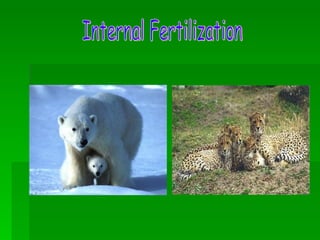
• the eggs are fertilized within the female reproductive tract

• internal fertilization requires copulatory organs


• the physical union between a male and a female’s
reproductive parts. It may or may not result in
successful fertilization.


• Animals that use internal fertilization specialize in the
protection of the developing egg

Animal reproduction

  • 2.
    • Reproduction isone of the most characteristic features of living organisms. • Reproduction is a marvelous culmination of individual transcendence. • Individual organisms come and go, but, to a certain extent, organisms "transcend" time through reproducing offspring. • Life would not exist on Earth if plants and animals did not reproduce to make their offspring.
  • 4.
    • also calledcloning • only one parent is needed, resulting in offspring that are genetically identical to the parent • new individual may become an independent animal or may remain attached to the parent, forming a colony • environments that are stable and experience very little change are the best places for organisms that reproduce asexually • cloned offspring are more likely to succeed in the same stable areas as their parents
  • 5.
    1. animals thatremain in one particular place and are unable to look for mates would need to reproduce asexually 2. numerous offspring can be produced without "costing" the parent a great amount of energy or time 1. no genetic variability in offspring results 1. Budding 2. Regeneration 3. Parthenogenesis
  • 7.
    • offspring developas a growth on the body of the parent • In some species, e.g., jellyfishes and many echinoderms, the buds break away and take up an independent existence. • In others, e.g., corals, the buds remain attached to the parent and the process results in colonies of animals. • Hydras exhibit this type of reproduction. • a type of internal budding • a parent releases a specialized mass of cells that can develop into an offspring • Sponges exhibit this type of reproduction
  • 9.
    • when ananimal that is capable of regeneration loses a body part, it can grow a replacement part • If the lost body part contains enough genetic information from the parent, it can regenerate into an entirely new organism • Echinoderms are examples of animals that use regeneration
  • 11.
    • "virgin birth" •requires the female organs of sexual reproduction (gonads and reproductive tract) but no fertilization ever occurs • reproduction by parthenogenesis is more rapid that sexual reproduction, and the use of this mode of asexual reproduction permits the animals to quickly exploit the available resources • occurs in some fishes, several kinds of insects, and a few species of frogs and lizards • micro-aquatic rotifers are normally reproduce by females producing diploid eggs (genetic clones of themselves) which develop into young individuals
  • 13.
    • two individualsproduce offspring that have genetic characteristics from both parents • Sexual reproduction introduces new gene combinations in a population • Both the events of meiosis and fertilization are common to all sexual reproduction 1. External fertilization 2. Internal fertilization
  • 15.
    • the eggsare fertilized outside of the body • occurs mostly in wet environments and requires both the male and the female to release their gametes into their surroundings (usually water) 1. it results in the production of a large number of offspring 2. environmental hazards such as predators greatly reduce the chance of surviving into adulthood
  • 17.
    • the eggsare fertilized within the female reproductive tract • internal fertilization requires copulatory organs • the physical union between a male and a female’s reproductive parts. It may or may not result in successful fertilization. • Animals that use internal fertilization specialize in the protection of the developing egg