Ptosis
By
Dr. Amr Mounir
Lecturer of Ophthalmology
Sohag University
Definition:
It is drooping of the upper eyelid due to paralysis or
disease, or due to a congenital condition.
Etiology

Myogenic

Neurogenic

Aponeurotic

Mechanical
Myogenic ptosis
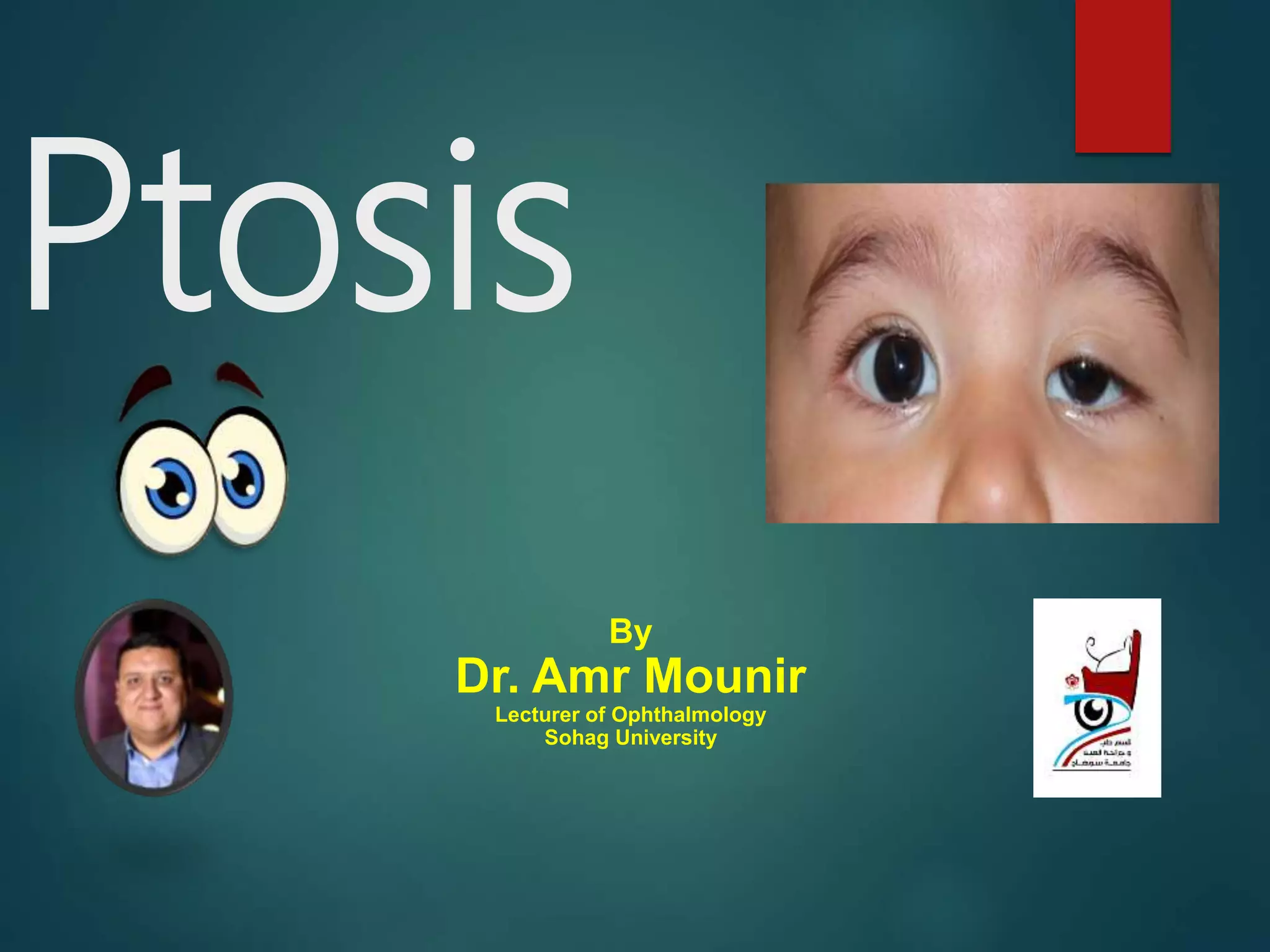
A)Congenital ptosis: due to dystrophy of levator
muscle lead to poor contraction and incomplete
relaxation
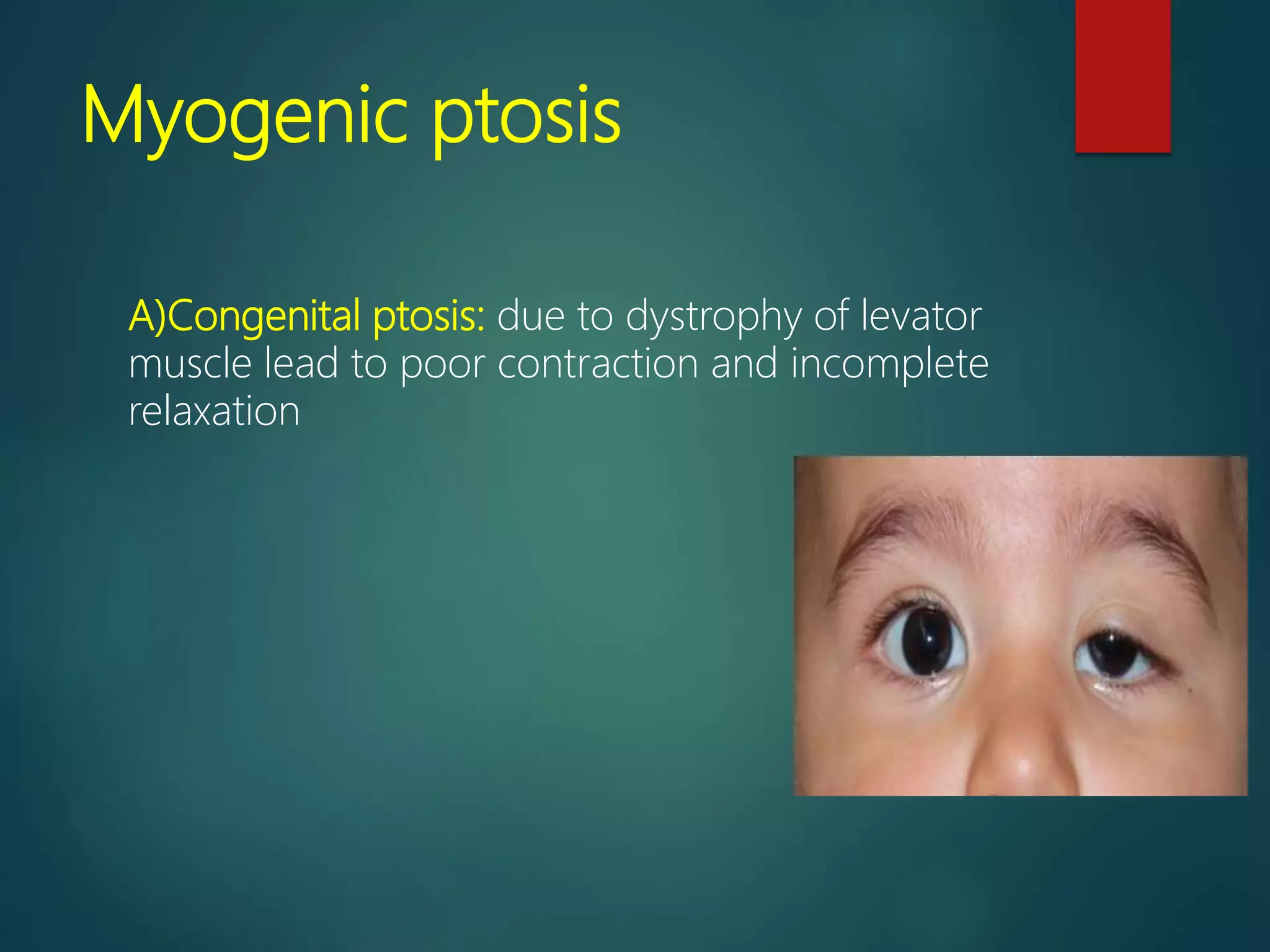
B) Acquired ptosis
(Myasthenia gravis) : due
to defect in the myoneural
junction.. it is progressive
the end of the day and on
prolonged fixation
Neurogenic ptosis
Third nerve palsy : paralytic ptosis
(Diabetes- congenital-traumatic)
Horner’s syndrome : due to interference
with sympathetic nerve supply with
characteristic ptosis, miosis, anhidrosis and
enophthalmos
Aponeurotic ptosis
(disorder in levator
aponeurosis)

Senile (involutional): degenerative
changes with age

Postoperative ptosis:
following cataract surgery and retinal
detachment surgery (damage of
levator ,superior rectus comlex)
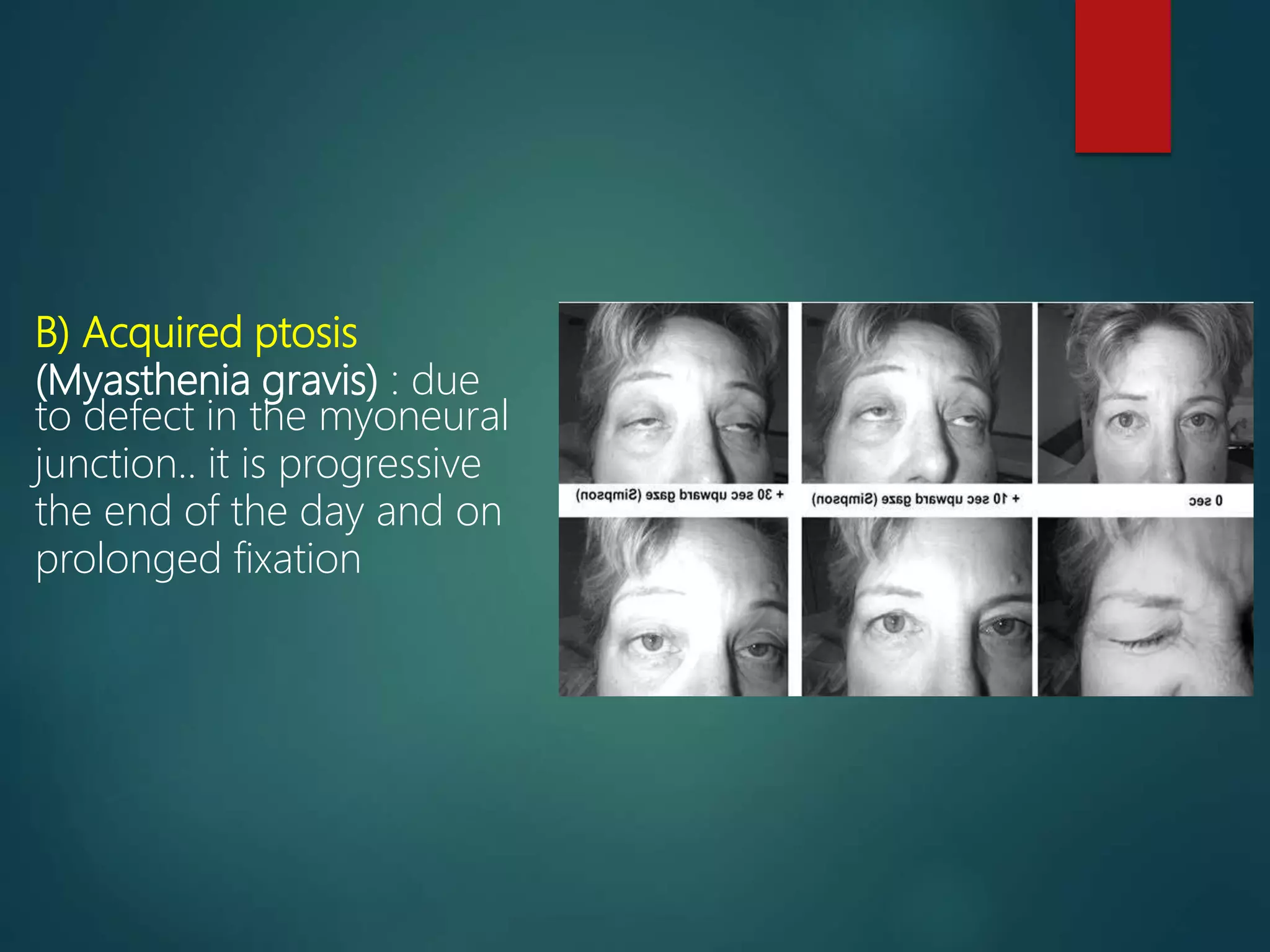
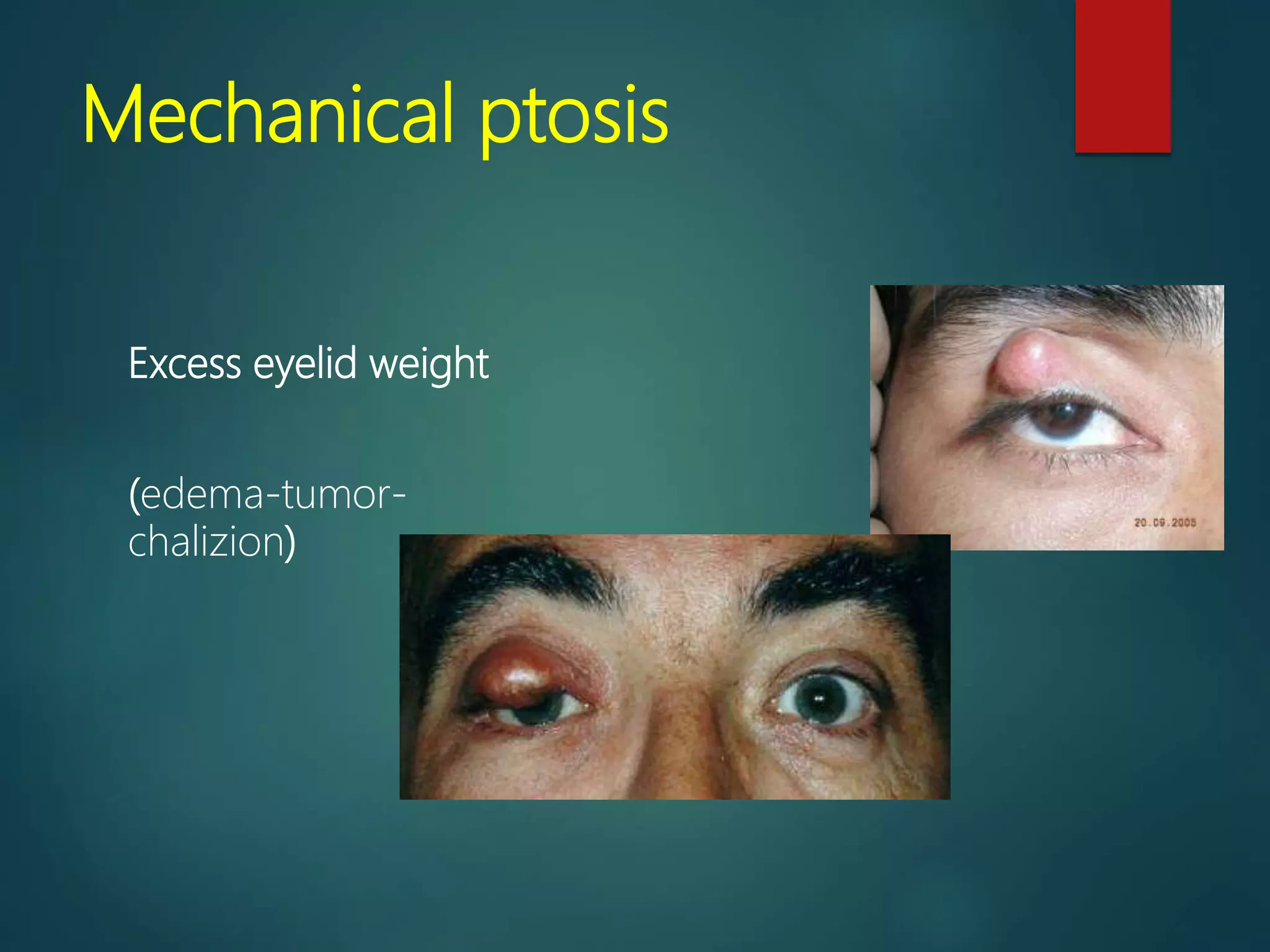
Mechanical ptosis
Excess eyelid weight
(edema-tumor-
chalizion)
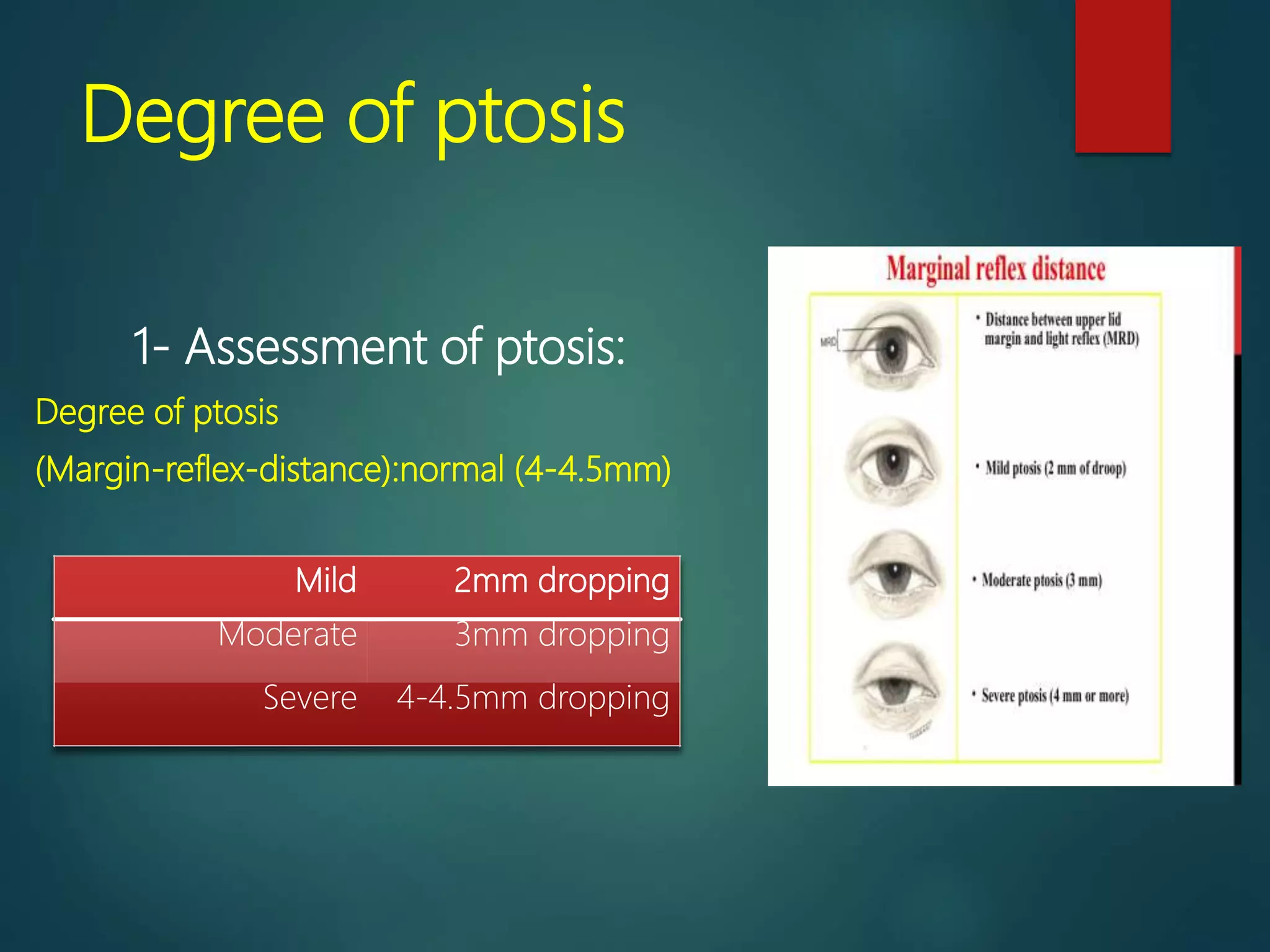
Degree of ptosis
1- Assessment of ptosis:
Degree of ptosis
(Margin-reflex-distance):normal (4-4.5mm)
Mild 2mm dropping
Moderate 3mm dropping
Severe 4-4.5mm dropping
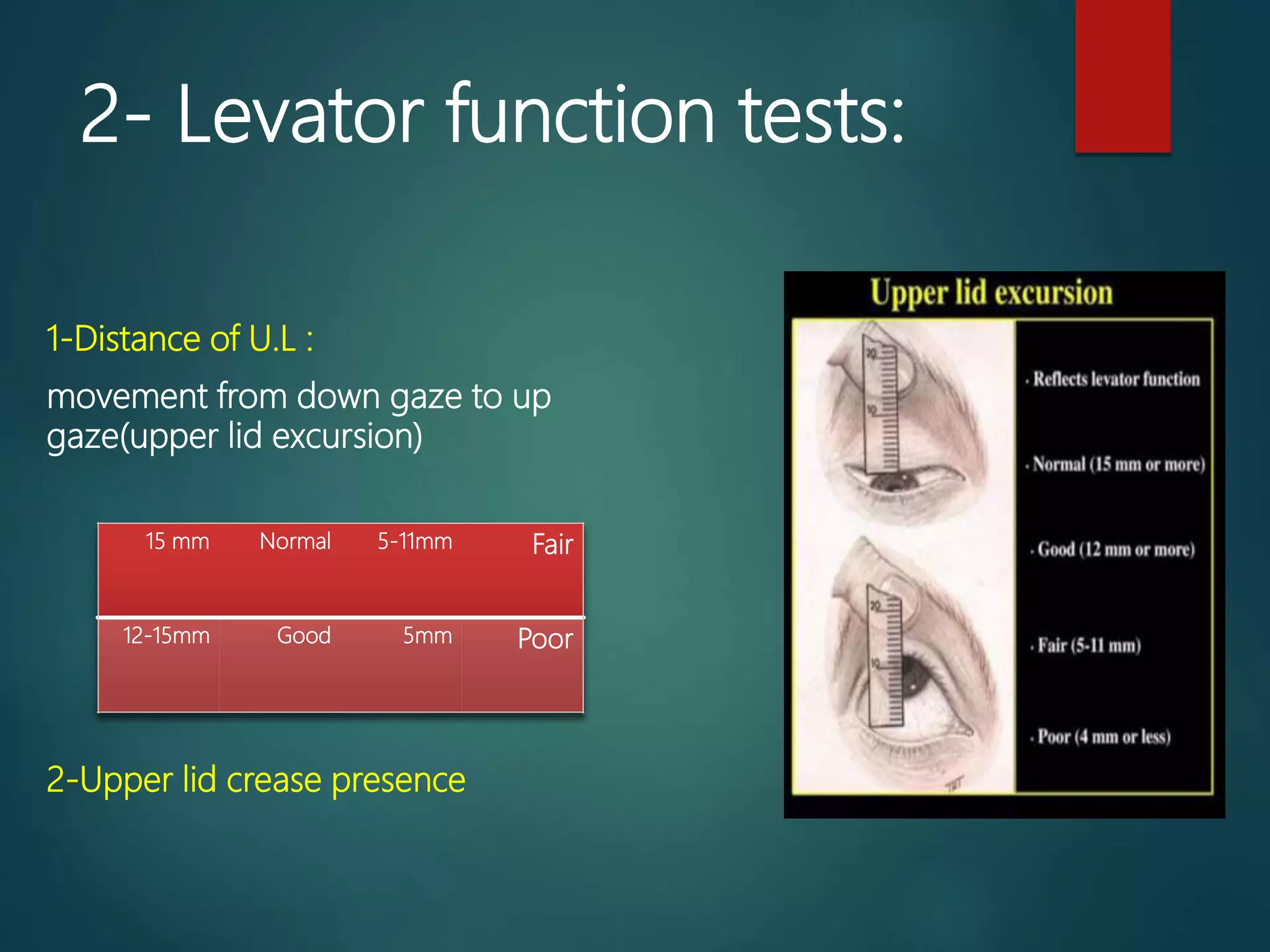
2- Levator function tests:
1-Distance of U.L :
movement from down gaze to up
gaze(upper lid excursion)
2-Upper lid crease presence
15 mm Normal 5-11mm Fair
12-15mm Good 5mm Poor
3)Associated signs:
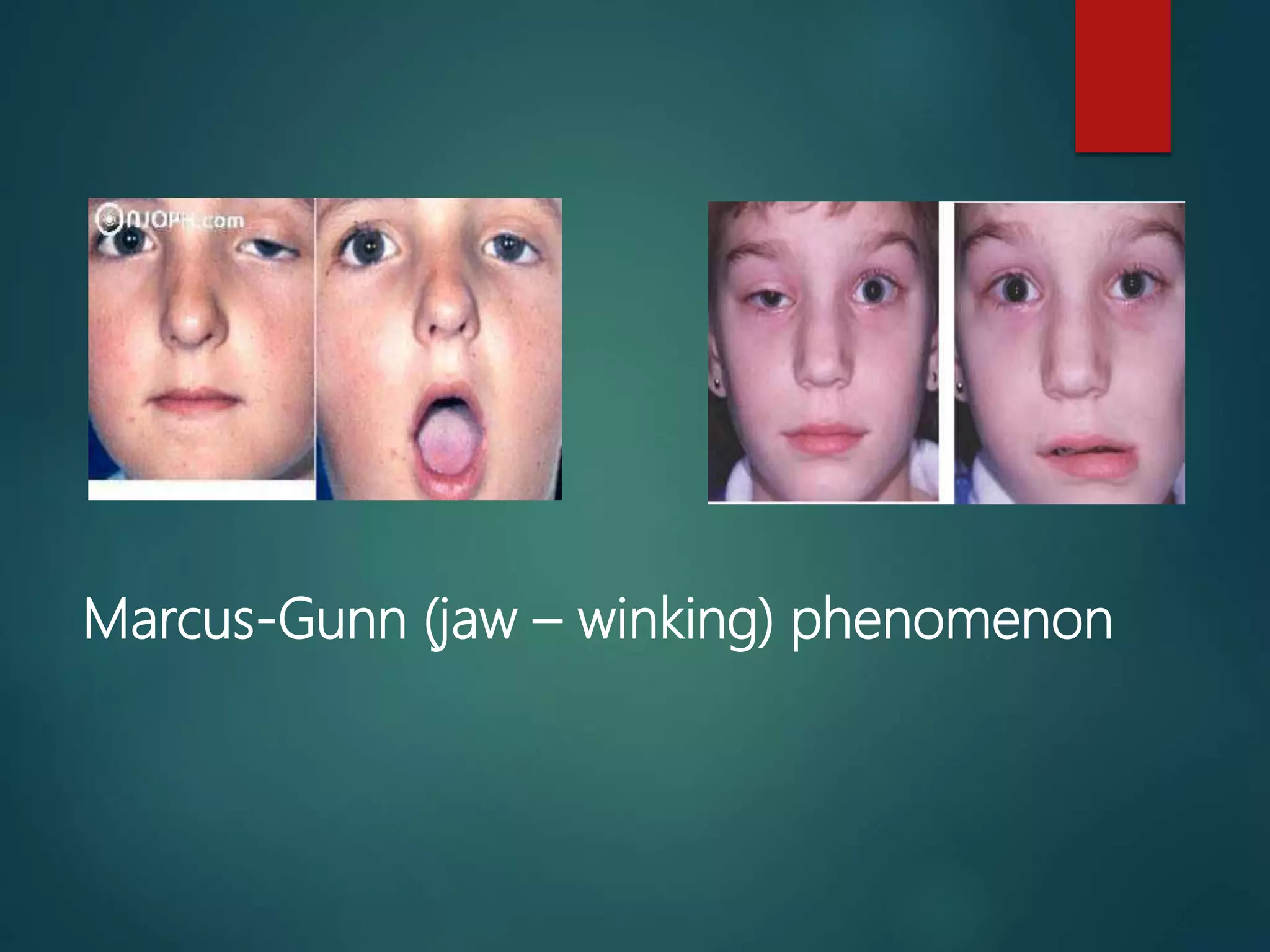
Marcus-Gunn (jaw-winking) phenomenon:
Ocular motility
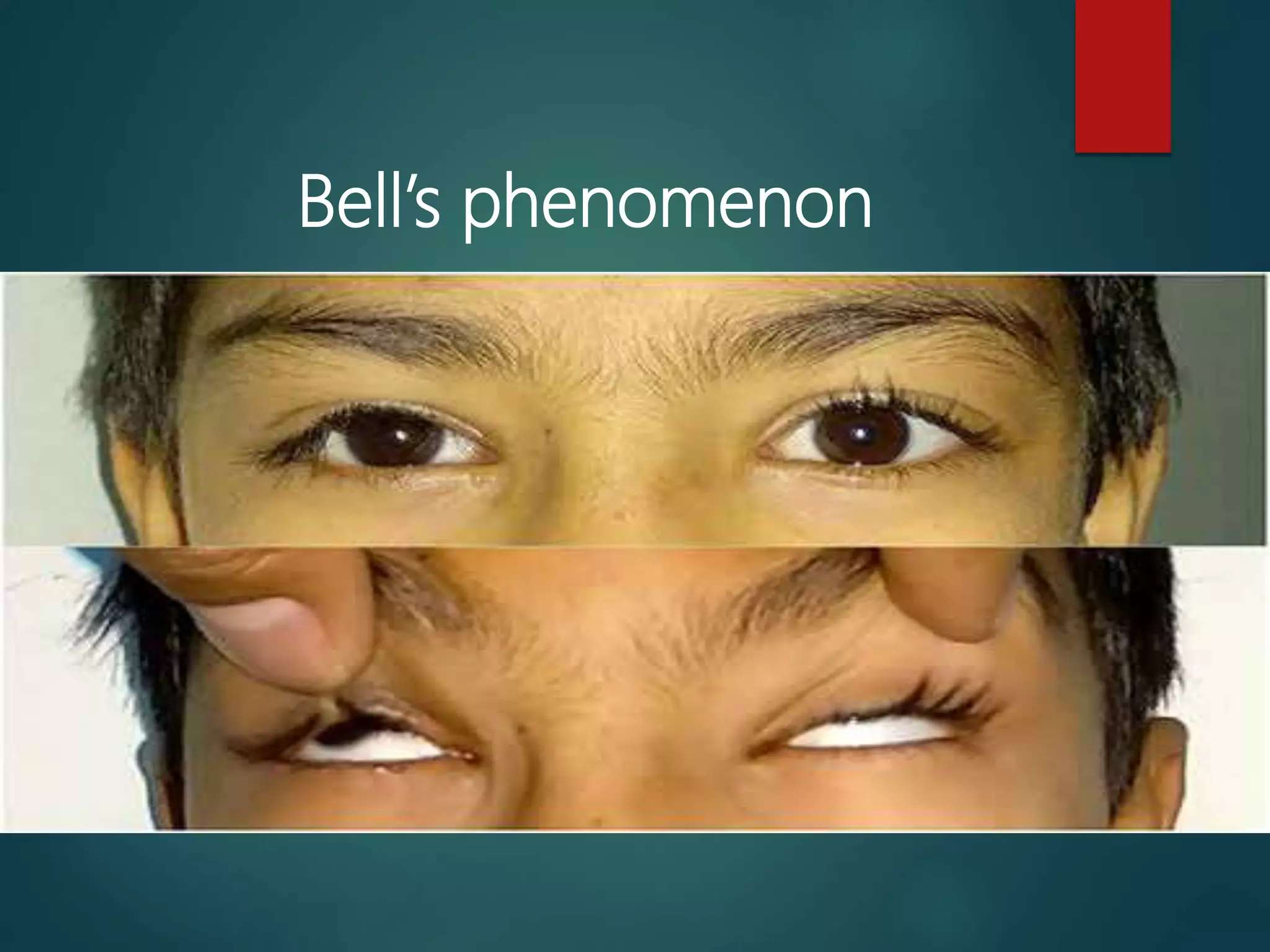
Bell’s phenomenon
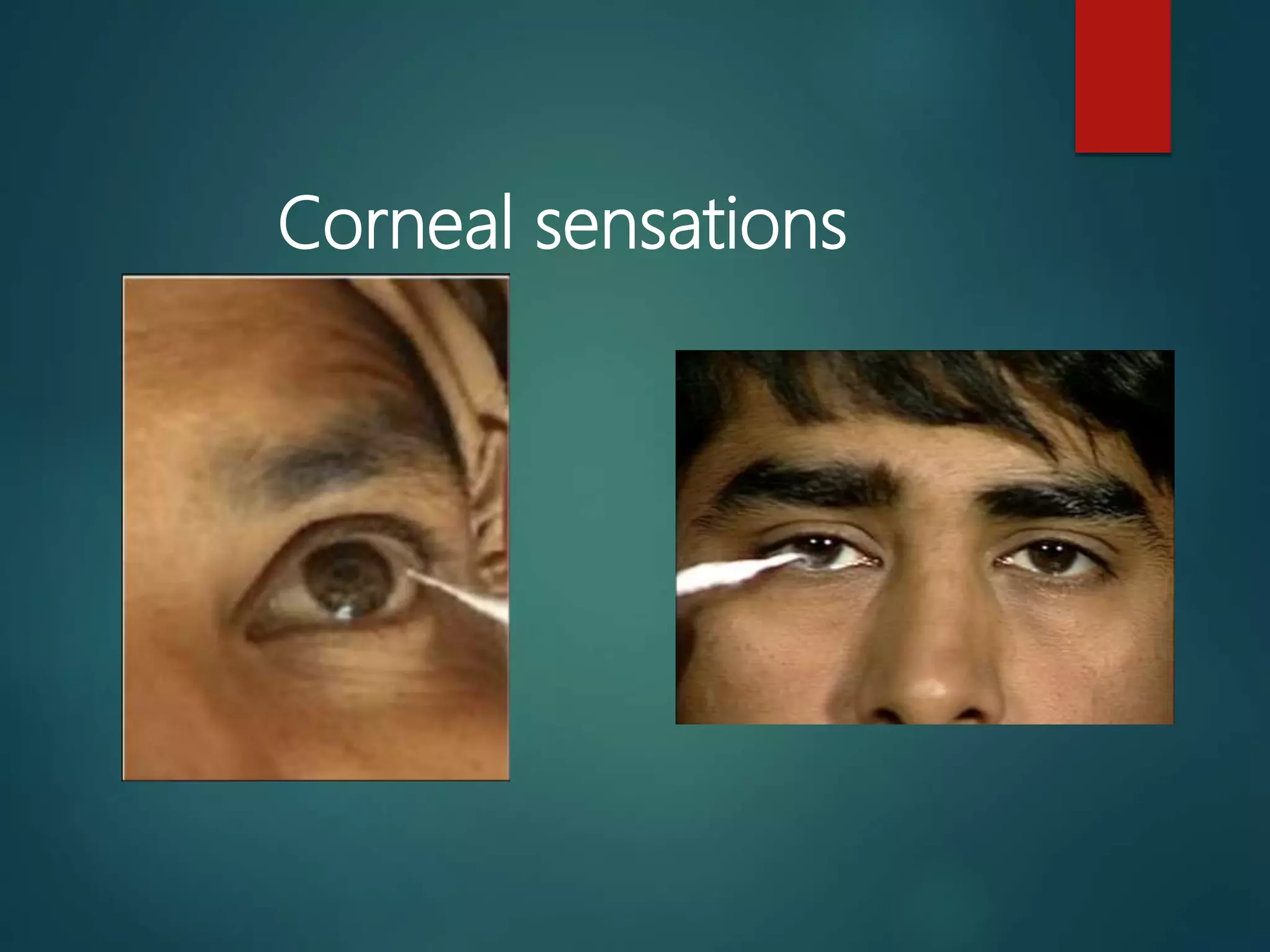
Corneal sensation
Squint
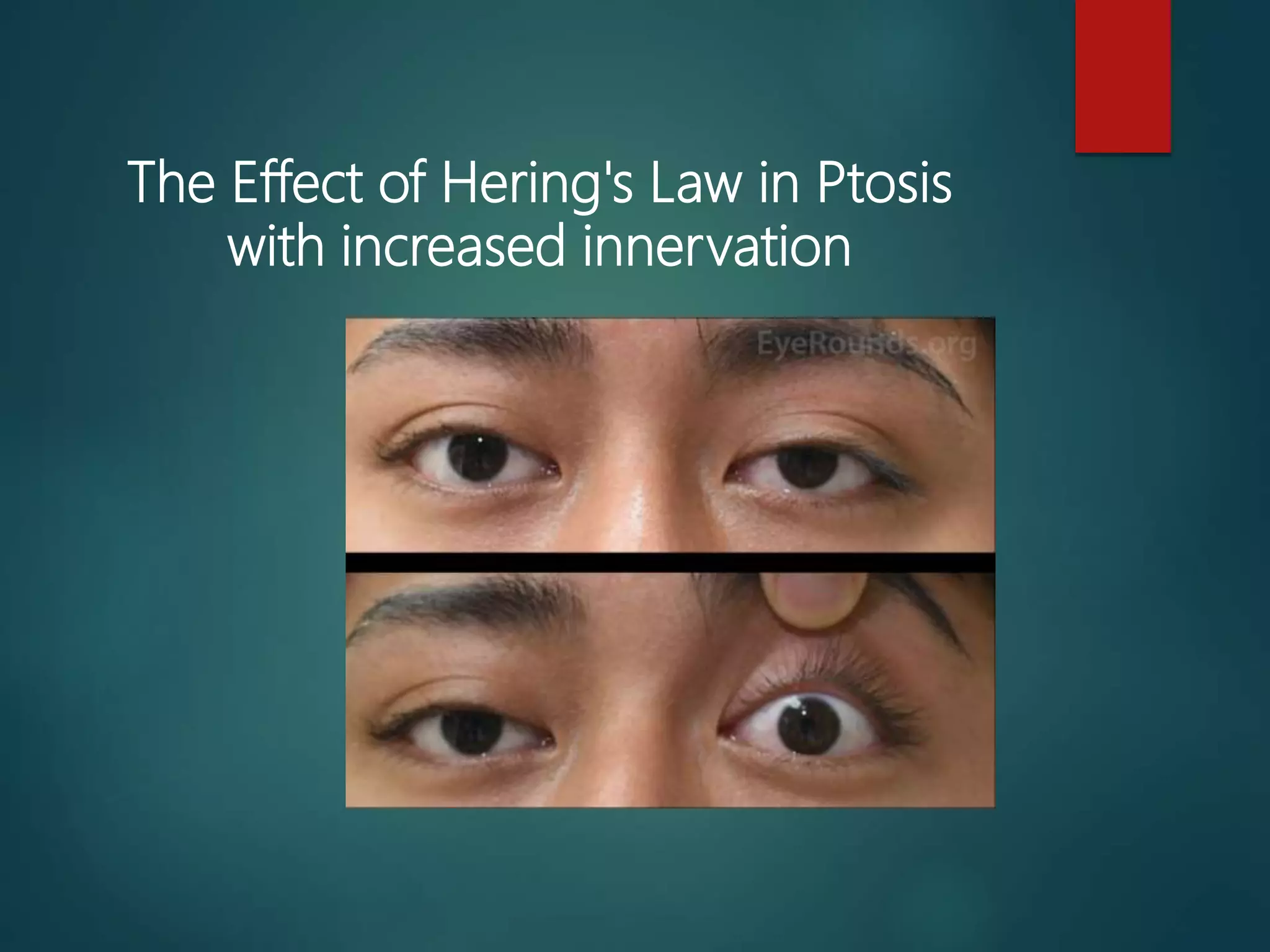
Increased innervation
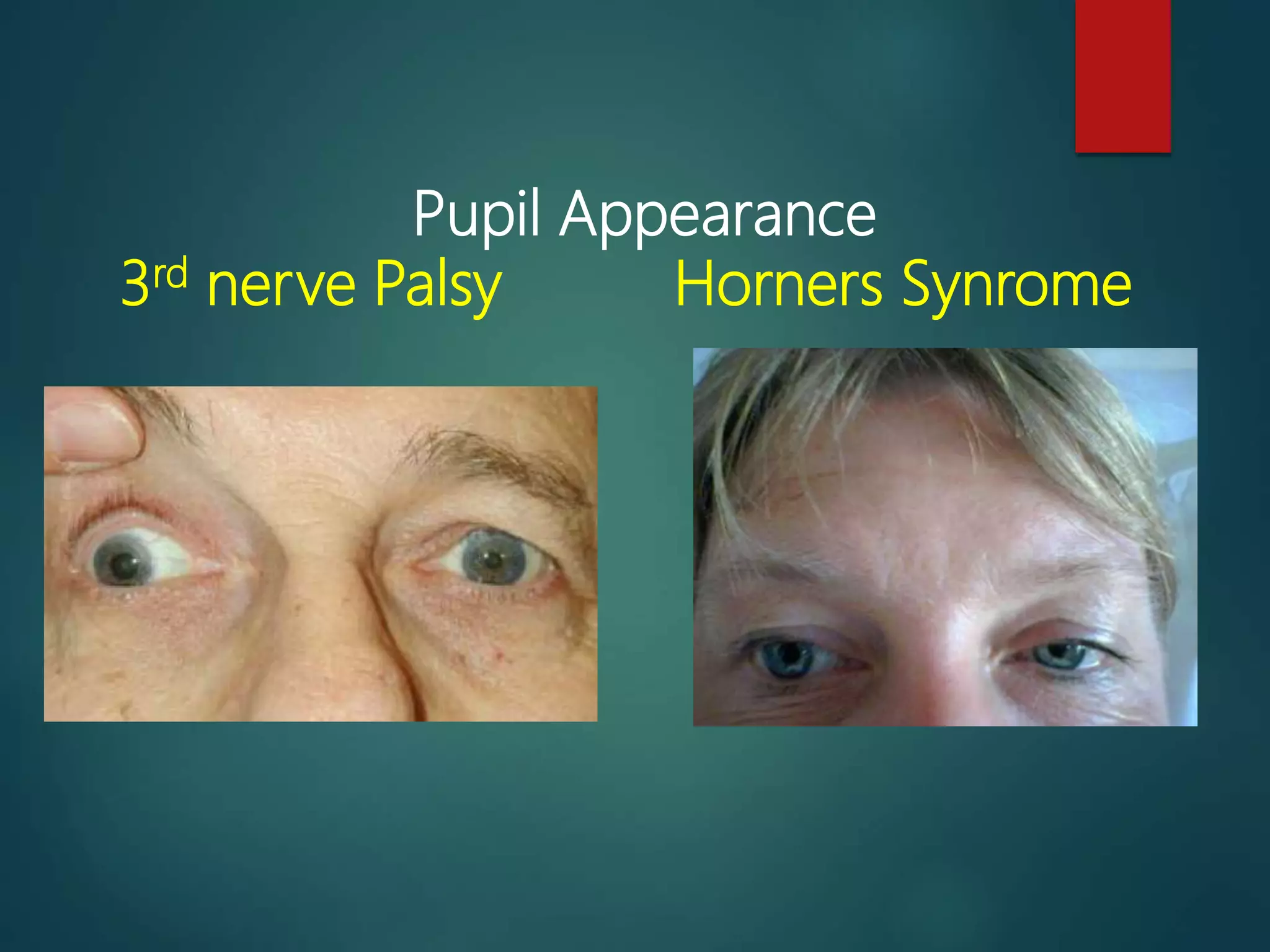
Pupil: ptosis &mydriasis>>third nerve palsy
Ptosis &miosis>> horner’s syndrome
Marcus-Gunn (jaw – winking) phenomenon
Bell’s phenomenon
Corneal sensations
The Effect of Hering's Law in Ptosis
with increased innervation
Pupil Appearance
3rd nerve Palsy Horners Synrome
Differential diagnosis
Causes of pseudo-ptosis
Contralateral side Ipsilateral side
•
Lid retraction
•
Severe proptosis
•
Lack of support
•
Hypotropia
•
Excessive
dermatochalesis
Treatment
Aim of surgery:
1) Maintenance of correct eyelid position
2) Preservation of the normal eyelid crease
3) Maintenance of the normal tear film
4) Prevention of exposure keratopathy by
prevention of over correction.
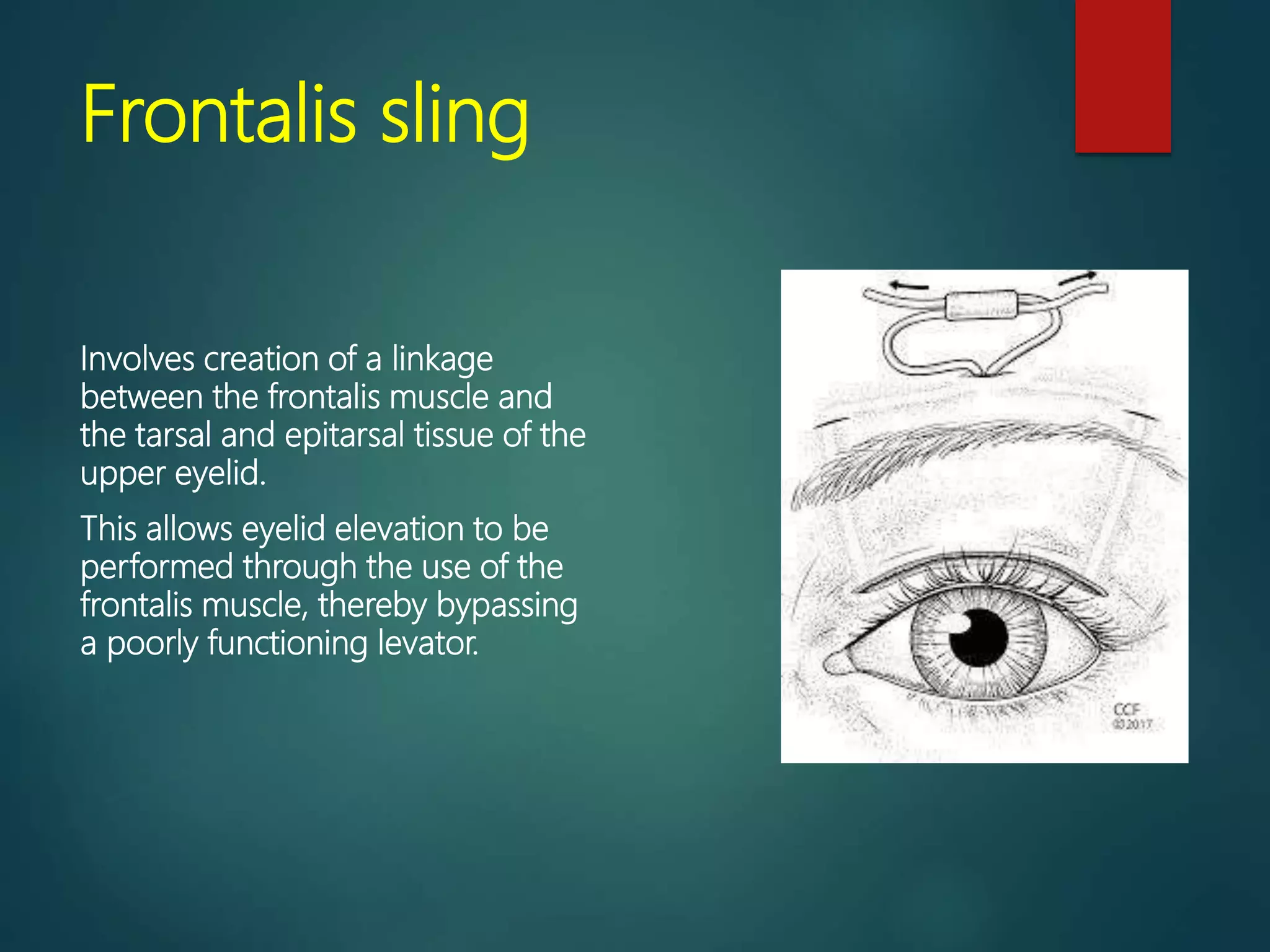
Frontalis sling
Involves creation of a linkage
between the frontalis muscle and
the tarsal and epitarsal tissue of the
upper eyelid.
This allows eyelid elevation to be
performed through the use of the
frontalis muscle, thereby bypassing
a poorly functioning levator.
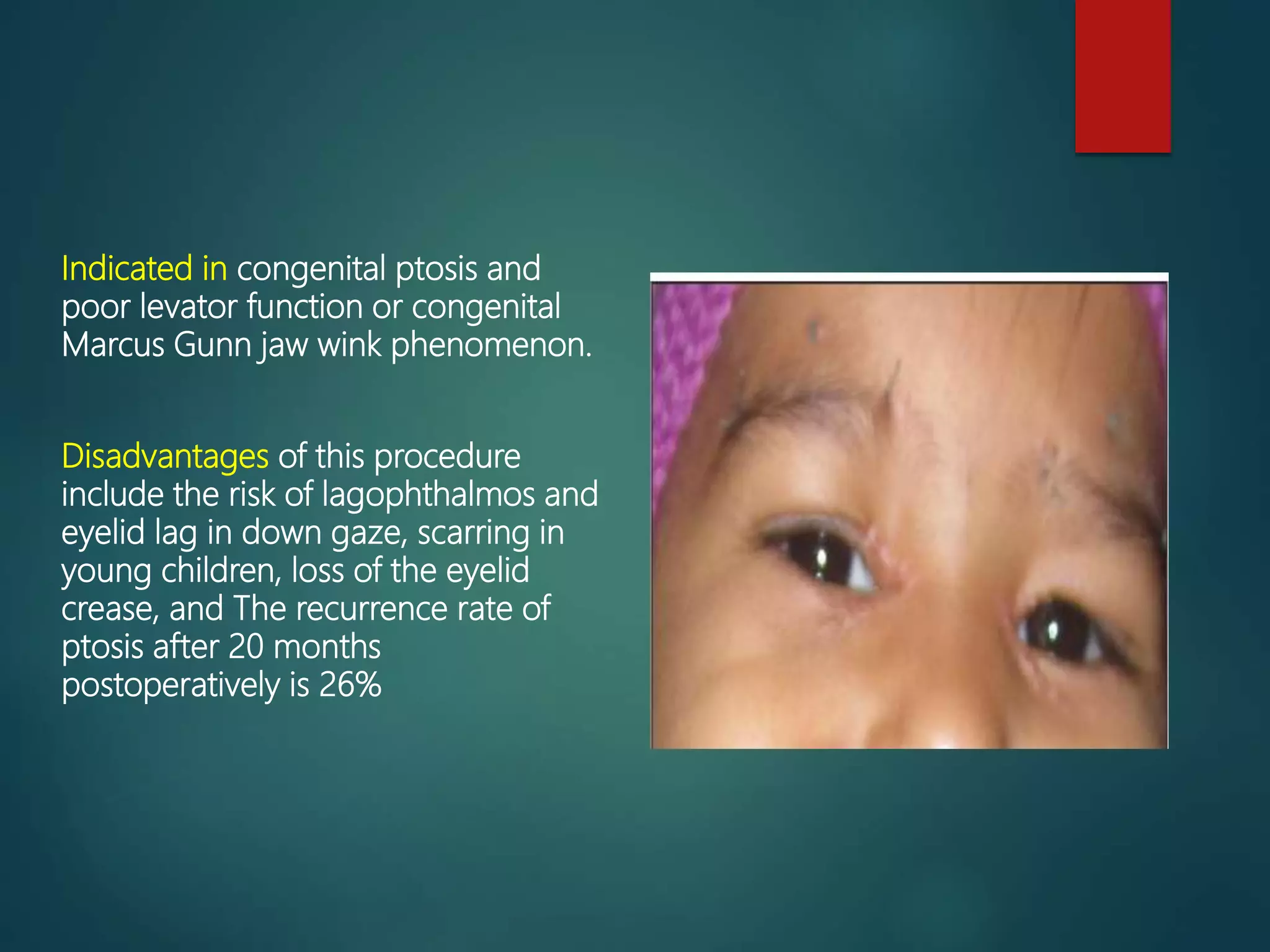
Indicated in congenital ptosis and
poor levator function or congenital
Marcus Gunn jaw wink phenomenon.
Disadvantages of this procedure
include the risk of lagophthalmos and
eyelid lag in down gaze, scarring in
young children, loss of the eyelid
crease, and The recurrence rate of
ptosis after 20 months
postoperatively is 26%
Levator resection and
advancement
Patients with greater than 5 mm of
levator function.
Advantages: it preserves normal
anatomical planes and structures
of the eyelid.
WHITNALL SLING
Indicated in severe ptosis with
levator function of 3–5 mm.
This procedure involves
resecting the levator
aponeurosis up to the point of
Whitnall's ligament, and then
suturing both Whitnall's
ligament and the underlying
levator muscle to the superior
portion of the tarsal plate.
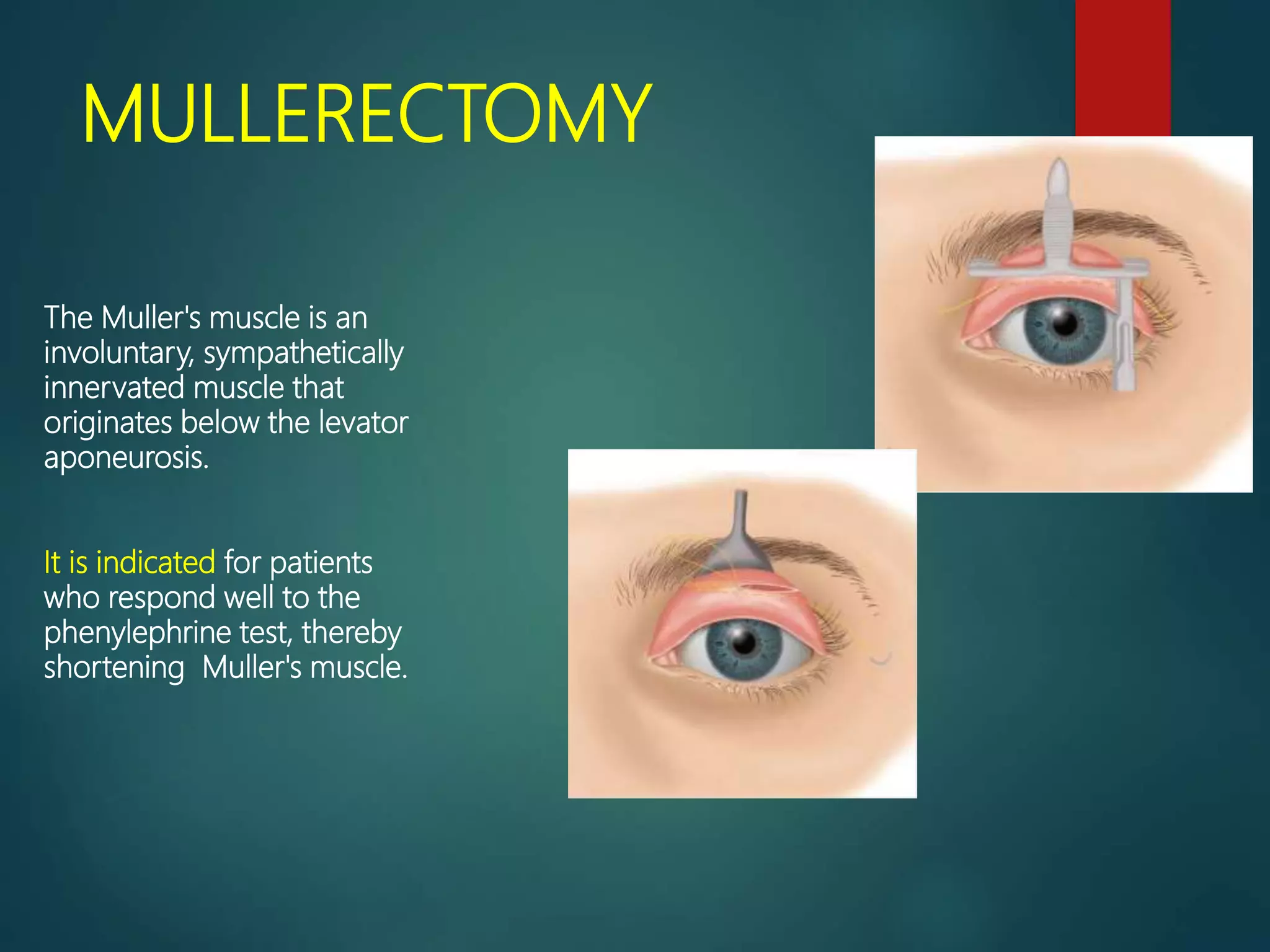
MULLERECTOMY
The Muller's muscle is an
involuntary, sympathetically
innervated muscle that
originates below the levator
aponeurosis.
It is indicated for patients
who respond well to the
phenylephrine test, thereby
shortening Muller's muscle.
Thank You

Ptosis

  • 1.
    Ptosis By Dr. Amr Mounir Lecturerof Ophthalmology Sohag University
  • 2.
    Definition: It is droopingof the upper eyelid due to paralysis or disease, or due to a congenital condition.
  • 3.
  • 4.
    Myogenic ptosis A)Congenital ptosis:due to dystrophy of levator muscle lead to poor contraction and incomplete relaxation
  • 5.
    B) Acquired ptosis (Myastheniagravis) : due to defect in the myoneural junction.. it is progressive the end of the day and on prolonged fixation
  • 6.
    Neurogenic ptosis Third nervepalsy : paralytic ptosis (Diabetes- congenital-traumatic) Horner’s syndrome : due to interference with sympathetic nerve supply with characteristic ptosis, miosis, anhidrosis and enophthalmos
  • 7.
    Aponeurotic ptosis (disorder inlevator aponeurosis)  Senile (involutional): degenerative changes with age  Postoperative ptosis: following cataract surgery and retinal detachment surgery (damage of levator ,superior rectus comlex)
  • 8.
    Mechanical ptosis Excess eyelidweight (edema-tumor- chalizion)
  • 9.
    Degree of ptosis 1-Assessment of ptosis: Degree of ptosis (Margin-reflex-distance):normal (4-4.5mm) Mild 2mm dropping Moderate 3mm dropping Severe 4-4.5mm dropping
  • 10.
    2- Levator functiontests: 1-Distance of U.L : movement from down gaze to up gaze(upper lid excursion) 2-Upper lid crease presence 15 mm Normal 5-11mm Fair 12-15mm Good 5mm Poor
  • 11.
    3)Associated signs: Marcus-Gunn (jaw-winking)phenomenon: Ocular motility Bell’s phenomenon Corneal sensation Squint Increased innervation Pupil: ptosis &mydriasis>>third nerve palsy Ptosis &miosis>> horner’s syndrome
  • 12.
    Marcus-Gunn (jaw –winking) phenomenon
  • 13.
  • 14.
  • 15.
    The Effect ofHering's Law in Ptosis with increased innervation
  • 16.
    Pupil Appearance 3rd nervePalsy Horners Synrome
  • 17.
    Differential diagnosis Causes ofpseudo-ptosis Contralateral side Ipsilateral side • Lid retraction • Severe proptosis • Lack of support • Hypotropia • Excessive dermatochalesis
  • 18.
    Treatment Aim of surgery: 1)Maintenance of correct eyelid position 2) Preservation of the normal eyelid crease 3) Maintenance of the normal tear film 4) Prevention of exposure keratopathy by prevention of over correction.
  • 19.
    Frontalis sling Involves creationof a linkage between the frontalis muscle and the tarsal and epitarsal tissue of the upper eyelid. This allows eyelid elevation to be performed through the use of the frontalis muscle, thereby bypassing a poorly functioning levator.
  • 20.
    Indicated in congenitalptosis and poor levator function or congenital Marcus Gunn jaw wink phenomenon. Disadvantages of this procedure include the risk of lagophthalmos and eyelid lag in down gaze, scarring in young children, loss of the eyelid crease, and The recurrence rate of ptosis after 20 months postoperatively is 26%
  • 21.
    Levator resection and advancement Patientswith greater than 5 mm of levator function. Advantages: it preserves normal anatomical planes and structures of the eyelid.
  • 22.
    WHITNALL SLING Indicated insevere ptosis with levator function of 3–5 mm. This procedure involves resecting the levator aponeurosis up to the point of Whitnall's ligament, and then suturing both Whitnall's ligament and the underlying levator muscle to the superior portion of the tarsal plate.
  • 23.
    MULLERECTOMY The Muller's muscleis an involuntary, sympathetically innervated muscle that originates below the levator aponeurosis. It is indicated for patients who respond well to the phenylephrine test, thereby shortening Muller's muscle.
  • 24.