This document discusses process planning and cost estimation. It covers topics such as process planning activities like drawing interpretation, material evaluation, process selection, and production equipment selection. It also discusses computer aided process planning approaches like retrieval and generative CAPP. For cost estimation, it covers importance of estimation, types of estimates, elements of estimation, estimating procedure, importance of costing, methods of costing, and calculation of costs.
PROCESS PLANNING ANDCOST
ESTIMATION
Mr.A . FELIX SAHAYARAJ ME
ASSISTANT PROF
MECHANICAL ENGINEERING
KALAIGNAR KARUNANIDHI INSTITUTE OF TECHNOLOGY
COIMBATORE - 641402
Types of processplanning
• Manual process planning
– Traditional approach
– Workbook approach
• Computer aided process planning
– Retrieval process planning (variant)
– Generative process planning
5.
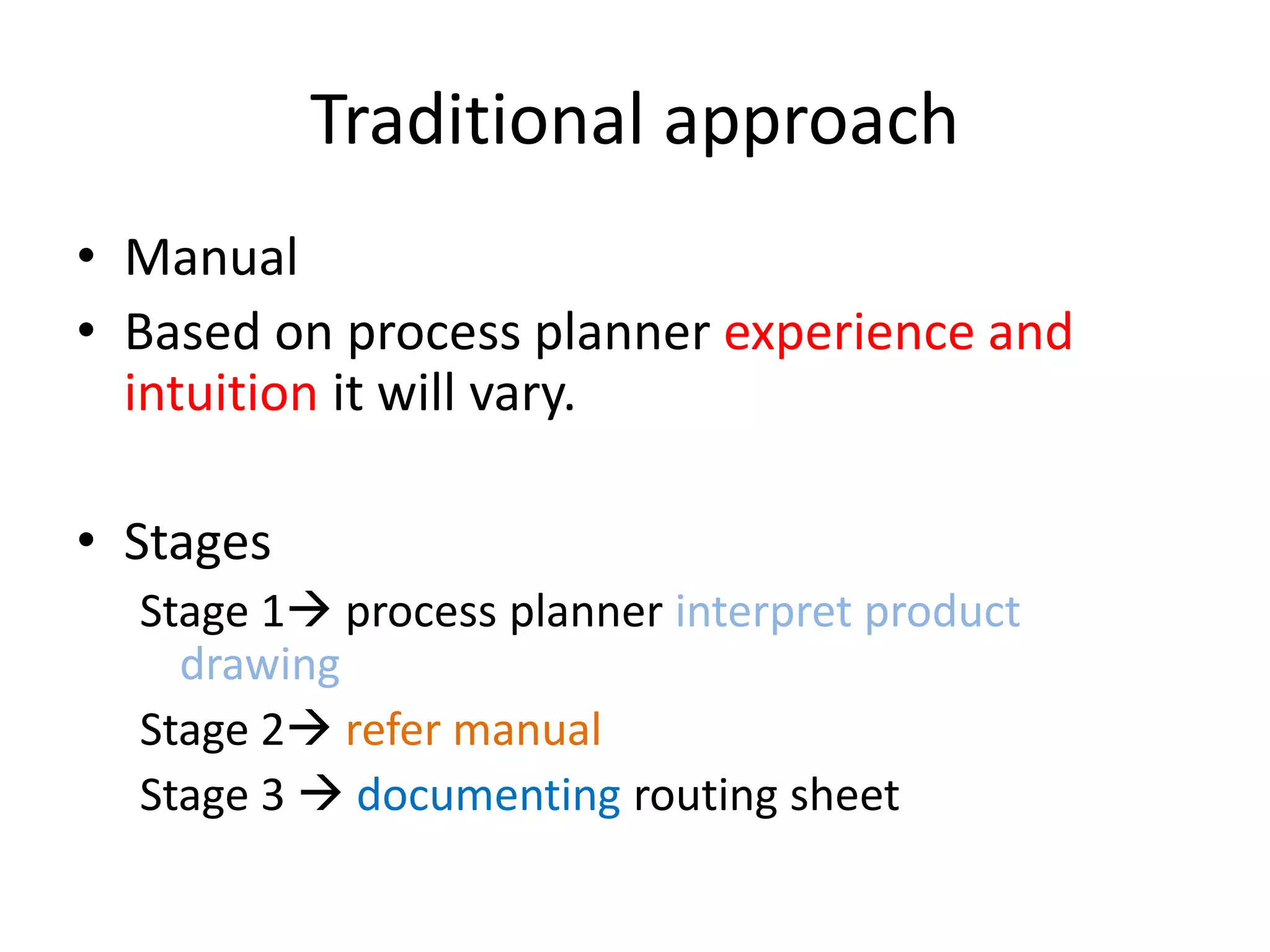
Traditional approach
• Manual
•Based on process planner experience and
intuition it will vary.
• Stages
Stage 1 process planner interpret product
drawing
Stage 2 refer manual
Stage 3 documenting routing sheet
6.
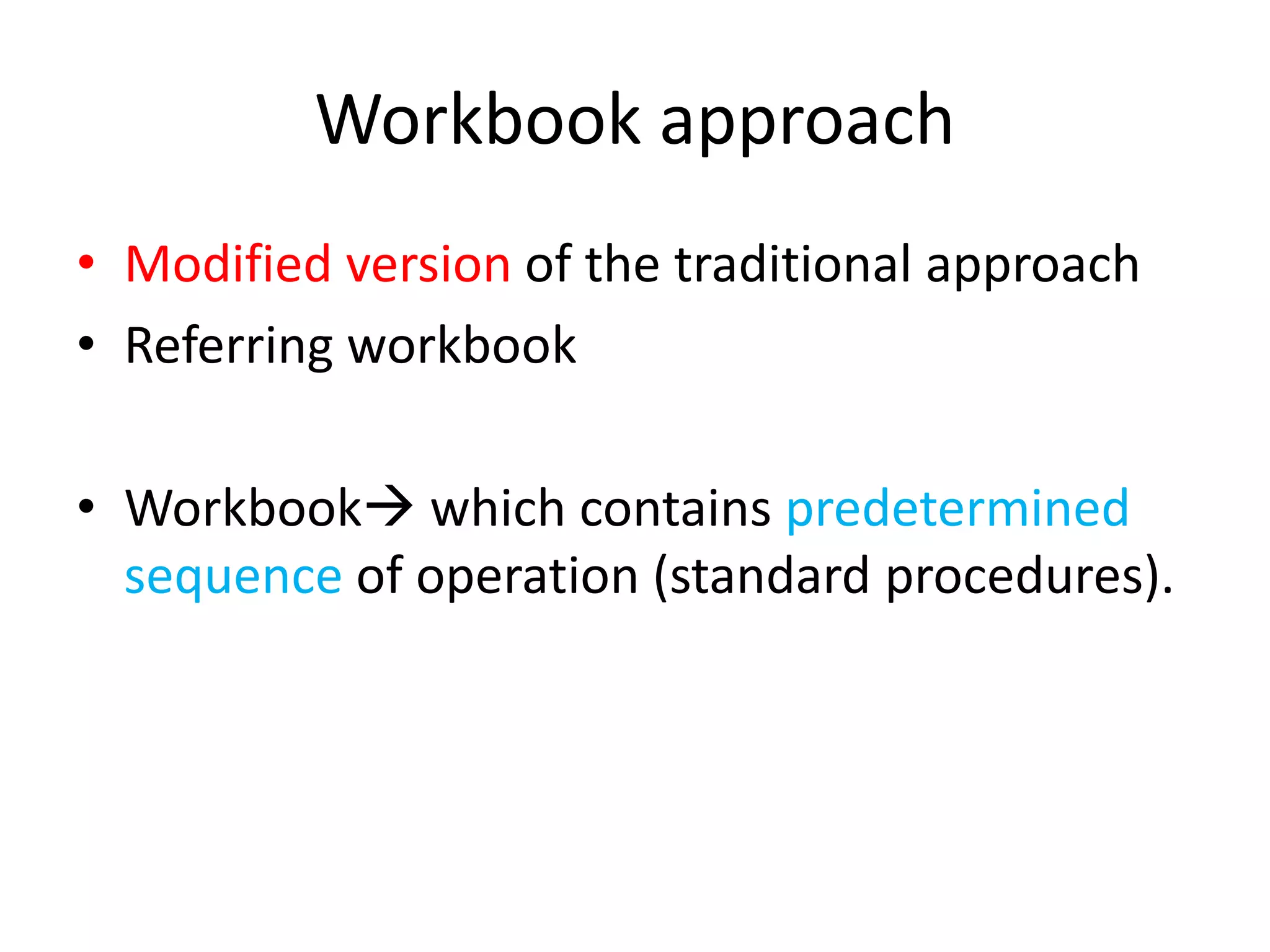
Workbook approach
• Modifiedversion of the traditional approach
• Referring workbook
• Workbook which contains predetermined
sequence of operation (standard procedures).
7.
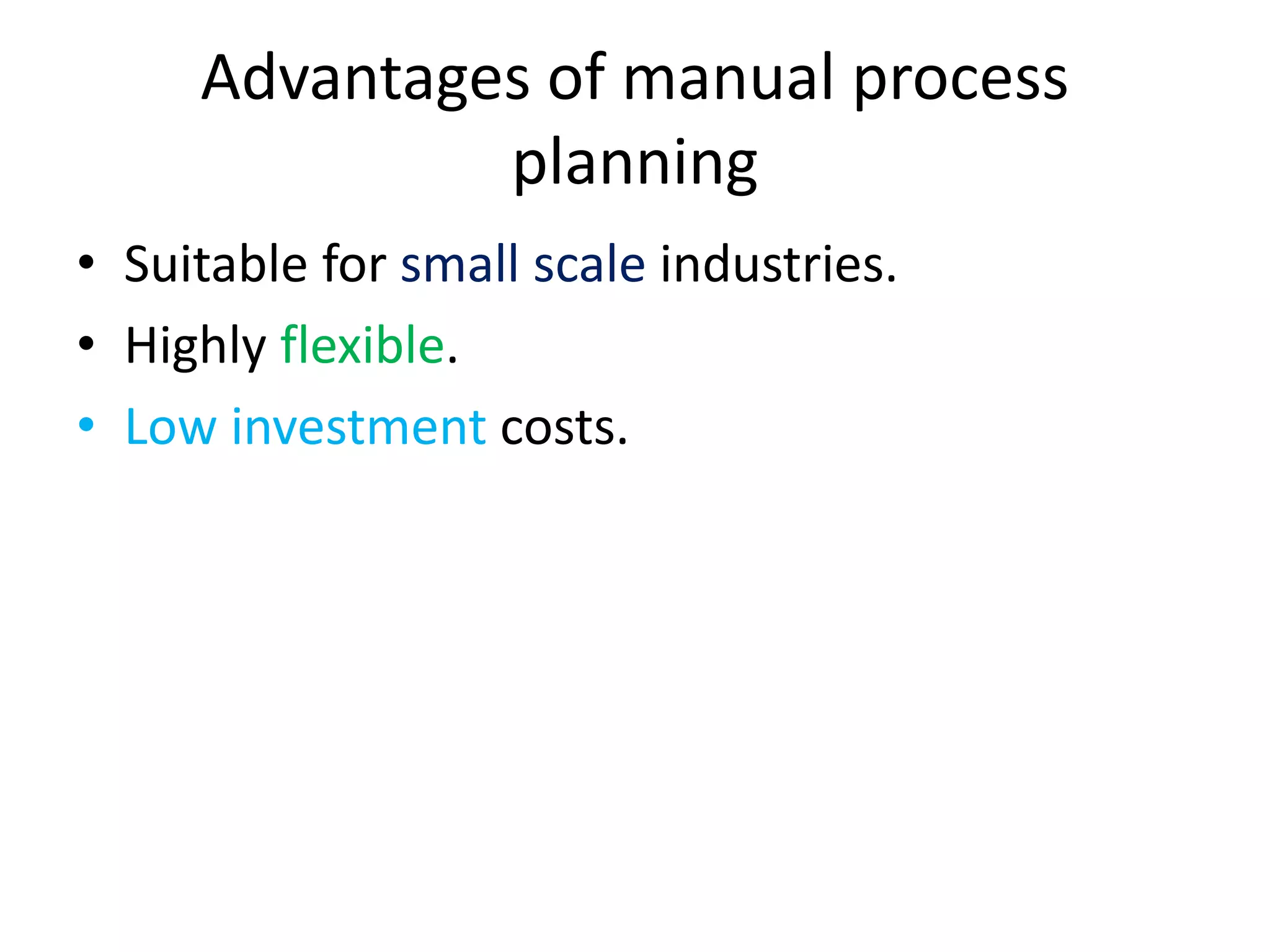
Advantages of manualprocess
planning
• Suitable for small scale industries.
• Highly flexible.
• Low investment costs.
8.
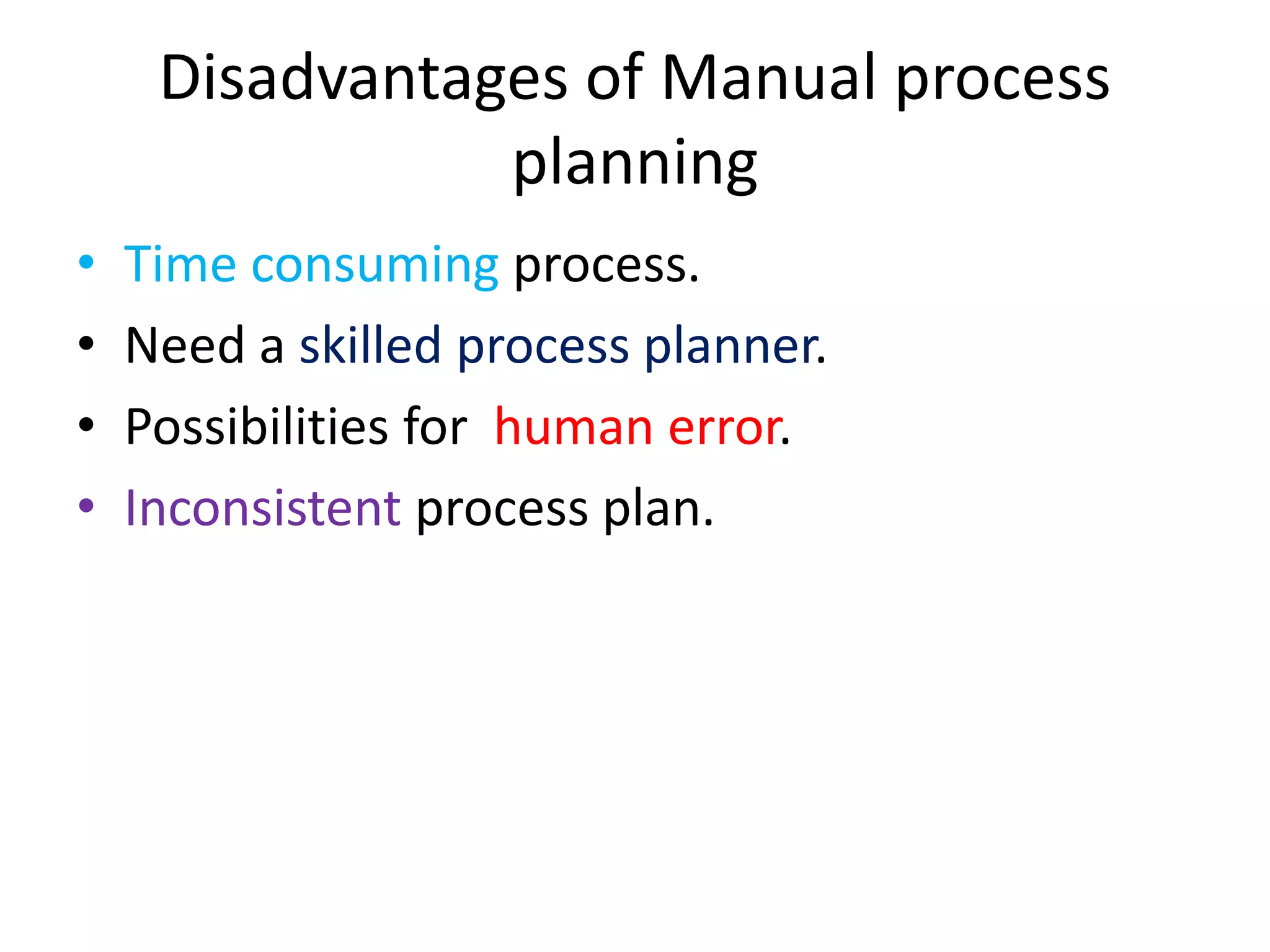
Disadvantages of Manualprocess
planning
• Time consuming process.
• Need a skilled process planner.
• Possibilities for human error.
• Inconsistent process plan.
9.
Computer aided processplanning
(CAPP)
why we need to go for CAPP?
• Overcome the drawbacks of Manual process
planning.
• Reduce the routine work of manufacturing
engineer.
• Act as an interface between CAD and CAM.
10.
Benefits of CAPP(2 mark)
• Productivity improvement.
• Production cost reduction
• Elimination of human error.
• Product standardization.
11.
Approaches of CAPP
•Retrieval CAPP system (variant approach)
• Generative CAPP system
12.
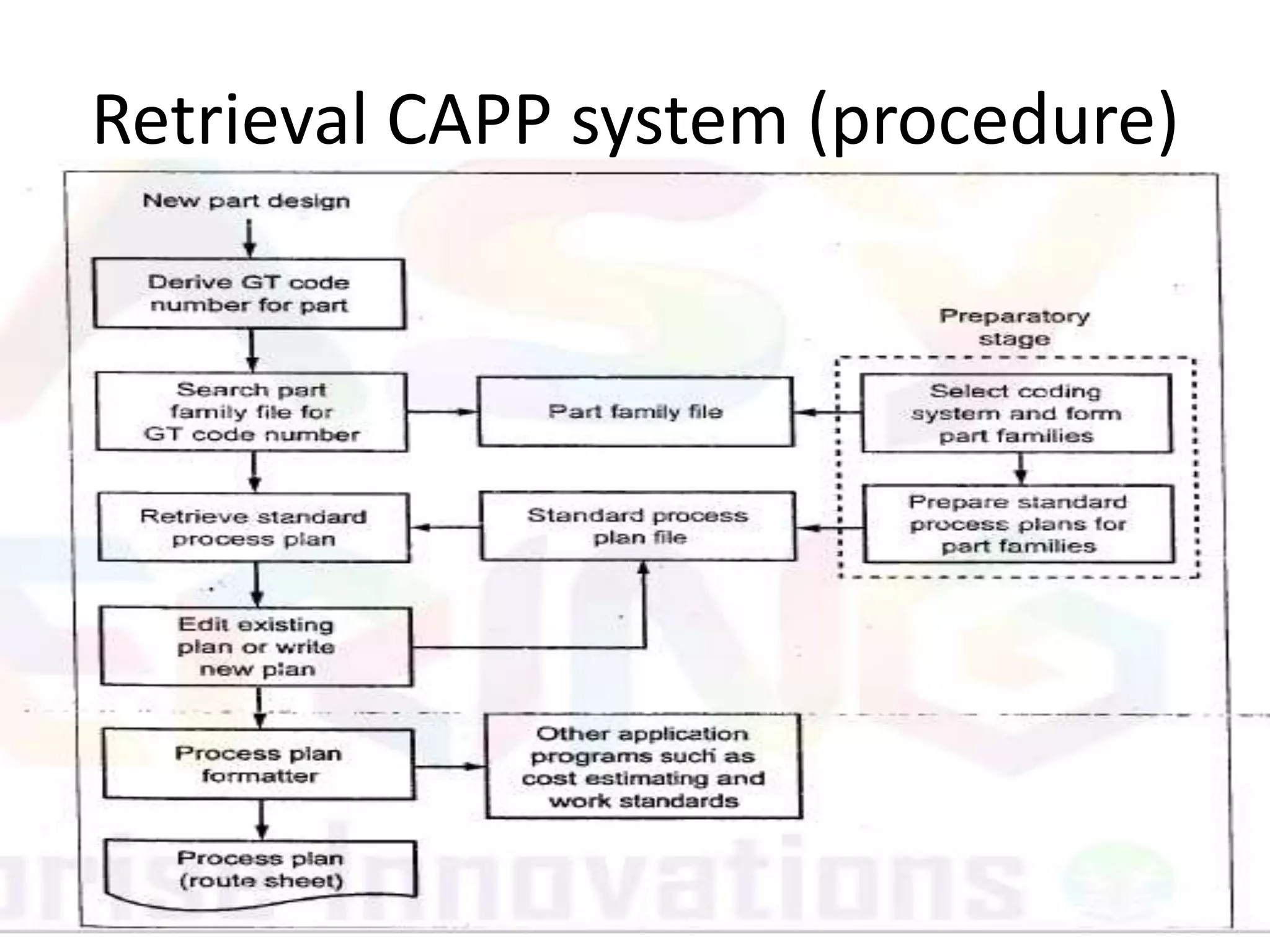
Retrieval CAPP system
•Concept similar parts will have similar
process plan.
• Process plan for a new product is created by
recalling, identifying or retrieving the existing
plan for similar product.
Advantages of retrievalCAPP
• Once a standard plan is produced, similar
plans can be produced using existing plan.
• Simple programming (when compared to
Generative type).
• Easy to learn and use.
• Commercially available retrieval CAPP systems
are MultiCapp and MIPLAN
15.
Generative Process plan
•In generative approach, the process plan were
generate process plan automatically without
any reference to prior plan.
• Concept the concept is based on decision
logics and pre-coded algorithms.
16.
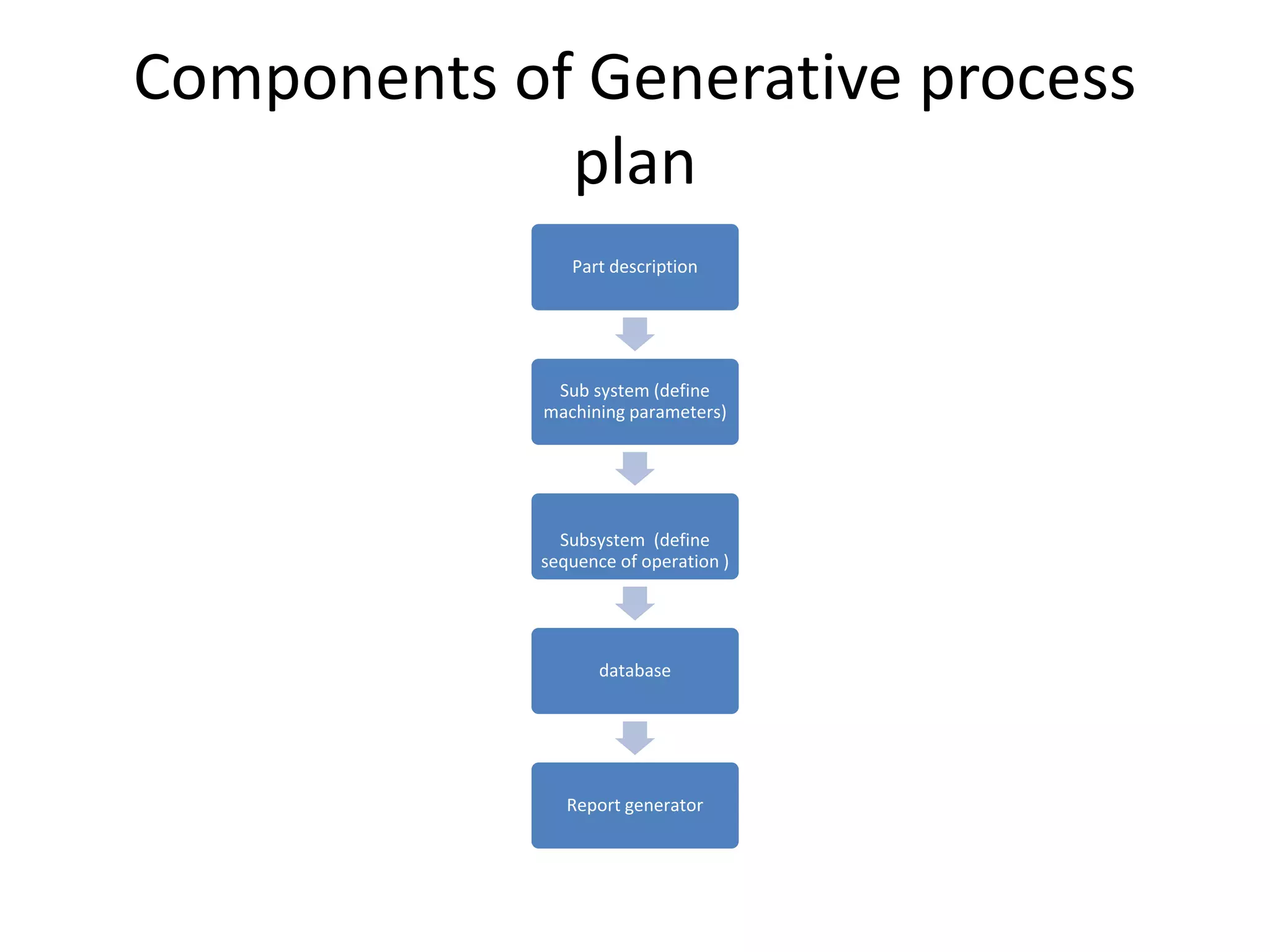
Components of Generativeprocess
plan
Part description
Sub system (define
machining parameters)
Subsystem (define
sequence of operation )
database
Report generator
17.
Advantages of generativeCAPP
• Generate consistent process plan.
• New components can planned easily
• Integrating with an automated manufacturing
facility.
• Example APPAS,CMPP,EXCAP,XPLAN
18.
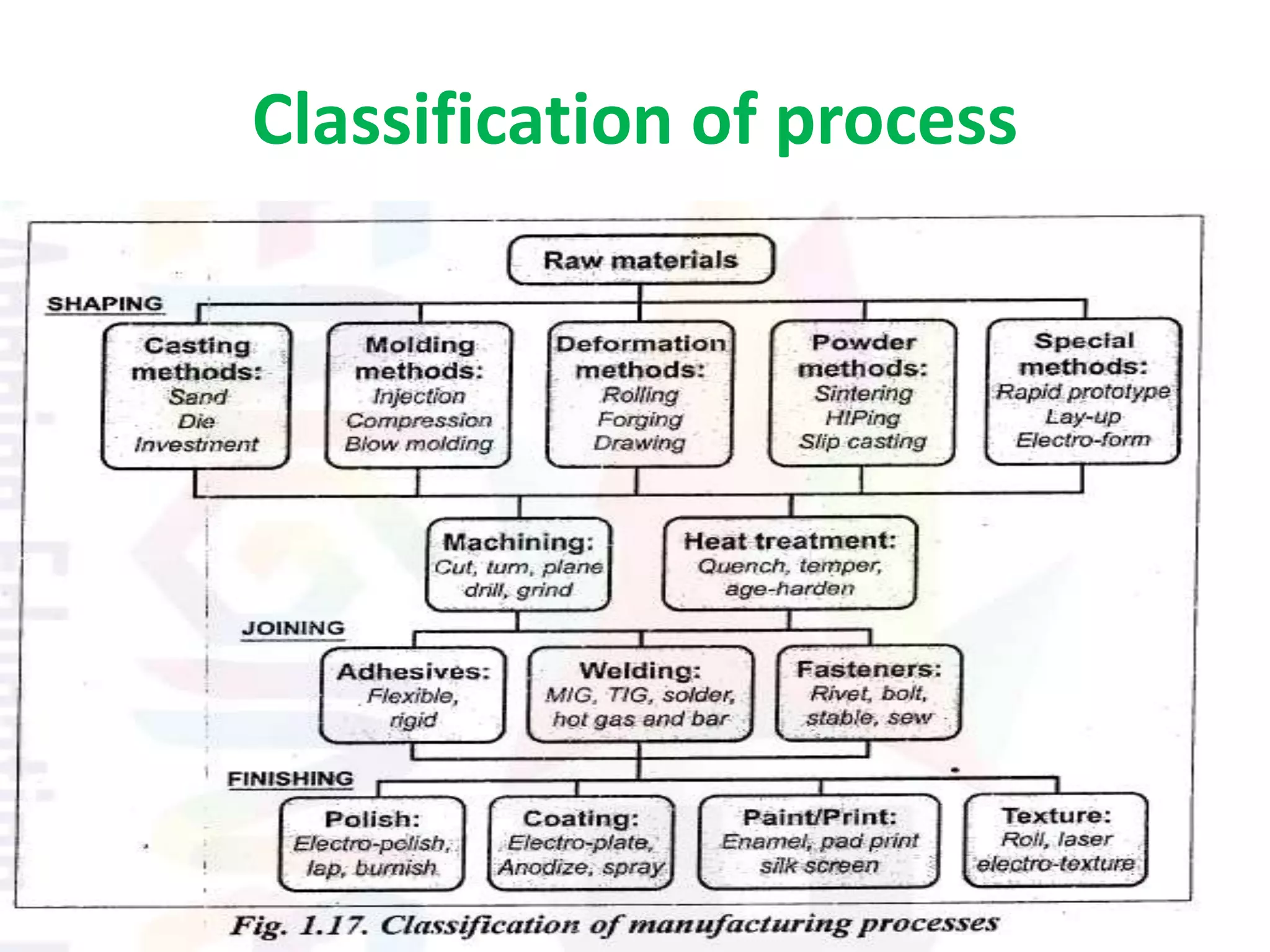
Drawing interpretation
• Firststep
• Getting information from the drawing.
• Prepared by design department.
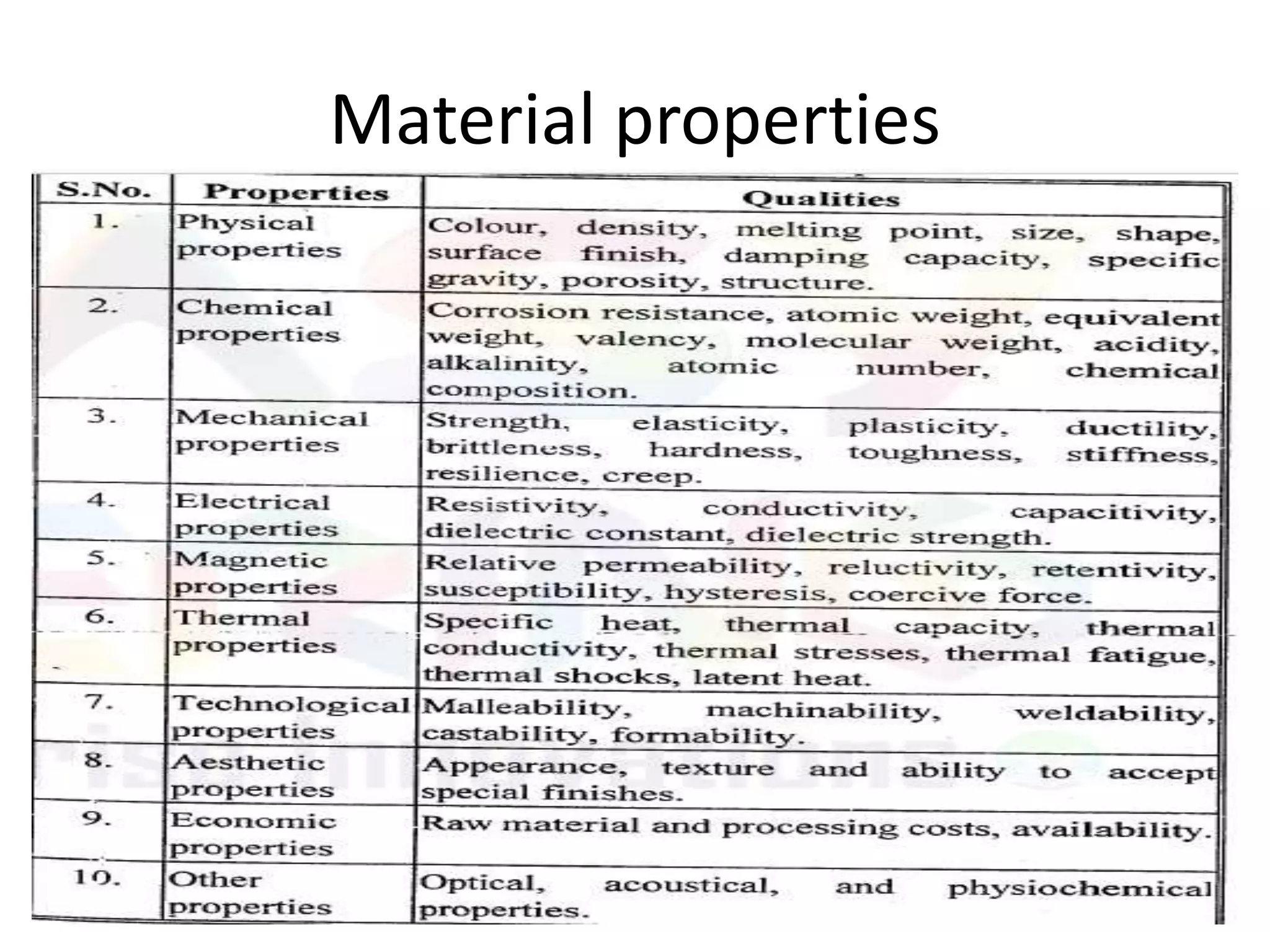
• Details required
– Material of the component, its designation
– Number of parts to be produced
– Weight of the component
– Dimensions of the part
– Dimensional and geometric tolerances
– Size and accuracy of the parts
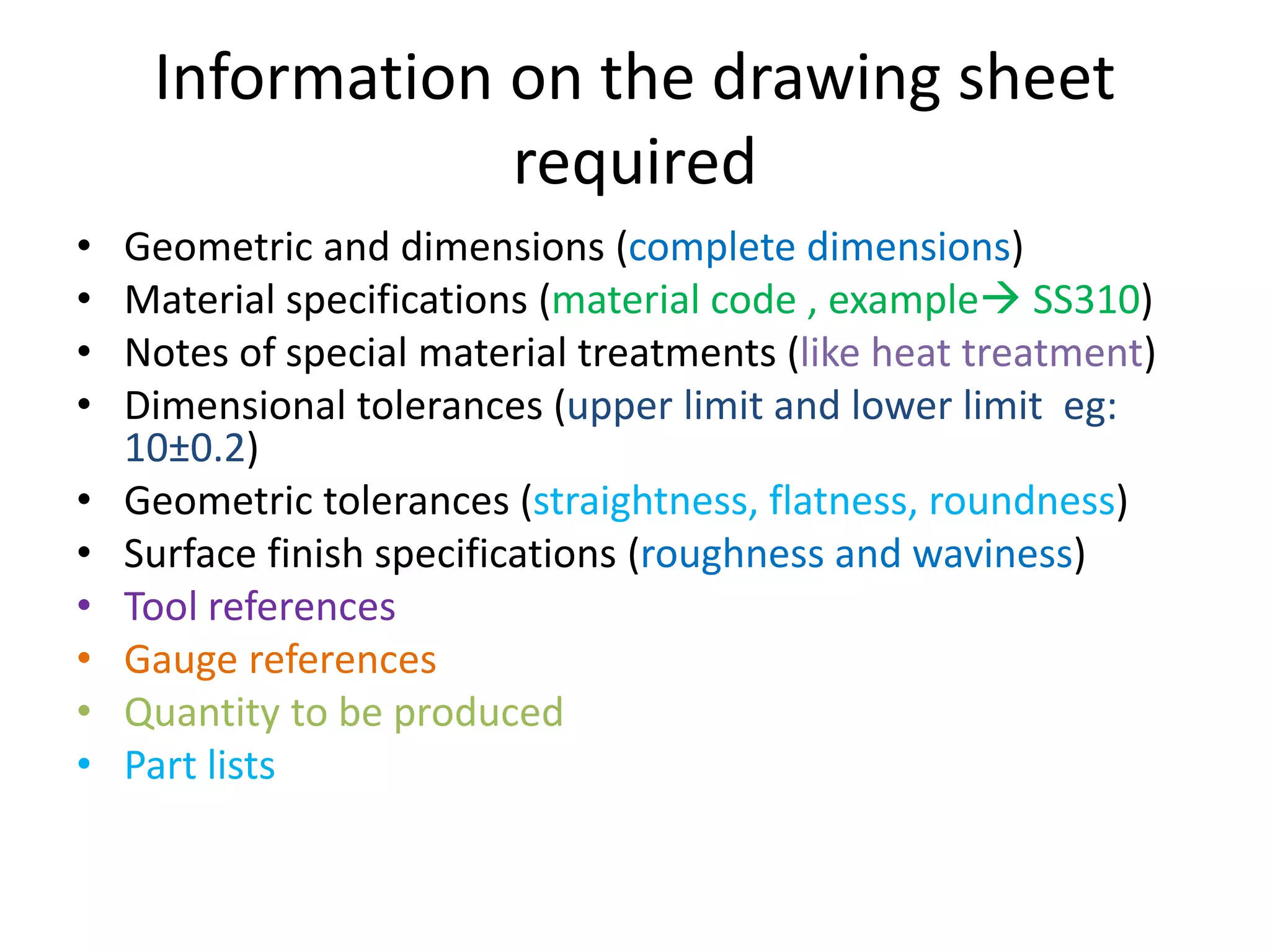
Information on thedrawing sheet
required
• Geometric and dimensions (complete dimensions)
• Material specifications (material code , example SS310)
• Notes of special material treatments (like heat treatment)
• Dimensional tolerances (upper limit and lower limit eg:
10±0.2)
• Geometric tolerances (straightness, flatness, roundness)
• Surface finish specifications (roughness and waviness)
• Tool references
• Gauge references
• Quantity to be produced
• Part lists
28.
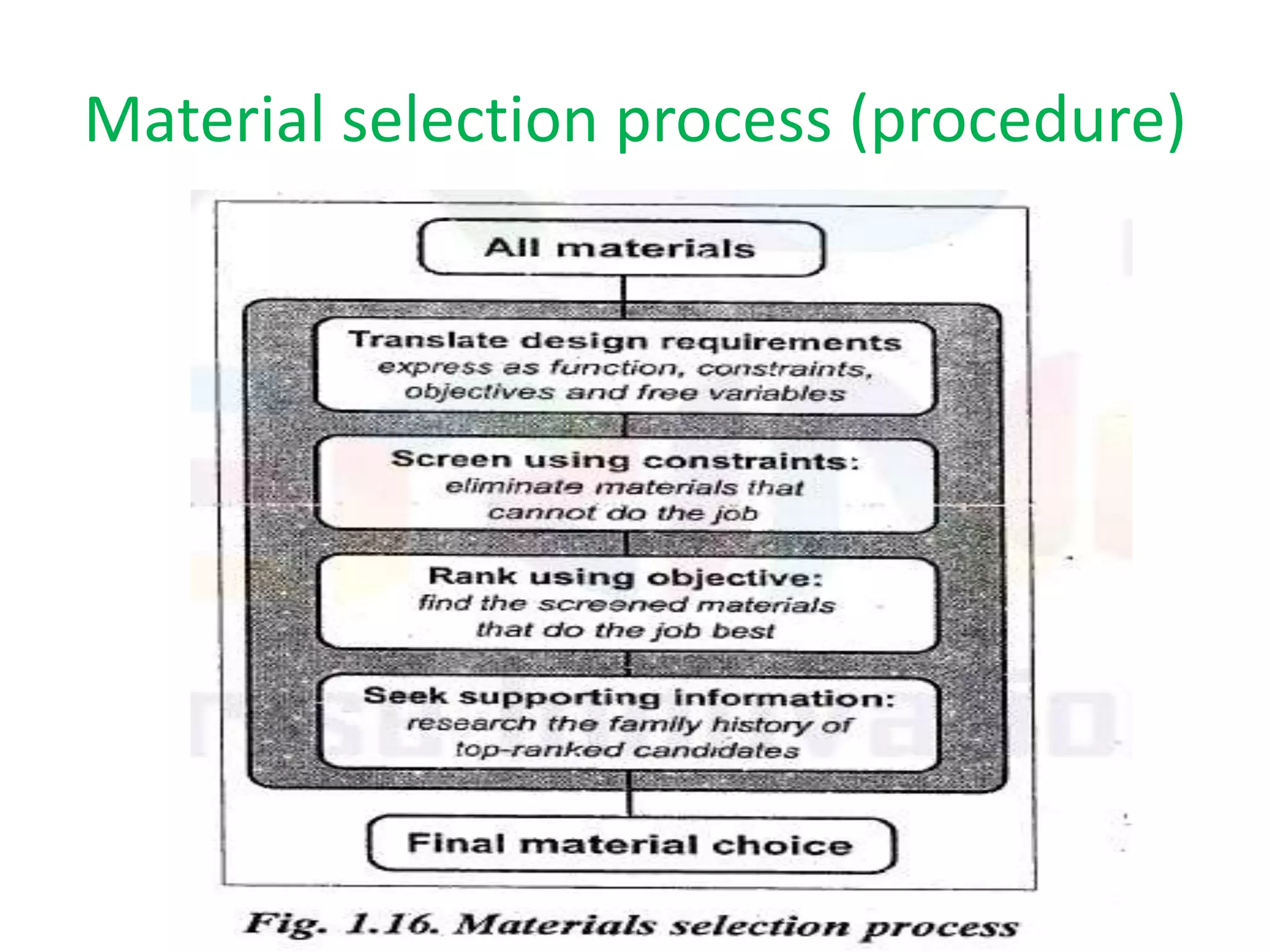
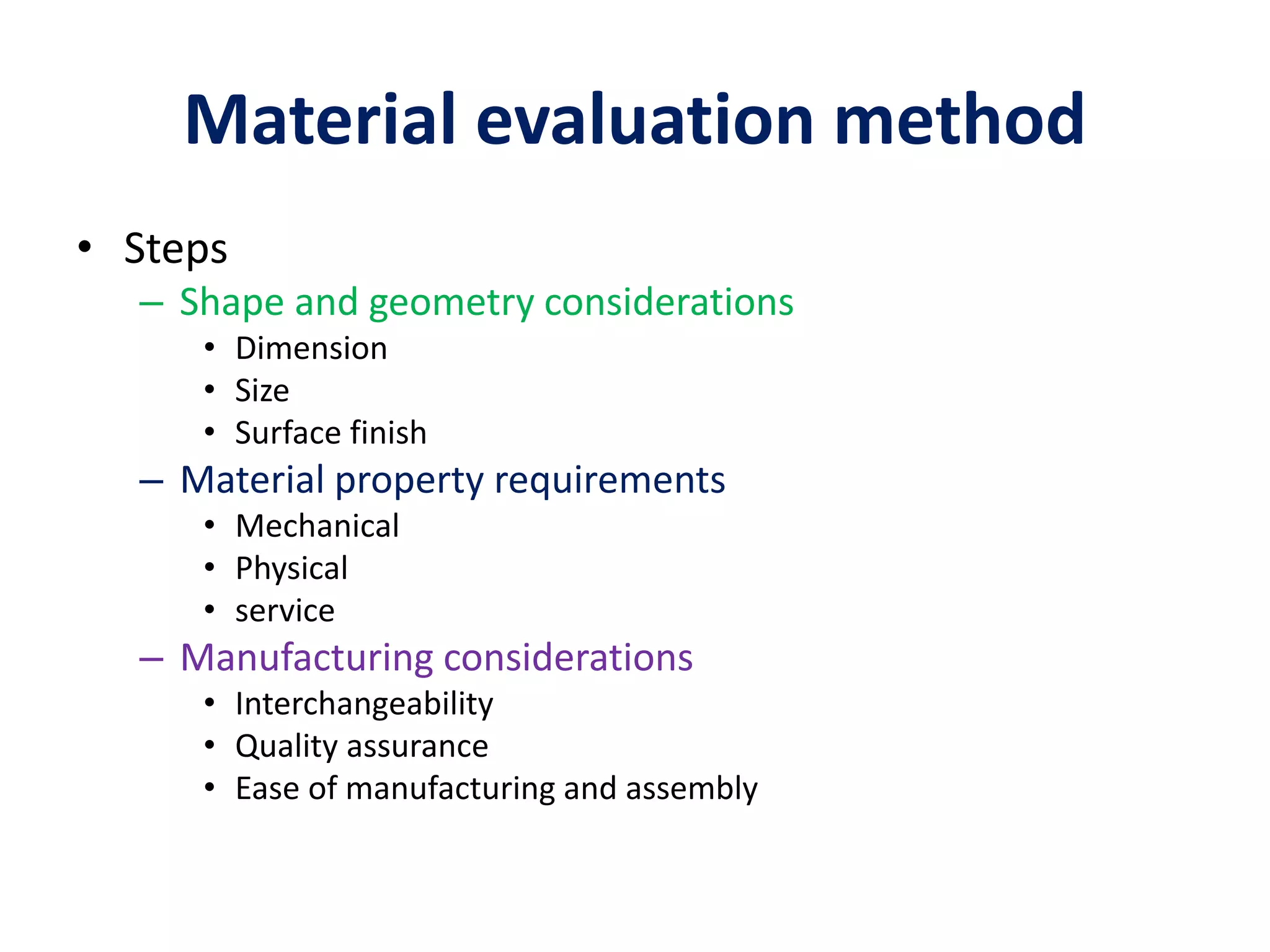
Material Evaluation
• Secondactivity of process planning.
• Material selection (done by design engineer)
– Choose the material
• Material evaluation (done by process planning
engineer)
– Check the chosen material for further process
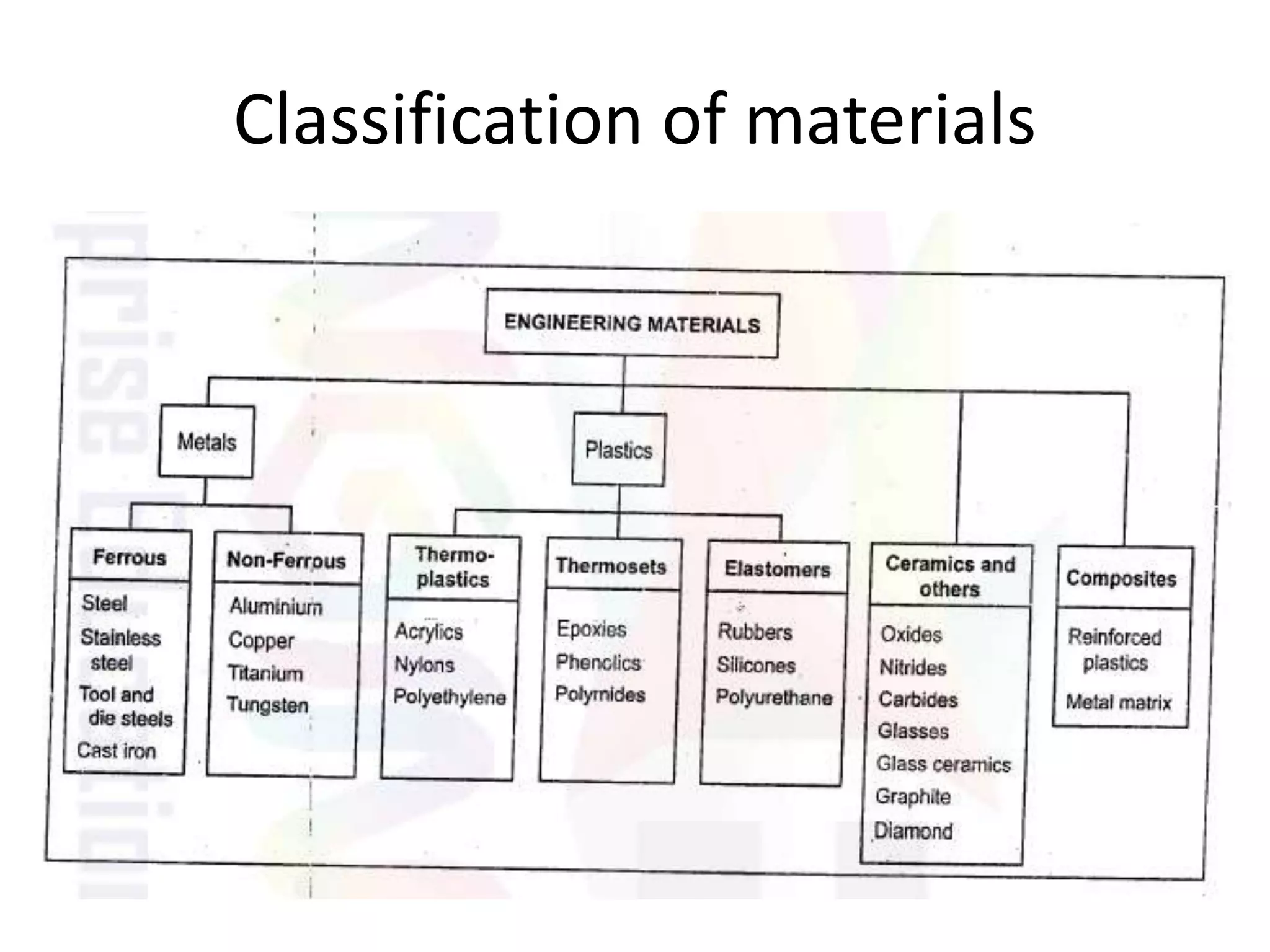
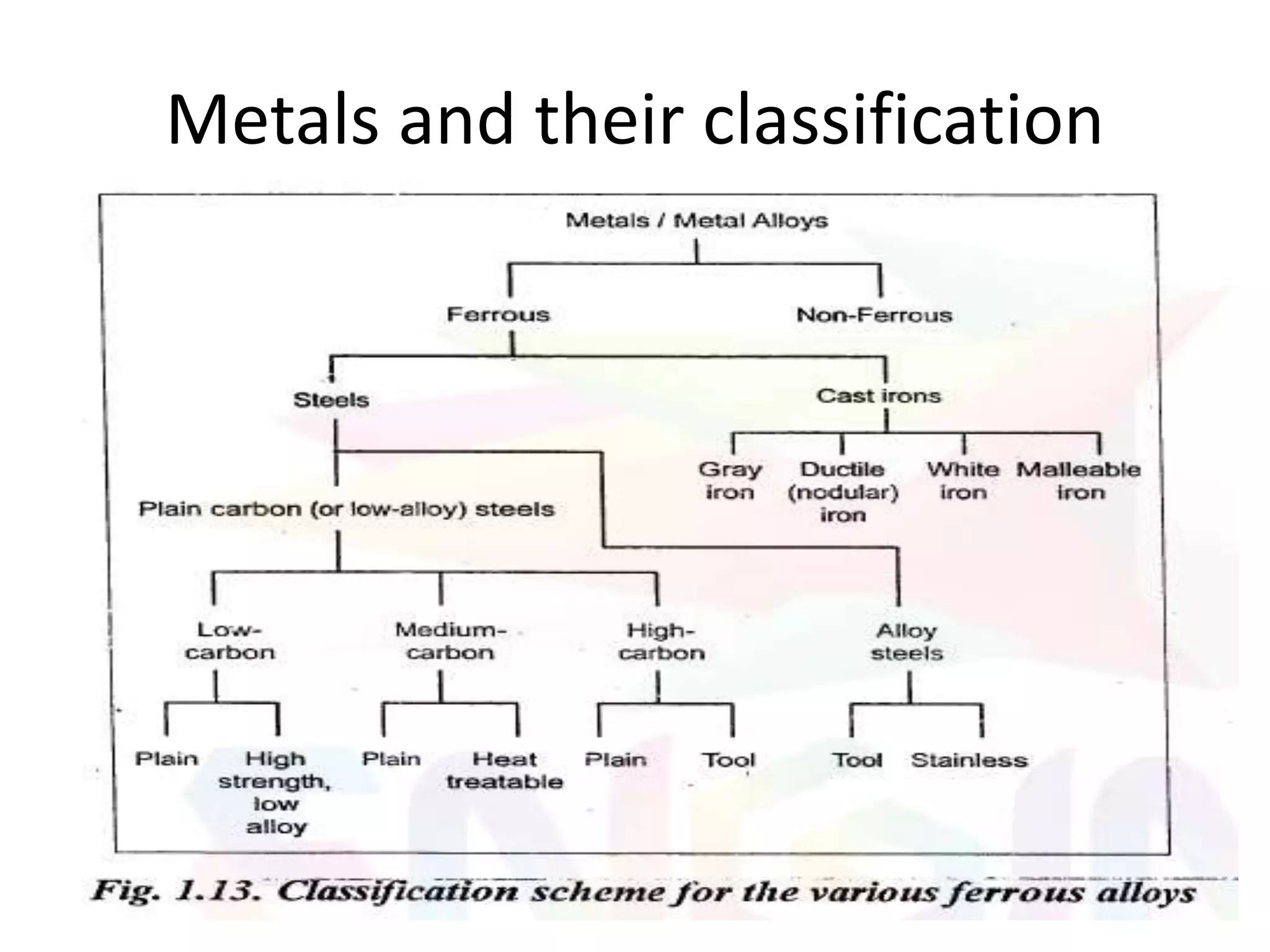
Steels
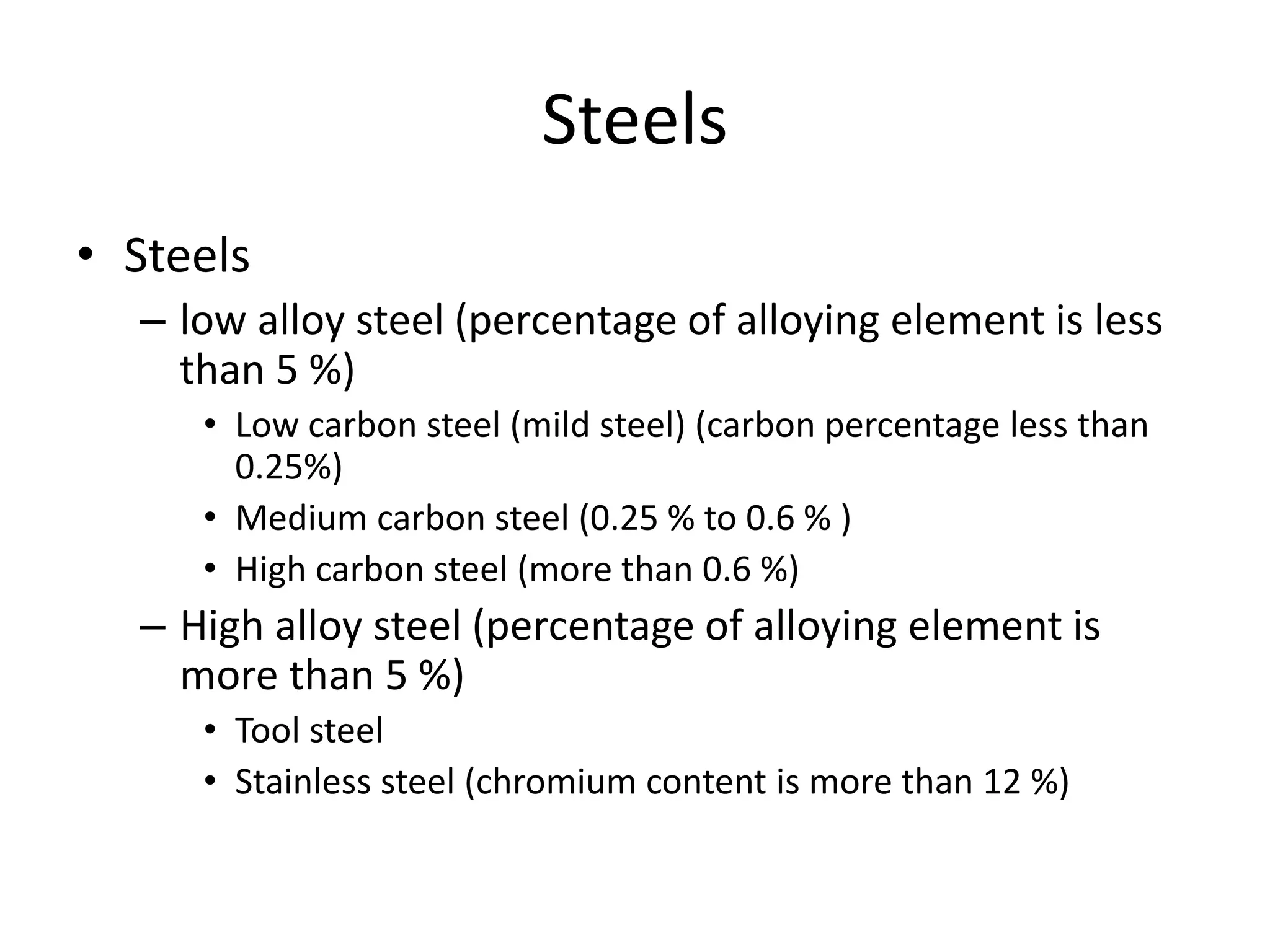
• Steels
– lowalloy steel (percentage of alloying element is less
than 5 %)
• Low carbon steel (mild steel) (carbon percentage less than
0.25%)
• Medium carbon steel (0.25 % to 0.6 % )
• High carbon steel (more than 0.6 %)
– High alloy steel (percentage of alloying element is
more than 5 %)
• Tool steel
• Stainless steel (chromium content is more than 12 %)
35.
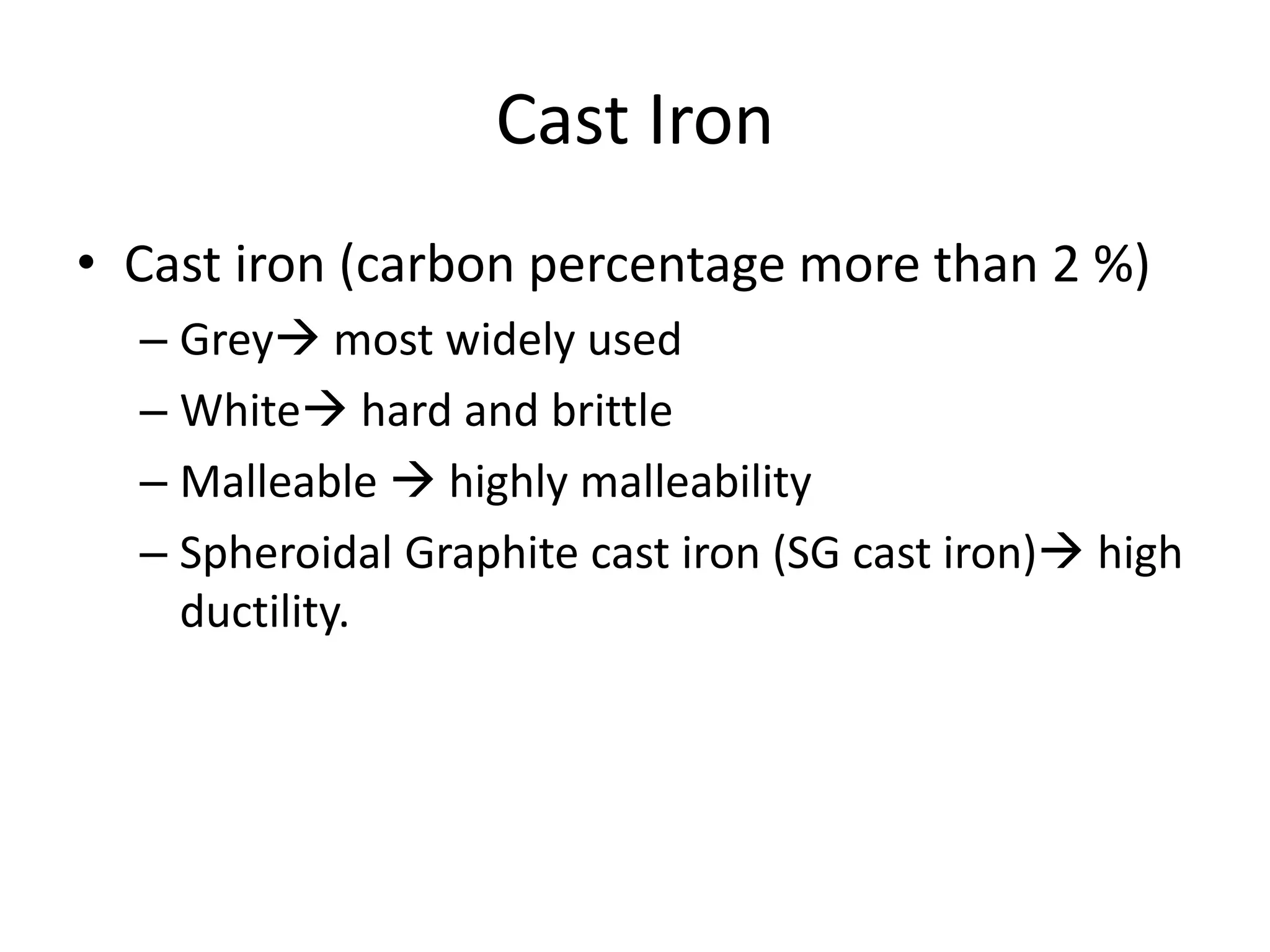
Cast Iron
• Castiron (carbon percentage more than 2 %)
– Grey most widely used
– White hard and brittle
– Malleable highly malleability
– Spheroidal Graphite cast iron (SG cast iron) high
ductility.
36.
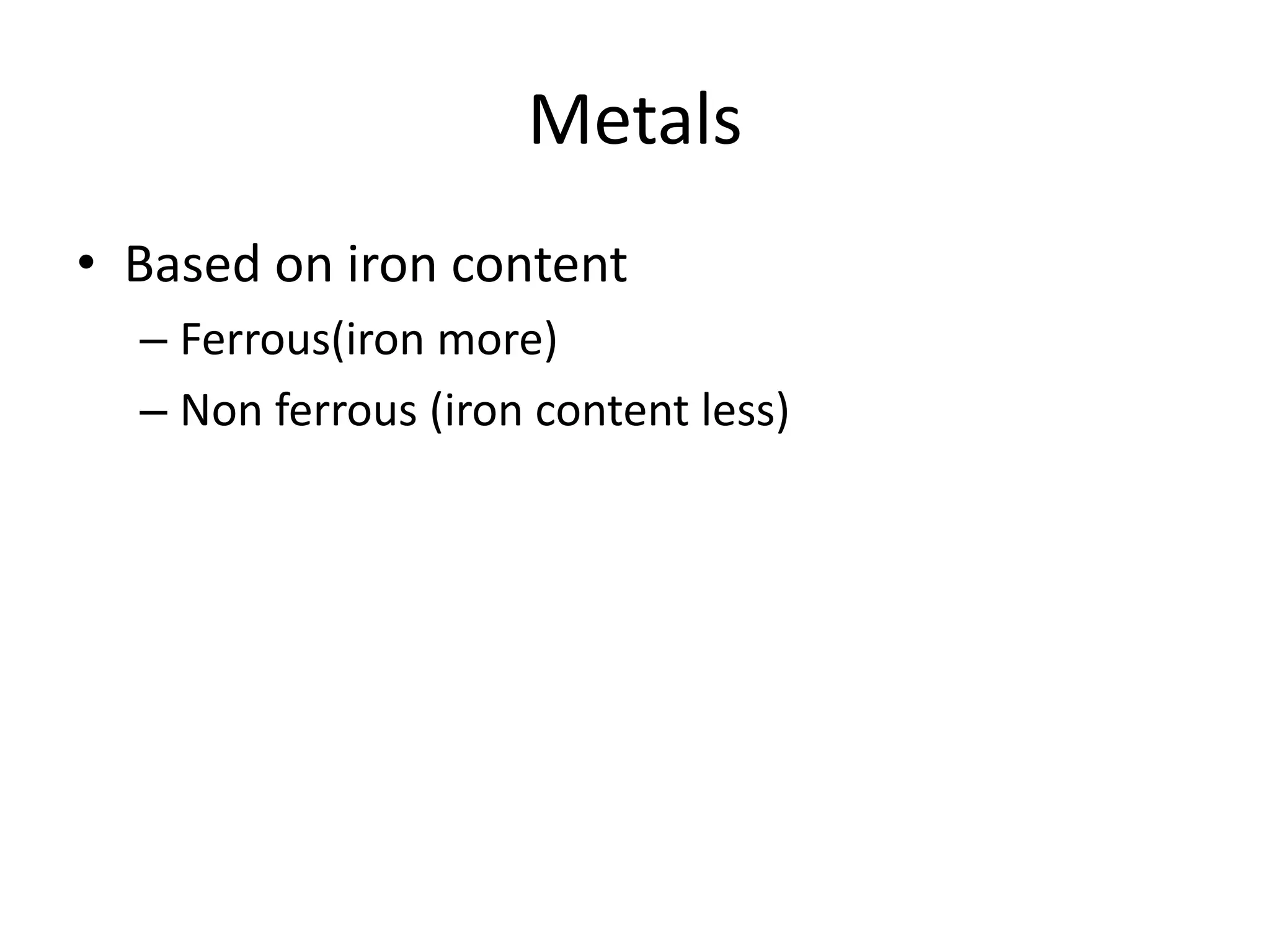
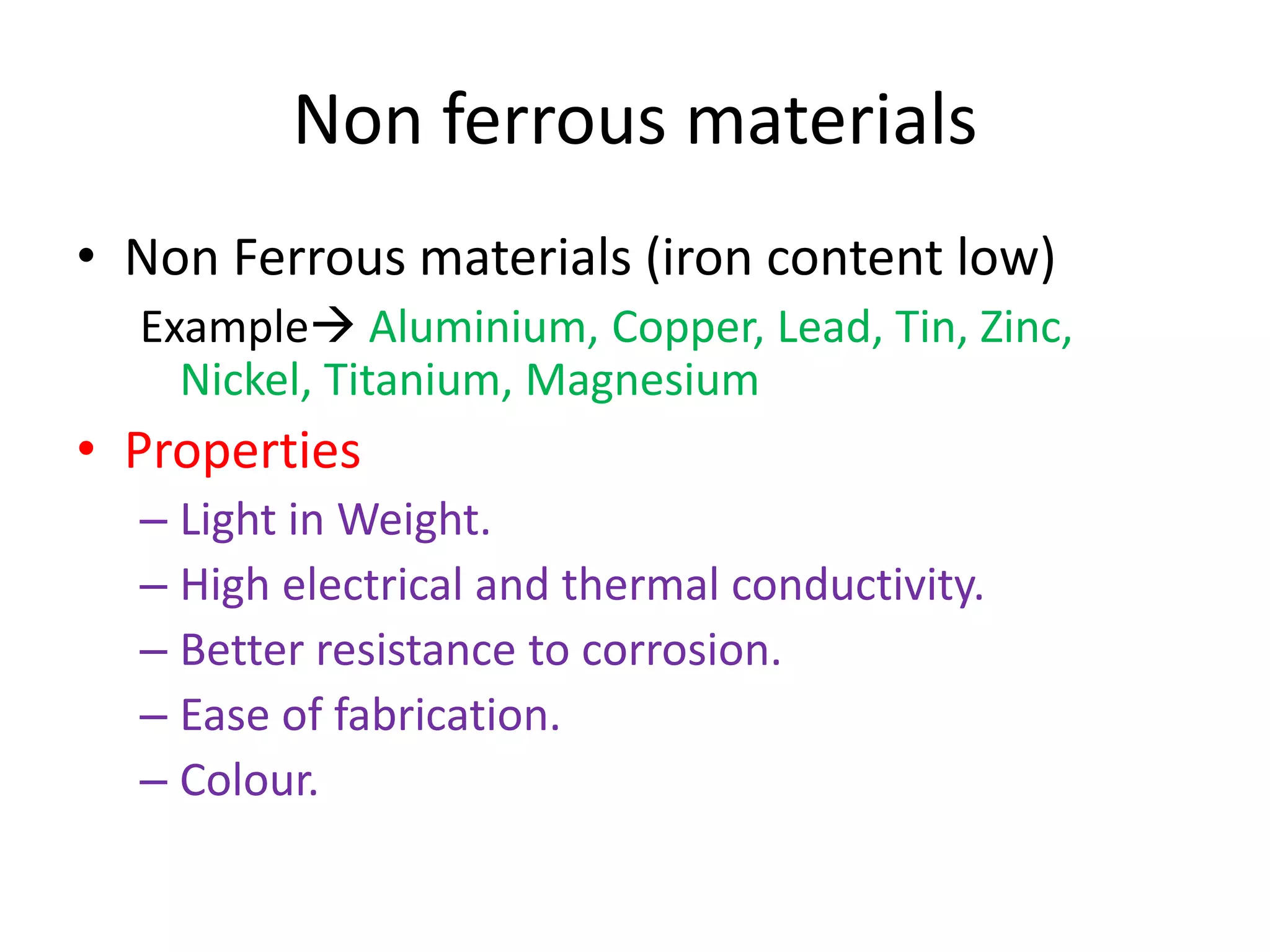
Non ferrous materials
•Non Ferrous materials (iron content low)
Example Aluminium, Copper, Lead, Tin, Zinc,
Nickel, Titanium, Magnesium
• Properties
– Light in Weight.
– High electrical and thermal conductivity.
– Better resistance to corrosion.
– Ease of fabrication.
– Colour.
37.
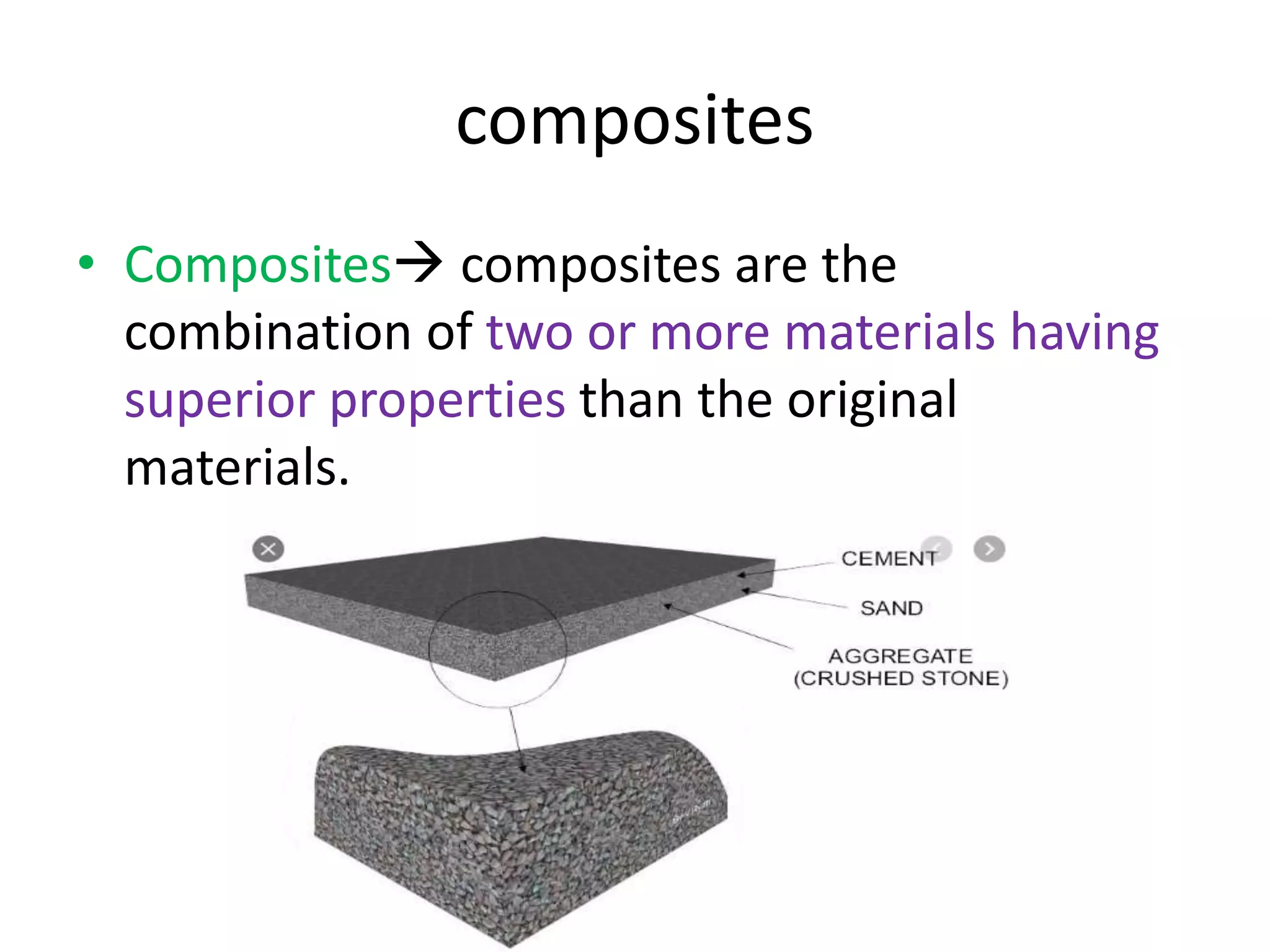
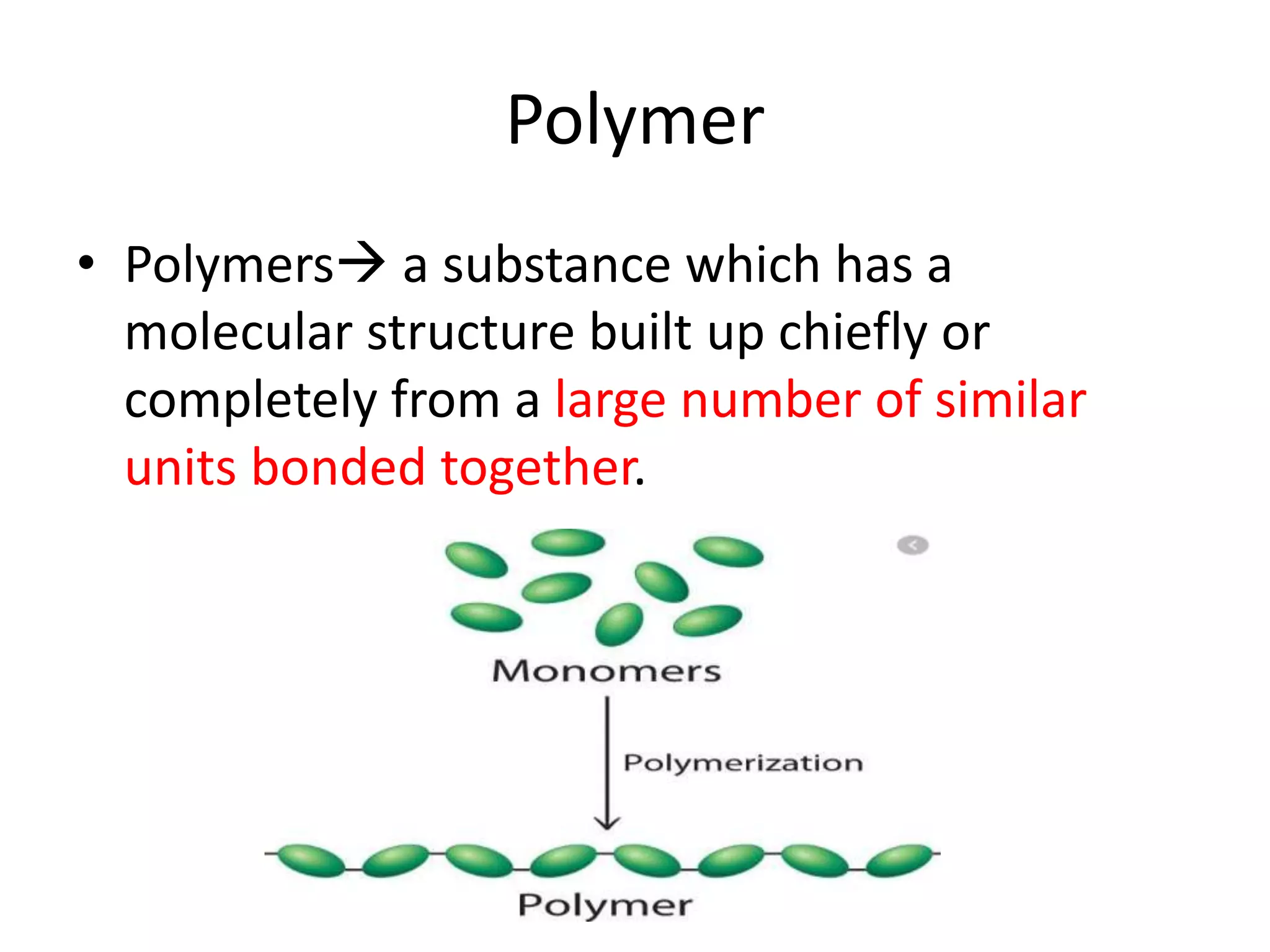
Polymer
• Polymers asubstance which has a
molecular structure built up chiefly or
completely from a large number of similar
units bonded together.
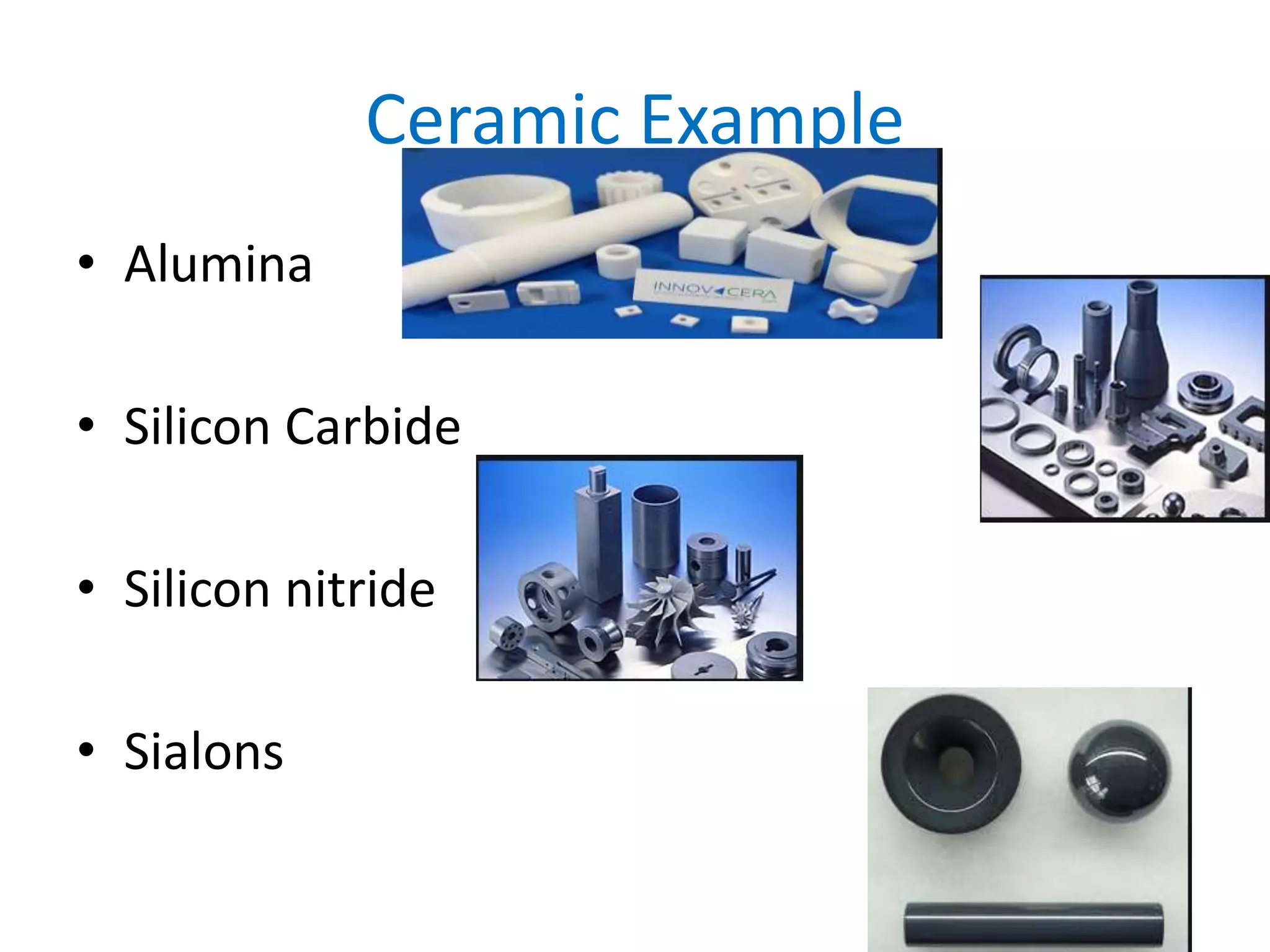
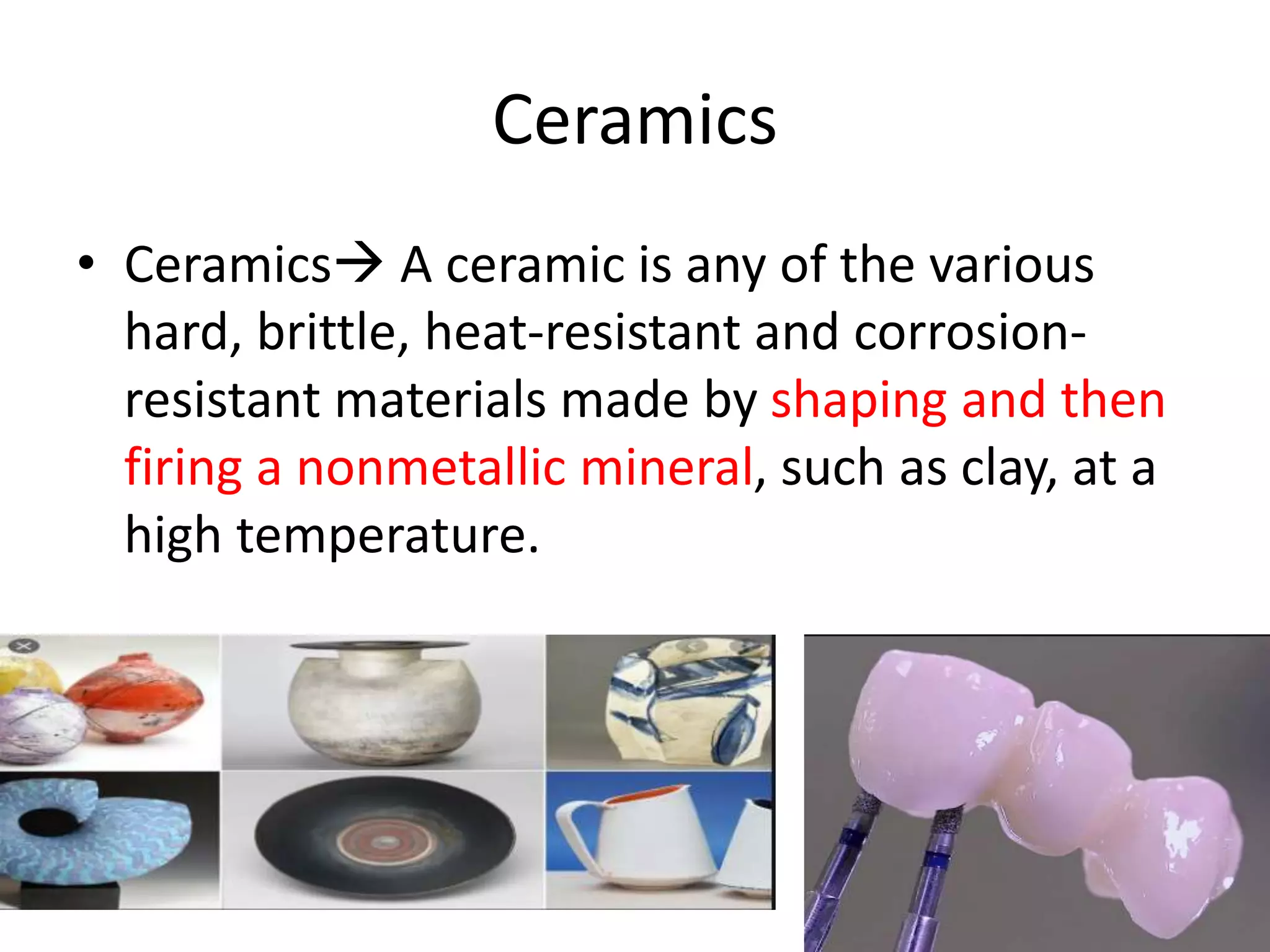
Ceramics
• Ceramics Aceramic is any of the various
hard, brittle, heat-resistant and corrosion-
resistant materials made by shaping and then
firing a nonmetallic mineral, such as clay, at a
high temperature.
40.
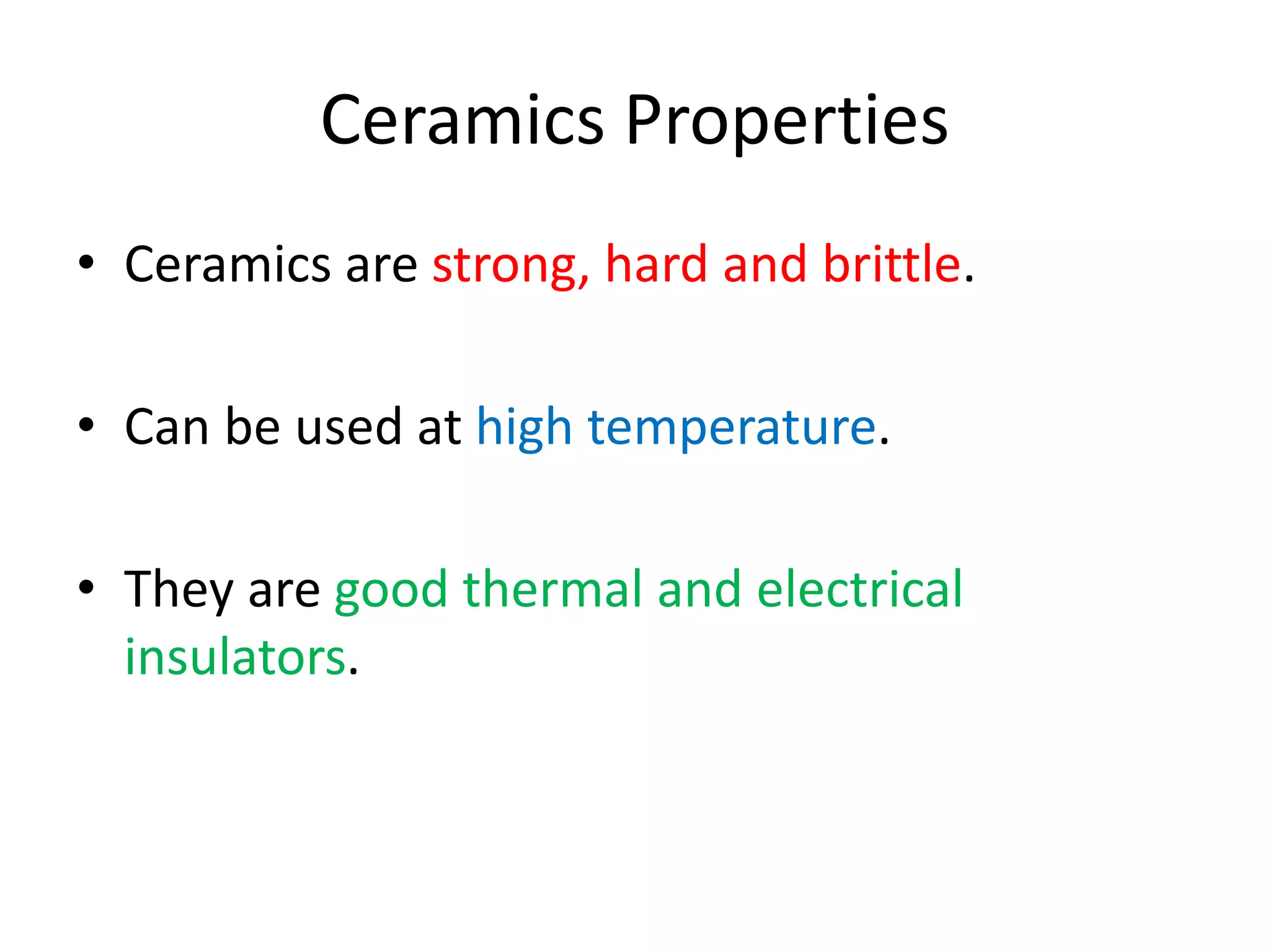
Ceramics Properties
• Ceramicsare strong, hard and brittle.
• Can be used at high temperature.
• They are good thermal and electrical
insulators.
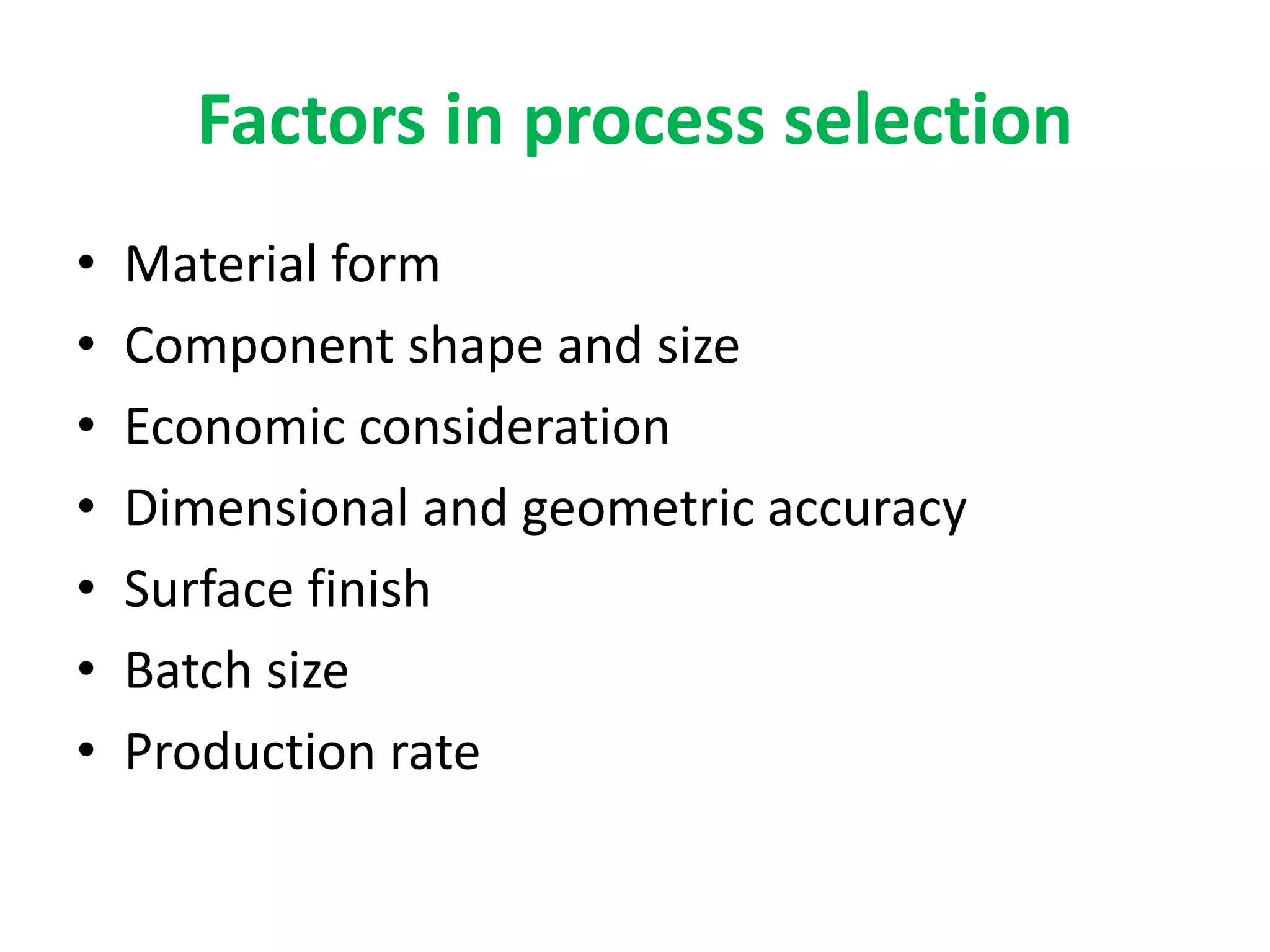
Factors in processselection
• Material form
• Component shape and size
• Economic consideration
• Dimensional and geometric accuracy
• Surface finish
• Batch size
• Production rate
50.
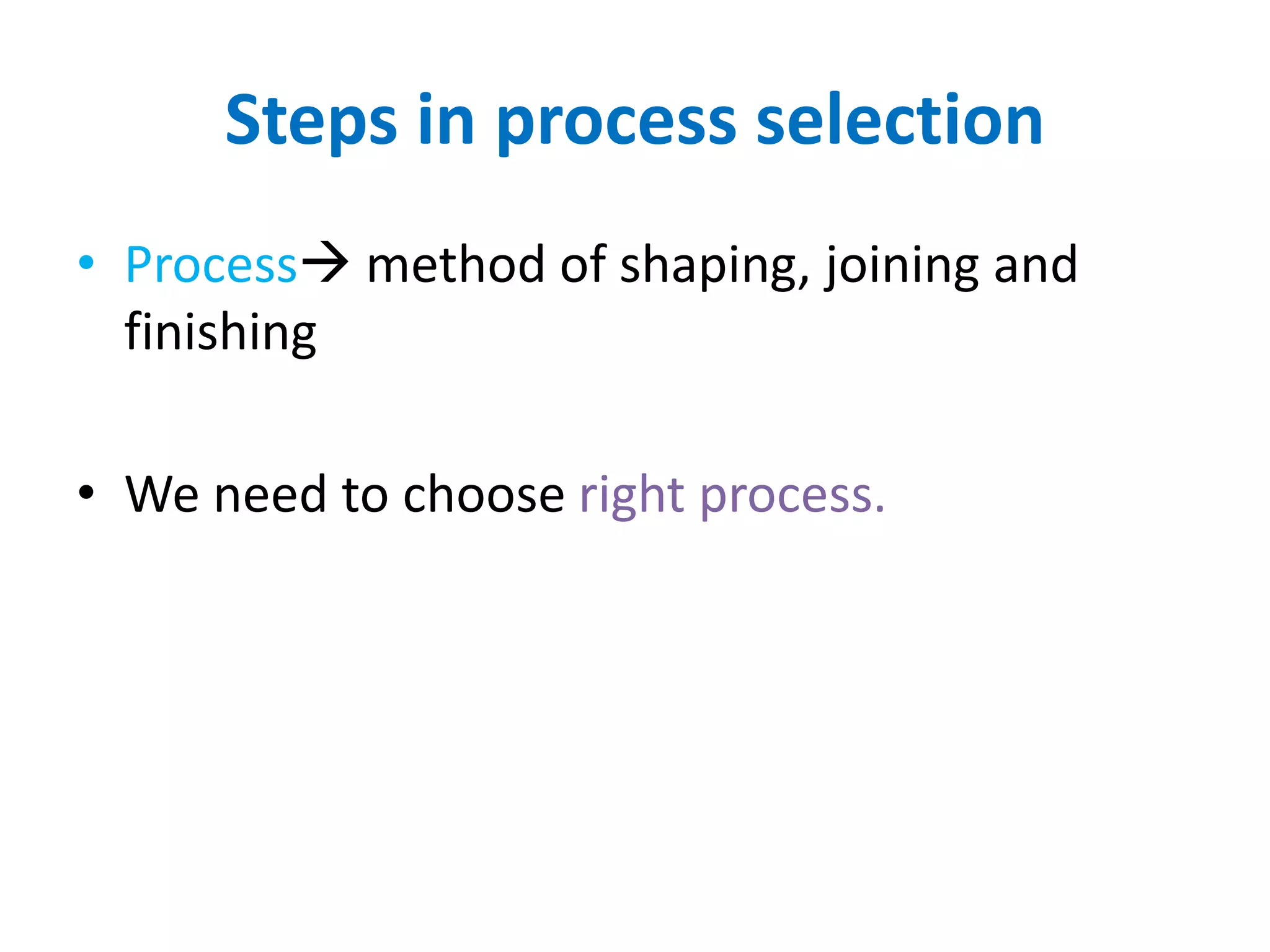
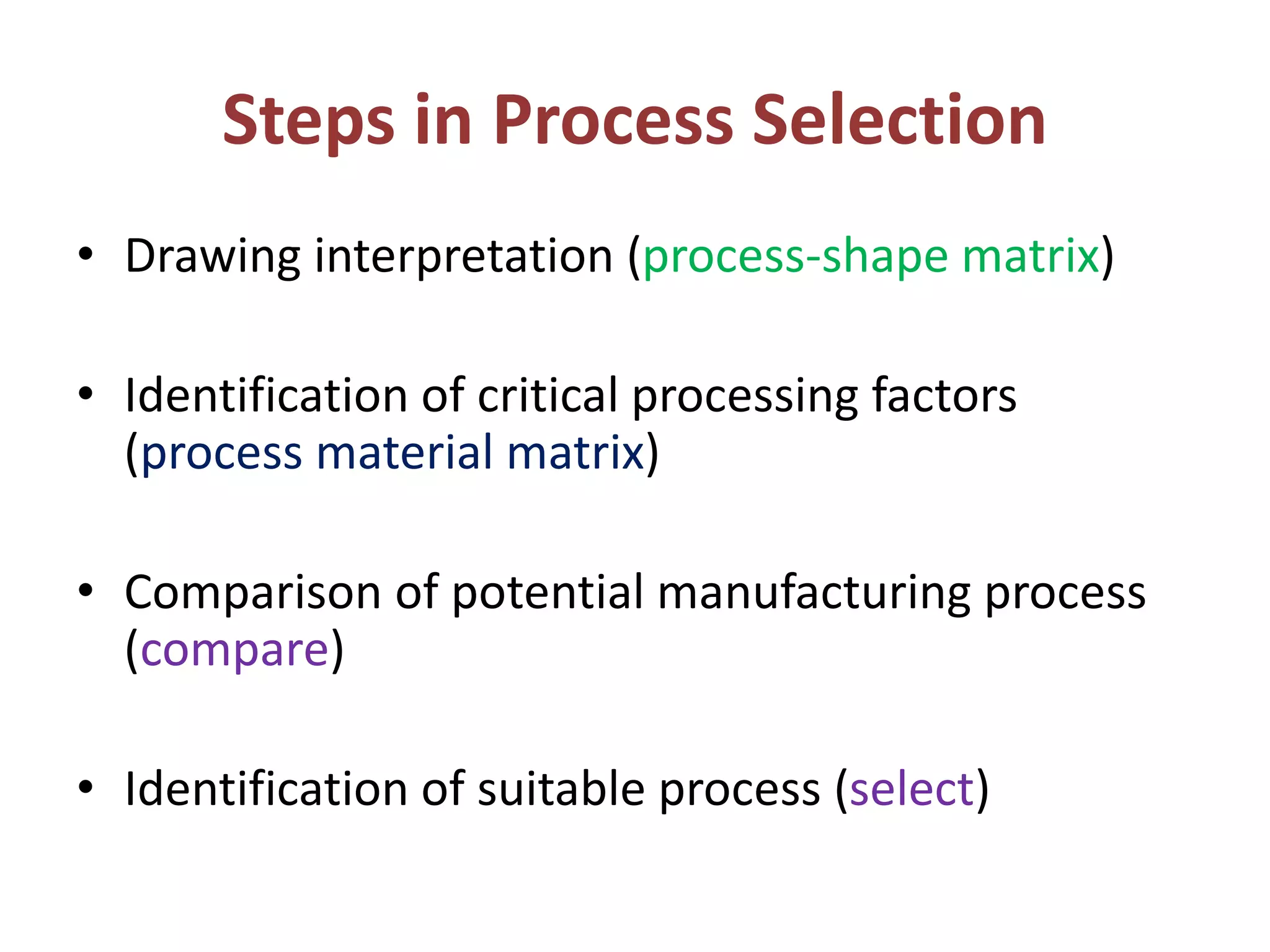
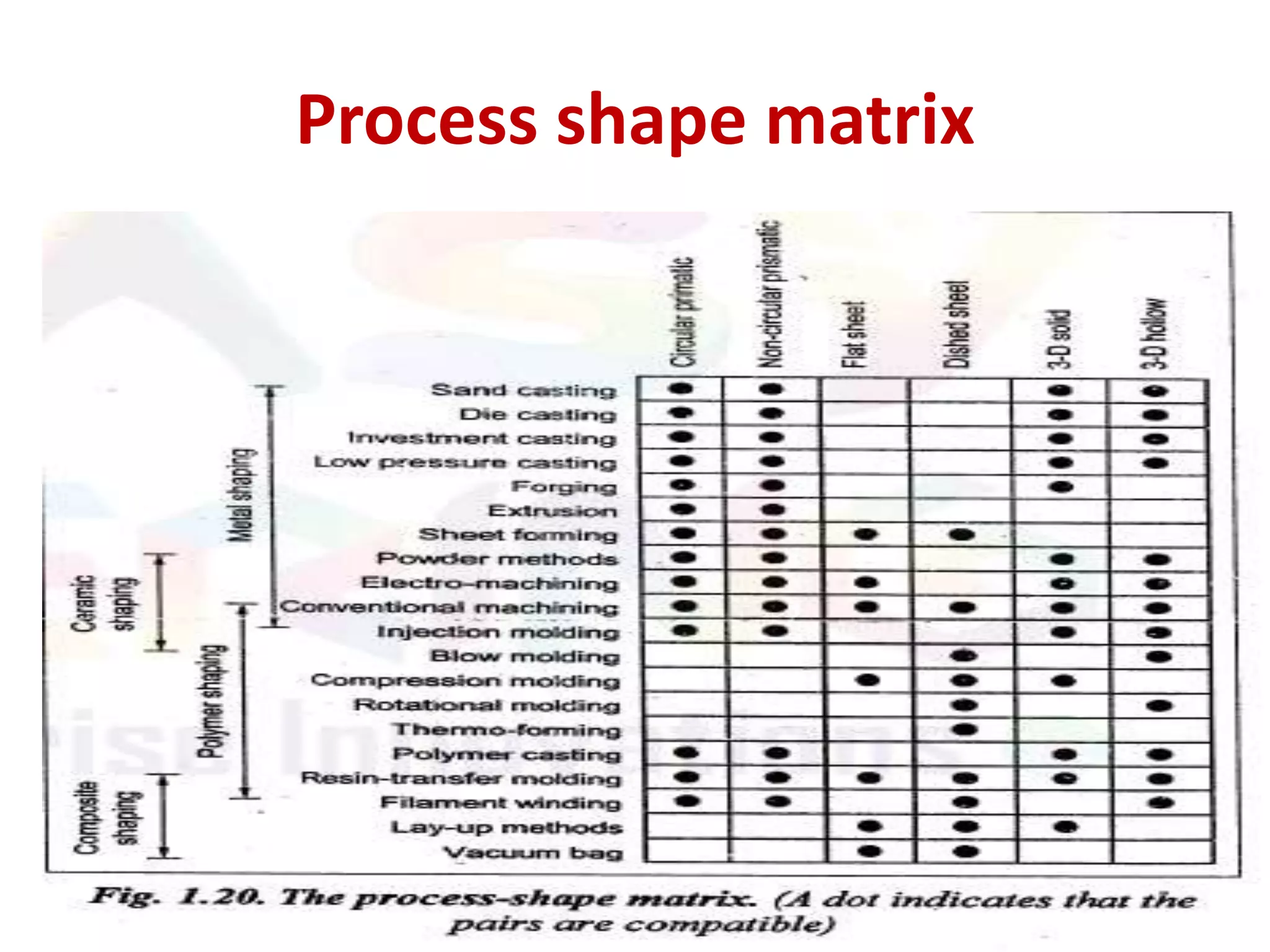
Steps in ProcessSelection
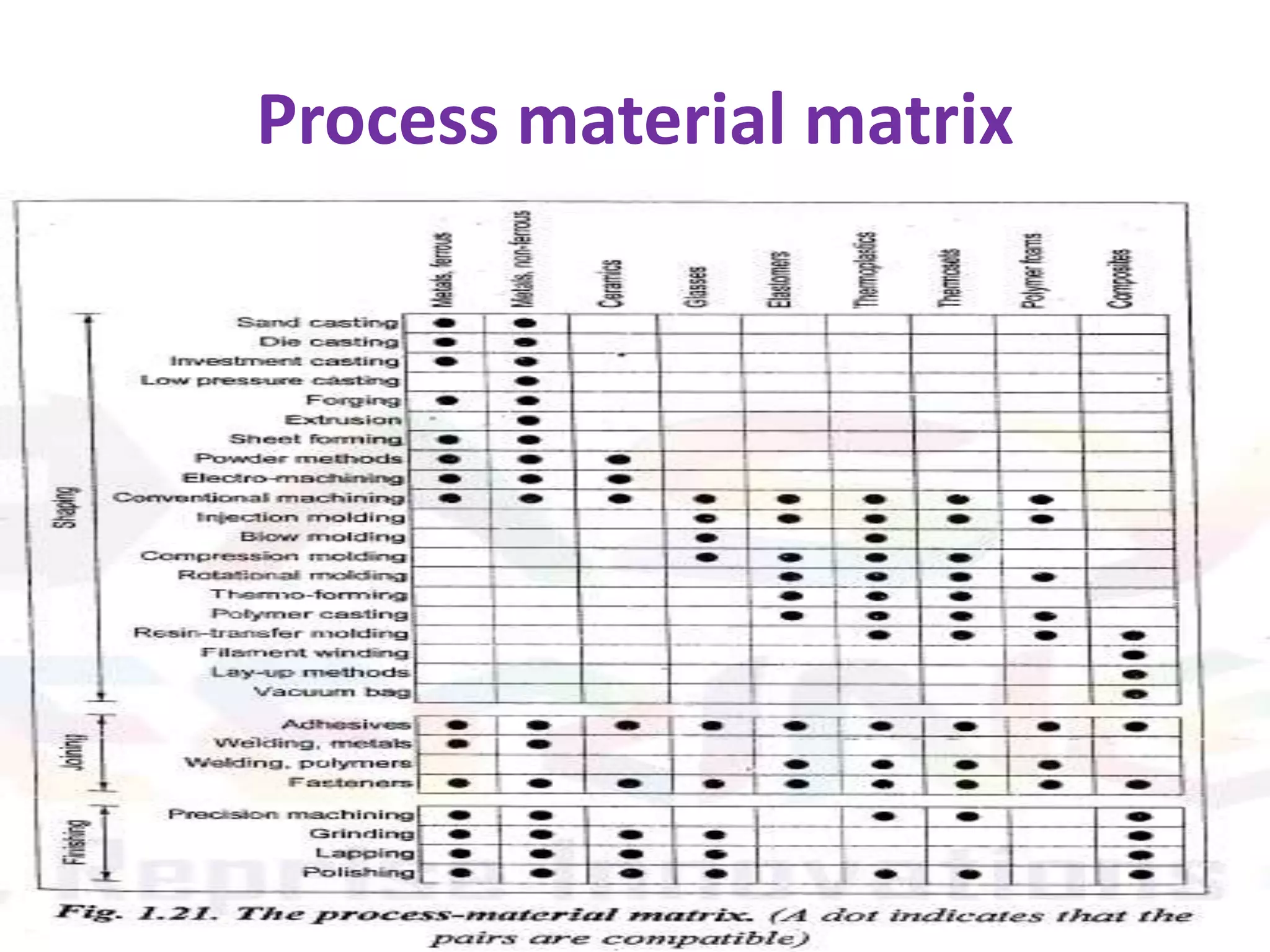
• Drawing interpretation (process-shape matrix)
• Identification of critical processing factors
(process material matrix)
• Comparison of potential manufacturing process
(compare)
• Identification of suitable process (select)
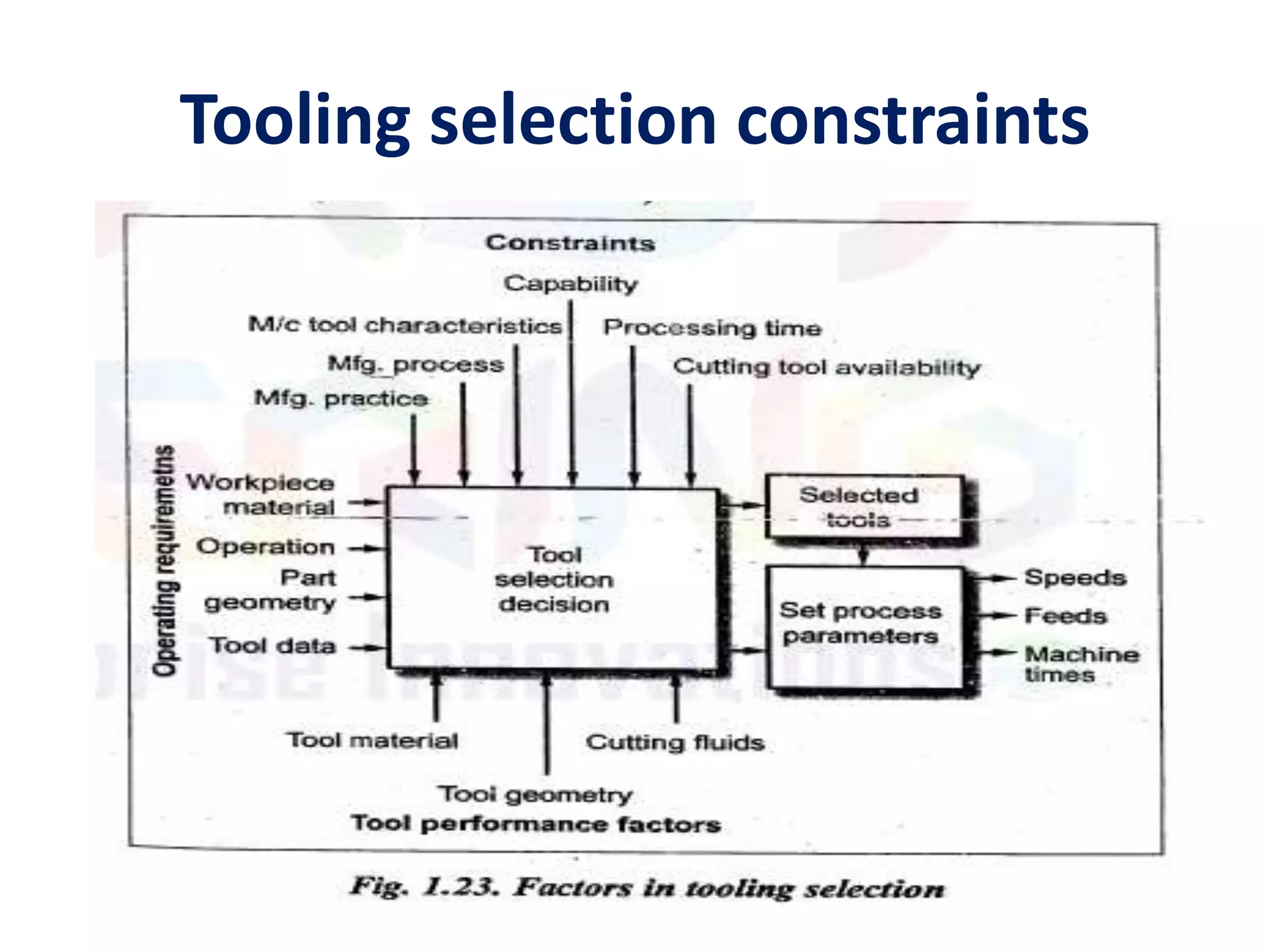
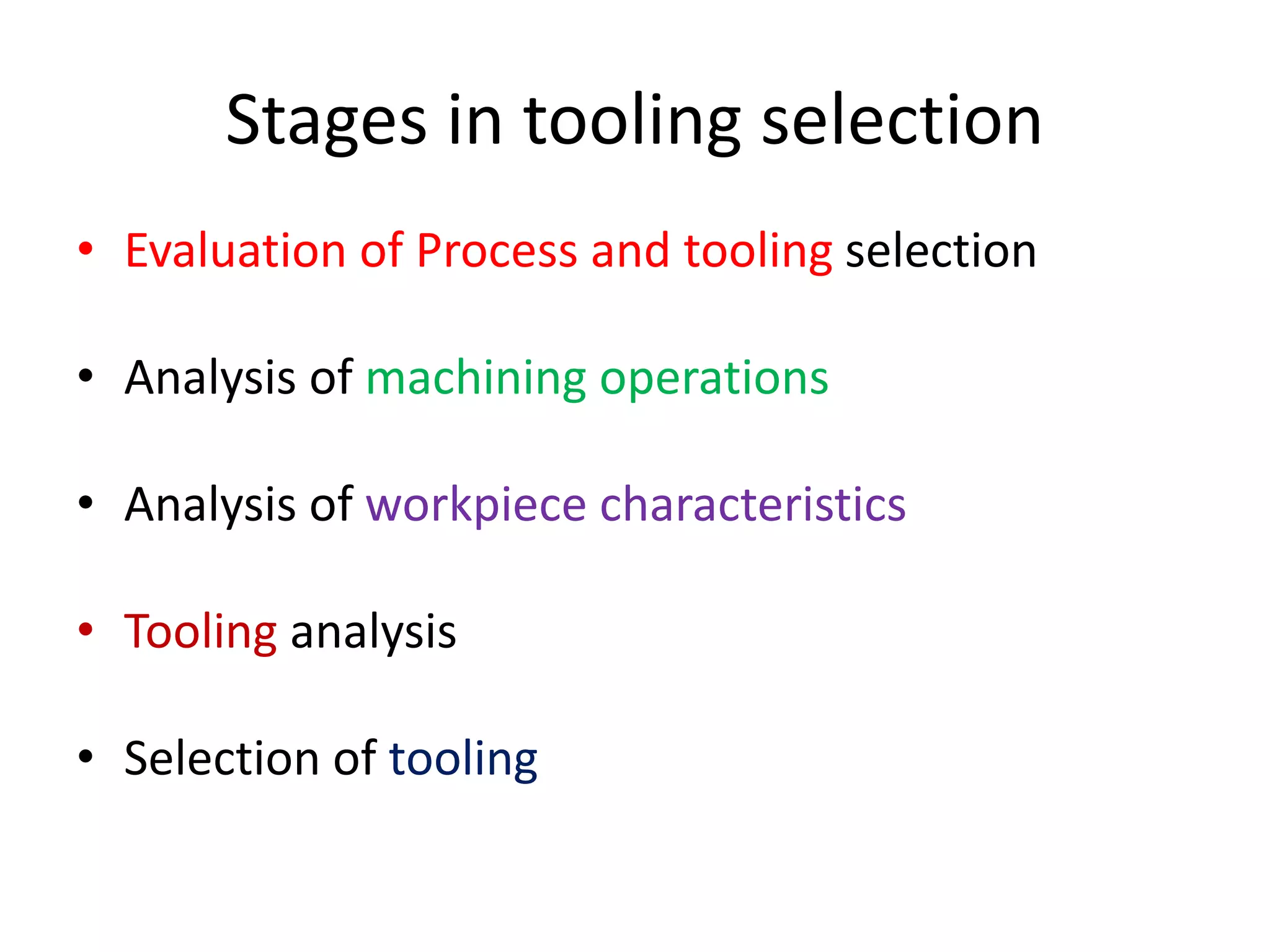
Stages in toolingselection
• Evaluation of Process and tooling selection
• Analysis of machining operations
• Analysis of workpiece characteristics
• Tooling analysis
• Selection of tooling
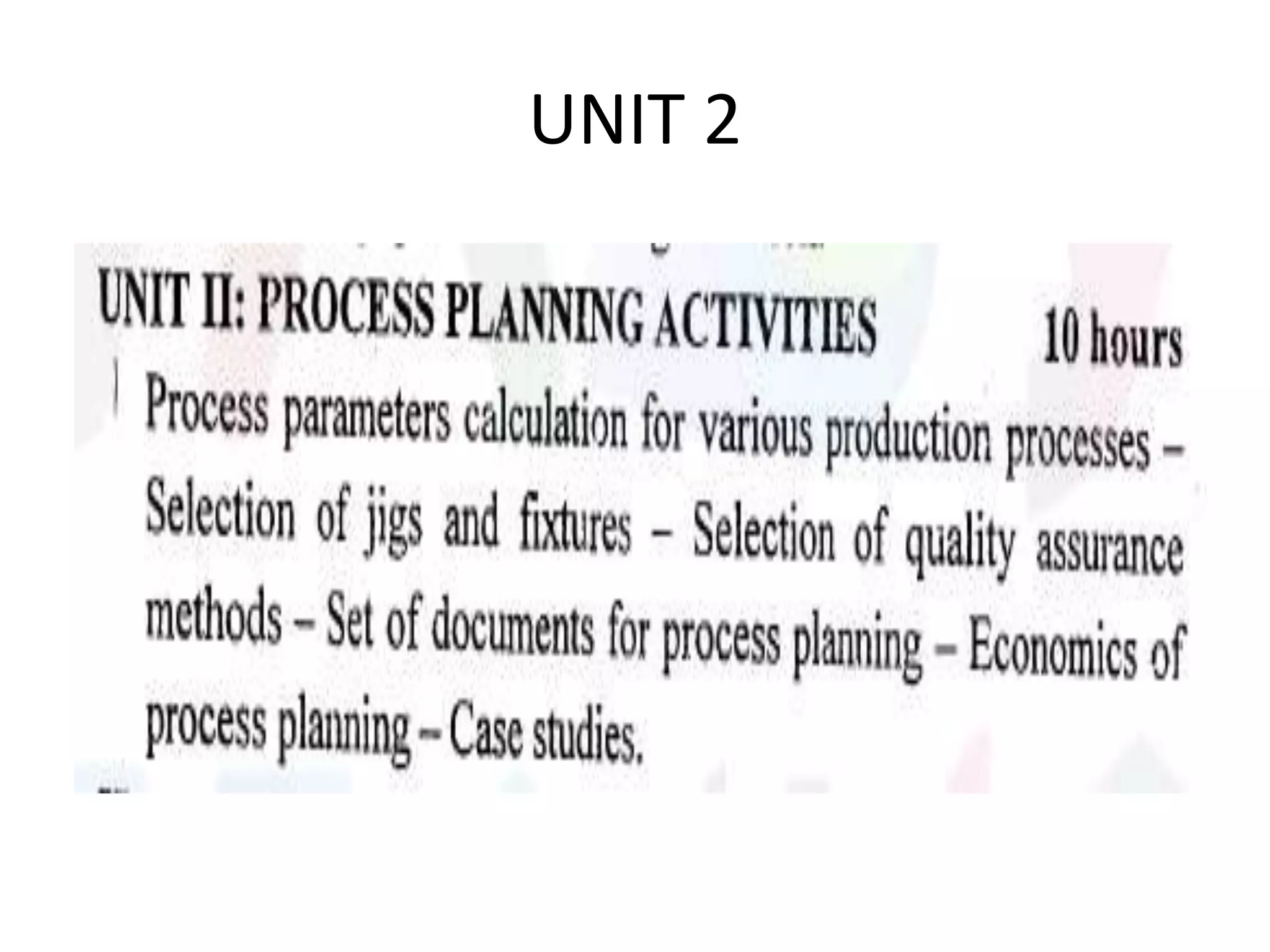
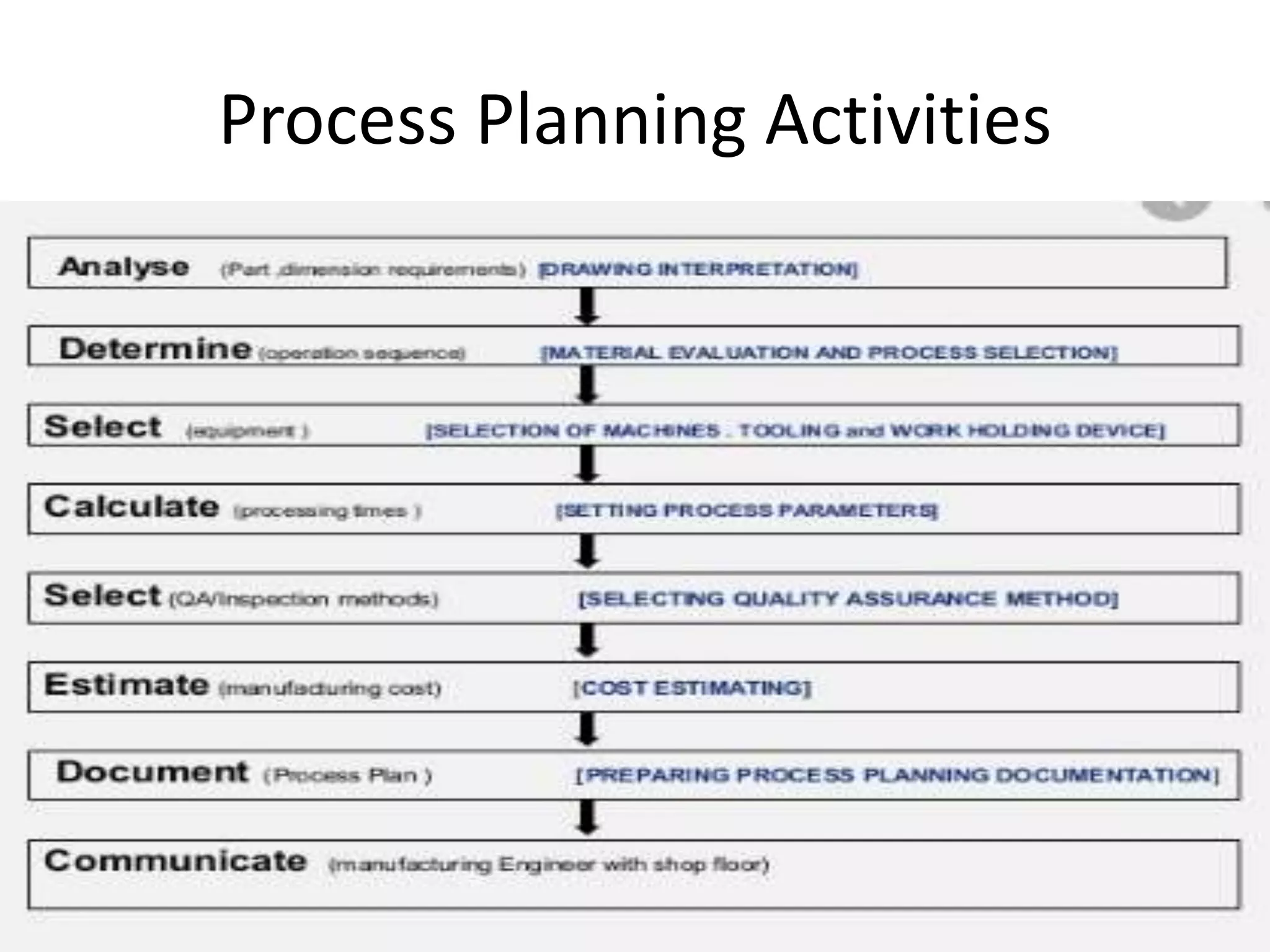
Process Planning Activities
•Process parameter calculation for various
production process
• Selection of jigs and fixtures
• Selection of quality assurance methods
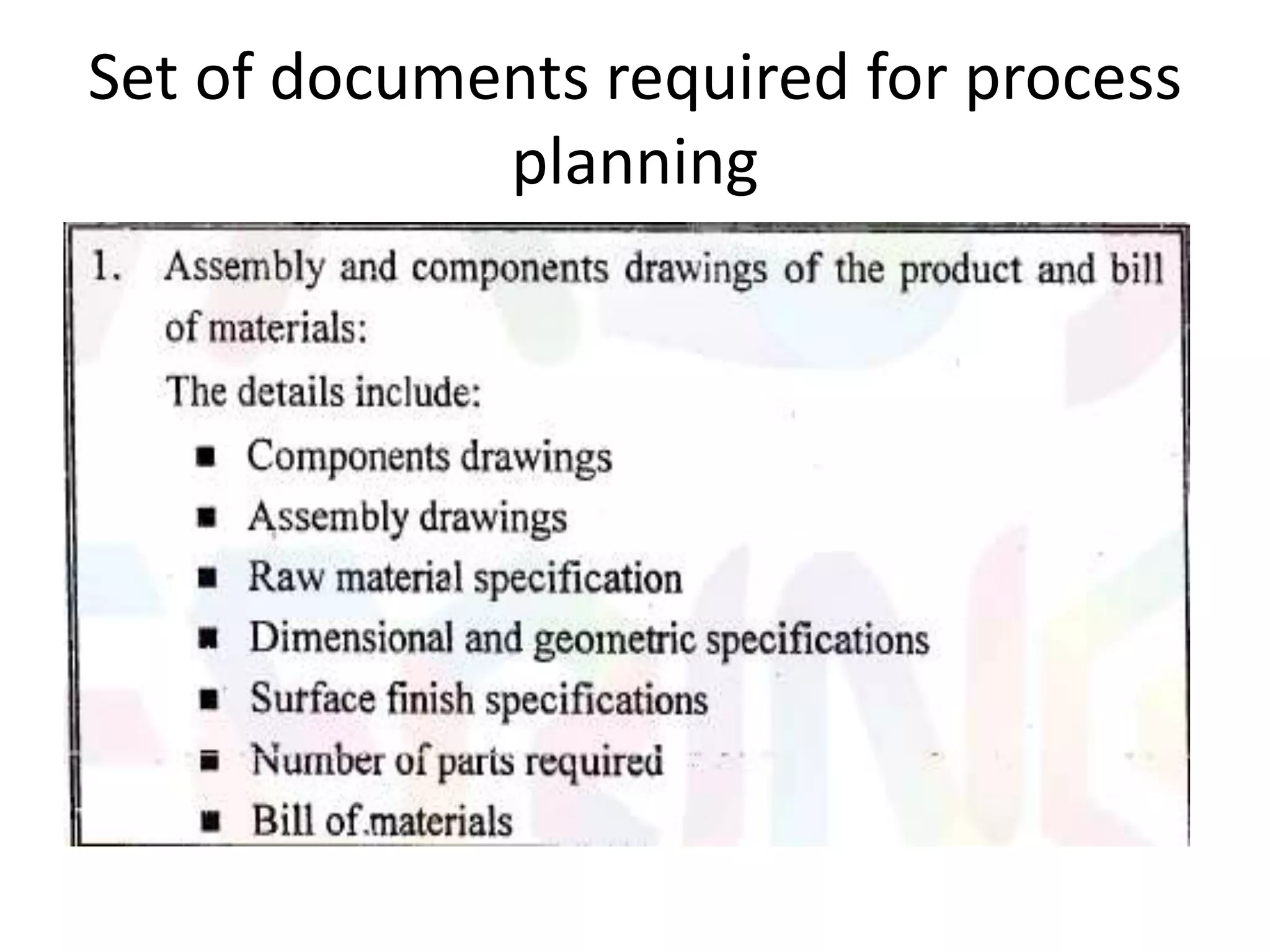
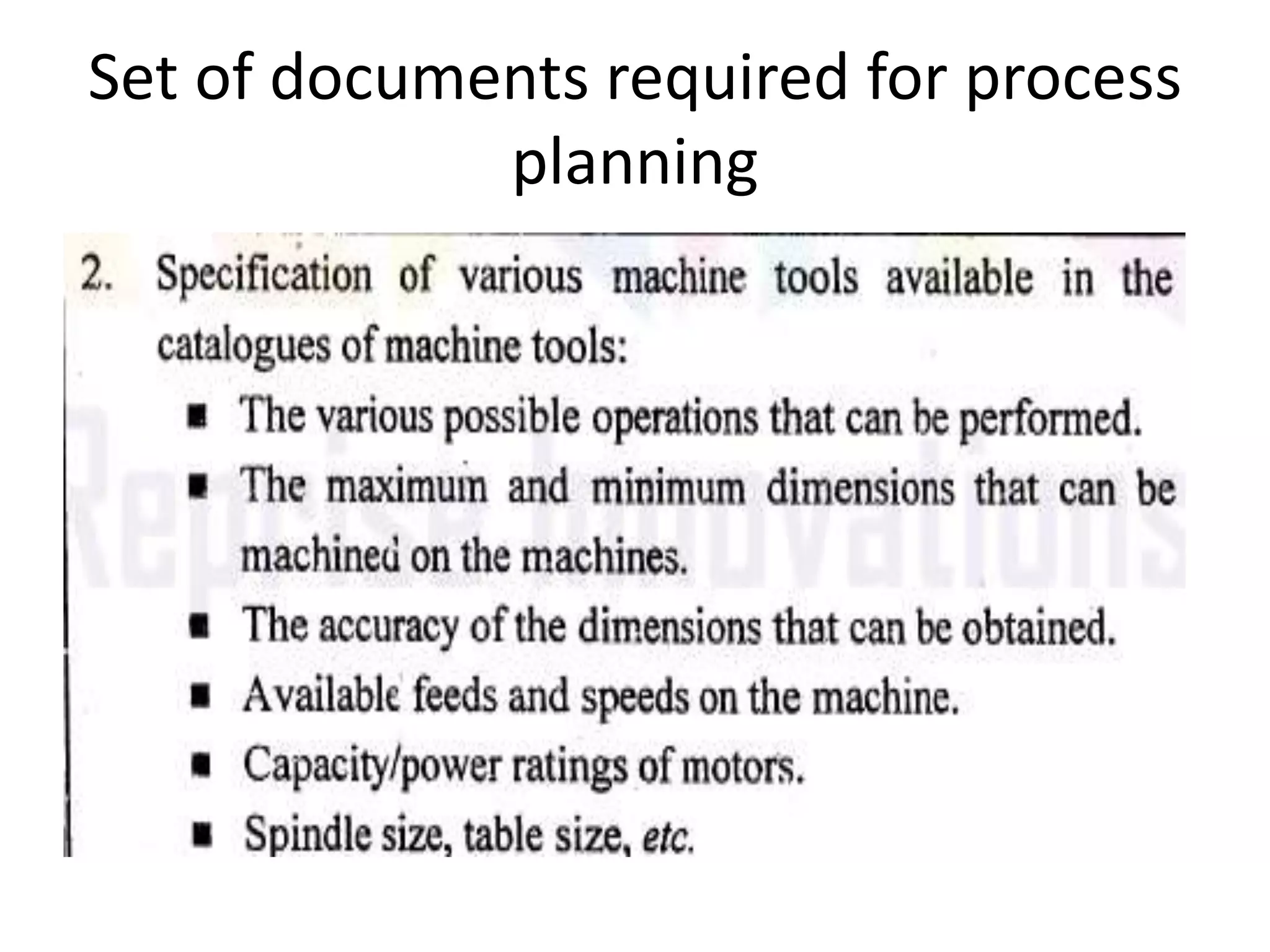
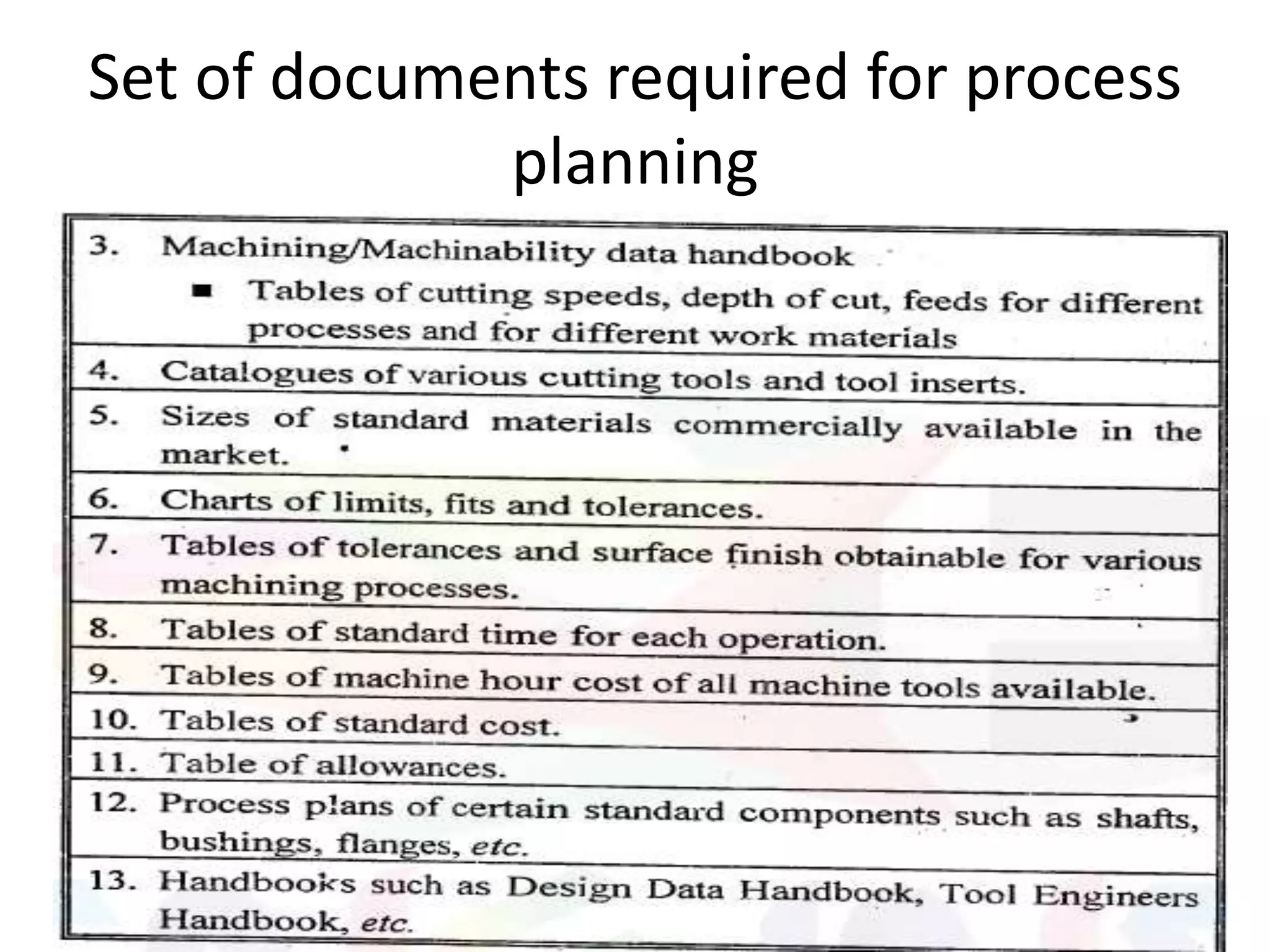
• Set of documents for process planning
• Economics of process planning
• Case studies
61.
Process Parameter calculationfor
various production process
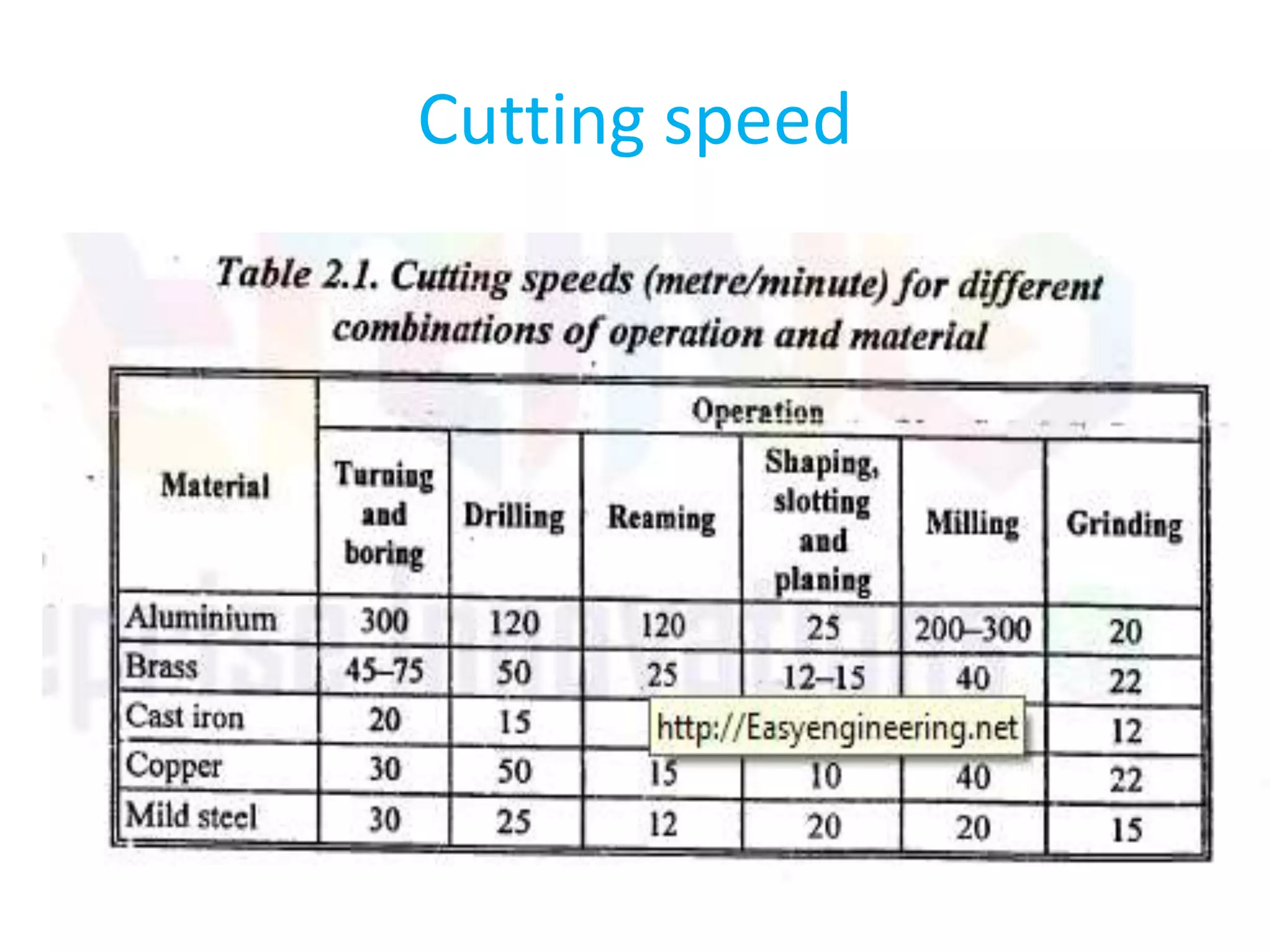
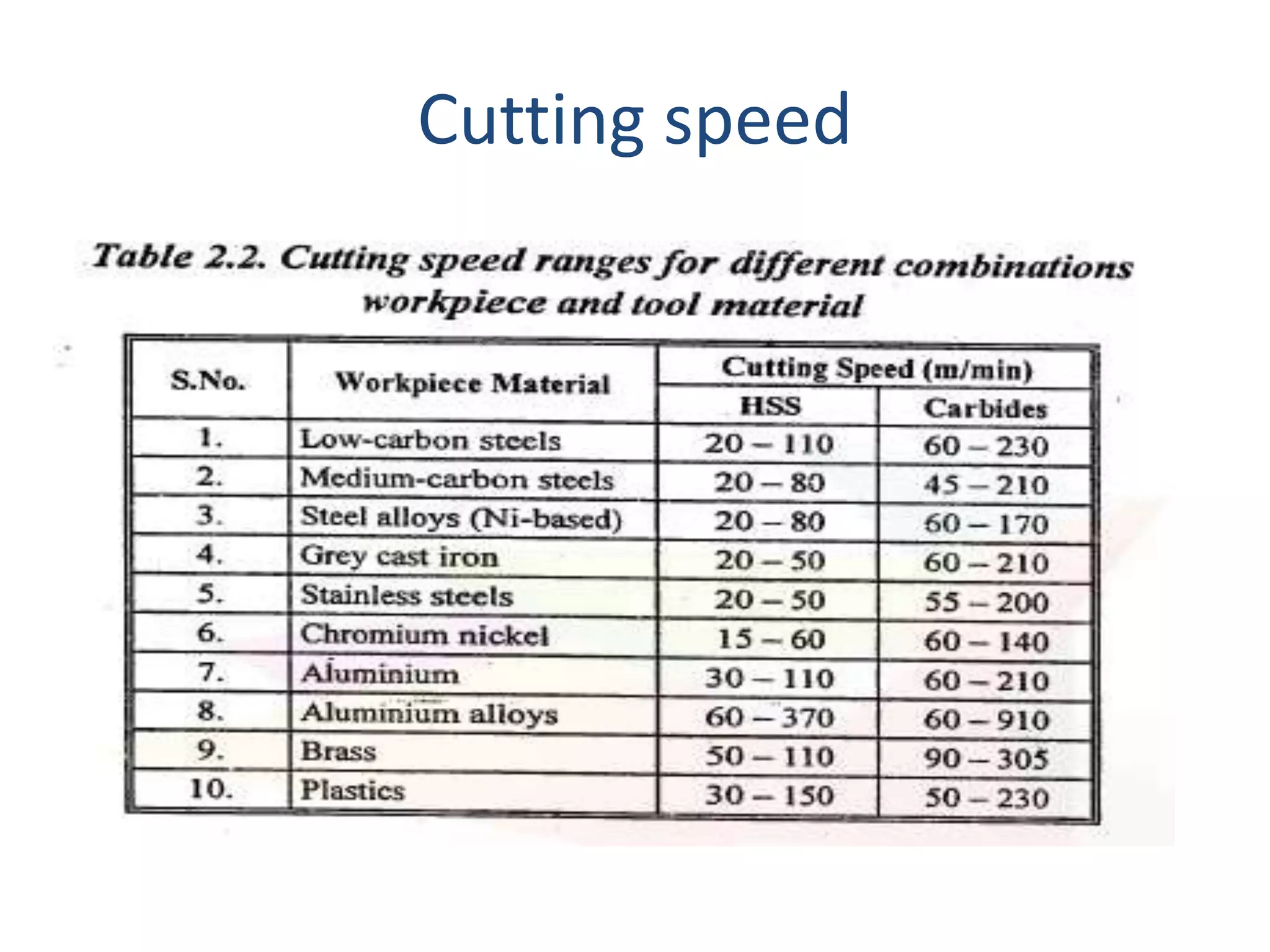
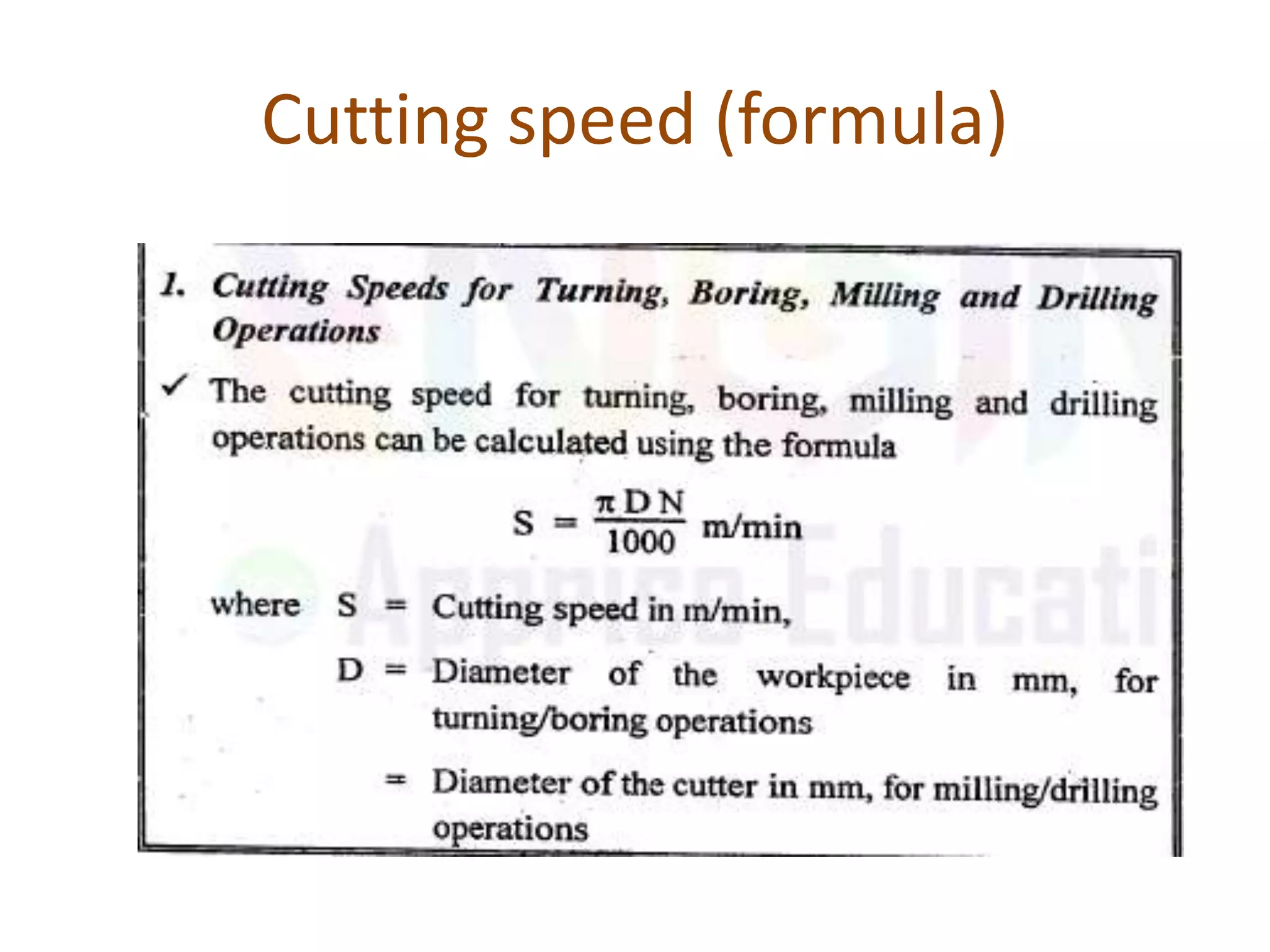
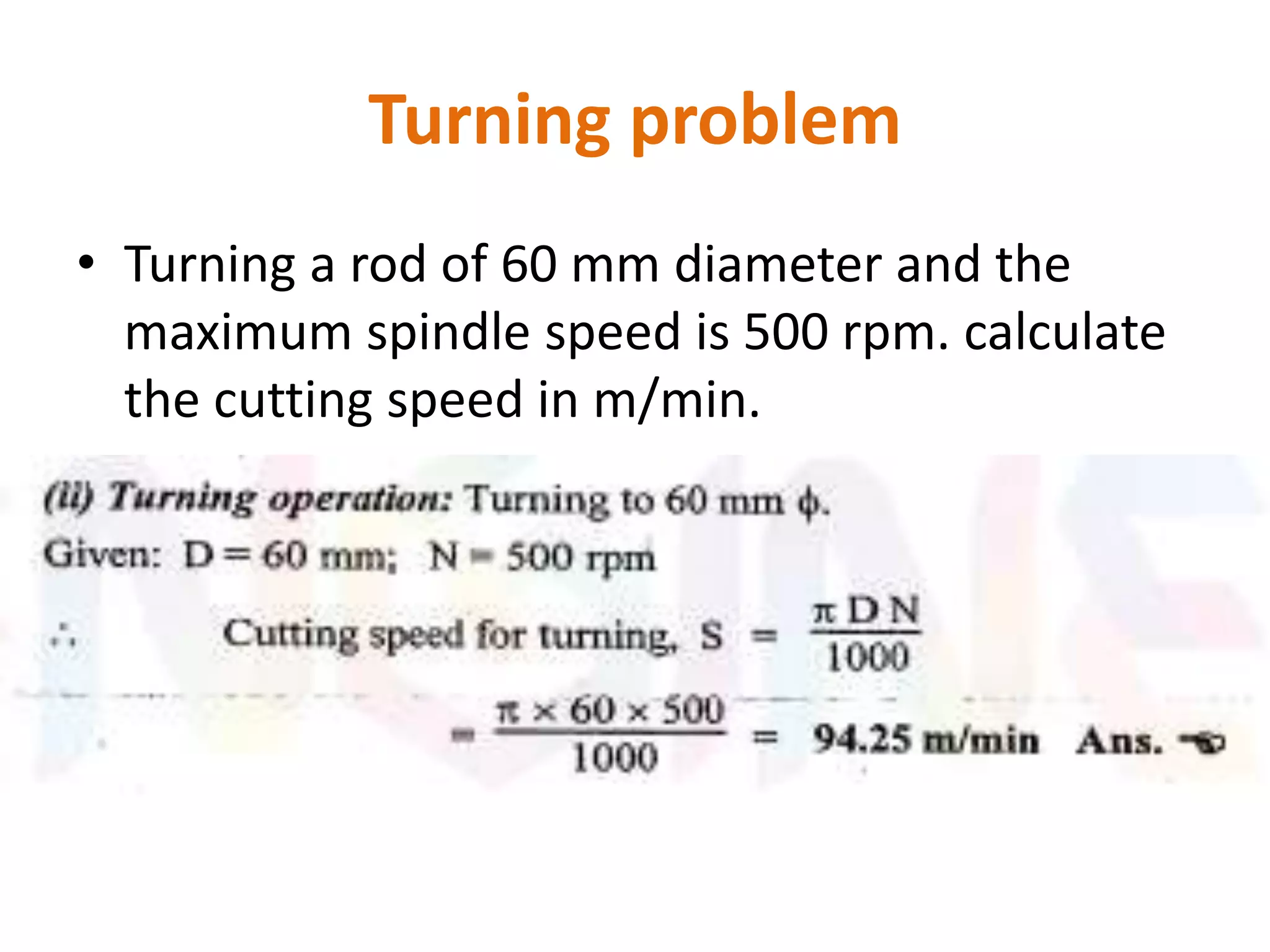
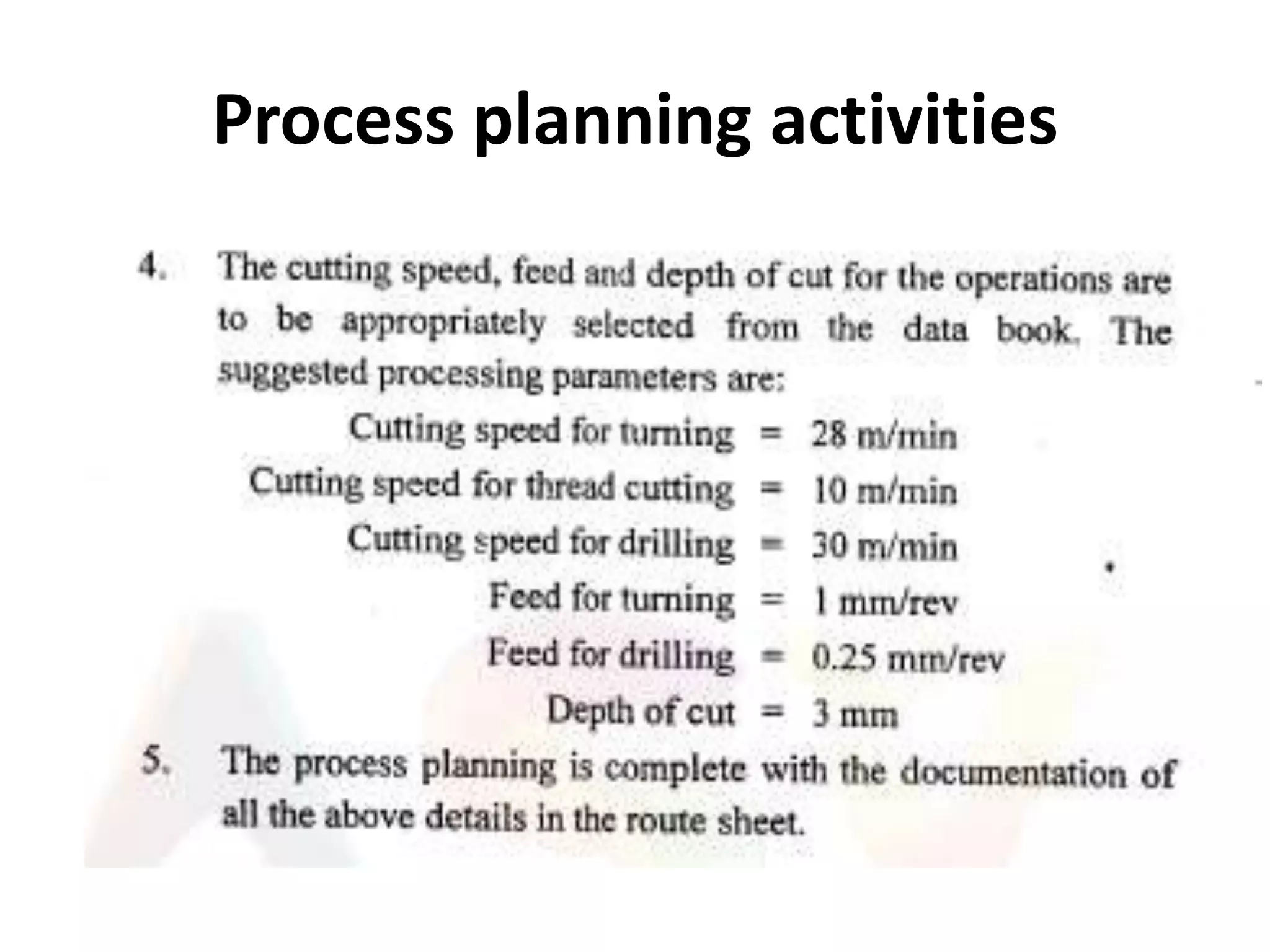
• Process Parameter
– Cutting Speed
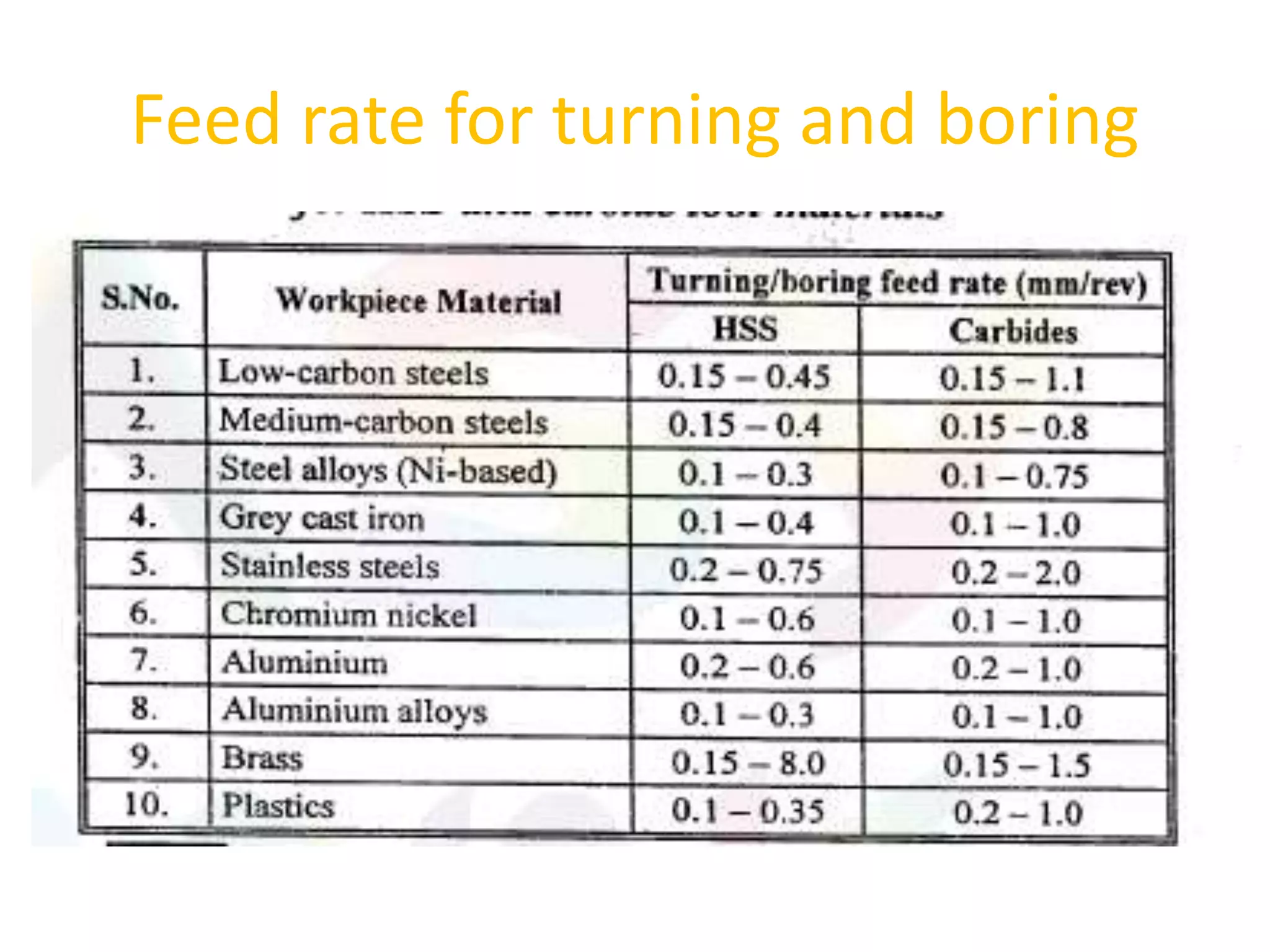
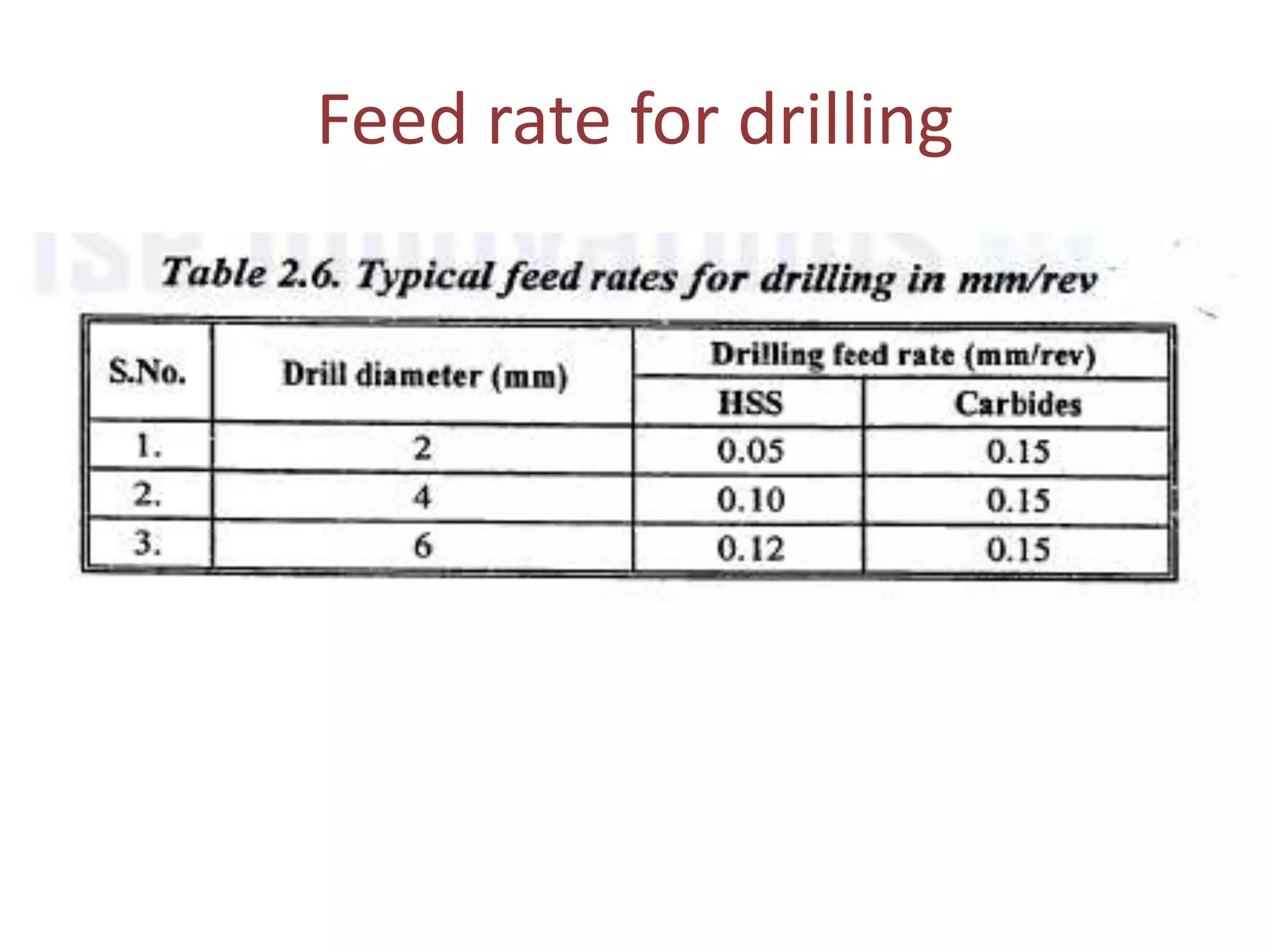
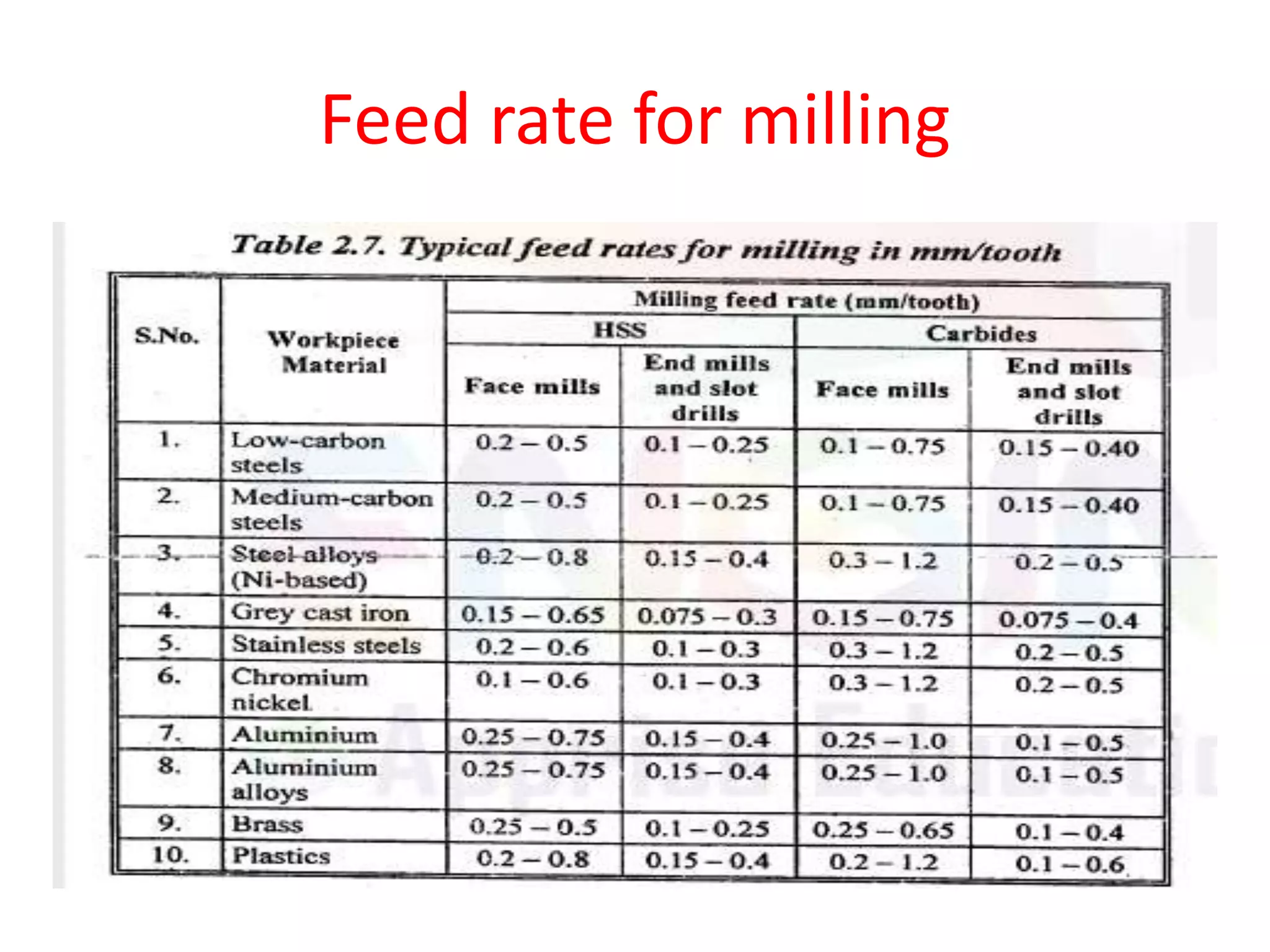
– Feed and Feed rate
– Depth of Cut
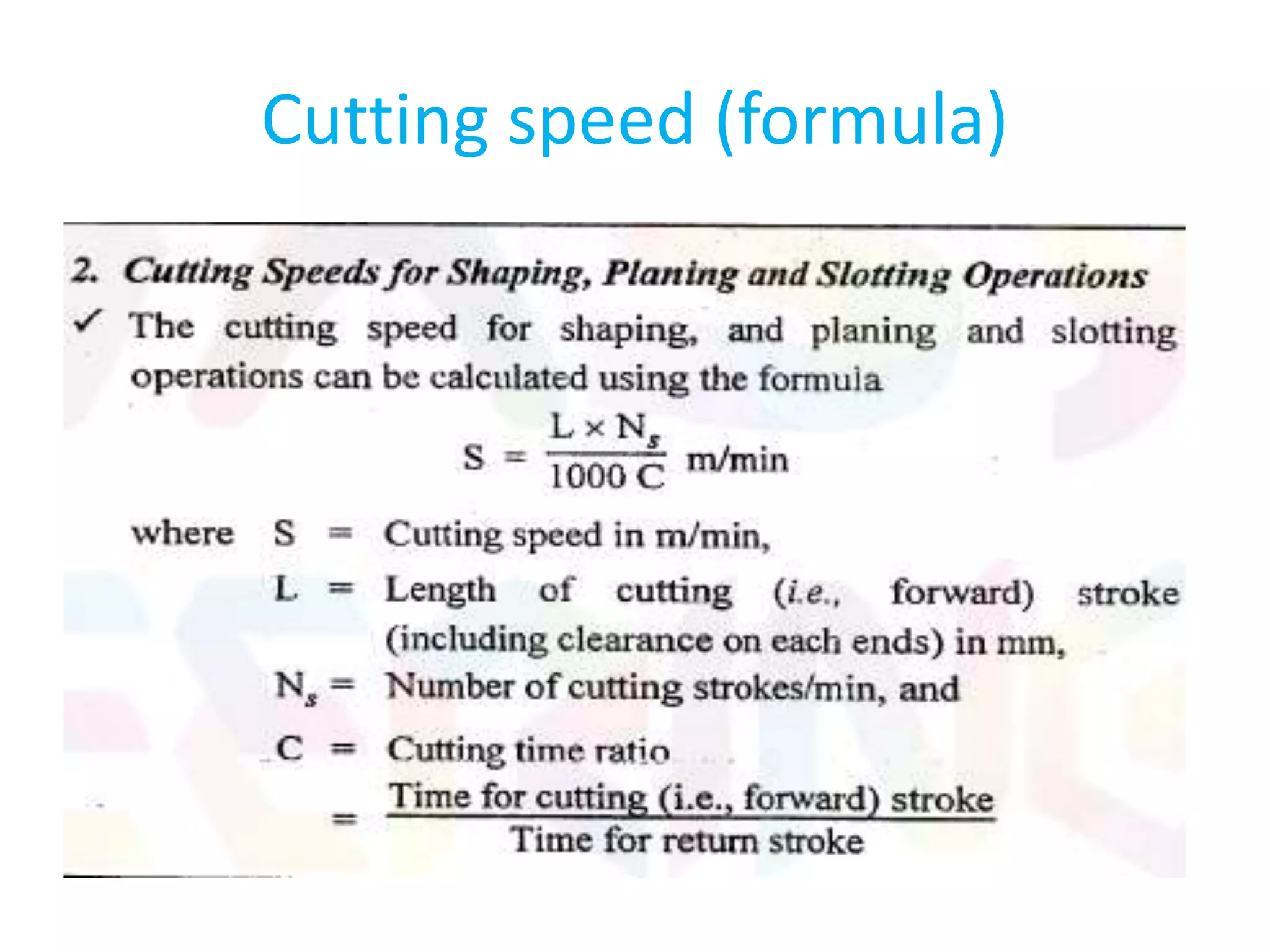
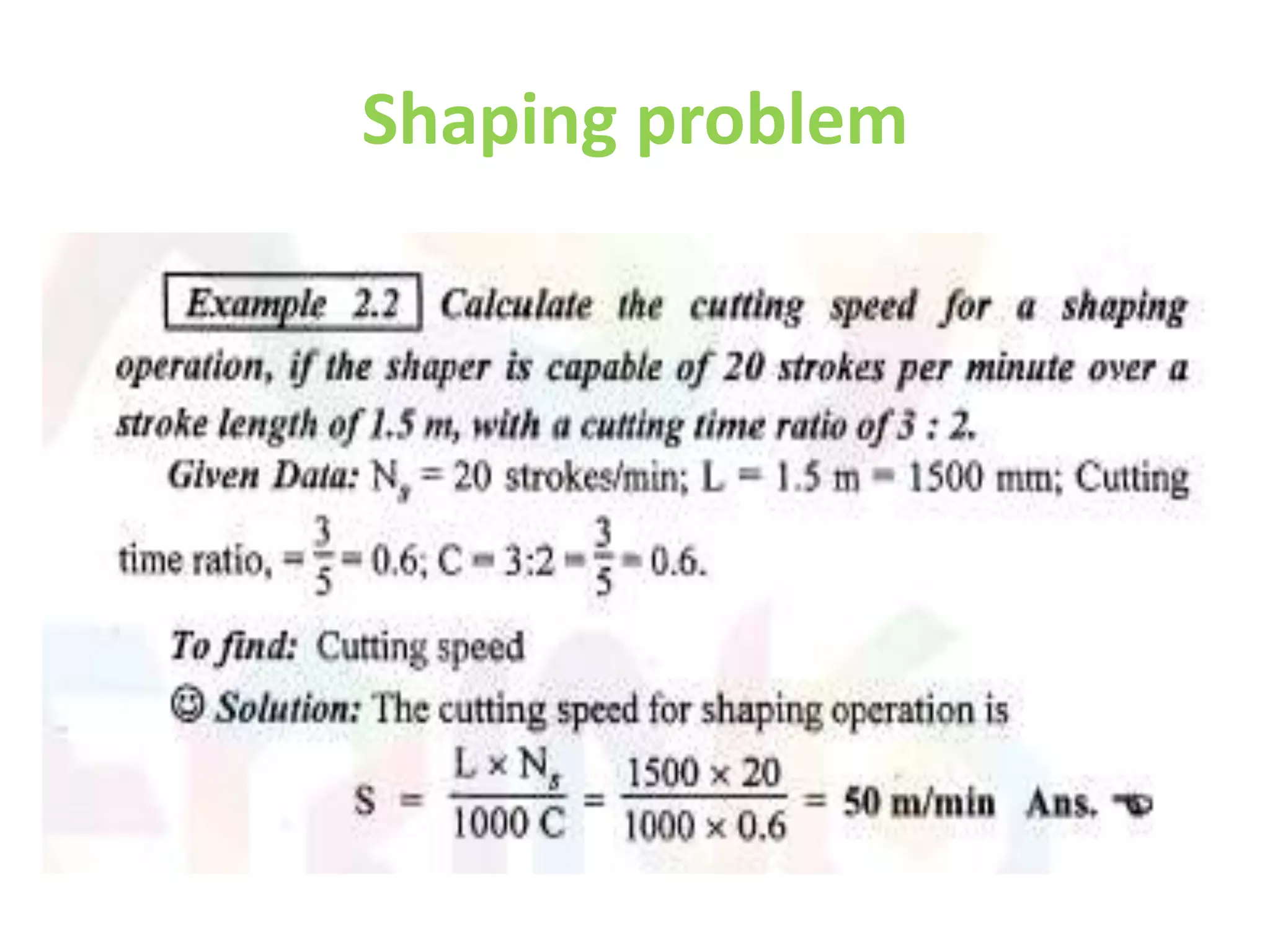
Cutting Speed
• Factorsaffecting cutting speed
– Nature of cut
– work material
– Cutting tool material
– Cutting fluid application
– Purpose of machining
– Kind of machining operation
– Capacity of machining tool
– Condition of the machine tool
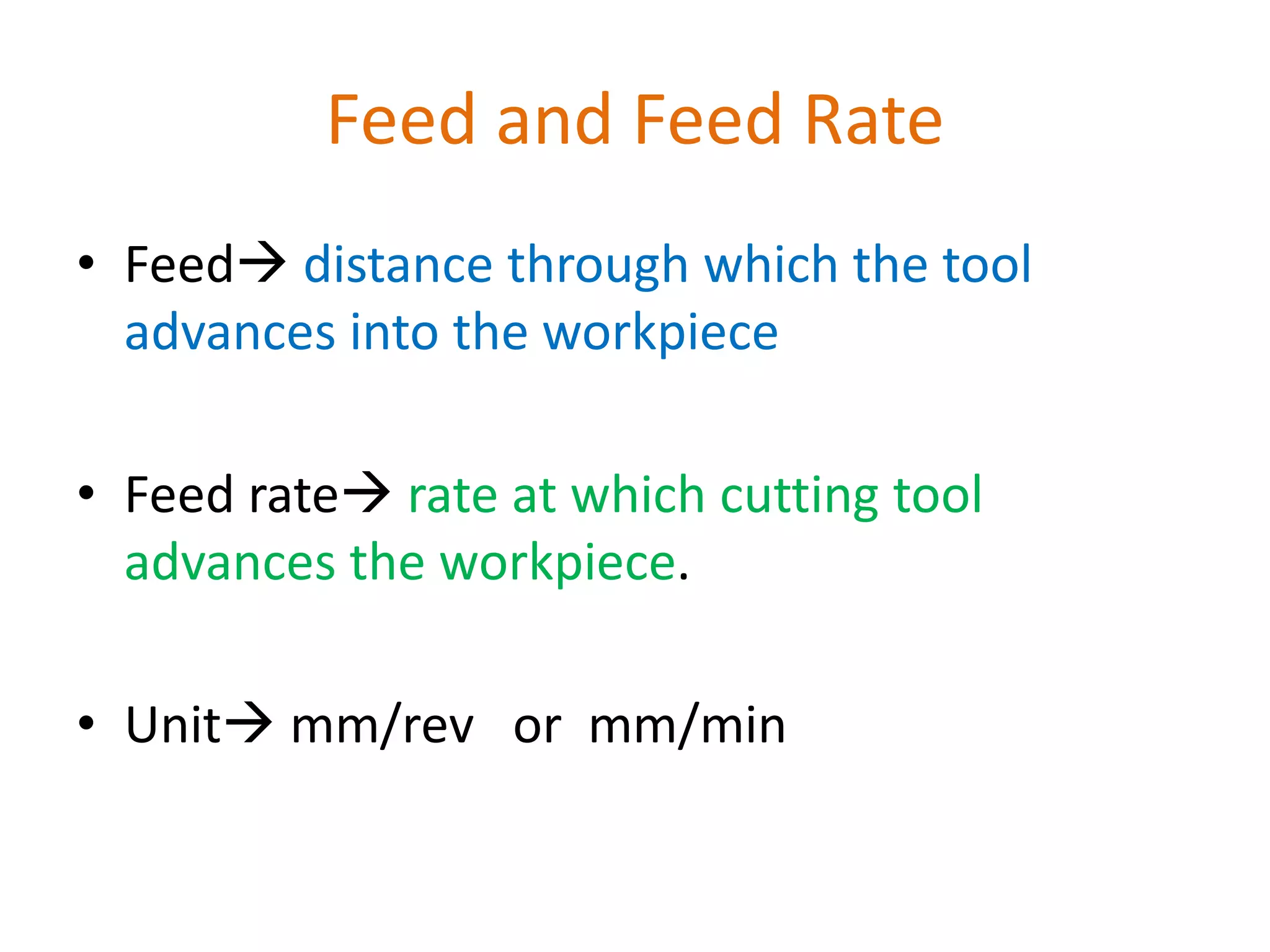
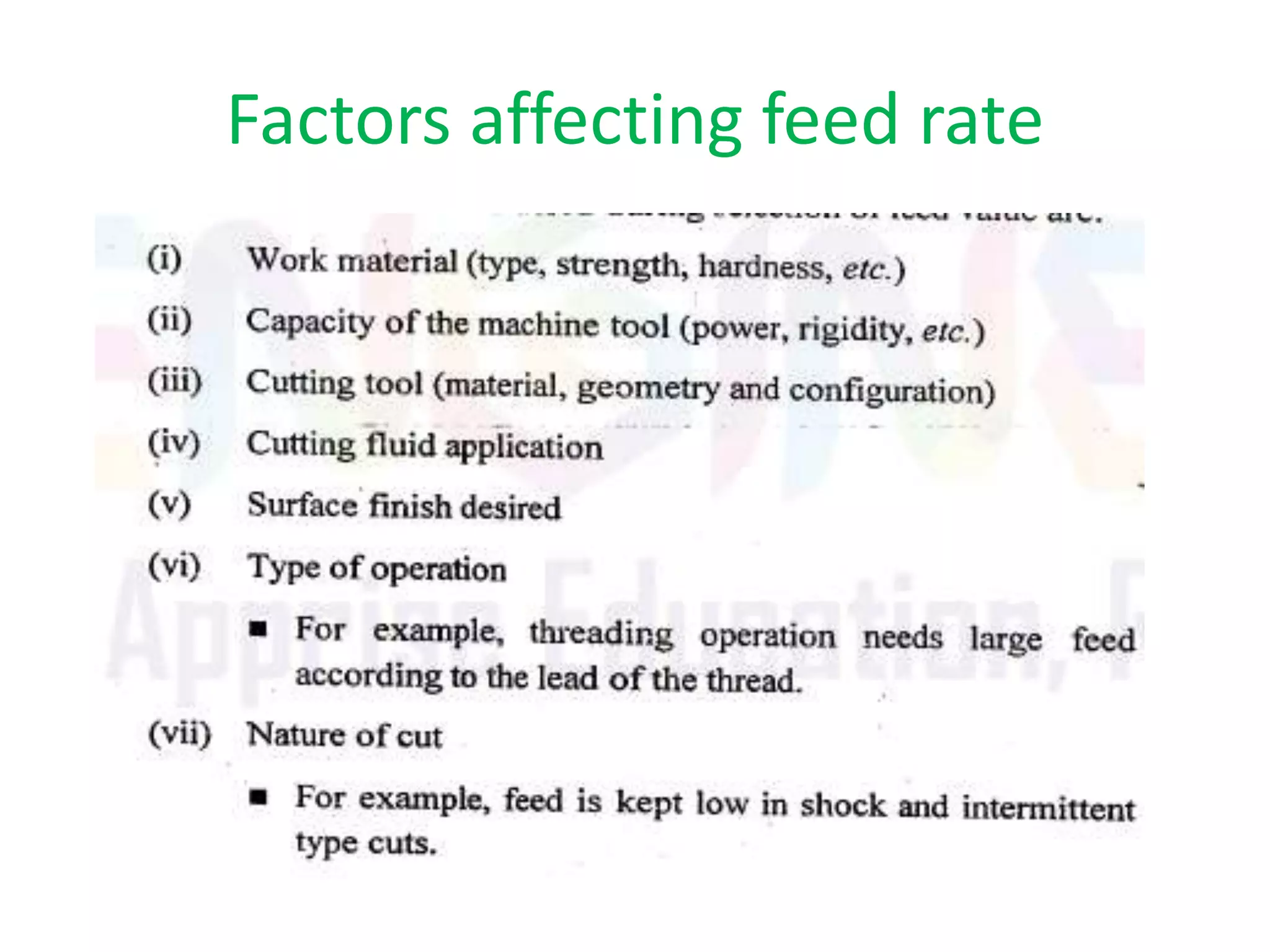
Feed and FeedRate
• Feed distance through which the tool
advances into the workpiece
• Feed rate rate at which cutting tool
advances the workpiece.
• Unit mm/rev or mm/min
Depth of Cut
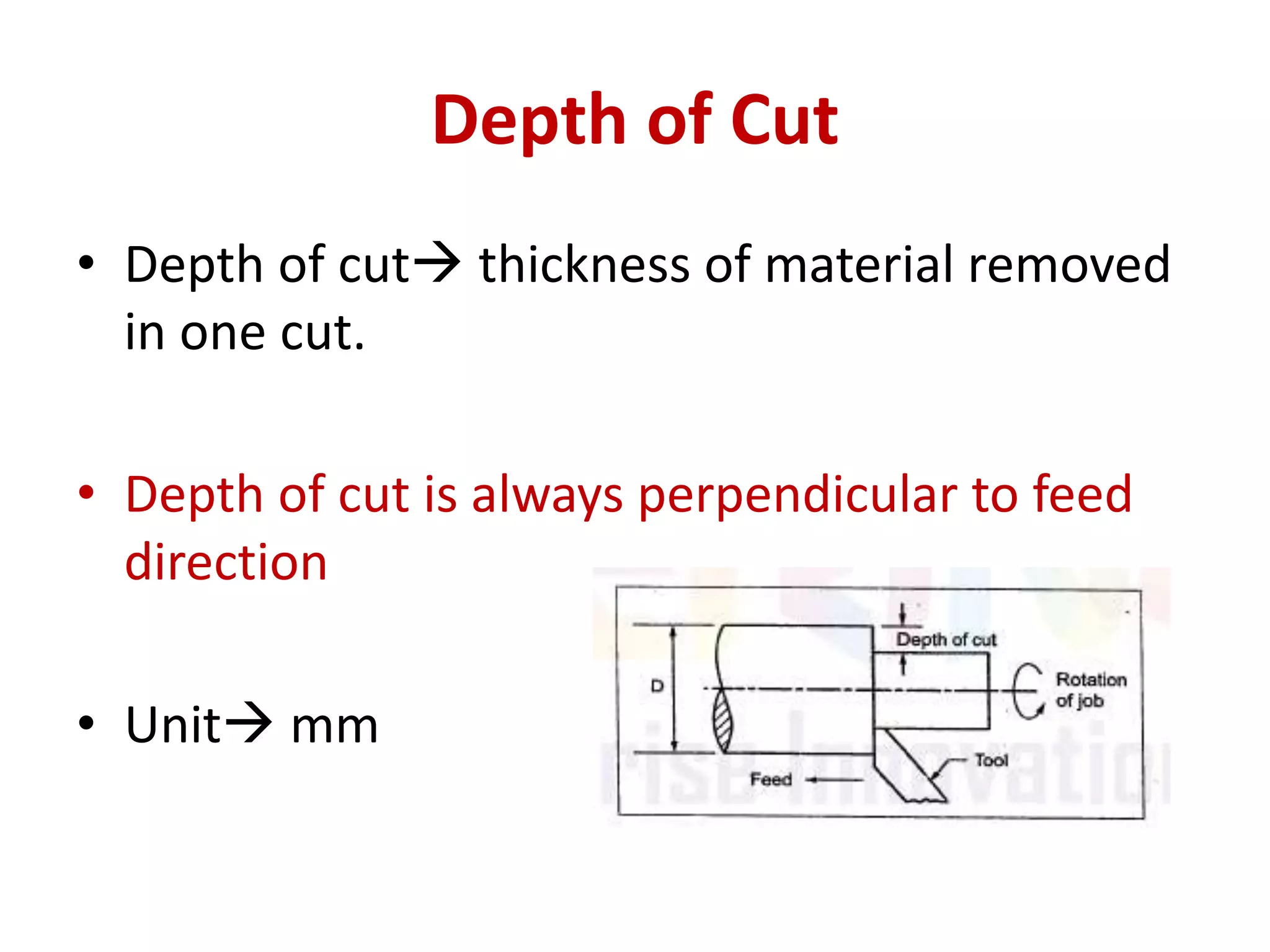
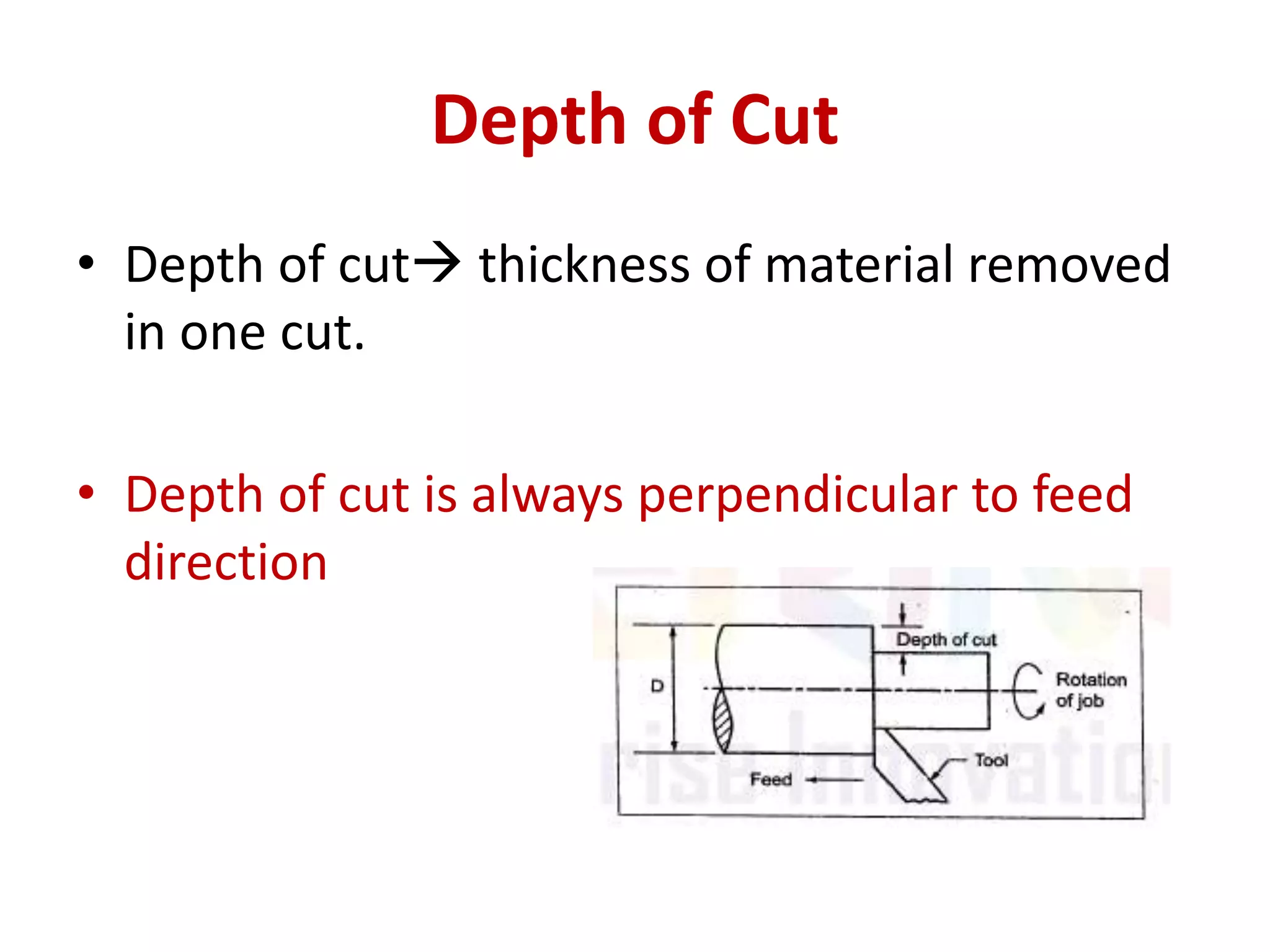
•Depth of cut thickness of material removed
in one cut.
• Depth of cut is always perpendicular to feed
direction
• Unit mm
76.
Speed, feed, anddepth of cut
https://www.youtube.com/watch?v=NN3vOblJQ
Q8
77.
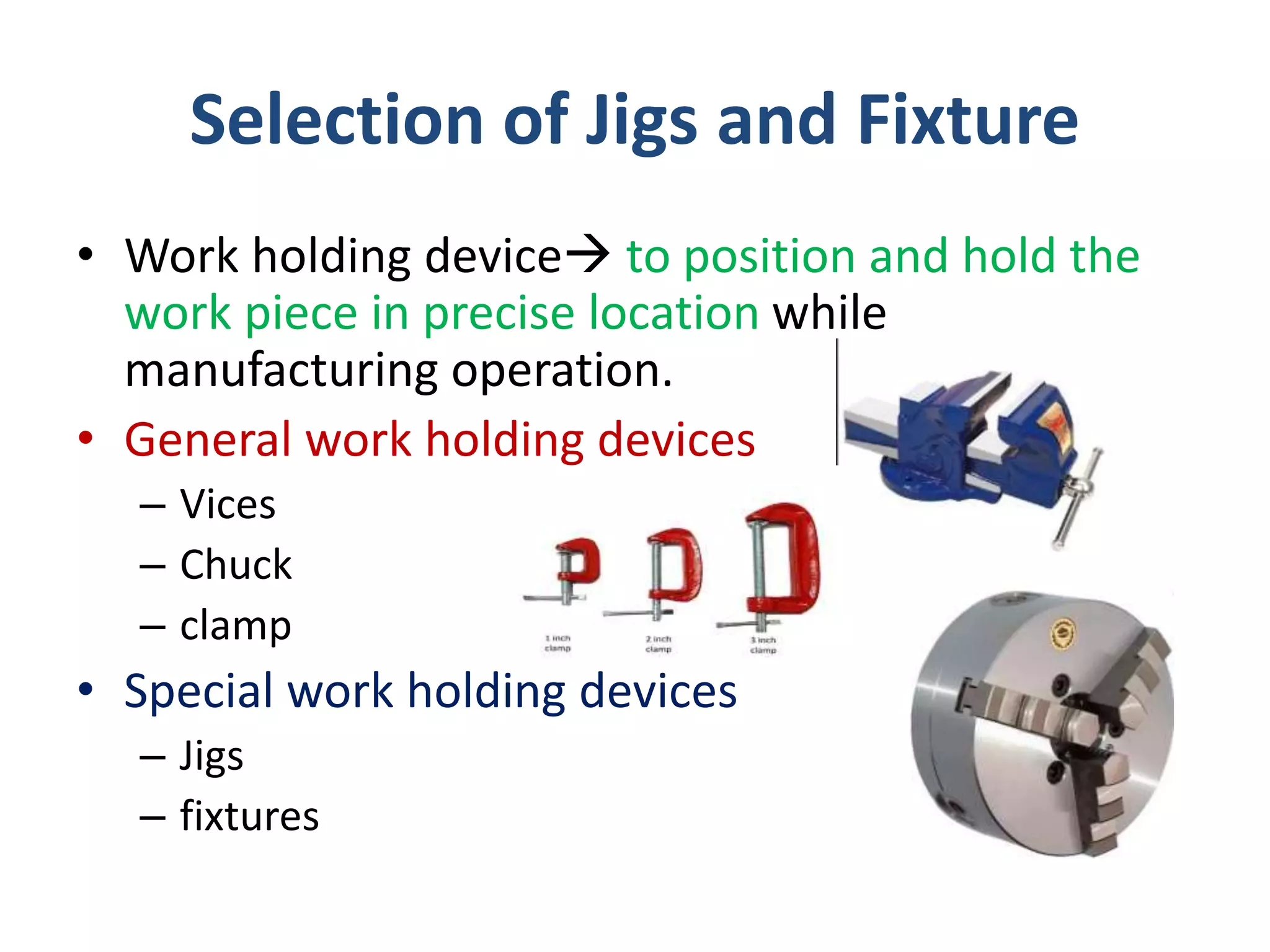
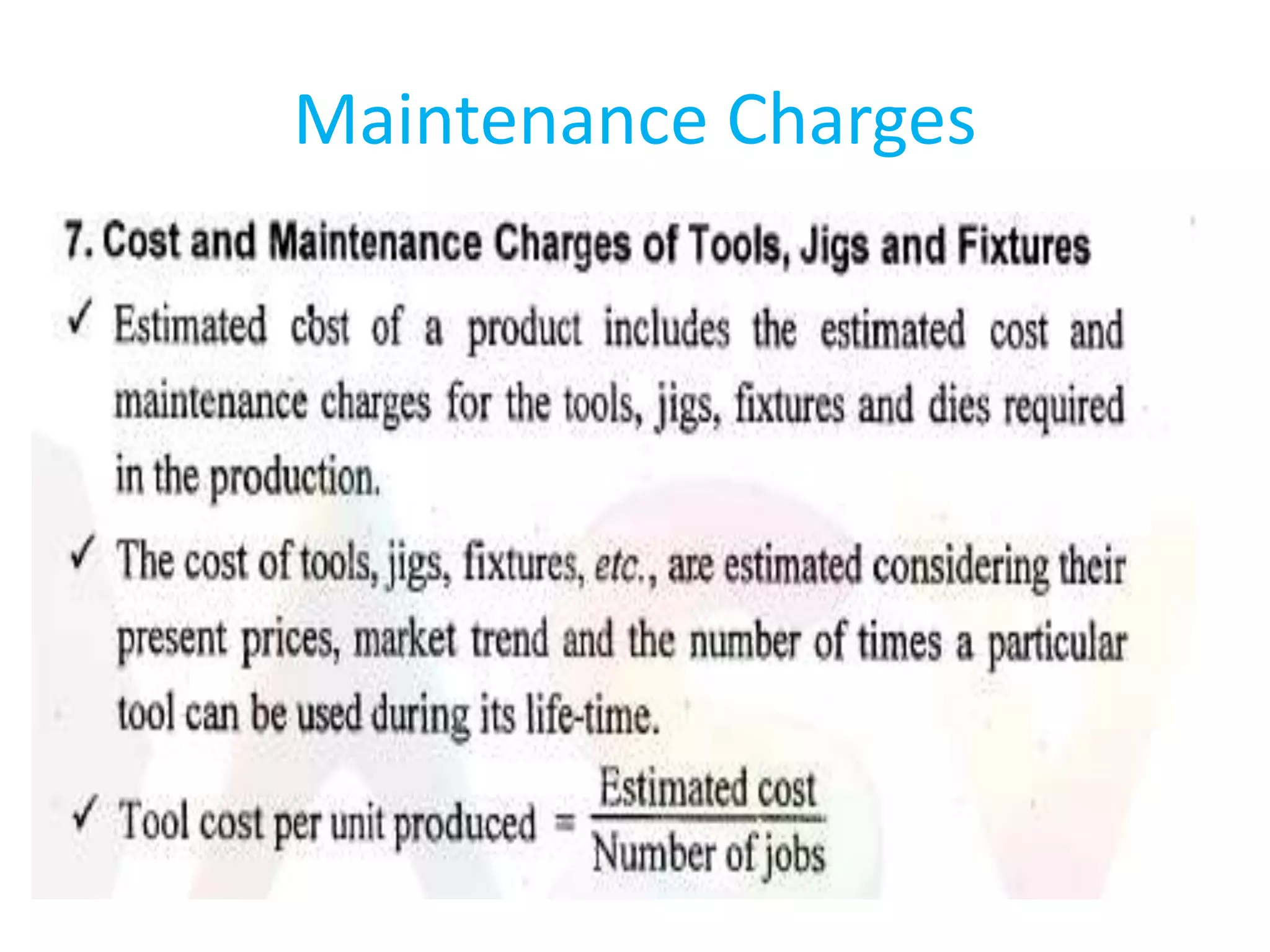
Selection of Jigsand Fixture
• Work holding device to position and hold the
work piece in precise location while
manufacturing operation.
• General work holding devices
– Vices
– Chuck
– clamp
• Special work holding devices
– Jigs
– fixtures
79.
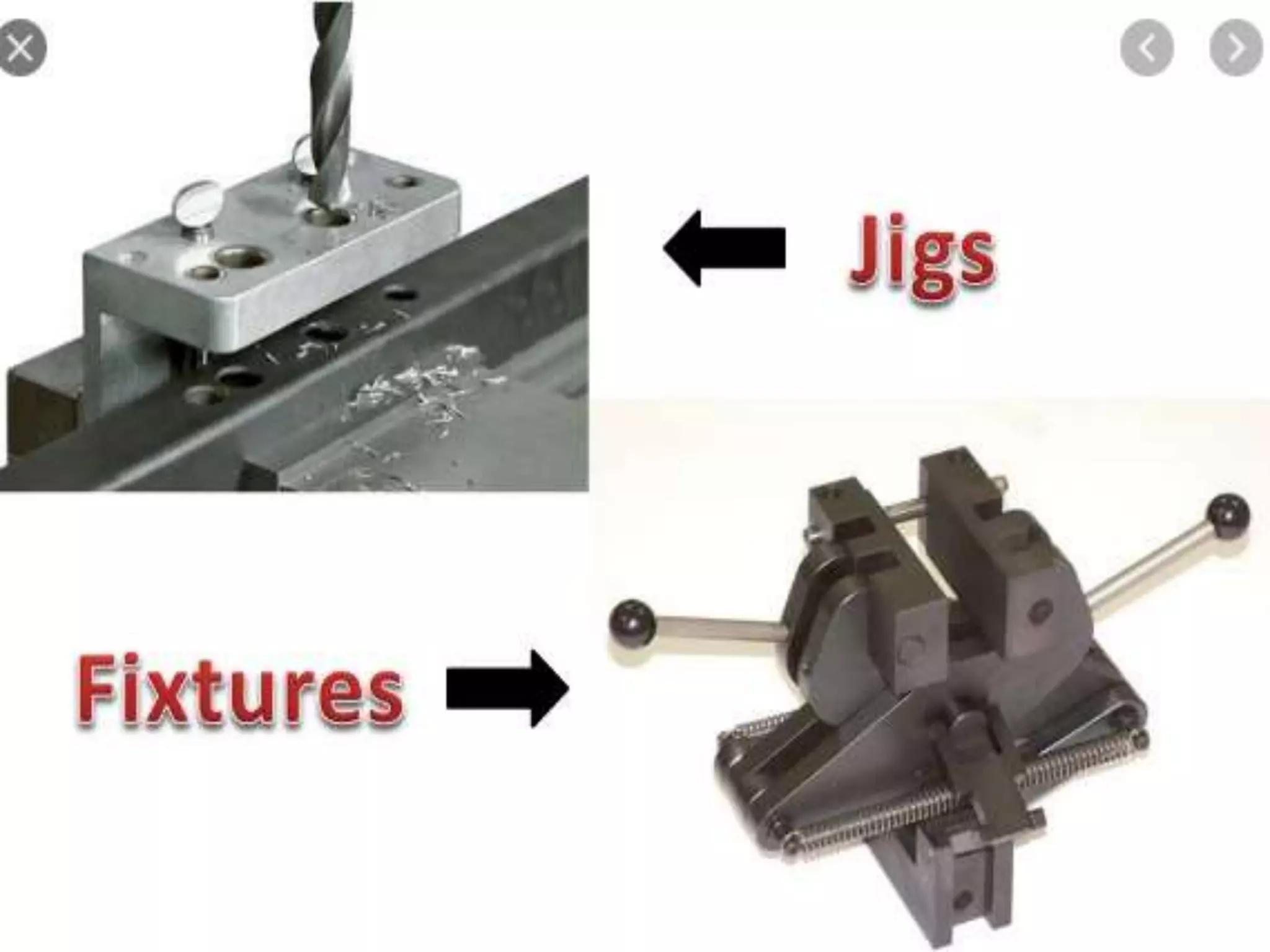
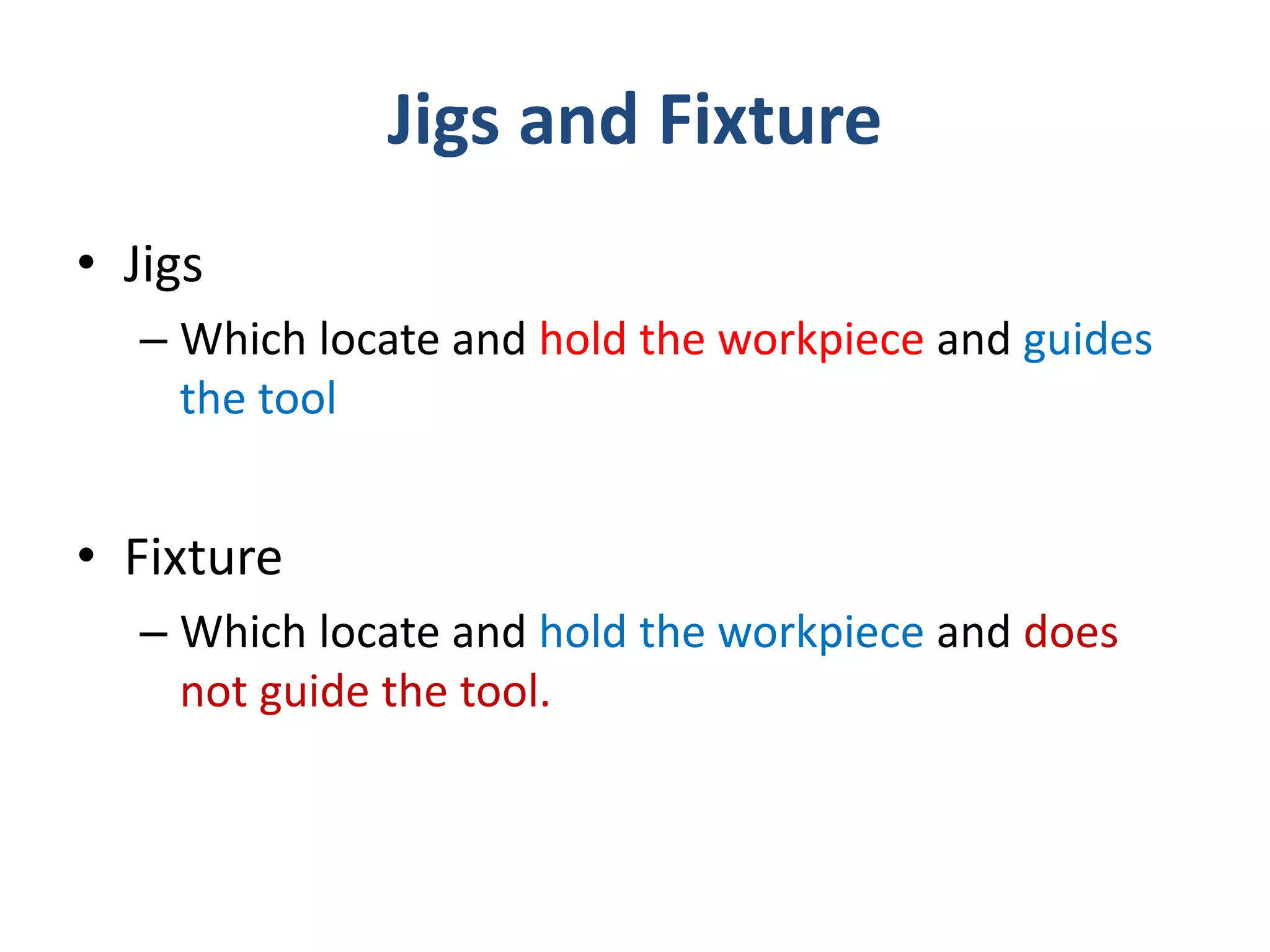
Jigs and Fixture
•Jigs
– Which locate and hold the workpiece and guides
the tool
• Fixture
– Which locate and hold the workpiece and does
not guide the tool.
80.
Jigs and Fixtureanimation
• https://www.youtube.com/watch?v=5m5HqE
y_Jqs
81.
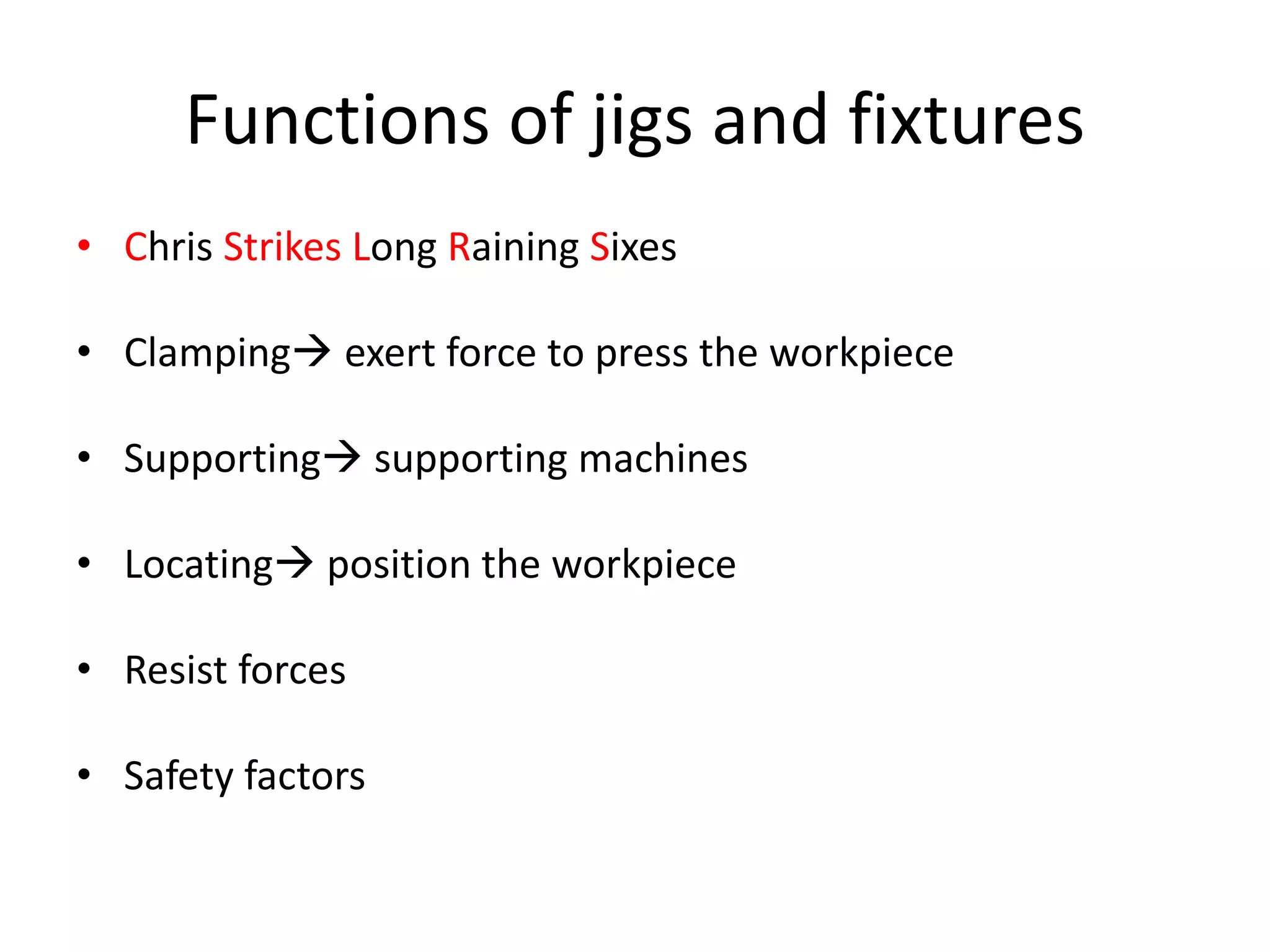
Functions of jigsand fixtures
• Chris Strikes Long Raining Sixes
• Clamping exert force to press the workpiece
• Supporting supporting machines
• Locating position the workpiece
• Resist forces
• Safety factors
82.
Reason for usingjigs
• Reduce the effort of setting workpiece
• Reduce production cycle time
• Semi skilled labour employed
• Reduce the cost of inspection
83.
Factors considering duringselection of
jigs and fixture
• Physical characteristics of tool and workpiece
• Type and capacity of machine
• Study of safety and ejecting devices
• Required level of accuracy
Selection of qualityassurance
methods
• Quality is fitness for use (Juran)
• Quality assurance maintenance of a desired level of
quality
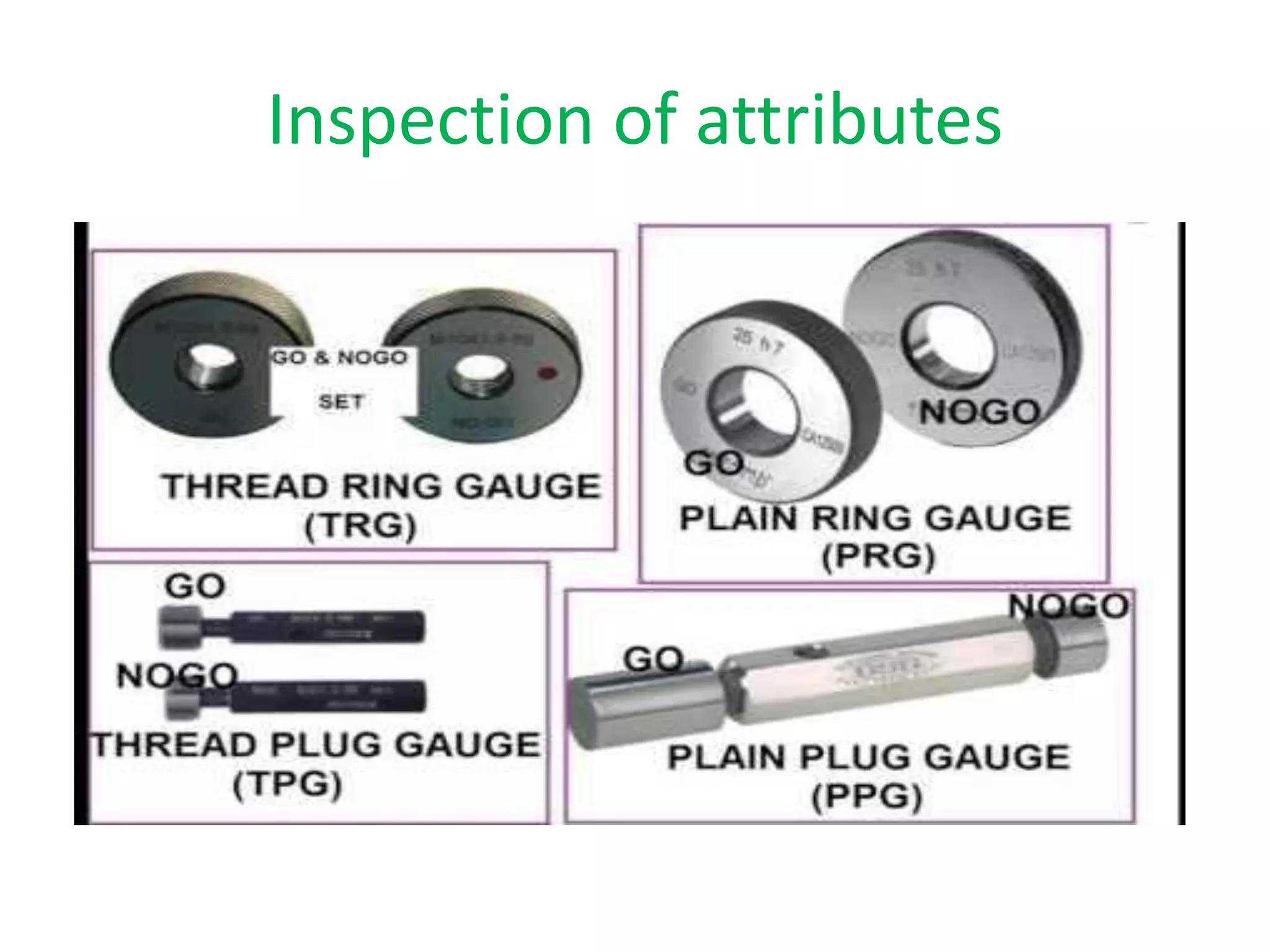
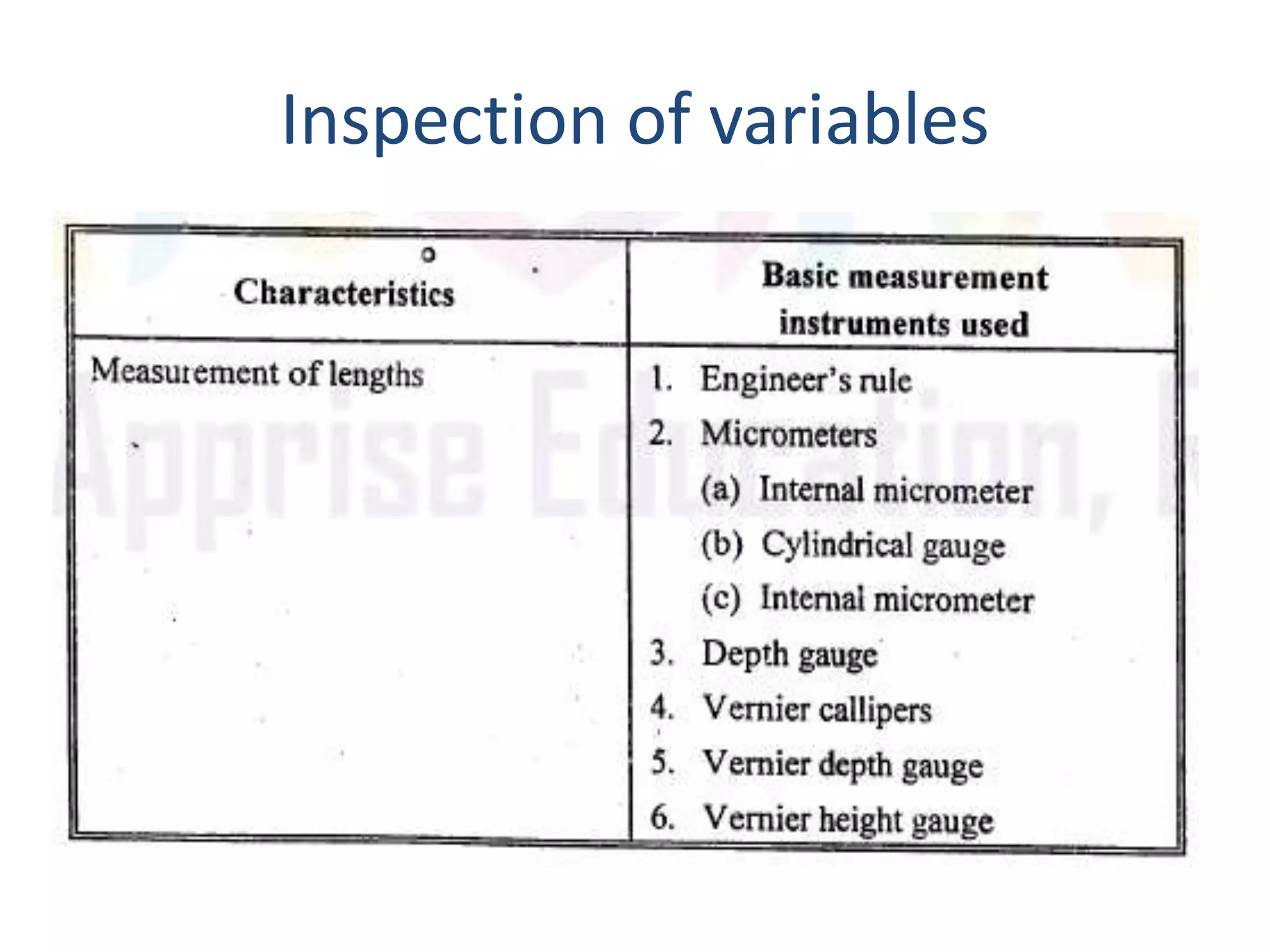
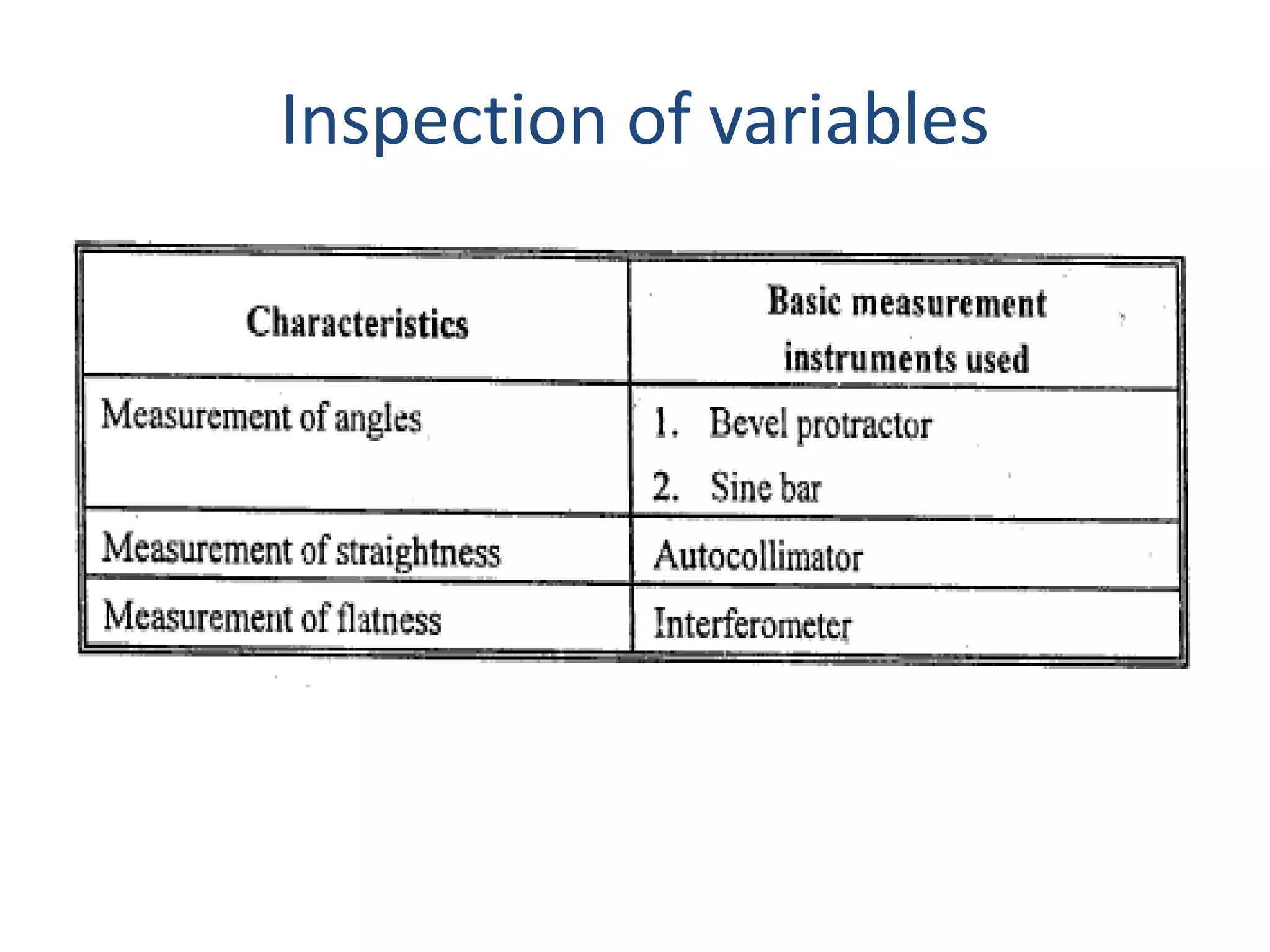
• Selection of quality assurance methods for critical factors
• Critical factors
– Dimensional tolerance
– Geometry tolerances
– Surface finish
86.
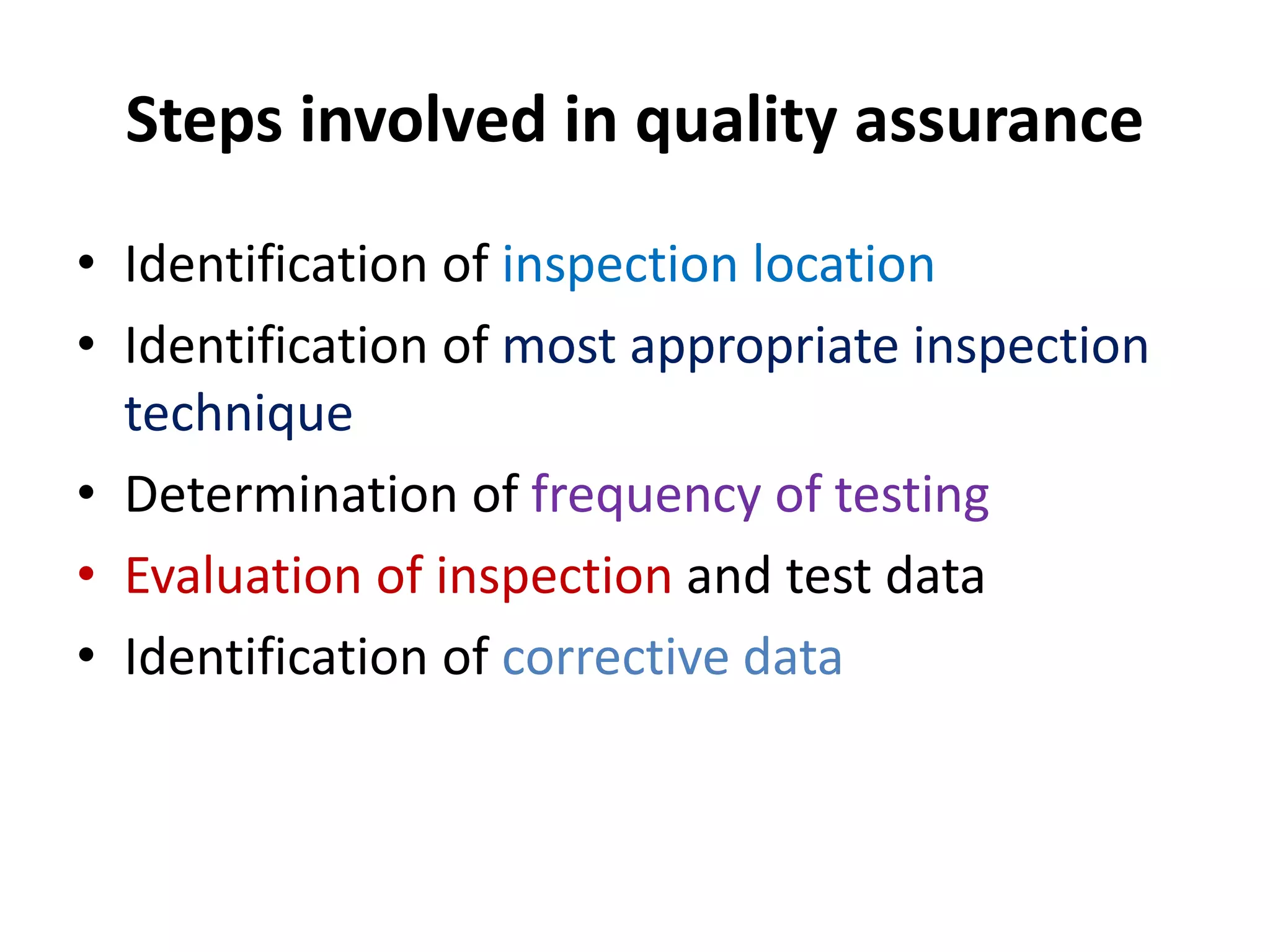
Steps involved inquality assurance
• Identification of inspection location
• Identification of most appropriate inspection
technique
• Determination of frequency of testing
• Evaluation of inspection and test data
• Identification of corrective data
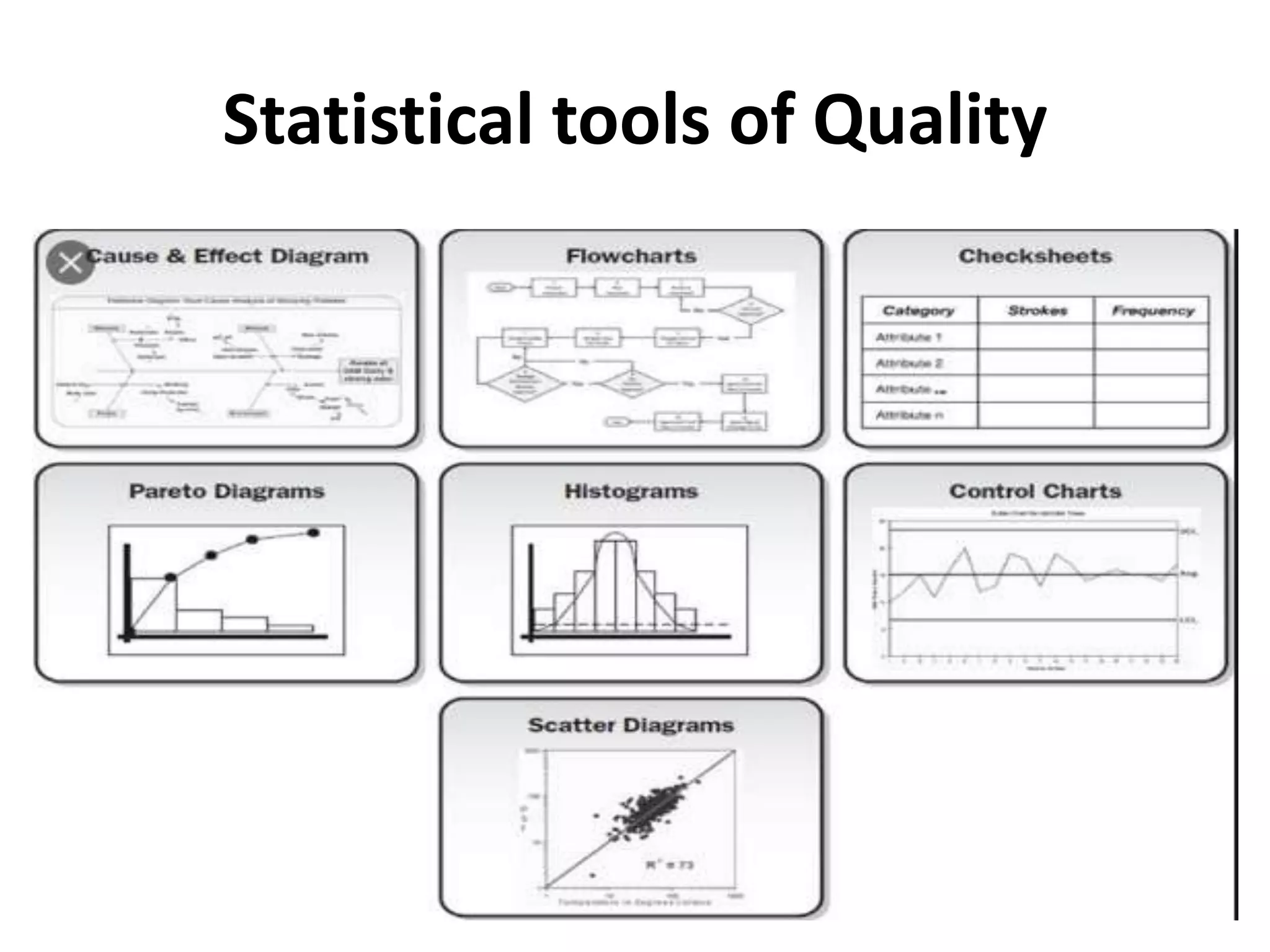
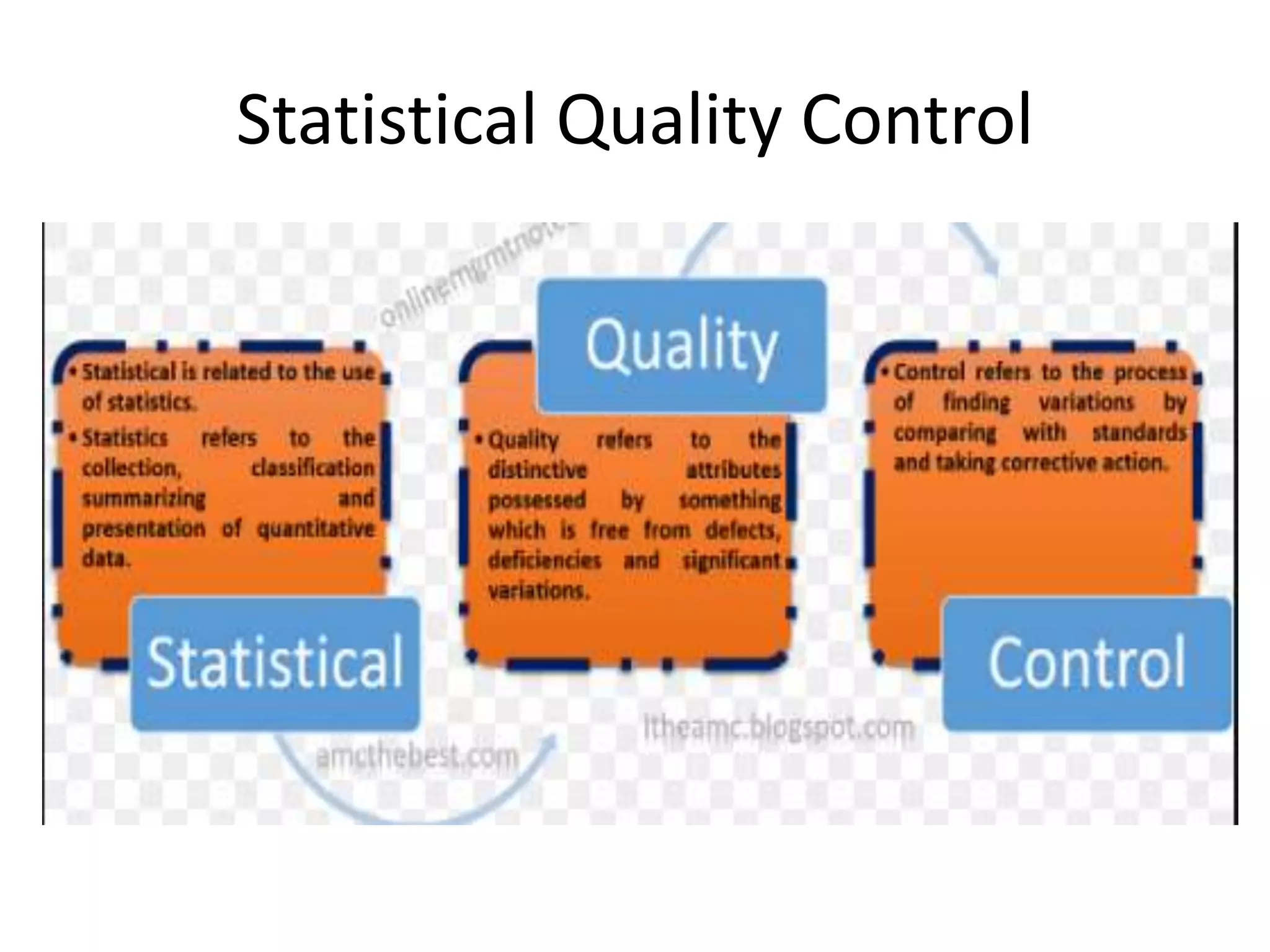
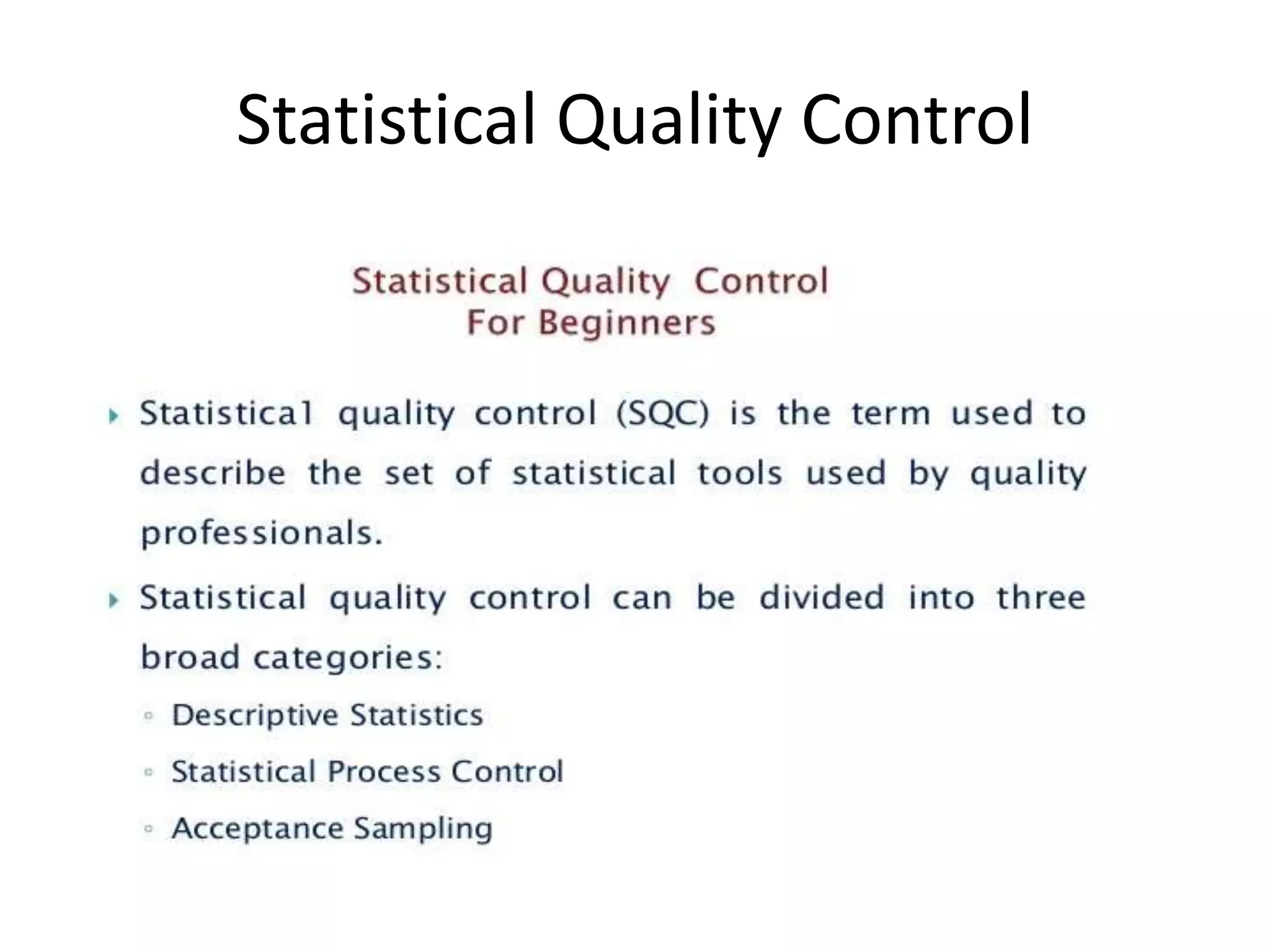
Statistical Quality Control
•Descriptive Statistics mean, median, mode
• Statistical process control using control
charts
• Acceptance sampling samples are taken to
decide quality
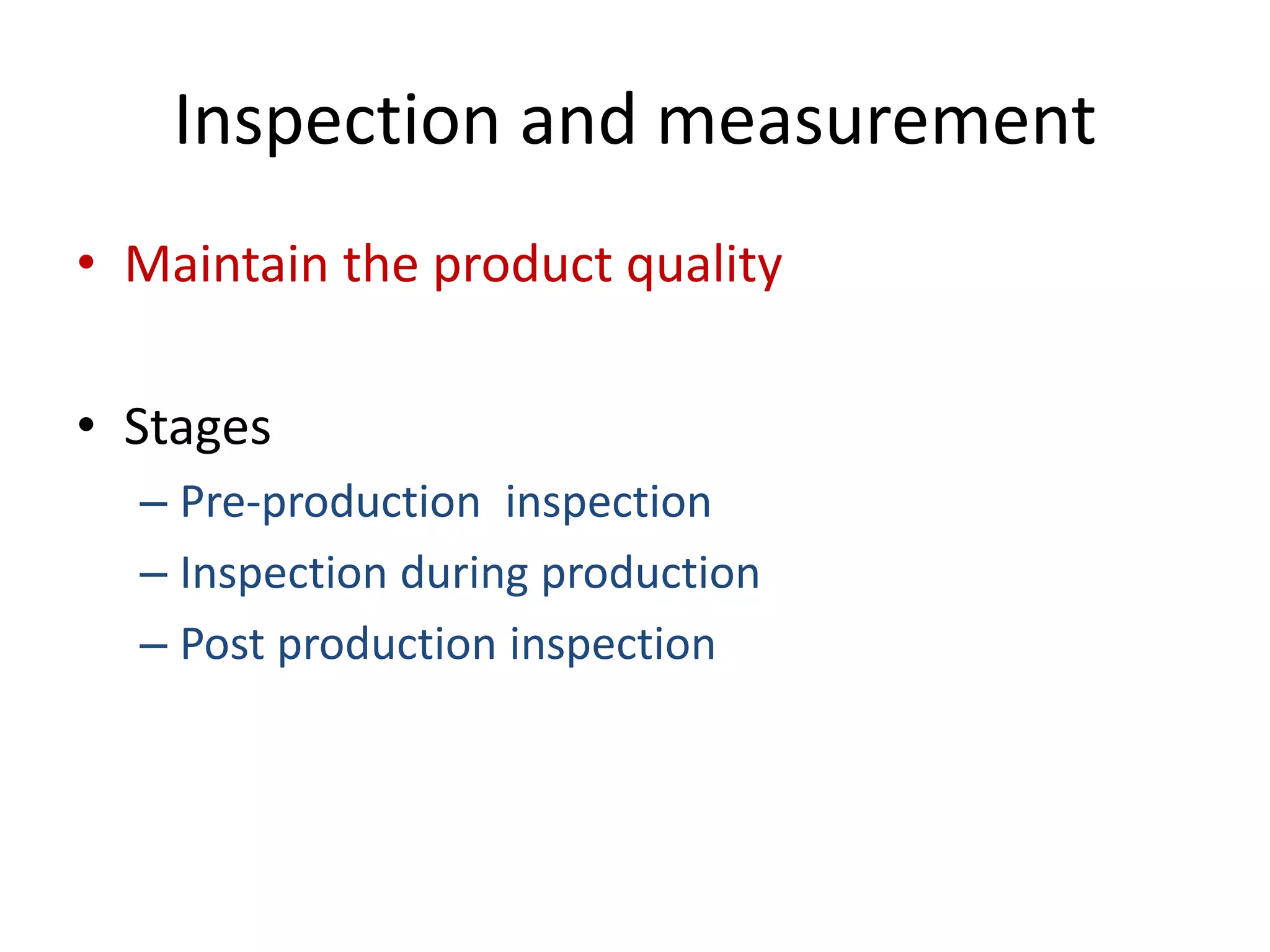
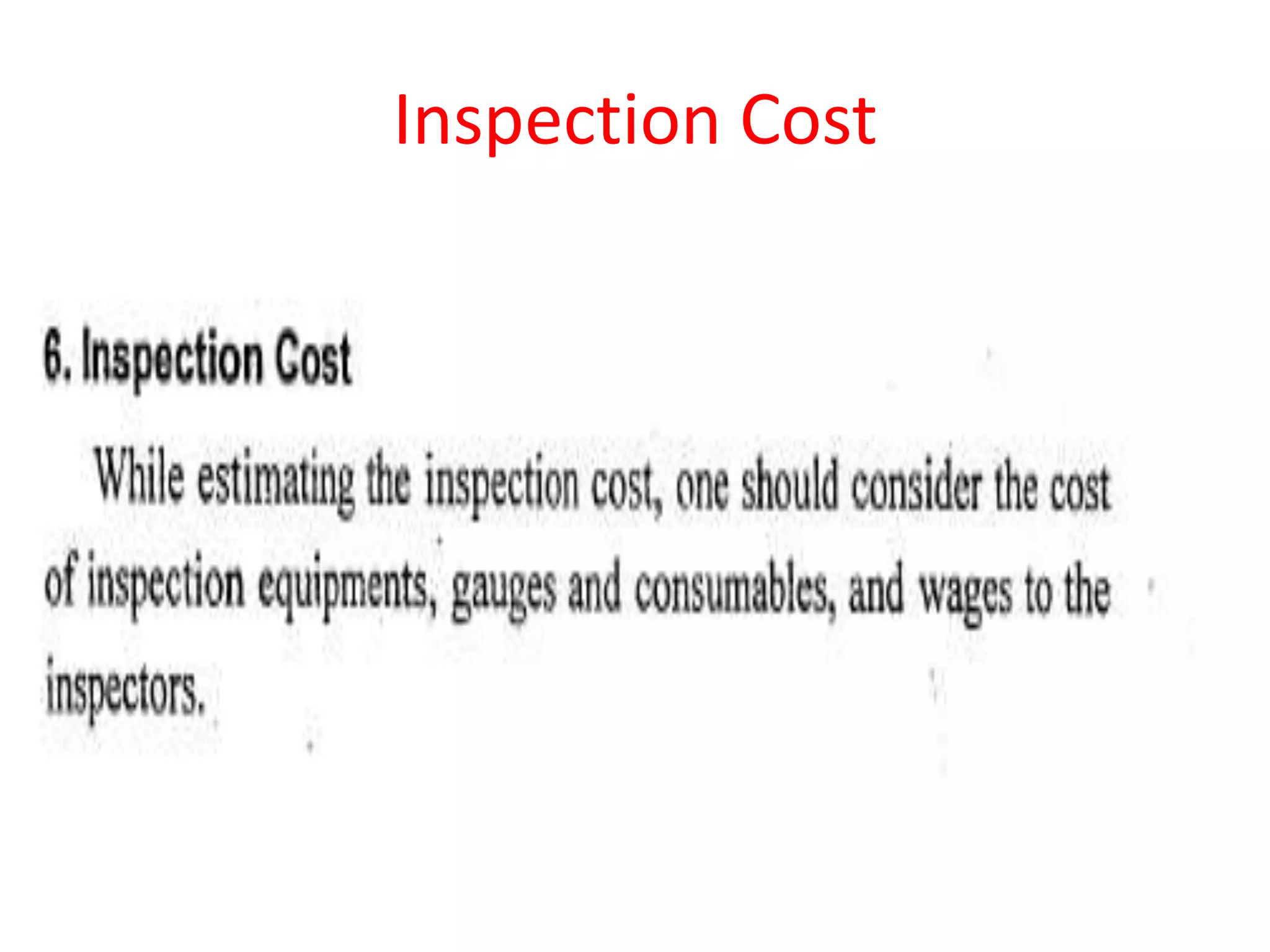
Inspection and measurement
•Maintain the product quality
• Stages
– Pre-production inspection
– Inspection during production
– Post production inspection
Economics of Processplanning
• Process planner should have fundamental
knowledge on cost estimating, cost
accounting, various types of costs,
components of cost and calculation of cost of
the product manufacturing
108.
Economics of Processplanning
• Knowledge of costing will help process
planner and management for taking following
decisions
– Type of material to be used
– Type of manufacturing process
– Volume of product
– Make or buy decision
– Design of a product
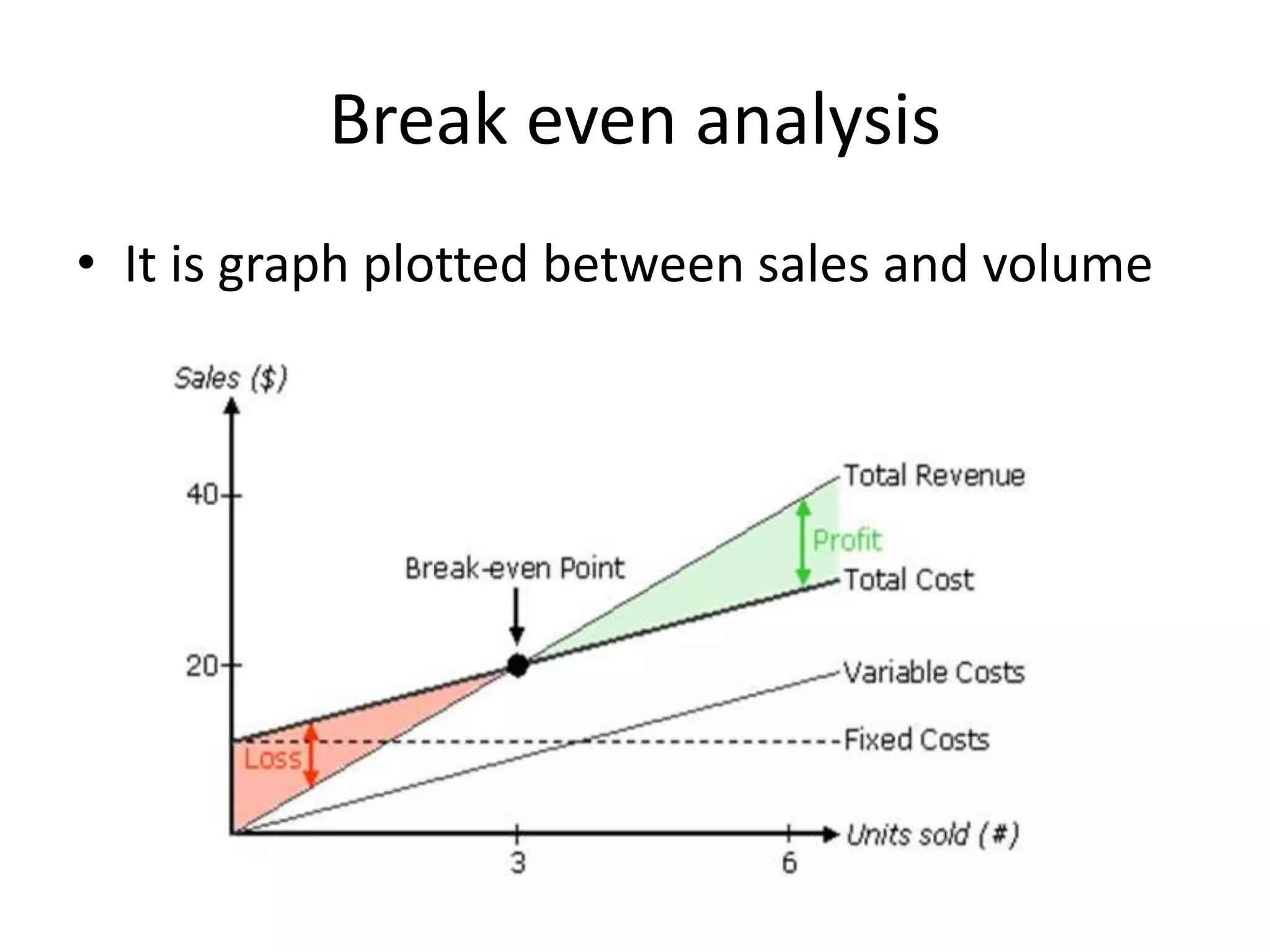
Break even analysis
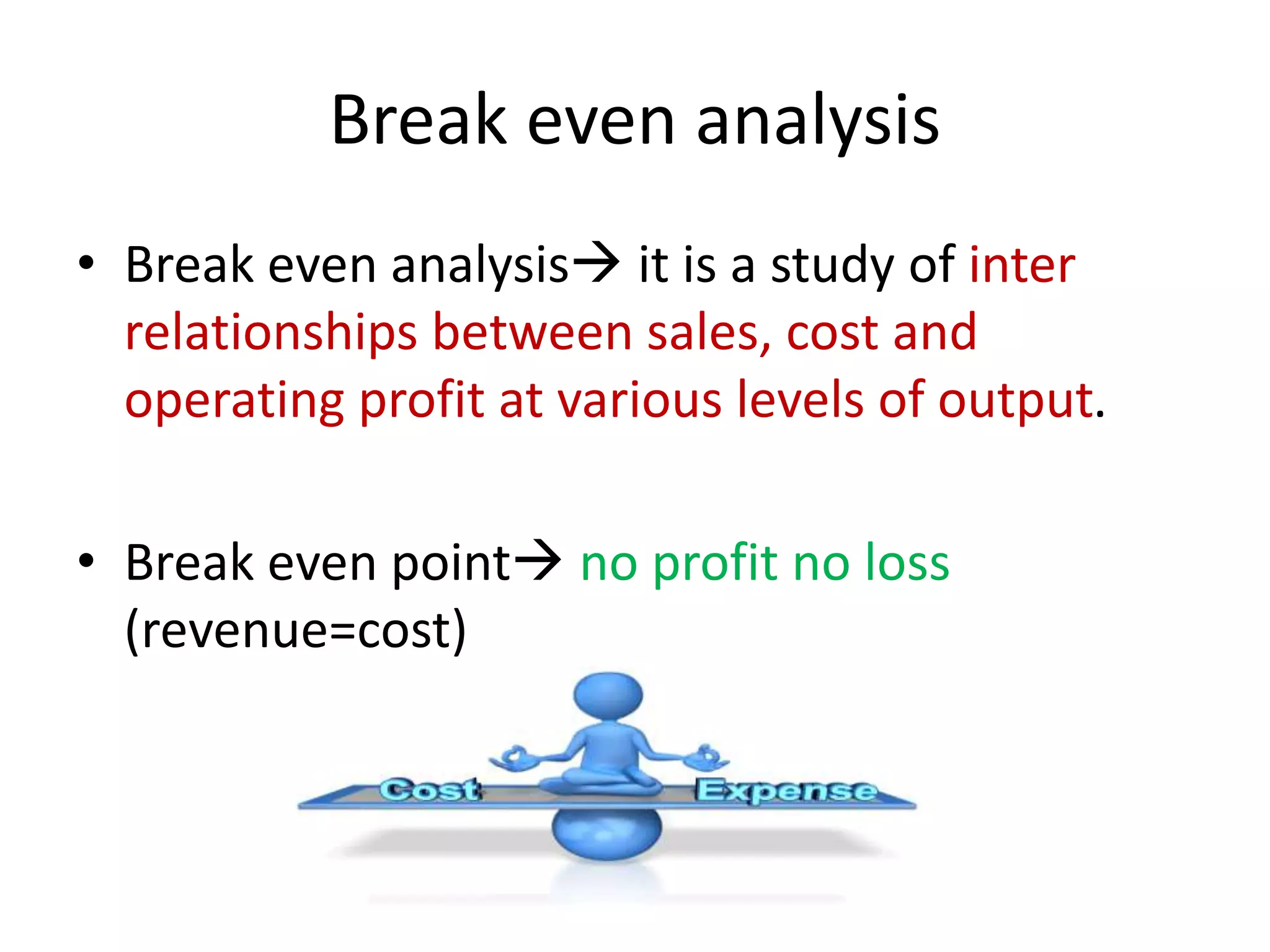
•Break even analysis it is a study of inter
relationships between sales, cost and
operating profit at various levels of output.
• Break even point no profit no loss
(revenue=cost)
111.
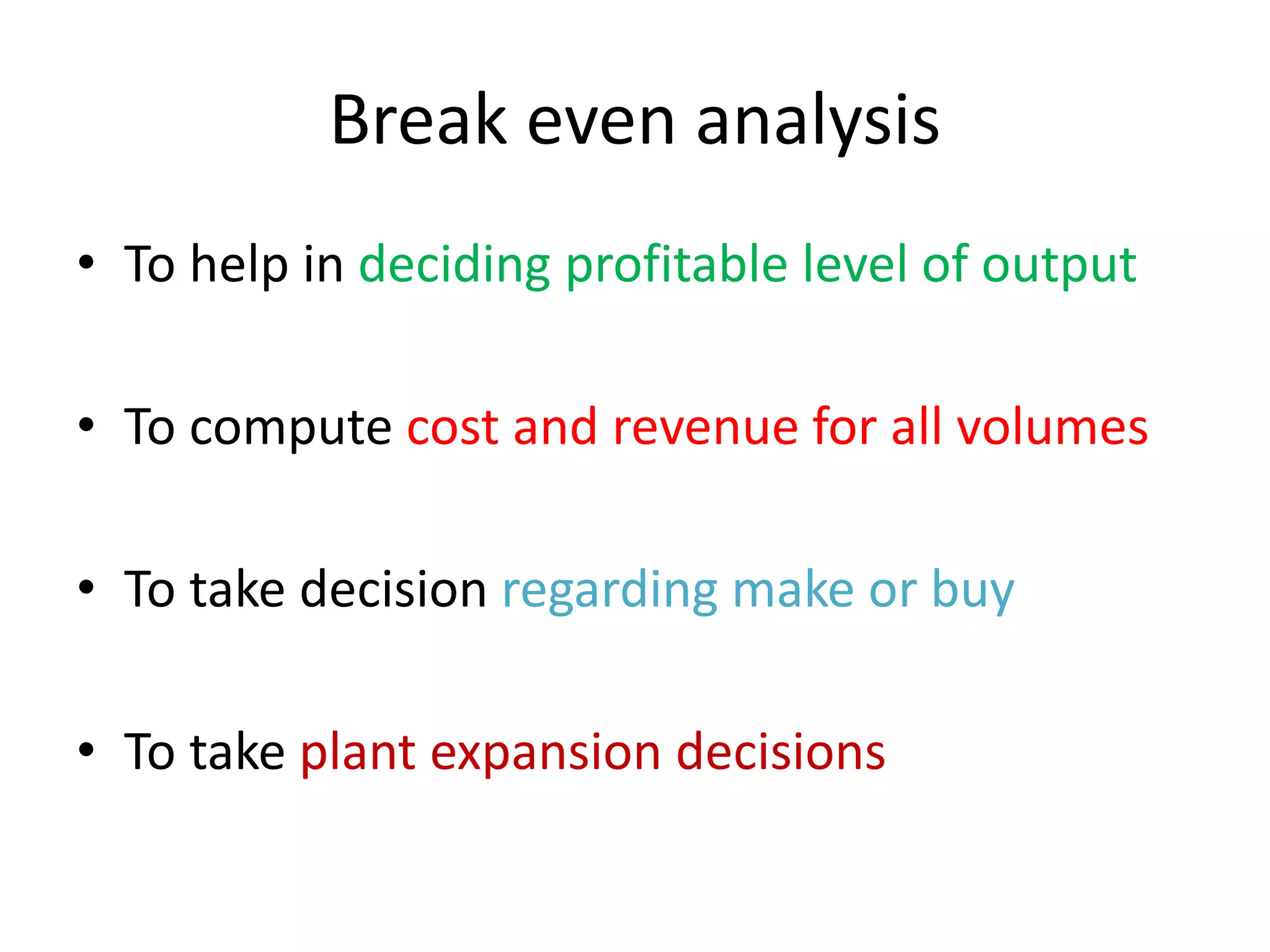
Break even analysis
•To help in deciding profitable level of output
• To compute cost and revenue for all volumes
• To take decision regarding make or buy
• To take plant expansion decisions
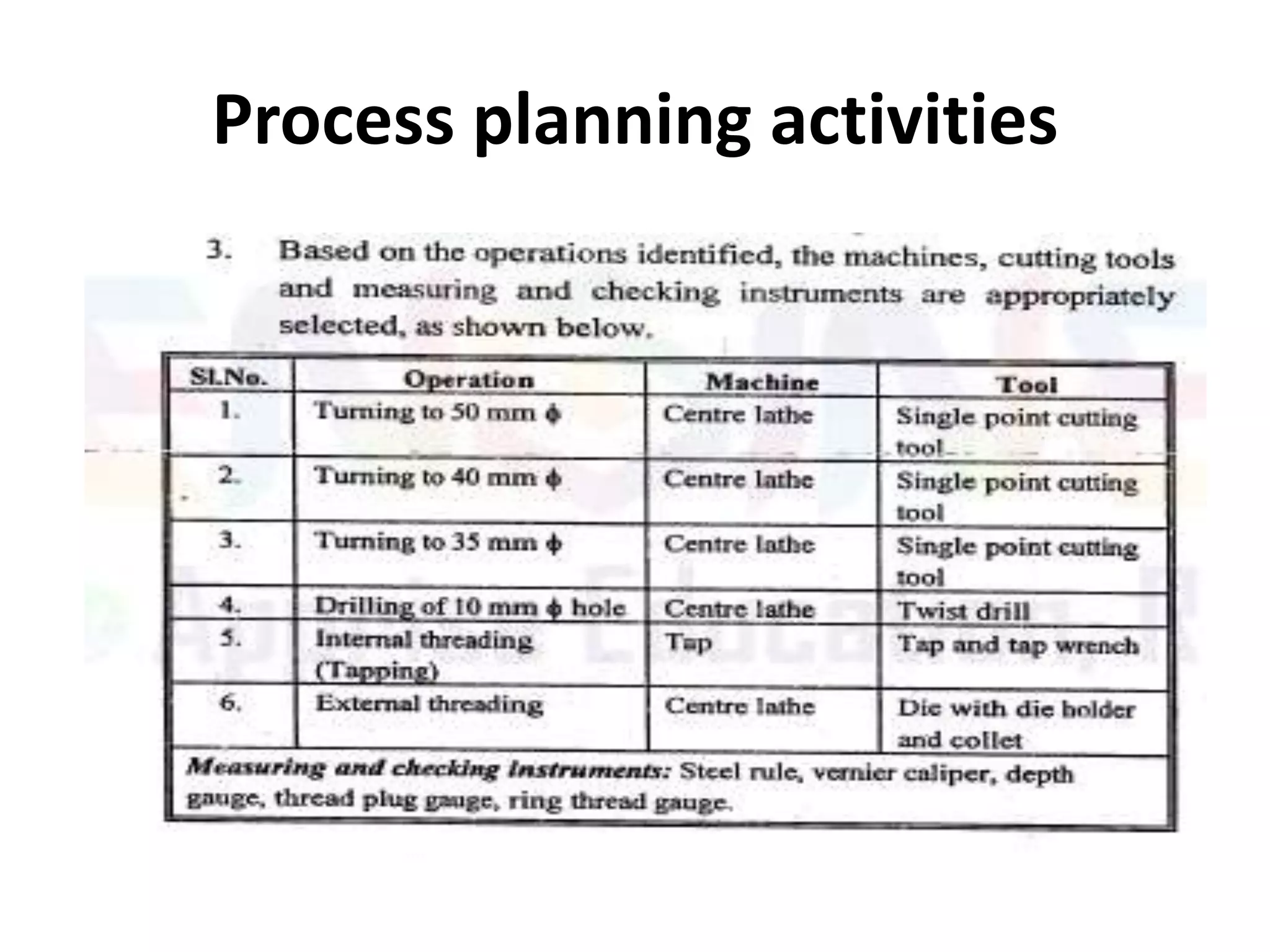
Process planning activities
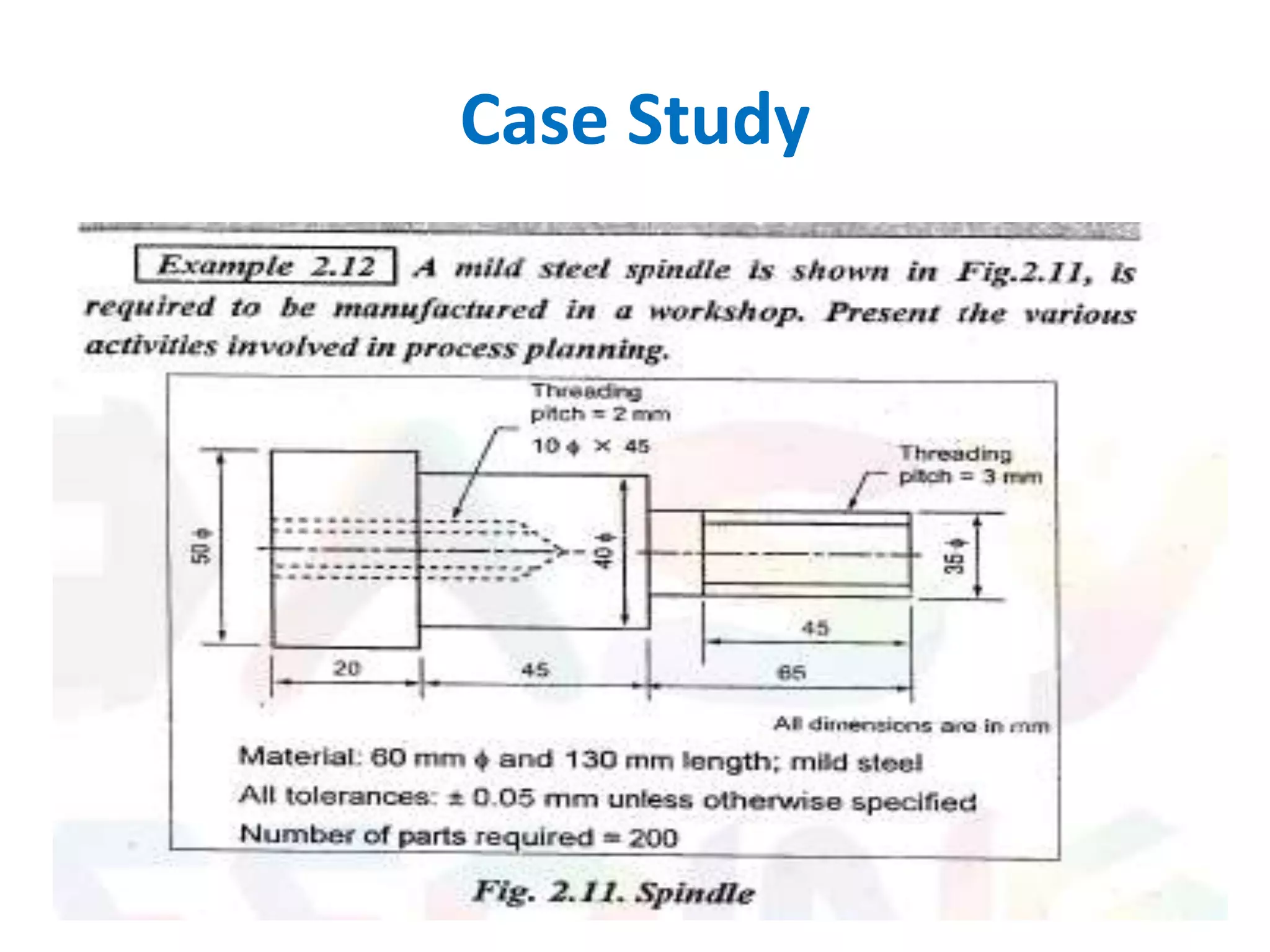
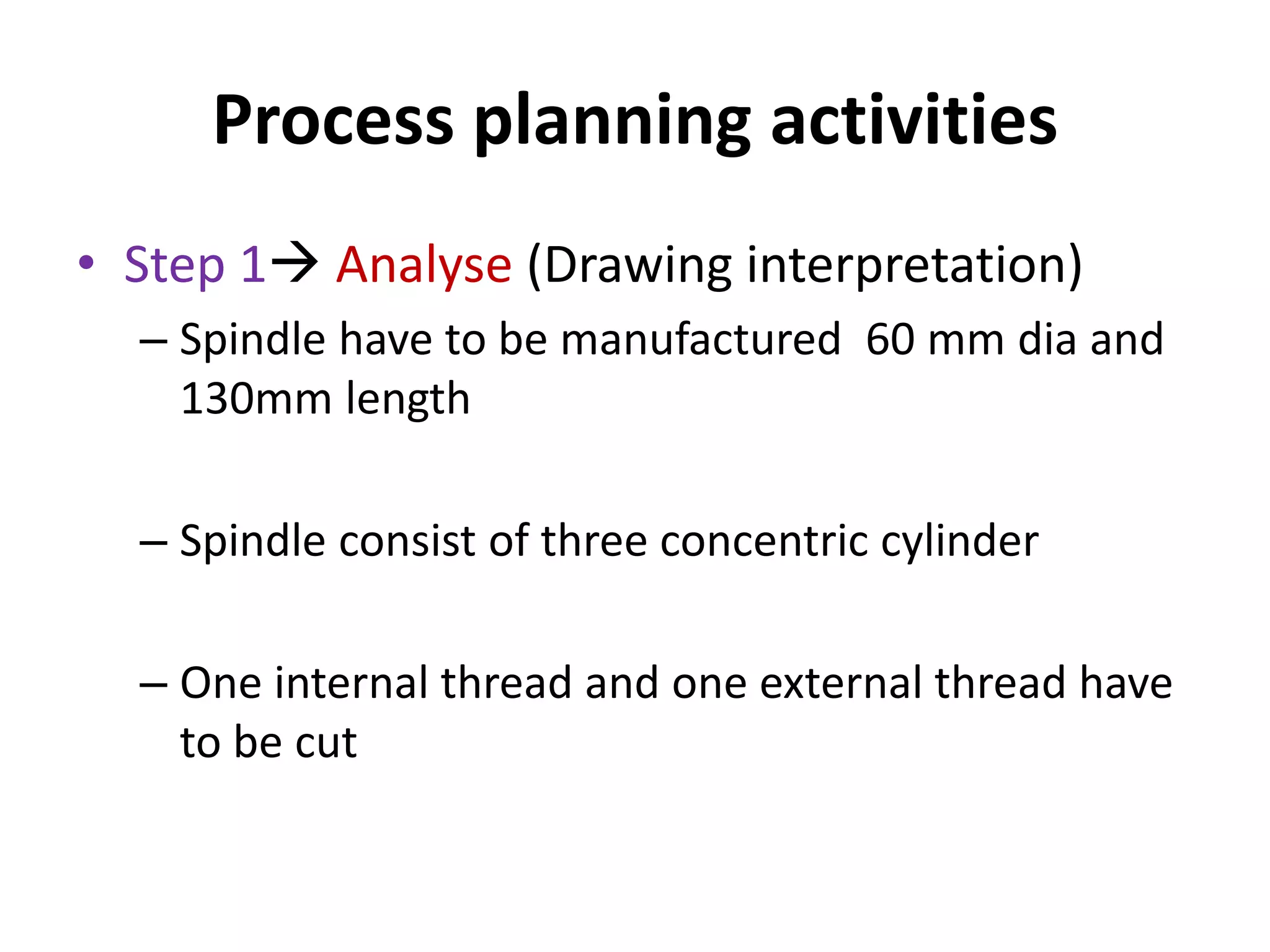
•Step 1 Analyse (Drawing interpretation)
– Spindle have to be manufactured 60 mm dia and
130mm length
– Spindle consist of three concentric cylinder
– One internal thread and one external thread have
to be cut
117.
Process planning activities
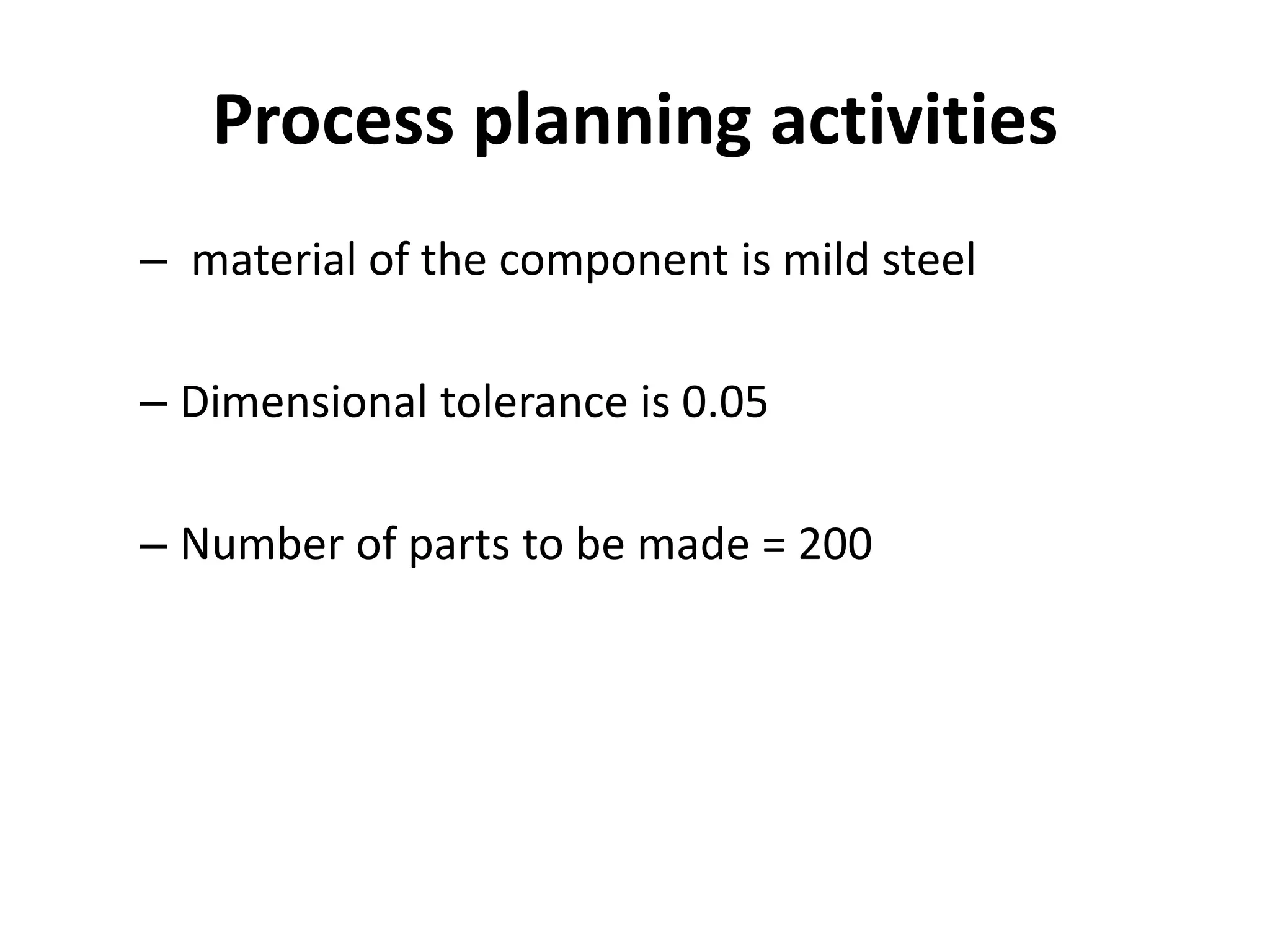
–material of the component is mild steel
– Dimensional tolerance is 0.05
– Number of parts to be made = 200
118.
Process planning activities
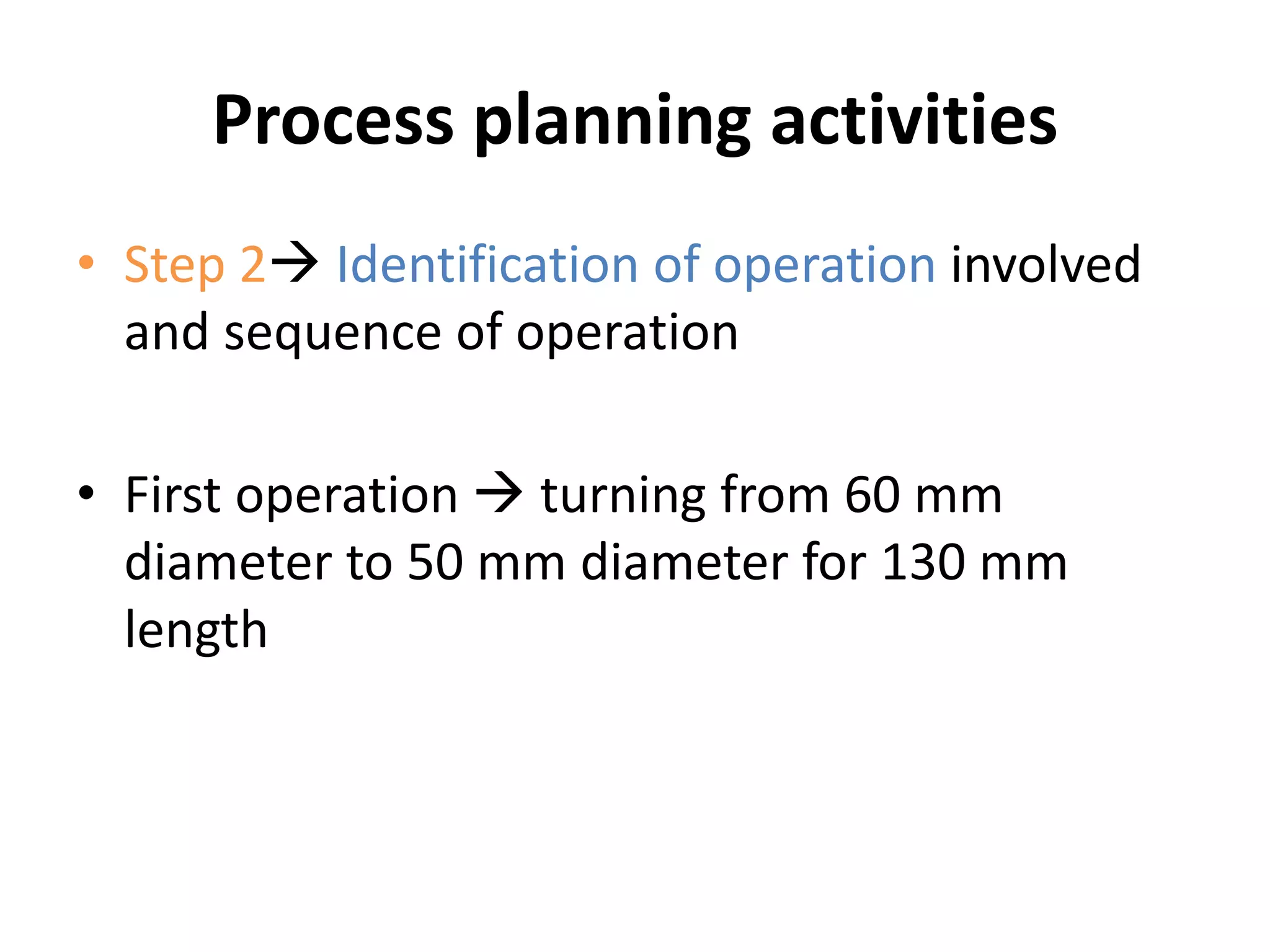
•Step 2 Identification of operation involved
and sequence of operation
• First operation turning from 60 mm
diameter to 50 mm diameter for 130 mm
length
119.
Process planning activities
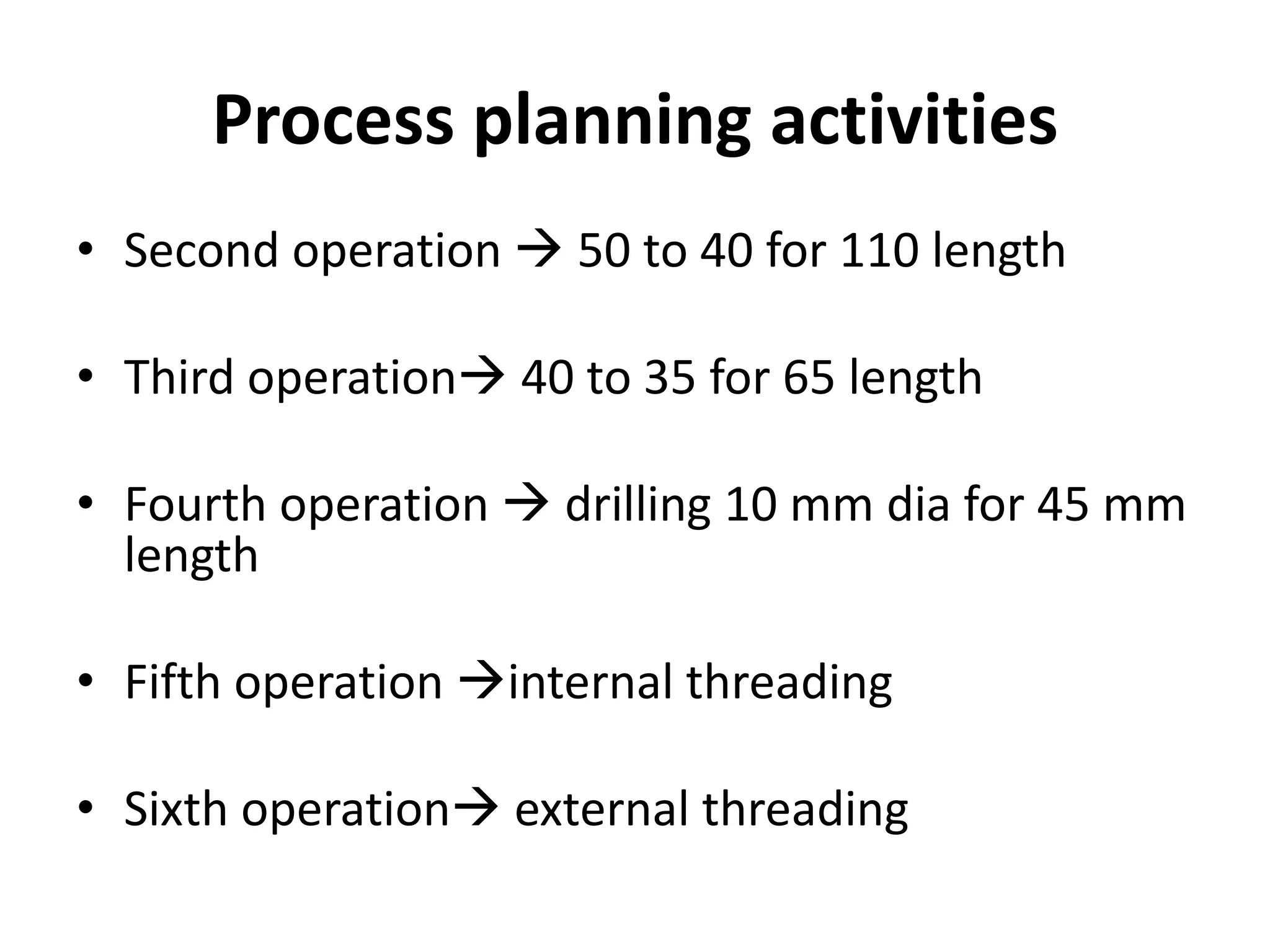
•Second operation 50 to 40 for 110 length
• Third operation 40 to 35 for 65 length
• Fourth operation drilling 10 mm dia for 45 mm
length
• Fifth operation internal threading
• Sixth operation external threading
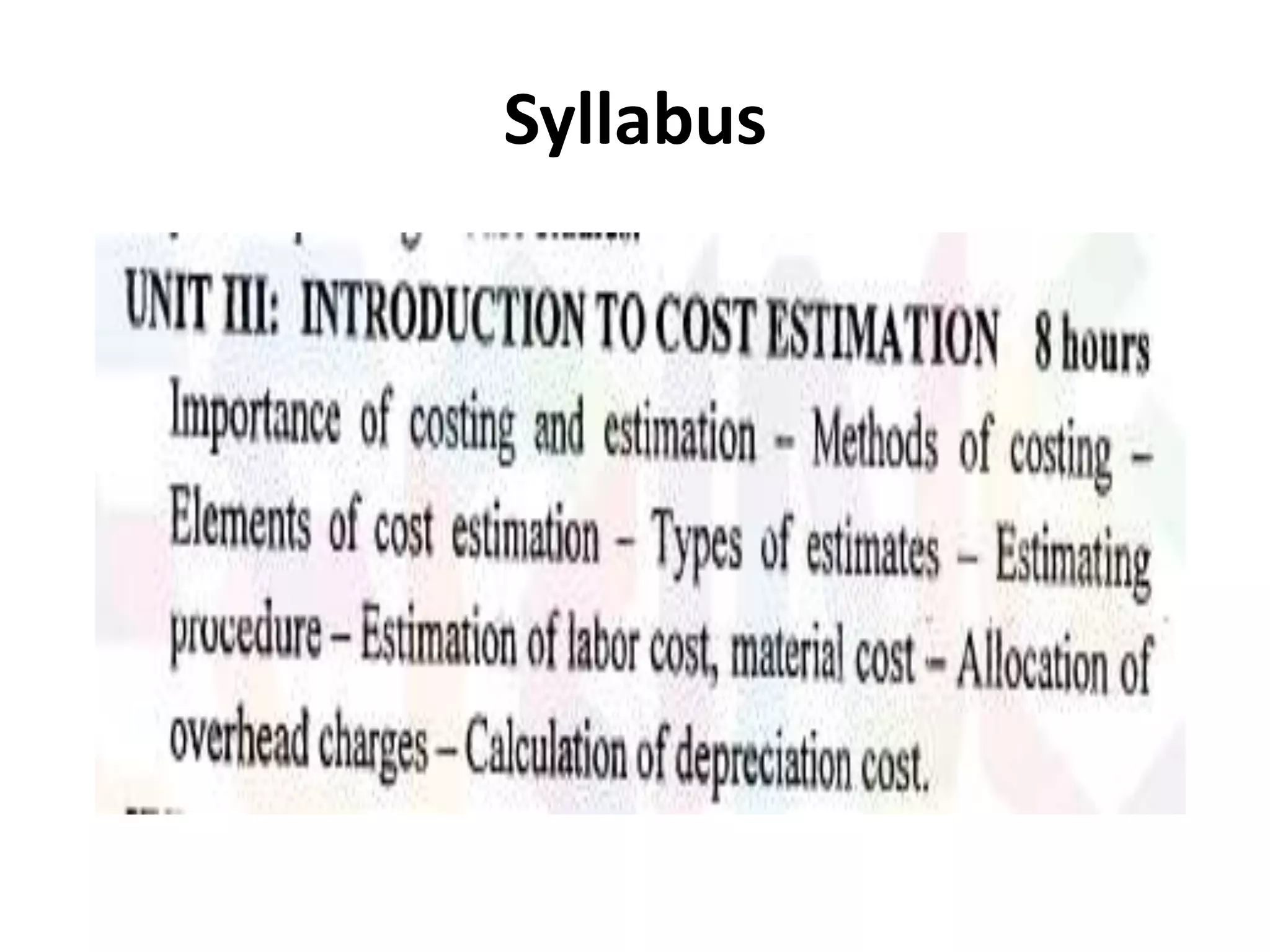
Topics to becovered
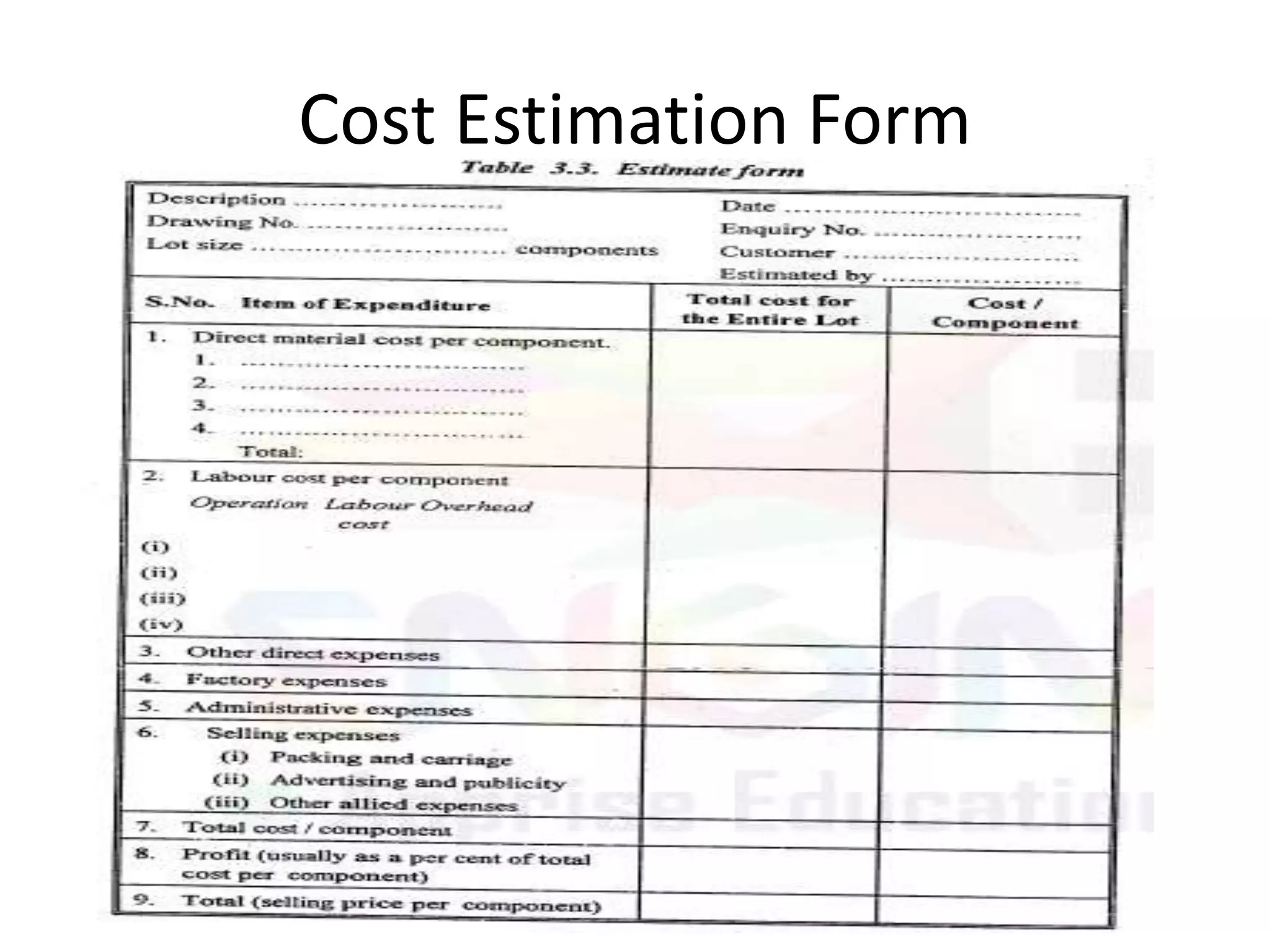
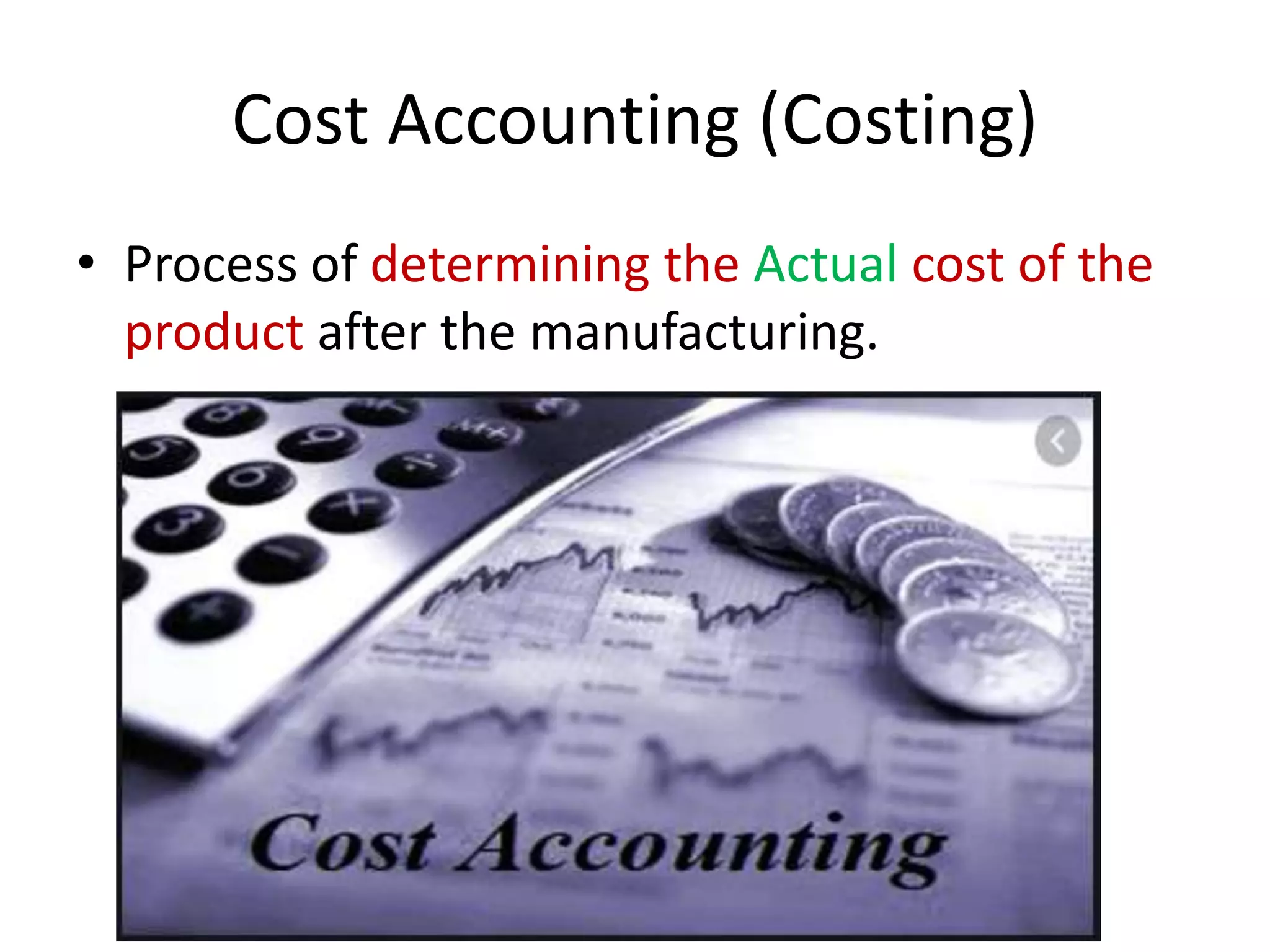
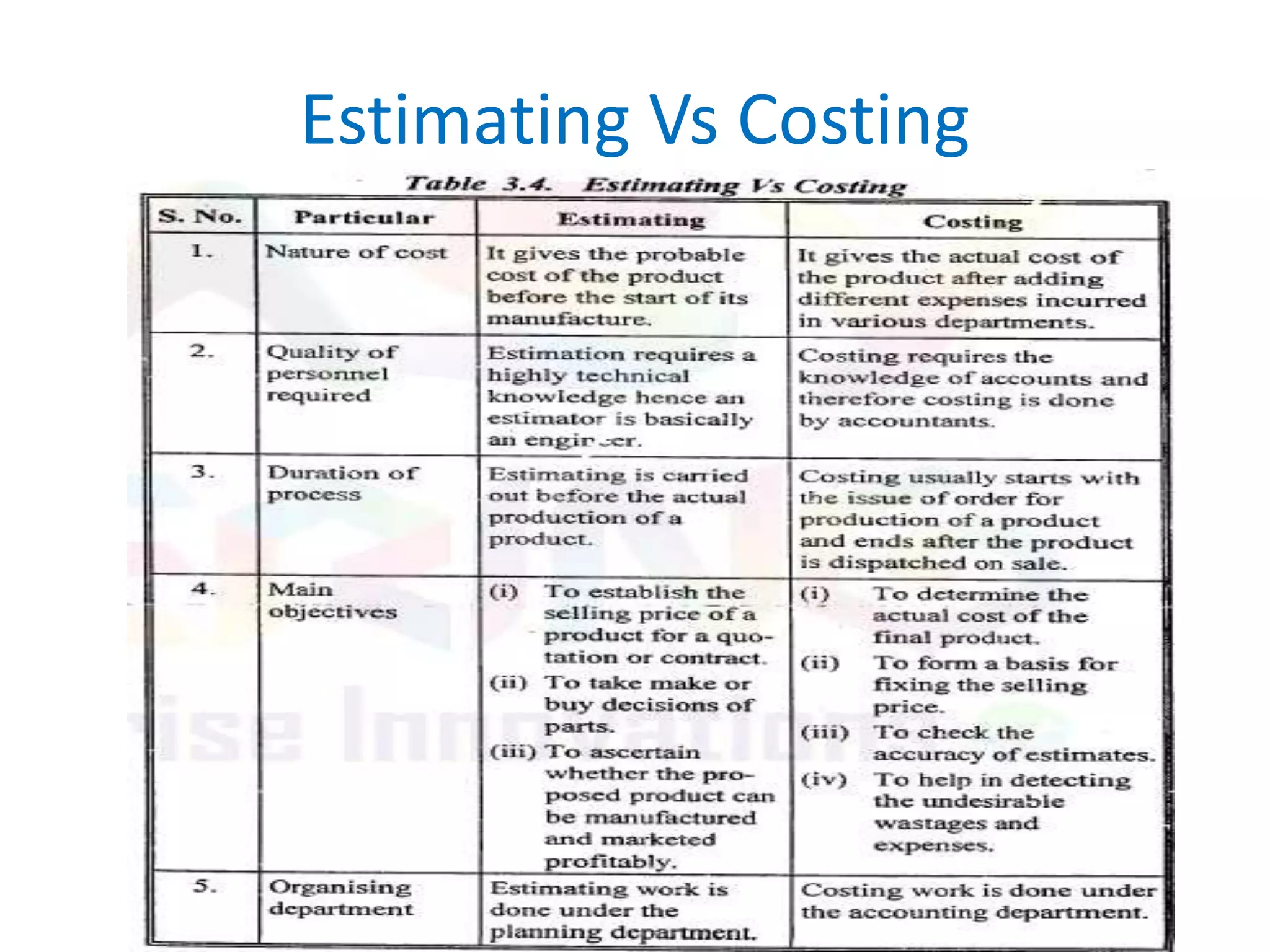
• Cost Estimation (Estimation) Vs Cost Accounting
(Costing)
• Importance of Cost Estimation
• Types of estimates
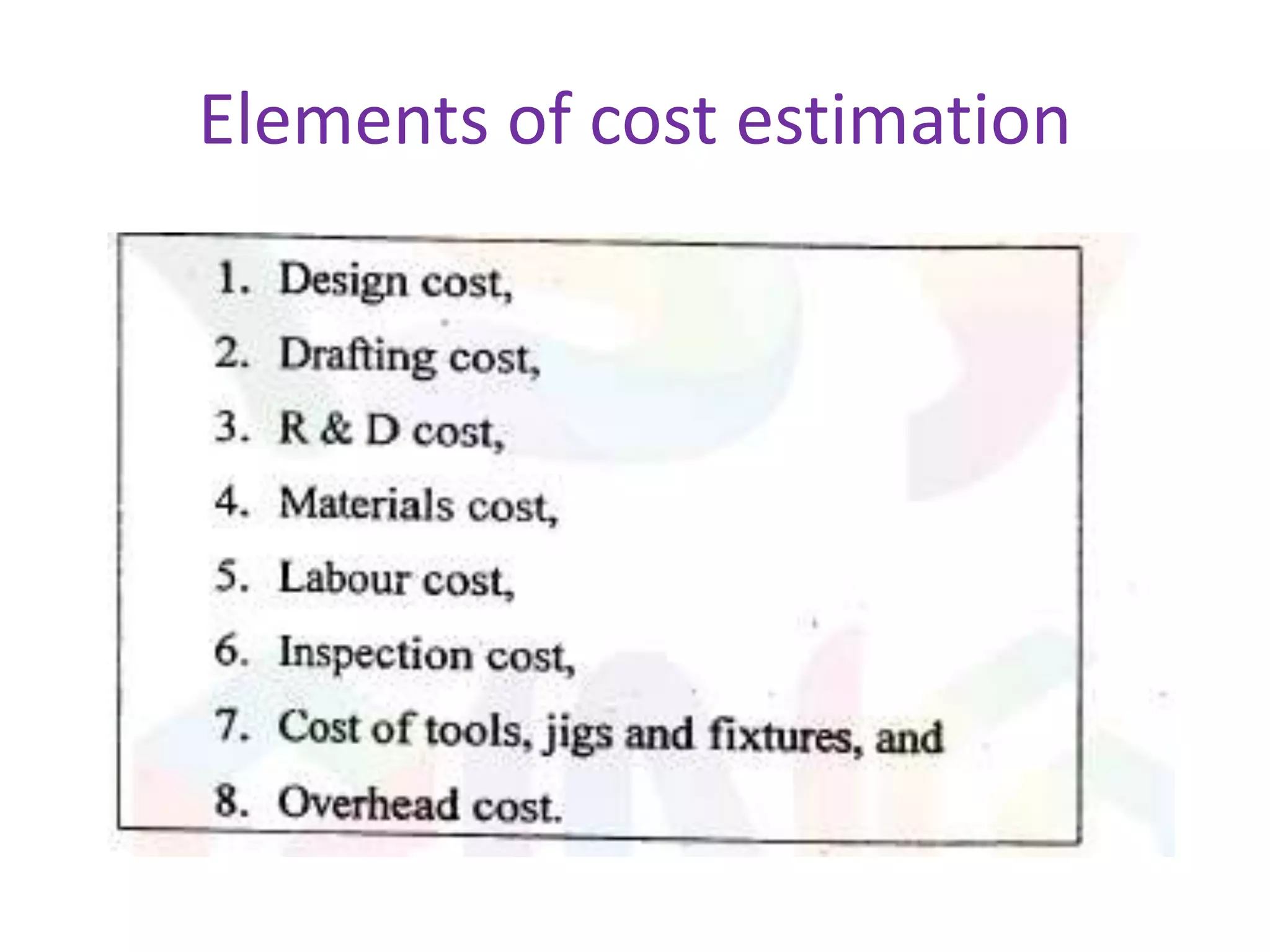
• Elements of cost estimation
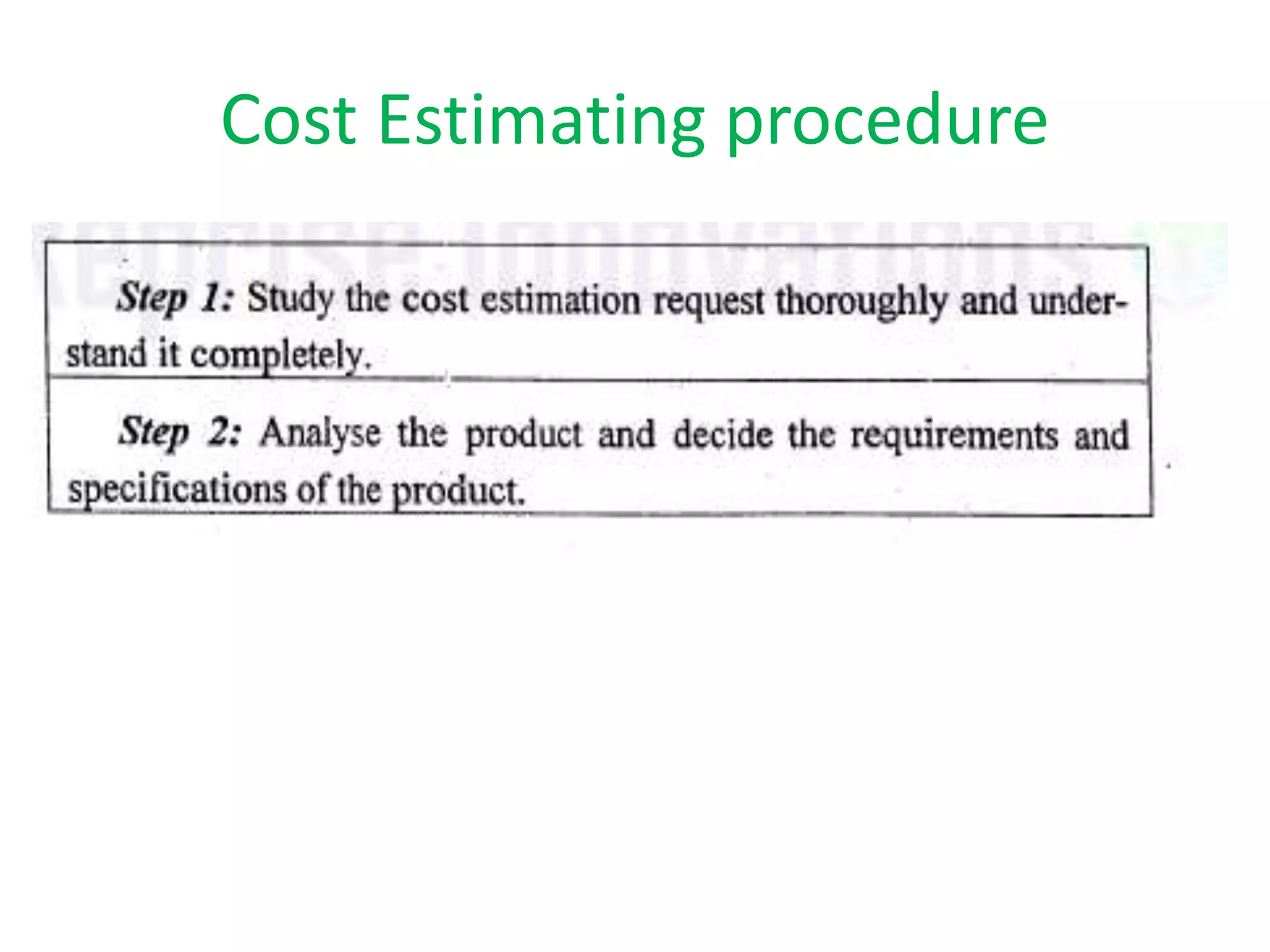
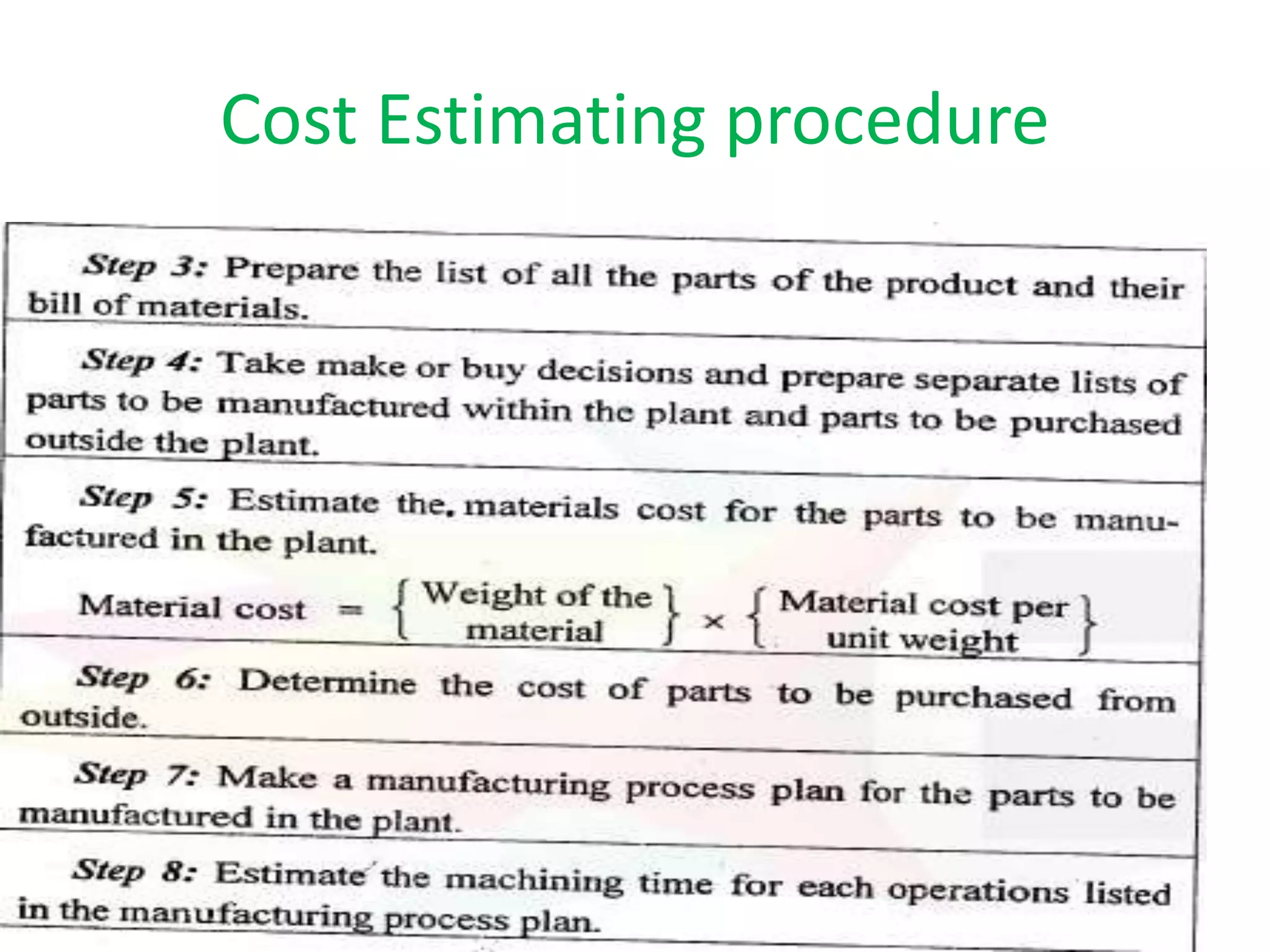
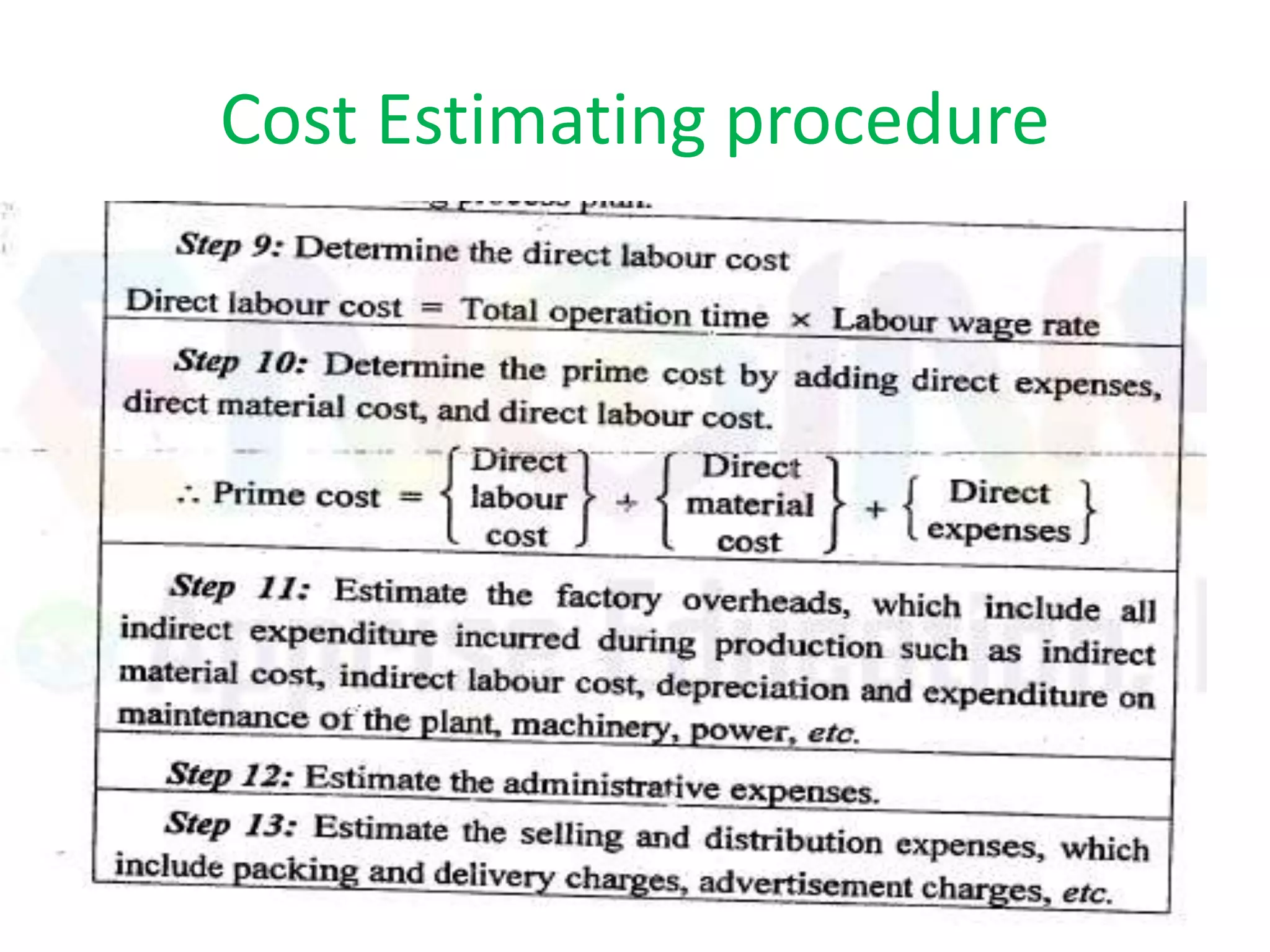
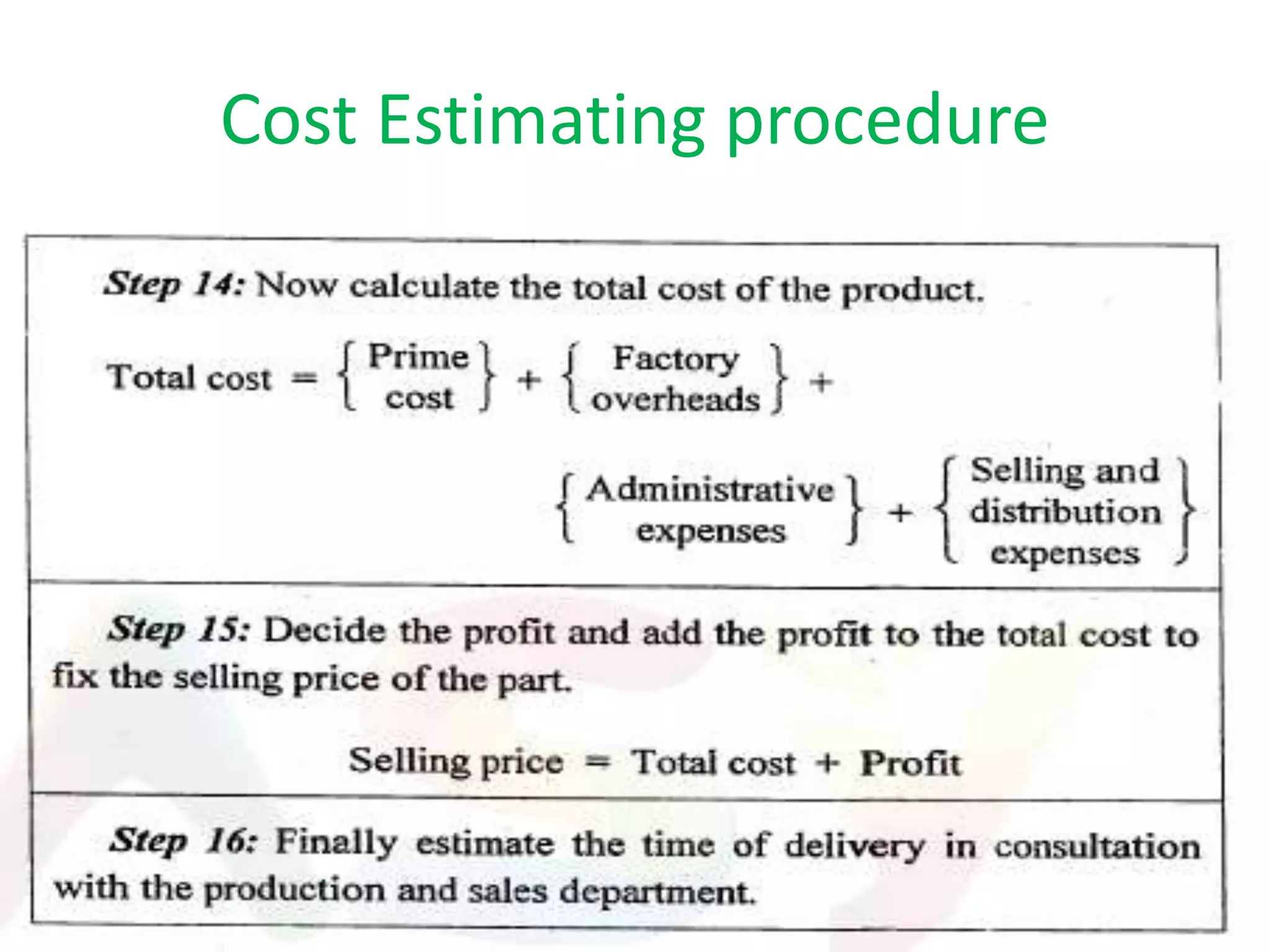
• Estimating procedure
125.
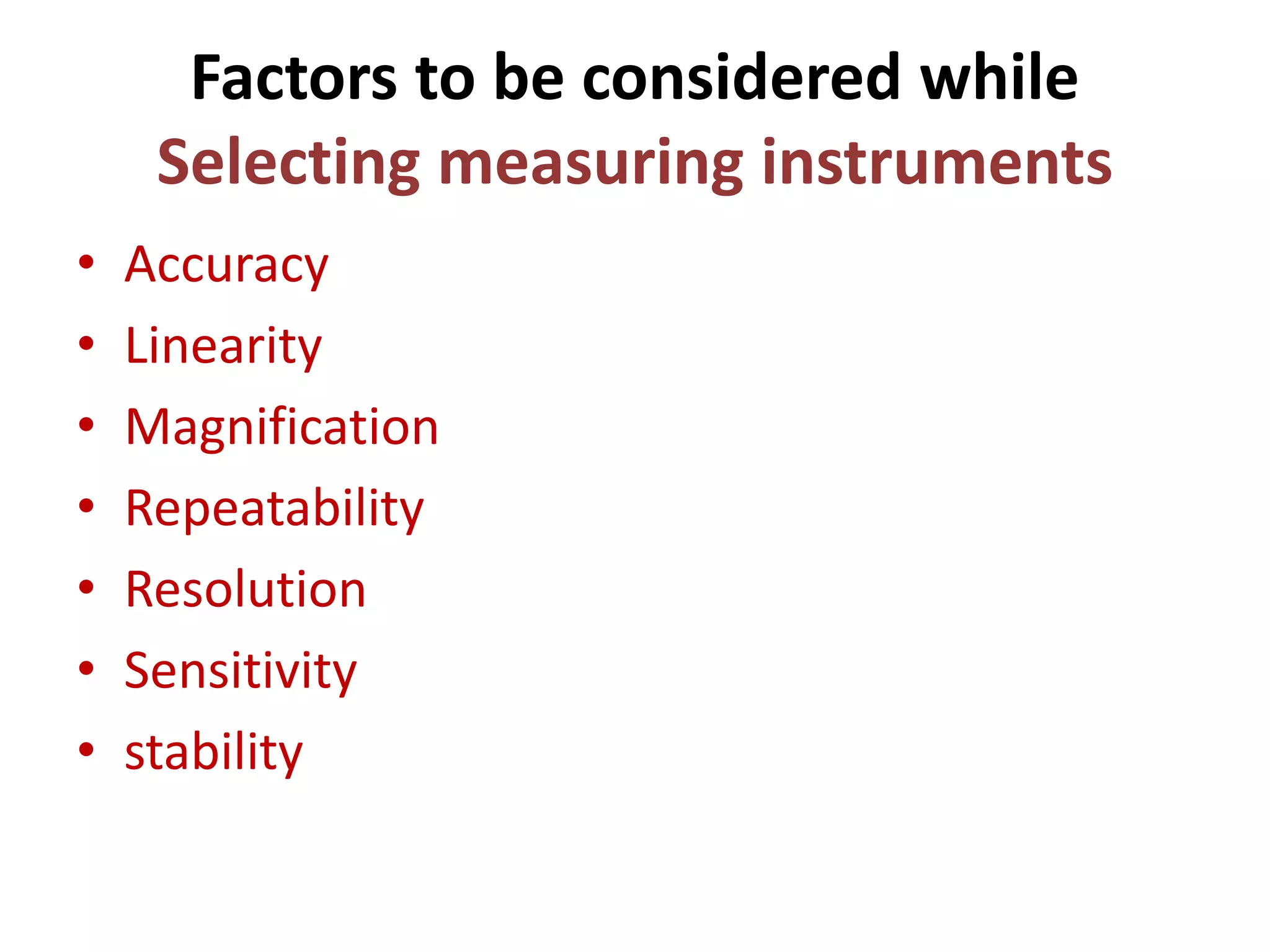
Topics to becovered
• Importance of Costing
• Methods of costing
• Elements of Costing
• Estimate of labor cost and material cost
• Allocation of overhead charges
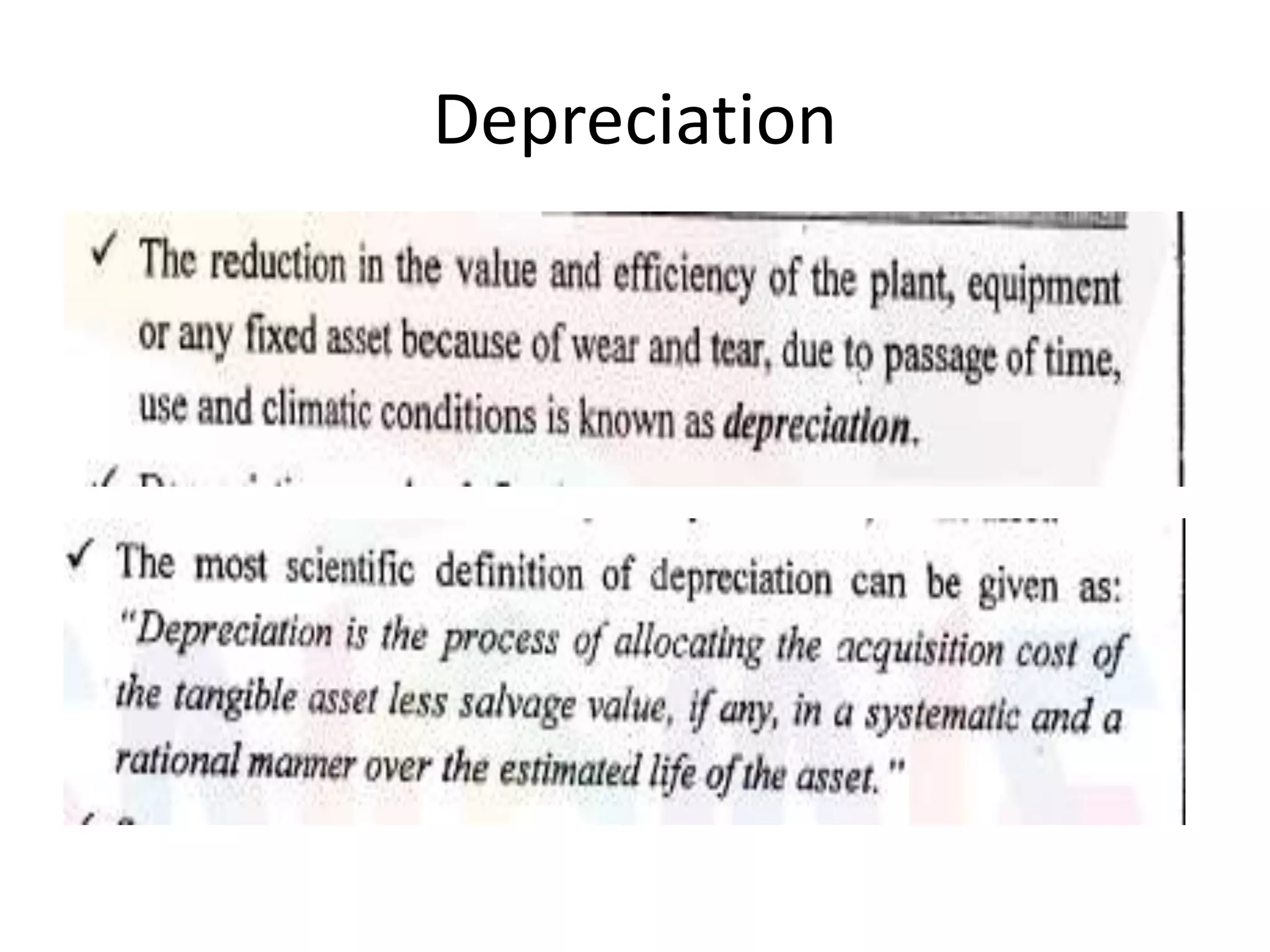
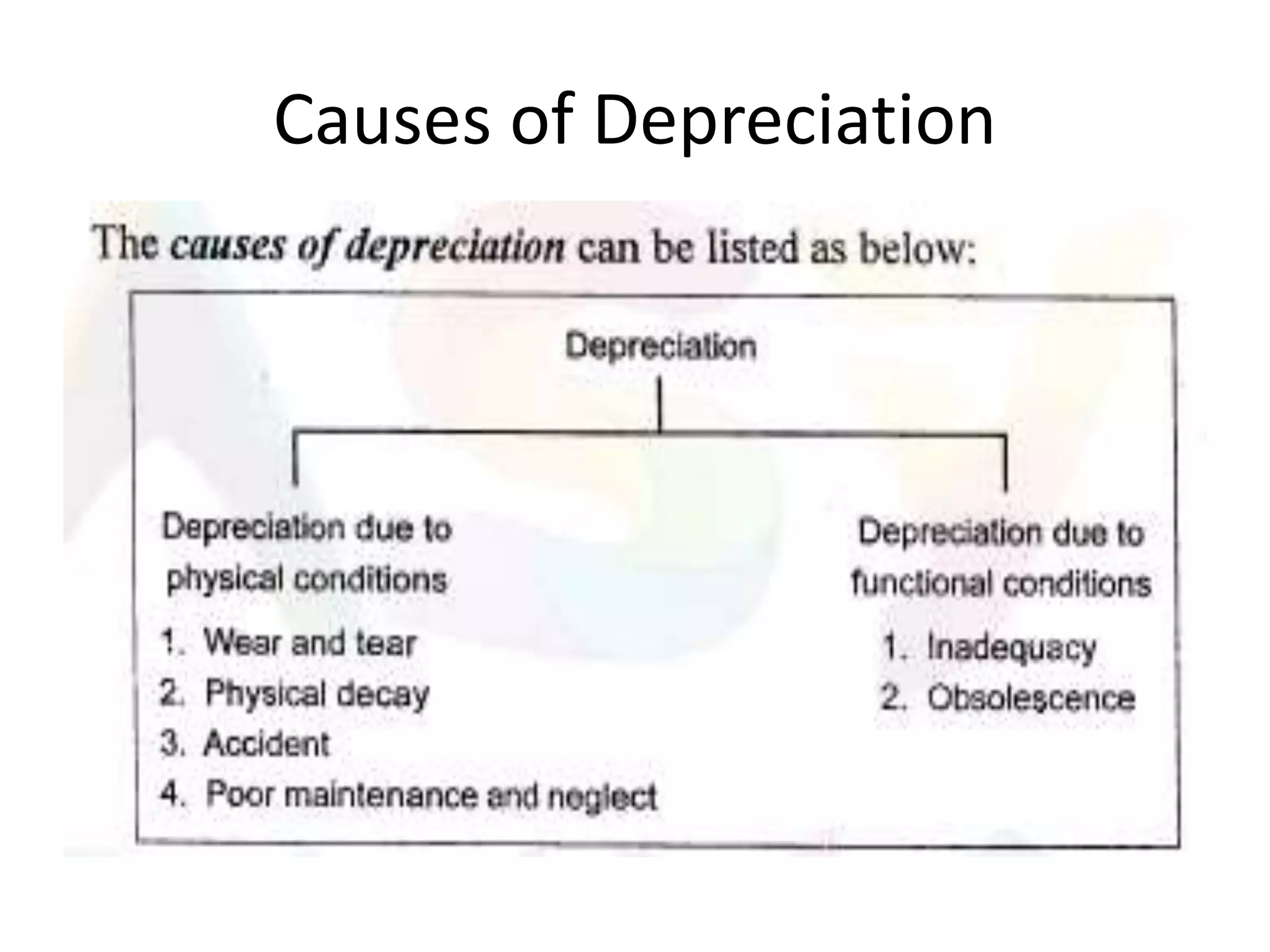
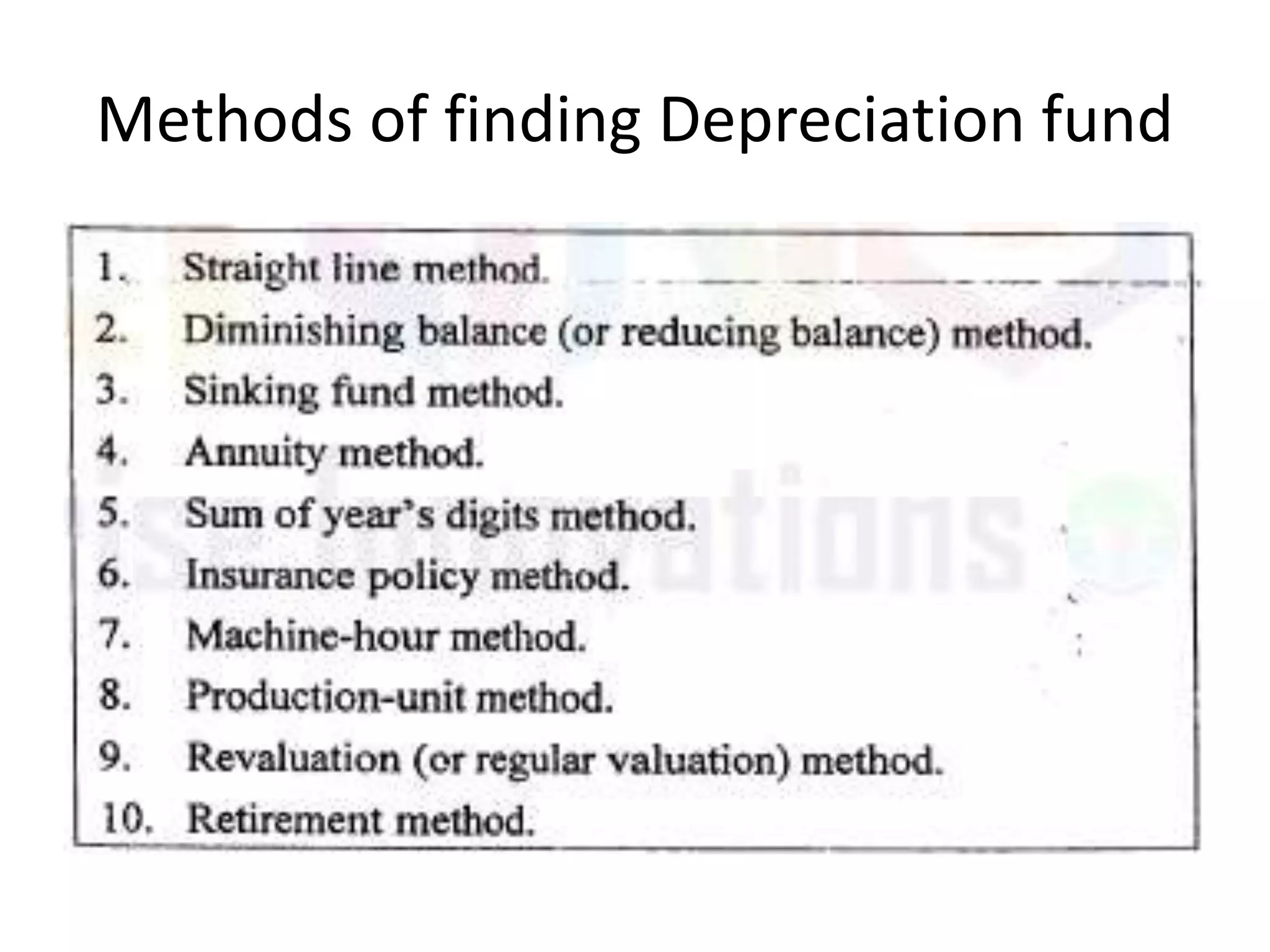
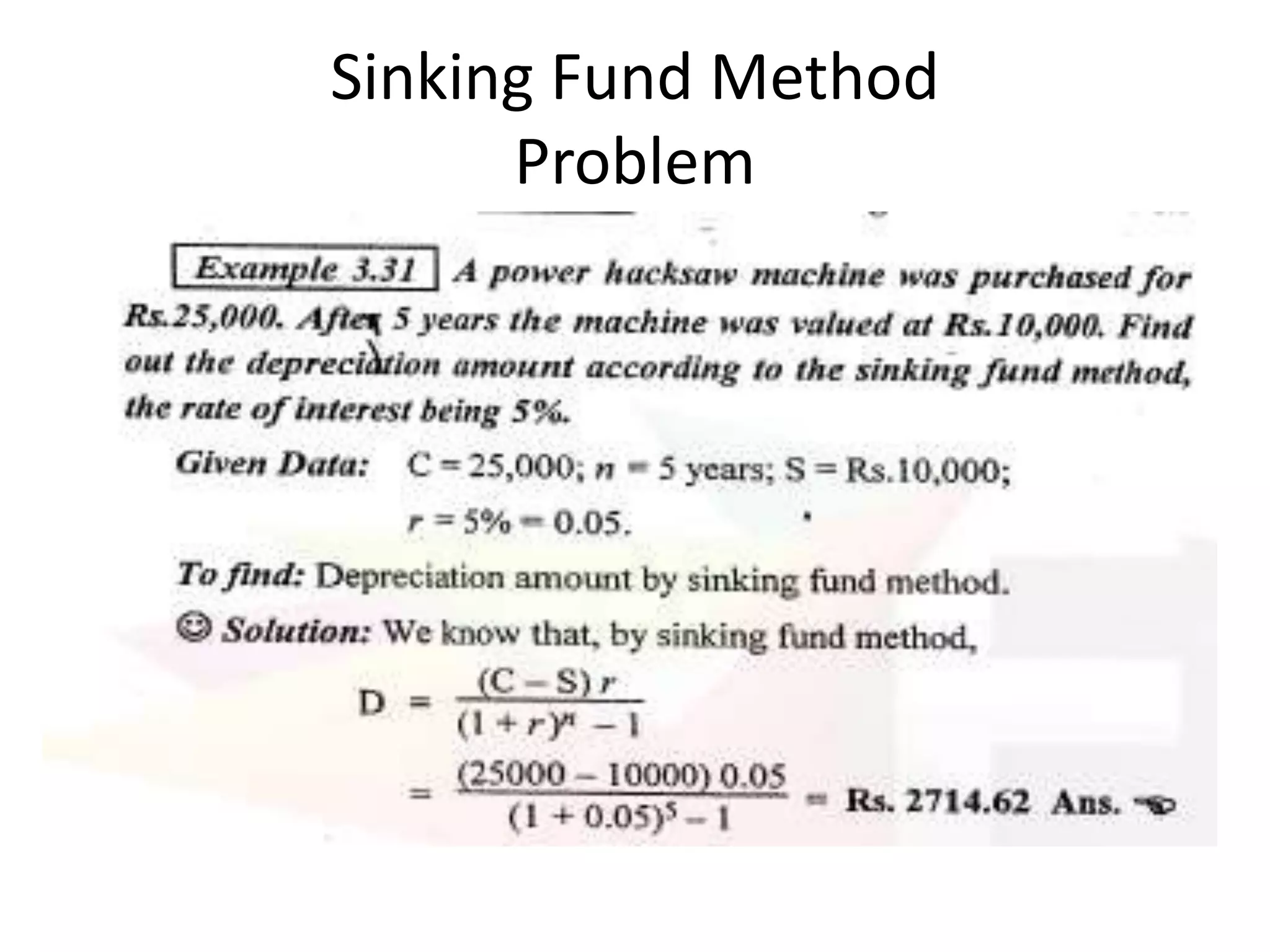
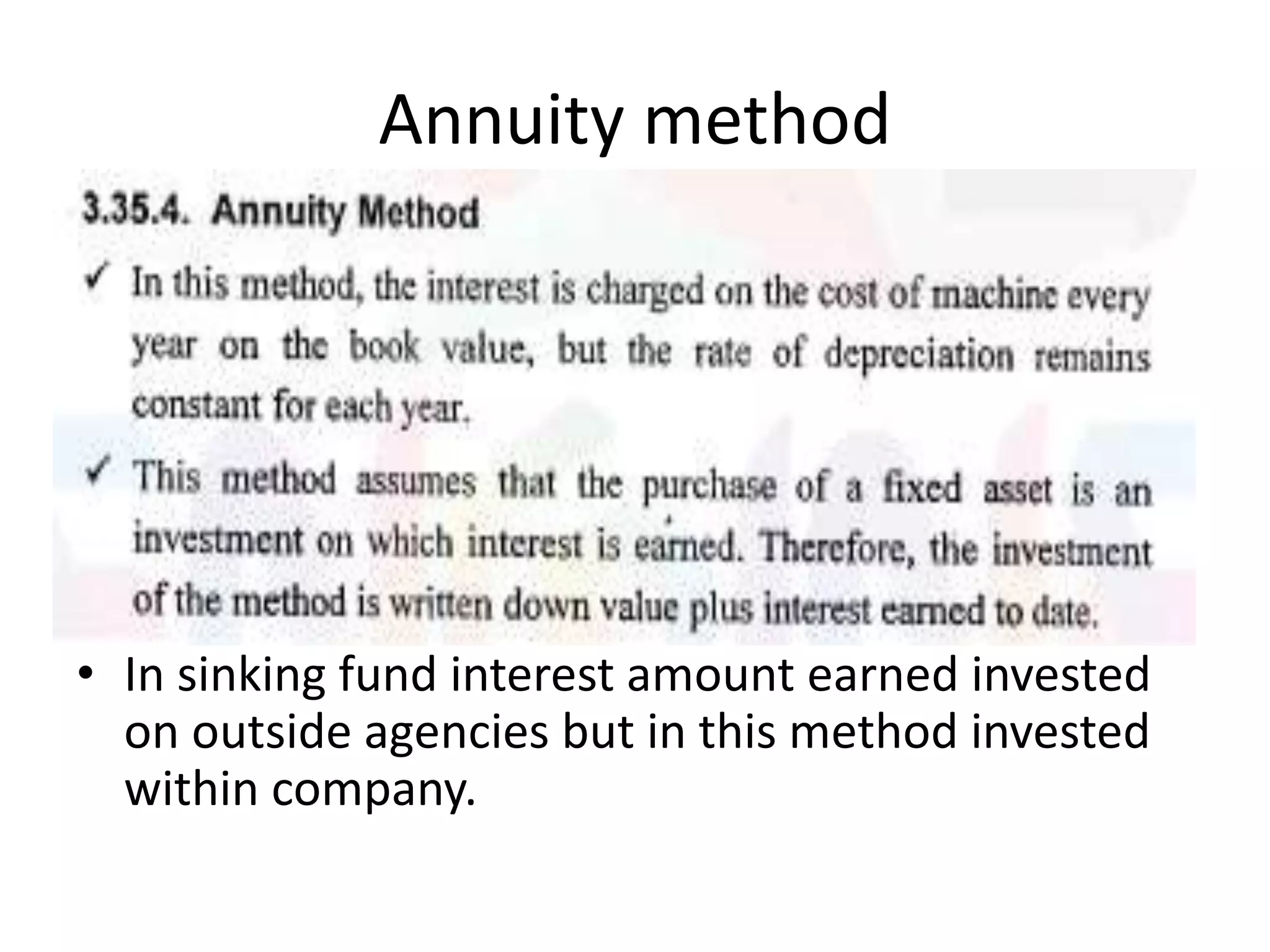
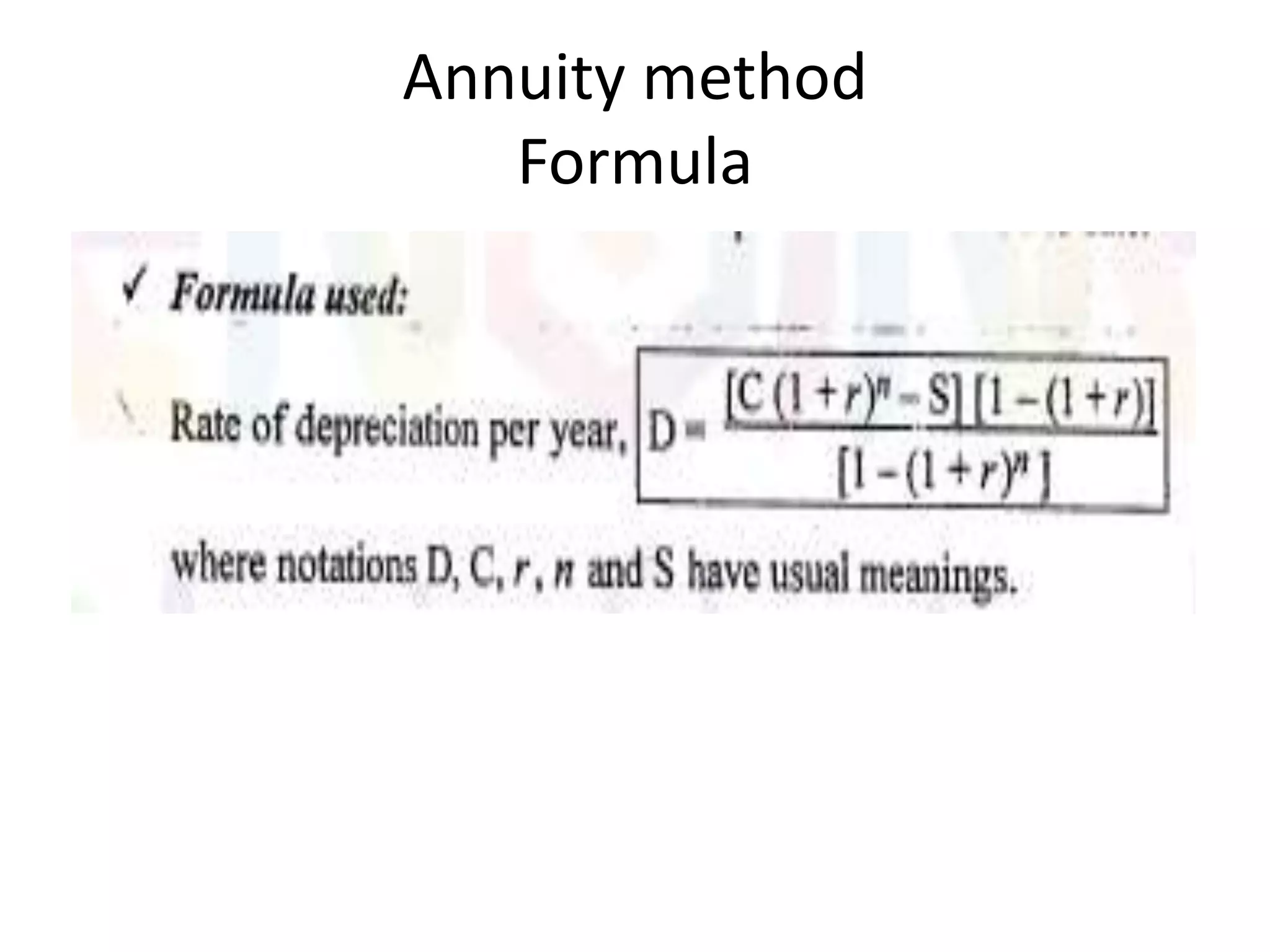
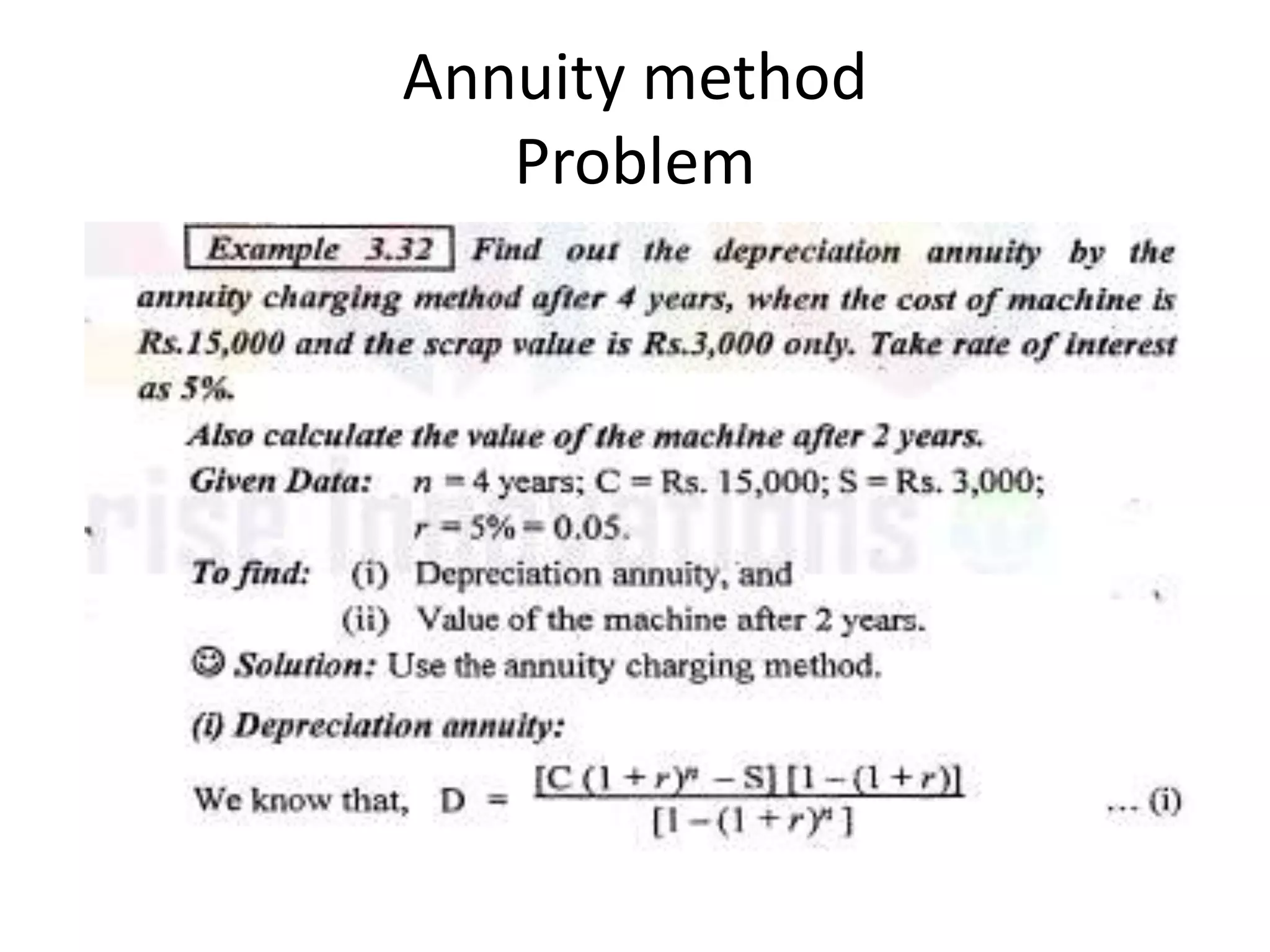
• Calculation of depreciation cost
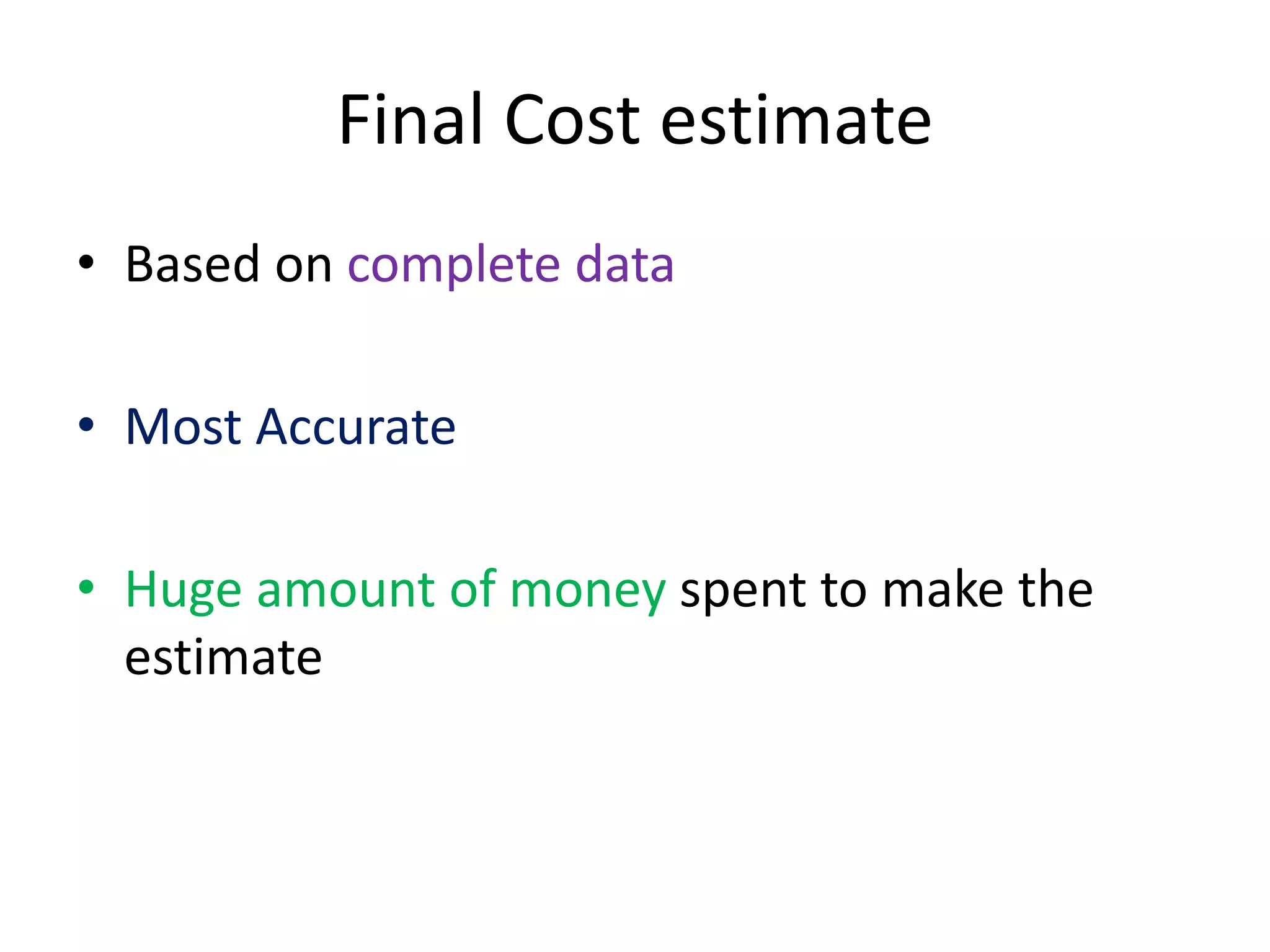
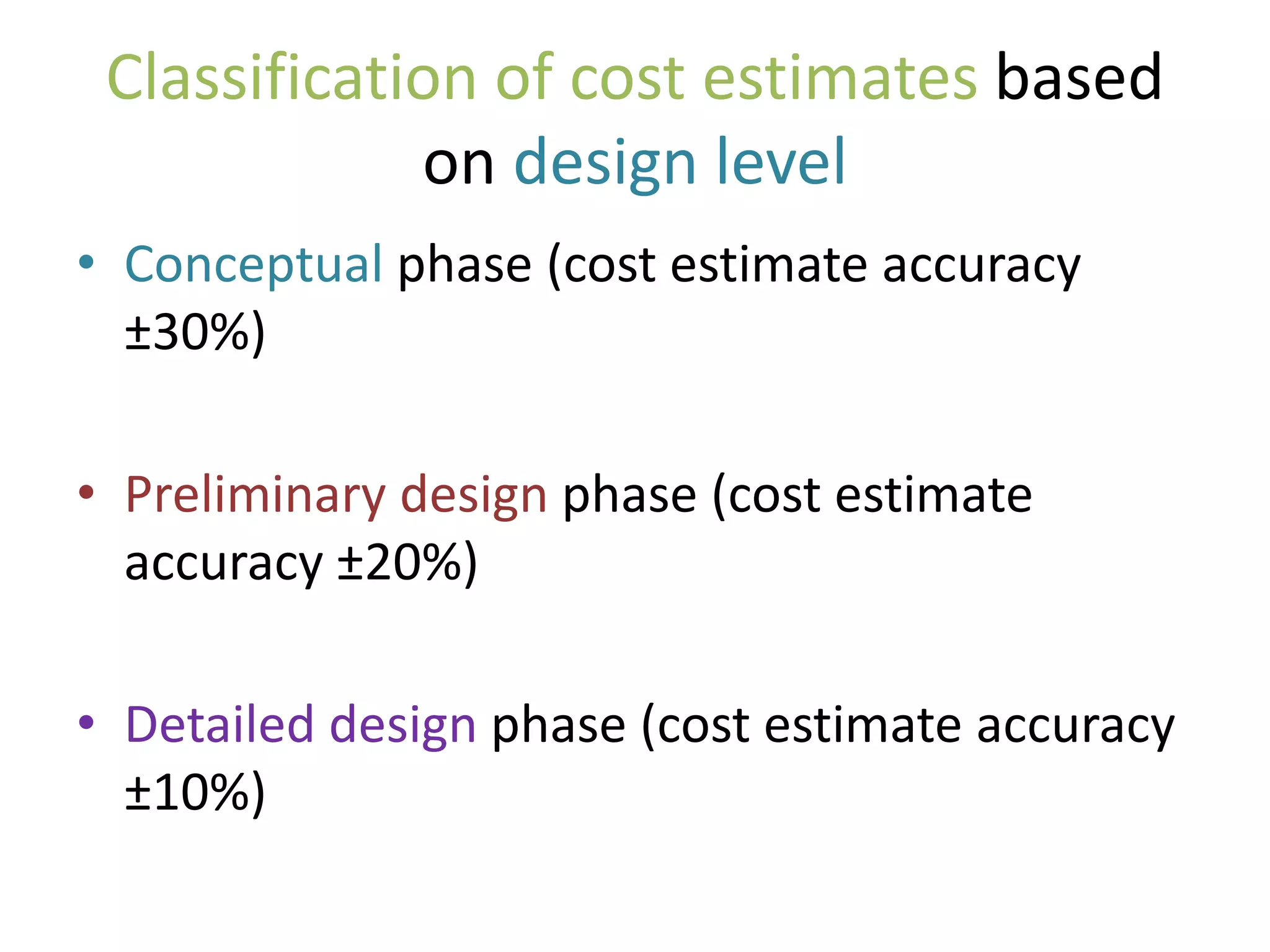
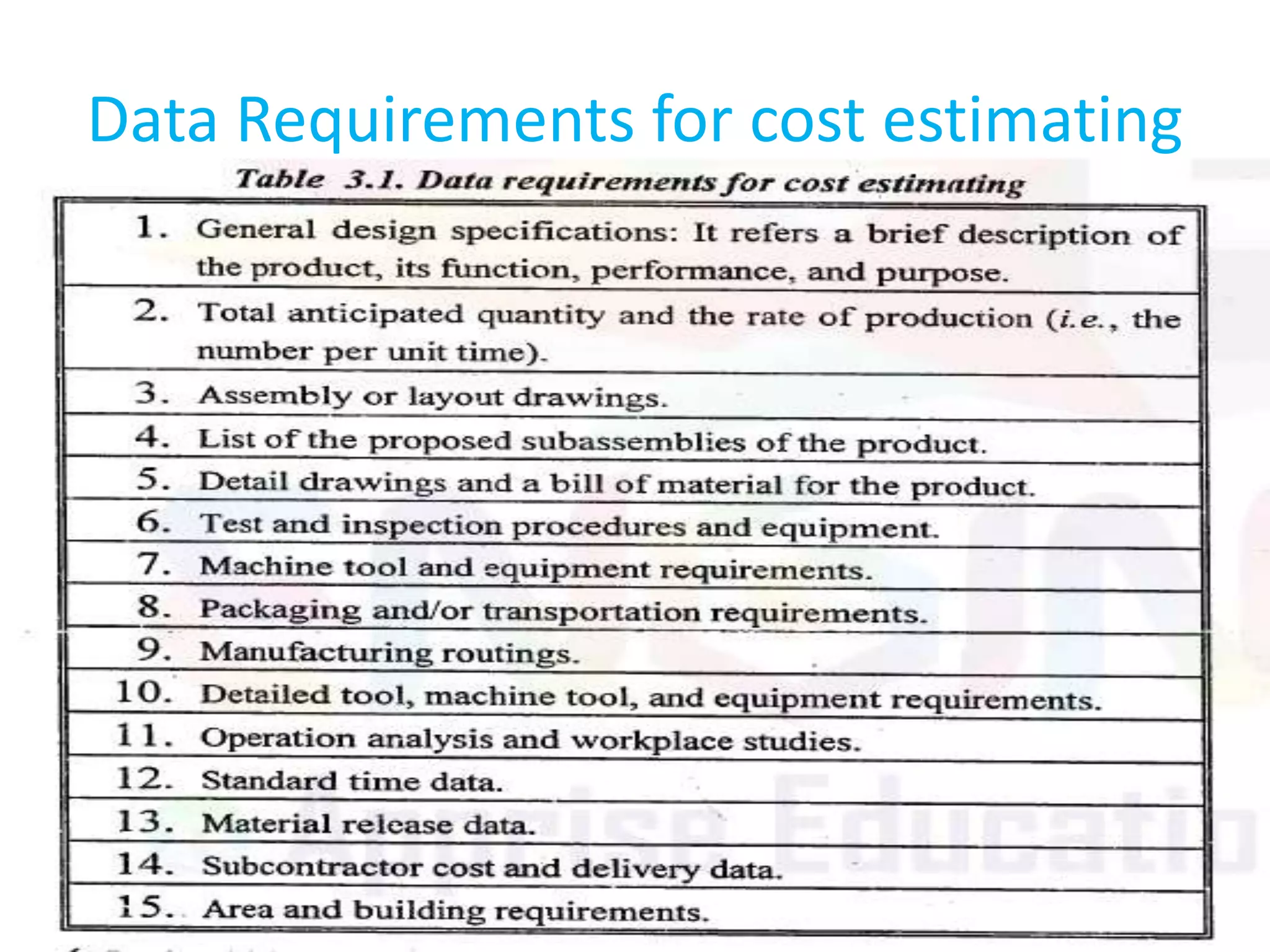
Importance of costestimation
• Important for all organizations.
• Important for deciding manufacturing and
selling policies.
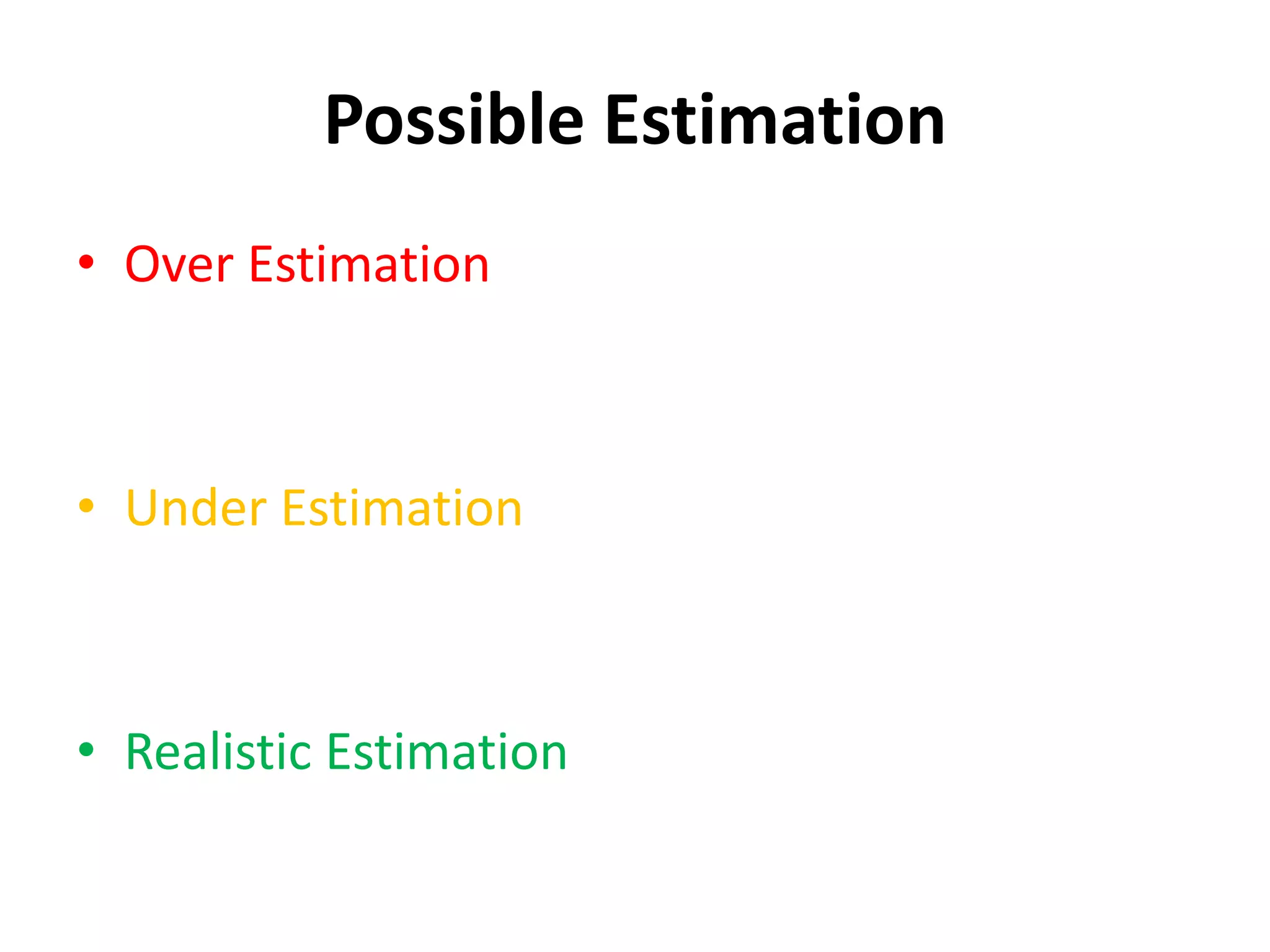
• Problem
– Overestimating problem with competitive
prices
– Underestimating will lead to financial loss
129.
Objective of costestimation
• To establish selling price of product
• To verify the quotation by vendors
• To take make or buy decision
• To prepare production budget
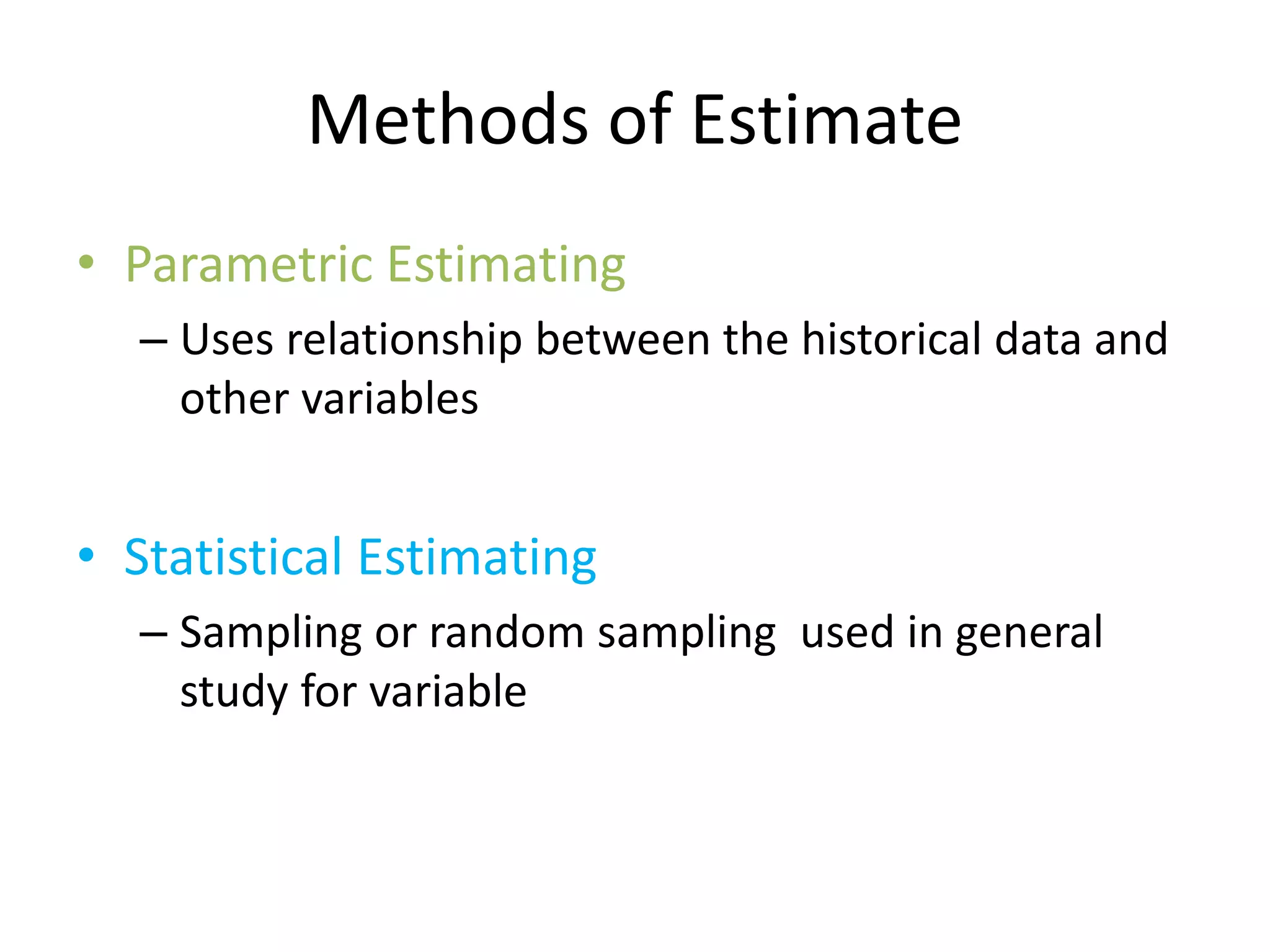
Methods of Estimate
•Parametric Estimating
– Uses relationship between the historical data and
other variables
• Statistical Estimating
– Sampling or random sampling used in general
study for variable
Importance of CostAccounting
• Determining , classifying and analyzing the
cost and income of business firm
• Determining prices to be quoted to customers
• Forming basis for managerial decision
– To make or buy decision
– To introduce new product or drop on existing one
157.
Importance of CostAccounting
• Cost control through the accumulation and
utilization of cost data.
• Establishing standard for measuring efficiency.
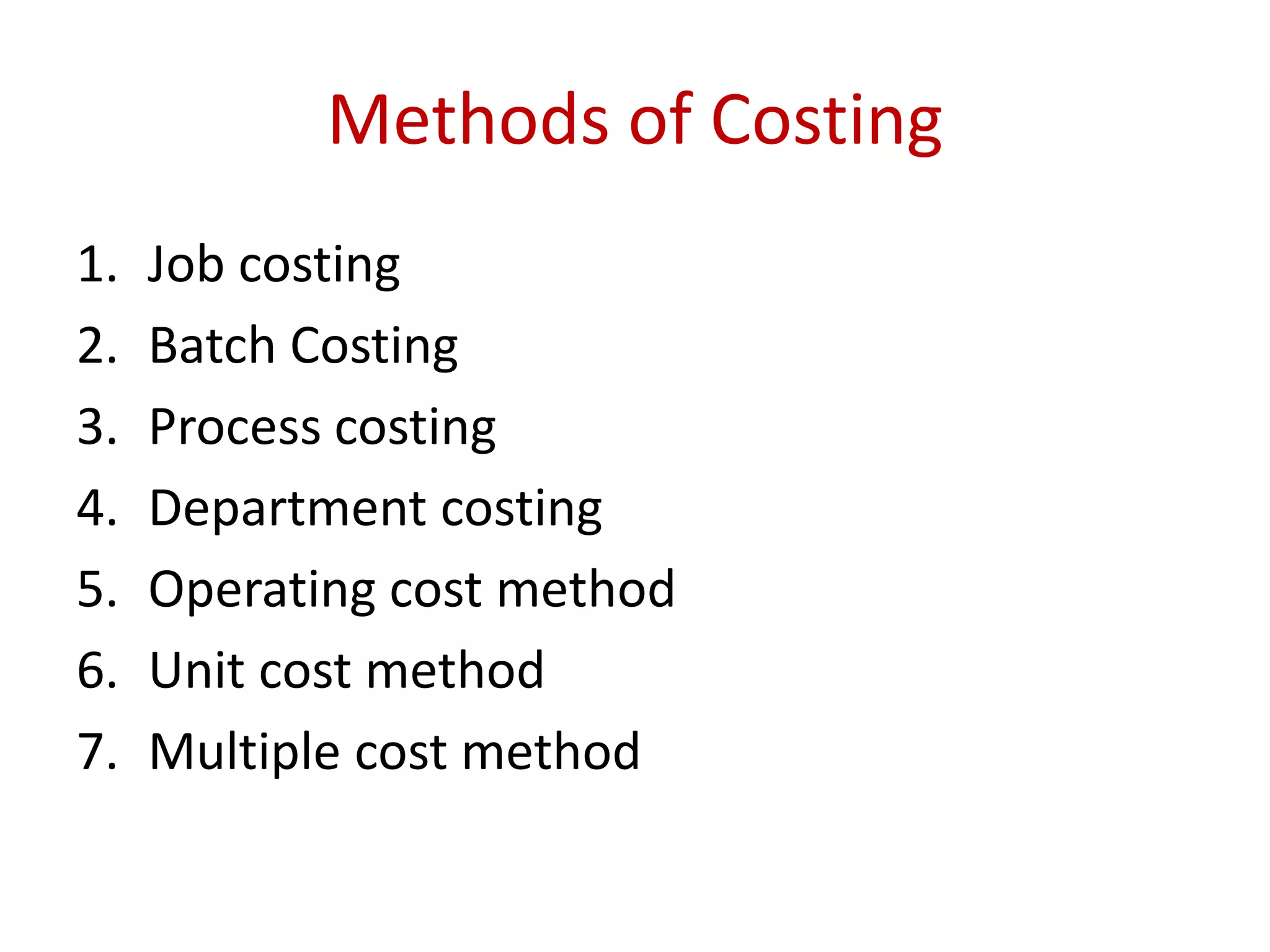
Methods of Costing
1.Job costing
2. Batch Costing
3. Process costing
4. Department costing
5. Operating cost method
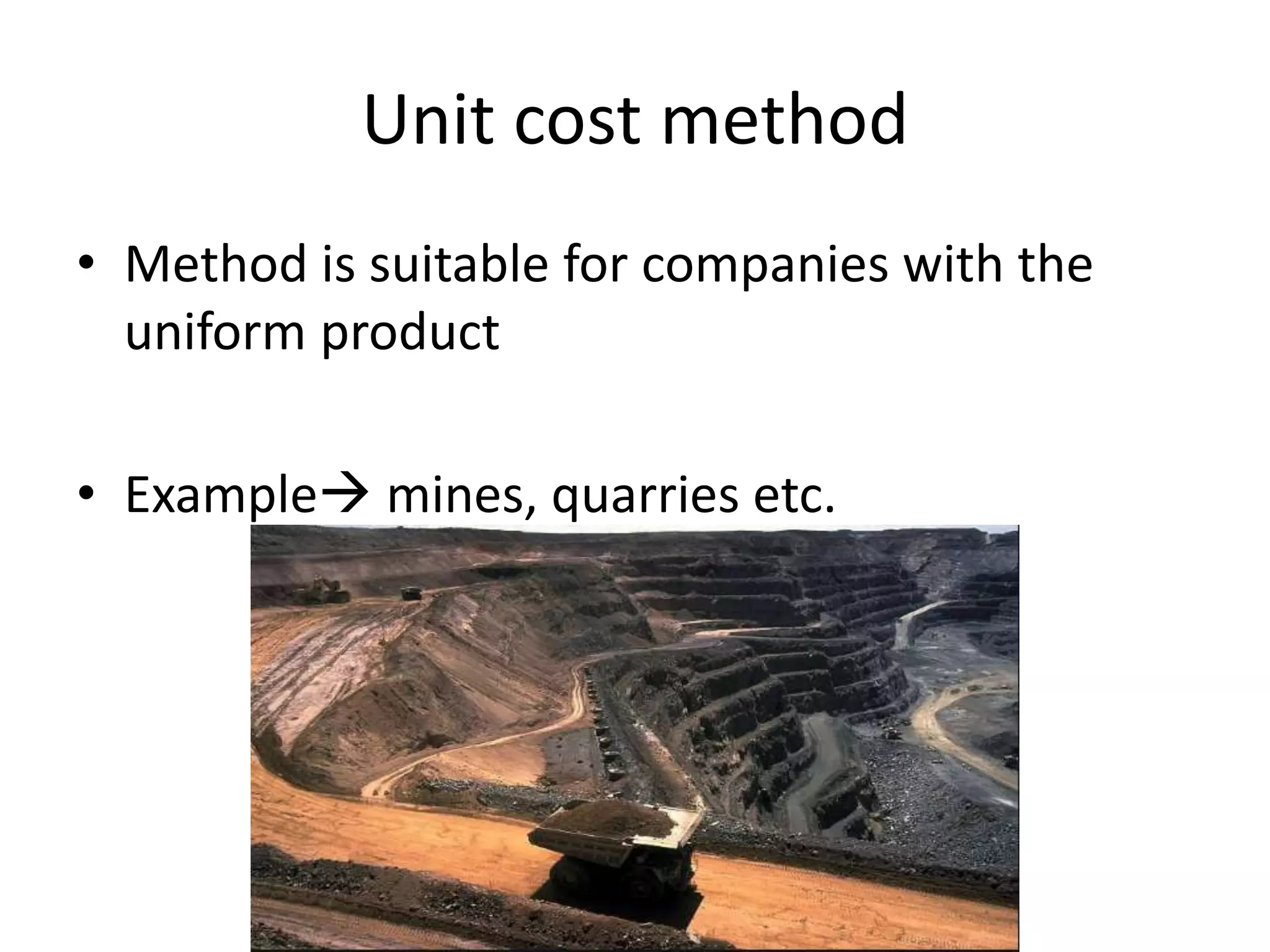
6. Unit cost method
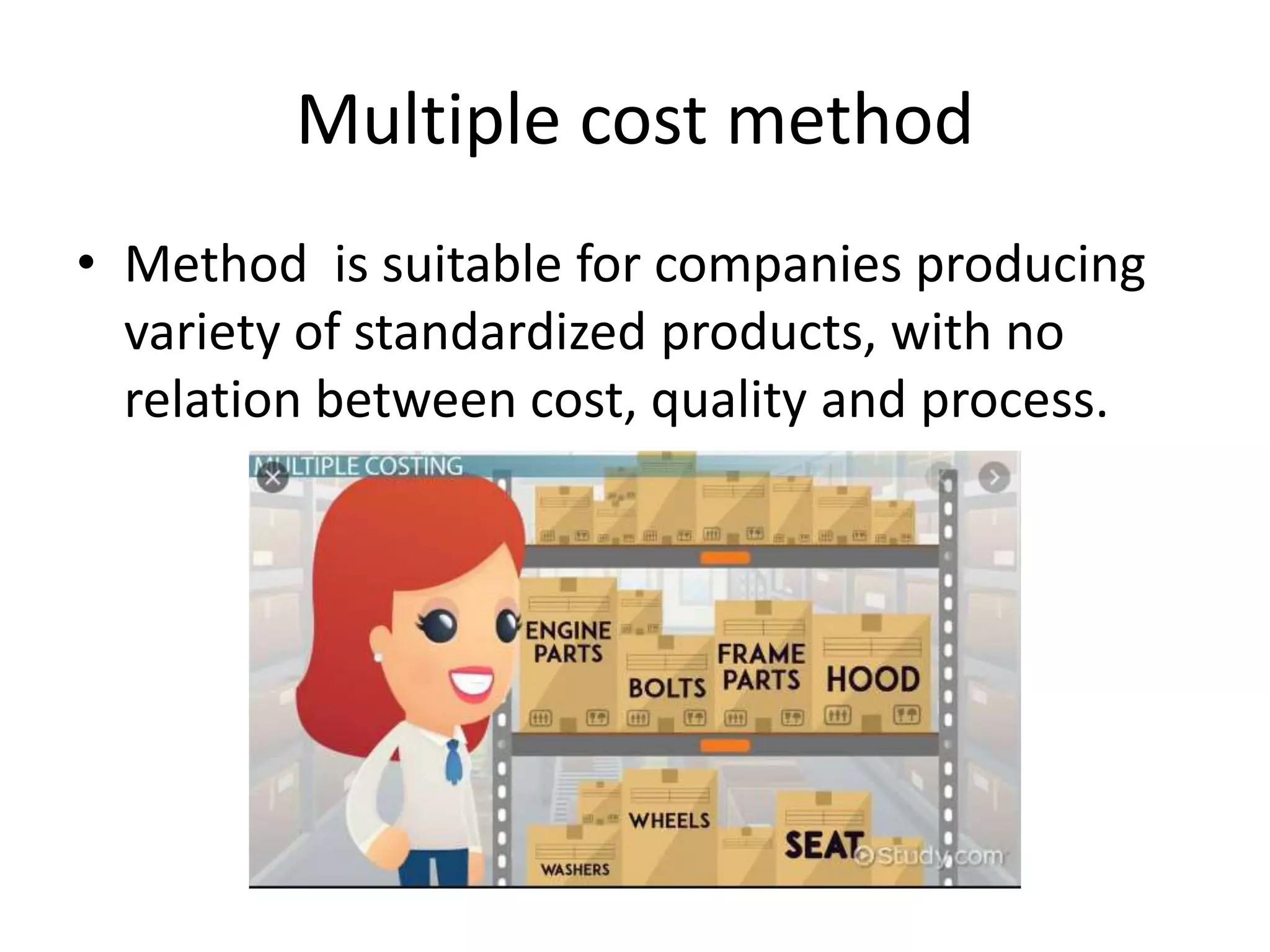
7. Multiple cost method
160.
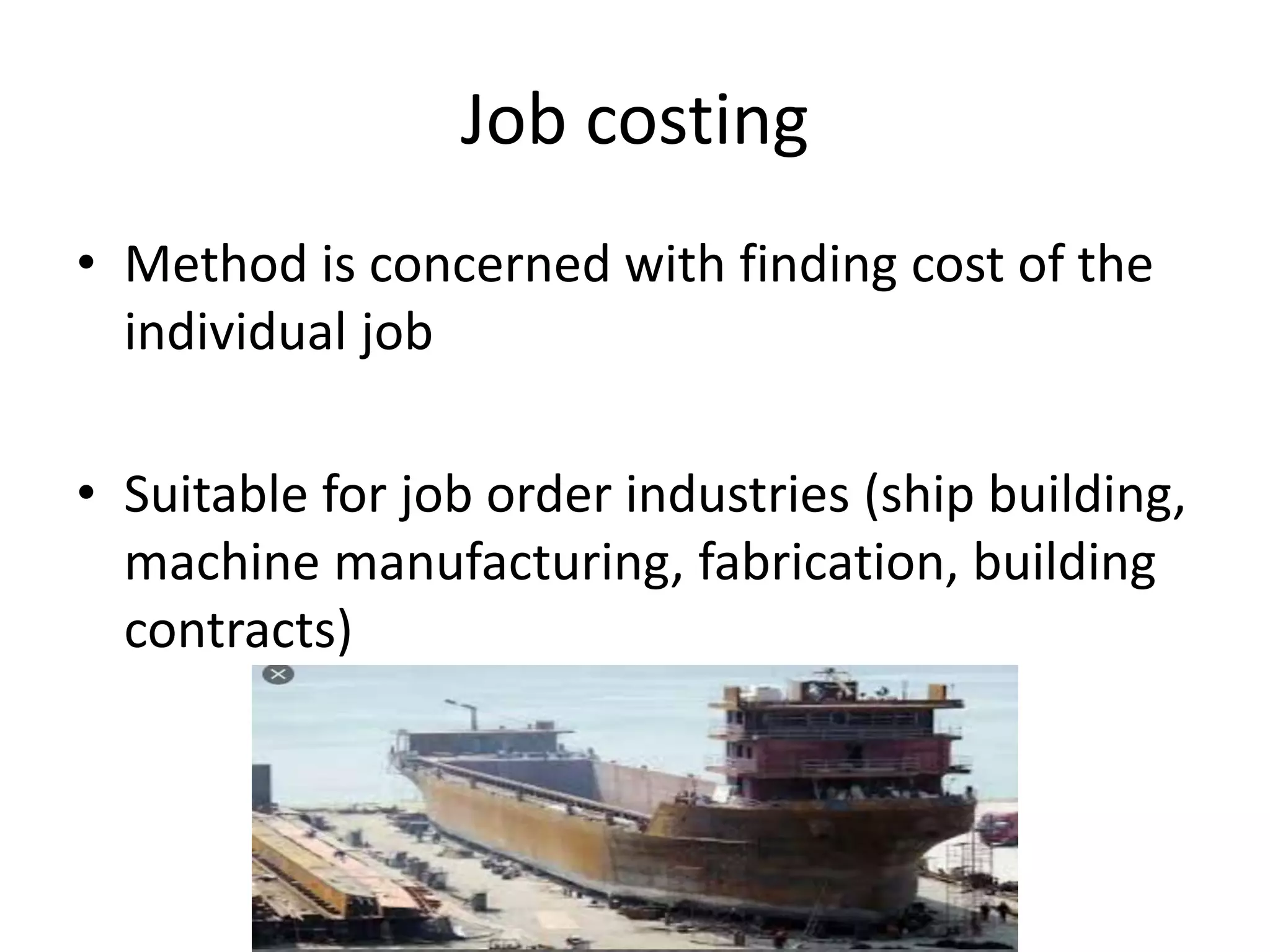
Job costing
• Methodis concerned with finding cost of the
individual job
• Suitable for job order industries (ship building,
machine manufacturing, fabrication, building
contracts)
161.
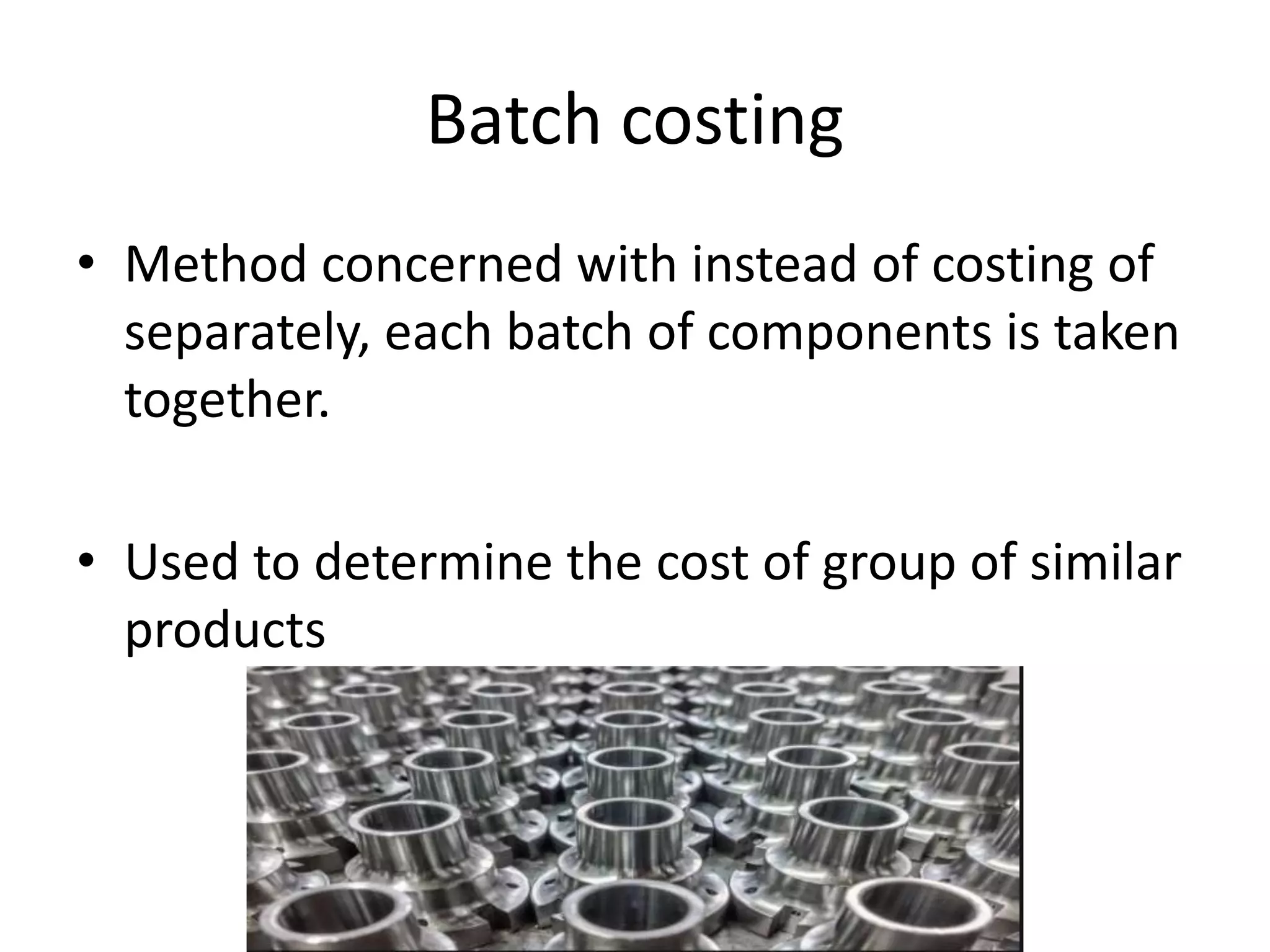
Batch costing
• Methodconcerned with instead of costing of
separately, each batch of components is taken
together.
• Used to determine the cost of group of similar
products
162.
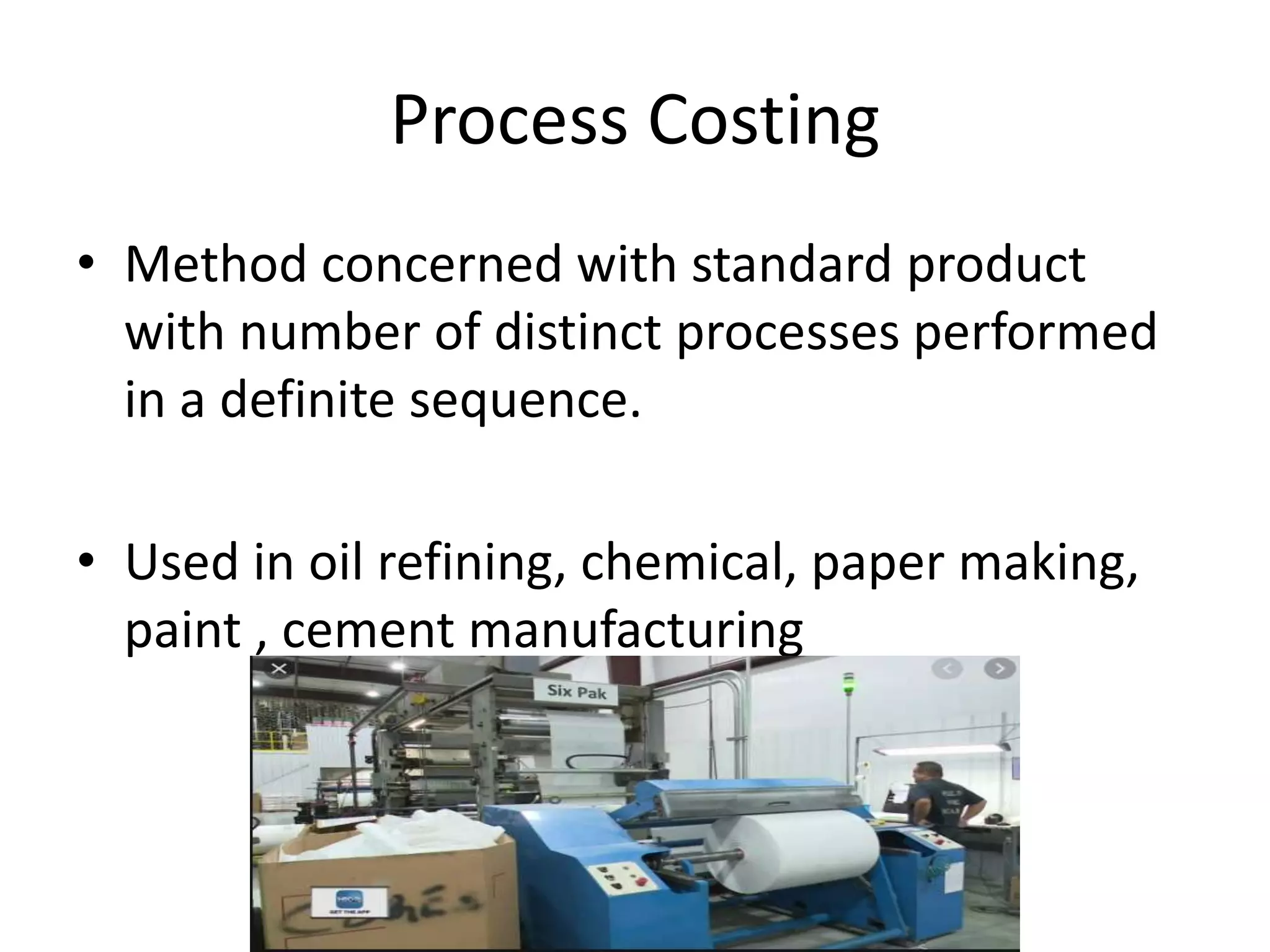
Process Costing
• Methodconcerned with standard product
with number of distinct processes performed
in a definite sequence.
• Used in oil refining, chemical, paper making,
paint , cement manufacturing
163.
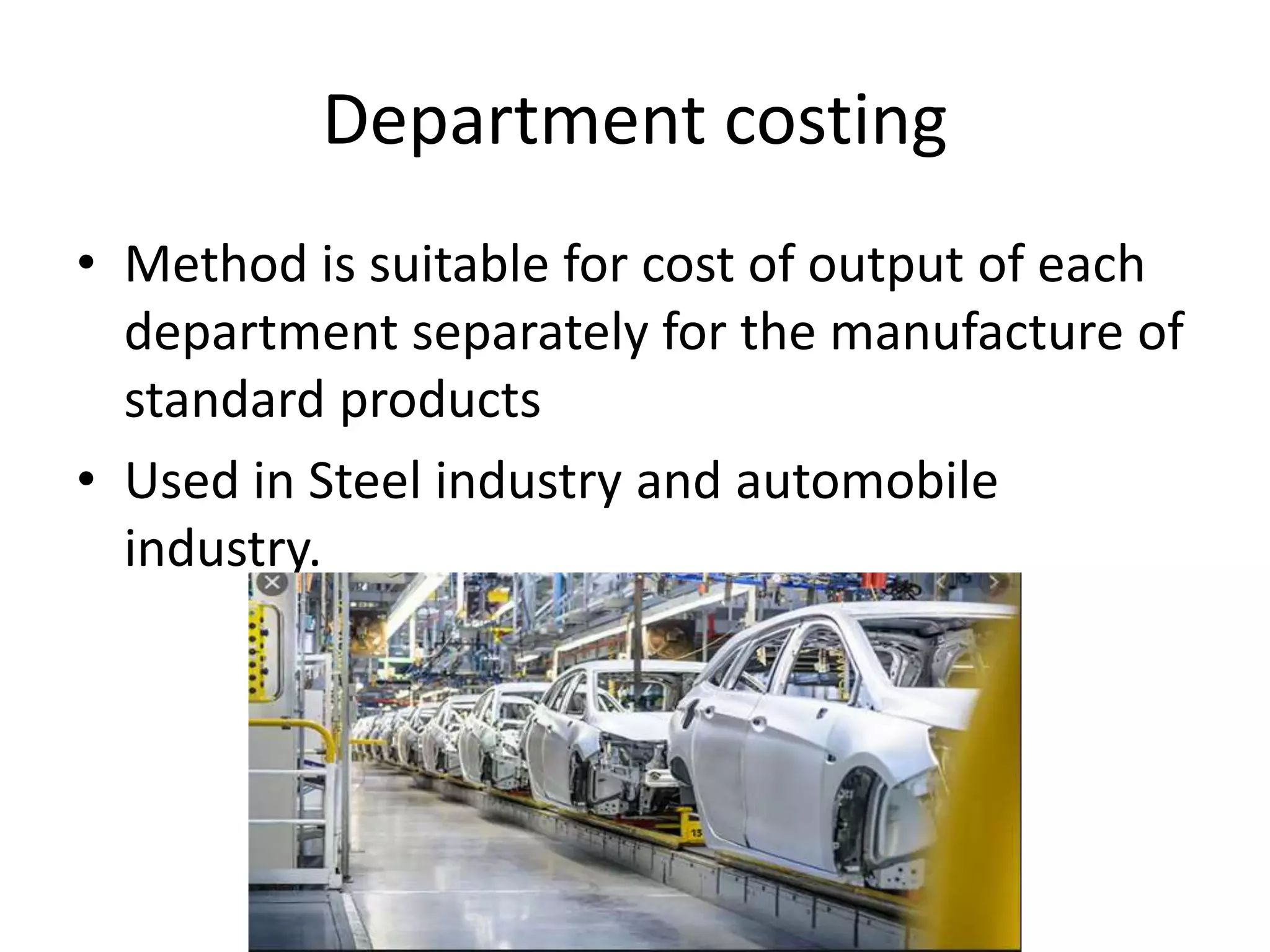
Department costing
• Methodis suitable for cost of output of each
department separately for the manufacture of
standard products
• Used in Steel industry and automobile
industry.
164.
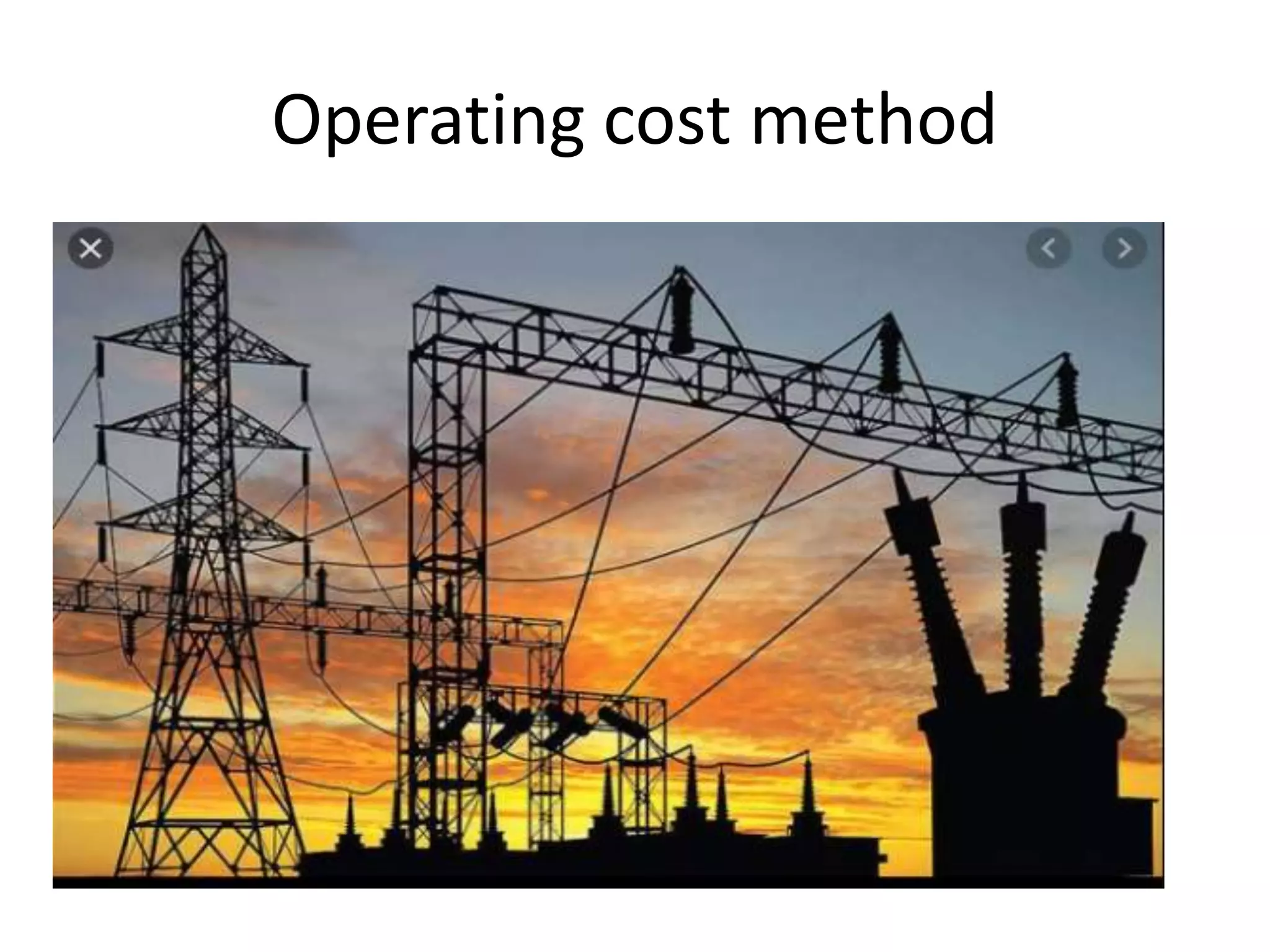
Operating cost method
•Method is suitable for company providing
utility services
• Example transport services, water works,
electric board,
• Cost is based on operating expenses (per Km)
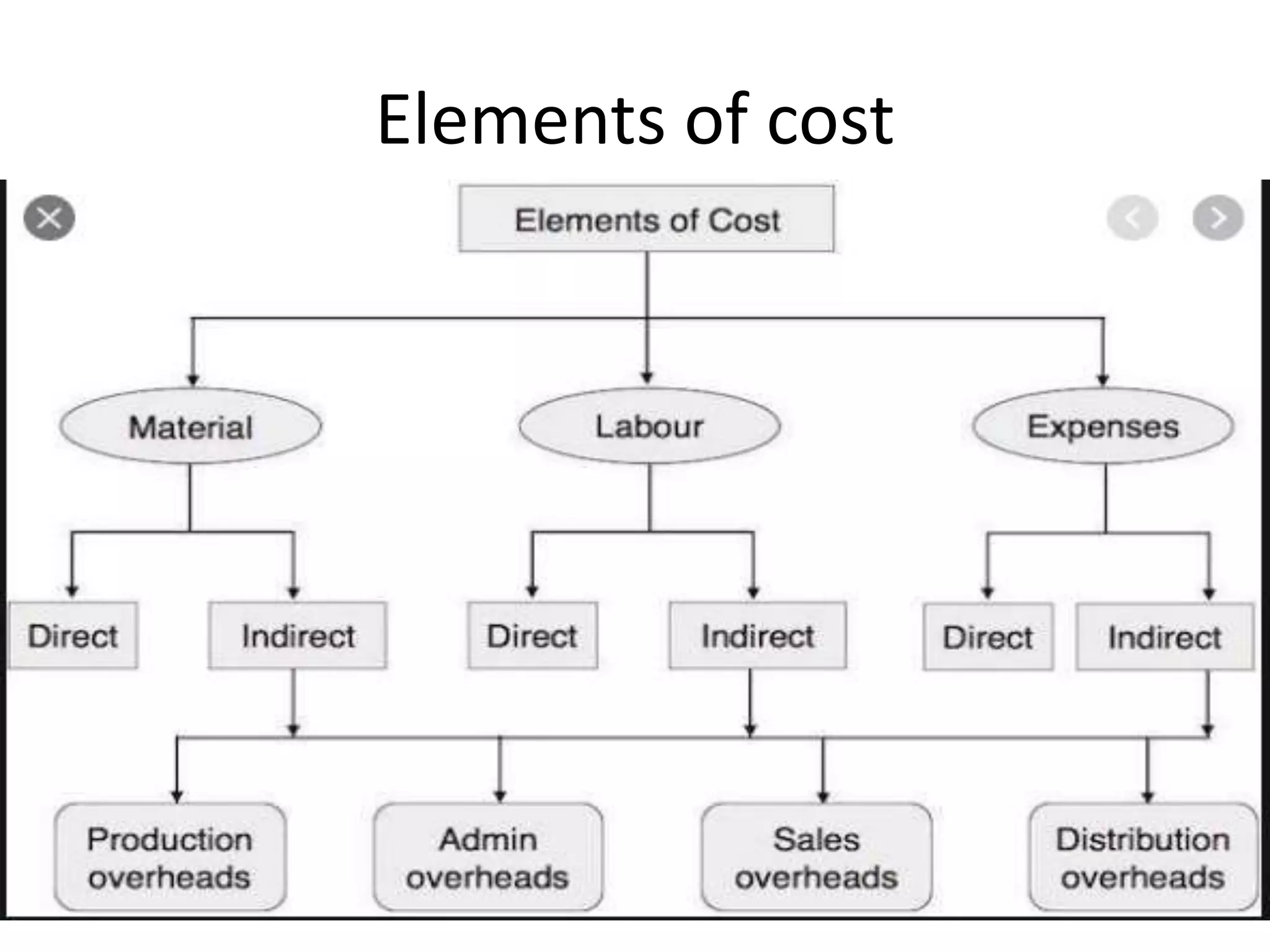
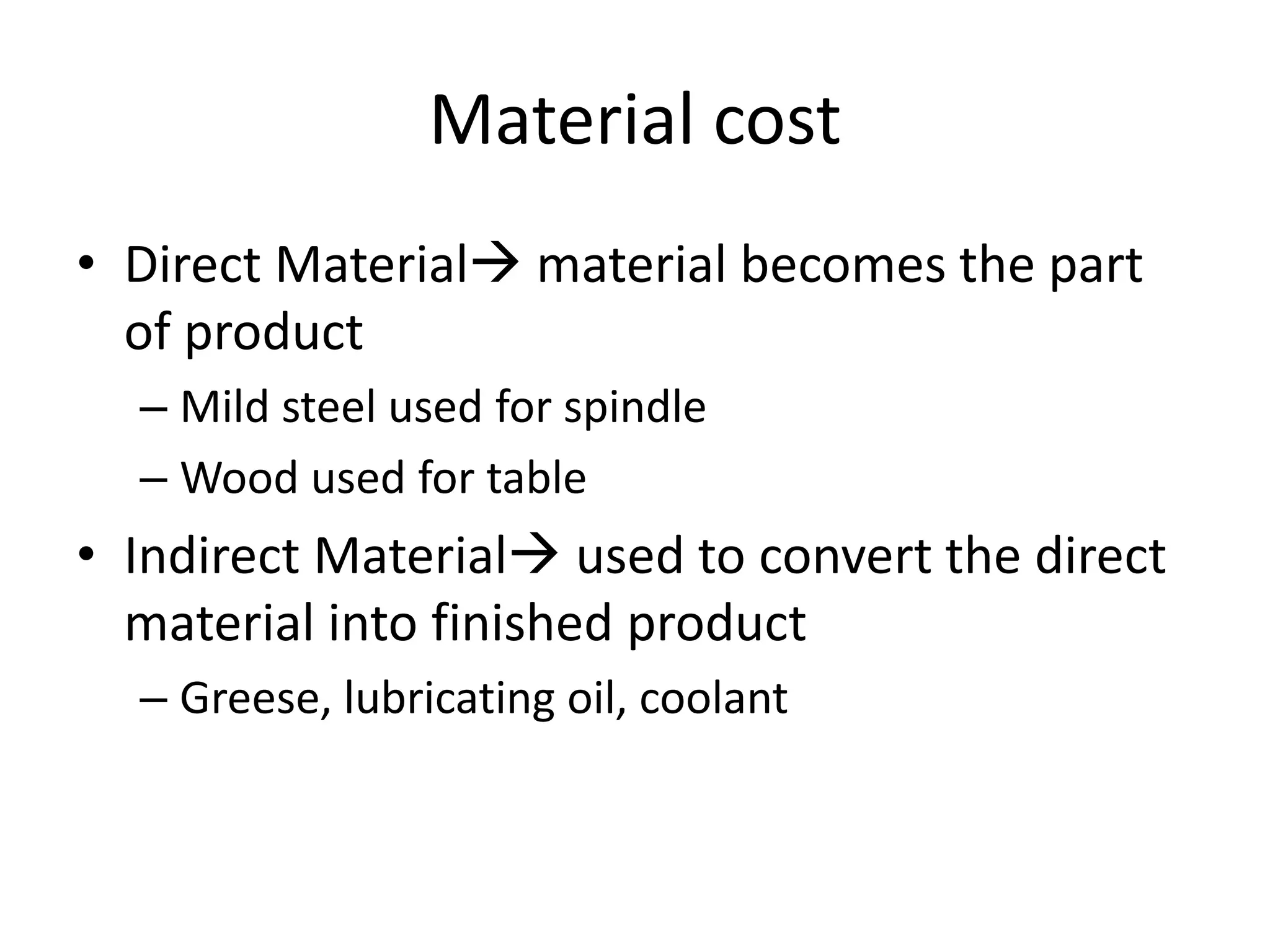
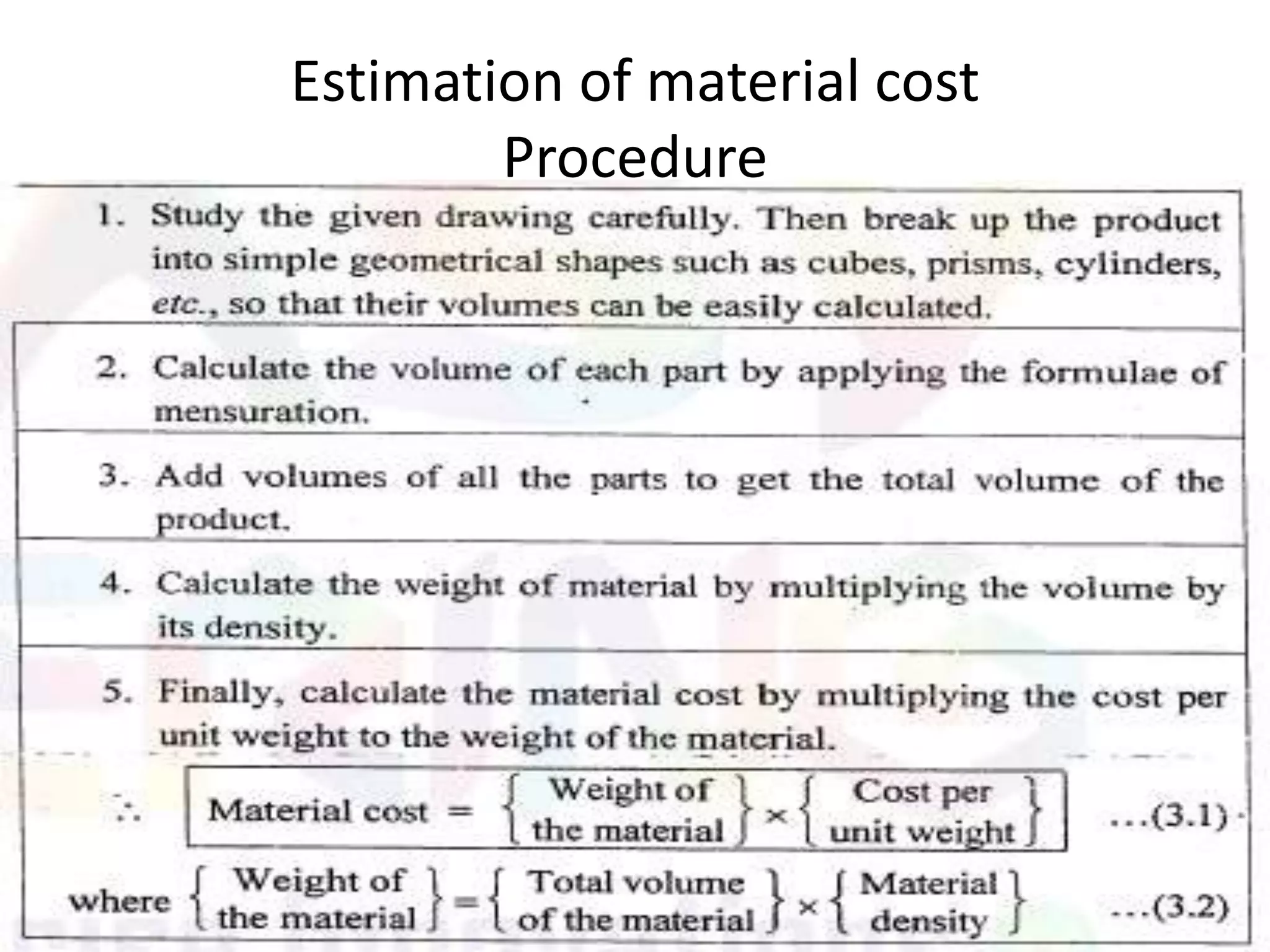
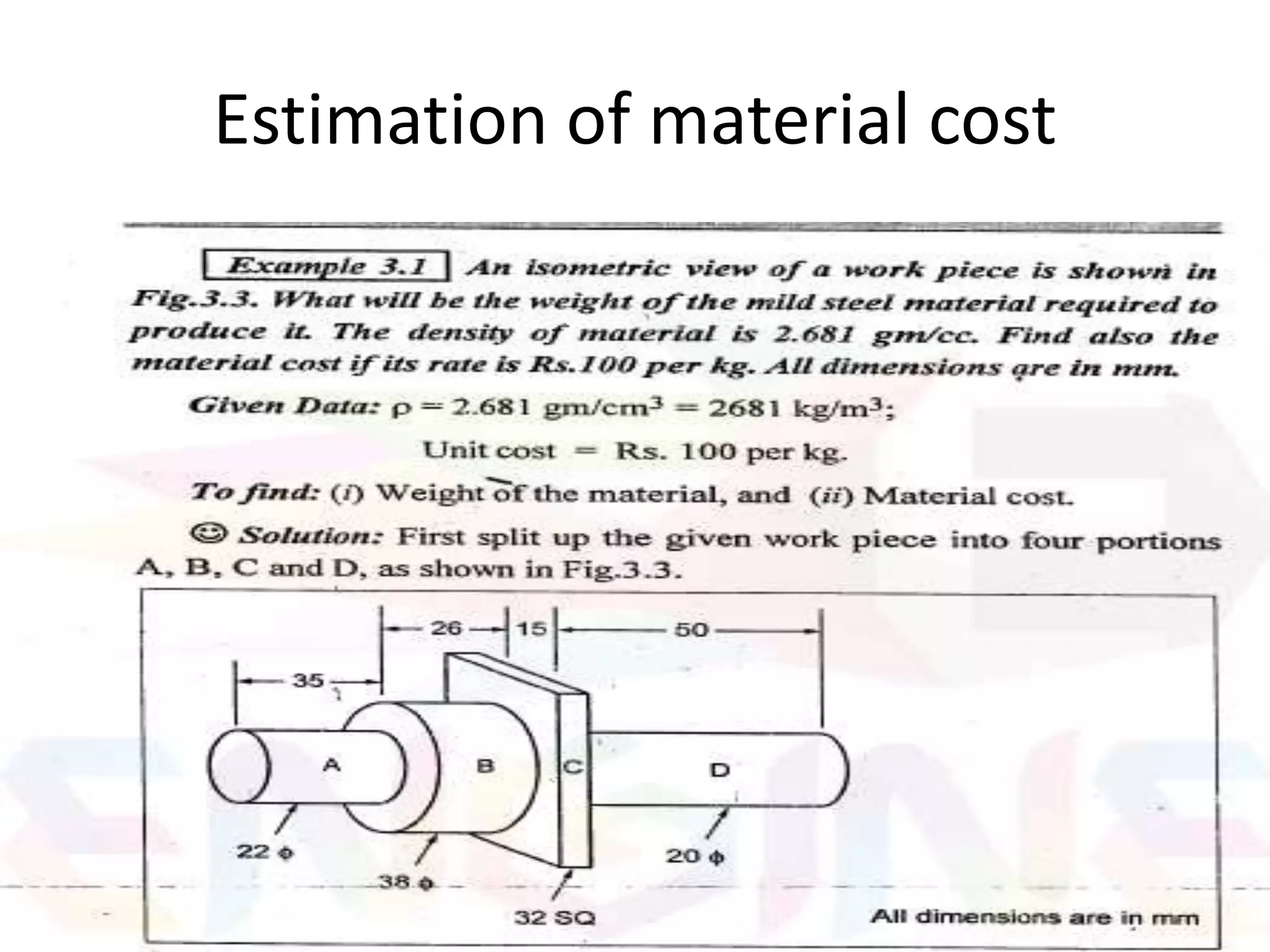
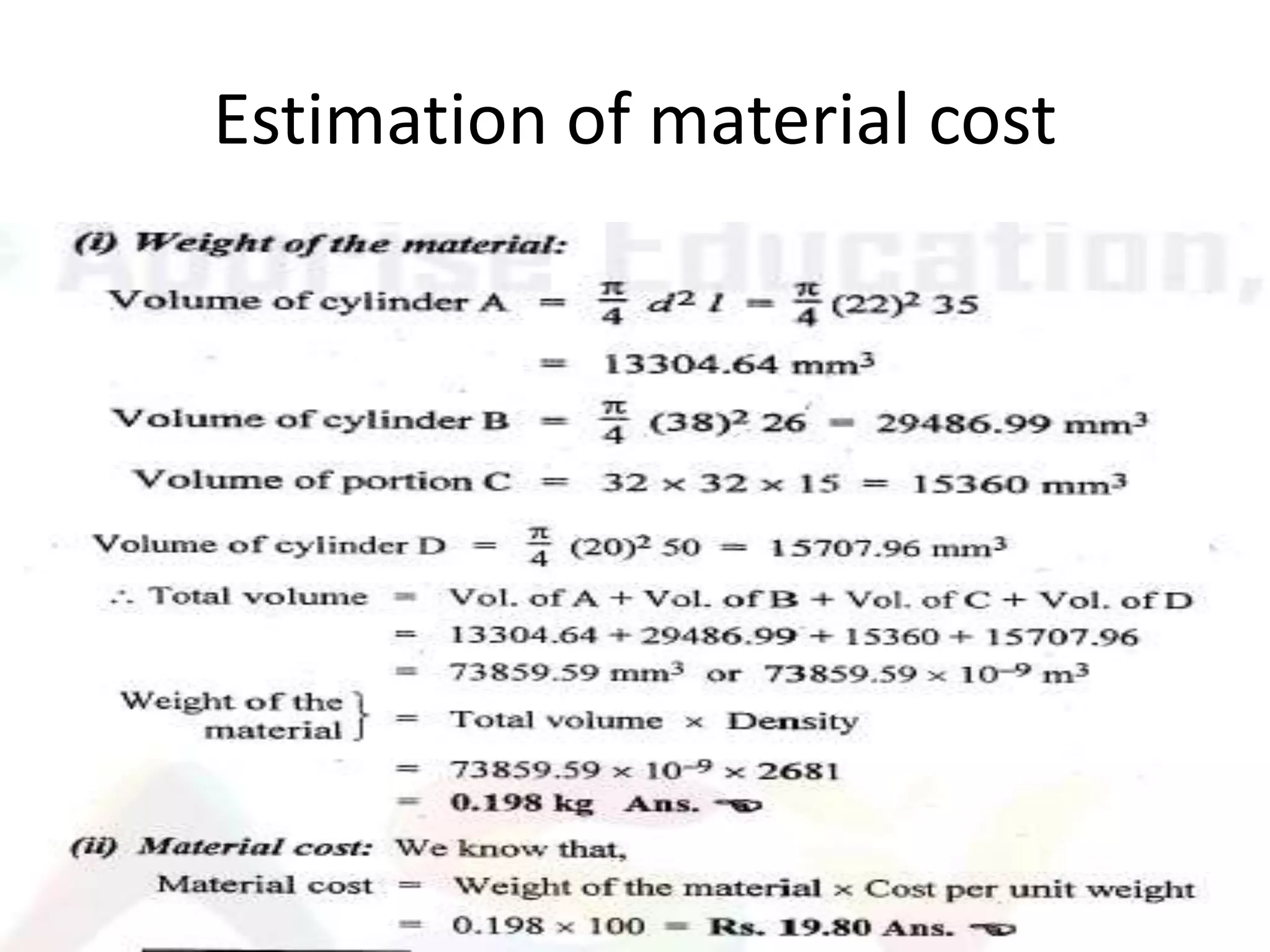
Material cost
• DirectMaterial material becomes the part
of product
– Mild steel used for spindle
– Wood used for table
• Indirect Material used to convert the direct
material into finished product
– Greese, lubricating oil, coolant
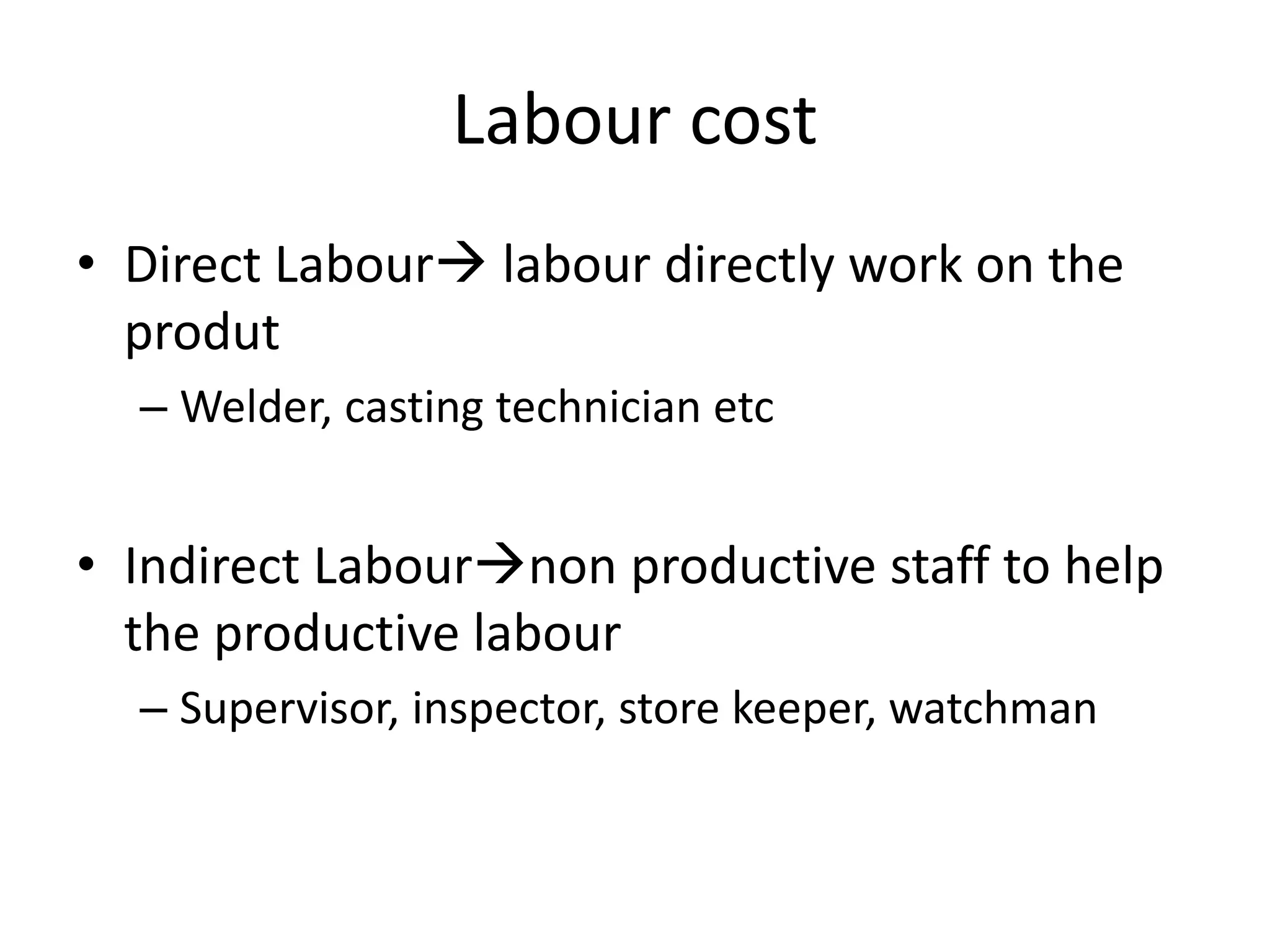
171.
Labour cost
• DirectLabour labour directly work on the
produt
– Welder, casting technician etc
• Indirect Labournon productive staff to help
the productive labour
– Supervisor, inspector, store keeper, watchman
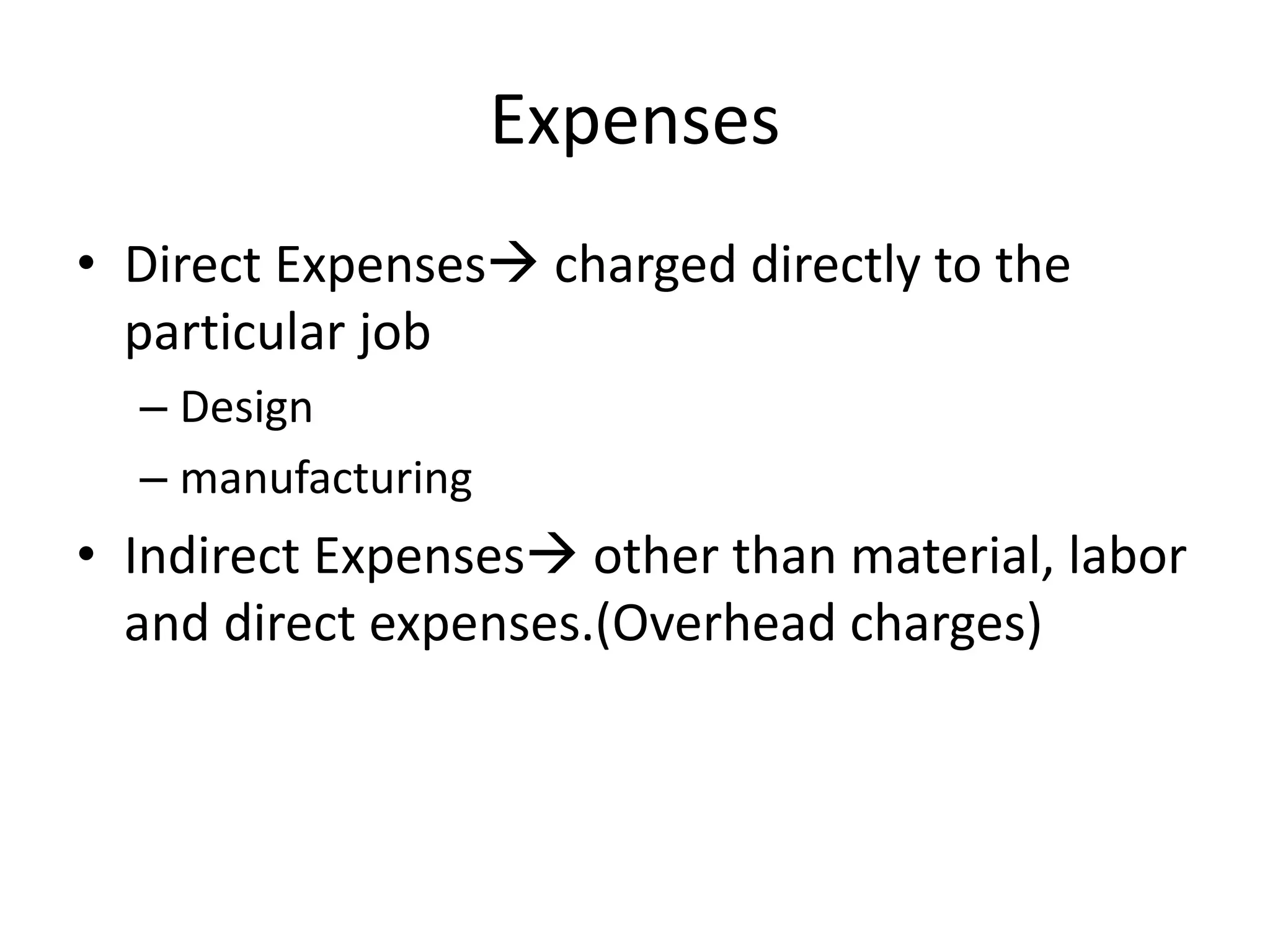
172.
Expenses
• Direct Expensescharged directly to the
particular job
– Design
– manufacturing
• Indirect Expenses other than material, labor
and direct expenses.(Overhead charges)
173.
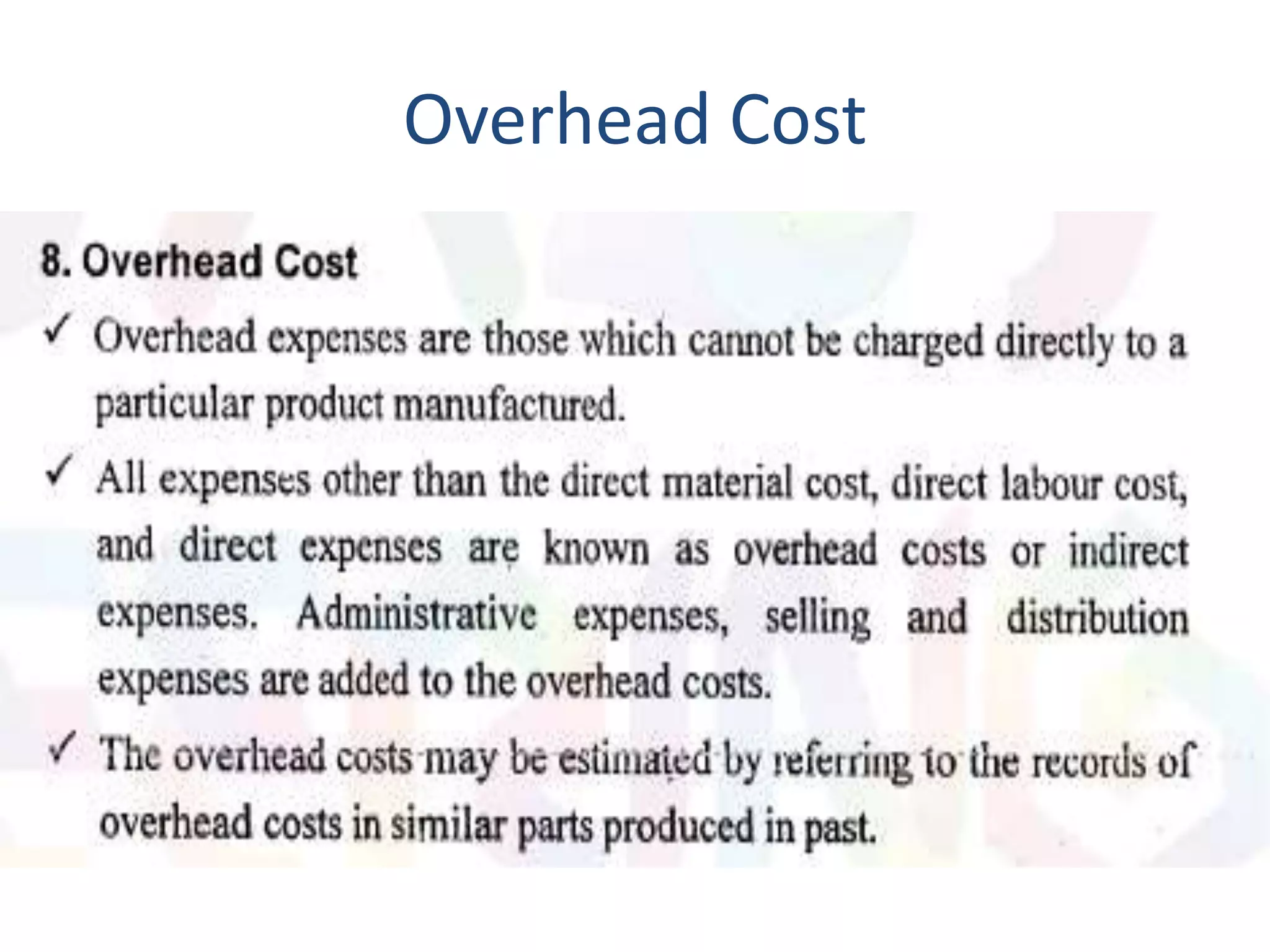
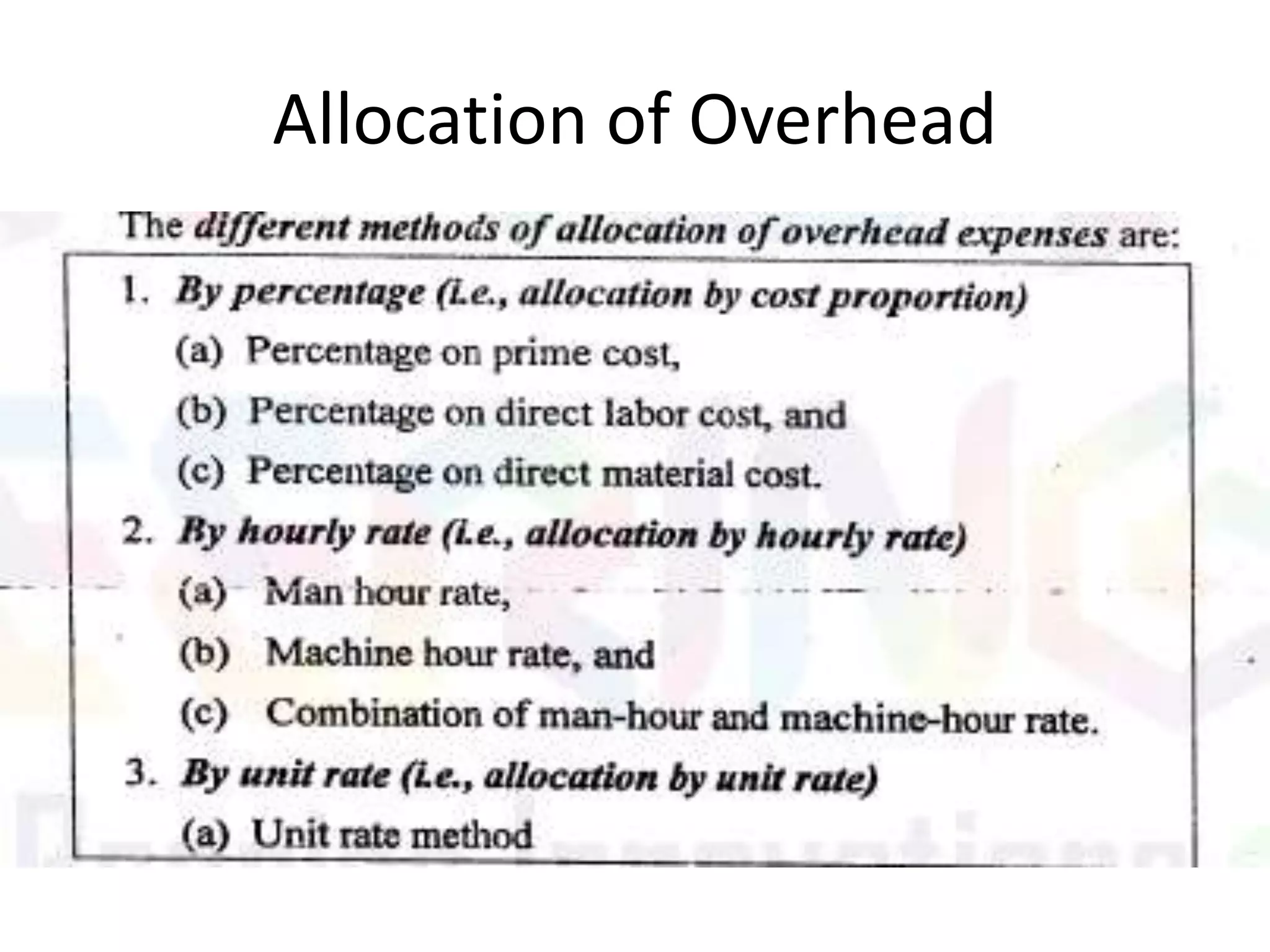
Overhead charges
• Factoryexpenses
– Cost fuel, power and internal transport
– Repair and maintenance
• administrative expenses
– Charge of higher officials
– Office rent, legal charges, audit fees
• Selling expenses
– Cost of sales manager
– Cost of advertising
• Distribution expenses
– Packaging and delivery
– Store keeper
– unloading
174.
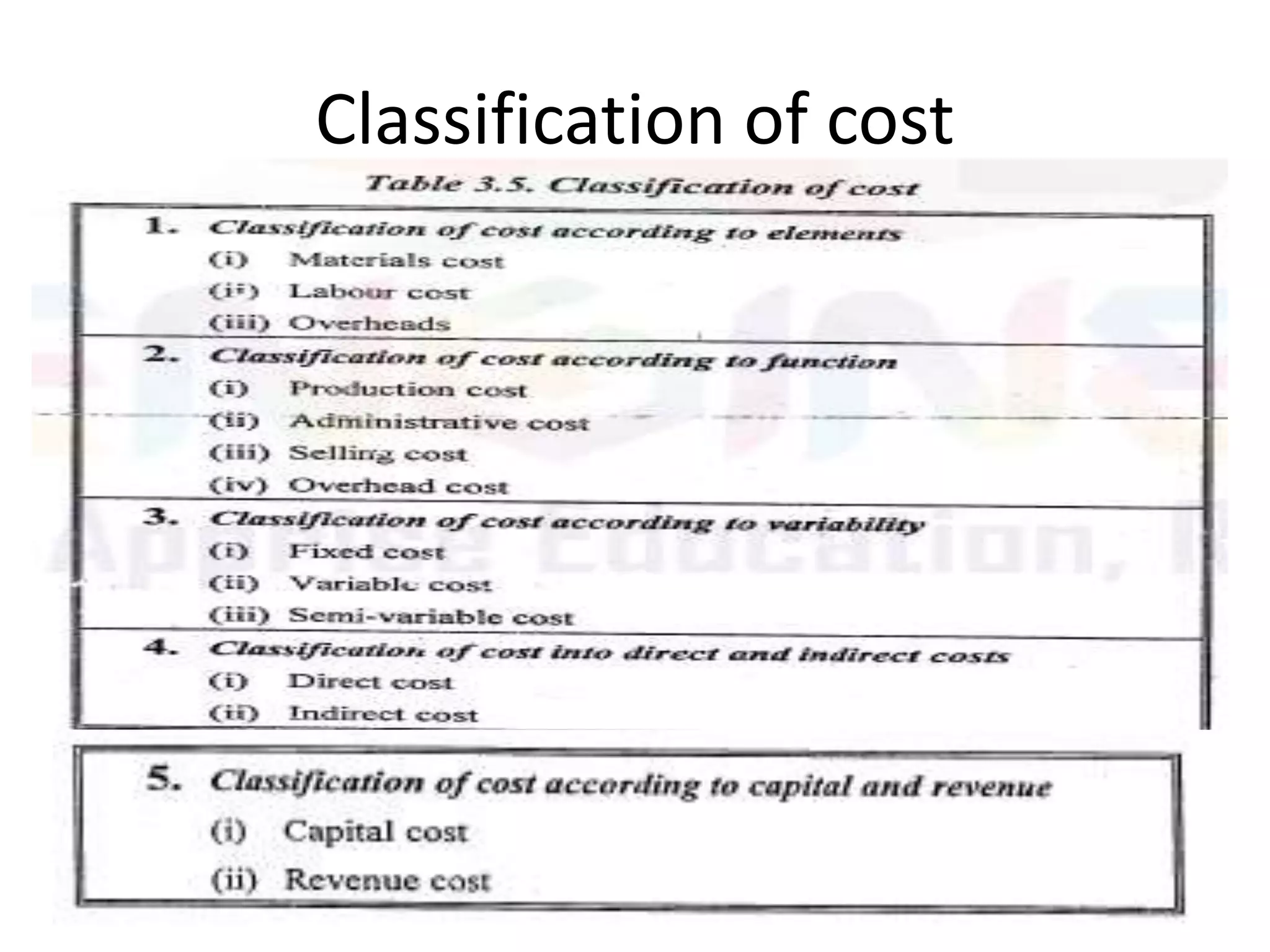
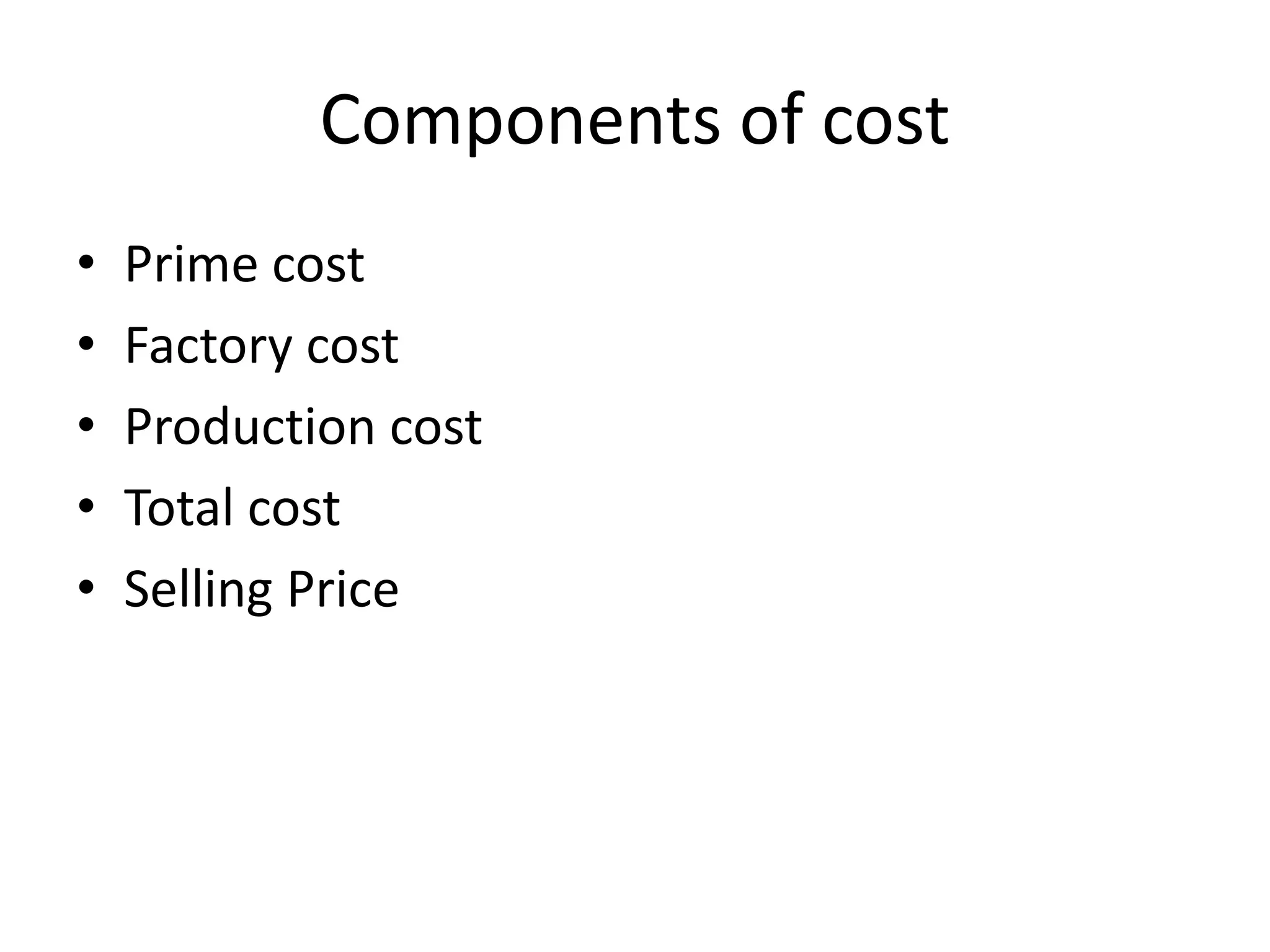
Components of cost
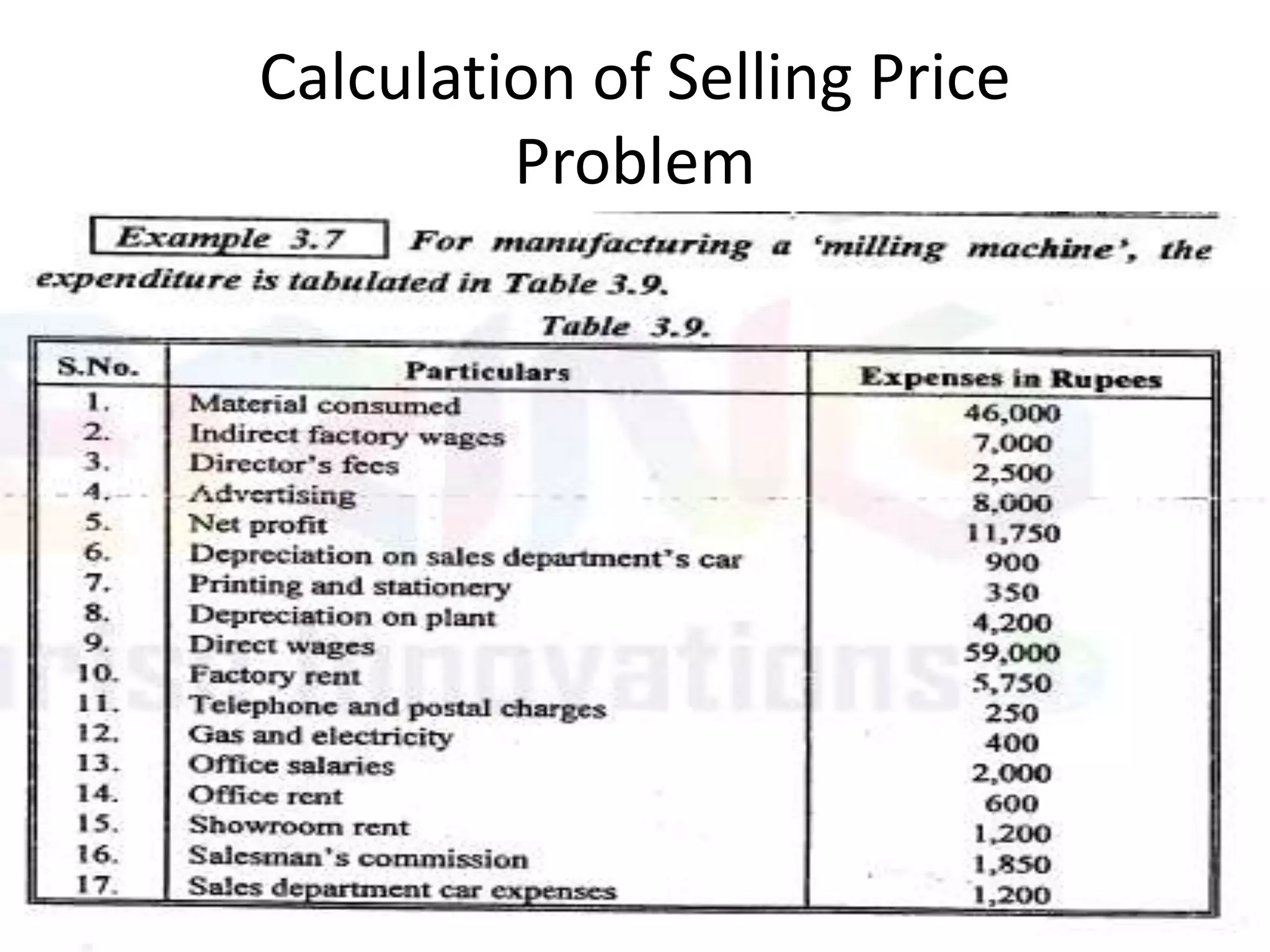
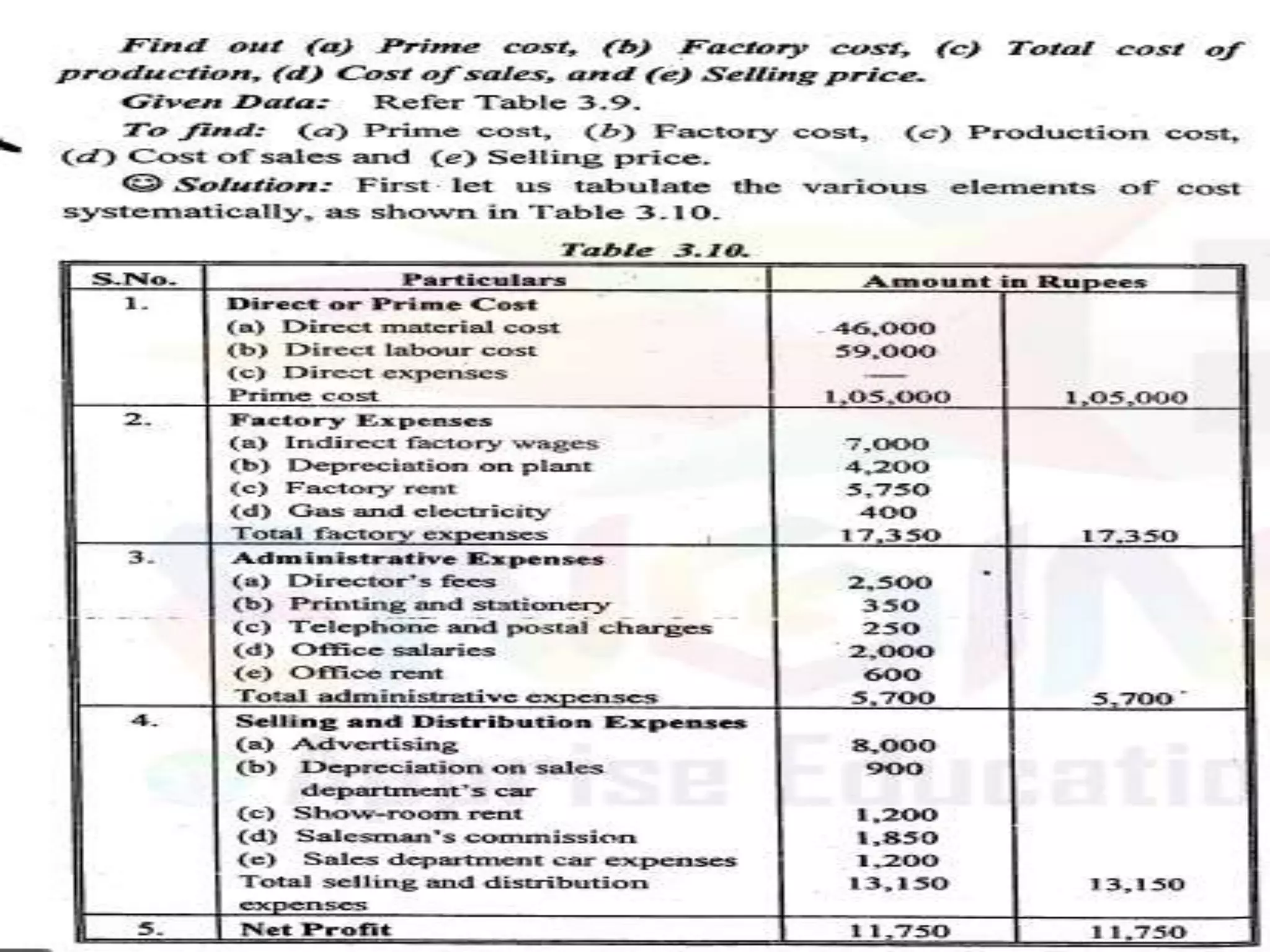
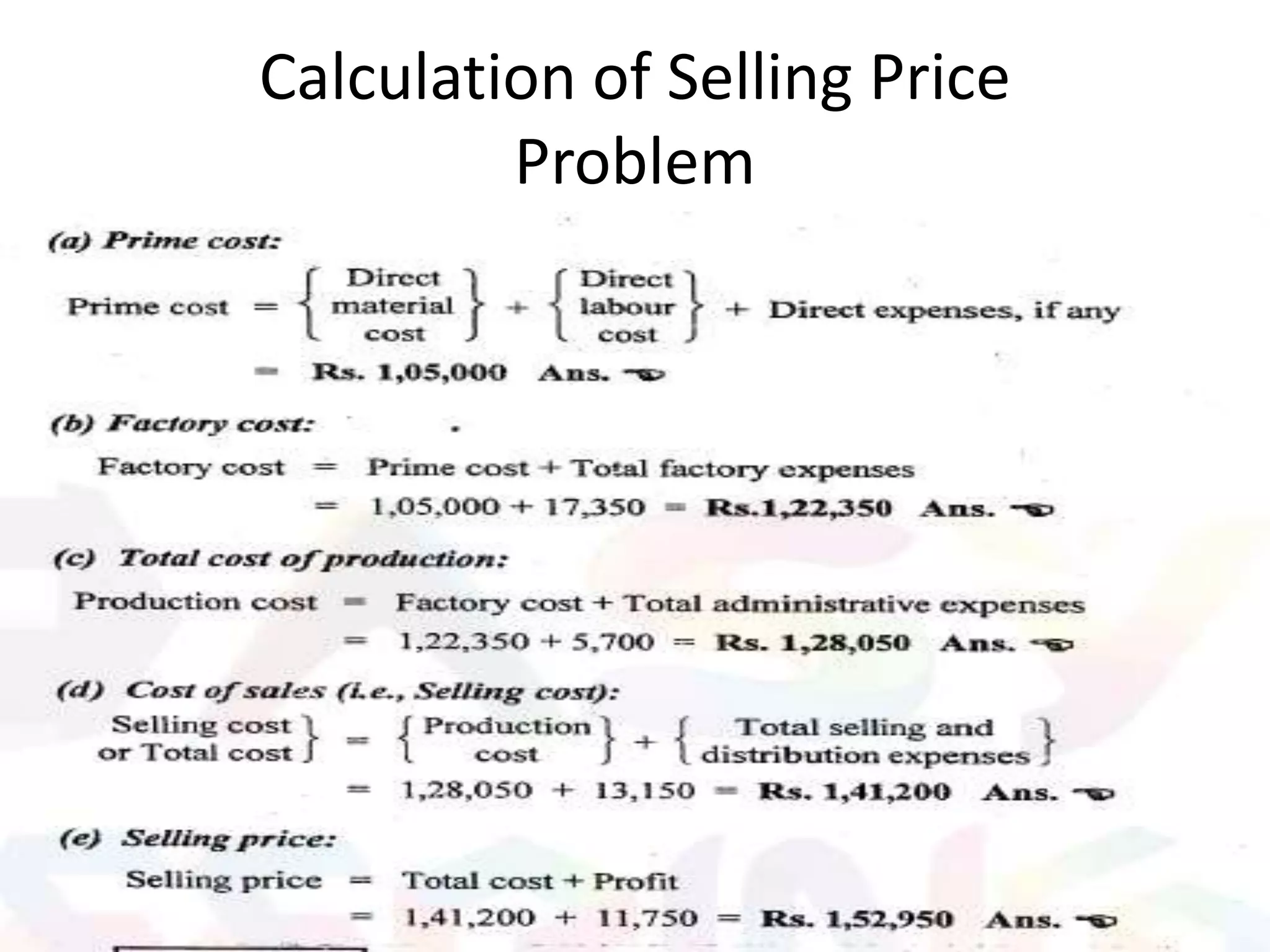
•Prime cost
• Factory cost
• Production cost
• Total cost
• Selling Price
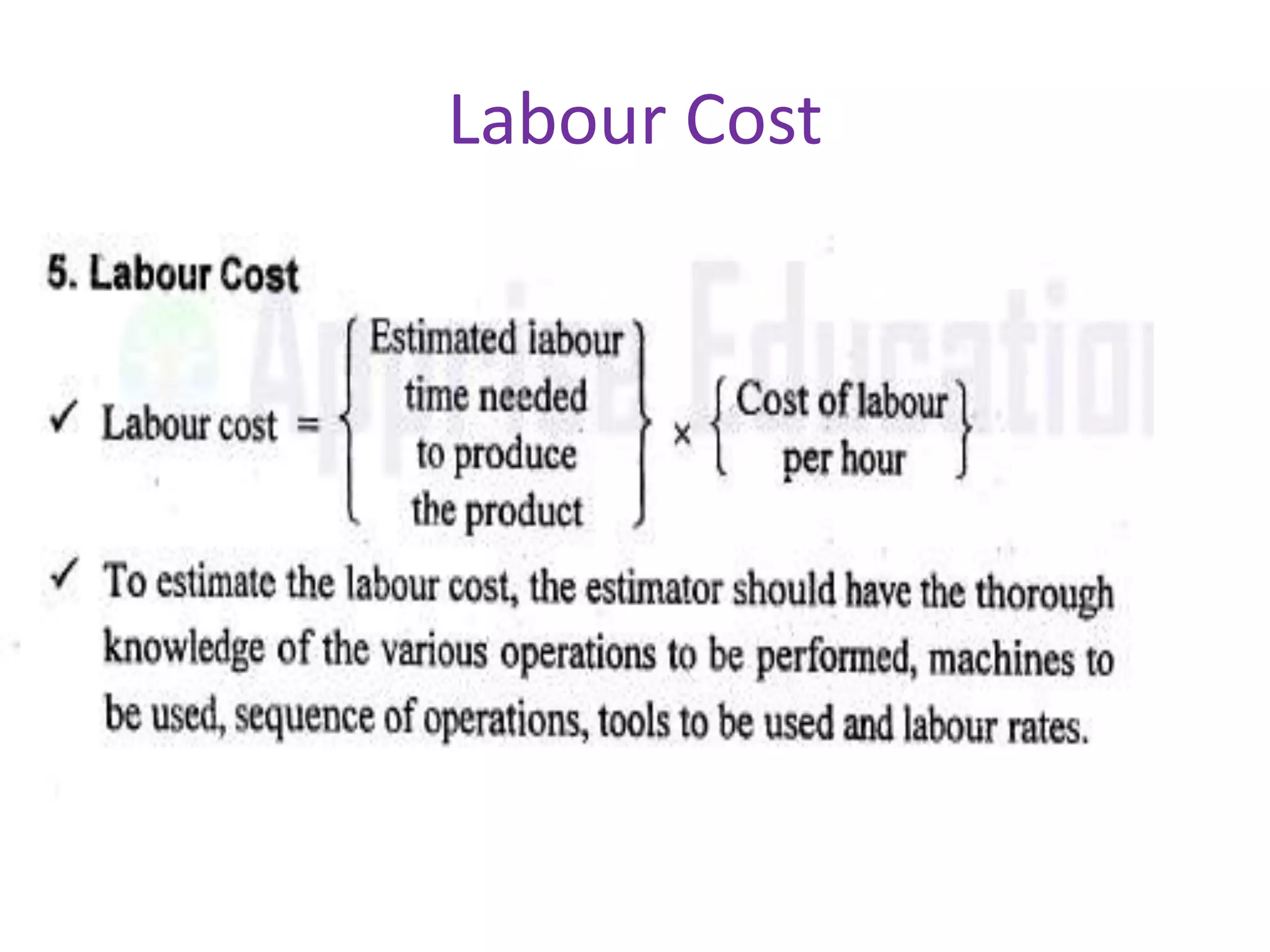
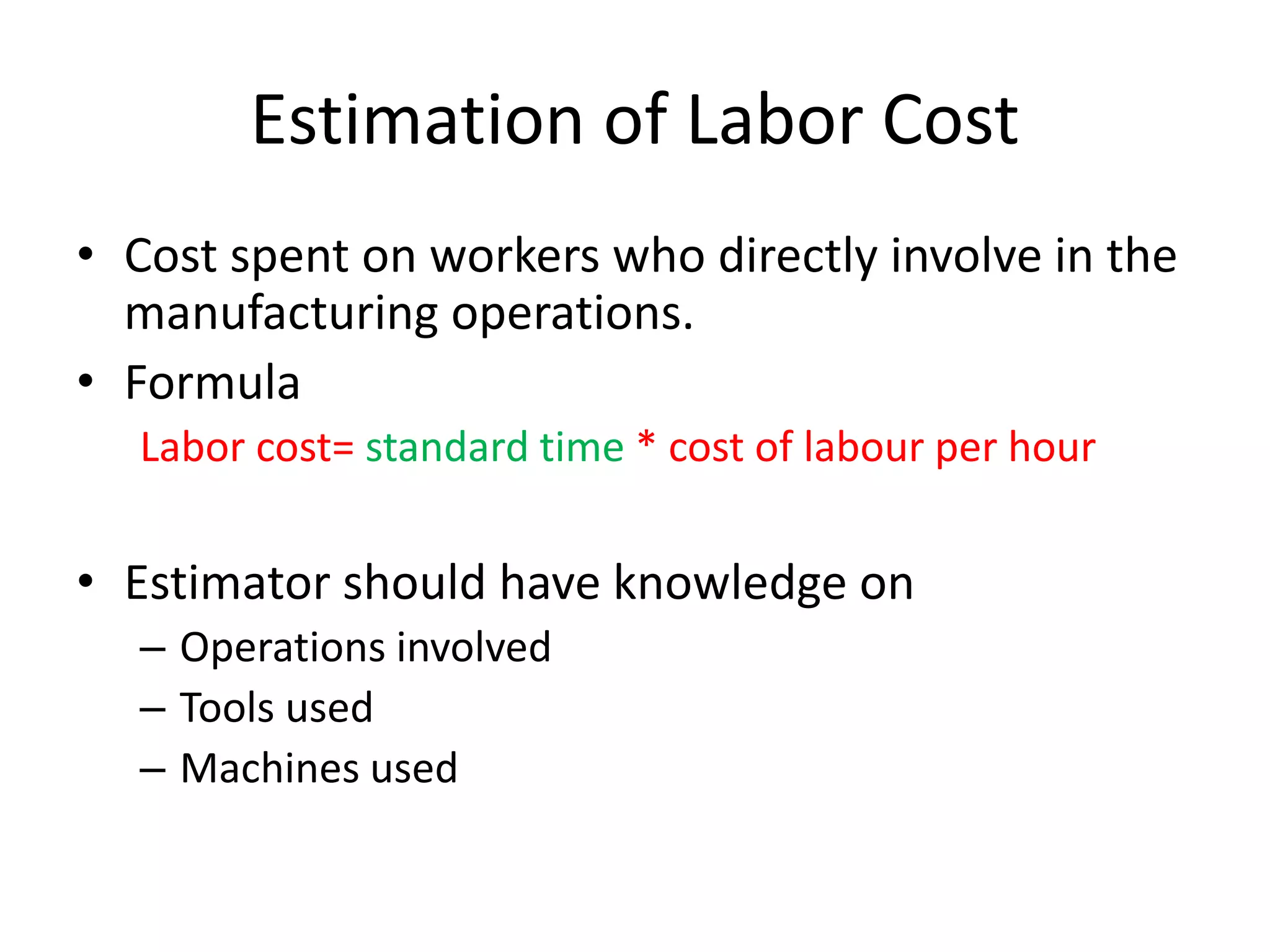
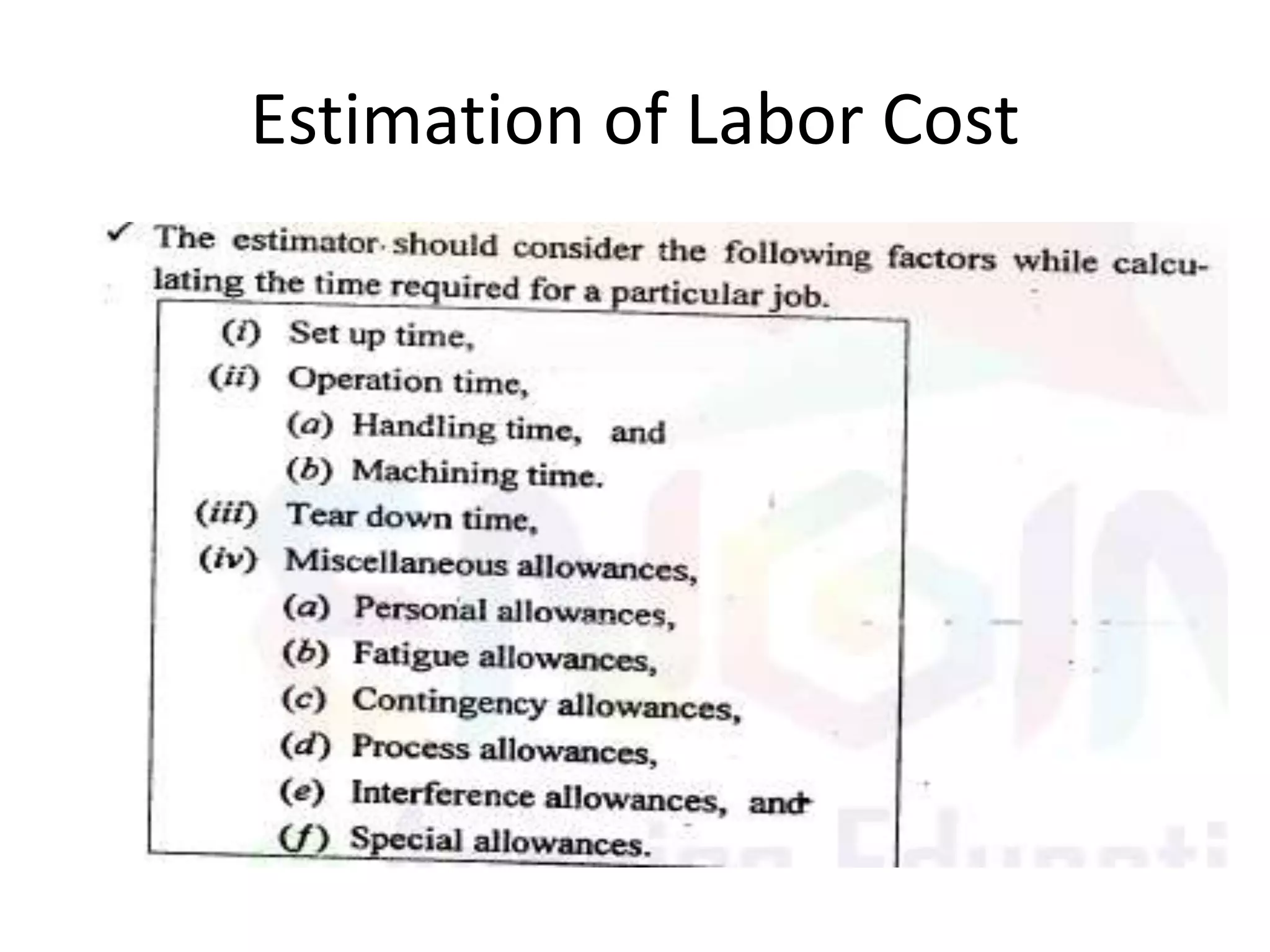
Estimation of LaborCost
• Cost spent on workers who directly involve in the
manufacturing operations.
• Formula
Labor cost= standard time * cost of labour per hour
• Estimator should have knowledge on
– Operations involved
– Tools used
– Machines used
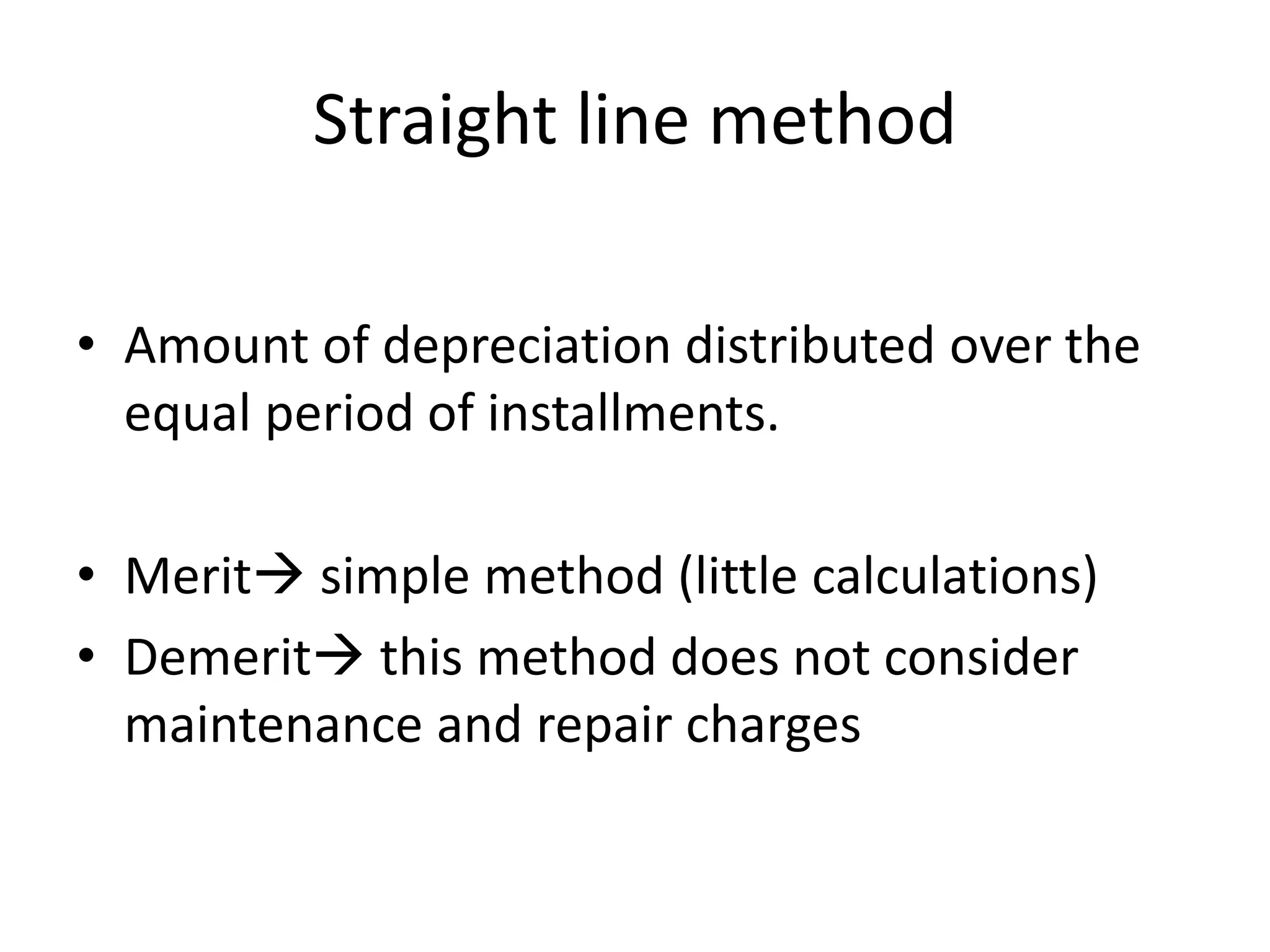
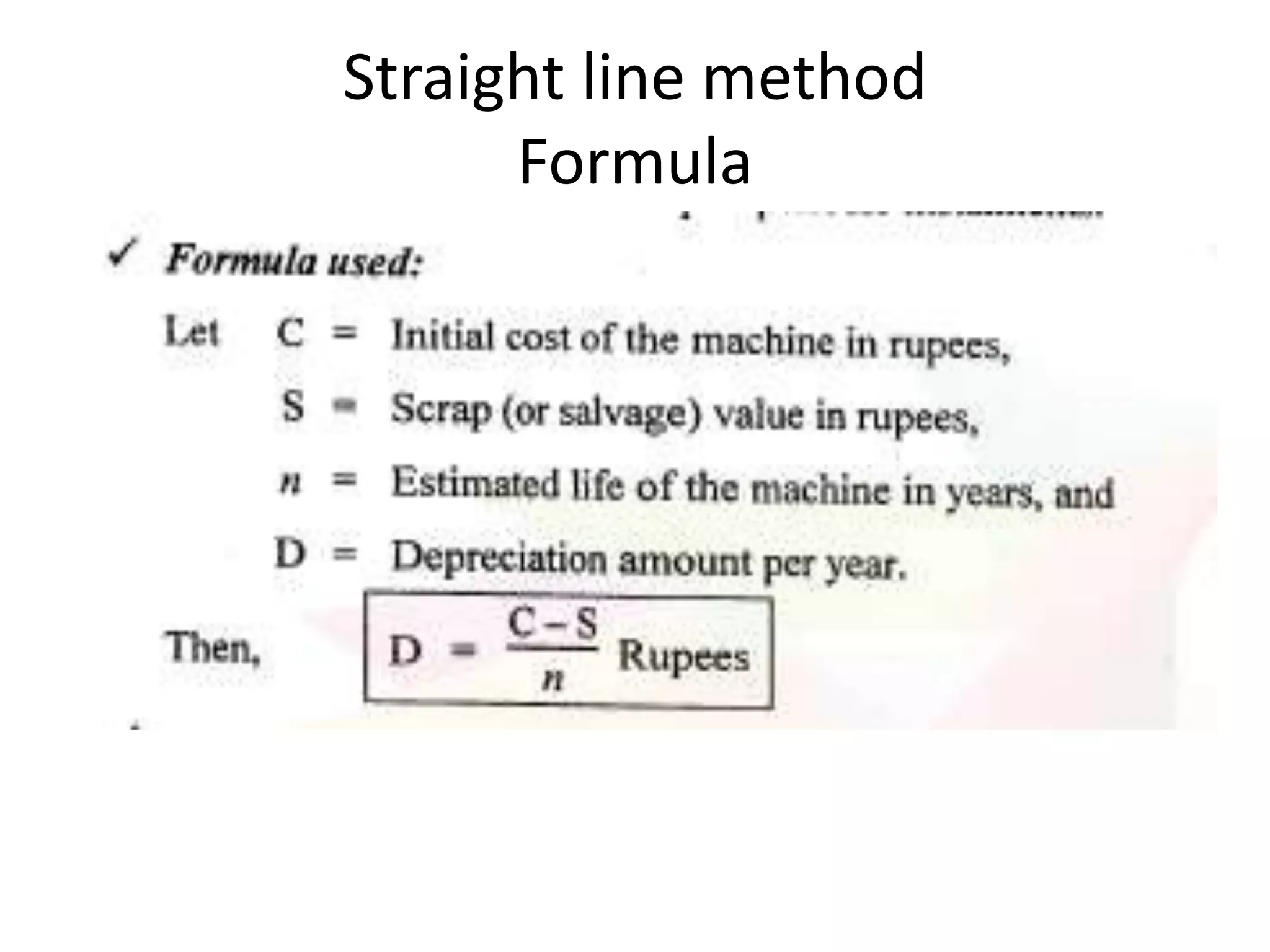
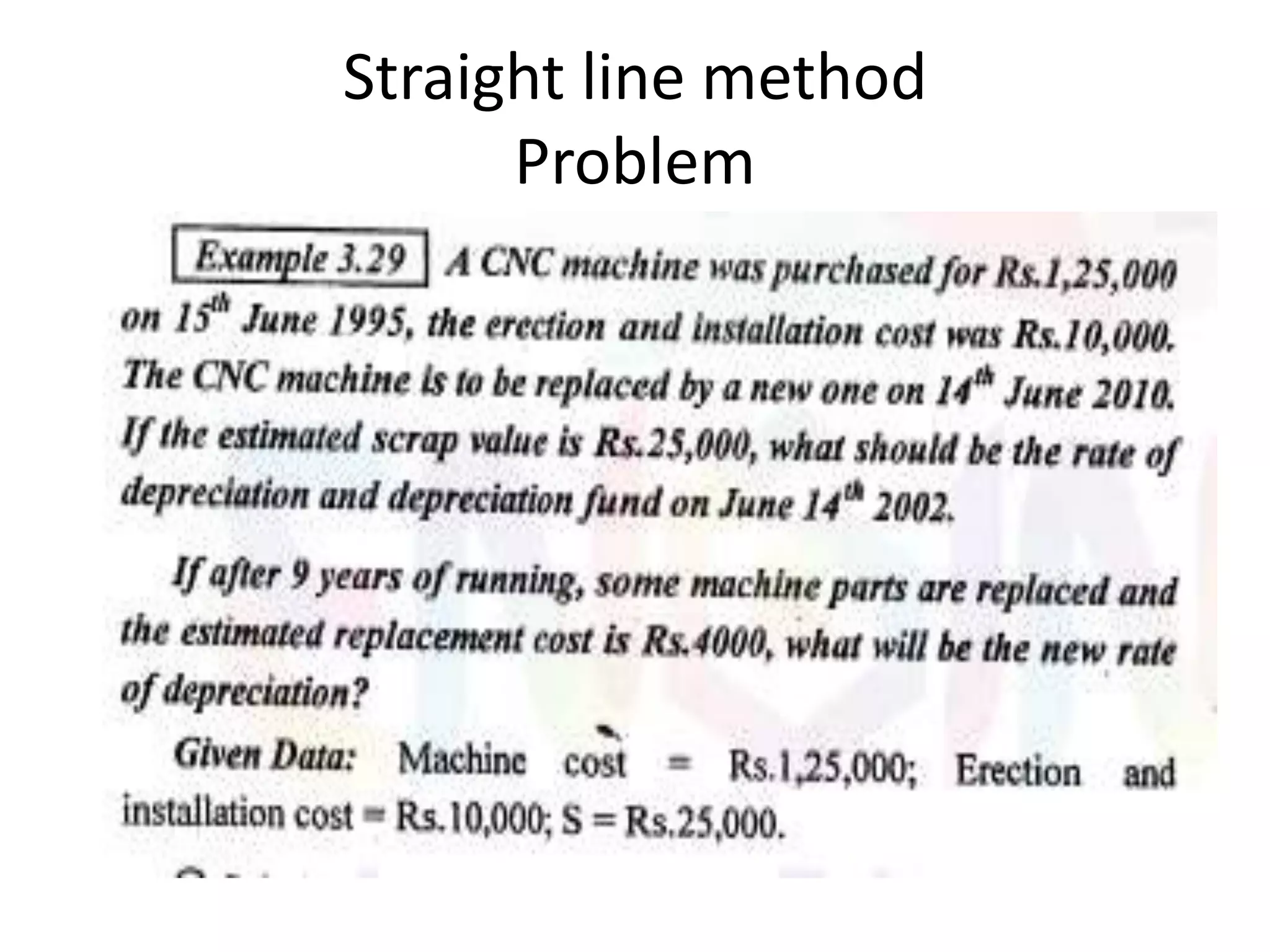
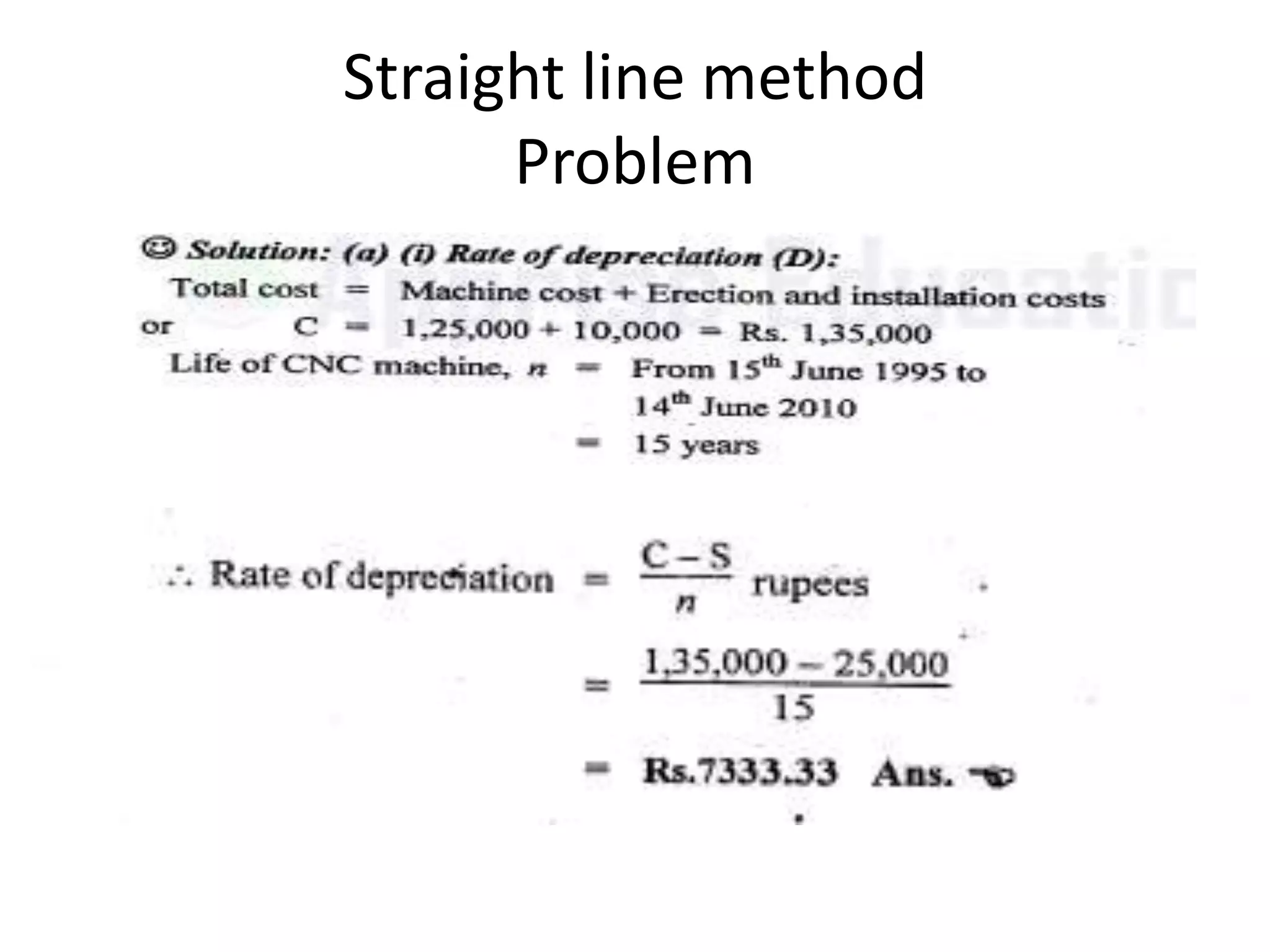
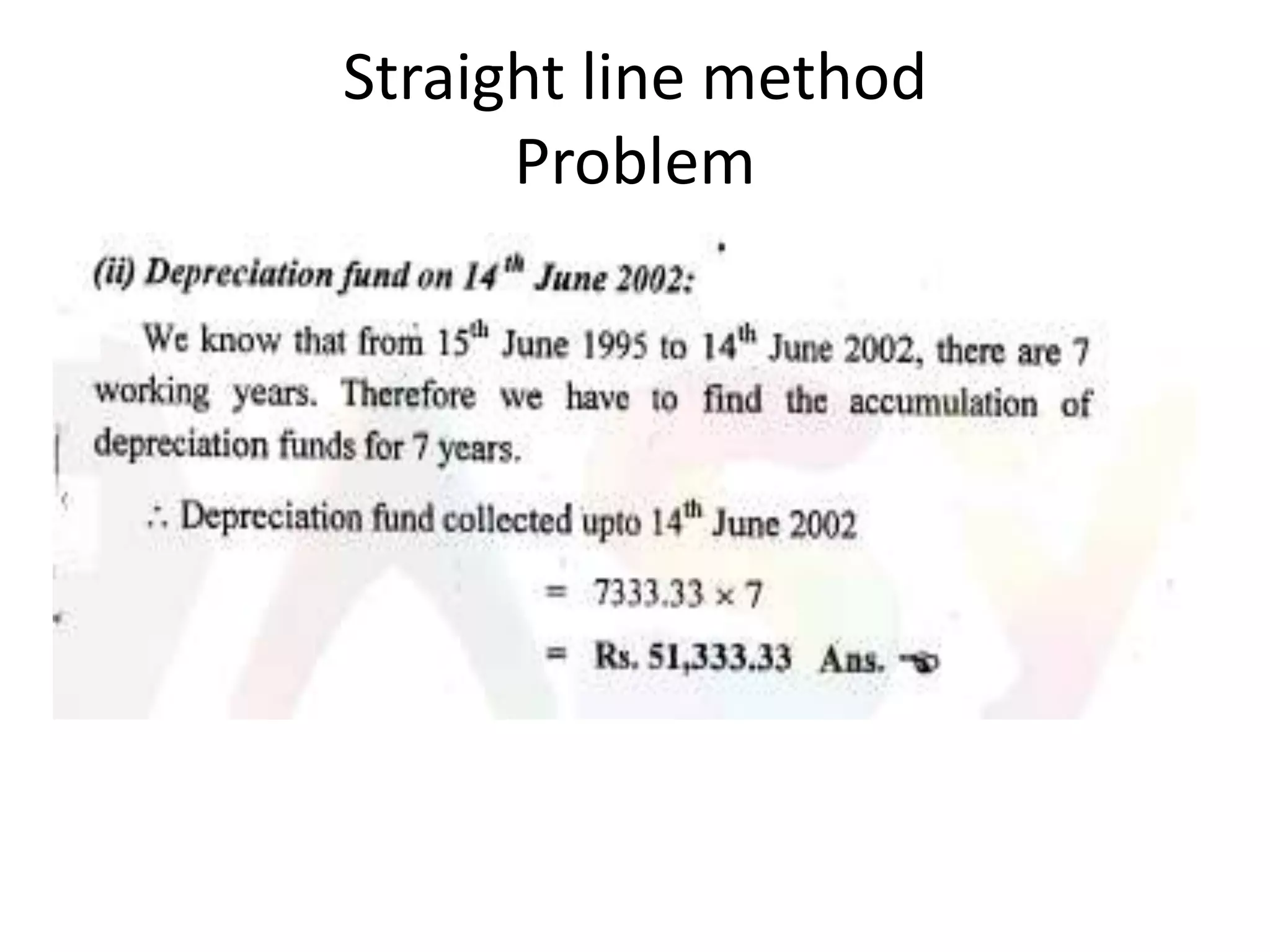
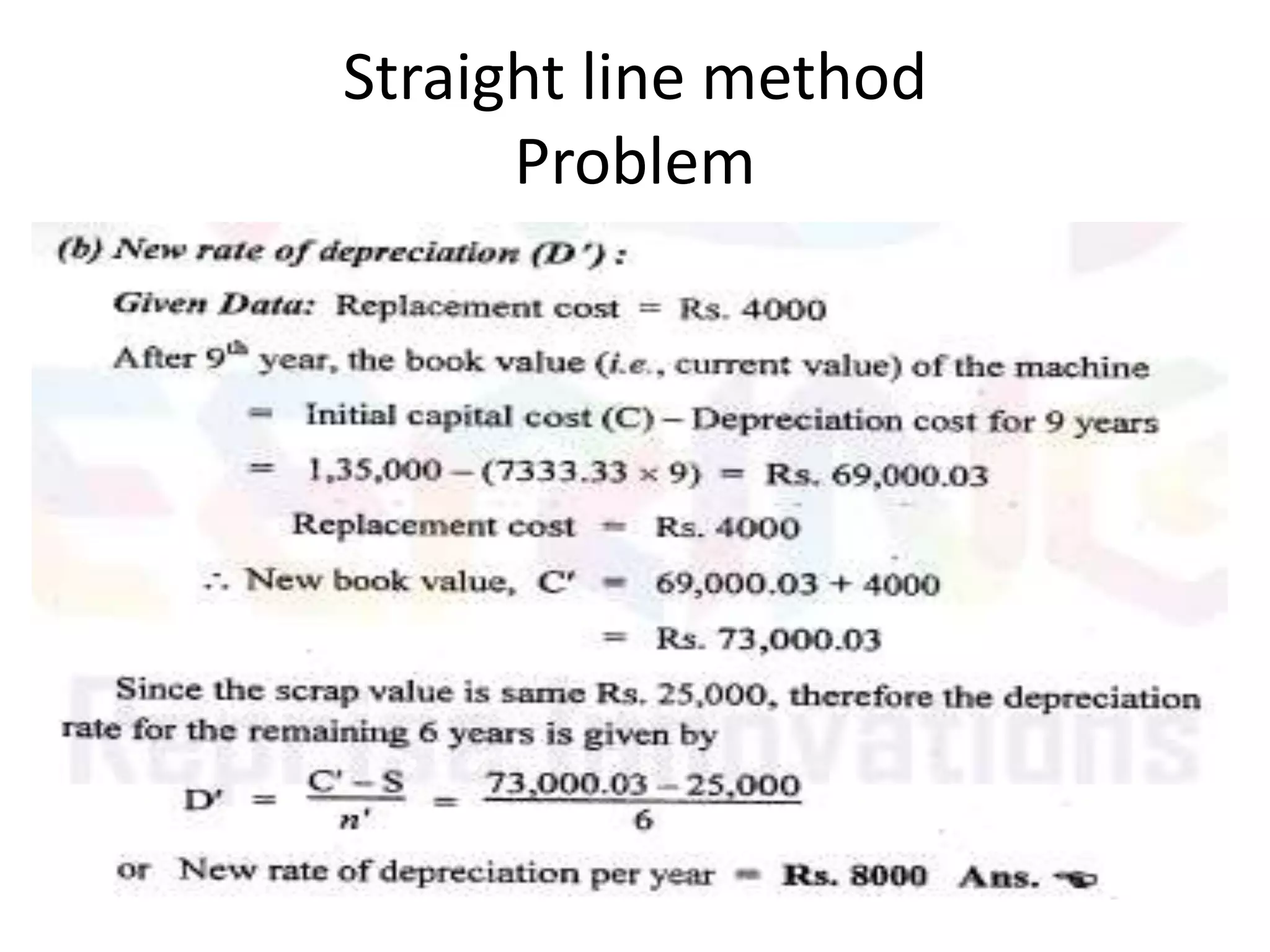
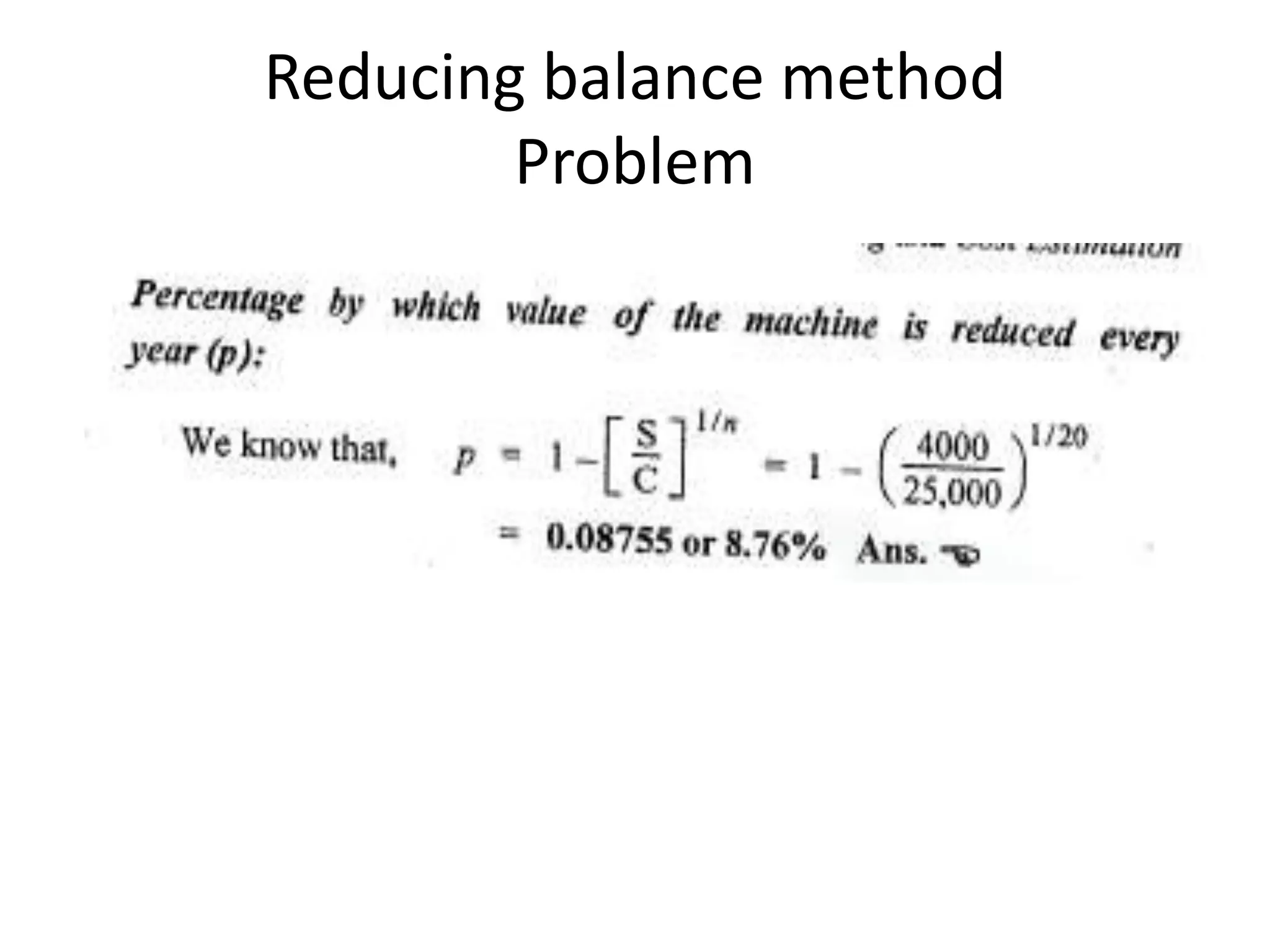
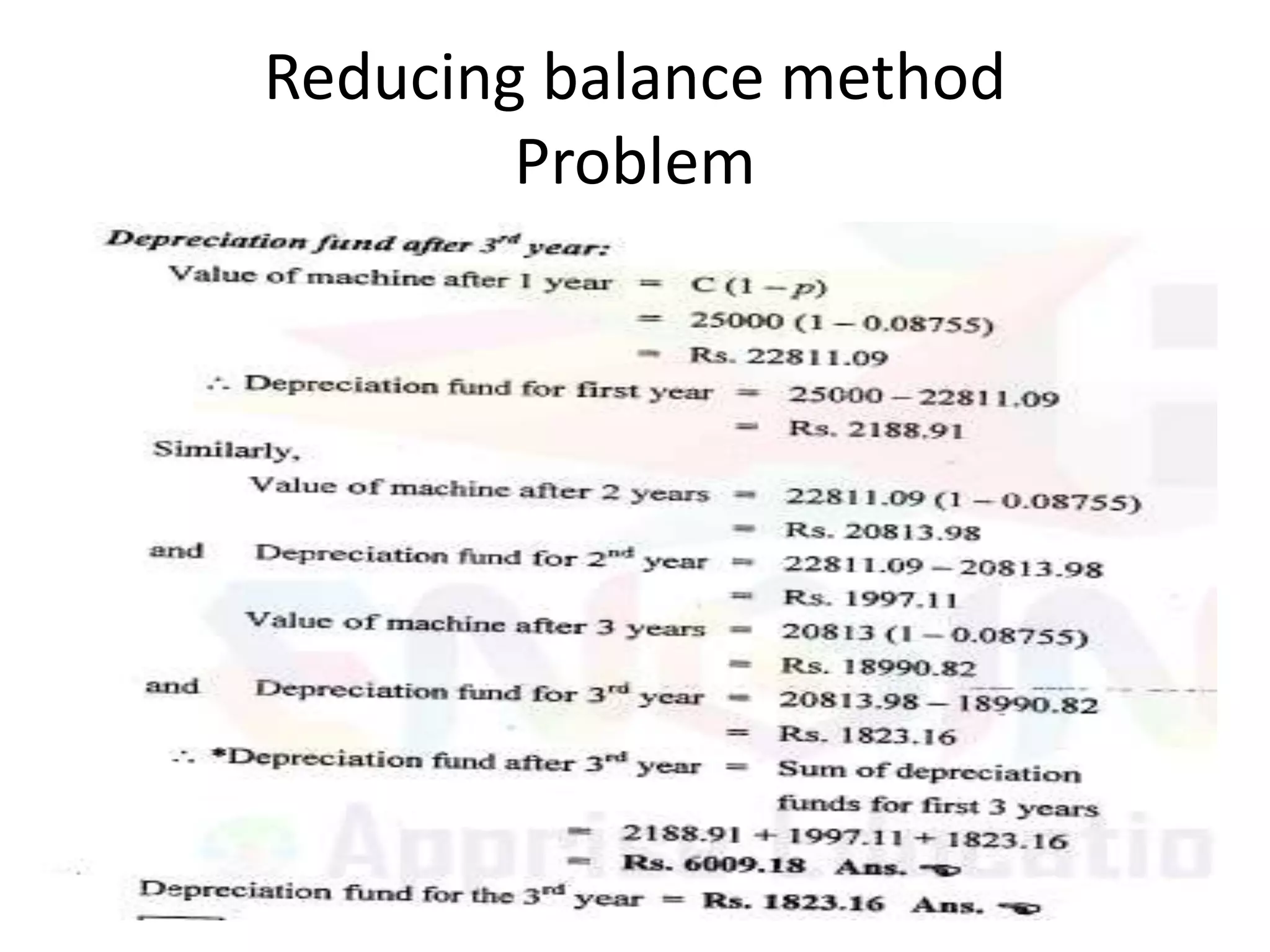
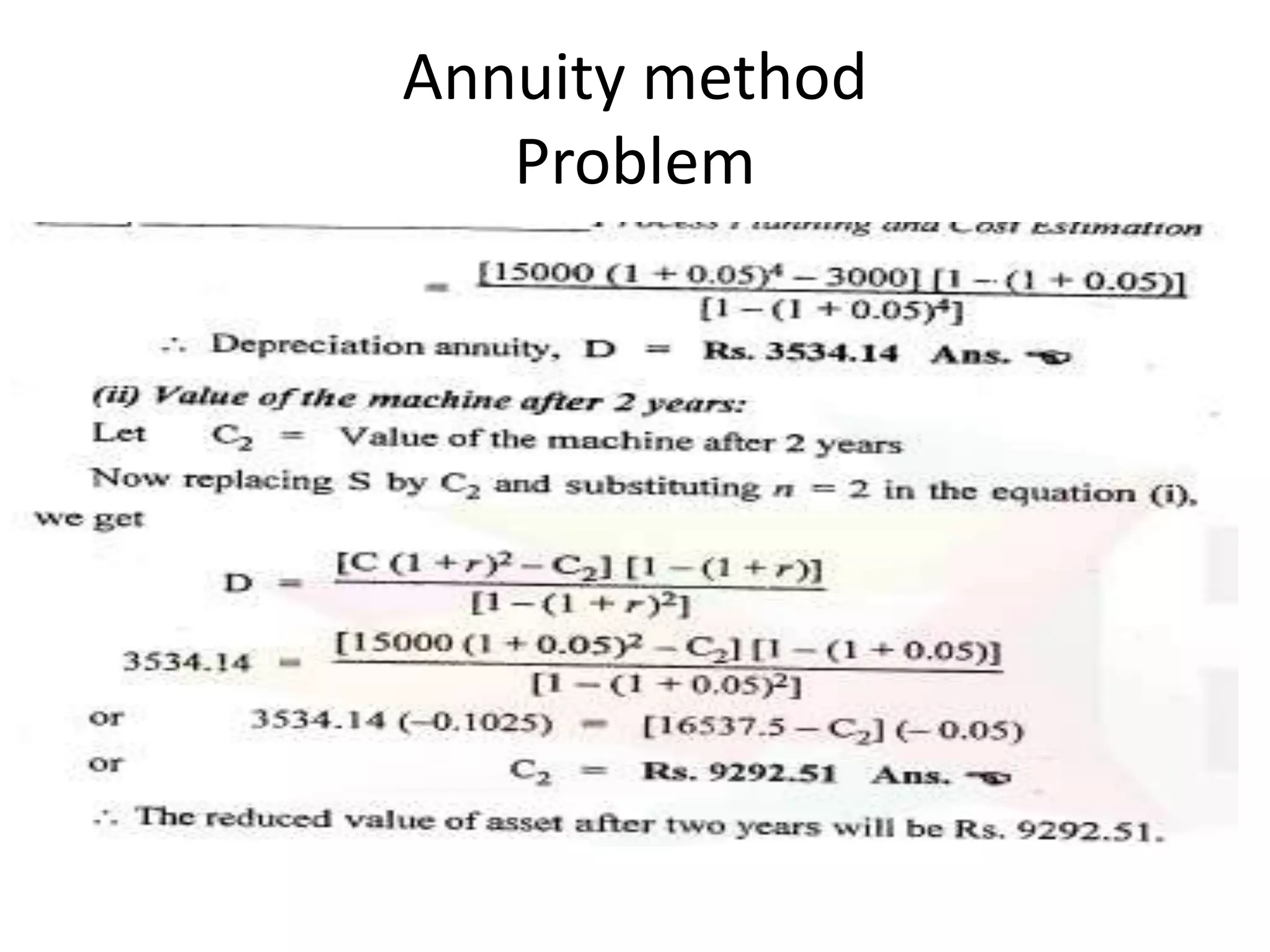
Straight line method
•Amount of depreciation distributed over the
equal period of installments.
• Merit simple method (little calculations)
• Demerit this method does not consider
maintenance and repair charges
Topics to becovered
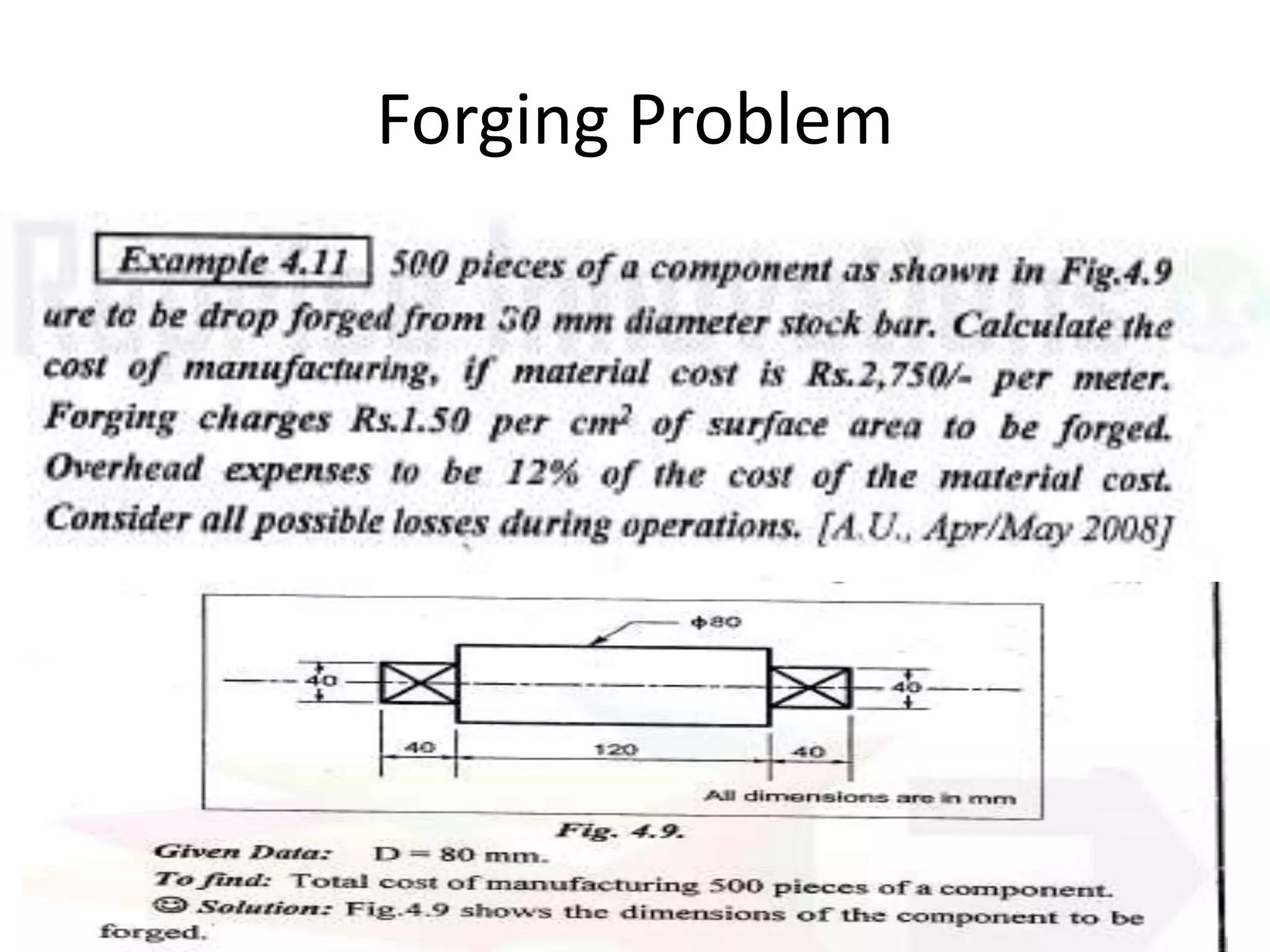
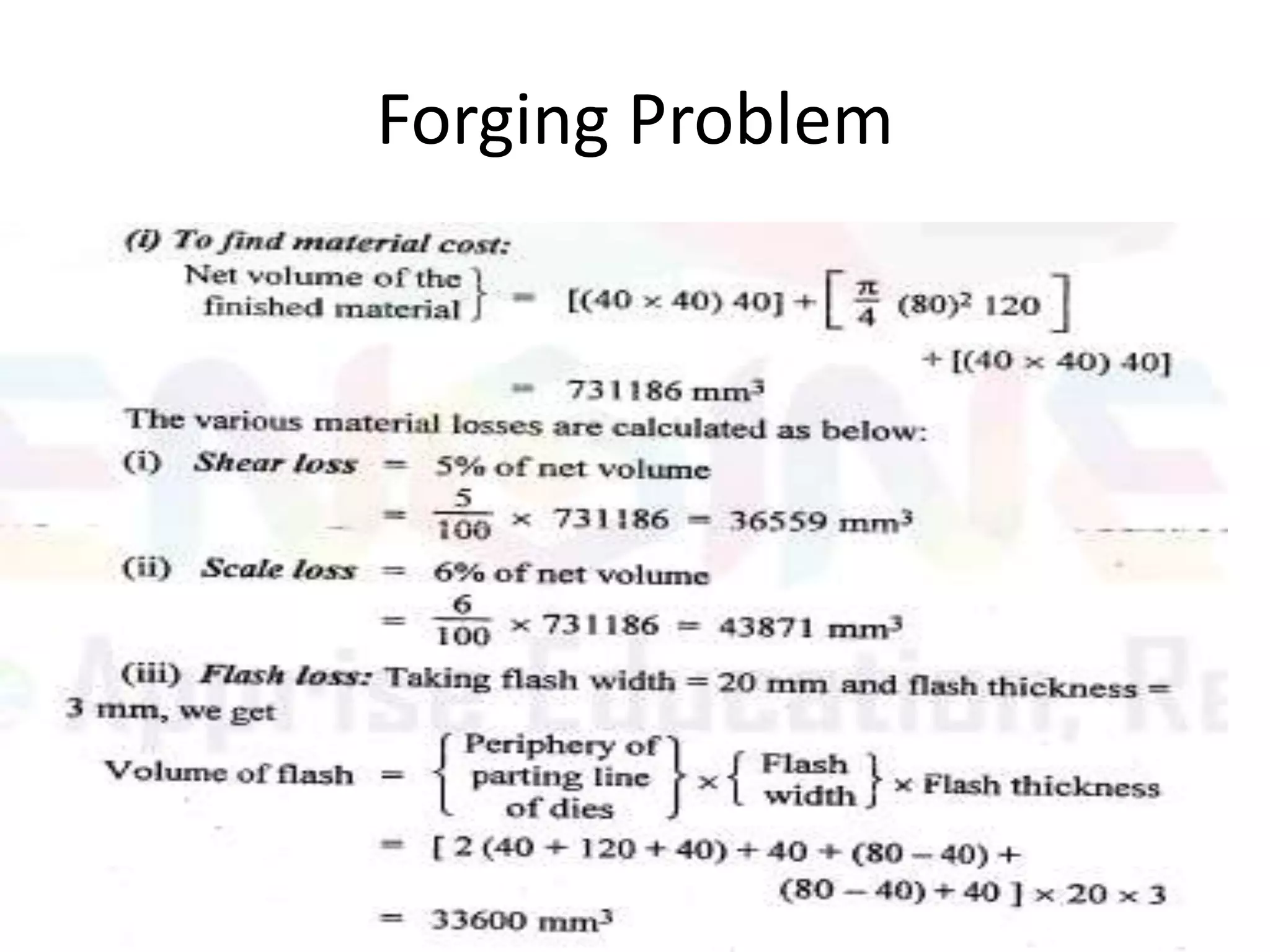
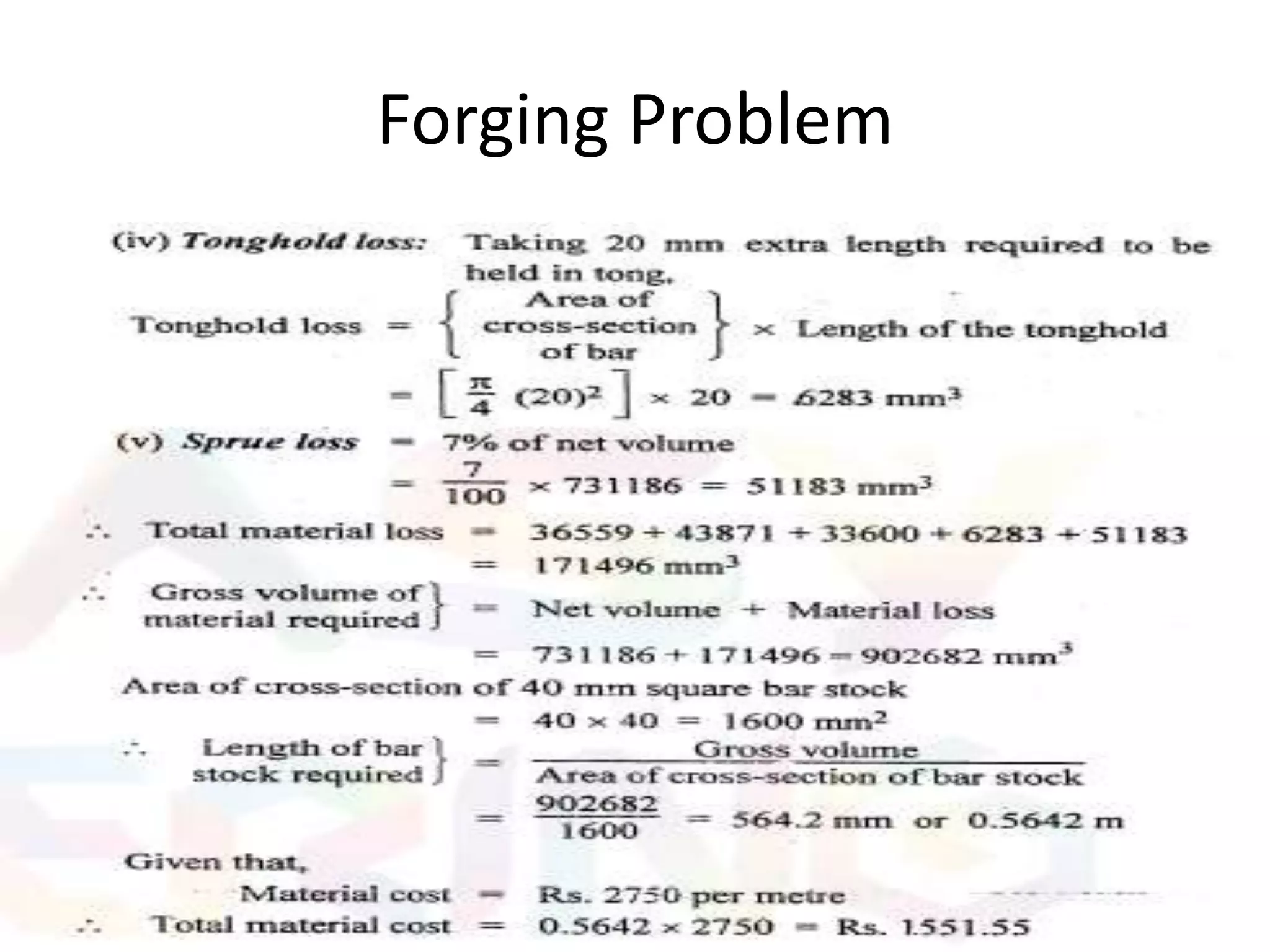
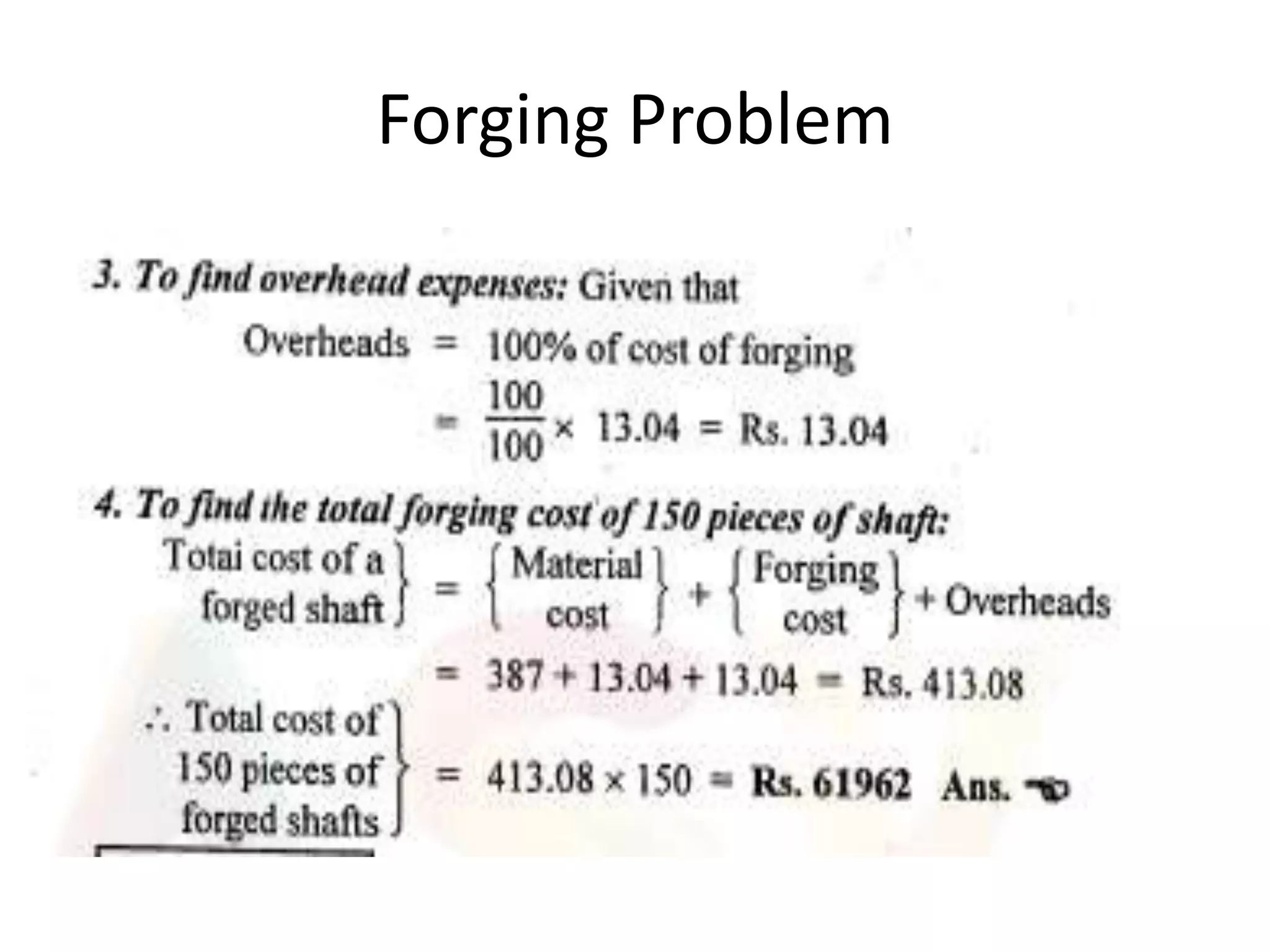
• Estimation of Forging Shop
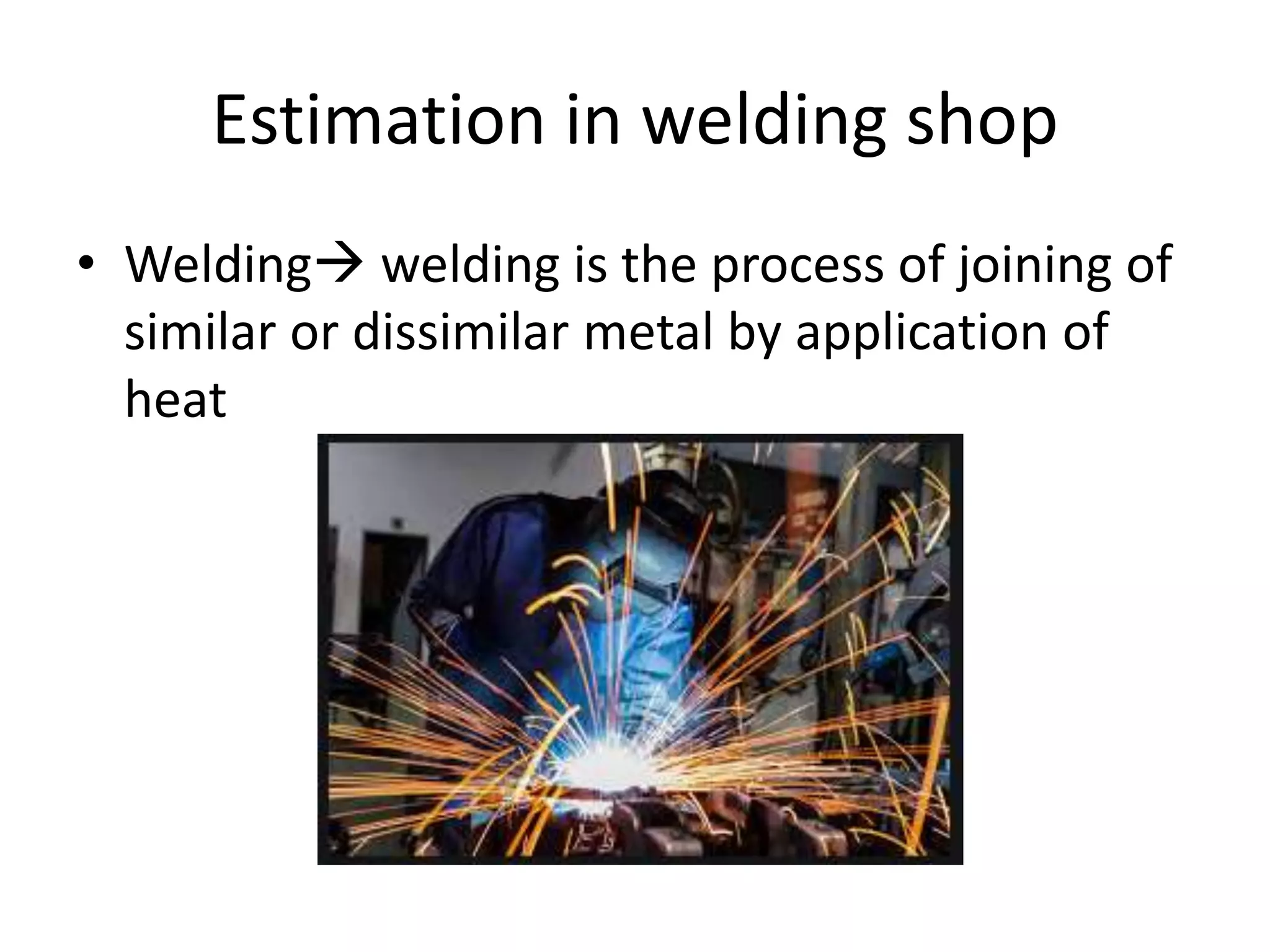
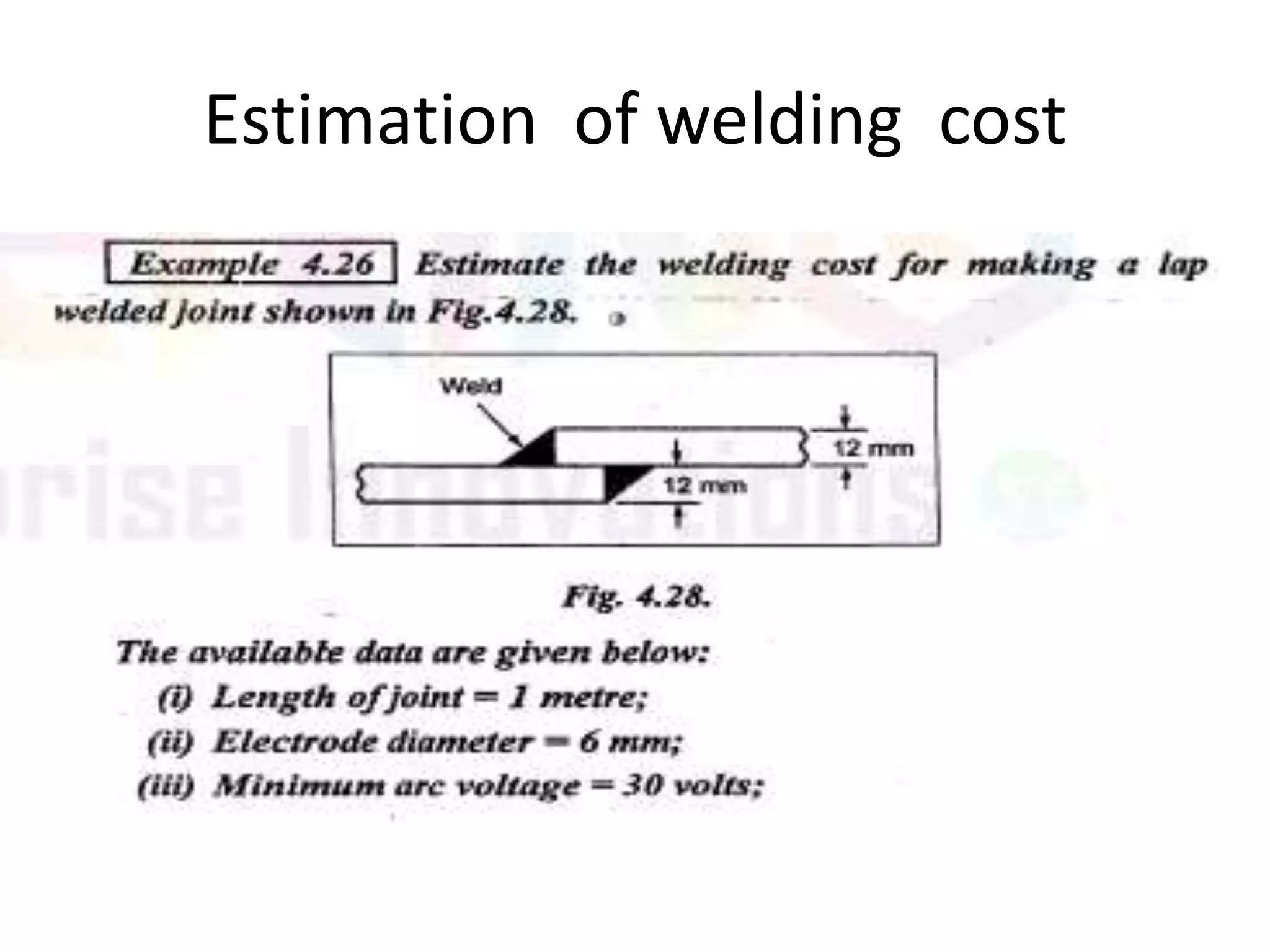
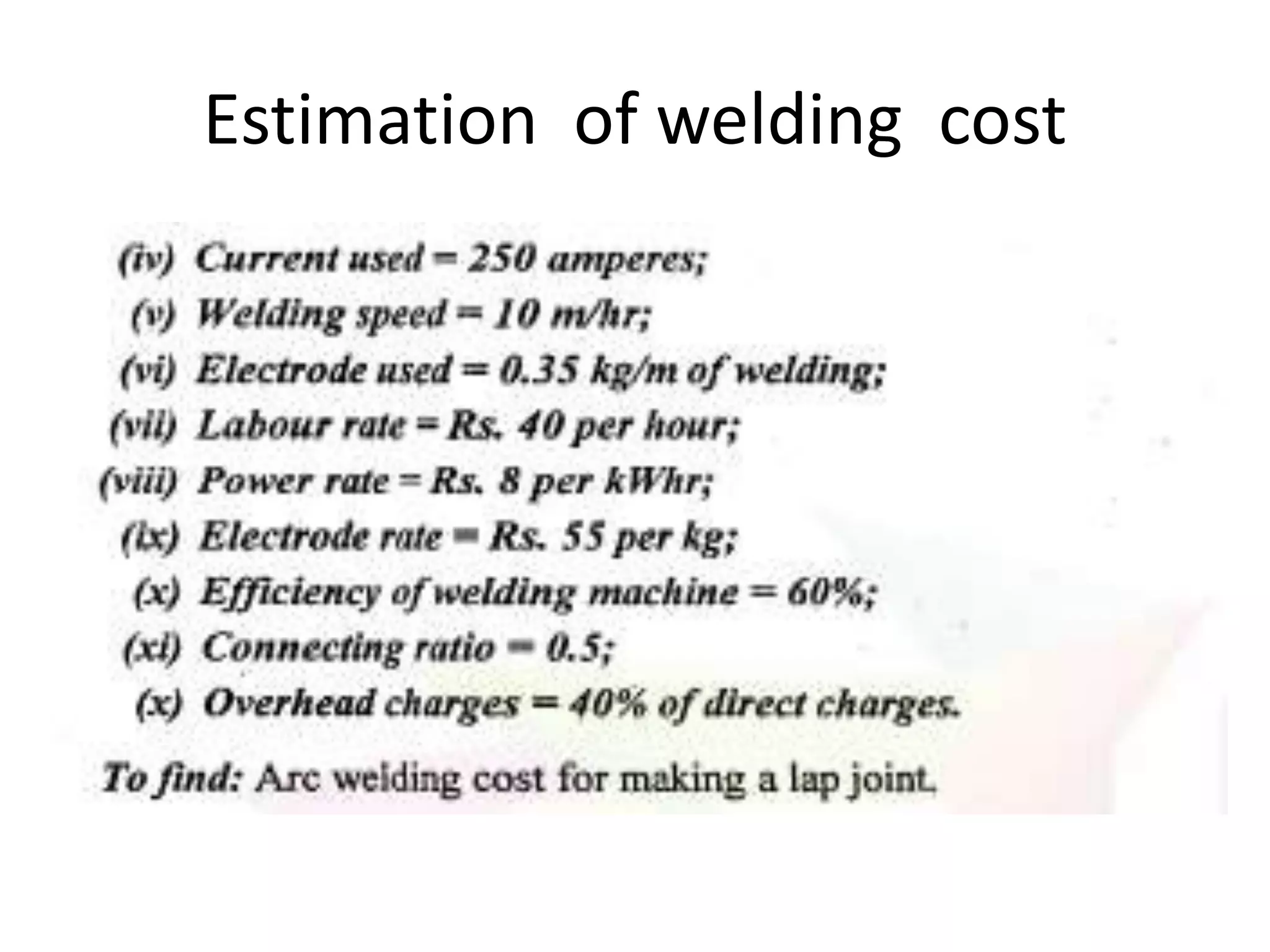
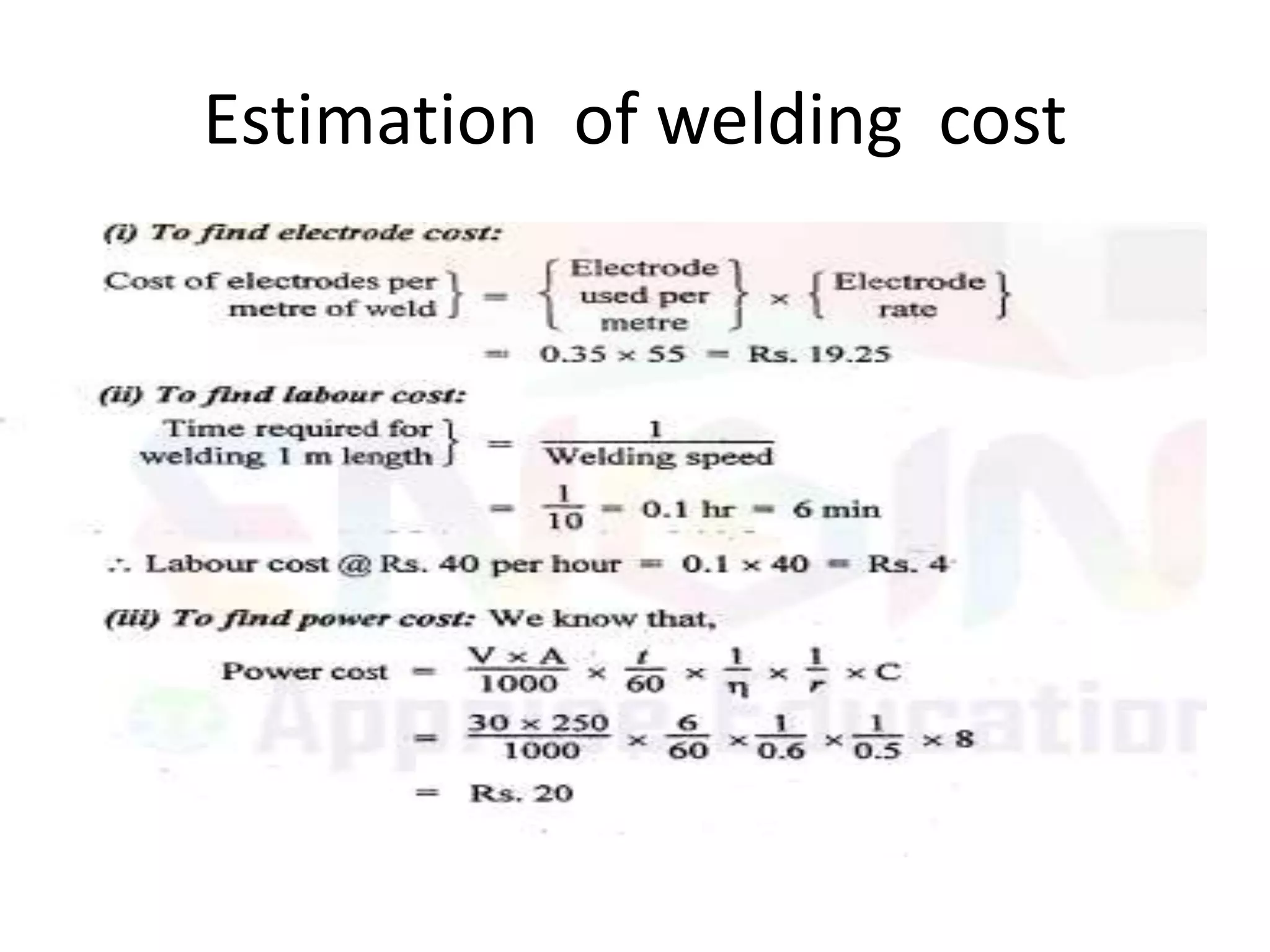
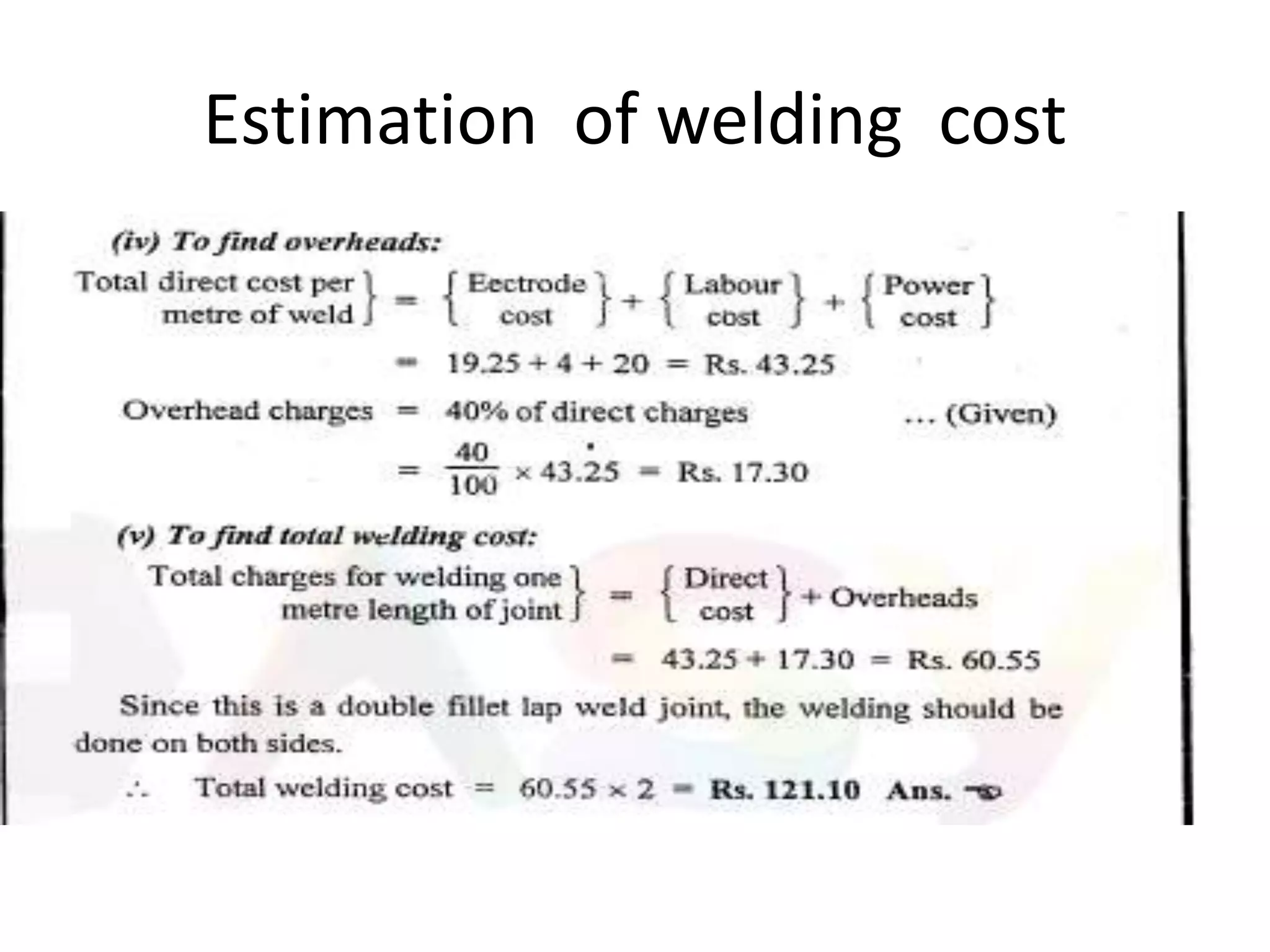
• Estimation of welding
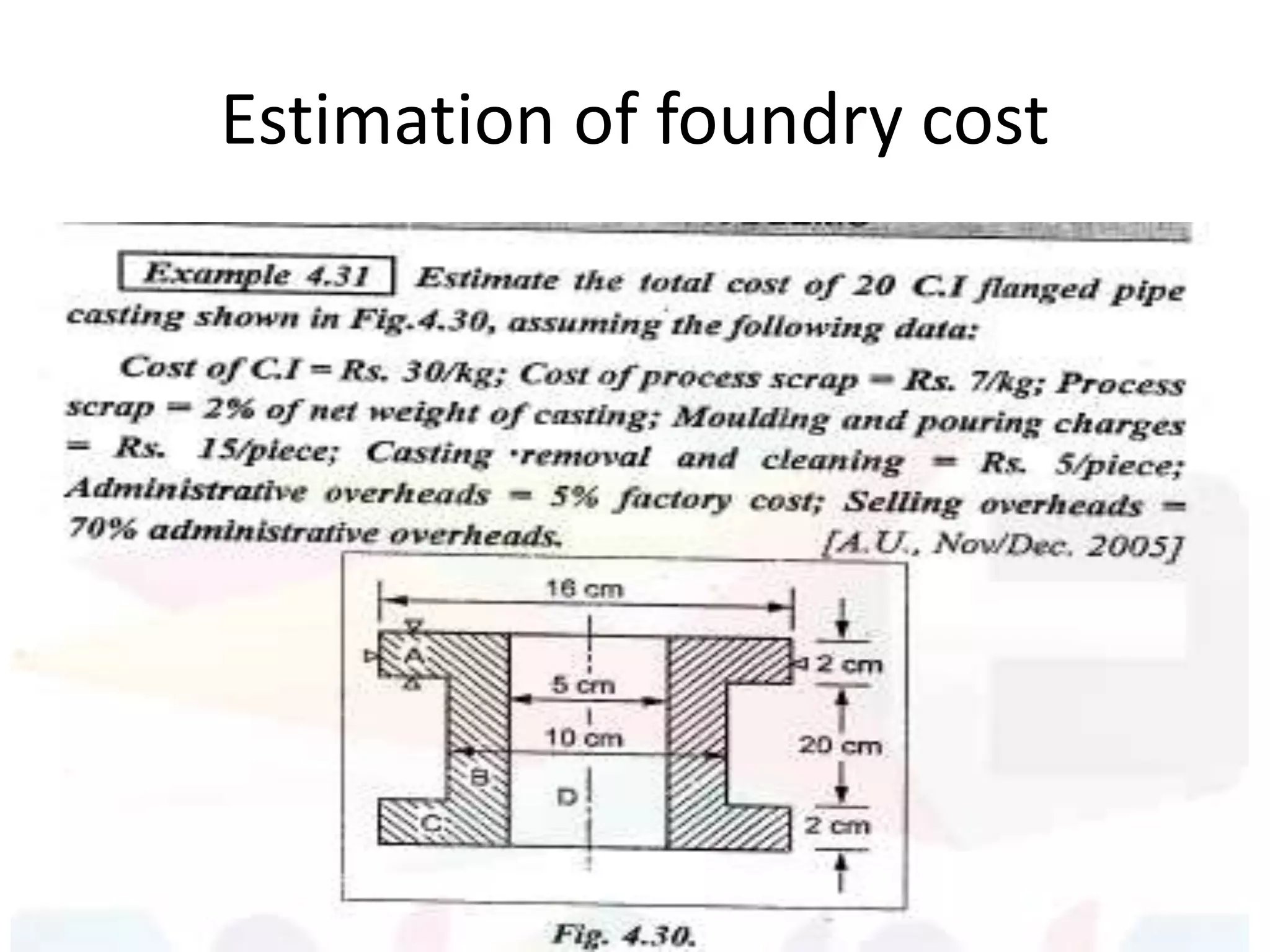
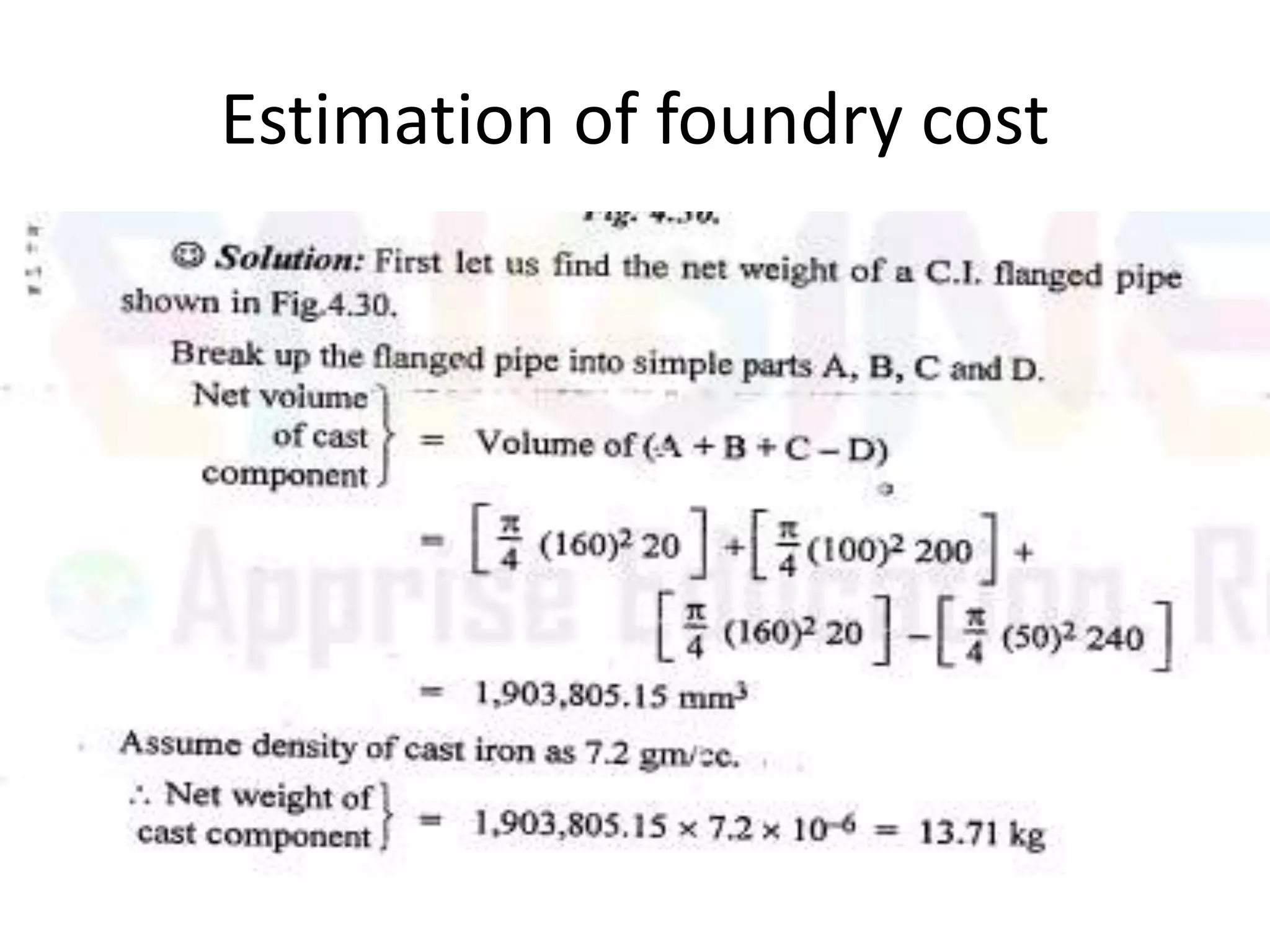
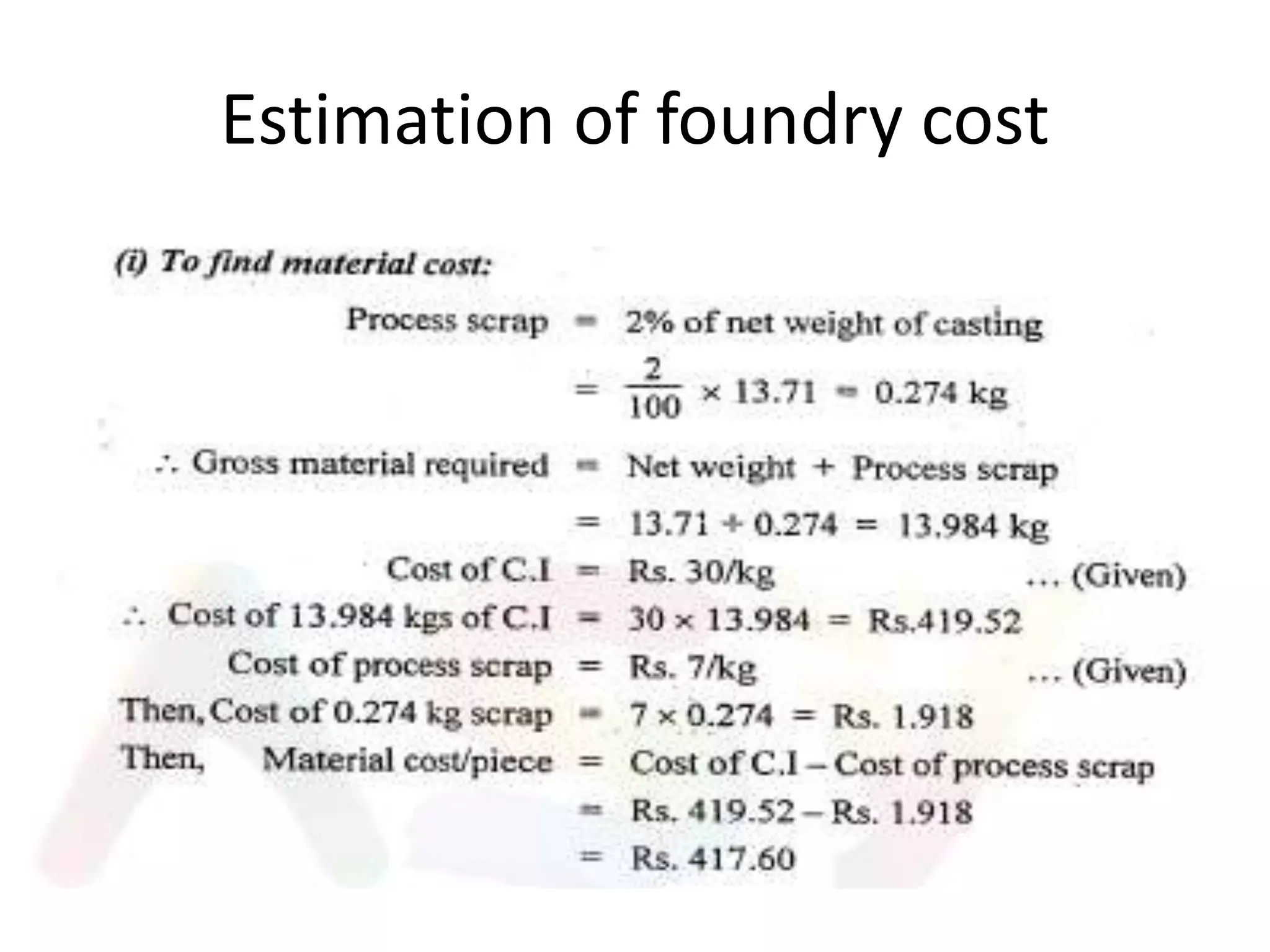
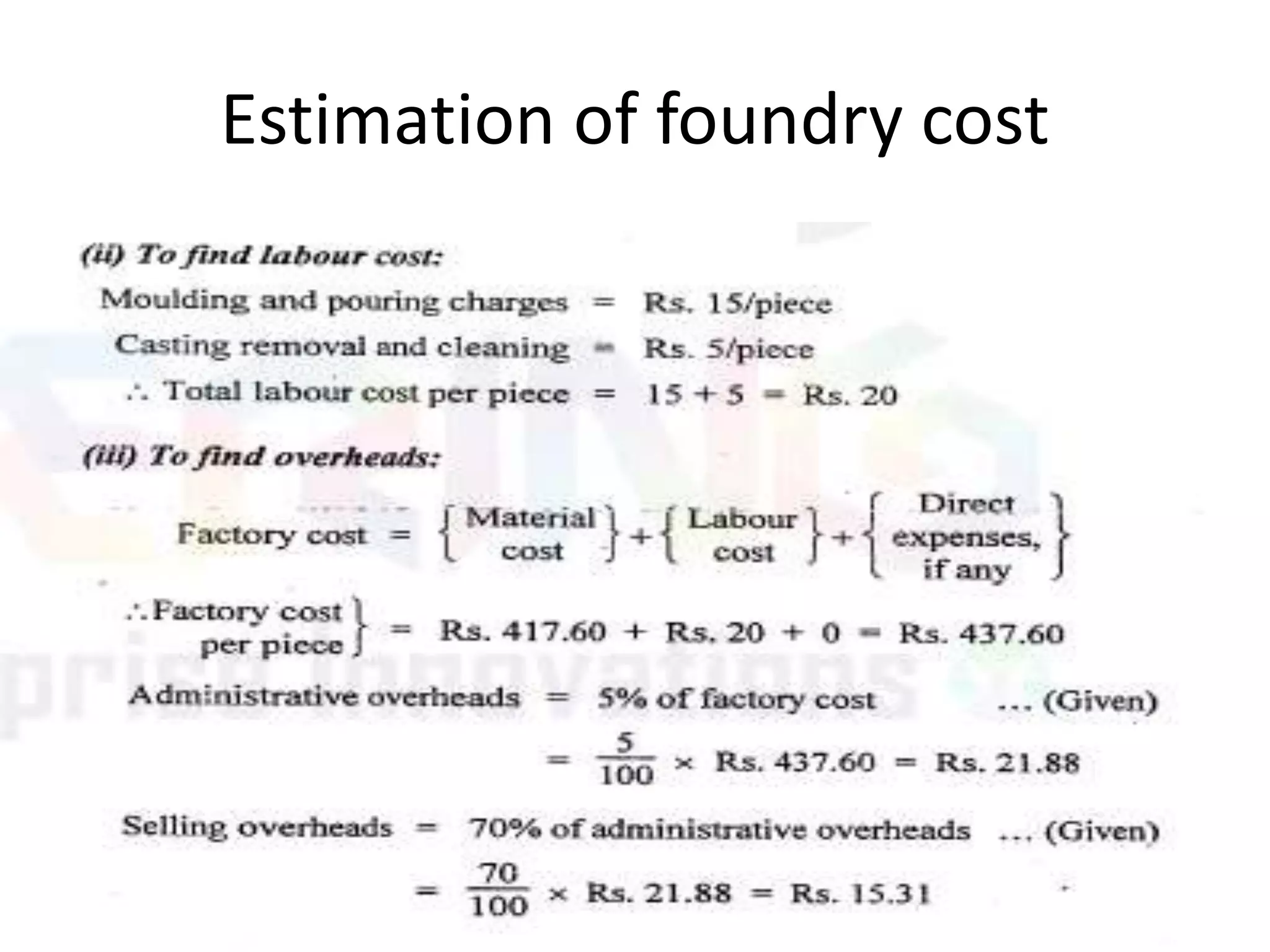
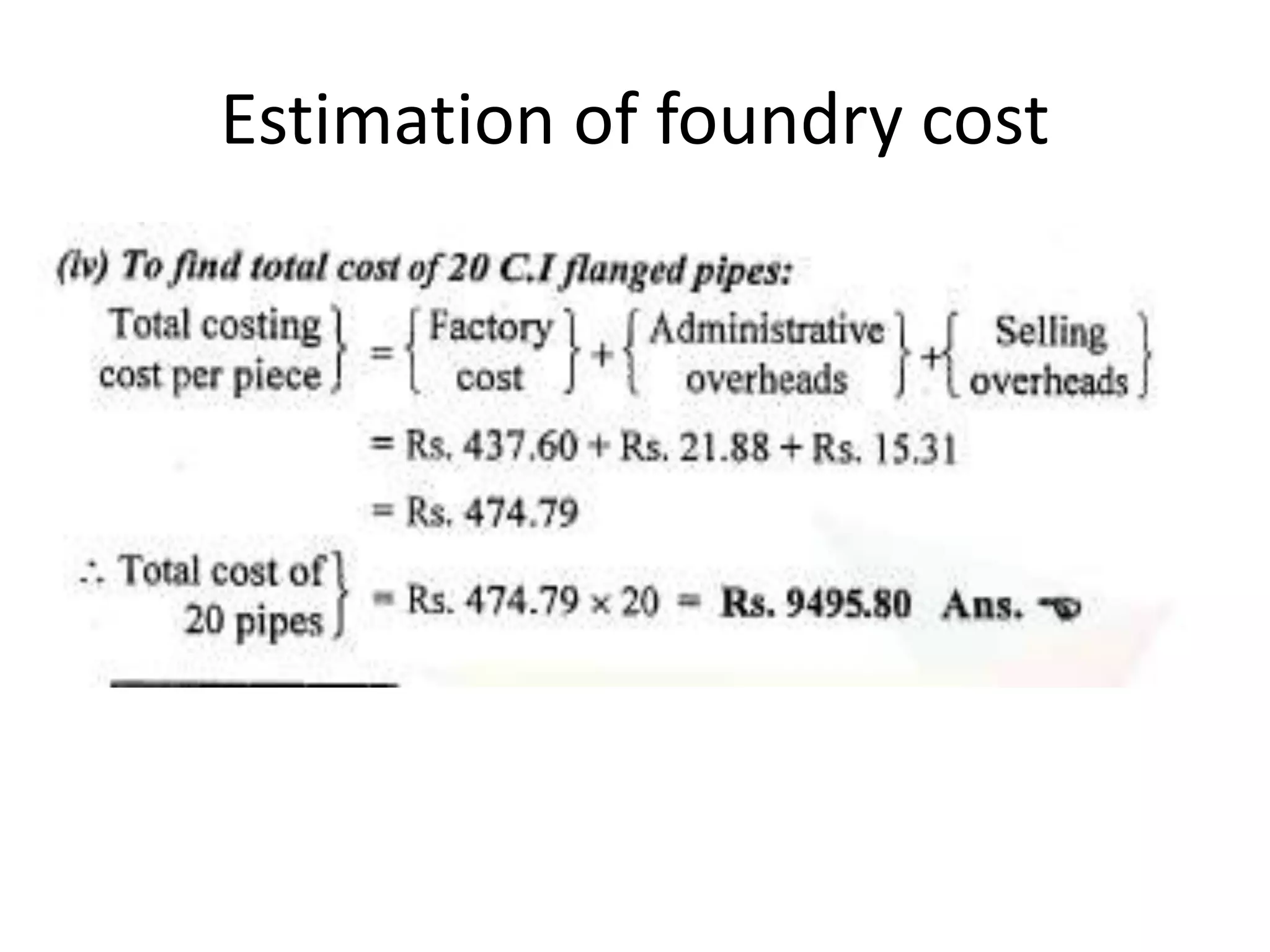
• Estimation of foundry shop
221.
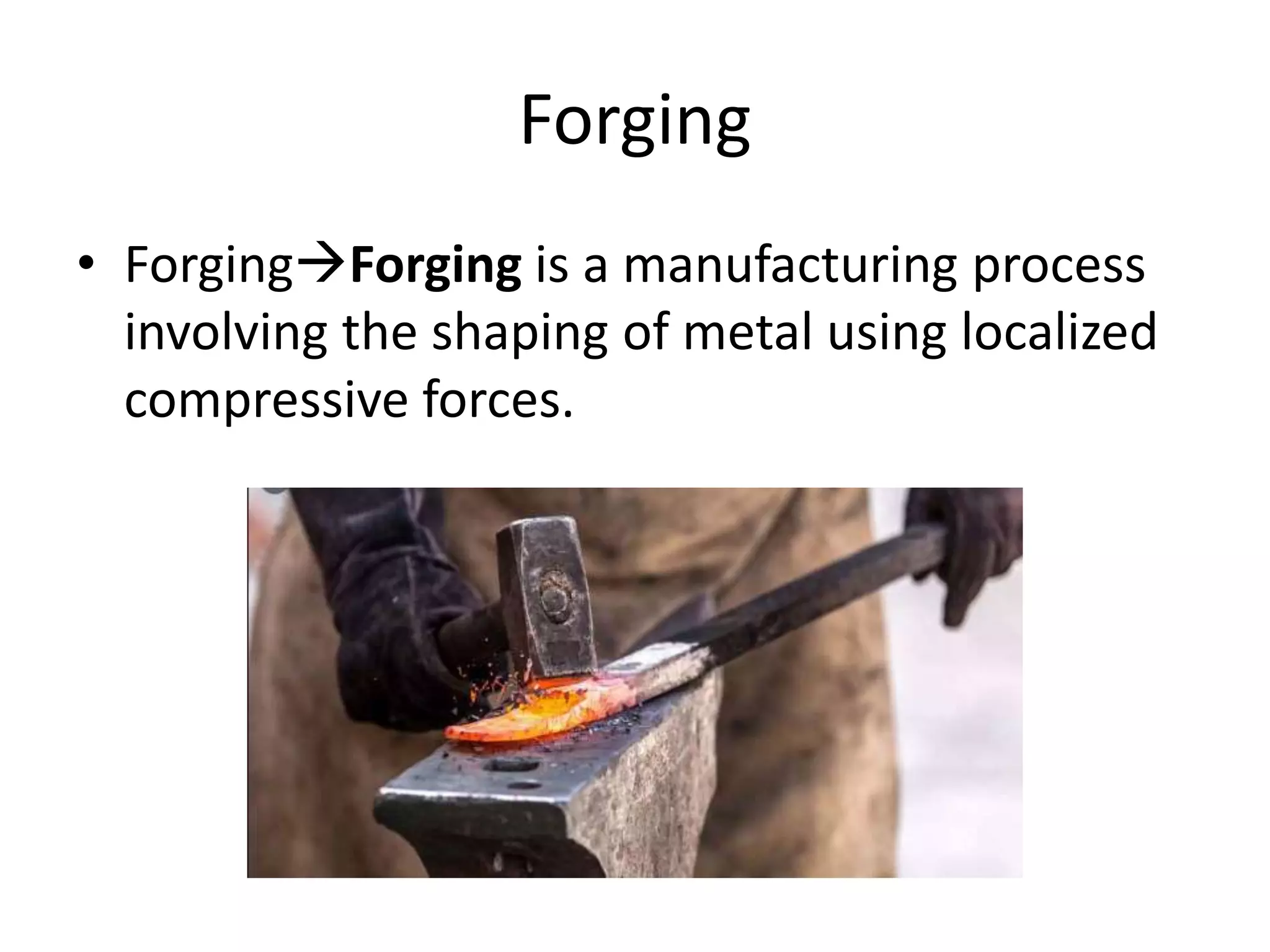
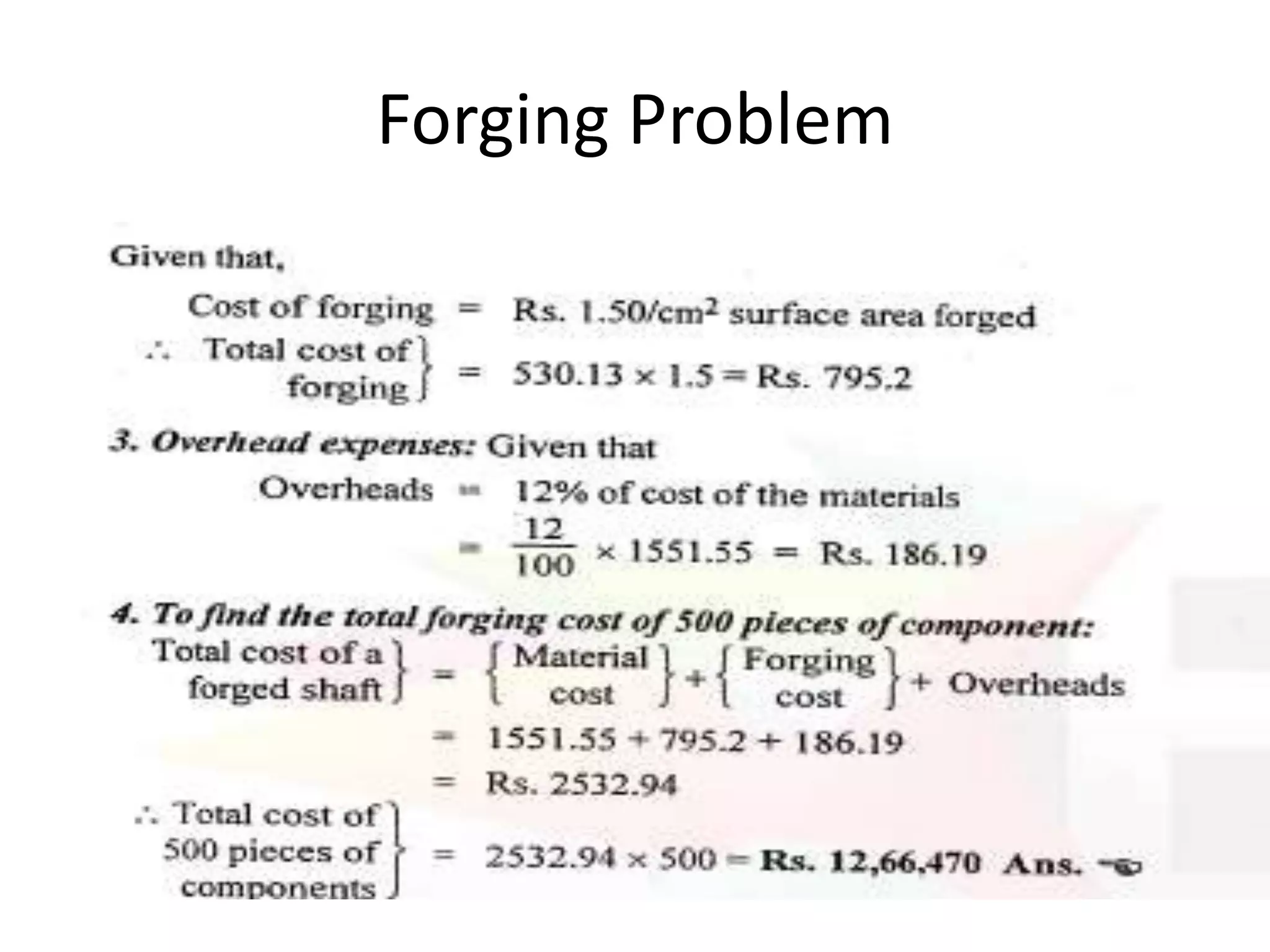
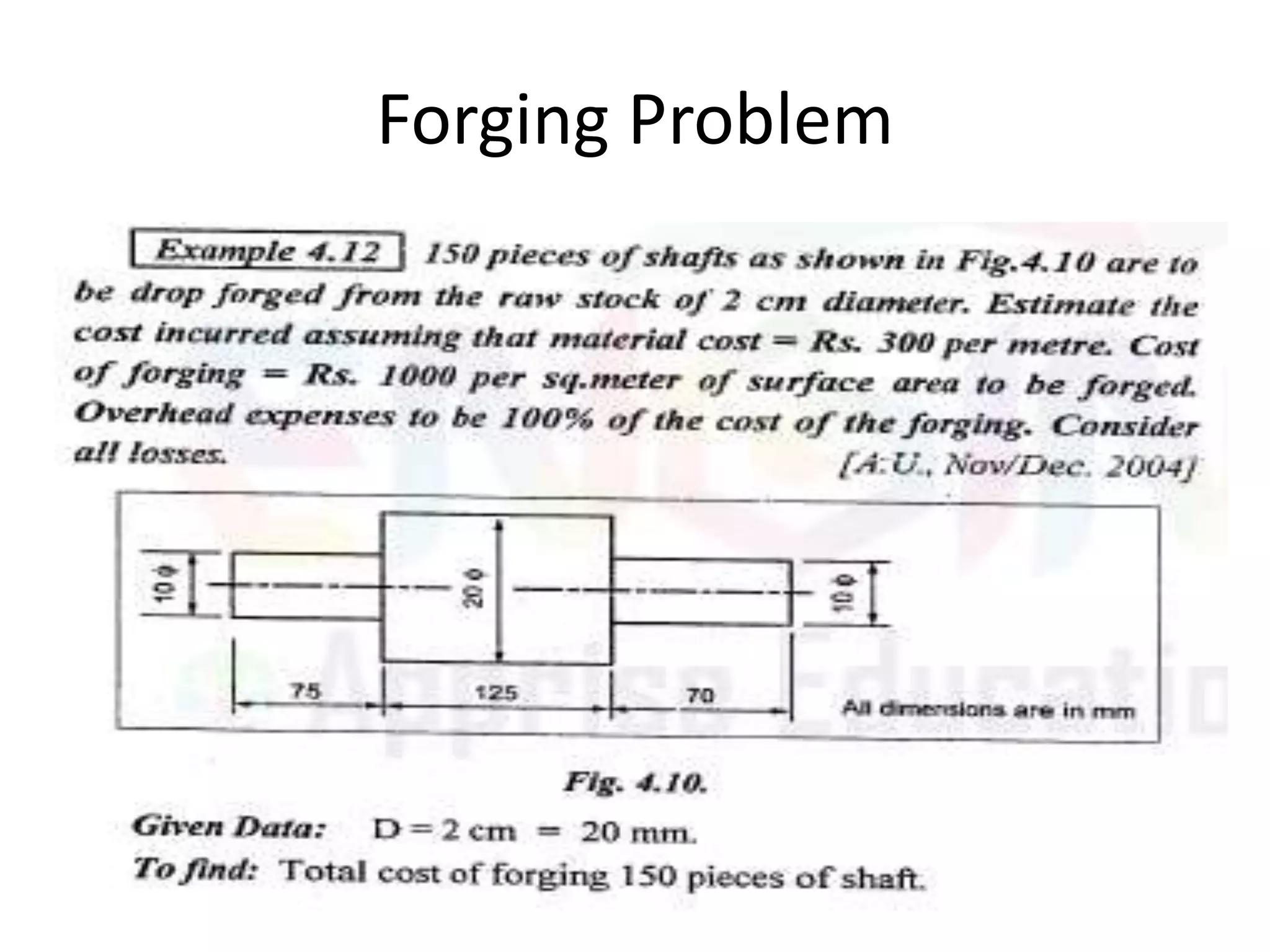
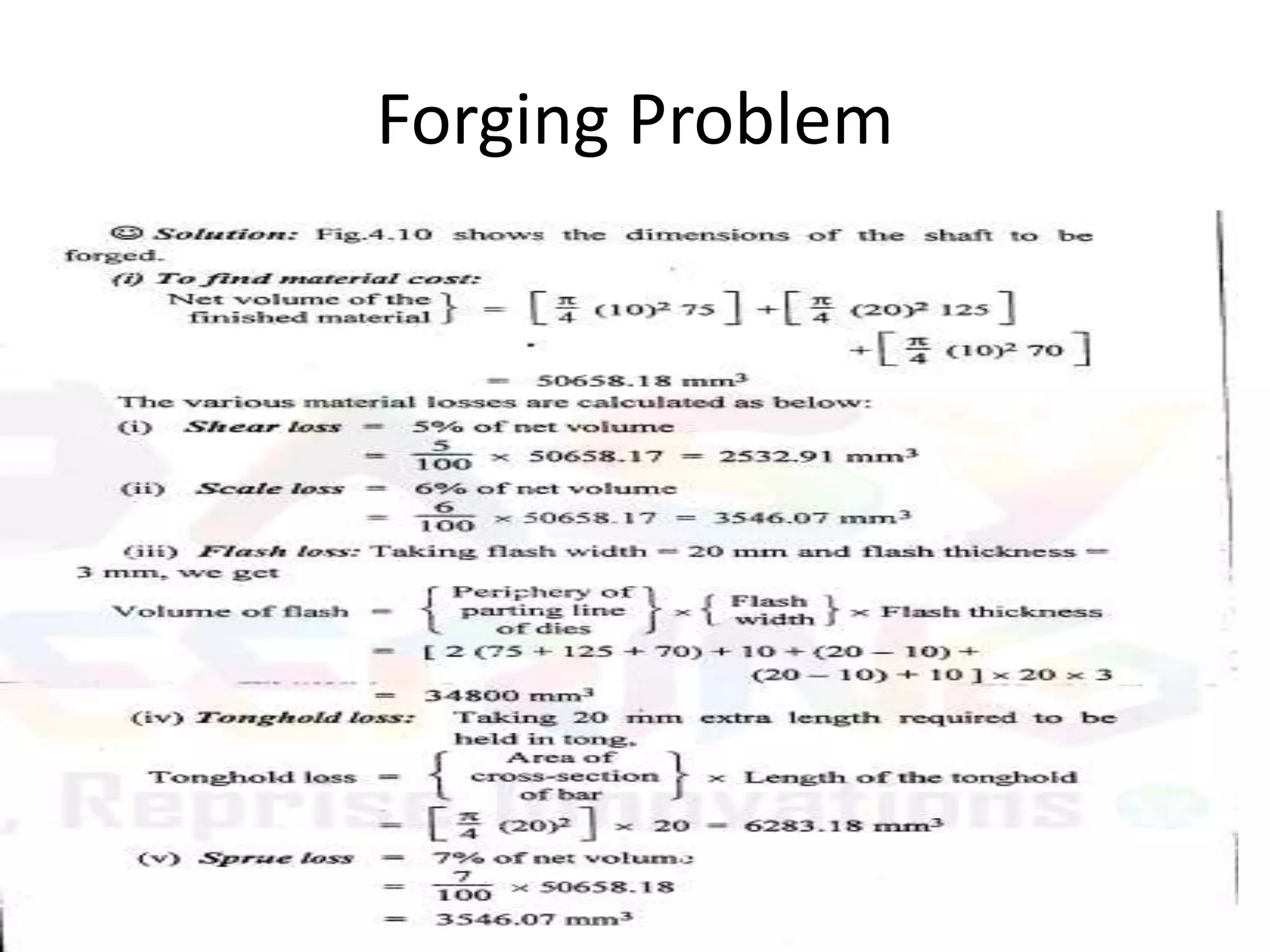
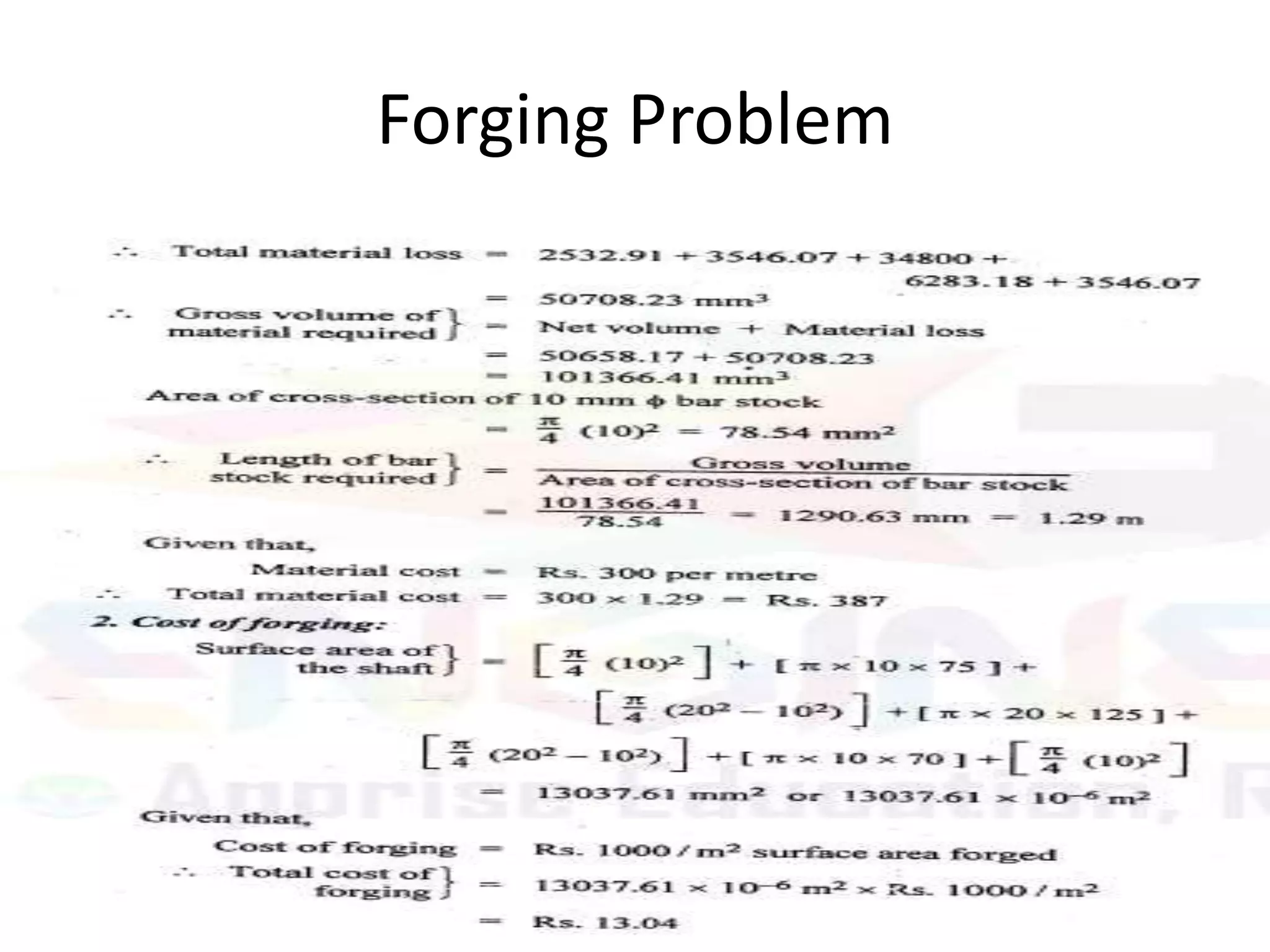
Forging
• ForgingForging isa manufacturing process
involving the shaping of metal using localized
compressive forces.
222.
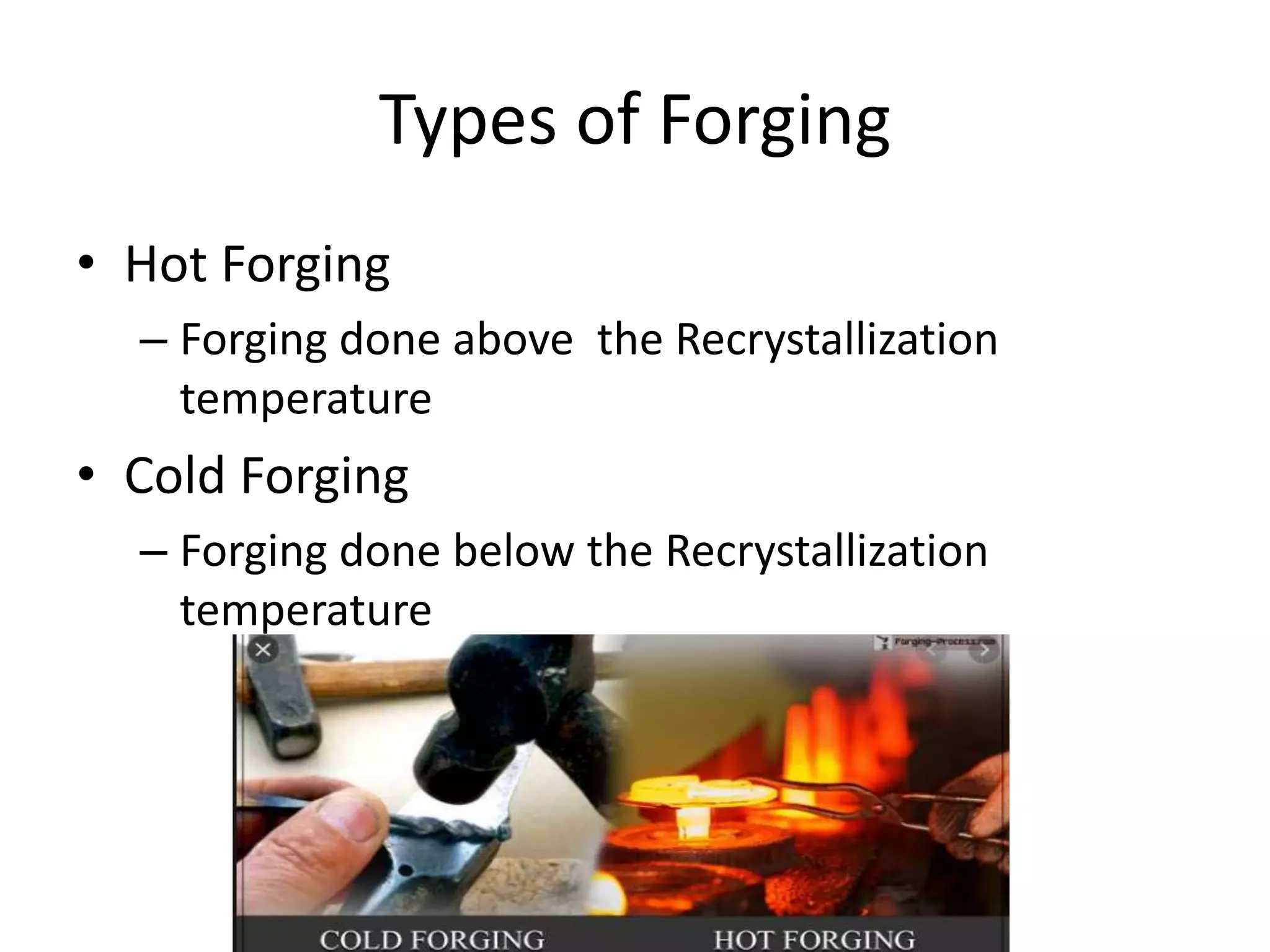
Types of Forging
•Hot Forging
– Forging done above the Recrystallization
temperature
• Cold Forging
– Forging done below the Recrystallization
temperature
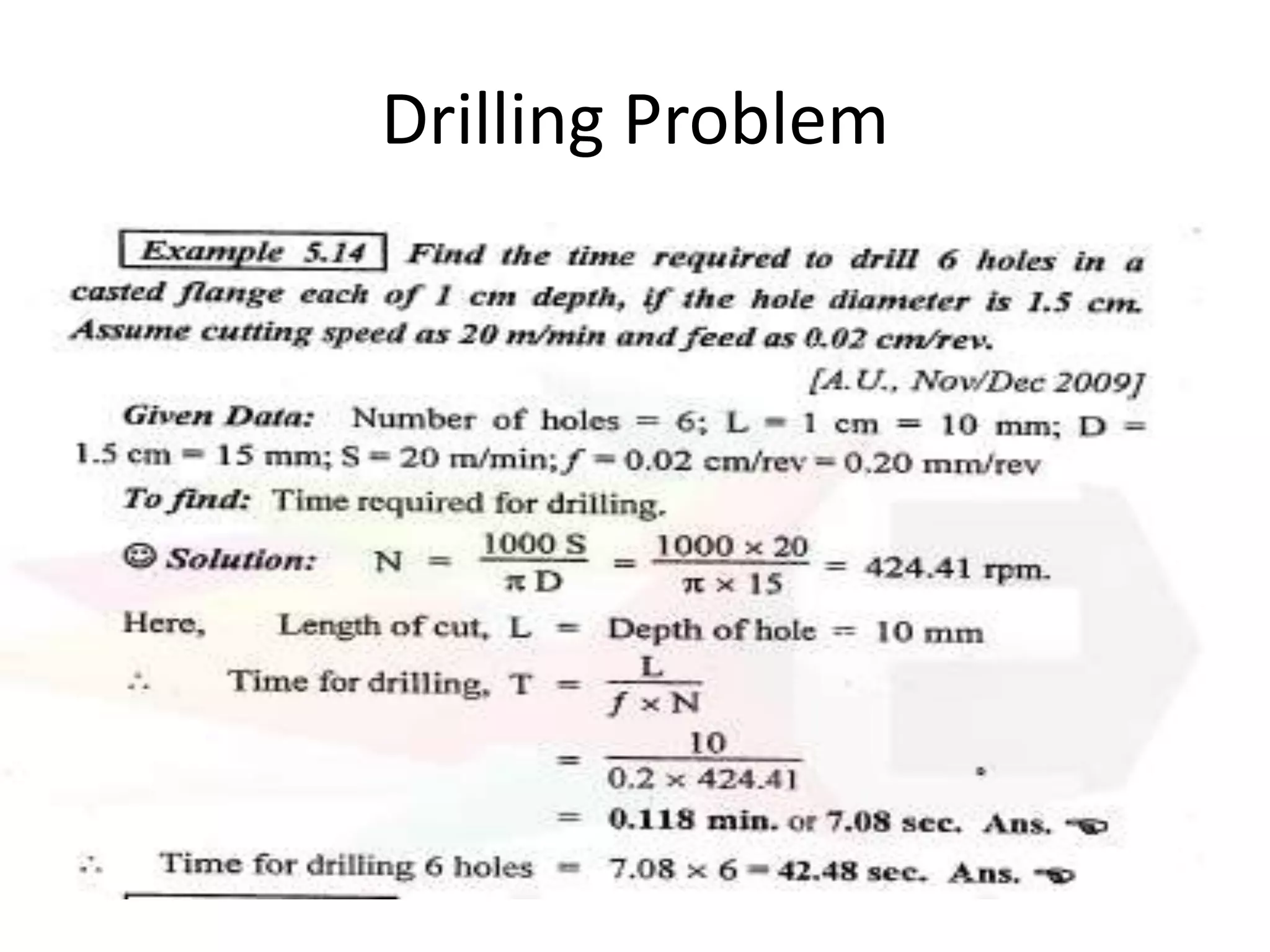
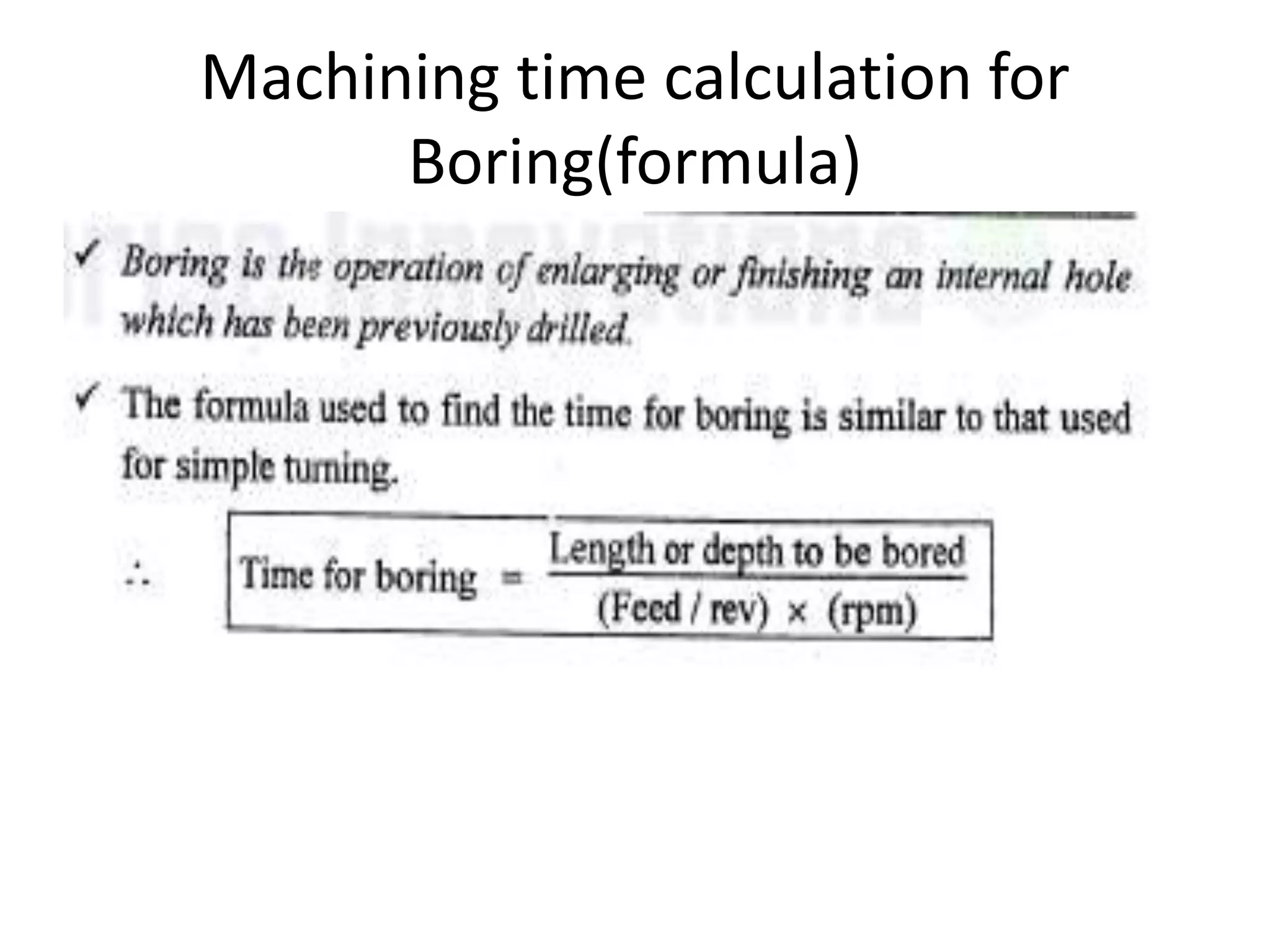
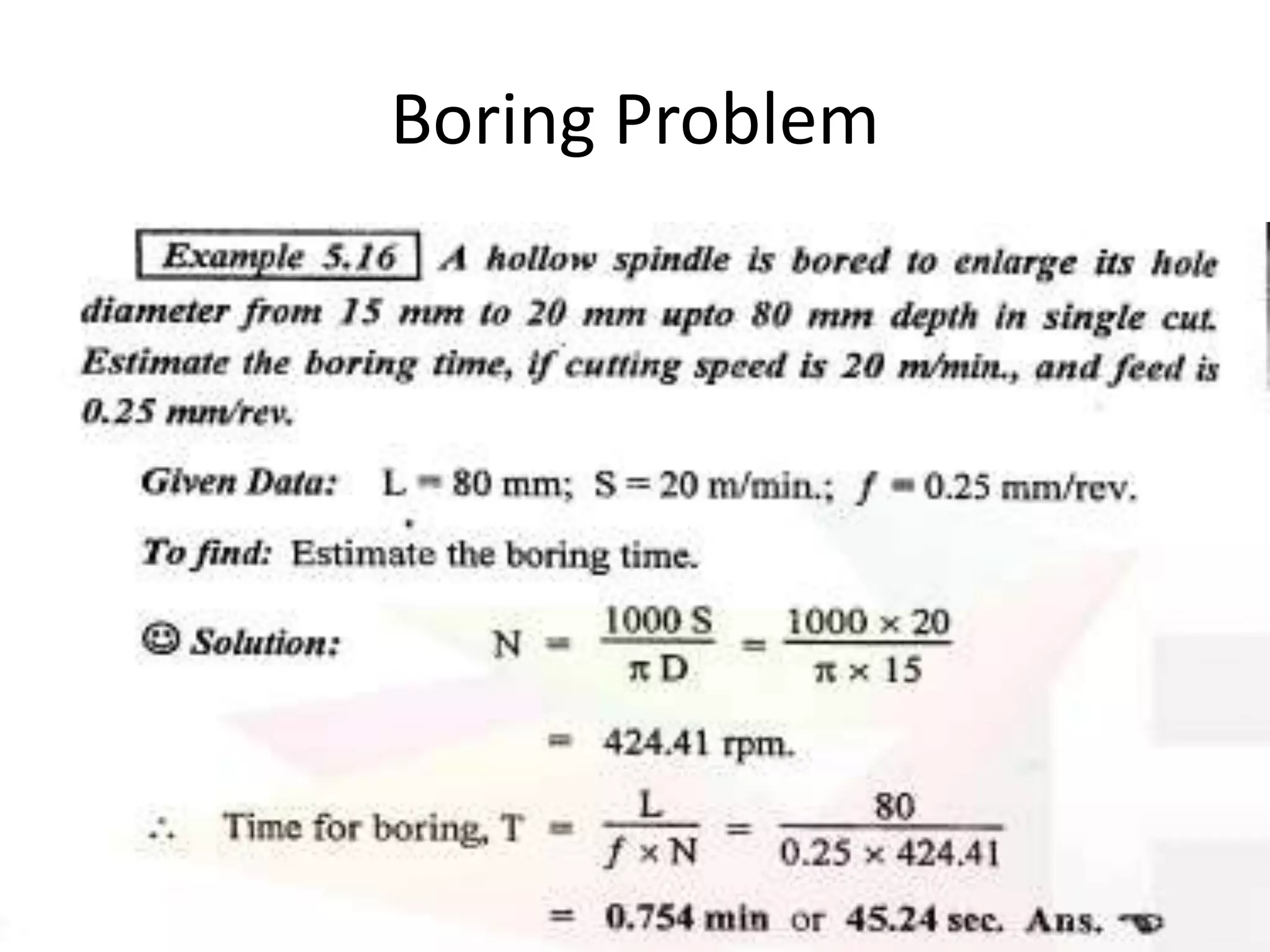
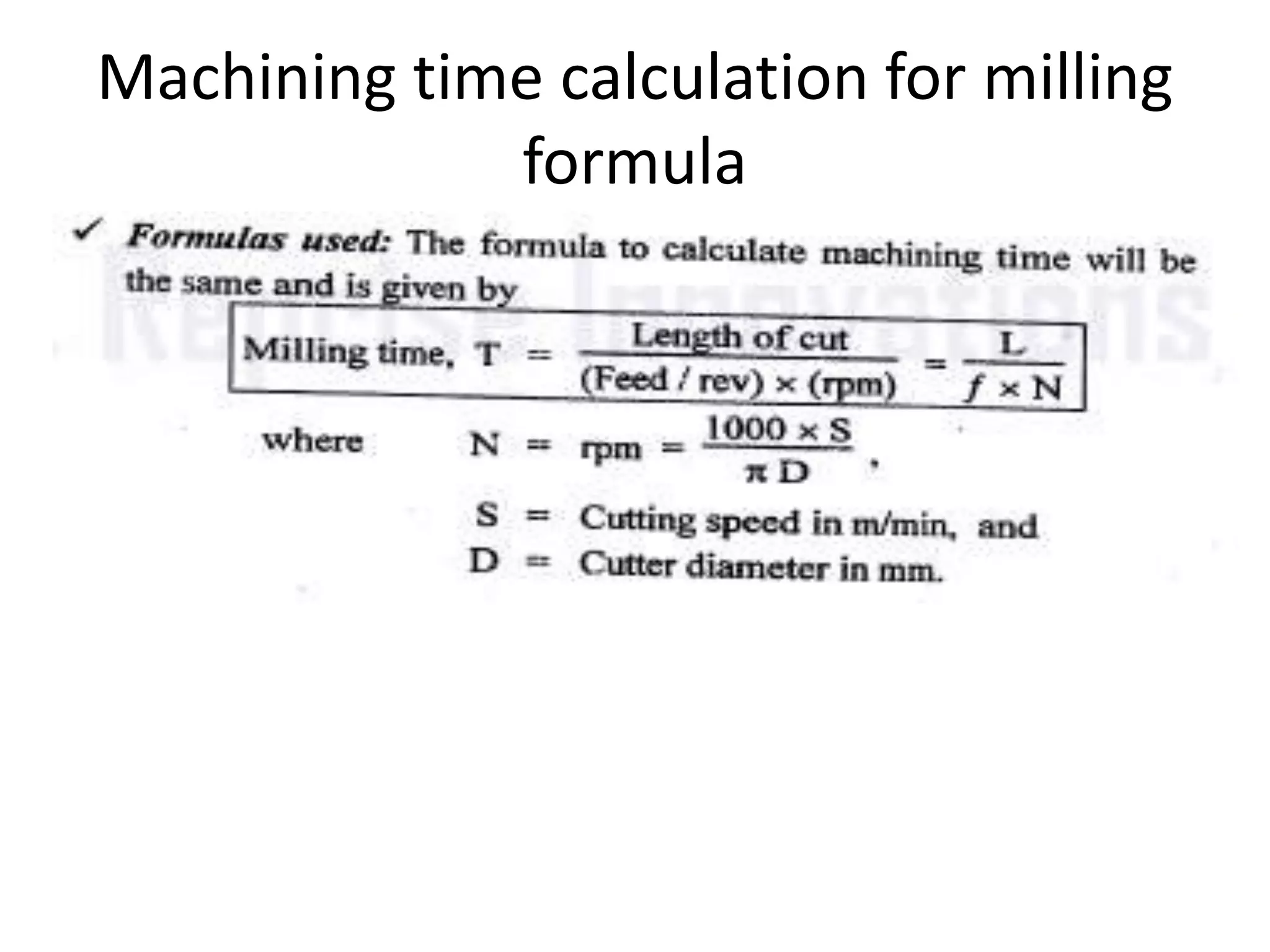
Estimation of machiningtime
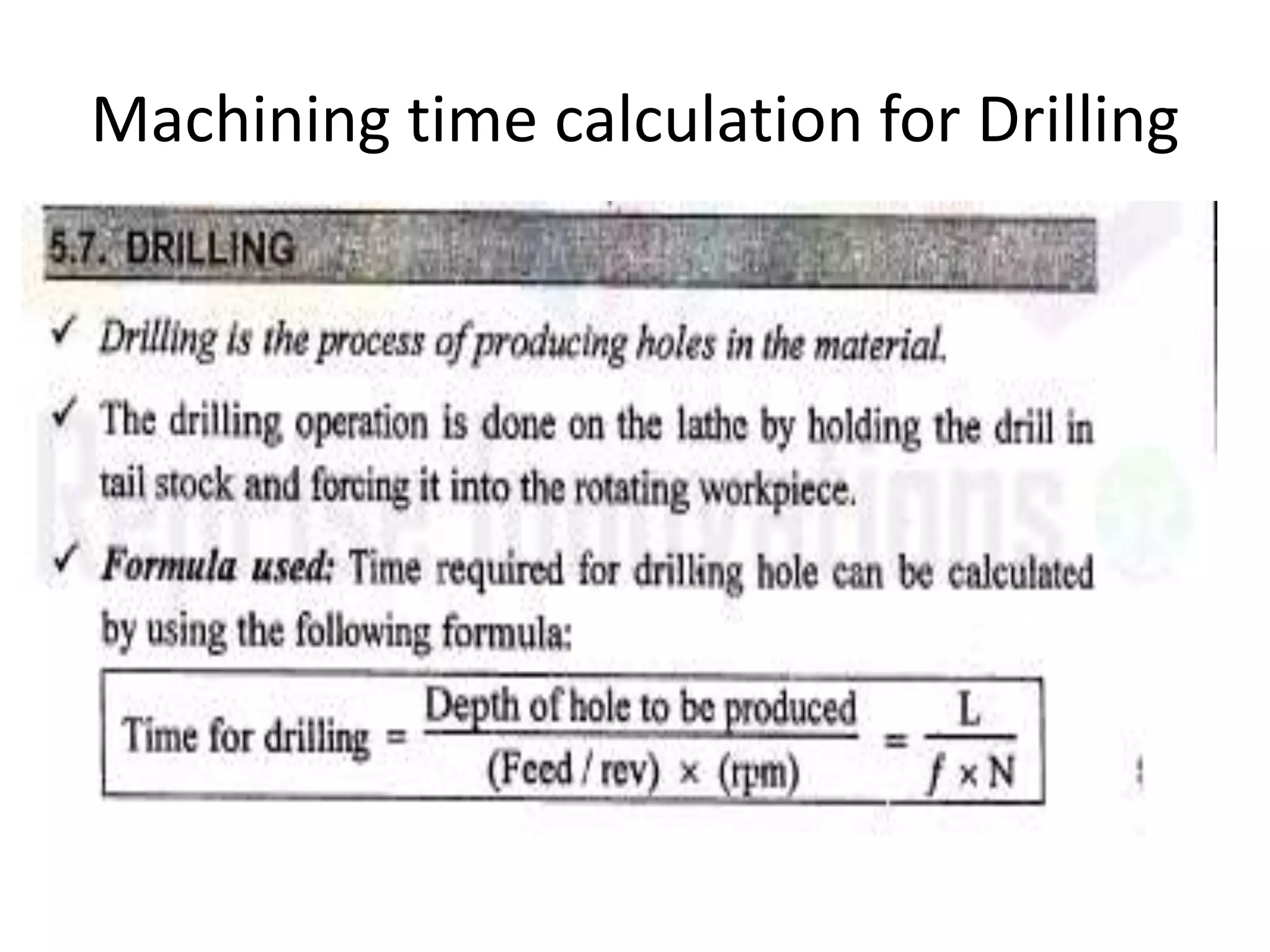
• Machining time is the time which machine
works on the component.
• Eg: from the time tool touches the work to
tool leaves the work
Feed and FeedRate
• Feed distance through which the tool
advances into the workpiece
• Unit mm/rev or mm/min
255.
Depth of Cut
•Depth of cut thickness of material removed
in one cut.
• Depth of cut is always perpendicular to feed
direction
256.
Importance of machiningtime
calculation
• Inorder to find out the machining cost
• Reduction of total manufacturing time, T
• Increase in MRR, i.e., productivity
• Reduction in machining cost without sacrificing
product quality
• Increase in profit or profit rate, i.e., profitability.
257.
Calculation of machiningtime for
different lathe operation
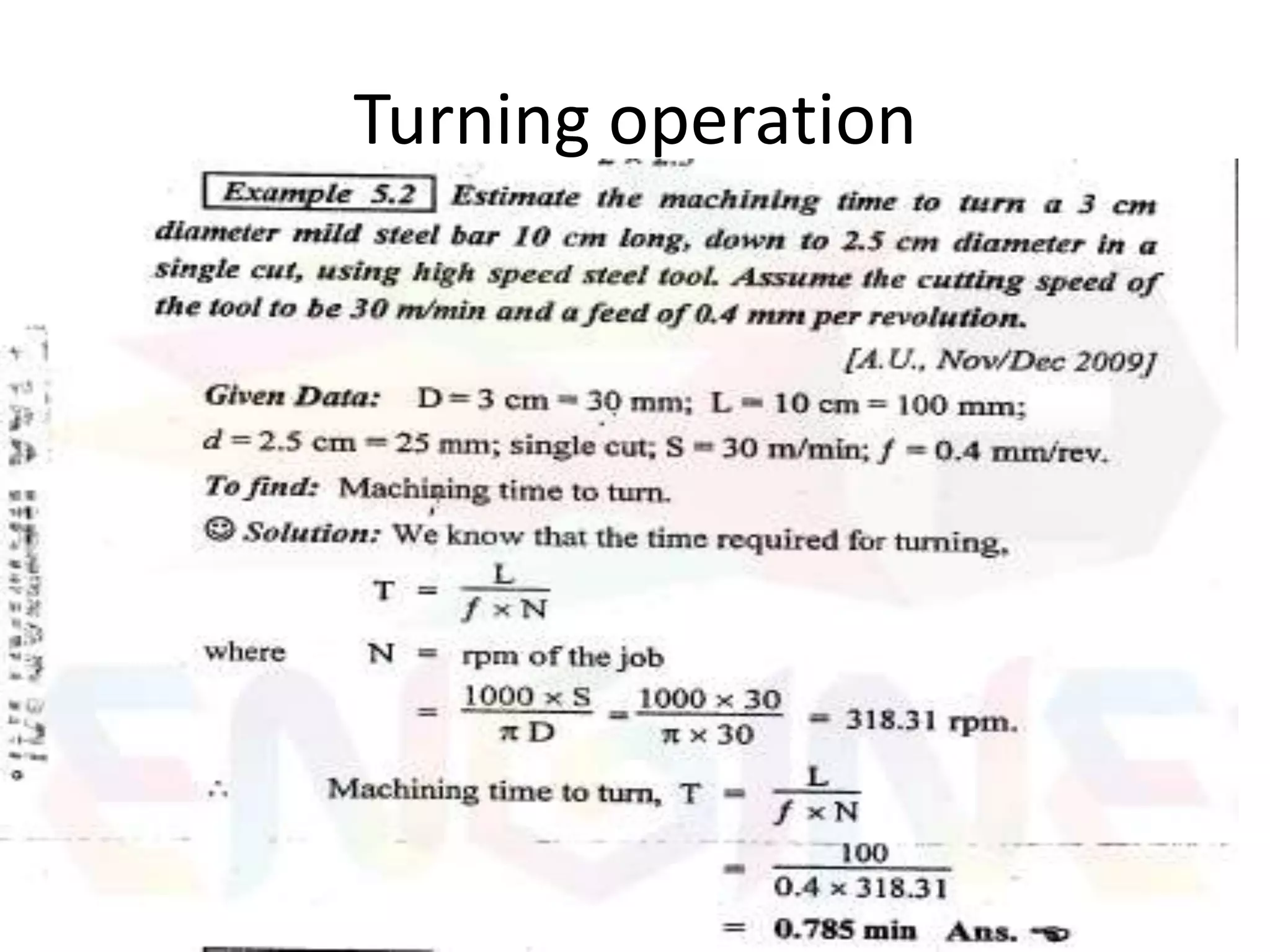
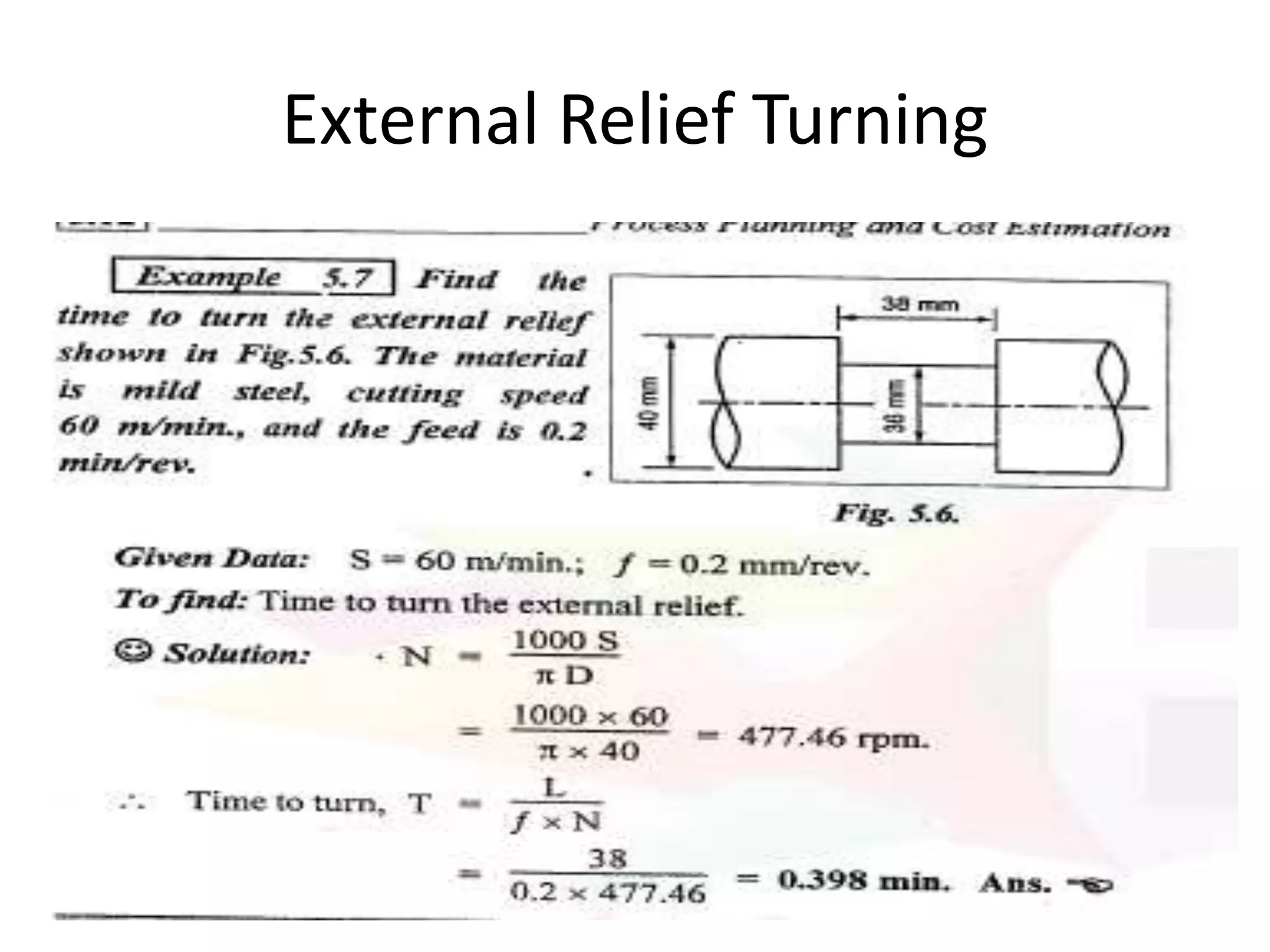
• Turning
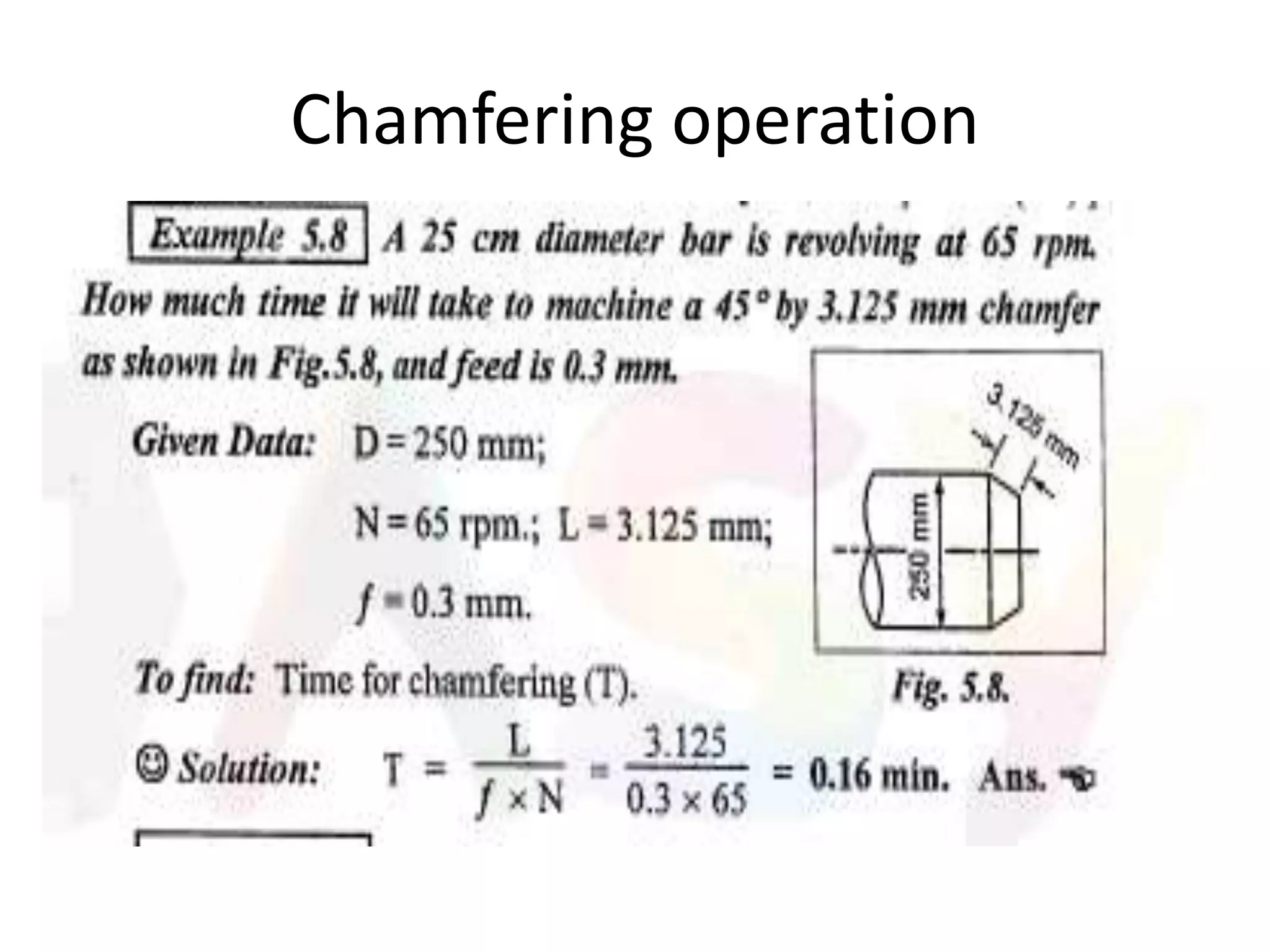
• Chamfering
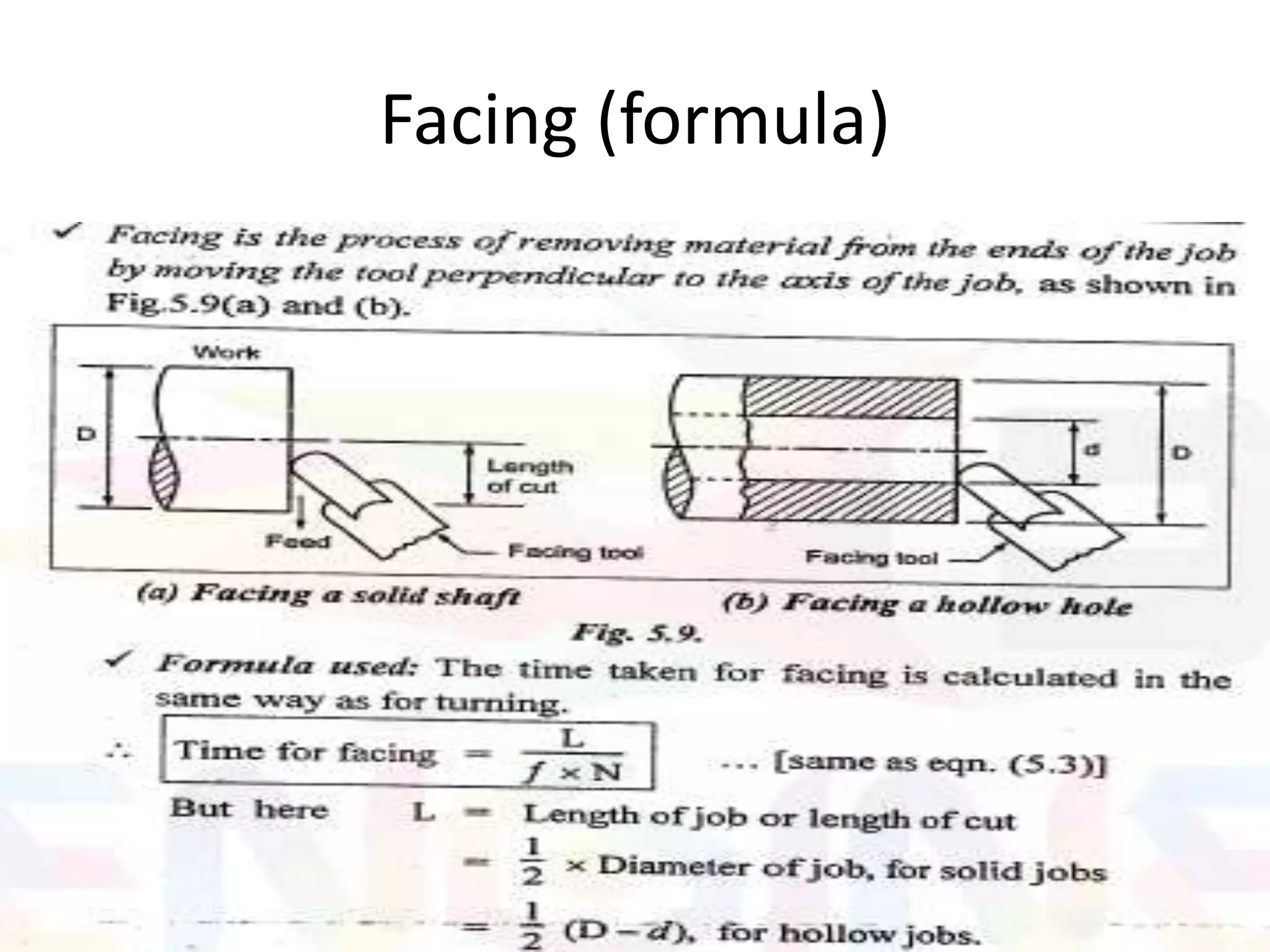
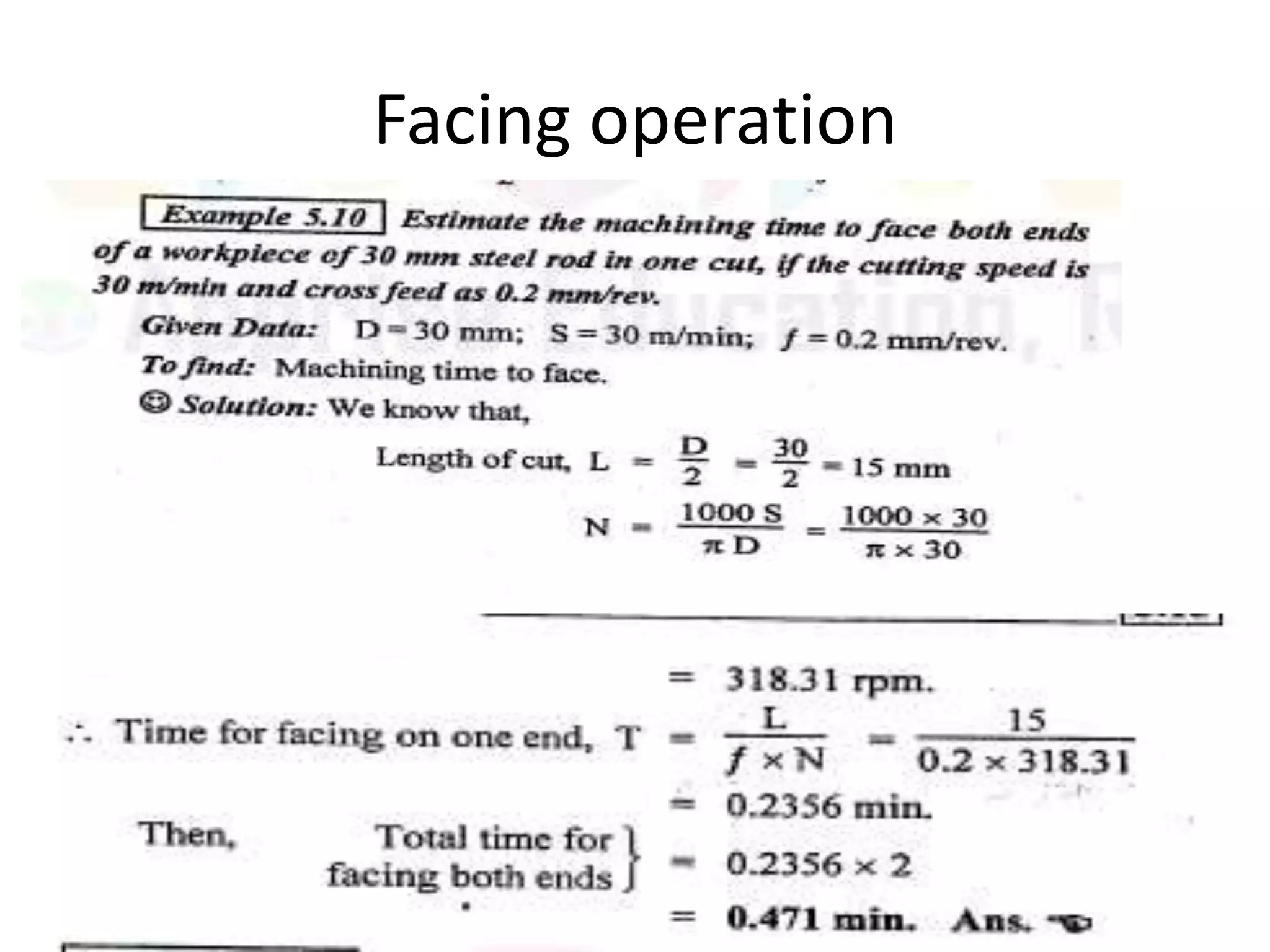
• Facing
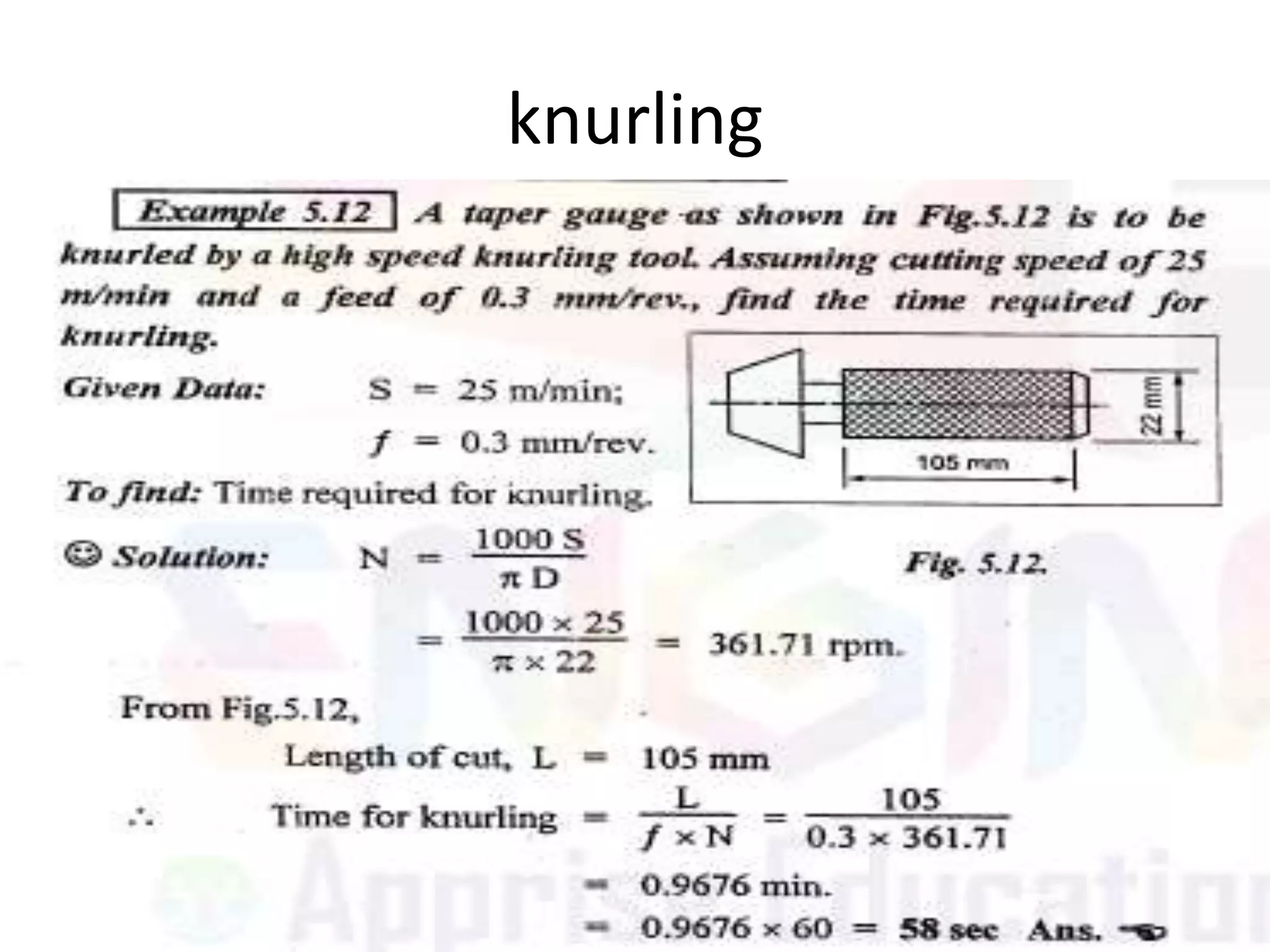
• Knurling
• Thread Cutting
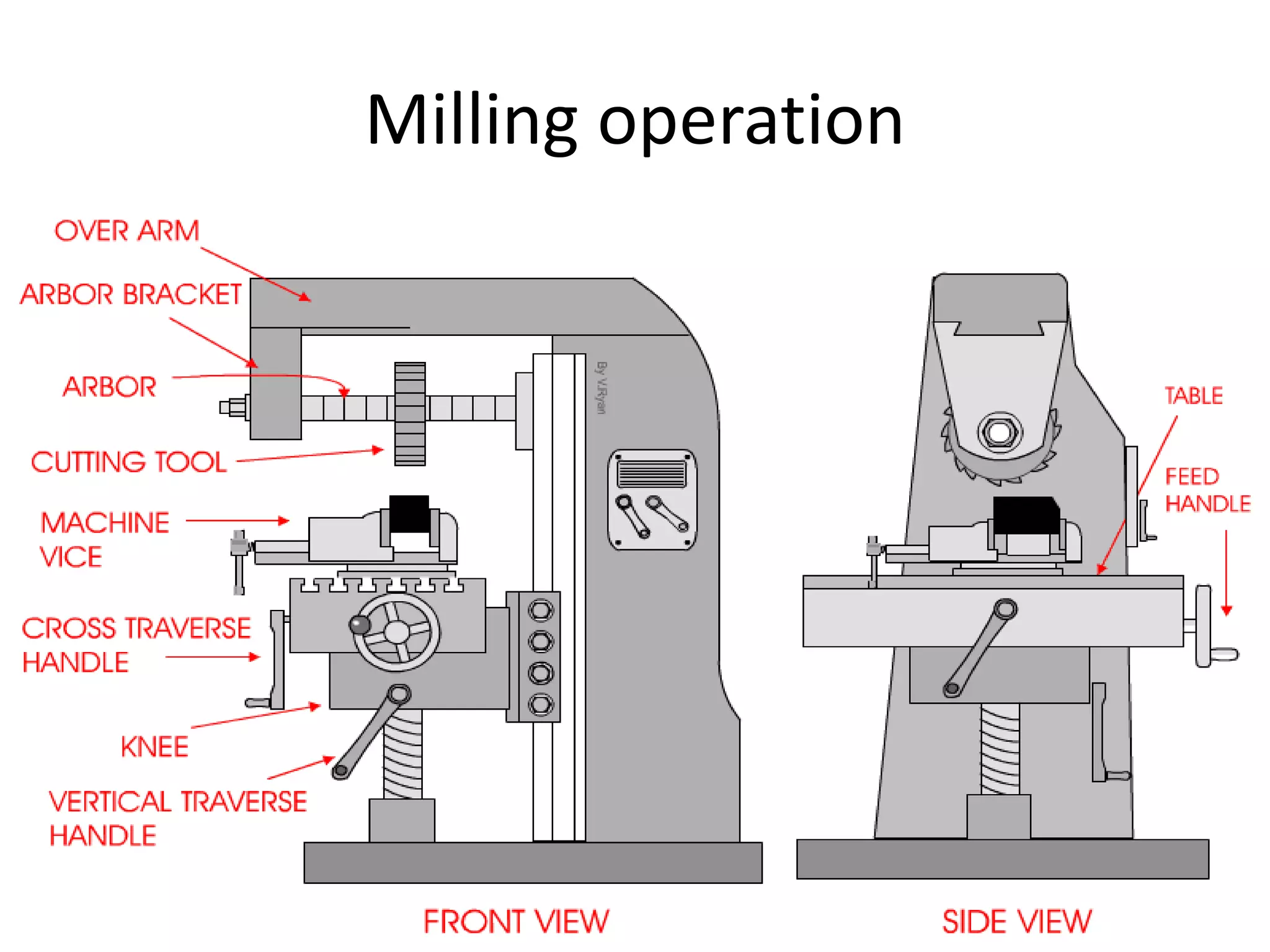
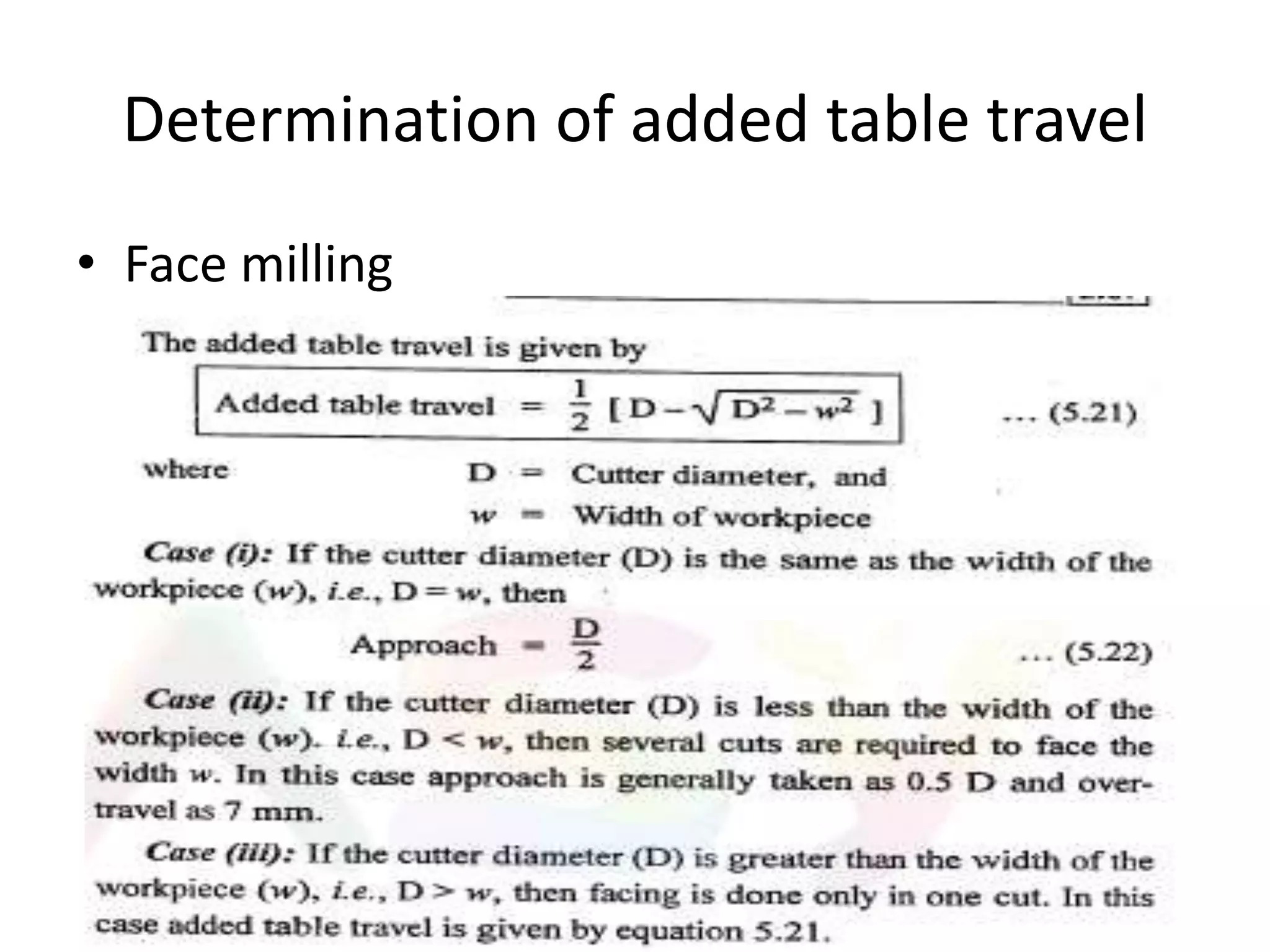
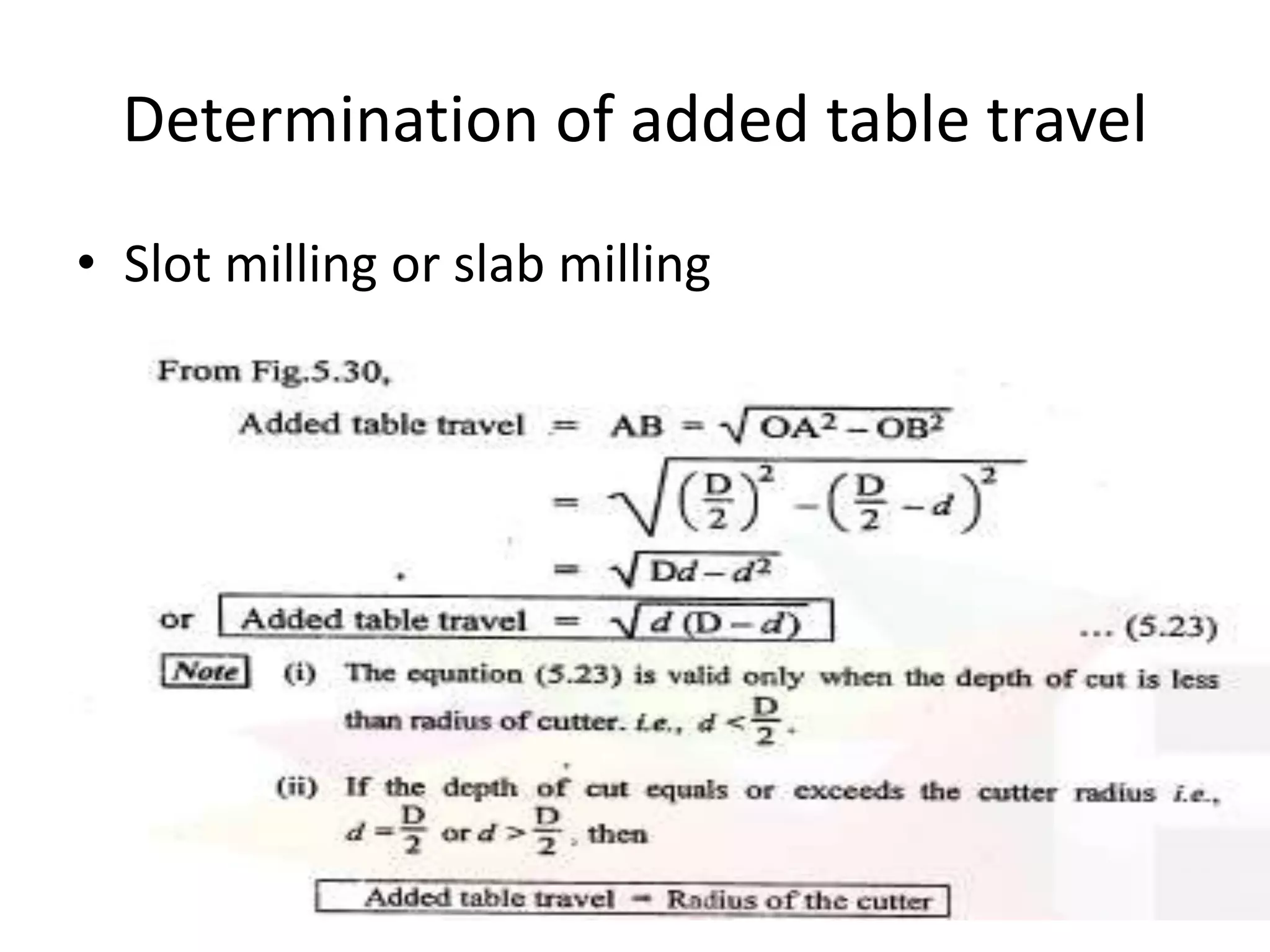
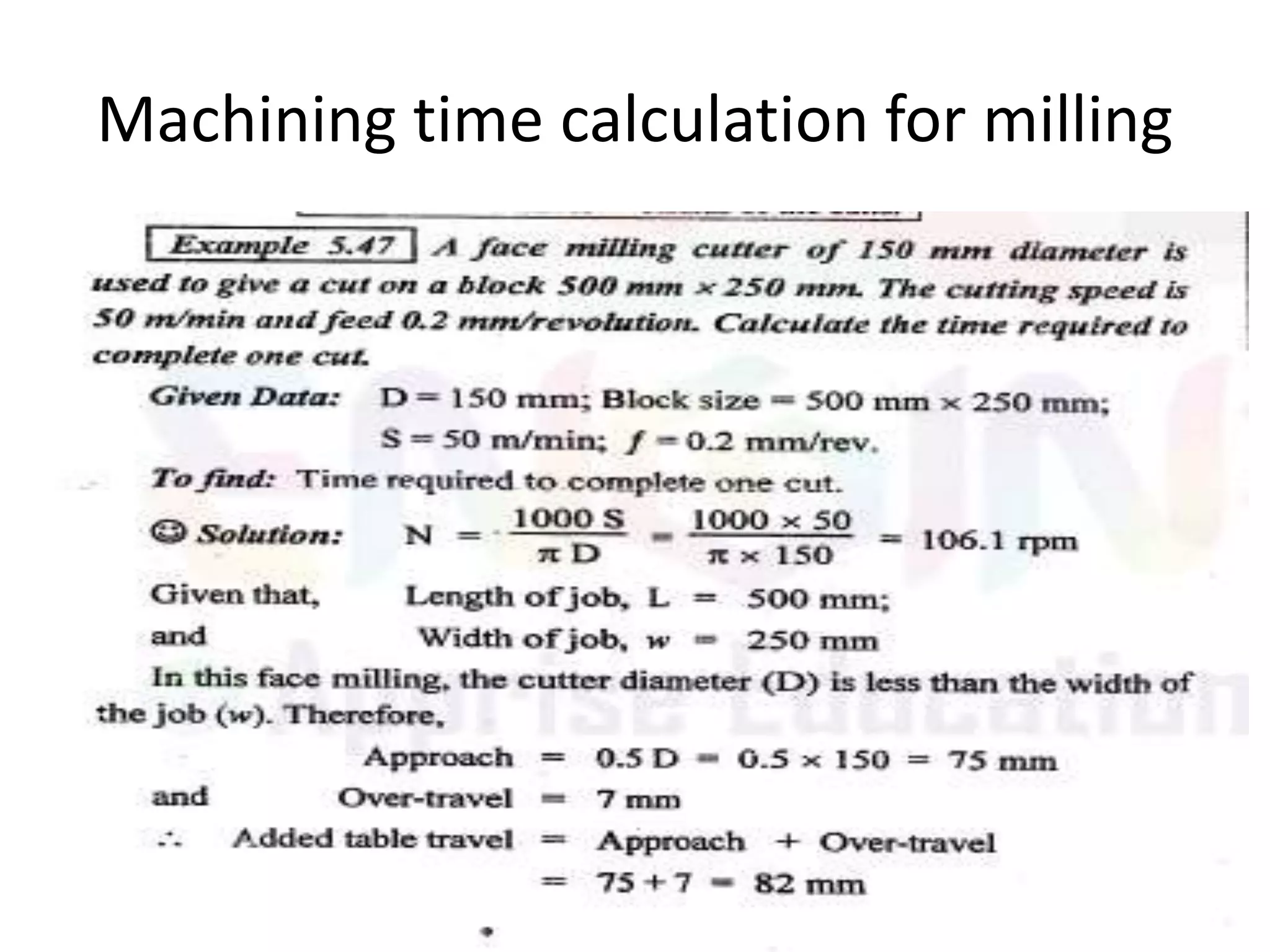
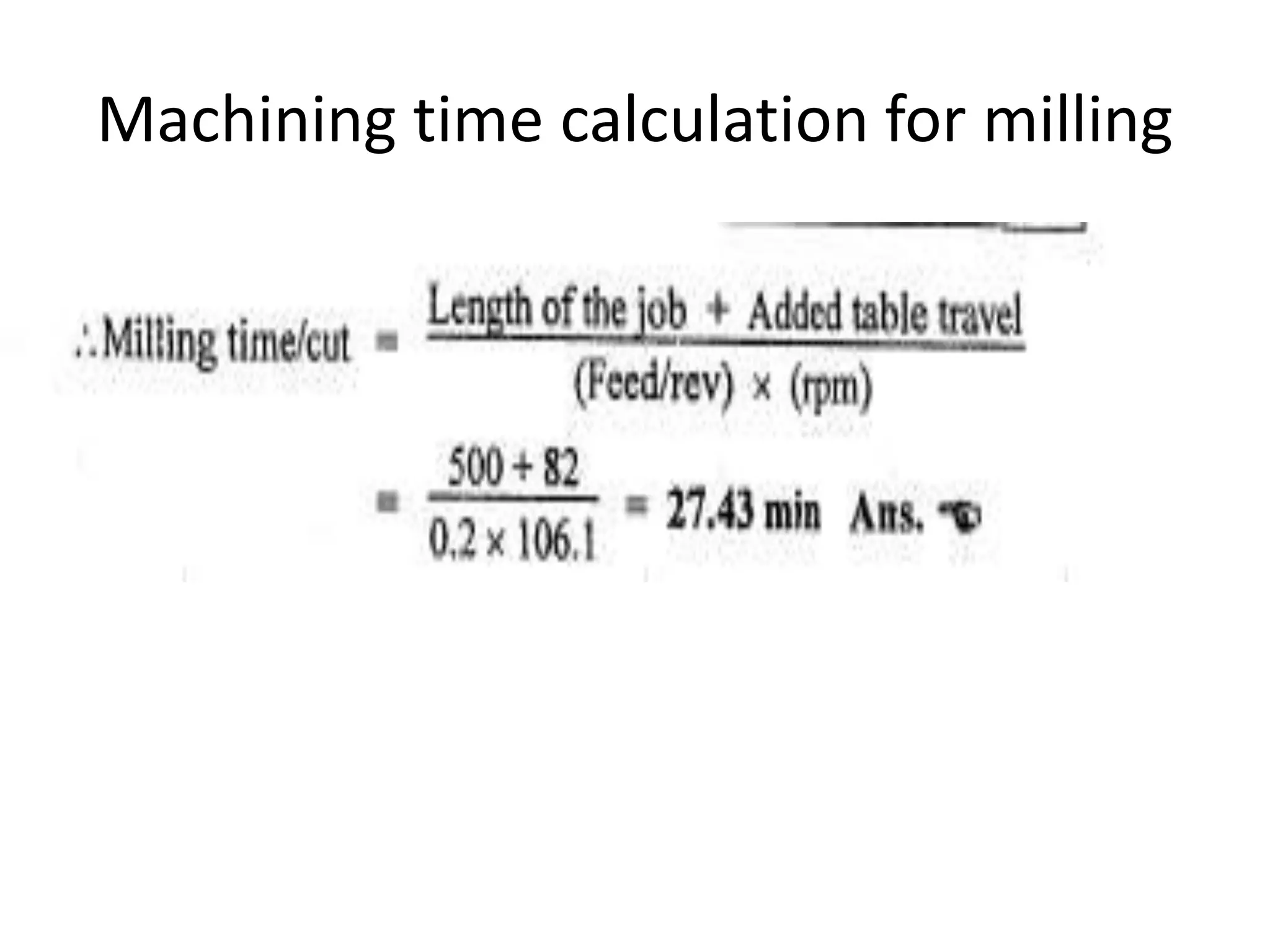
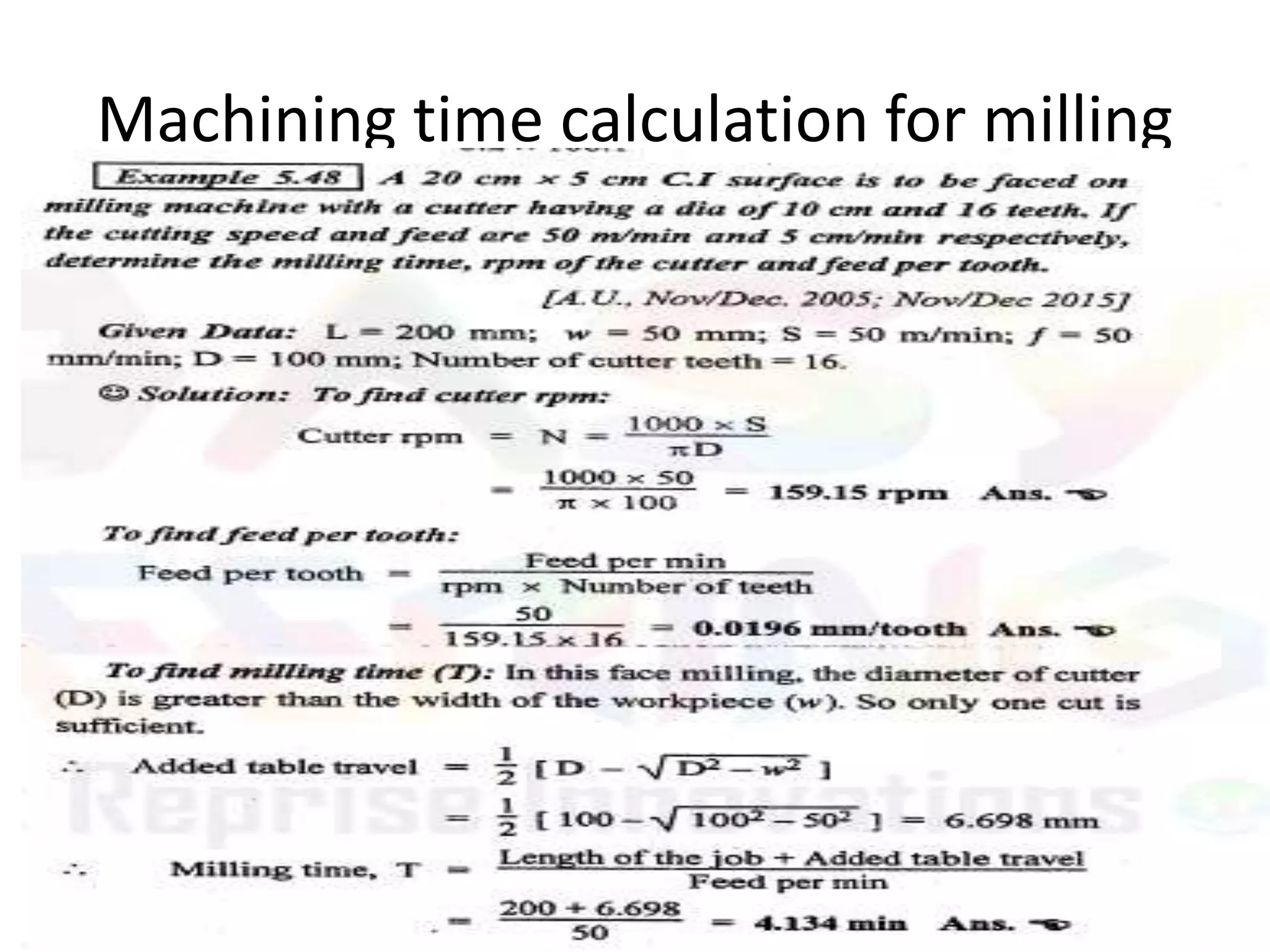
Milling
• Milling isthe removal of material from
workpiece by rotary multipoint cutting tool.
• Operations
– Face milling
– Slot milling or slab milling
– Profile machining or forming
– Keyway cutting
– indexing
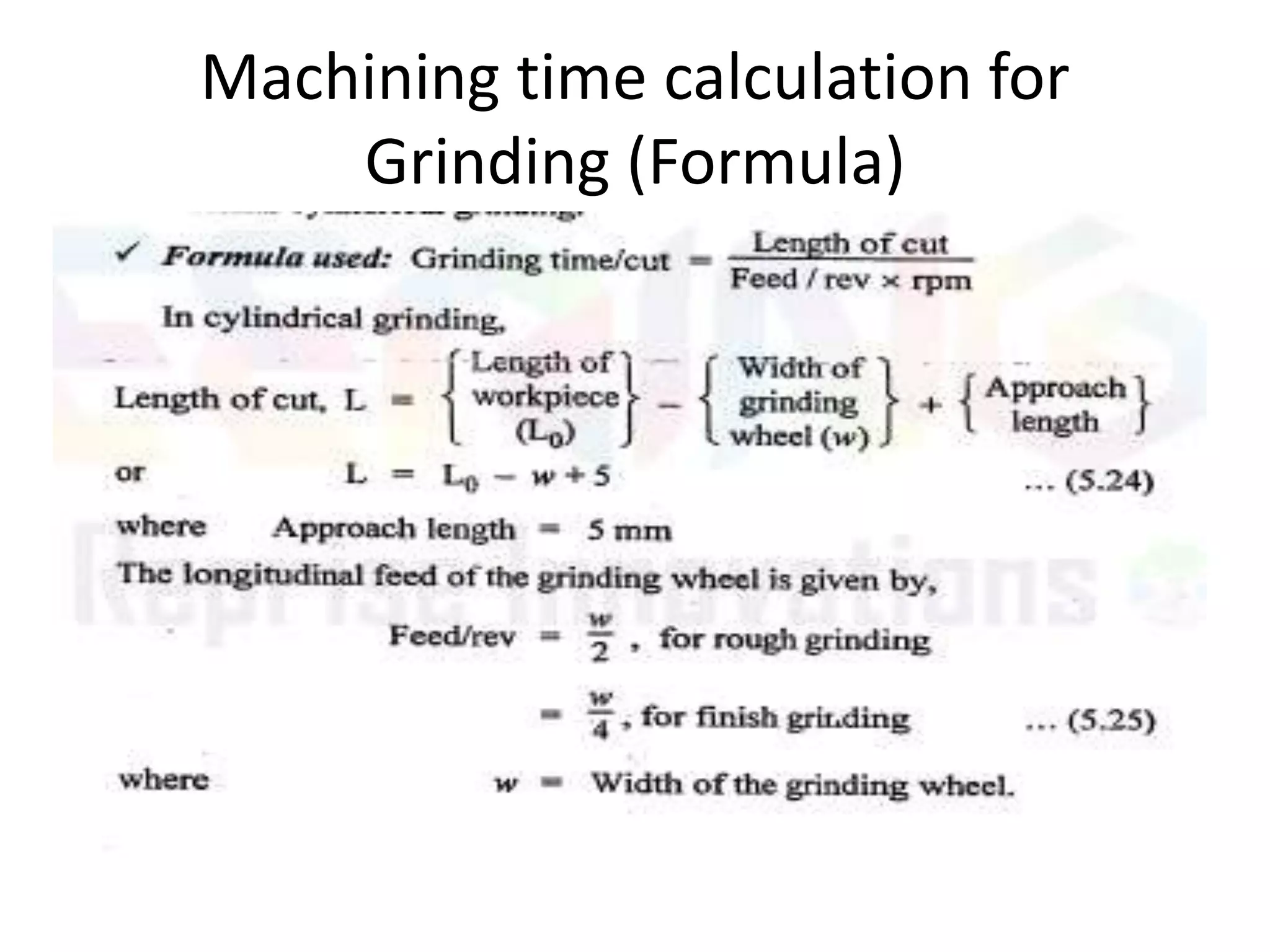
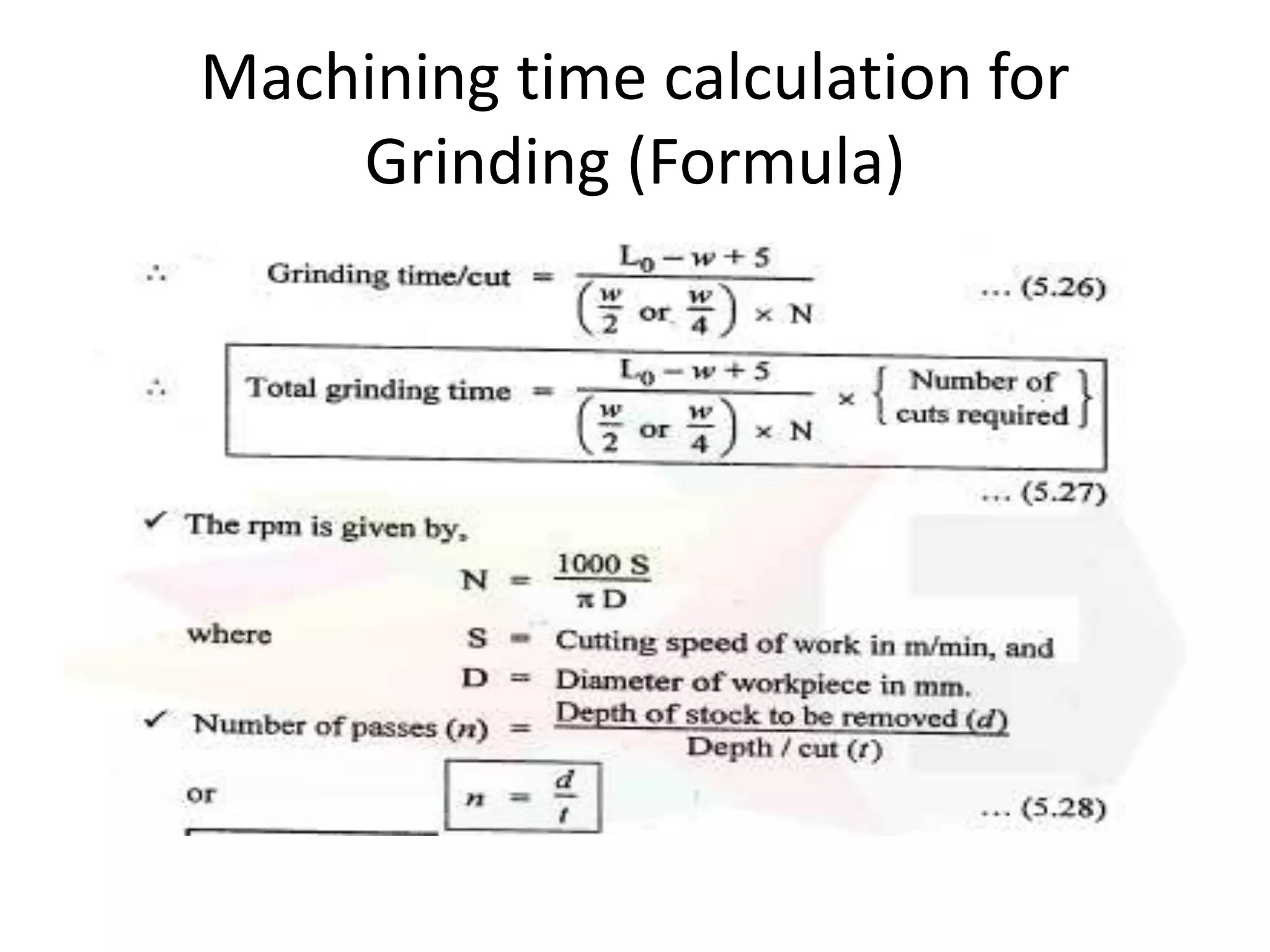
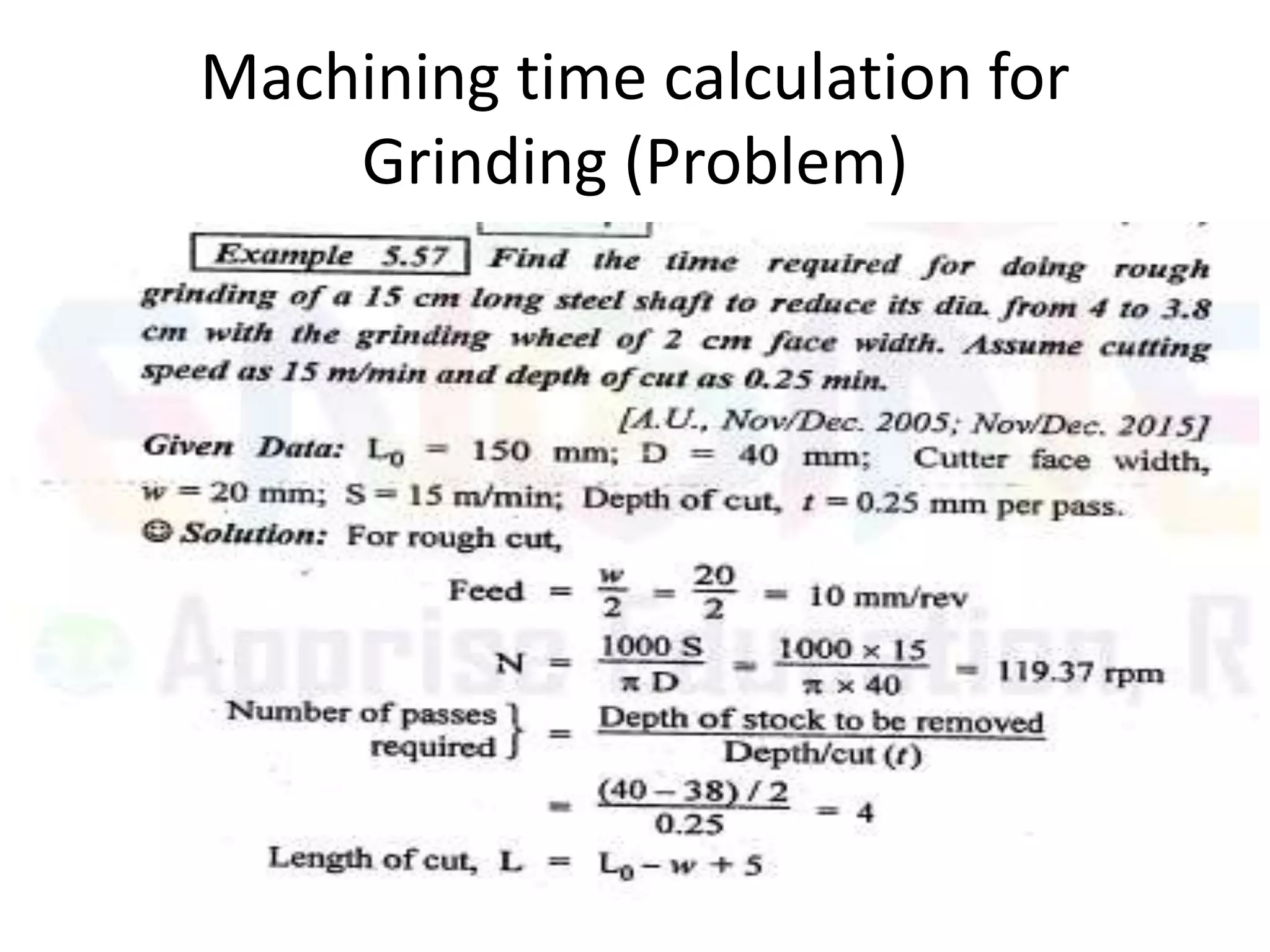
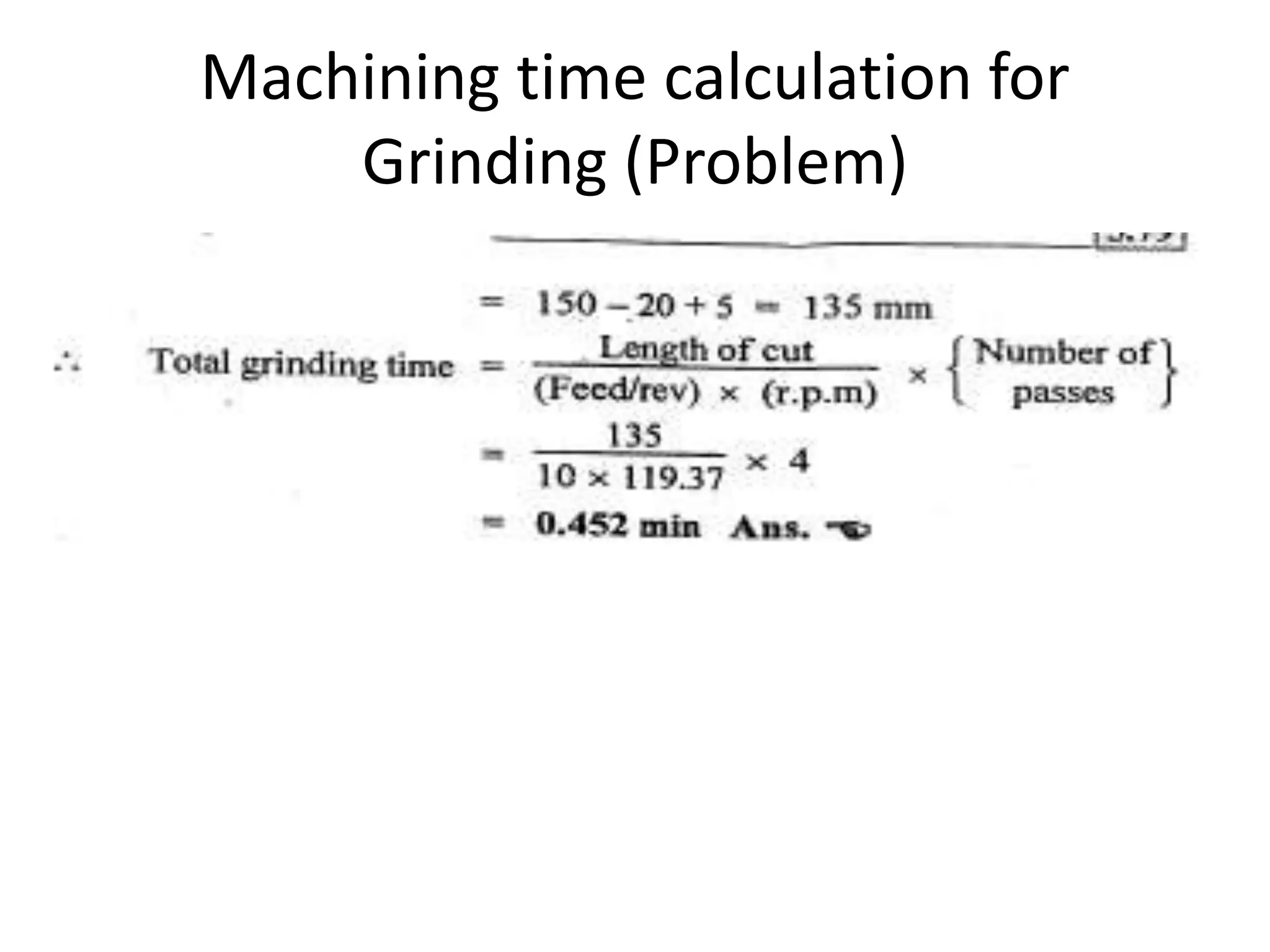
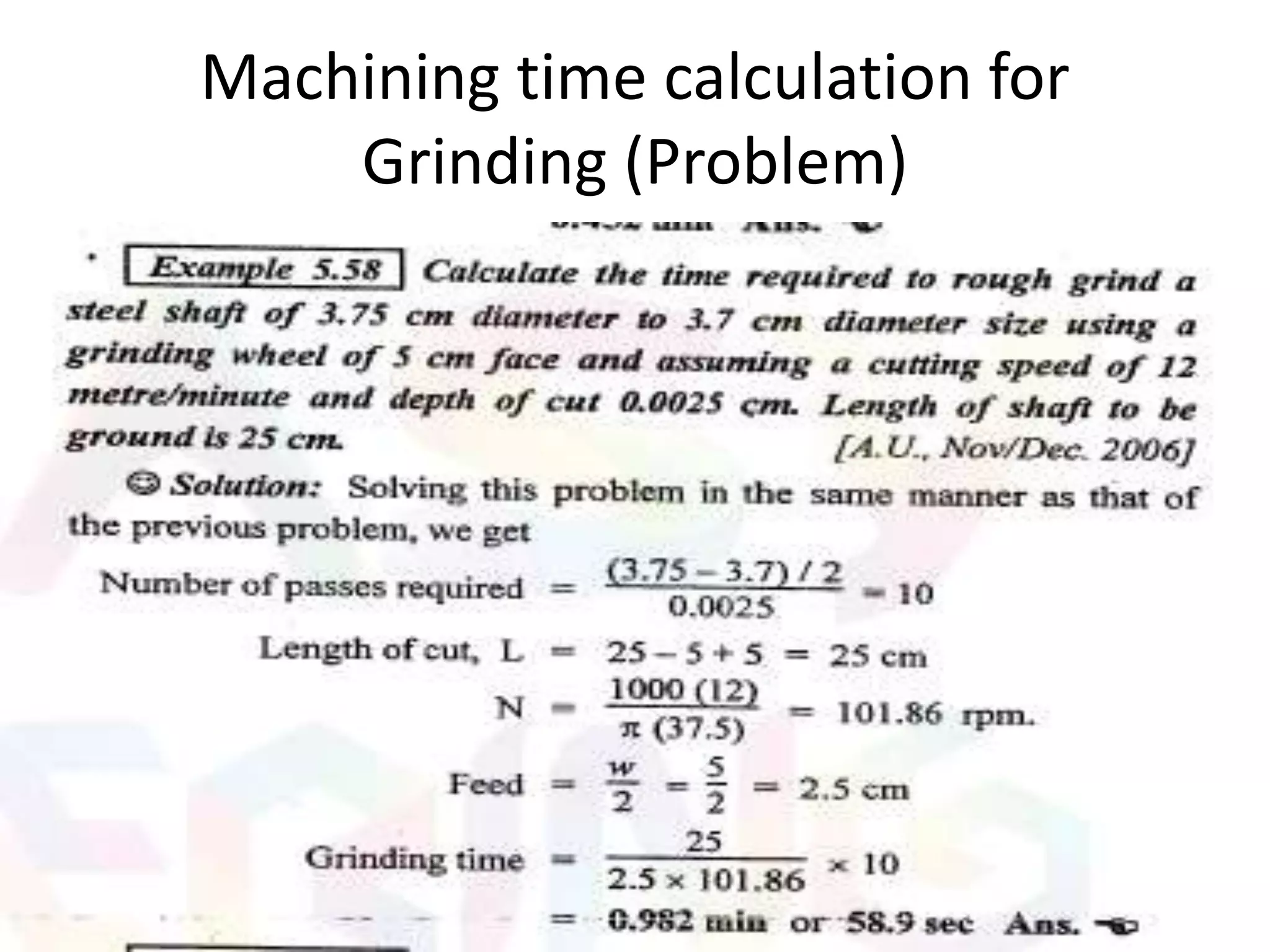
Machining time calculationfor
Grinding
• Grinding is the process of metal removal by
abrasion.
• Methods of grinding
– Surface grinding
– Cylindrical grinding