GROUP
TECHNOLOGY
FACILITIES DESIGN
What..? Why..?
Group technology is an approach in which similar parts are
identified and grouped together in order to take advantage of the
similarities in design and production.

Usually, carried out in batch production, where	

• Downtime for changeovers is high.

• High inventory carrying costs.

GT minimises these disadvantages by recognising - “although the
parts are different, there are groups of parts that possess process
similarities”. 

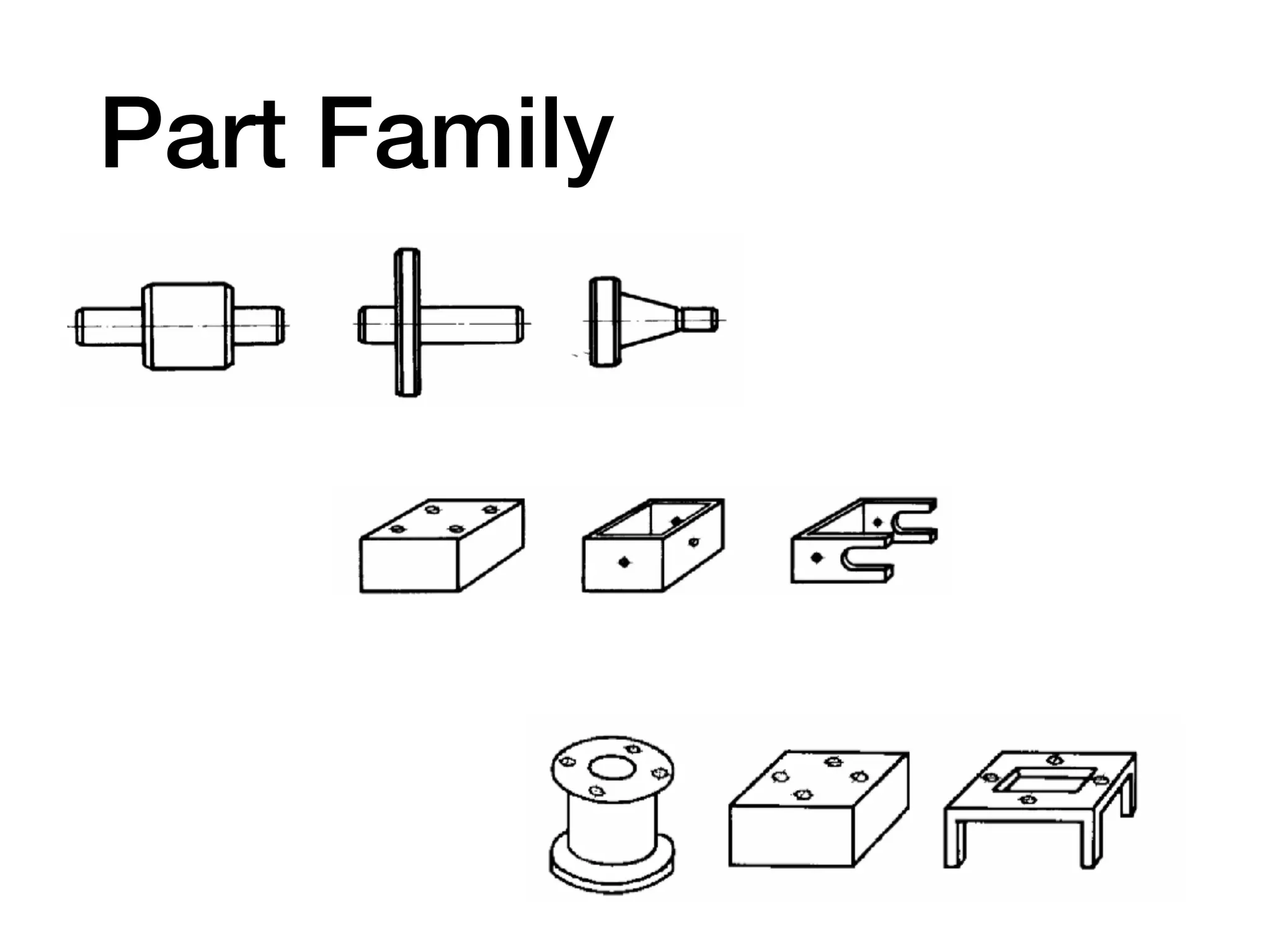
Part Family
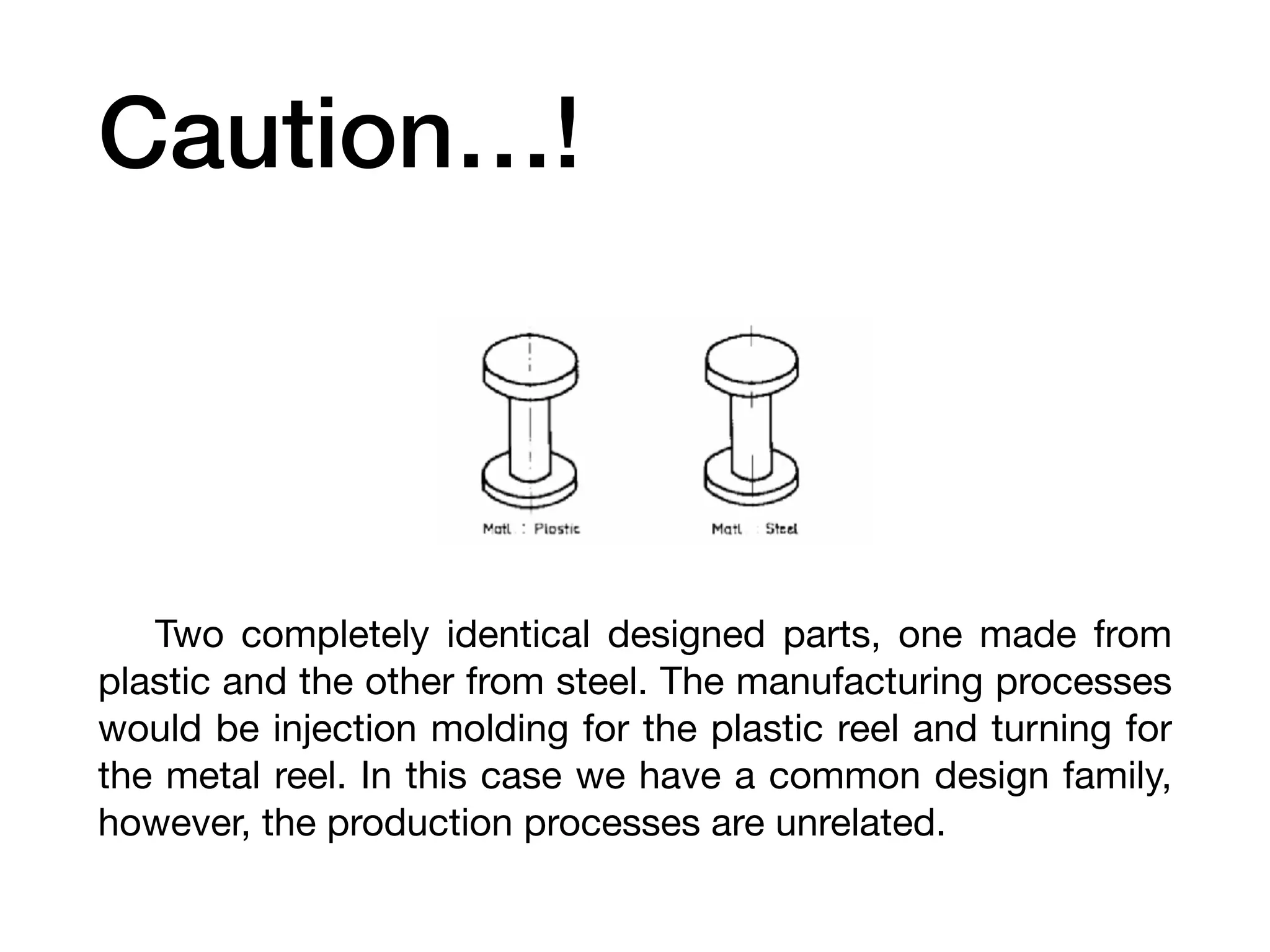
Caution…!
	 Two completely identical designed parts, one made from
plastic and the other from steel. The manufacturing processes
would be injection molding for the plastic reel and turning for
the metal reel. In this case we have a common design family,
however, the production processes are unrelated. 

Production Flow Analysis
PFA
• A way to Identify Part Families using information contained on
route sheets or an incidence matrix to classify parts.
• Can be implemented to all discrete industries, except the process
industries where the procedure or the group is fixed.
• No Volume of Production.
• Sequence is not Conveyed.
• No Processing Time.
• Can be implemented with other tools like JIT, TQM etc ,.
• Production Rate will vary drastically during implementation.
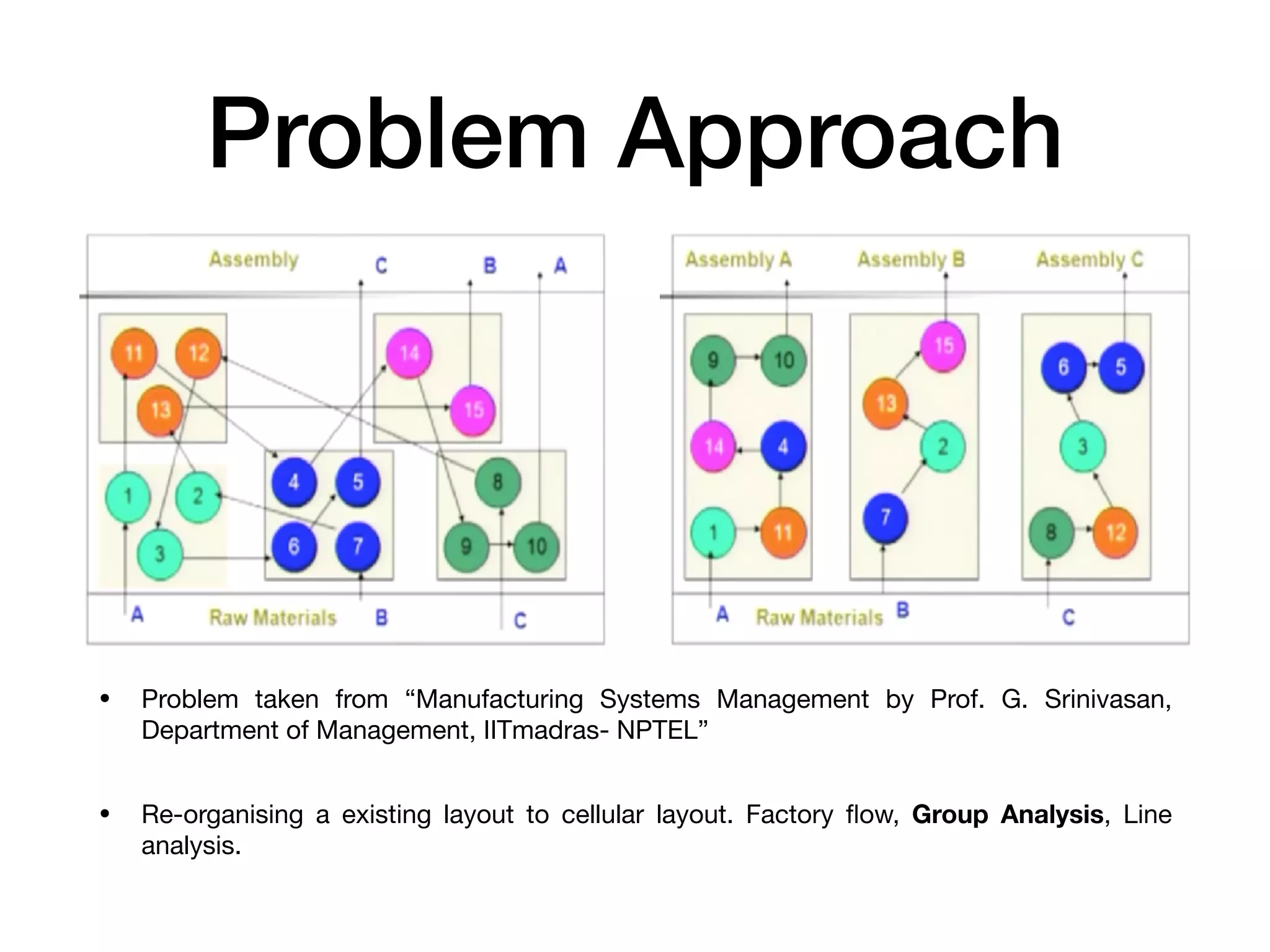
Problem Approach
• Problem taken from “Manufacturing Systems Management by Prof. G. Srinivasan,
Department of Management, IITmadras- NPTEL”

• Re-organising a existing layout to cellular layout. Factory flow, Group Analysis, Line
analysis.
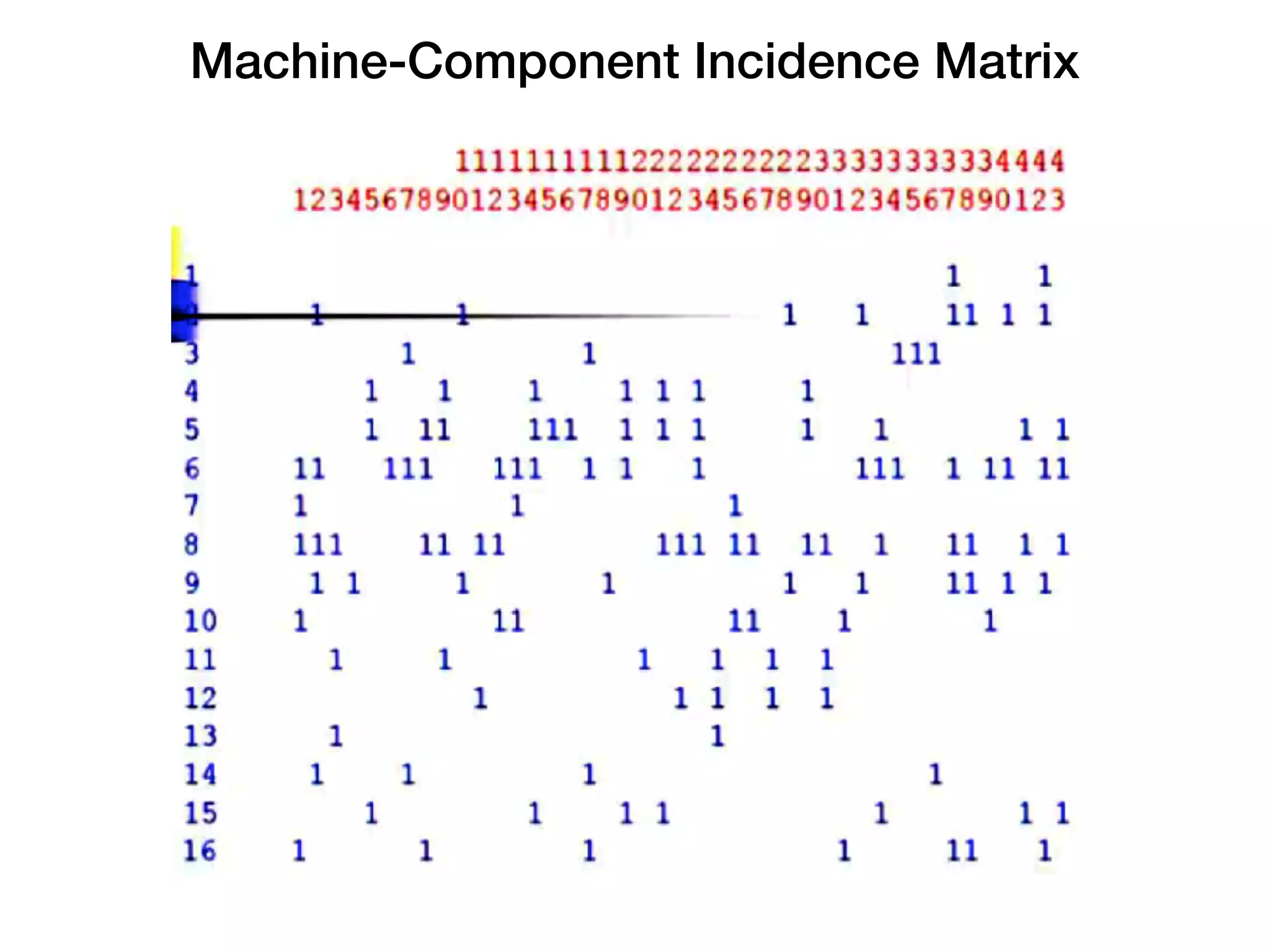
Machine-Component Incidence Matrix
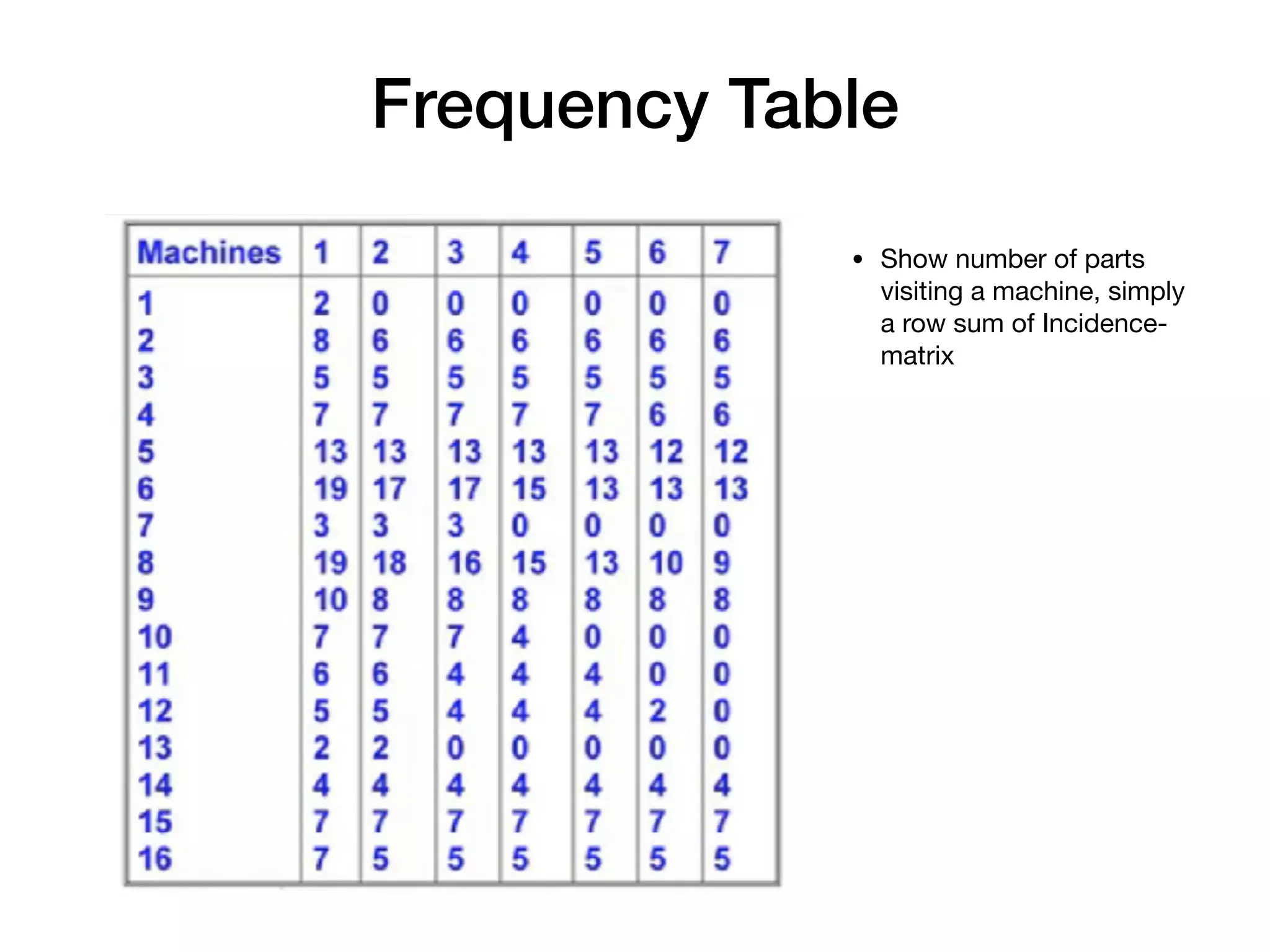
Frequency Table
• Show number of parts
visiting a machine, simply
a row sum of Incidence-
matrix
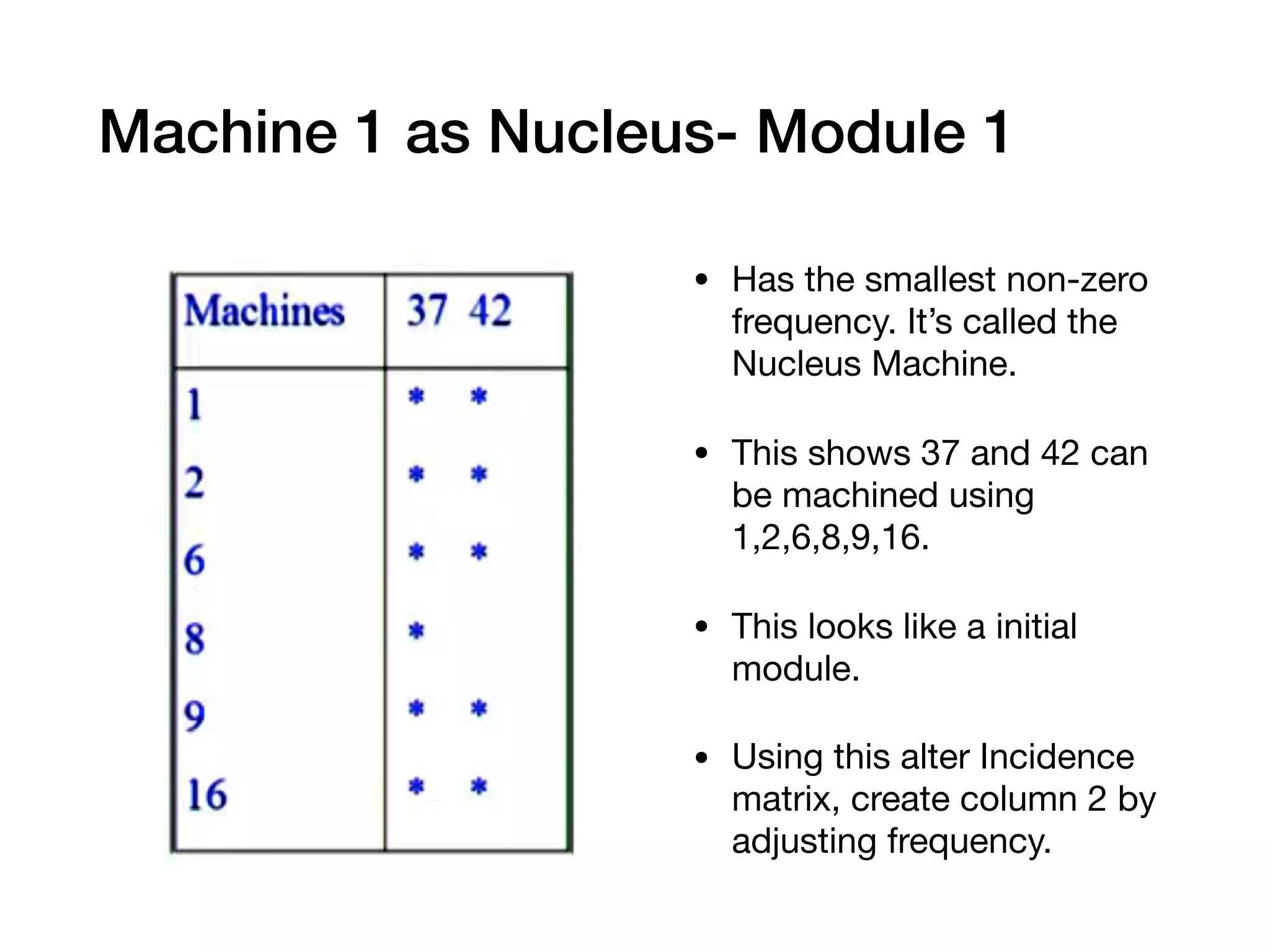
Machine 1 as Nucleus- Module 1
• Has the smallest non-zero
frequency. It’s called the
Nucleus Machine.

• This shows 37 and 42 can
be machined using
1,2,6,8,9,16.

• This looks like a initial
module.

• Using this alter Incidence
matrix, create column 2 by
adjusting frequency.
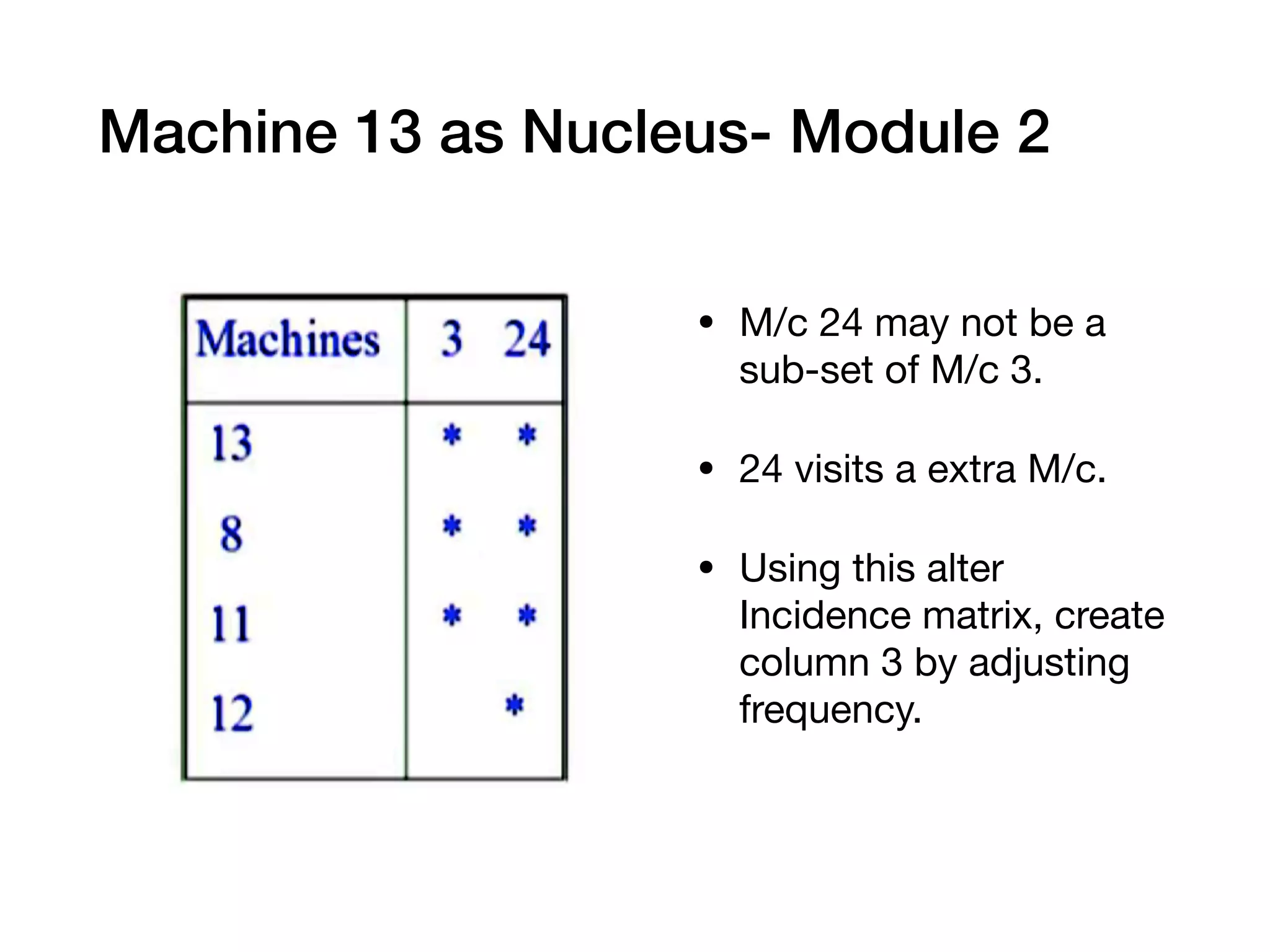
• M/c 24 may not be a
sub-set of M/c 3.

• 24 visits a extra M/c.

• Using this alter
Incidence matrix, create
column 3 by adjusting
frequency.
Machine 13 as Nucleus- Module 2
• Continue this process till all frequency becomes zero.

• Note! : At 4 the iteration, by selecting M/c 10 we have- 7
components, but the frequency is 4. Hence, choose only
the non allotted components from the Incidence Matrix.

• A maximum of 16 modules(16 iterations) can be created
or less than 16 modules if all the frequency hit zero early.

• Hence, a Module Table is created, which show machines
allotted to components.
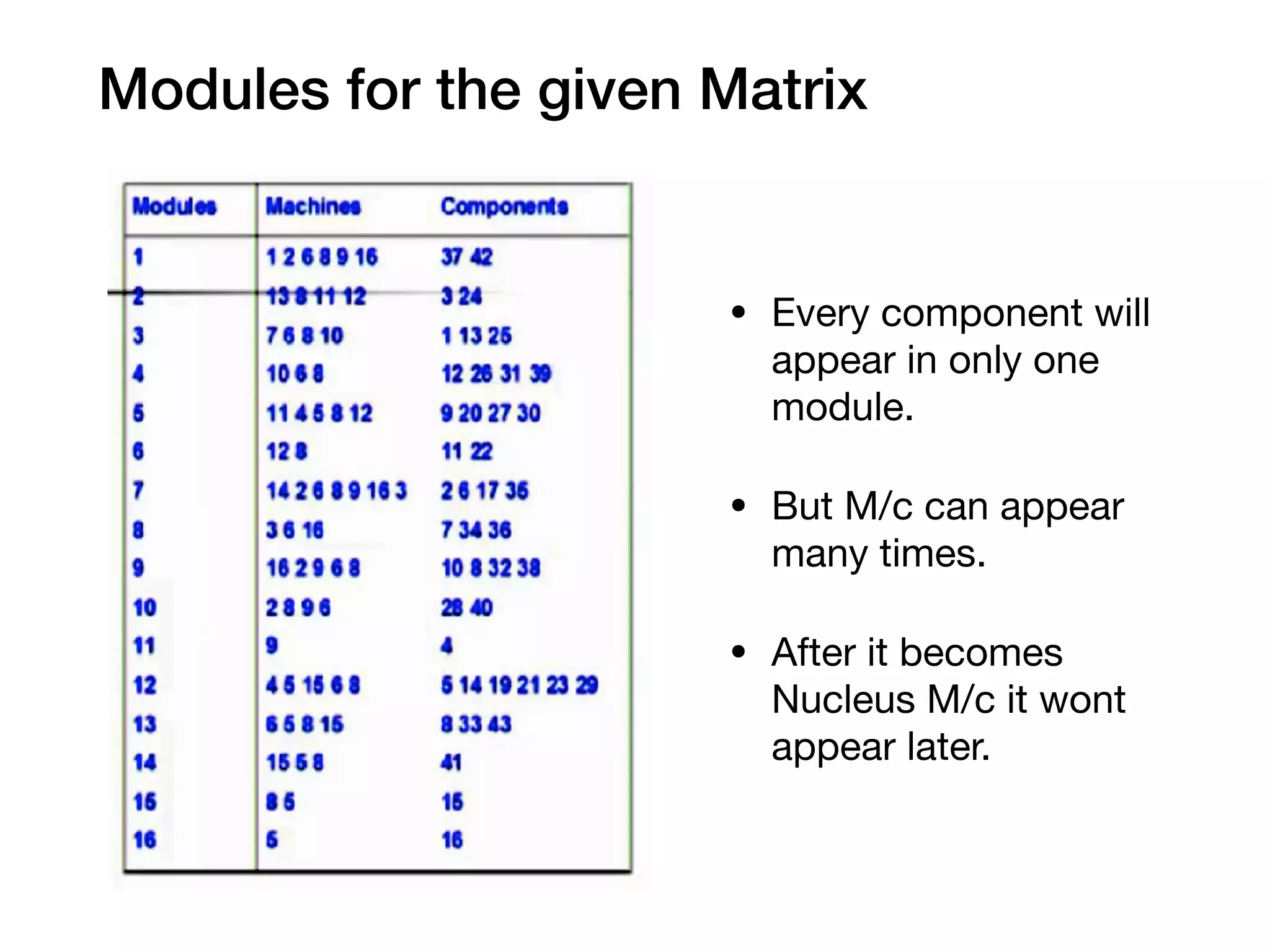
Modules for the given Matrix
• Every component will
appear in only one
module.

• But M/c can appear
many times.

• After it becomes
Nucleus M/c it wont
appear later.
Notes on Above Solution
• Your should create 16 manufacutring cells to make 43
parts.( Impossible)

• Number M/c needed are large.

• What can we do…..?

• Merge!
Merge!
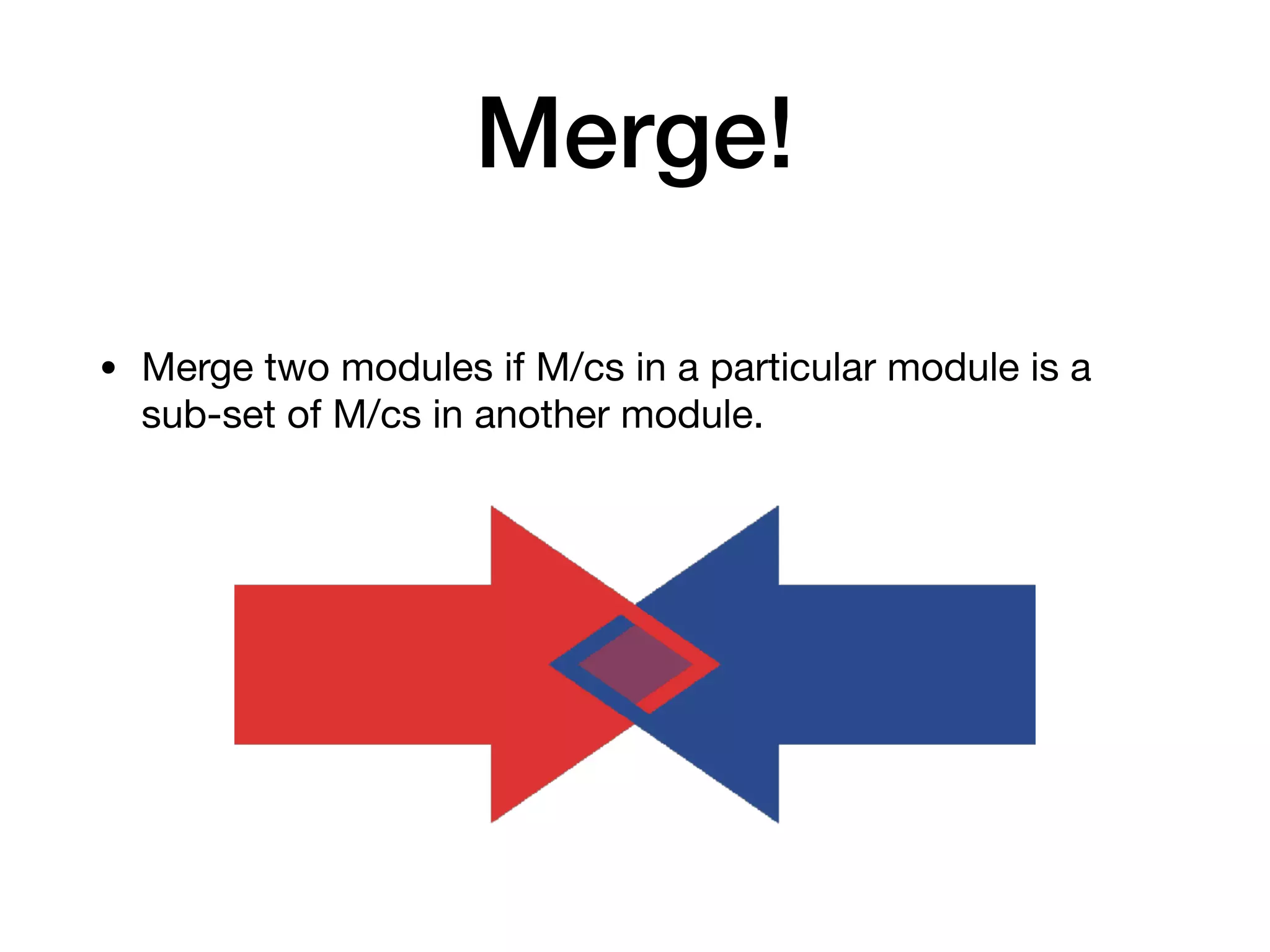
• Merge two modules if M/cs in a particular module is a
sub-set of M/cs in another module.
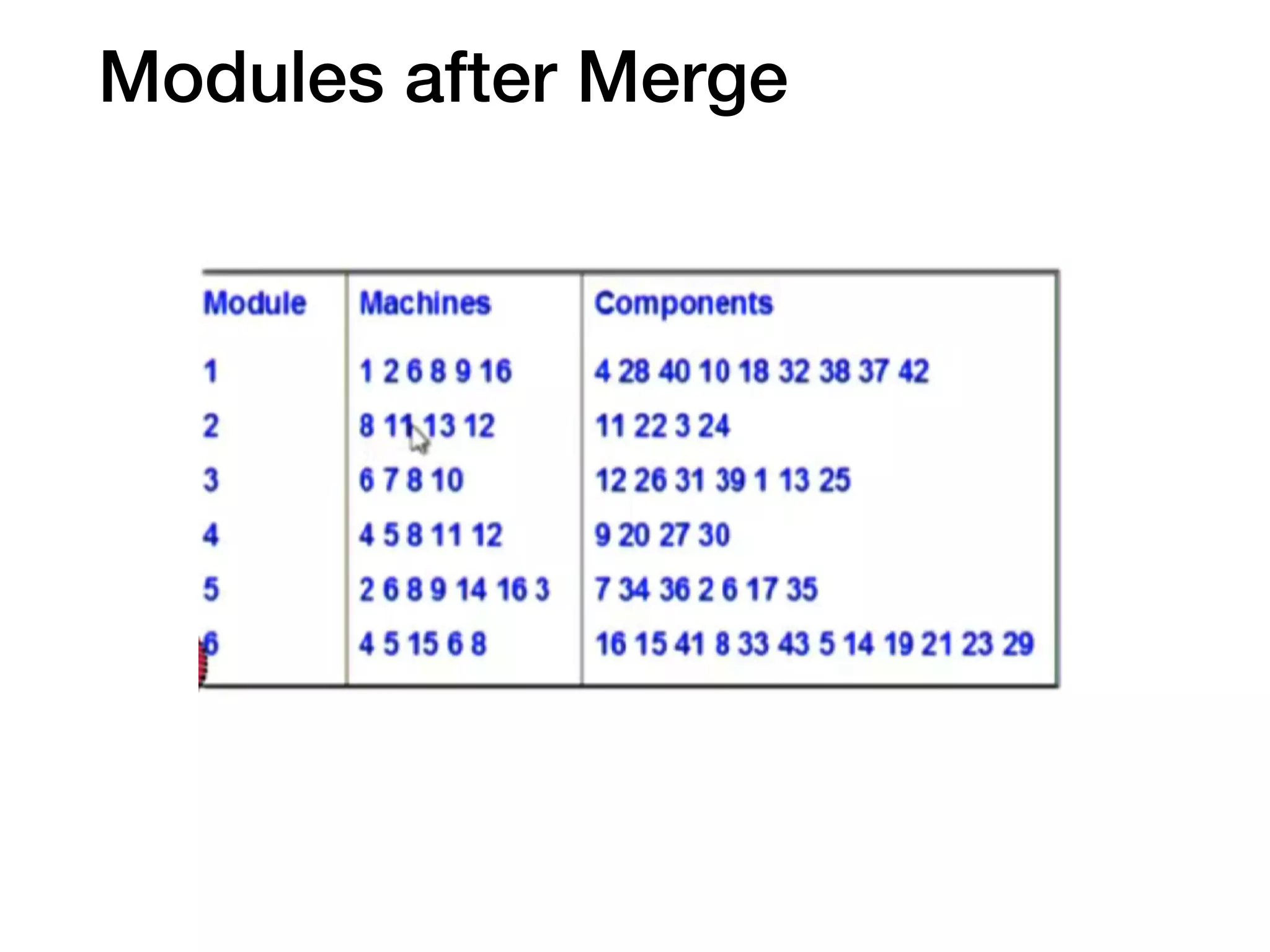
Modules after Merge
Note on Above solution
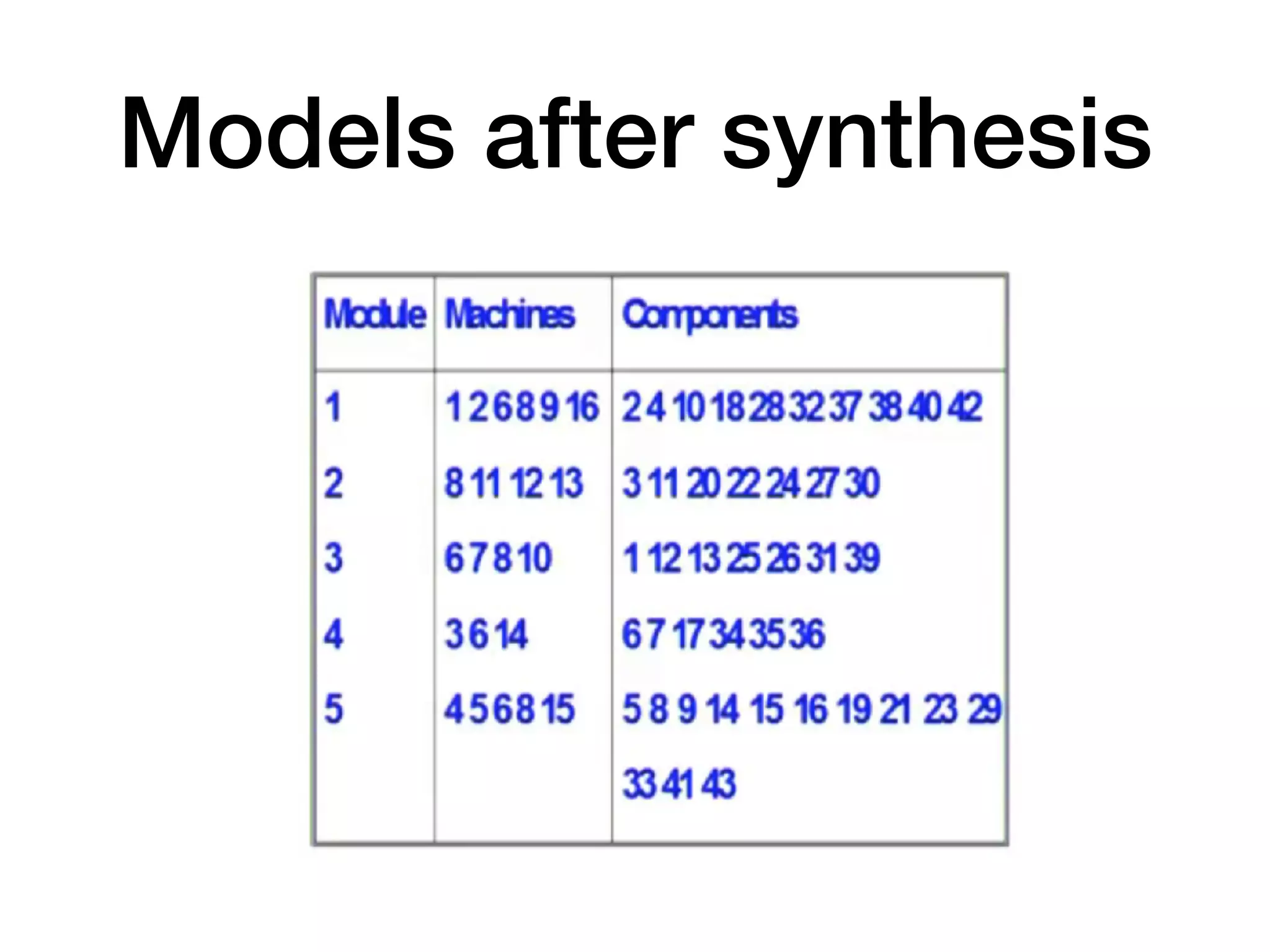
• 6 Cells to manufacture 43 components.

• Check do you have enough M/c copies.

• 31 M/c required to manufacture 43 components.

• Or lets refine Further…? Check for good intersection od
Machines.
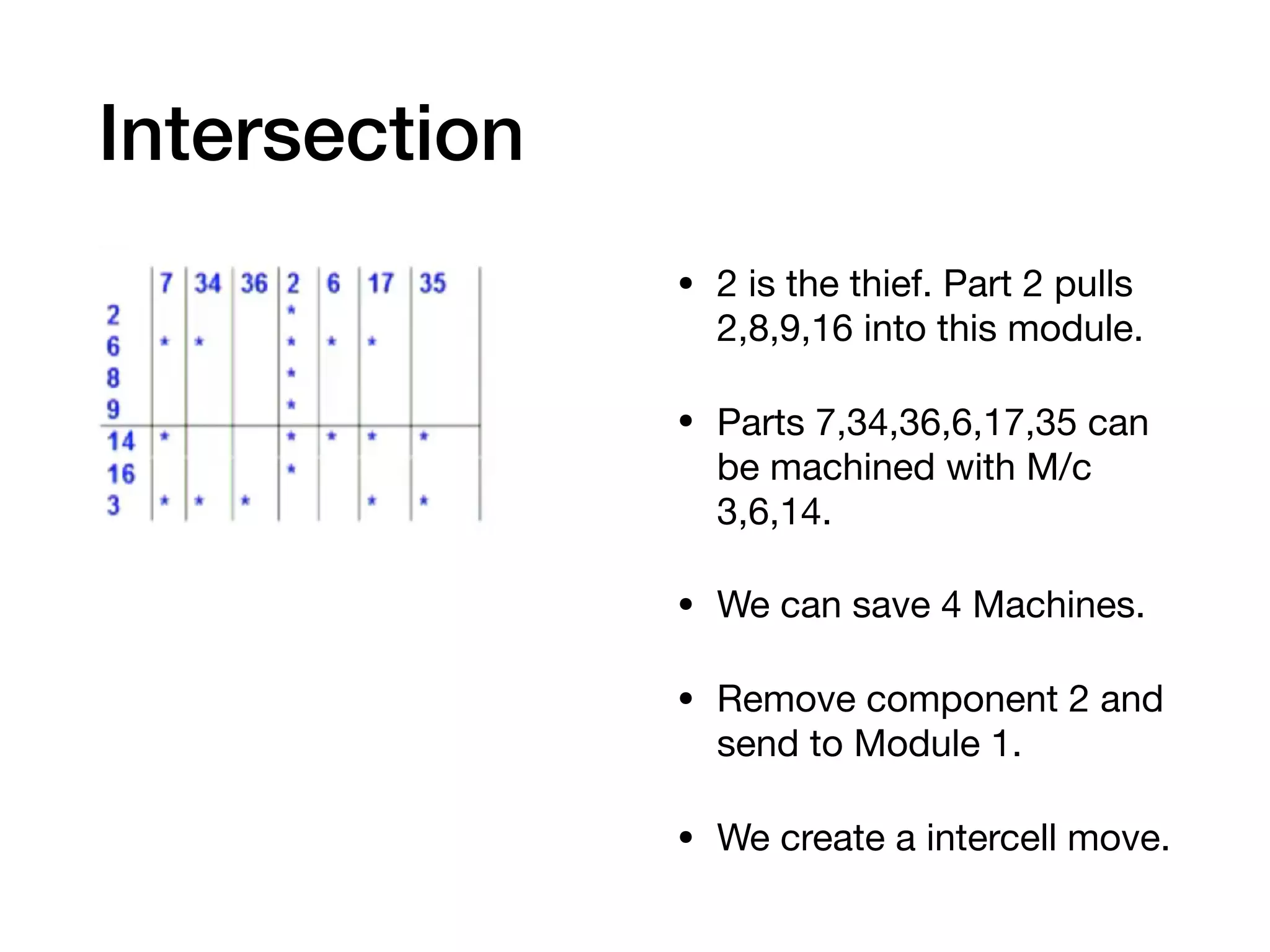
Intersection
• 2 is the thief. Part 2 pulls
2,8,9,16 into this module.

• Parts 7,34,36,6,17,35 can
be machined with M/c
3,6,14.

• We can save 4 Machines.

• Remove component 2 and
send to Module 1.

• We create a intercell move.
Similarly
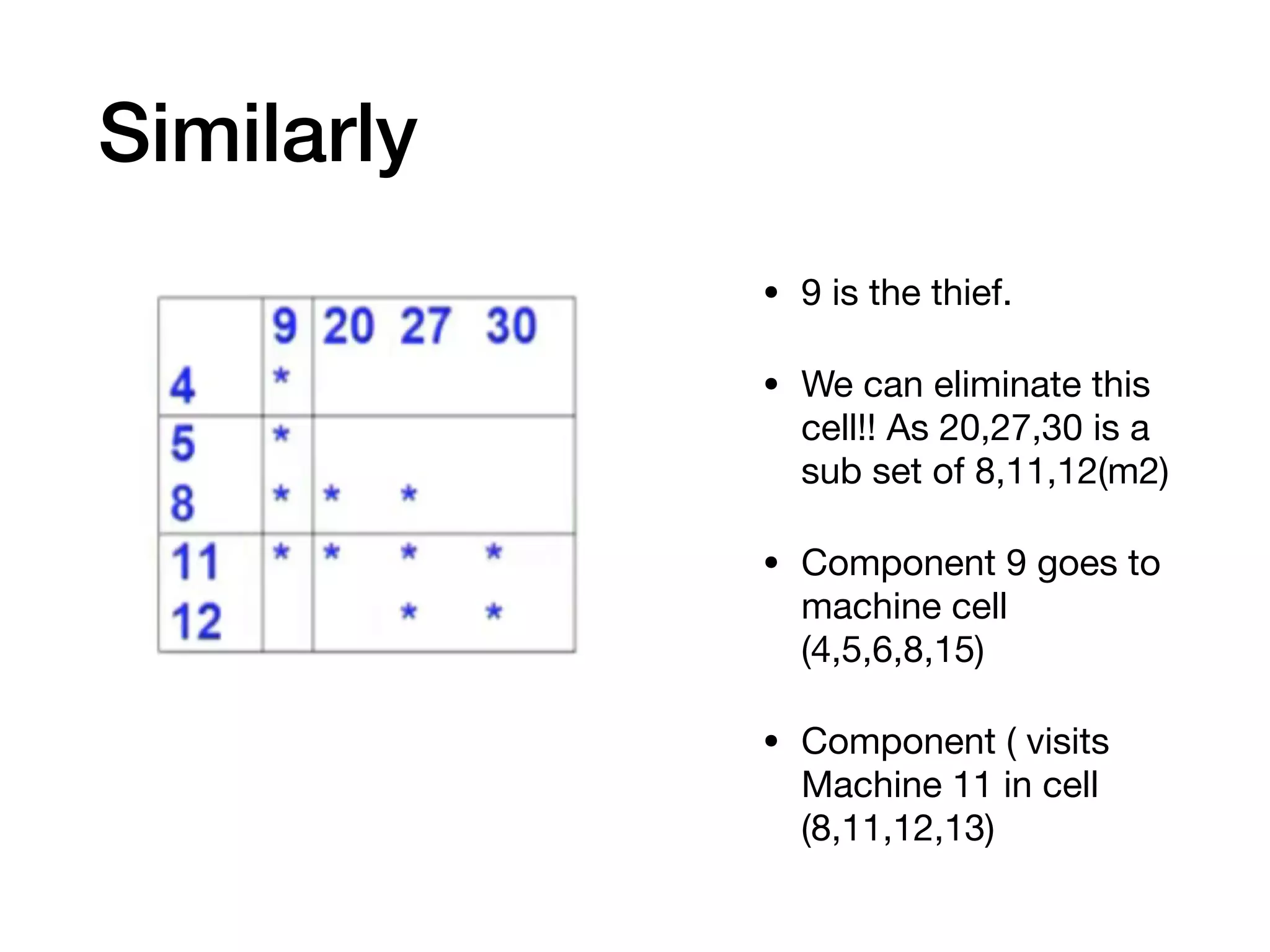
• 9 is the thief.

• We can eliminate this
cell!! As 20,27,30 is a
sub set of 8,11,12(m2)

• Component 9 goes to
machine cell
(4,5,6,8,15)

• Component ( visits
Machine 11 in cell
(8,11,12,13)
Models after synthesis
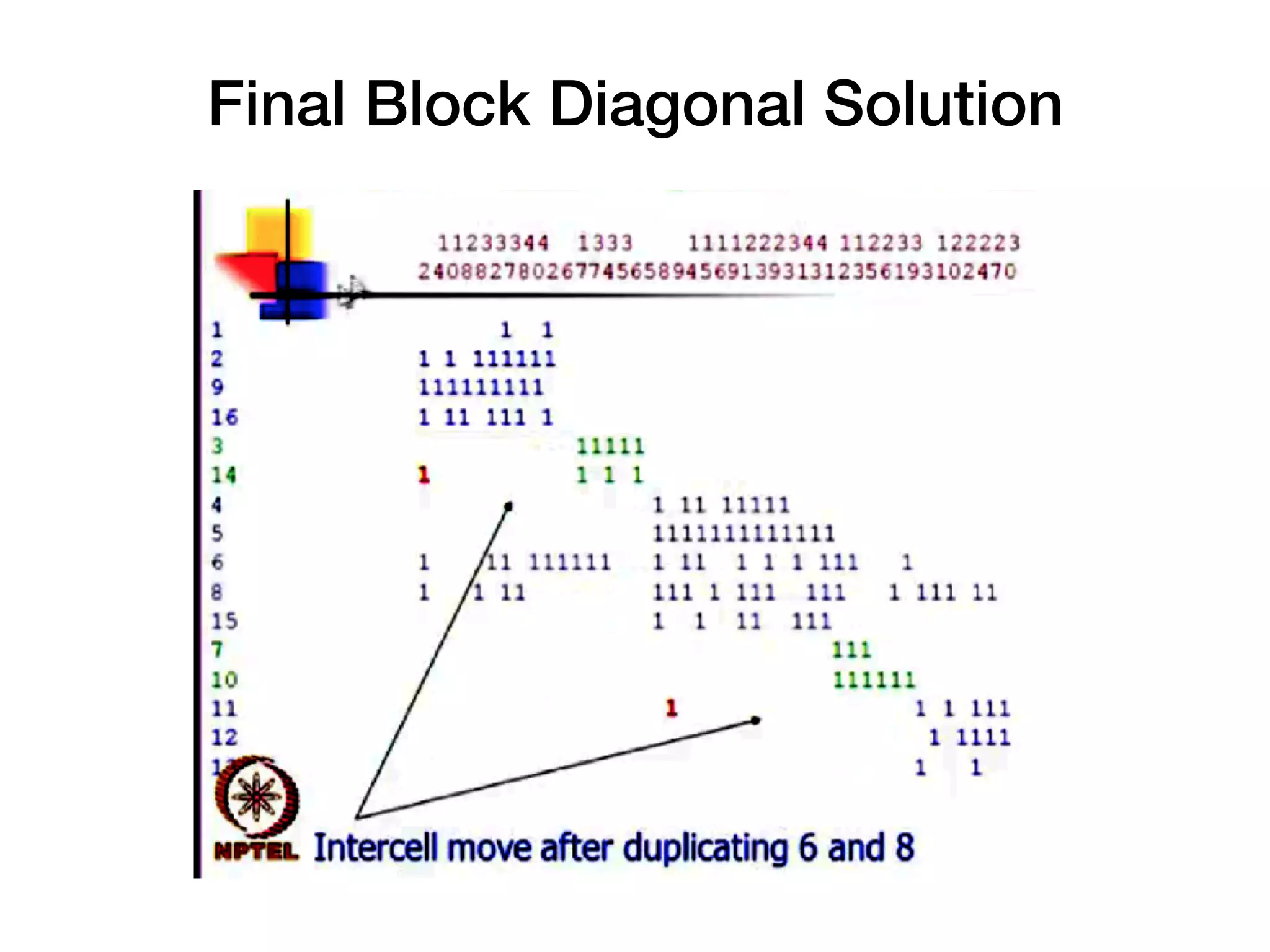
Final Block Diagonal Solution
Notes on Above solution…
• 6 and 8 copies are needed. It can be a central main
process(casting) or final process( heat treatment) needed
for all components.

• 5 Modules to create 43 parts.

• 2 intercell movements.

• Common sense can improve further.

• Next set of information needed for next analysis, like
volume, rate, capacity etc..
Reference
• https://nptel.ac.in/courses/110106044/5#

• https://www.youtube.com/watch?v=kaL5KLvAKA4

• https://www.youtube.com/watch?v=voN_297SXD8

• https://www.youtube.com/watch?v=dj5h-_Nqc70
Thank You
By:

Keerthivasan. R

2018229036

Group technology, Production flow Analysis

  • 1.
  • 2.
    What..? Why..? Group technologyis an approach in which similar parts are identified and grouped together in order to take advantage of the similarities in design and production. Usually, carried out in batch production, where • Downtime for changeovers is high. • High inventory carrying costs. GT minimises these disadvantages by recognising - “although the parts are different, there are groups of parts that possess process similarities”. 

  • 3.
  • 4.
    Caution…! Two completelyidentical designed parts, one made from plastic and the other from steel. The manufacturing processes would be injection molding for the plastic reel and turning for the metal reel. In this case we have a common design family, however, the production processes are unrelated. 

  • 5.
  • 6.
    PFA • A wayto Identify Part Families using information contained on route sheets or an incidence matrix to classify parts. • Can be implemented to all discrete industries, except the process industries where the procedure or the group is fixed. • No Volume of Production. • Sequence is not Conveyed. • No Processing Time. • Can be implemented with other tools like JIT, TQM etc ,. • Production Rate will vary drastically during implementation.
  • 7.
    Problem Approach • Problemtaken from “Manufacturing Systems Management by Prof. G. Srinivasan, Department of Management, IITmadras- NPTEL” • Re-organising a existing layout to cellular layout. Factory flow, Group Analysis, Line analysis.
  • 8.
  • 9.
    Frequency Table • Shownumber of parts visiting a machine, simply a row sum of Incidence- matrix
  • 10.
    Machine 1 asNucleus- Module 1 • Has the smallest non-zero frequency. It’s called the Nucleus Machine. • This shows 37 and 42 can be machined using 1,2,6,8,9,16. • This looks like a initial module. • Using this alter Incidence matrix, create column 2 by adjusting frequency.
  • 11.
    • M/c 24may not be a sub-set of M/c 3. • 24 visits a extra M/c. • Using this alter Incidence matrix, create column 3 by adjusting frequency. Machine 13 as Nucleus- Module 2
  • 12.
    • Continue thisprocess till all frequency becomes zero. • Note! : At 4 the iteration, by selecting M/c 10 we have- 7 components, but the frequency is 4. Hence, choose only the non allotted components from the Incidence Matrix. • A maximum of 16 modules(16 iterations) can be created or less than 16 modules if all the frequency hit zero early. • Hence, a Module Table is created, which show machines allotted to components.
  • 13.
    Modules for thegiven Matrix • Every component will appear in only one module. • But M/c can appear many times. • After it becomes Nucleus M/c it wont appear later.
  • 14.
    Notes on AboveSolution • Your should create 16 manufacutring cells to make 43 parts.( Impossible) • Number M/c needed are large. • What can we do…..? • Merge!
  • 15.
    Merge! • Merge twomodules if M/cs in a particular module is a sub-set of M/cs in another module.
  • 16.
  • 17.
    Note on Abovesolution • 6 Cells to manufacture 43 components. • Check do you have enough M/c copies. • 31 M/c required to manufacture 43 components. • Or lets refine Further…? Check for good intersection od Machines.
  • 18.
    Intersection • 2 isthe thief. Part 2 pulls 2,8,9,16 into this module. • Parts 7,34,36,6,17,35 can be machined with M/c 3,6,14. • We can save 4 Machines. • Remove component 2 and send to Module 1. • We create a intercell move.
  • 19.
    Similarly • 9 isthe thief. • We can eliminate this cell!! As 20,27,30 is a sub set of 8,11,12(m2) • Component 9 goes to machine cell (4,5,6,8,15) • Component ( visits Machine 11 in cell (8,11,12,13)
  • 20.
  • 21.
  • 22.
    Notes on Abovesolution… • 6 and 8 copies are needed. It can be a central main process(casting) or final process( heat treatment) needed for all components. • 5 Modules to create 43 parts. • 2 intercell movements. • Common sense can improve further. • Next set of information needed for next analysis, like volume, rate, capacity etc..
  • 23.
    Reference • https://nptel.ac.in/courses/110106044/5# • https://www.youtube.com/watch?v=kaL5KLvAKA4 •https://www.youtube.com/watch?v=voN_297SXD8 • https://www.youtube.com/watch?v=dj5h-_Nqc70
  • 24.