20ME706PE
PROCESS PLANNING
AND COST
ESTIMATION
• UNIT I INTRODUCTION TO PROCESS PLANNING
• UNIT II PROCESS PLANNING ACTIVITIES
• UNIT III INTRODUCTION TO COST ESTIMATION
• UNIT IV PRODUCTION COST ESTIMATION
• UNIT V MACHINING TIME CALCULATION
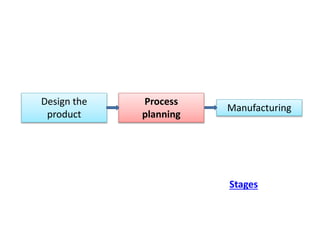
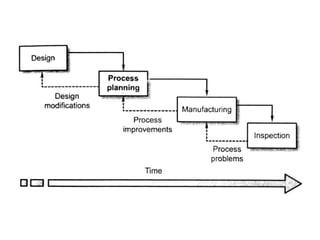
Design the
product
Manufacturing
Process
planning
Stages
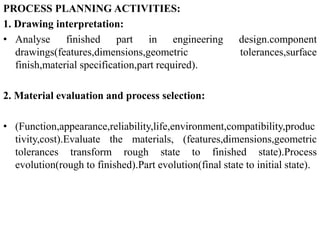
PROCESS PLANNING ACTIVITIES:
1. Drawing interpretation:
• Analyse finished part in engineering design.component
drawings(features,dimensions,geometric tolerances,surface
finish,material specification,part required).
2. Material evaluation and process selection:
• (Function,appearance,reliability,life,environment,compatibility,produc
tivity,cost).Evaluate the materials, (features,dimensions,geometric
tolerances transform rough state to finished state).Process
evolution(rough to finished).Part evolution(final state to initial state).
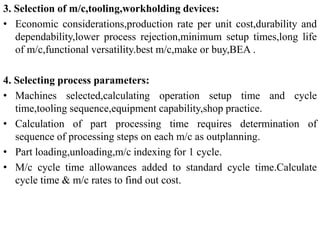
3. Selection of m/c,tooling,workholding devices:
• Economic considerations,production rate per unit cost,durability and
dependability,lower process rejection,minimum setup times,long life
of m/c,functional versatility.best m/c,make or buy,BEA .
4. Selecting process parameters:
• Machines selected,calculating operation setup time and cycle
time,tooling sequence,equipment capability,shop practice.
• Calculation of part processing time requires determination of
sequence of processing steps on each m/c as outplanning.
• Part loading,unloading,m/c indexing for 1 cycle.
• M/c cycle time allowances added to standard cycle time.Calculate
cycle time & m/c rates to find out cost.
5. Selecting quality assurance methods:
• Inspection criterias(dimensional,geometric,surface finish),tools and
techniques,increases costs&time.
6. Cost estimating:
• Process of determining the probable cost of product before
manufacture.
• Material,labour,overhead costs-profit.
• Material,mfg processes,batch size,make or buy.
7. Process planning documentation:
• Document clearly all the detail information.
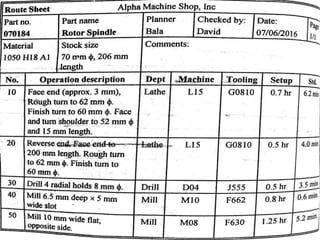
• Documented as job routing or operating sheet.
• Production operations&associated m/c tools for component and
subassembly.
• Route sheet information as
part identification,processing,operation of m/c,std times,setup cycle
times,tooling requirements,production control information shows
planning lead time operation.
• Reasons: part process-design,job quote,cost estimate,std cost
systems,communication vehicle.
8. Communicate process knowledge:
• Mfg to shop floor,economy,consistent quality.
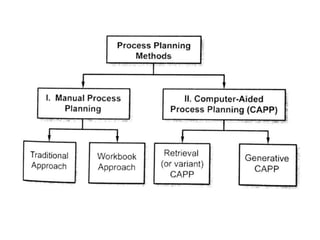
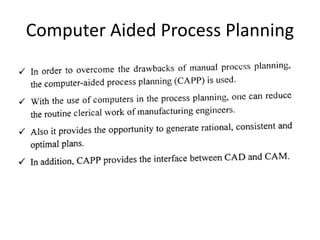
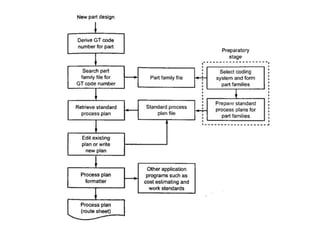
Computer Aided Process Planning
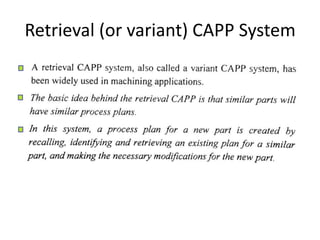
Retrieval (or variant) CAPP System
Selection of Process planning system
Major factors to be considered while selecting the
best process planning system are:
i. General Environment
ii. Organisational Structure
iii. Technical Expertise
iv. Needs and Objectives of the company
DRAWING INTERPRETATION
The following information can be obtained from the
interpretation of an engineering drawing:
i. Material of the product
ii. Number of parts to be produced
iii. Weight of the component
iv. Dimensions of the parts
v. Dimensional and geometric tolerances
vi. Size and Accuracy
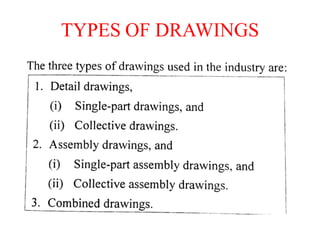
TYPES OF DRAWINGS
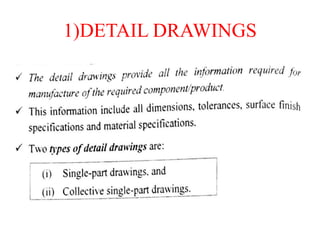
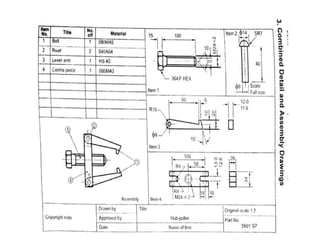
1)DETAIL DRAWINGS
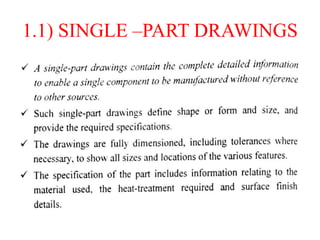
1.1) SINGLE –PART DRAWINGS
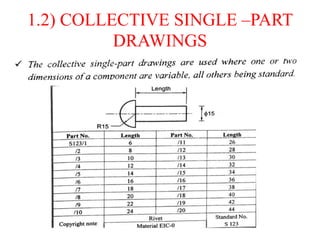
1.2) COLLECTIVE SINGLE –PART
DRAWINGS
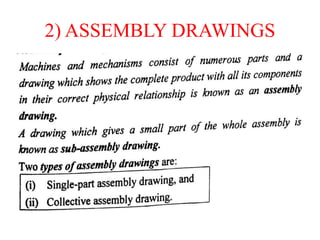
2) ASSEMBLY DRAWINGS
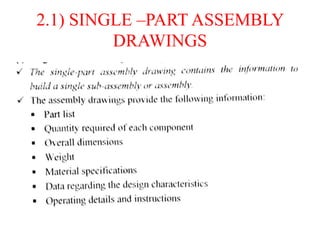
2.1) SINGLE –PART ASSEMBLY
DRAWINGS
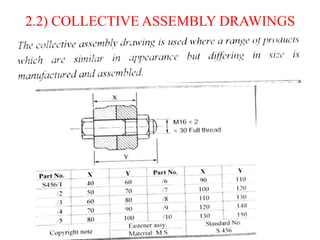
2.2) COLLECTIVE ASSEMBLY DRAWINGS
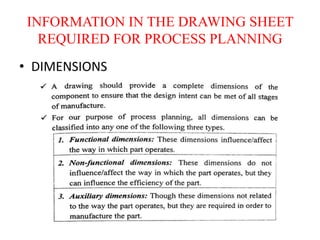
INFORMATION IN THE DRAWING SHEET
REQUIRED FOR PROCESS PLANNING
• DIMENSIONS
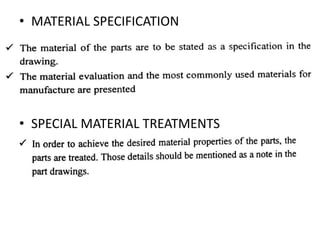
• MATERIAL SPECIFICATION
• SPECIAL MATERIAL TREATMENTS
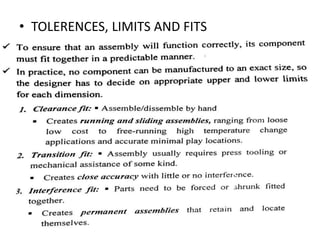
• TOLERENCES, LIMITS AND FITS
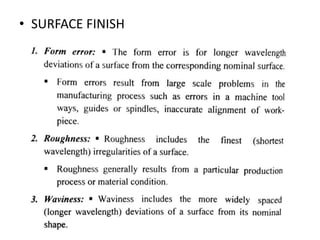
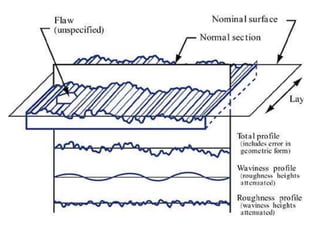
• SURFACE FINISH
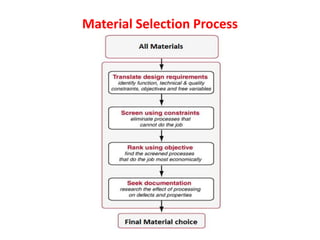
Material Selection Process
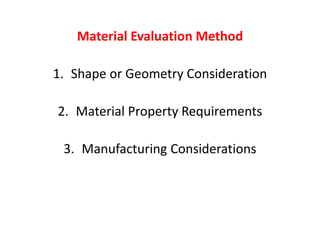
Material Evaluation Method
1. Shape or Geometry Consideration
2. Material Property Requirements
3. Manufacturing Considerations
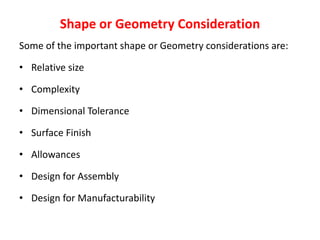
Shape or Geometry Consideration
Some of the important shape or Geometry considerations are:
• Relative size
• Complexity
• Dimensional Tolerance
• Surface Finish
• Allowances
• Design for Assembly
• Design for Manufacturability
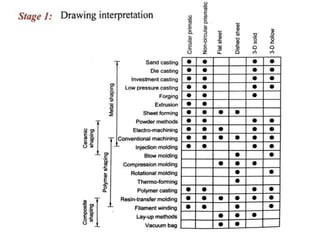
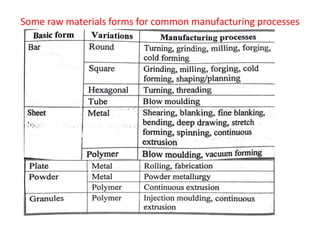
Some raw materials forms for common manufacturing processes
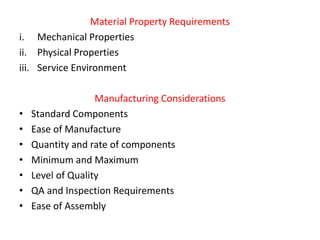
Material Property Requirements
i. Mechanical Properties
ii. Physical Properties
iii. Service Environment
Manufacturing Considerations
• Standard Components
• Ease of Manufacture
• Quantity and rate of components
• Minimum and Maximum
• Level of Quality
• QA and Inspection Requirements
• Ease of Assembly
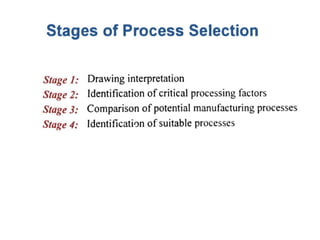
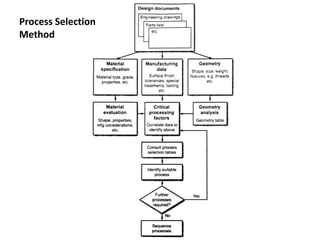
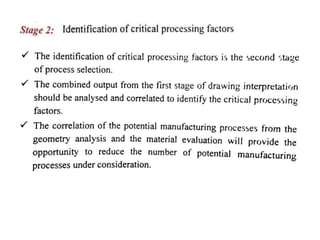
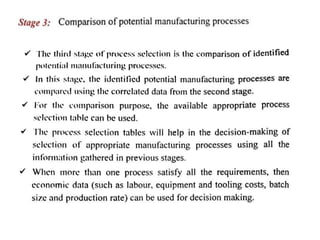
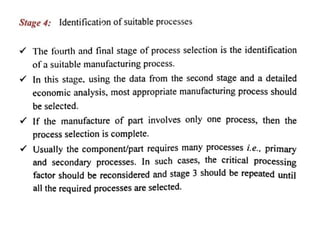
Process Selection
Method
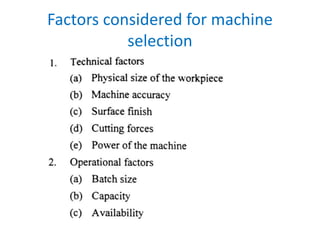
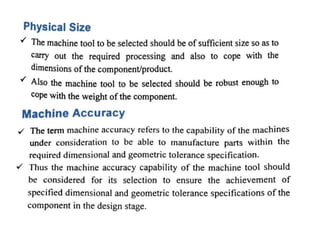
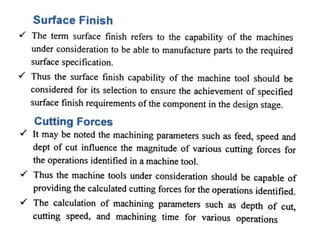
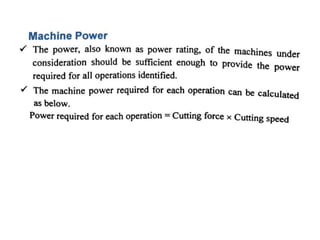
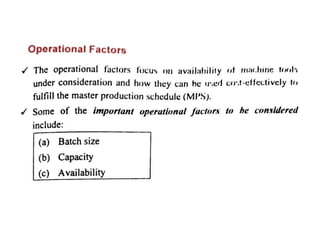
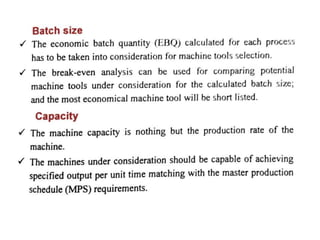
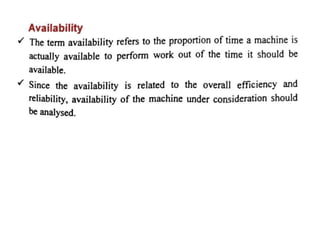
Factors considered for machine
selection
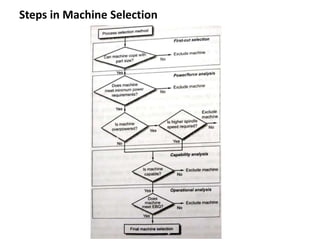
Steps in Machine Selection
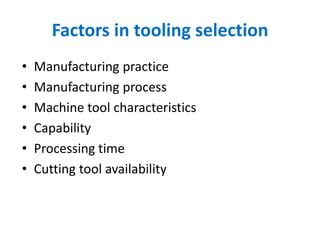
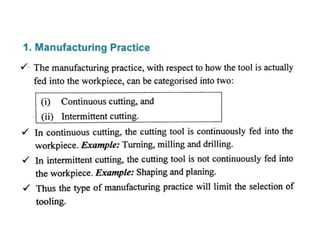
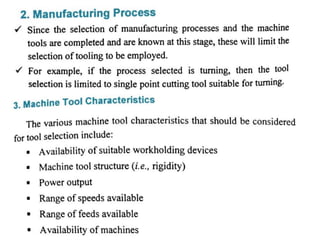
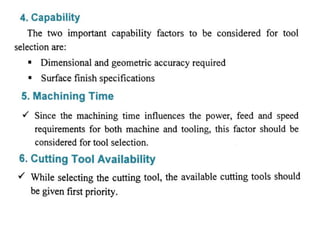
Factors in tooling selection
• Manufacturing practice
• Manufacturing process
• Machine tool characteristics
• Capability
• Processing time
• Cutting tool availability
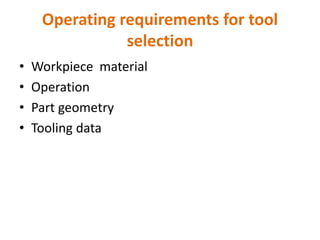
Operating requirements for tool
selection
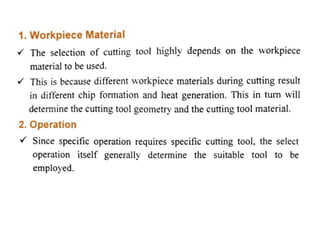
• Workpiece material
• Operation
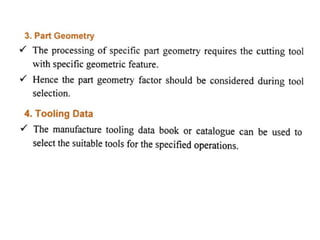
• Part geometry
• Tooling data
Factors affecting tooling performance
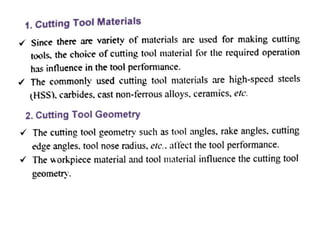
• Cutting tool materials
• Cutting tool geometry
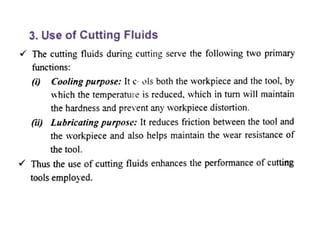
• Cutting fluids
INTRODUCTION TO PROCESS PLANNING

INTRODUCTION TO PROCESS PLANNING

  • 1.
  • 2.
    • UNIT IINTRODUCTION TO PROCESS PLANNING • UNIT II PROCESS PLANNING ACTIVITIES • UNIT III INTRODUCTION TO COST ESTIMATION • UNIT IV PRODUCTION COST ESTIMATION • UNIT V MACHINING TIME CALCULATION
  • 4.
  • 6.
    PROCESS PLANNING ACTIVITIES: 1.Drawing interpretation: • Analyse finished part in engineering design.component drawings(features,dimensions,geometric tolerances,surface finish,material specification,part required). 2. Material evaluation and process selection: • (Function,appearance,reliability,life,environment,compatibility,produc tivity,cost).Evaluate the materials, (features,dimensions,geometric tolerances transform rough state to finished state).Process evolution(rough to finished).Part evolution(final state to initial state).
  • 7.
    3. Selection ofm/c,tooling,workholding devices: • Economic considerations,production rate per unit cost,durability and dependability,lower process rejection,minimum setup times,long life of m/c,functional versatility.best m/c,make or buy,BEA . 4. Selecting process parameters: • Machines selected,calculating operation setup time and cycle time,tooling sequence,equipment capability,shop practice. • Calculation of part processing time requires determination of sequence of processing steps on each m/c as outplanning. • Part loading,unloading,m/c indexing for 1 cycle. • M/c cycle time allowances added to standard cycle time.Calculate cycle time & m/c rates to find out cost.
  • 8.
    5. Selecting qualityassurance methods: • Inspection criterias(dimensional,geometric,surface finish),tools and techniques,increases costs&time. 6. Cost estimating: • Process of determining the probable cost of product before manufacture. • Material,labour,overhead costs-profit. • Material,mfg processes,batch size,make or buy.
  • 9.
    7. Process planningdocumentation: • Document clearly all the detail information. • Documented as job routing or operating sheet. • Production operations&associated m/c tools for component and subassembly. • Route sheet information as part identification,processing,operation of m/c,std times,setup cycle times,tooling requirements,production control information shows planning lead time operation. • Reasons: part process-design,job quote,cost estimate,std cost systems,communication vehicle. 8. Communicate process knowledge: • Mfg to shop floor,economy,consistent quality.
  • 14.
  • 15.
  • 18.
    Selection of Processplanning system Major factors to be considered while selecting the best process planning system are: i. General Environment ii. Organisational Structure iii. Technical Expertise iv. Needs and Objectives of the company
  • 19.
  • 20.
    The following informationcan be obtained from the interpretation of an engineering drawing: i. Material of the product ii. Number of parts to be produced iii. Weight of the component iv. Dimensions of the parts v. Dimensional and geometric tolerances vi. Size and Accuracy
  • 21.
  • 22.
  • 23.
  • 24.
    1.2) COLLECTIVE SINGLE–PART DRAWINGS
  • 25.
  • 26.
    2.1) SINGLE –PARTASSEMBLY DRAWINGS
  • 27.
  • 29.
    INFORMATION IN THEDRAWING SHEET REQUIRED FOR PROCESS PLANNING • DIMENSIONS
  • 30.
    • MATERIAL SPECIFICATION •SPECIAL MATERIAL TREATMENTS
  • 31.
  • 32.
  • 34.
  • 35.
    Material Evaluation Method 1.Shape or Geometry Consideration 2. Material Property Requirements 3. Manufacturing Considerations
  • 36.
    Shape or GeometryConsideration Some of the important shape or Geometry considerations are: • Relative size • Complexity • Dimensional Tolerance • Surface Finish • Allowances • Design for Assembly • Design for Manufacturability
  • 37.
    Some raw materialsforms for common manufacturing processes
  • 38.
    Material Property Requirements i.Mechanical Properties ii. Physical Properties iii. Service Environment Manufacturing Considerations • Standard Components • Ease of Manufacture • Quantity and rate of components • Minimum and Maximum • Level of Quality • QA and Inspection Requirements • Ease of Assembly
  • 40.
  • 45.
    Factors considered formachine selection
  • 52.
  • 53.
    Factors in toolingselection • Manufacturing practice • Manufacturing process • Machine tool characteristics • Capability • Processing time • Cutting tool availability
  • 57.
    Operating requirements fortool selection • Workpiece material • Operation • Part geometry • Tooling data
  • 60.
    Factors affecting toolingperformance • Cutting tool materials • Cutting tool geometry • Cutting fluids