PROBIOTIC FOODS:
HEALTHY WAY TO HEALTHY LIFE

Anmol Kaur1, Sanu Arora2 and Ravinder Nagpal1
1

Department of Biotechnology, Lovely Professional University,
Phagwara (Punjab), India.
2
Department of Biotechnology, Punjabi University, Patiala
(Punjab), India.
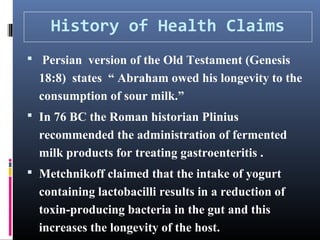
History of Health Claims
 Persian version of the Old Testament (Genesis

18:8) states “ Abraham owed his longevity to the
consumption of sour milk.”
 In 76 BC the Roman historian Plinius

recommended the administration of fermented
milk products for treating gastroenteritis .
 Metchnikoff claimed that the intake of yogurt

containing lactobacilli results in a reduction of
toxin-producing bacteria in the gut and this
increases the longevity of the host.
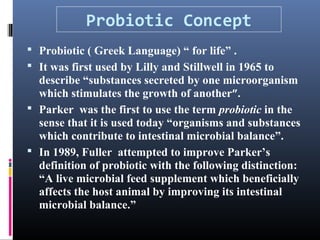
Probiotic Concept
 Probiotic ( Greek Language) “ for life” .
 It was first used by Lilly and Stillwell in 1965 to

describe “substances secreted by one microorganism
which stimulates the growth of another”.
 Parker was the first to use the term probiotic in the
sense that it is used today “organisms and substances
which contribute to intestinal microbial balance”.
 In 1989, Fuller attempted to improve Parker’s
definition of probiotic with the following distinction:
“A live microbial feed supplement which beneficially
affects the host animal by improving its intestinal
microbial balance.”
The probiotic concept:
 effects exerted by viable microorganisms
 applicable independent of the site of action and

route of administration.
 include sites such as the oral cavity, the intestine,

the vagina, and the skin.
 In the case of probiotic foods, the health effect is

usually based on alteration of the gastrointestinal
micro flora and, therefore, based on survival
during gastrointestinal transit.
Probiotics:
An edge over Antibiotics
Antibiotics:
 Emergence

of

antibiotic

resistance

organisms.
 Unpleasant side effects

Probiotics:
 Non- invasive
 Preventive
 Free from undesirable side effects

micro-
Where do Probiotics come from???
 The micro biota of a newborn develops rapidly after








the birth .
It is initially dependent mainly on :
the mother’s micro biota,
mode of delivery,
birth environment
and rarely genetic factors .
The maternal vaginal and intestinal flora constitutes
the source of bacteria, which colonizes the intestine of
the newborn.
After infancy probiotics are supplied to us by raw
foods; lactic acid fermented foods such as yogurt and
cheese; and probiotic supplements.
Gut Microflora
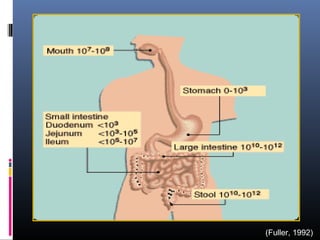
 Microbiologically, the gut has three principal regions: the







stomach, small intestine, and colon.
The stomach has very low bacterial numbers
Facultative anaerobes such as lactobacilli, streptococci, and
yeast are present at ;100 colony forming units (CFU) per
millilitre due to the low environmental pH .
The small intestine has a larger bacterial load that consists
of facultative anaerobes such as lactobacilli, streptococci,
and enterobacteria as well as anaerobes such as
Bifidobacterium spp., Bacteroides spp., and clostridia at
levels of ;104–108 CFU/ml.
However, the colon, has a total population of 1011–1012
CFU/ml of contents
(Fuller, 1992)
Factors affecting the intestinal
micro ecosystem
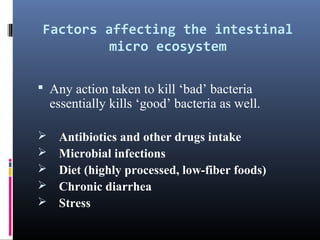
 Any action taken to kill ‘bad’ bacteria

essentially kills ‘good’ bacteria as well.







Antibiotics and other drugs intake
Microbial infections
Diet (highly processed, low-fiber foods)
Chronic diarrhea
Stress
Imbalance of intestinal
micro flora results in:


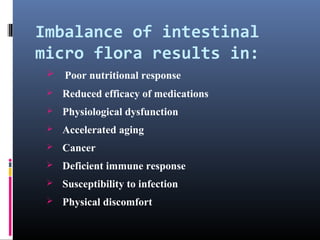
Poor nutritional response



Reduced efficacy of medications



Physiological dysfunction



Accelerated aging



Cancer



Deficient immune response



Susceptibility to infection



Physical discomfort
Therapeutic Modulation of
Gut Microflora
 The gut microflora is an important constituent in

the intestine's defence barrier.
 Specific aberrancies in the intestinal microbiota

may predispose the host to disease.
 The normal gut microbiota can prevent the

overgrowth of potential pathogens in the GI tract.
 The protective and immune barrier of the human

gastrointestinal (GI) tract is diverse.
Contd….
It includes :
 the epithelial layer
 the mucous layer
 the mechanics of peristalsis
 desquamation
 actions of secretory IgA
All of which impact bacterial attachment
 After attachment, colonic bacteria are prevented
from mixing with the host’s eukaryotic cells by
the epithelial layer, which acts as a vital barrier to
invasion.
Selection of probiotic
organism
 Safety
Origin
 Functional aspects
 Survival
 Adherence, colonisation
 Anti-microbial products
 Immune stimulation
Genetic stable
 Prevention of pathogens
(Mullan, 2002)
Major pre-requisite properties for
a microbe to be accepted as a
probiotic are:
 It should be non-pathogenic, non-toxic and non-

allergic.
 It should be capable of surviving and metabolizing in
upper G.I. tract secretion in the gut environment e.g.
Resistant to low pH, organic acids, bile juice, saliva
and gastric acid.
 It should be human in origin, genetically stable and
capable of remaining viable for long periods in field
condition.
 It should be able to modulate immune response and
provide resistance to disease through improved
immunity or by the production of antimicrobial
substance in the guts.
Contd….
 It should have a good adhesion/ colonization to human

intestinal tract and influence on gut mucosal
permeability.

 It should be antagonistic against carcinogenic/

pathogenic organism.

 It should posses clinically proven health benefit, e.g.

gastrointestinal disorders, persistant diarrhoea,
clostridium difficle colitis, antibiotics associated
diarrhoea, acute infantile gastroenteritis.

 It should have technologic properties for commercial

viability such as stability of desired characteristics
during processing, storage and transportation.
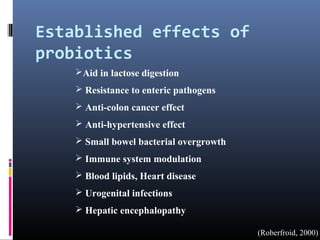
Established effects of
probiotics
Aid in lactose digestion
 Resistance to enteric pathogens
 Anti-colon cancer effect
 Anti-hypertensive effect
 Small bowel bacterial overgrowth
 Immune system modulation
 Blood lipids, Heart disease
 Urogenital infections
 Hepatic encephalopathy
(Roberfroid, 2000)
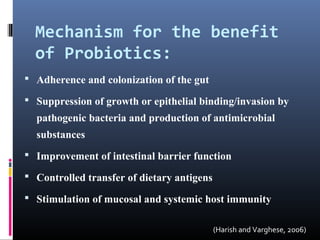
Mechanism for the benefit
of Probiotics:
 Adherence and colonization of the gut
 Suppression of growth or epithelial binding/invasion by

pathogenic bacteria and production of antimicrobial
substances
 Improvement of intestinal barrier function
 Controlled transfer of dietary antigens
 Stimulation of mucosal and systemic host immunity
(Harish and Varghese, 2006)
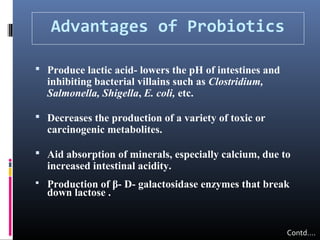
Advantages of Probiotics
 Produce lactic acid- lowers the pH of intestines and

inhibiting bacterial villains such as Clostridium,
Salmonella, Shigella, E. coli, etc.

 Decreases the production of a variety of toxic or

carcinogenic metabolites.

 Aid absorption of minerals, especially calcium, due to

increased intestinal acidity.



Production of β- D- galactosidase enzymes that break
down lactose .

Contd….


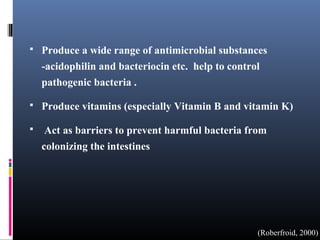
Produce a wide range of antimicrobial substances
-acidophilin and bacteriocin etc. help to control
pathogenic bacteria .



Produce vitamins (especially Vitamin B and vitamin K)



Act as barriers to prevent harmful bacteria from
colonizing the intestines

(Roberfroid, 2000)
Effects of probiotics on
pathogenic bacteria
 Probiotics reduce plasma levels of bacterial endotoxin

concentrations, by inhibiting translocation of bacteria
across the GI lumen into the bloodstream.
 Decreases in translocation of bacteria may occur as a result

of the ability of probiotics to tighten the mucosal barrier.
 There are several ways probiotic microflora can prevent

pathogenic bacteria from adhering and colonizing gut
mucosa.
 Probiotics disallow colonization by disease-provoking

bacteria through competition for nutrients, immune system
up-regulation, production of antitoxins, and up-regulation
of intestinal mucin genes.

contd…
 Probiotics lower colon luminal pH and foster growth

of non-pathogenic commensal bacteria by SCFA
(Short Chain Fatty Acid) production. One SCFA,
acetic acid, has antimicrobial activity against molds,
yeasts, and bacteria.
 Probiotics exert protective effects through

production of hydrogen peroxide and benzoic acid,
which inhibit many pathogenic, acid-sensitive
bacteria .

(Sanders, 2003)
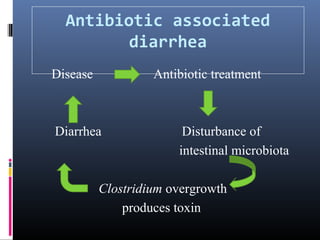
Antibiotic associated
diarrhea
Disease

Antibiotic treatment

Diarrhea

Disturbance of
intestinal microbiota

Clostridium overgrowth
produces toxin
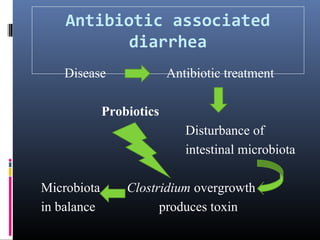
Antibiotic associated
diarrhea
Disease

Antibiotic treatment

Probiotics
Disturbance of
intestinal microbiota
Microbiota
in balance

Clostridium overgrowth
produces toxin
Probiotics and Cancer
 Enzymes (Glycosidase, B- glucuronidase , azoreductase ,

and nitroreductase ) of the intestinal flora convert the
precarcinogens to active carcinogens






Probiotics reduce:
Faecal concentrations of enzymes
Secondary bile salts
Reduce absorption of harmful mutagens that may
contribute to colon carcinogenesis.

 Activity of L. acidophilus and L. casei supplementation

in humans helped to decrease levels of these enzymes
 Several mechanisms have been proposed as to how

lactic acid bacteria may inhibit colon cancer:
 Enhancing the host’s immune response
 Altering the metabolic activity of the intestinal

microflora
 Binding and degrading carcinogens
 Producing antimutagenic compounds
 Altering the physiochemical conditions in the colon

(Harish and Varghese, 2006)
Hepatic

Diseases

Mechanisms by which probiotics may treat Hepatic
Encephalopathy:
 Decreased portal blood ammonia by reduced bacterial

urease activity
 Decreased pH due to less ammonia absorption
 Less intestinal permeability and improved gut epithelium
 Decreased inflammation and oxidative stress due to

reduced ammonia toxins
 Reduced uptake of other toxins
Helicobacter pylori Infections


It the most common chronic bacterial infection in humans and causes :

 Chronic gastritis
 Peptic ulcers
 Gastric adenocarcinoma
 Lymphoma and a number of non-gastrointestinal disorders.
 In vitro studies have suggested that lactic acid bacteria may inhibit or

kill H. pylori by acting as a bactericide.
 Bifidobacteria and B. subtilis may inhibit the growth or attachment of H.

pylori.
 Possible mechanisms by which L. salivarius eradicates H. pylori include

the ability of the former to bind to gastric epithelial cells, to produce a
high quantity of lactic acid, and to proliferate rapidly.
Use of probiotics beyond
GIT
 Allergy: Probiotics have the potential:
 To modify the structure of antigens
 Reduce their immunogenicity
 Reduce intestinal permeability
 Generation of proinflammatory cytokines that are

elevated in patients with a variety of allergic
disorders
Probiotics in Pregnancy:
 Bacterial vaginosis , increases the risk of preterm labour

and infant mortality .
 Probiotics decrease the risk of bacterial vaginosis and

maintain normal lactobacilli vaginal flora
 Studies using L. rhamnosus GG and B. lactis BB12 have

shown that atopic dermatitis, a condition that causes
severe skin rashes in up to 15% of babies, can be
prevented in 50% of cases if mothers ingest probiotics
during pregnancy and newborns ingest them during the
first 6 months of life
Use of probiotics
 All probiotics works effectively, if taken after meals, when

stomach acid is lowest.
 Stomach acid destroys up to 99.9% of probiotics, if taken

before a meal but only about 90%, if taken after meal.
 Thus, after meal intake ensures maximum delivery to the

small intestine, where they reproduce rapidly, populating
the colon.
 They do most of their good work in the small and large

intestines, but they also help the mouth and esophagus to
remain uninfected.
Probiotic Strains
 A total of 169 Lactobacillus strains from 12

species (L. acidophilus, L. brevis, L. buchneri, L.
casei, L. delbrueckii subsp. bulgaricus, L.
delbrueckii subsp. delbrueckii, L. delbrueckii subsp.
lactis, L. fermentum, L. helveticus, L. paracasei
subsp. paracasei, L. plantarum and L. rhamnosus)
isolated from raw milk and various milk products.
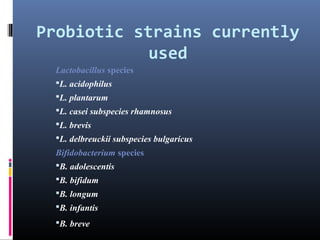
Probiotic strains currently
used
Lactobacillus species
L. acidophilus
L. plantarum
L. casei subspecies rhamnosus
L. brevis
L. delbreuckii subspecies bulgaricus

Bifidobacterium species
B. adolescentis
B. bifidum
B. longum
B. infantis
B. breve
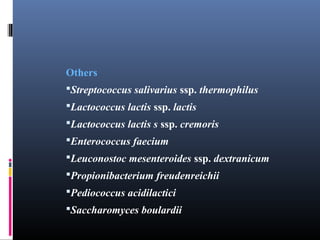
Others
Streptococcus salivarius ssp. thermophilus
Lactococcus lactis ssp. lactis
Lactococcus lactis s ssp. cremoris
Enterococcus faecium
Leuconostoc mesenteroides ssp. dextranicum
Propionibacterium freudenreichii
Pediococcus acidilactici
Saccharomyces boulardii
Strains of bacteria one should look
for in a probiotic:
 It is important to choose a high quality formula that

contains the right strains of bacteria for optimum results .
 It is best to choose a probiotic that contains the entire family

of lactobacillus bacteria.
 The family members are : L. acidophilus, L. delbrueckii, L.

casei, L. bulgaricus, L. caucasicus, L. fermenti, L. plantarum,
L. brevis, L. helveticus, L. leichmannii, L. lactis, L. bifidus,
and L.sporogenes.
 It is important that the complete family of 13 strains is

present. Most people don’t realize this family works in
harmony only if the complete family is present.
 A good probiotic should have most of these strains:
 Bifidobacterium bifidum - Protects the body against

invasive pathogens, salmonella and rotavirus. Helps
suppress tumors and reduce inflammation. Helps
protect against diarrhea and intestinal infections and
strengthens immune system.
 Bifidobacterium breve - Helps prevent rotavirus-induced

diarrhea and activates your immune system. Also helps
IBS.
 Bifidobacteria infantis - Inhibitory effect on some strains

of E. coli. Protects against gastroenteritis (inflammation of
the stomach and bowels) and is useful in the prevention
and therapy of solid tumors (breast tumors).
 Bifidobacteria lactis - Enhances resistance to oral

salmonella typhimurium. Enhances natural immune
function. Helps alleviate constipation, prevents diarrhea
and decreases chronic inflammation of the colon.
 Bifidobacterium longum - Able to eliminate harmful

nitrates commonly found in foods. Inhibits the
development and growth of colon, liver and breast
cancers in laboratory animals. Helps prevent diarrhea
caused by antibiotic use, helps constipation and
reduces fecal odor.
 Lactococcus lactis - A natural antibiotic that reduces

the ability of pathogenic microbes to grow and cause
infection.
 Lactobacillus salivarius - Produces a high amount of

lactic acid, thus completely inhibiting the growth of
Helicobacter pylori (H. pylori) bacteria, which are now
known to be the major cause of peptic ulcers. It is also
effective against Salmonella typhimurium
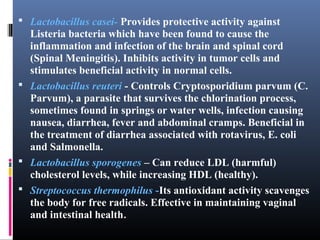
 Lactobacillus casei- Provides protective activity against

Listeria bacteria which have been found to cause the
inflammation and infection of the brain and spinal cord
(Spinal Meningitis). Inhibits activity in tumor cells and
stimulates beneficial activity in normal cells.
 Lactobacillus reuteri - Controls Cryptosporidium parvum (C.
Parvum), a parasite that survives the chlorination process,
sometimes found in springs or water wells, infection causing
nausea, diarrhea, fever and abdominal cramps. Beneficial in
the treatment of diarrhea associated with rotavirus, E. coli
and Salmonella.
 Lactobacillus sporogenes – Can reduce LDL (harmful)
cholesterol levels, while increasing HDL (healthy).
 Streptococcus thermophilus -Its antioxidant activity scavenges
the body for free radicals. Effective in maintaining vaginal
and intestinal health.
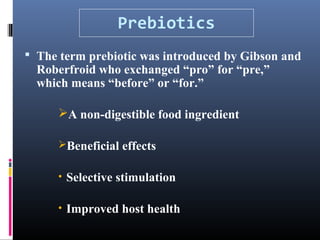
Prebiotics
 The term prebiotic was introduced by Gibson and

Roberfroid who exchanged “pro” for “pre,”
which means “before” or “for.”
A non-digestible food ingredient
Beneficial effects
• Selective stimulation
• Improved host health
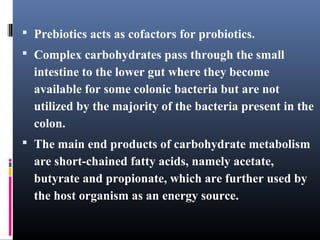
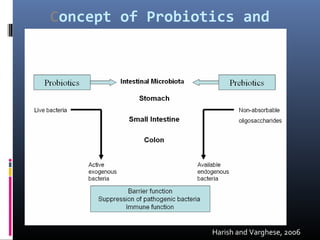
 Prebiotics acts as cofactors for probiotics.
 Complex carbohydrates pass through the small

intestine to the lower gut where they become
available for some colonic bacteria but are not
utilized by the majority of the bacteria present in the
colon.
 The main end products of carbohydrate metabolism

are short-chained fatty acids, namely acetate,
butyrate and propionate, which are further used by
the host organism as an energy source.
Concept of Probiotics and
Prebiotics:

Harish and Varghese, 2006
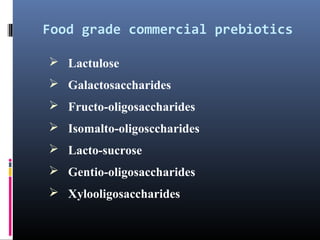
Food grade commercial prebiotics
 Lactulose
 Galactosaccharides
 Fructo-oligosaccharides
 Isomalto-oligosccharides
 Lacto-sucrose
 Gentio-oligosaccharides
 Xylooligosaccharides
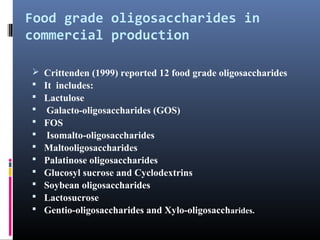
Food grade oligosaccharides in
commercial production













Crittenden (1999) reported 12 food grade oligosaccharides
It includes:
Lactulose
Galacto-oligosaccharides (GOS)
FOS
Isomalto-oligosaccharides
Maltooligosaccharides
Palatinose oligosaccharides
Glucosyl sucrose and Cyclodextrins
Soybean oligosaccharides
Lactosucrose
Gentio-oligosaccharides and Xylo-oligosaccharides.
 The purely vegetable Fructo-oligosaccharides or

Fructofibres® consist of inulin and oligofructose, which are
inert polysaccharides.
 Inulin and oligo-fructose, cannot be split by the enzymes of

the upper digestive tract and pass through the intestine
without being digested or absorbed.
 They therefore have no significant calorie value (1–2

kcal/g). Components of food that cannot be broken down
by digestive enzymes pass through the small intestine,
intact, increasing bulk or faecal mass. They may then
undergo fermentation by the intestinal flora in the large
intestine.
 Fructo-oligosaccharides

alter the intestinal
microflora balance in a positive way.
Fructofibres® stimulate the proliferation of the
health-promoting bacteria in the gastro-intestinal
tract and encourage their metabolic selectivity.
These effects promote a healthy digestive tract
and increased resistance to infection.
Characteristics of an ideal
prebiotics







It should not be hydrolyzed or absorbed in the upper part of G.I.
tract.
It should be a selective substrate for one or a limited number of
potentially bacterial commercial to the colon culture protagonist.
It should be able to alter the colonic micro flora towards a
healthier composition or selectively stimulates the growth and/or
activity of intestinal bacteria associated with health and well
being.
It should help in increasing the absorption of certain minerals
such as calcium and magnesium.
It should or may have a favorable effect on the immune system
and provide improved resistance against infection.
 Human could consume nearly 10 g of non-digestible

fermentable carbohydrates without noticeable side
effects and recommended a dose of 5 to 8 g of
oligofructose and 10 g of inulin per person.

(Coussement, 1999)
Synbiotics
 Synbiotic = Probiotic + Prebiotic
 The concept of synbiotics has been proposed to

characterize health-enhancing foods and
supplements used as functional food ingredients
in humans (Gibson, 2004).
 Potential synergy between pro- & prebiotics
 Improve survival in upper GIT
 More efficient implantation
 Stimulating effect of Probiotics
Some of the major health benefits of
synbiotics:








Improved survival of live bacteria in food products, prolonged
shelf life,
Increased number of ingested bacteria reaching the colon in a
viable form
Stimulation in the colon of the growth and implantation of both
exogenous and endogenous bacteria
Activation of metabolism of beneficial bacteria, antagonistic
toward pathogenic bacteria
Production of antimicrobial substances (bacteriocins , hydrogen
peroxide, organic acids etc)
Immunostimulation
Anti-inflammatory, Anti-mutagenic, Anti-carcinogenic, and
production of bioactive compounds (enzymes, vaccines, peptides
etc)
(Nagpal et al, 2007)
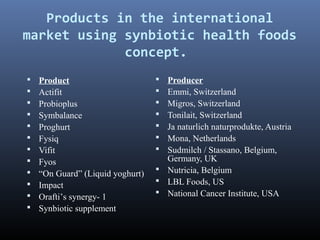
Products in the international
market using synbiotic health foods
concept.













Product
Actifit
Probioplus
Symbalance
Proghurt
Fysiq
Vifit
Fyos
“On Guard” (Liquid yoghurt)
Impact
Orafti’s synergy- 1
Synbiotic supplement

Producer
Emmi, Switzerland
Migros, Switzerland
Tonilait, Switzerland
Ja naturlich naturprodukte, Austria
Mona, Netherlands
Sudmilch / Stassano, Belgium,
Germany, UK
 Nutricia, Belgium
 LBL Foods, US
 National Cancer Institute, USA







Administration of probiotics
 “The specific microorganisms shall be viable, active &

abundant at the level of at least 107 cfu /g in the product to
the date of minimum durability”
 Minimum Consumption: 100g of a probiotic food with 107

cfu/ g.
Functional Foods
 Food is regarded “functional” if consumed as part

of a usual diet, providing benefits to one or more
target functions in body, beyond basic inherent
nutrition.
 The first functional food products were launched in

Japan where a food category called FOSHU (Foods
for Specific Health Use) was established in 1991 to
reduce the increasing health-care costs.
Use of functional foods for the
improvement of number of targets in
hunam body:

 Gastrointestinal function, including the balancing of colonic

microflora and control of nutrient bioavailability, food transit
time, immune activity, endocrine activity, mucosal motility
and epithelial cell proliferation.
 Antioxidant and redox systems require certain amounts of

vitamins as well as non-vitamin components like polyphenols.
 Antioxidant and redox functions are important for all cells

and tissues; however beneficial effects have not been proven
except when consumed as a component of fresh fruit and
vegetables.
Contd…
 Xenobiotic metabolic activities and their control by some food

components such as glucosinolates, which are mostly nonnutritive. These functions may be important in controlling
toxicity and carcinogenicity caused by chemical contaminants of
the food and/or the environment.
 Moods and behaviour as well as cognitive and physical

performances may be influenced by food components, though
there is a fine line between nutrition and pharmacology in this
category (Roberfroid, 1998; 2000).
 Metabolism of macronutrients (carbohydrates amino acids and

fatty acids) and the related hormonal regulation e.g.
insulin/glucagon balance.
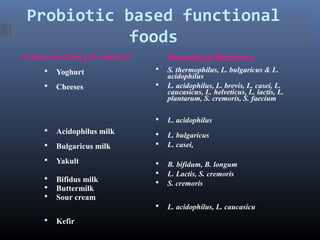
Probiotic based functional
foods
Cultured Dairy Products

Beneficial Bacteria



Yoghurt





Cheeses



S. thermophilus, L. bulgaricus & L.
acidophilus
L. acidophilus, L. brevis, L. casei, L.
caucasicus, L. helveticus, L. lactis, L.
plantarum, S. cremoris, S. faecium



L. acidophilus




L. bulgaricus
L. casei,





B. bifidum, B. longum
L. Lactis, S. cremoris
S. cremoris



L. acidophilus, L. caucasicu



Acidophilus milk



Bulgaricus milk



Yakult





Bifidus milk
Buttermilk
Sour cream



Kefir
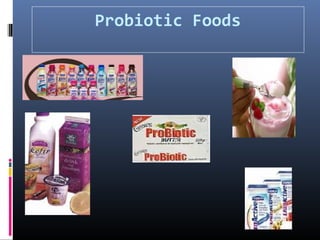
Probiotic Foods
Conclusion
 Consuming Functional Dairy products with

targeted therapeutic benefits can be a tasteful
and pleasurable way of healthy life.
 Close network of medical experts, nutritionists

and microbiologists necessary to develop such
foods.
 Flow

of information from research to
healthcare professionals to consumers is
necessary to derive maximum benefits.

Probiotic

  • 1.
    PROBIOTIC FOODS: HEALTHY WAYTO HEALTHY LIFE Anmol Kaur1, Sanu Arora2 and Ravinder Nagpal1 1 Department of Biotechnology, Lovely Professional University, Phagwara (Punjab), India. 2 Department of Biotechnology, Punjabi University, Patiala (Punjab), India.
  • 2.
    History of HealthClaims  Persian version of the Old Testament (Genesis 18:8) states “ Abraham owed his longevity to the consumption of sour milk.”  In 76 BC the Roman historian Plinius recommended the administration of fermented milk products for treating gastroenteritis .  Metchnikoff claimed that the intake of yogurt containing lactobacilli results in a reduction of toxin-producing bacteria in the gut and this increases the longevity of the host.
  • 3.
    Probiotic Concept  Probiotic( Greek Language) “ for life” .  It was first used by Lilly and Stillwell in 1965 to describe “substances secreted by one microorganism which stimulates the growth of another”.  Parker was the first to use the term probiotic in the sense that it is used today “organisms and substances which contribute to intestinal microbial balance”.  In 1989, Fuller attempted to improve Parker’s definition of probiotic with the following distinction: “A live microbial feed supplement which beneficially affects the host animal by improving its intestinal microbial balance.”
  • 4.
    The probiotic concept: effects exerted by viable microorganisms  applicable independent of the site of action and route of administration.  include sites such as the oral cavity, the intestine, the vagina, and the skin.  In the case of probiotic foods, the health effect is usually based on alteration of the gastrointestinal micro flora and, therefore, based on survival during gastrointestinal transit.
  • 5.
    Probiotics: An edge overAntibiotics Antibiotics:  Emergence of antibiotic resistance organisms.  Unpleasant side effects Probiotics:  Non- invasive  Preventive  Free from undesirable side effects micro-
  • 6.
    Where do Probioticscome from???  The micro biota of a newborn develops rapidly after        the birth . It is initially dependent mainly on : the mother’s micro biota, mode of delivery, birth environment and rarely genetic factors . The maternal vaginal and intestinal flora constitutes the source of bacteria, which colonizes the intestine of the newborn. After infancy probiotics are supplied to us by raw foods; lactic acid fermented foods such as yogurt and cheese; and probiotic supplements.
  • 7.
    Gut Microflora  Microbiologically,the gut has three principal regions: the     stomach, small intestine, and colon. The stomach has very low bacterial numbers Facultative anaerobes such as lactobacilli, streptococci, and yeast are present at ;100 colony forming units (CFU) per millilitre due to the low environmental pH . The small intestine has a larger bacterial load that consists of facultative anaerobes such as lactobacilli, streptococci, and enterobacteria as well as anaerobes such as Bifidobacterium spp., Bacteroides spp., and clostridia at levels of ;104–108 CFU/ml. However, the colon, has a total population of 1011–1012 CFU/ml of contents
  • 8.
  • 9.
    Factors affecting theintestinal micro ecosystem  Any action taken to kill ‘bad’ bacteria essentially kills ‘good’ bacteria as well.      Antibiotics and other drugs intake Microbial infections Diet (highly processed, low-fiber foods) Chronic diarrhea Stress
  • 10.
    Imbalance of intestinal microflora results in:  Poor nutritional response  Reduced efficacy of medications  Physiological dysfunction  Accelerated aging  Cancer  Deficient immune response  Susceptibility to infection  Physical discomfort
  • 11.
    Therapeutic Modulation of GutMicroflora  The gut microflora is an important constituent in the intestine's defence barrier.  Specific aberrancies in the intestinal microbiota may predispose the host to disease.  The normal gut microbiota can prevent the overgrowth of potential pathogens in the GI tract.  The protective and immune barrier of the human gastrointestinal (GI) tract is diverse. Contd….
  • 12.
    It includes : the epithelial layer  the mucous layer  the mechanics of peristalsis  desquamation  actions of secretory IgA All of which impact bacterial attachment  After attachment, colonic bacteria are prevented from mixing with the host’s eukaryotic cells by the epithelial layer, which acts as a vital barrier to invasion.
  • 13.
    Selection of probiotic organism Safety Origin  Functional aspects  Survival  Adherence, colonisation  Anti-microbial products  Immune stimulation Genetic stable  Prevention of pathogens (Mullan, 2002)
  • 14.
    Major pre-requisite propertiesfor a microbe to be accepted as a probiotic are:  It should be non-pathogenic, non-toxic and non- allergic.  It should be capable of surviving and metabolizing in upper G.I. tract secretion in the gut environment e.g. Resistant to low pH, organic acids, bile juice, saliva and gastric acid.  It should be human in origin, genetically stable and capable of remaining viable for long periods in field condition.  It should be able to modulate immune response and provide resistance to disease through improved immunity or by the production of antimicrobial substance in the guts. Contd….
  • 15.
     It shouldhave a good adhesion/ colonization to human intestinal tract and influence on gut mucosal permeability.  It should be antagonistic against carcinogenic/ pathogenic organism.  It should posses clinically proven health benefit, e.g. gastrointestinal disorders, persistant diarrhoea, clostridium difficle colitis, antibiotics associated diarrhoea, acute infantile gastroenteritis.  It should have technologic properties for commercial viability such as stability of desired characteristics during processing, storage and transportation.
  • 16.
    Established effects of probiotics Aidin lactose digestion  Resistance to enteric pathogens  Anti-colon cancer effect  Anti-hypertensive effect  Small bowel bacterial overgrowth  Immune system modulation  Blood lipids, Heart disease  Urogenital infections  Hepatic encephalopathy (Roberfroid, 2000)
  • 17.
    Mechanism for thebenefit of Probiotics:  Adherence and colonization of the gut  Suppression of growth or epithelial binding/invasion by pathogenic bacteria and production of antimicrobial substances  Improvement of intestinal barrier function  Controlled transfer of dietary antigens  Stimulation of mucosal and systemic host immunity (Harish and Varghese, 2006)
  • 18.
    Advantages of Probiotics Produce lactic acid- lowers the pH of intestines and inhibiting bacterial villains such as Clostridium, Salmonella, Shigella, E. coli, etc.  Decreases the production of a variety of toxic or carcinogenic metabolites.  Aid absorption of minerals, especially calcium, due to increased intestinal acidity.  Production of β- D- galactosidase enzymes that break down lactose . Contd….
  • 19.
     Produce a widerange of antimicrobial substances -acidophilin and bacteriocin etc. help to control pathogenic bacteria .  Produce vitamins (especially Vitamin B and vitamin K)  Act as barriers to prevent harmful bacteria from colonizing the intestines (Roberfroid, 2000)
  • 20.
    Effects of probioticson pathogenic bacteria  Probiotics reduce plasma levels of bacterial endotoxin concentrations, by inhibiting translocation of bacteria across the GI lumen into the bloodstream.  Decreases in translocation of bacteria may occur as a result of the ability of probiotics to tighten the mucosal barrier.  There are several ways probiotic microflora can prevent pathogenic bacteria from adhering and colonizing gut mucosa.  Probiotics disallow colonization by disease-provoking bacteria through competition for nutrients, immune system up-regulation, production of antitoxins, and up-regulation of intestinal mucin genes. contd…
  • 21.
     Probiotics lowercolon luminal pH and foster growth of non-pathogenic commensal bacteria by SCFA (Short Chain Fatty Acid) production. One SCFA, acetic acid, has antimicrobial activity against molds, yeasts, and bacteria.  Probiotics exert protective effects through production of hydrogen peroxide and benzoic acid, which inhibit many pathogenic, acid-sensitive bacteria . (Sanders, 2003)
  • 22.
    Antibiotic associated diarrhea Disease Antibiotic treatment Diarrhea Disturbanceof intestinal microbiota Clostridium overgrowth produces toxin
  • 23.
    Antibiotic associated diarrhea Disease Antibiotic treatment Probiotics Disturbanceof intestinal microbiota Microbiota in balance Clostridium overgrowth produces toxin
  • 24.
    Probiotics and Cancer Enzymes (Glycosidase, B- glucuronidase , azoreductase , and nitroreductase ) of the intestinal flora convert the precarcinogens to active carcinogens     Probiotics reduce: Faecal concentrations of enzymes Secondary bile salts Reduce absorption of harmful mutagens that may contribute to colon carcinogenesis.  Activity of L. acidophilus and L. casei supplementation in humans helped to decrease levels of these enzymes
  • 25.
     Several mechanismshave been proposed as to how lactic acid bacteria may inhibit colon cancer:  Enhancing the host’s immune response  Altering the metabolic activity of the intestinal microflora  Binding and degrading carcinogens  Producing antimutagenic compounds  Altering the physiochemical conditions in the colon (Harish and Varghese, 2006)
  • 26.
    Hepatic Diseases Mechanisms by whichprobiotics may treat Hepatic Encephalopathy:  Decreased portal blood ammonia by reduced bacterial urease activity  Decreased pH due to less ammonia absorption  Less intestinal permeability and improved gut epithelium  Decreased inflammation and oxidative stress due to reduced ammonia toxins  Reduced uptake of other toxins
  • 27.
    Helicobacter pylori Infections  Itthe most common chronic bacterial infection in humans and causes :  Chronic gastritis  Peptic ulcers  Gastric adenocarcinoma  Lymphoma and a number of non-gastrointestinal disorders.  In vitro studies have suggested that lactic acid bacteria may inhibit or kill H. pylori by acting as a bactericide.  Bifidobacteria and B. subtilis may inhibit the growth or attachment of H. pylori.  Possible mechanisms by which L. salivarius eradicates H. pylori include the ability of the former to bind to gastric epithelial cells, to produce a high quantity of lactic acid, and to proliferate rapidly.
  • 28.
    Use of probioticsbeyond GIT  Allergy: Probiotics have the potential:  To modify the structure of antigens  Reduce their immunogenicity  Reduce intestinal permeability  Generation of proinflammatory cytokines that are elevated in patients with a variety of allergic disorders
  • 29.
    Probiotics in Pregnancy: Bacterial vaginosis , increases the risk of preterm labour and infant mortality .  Probiotics decrease the risk of bacterial vaginosis and maintain normal lactobacilli vaginal flora  Studies using L. rhamnosus GG and B. lactis BB12 have shown that atopic dermatitis, a condition that causes severe skin rashes in up to 15% of babies, can be prevented in 50% of cases if mothers ingest probiotics during pregnancy and newborns ingest them during the first 6 months of life
  • 30.
    Use of probiotics All probiotics works effectively, if taken after meals, when stomach acid is lowest.  Stomach acid destroys up to 99.9% of probiotics, if taken before a meal but only about 90%, if taken after meal.  Thus, after meal intake ensures maximum delivery to the small intestine, where they reproduce rapidly, populating the colon.  They do most of their good work in the small and large intestines, but they also help the mouth and esophagus to remain uninfected.
  • 31.
    Probiotic Strains  Atotal of 169 Lactobacillus strains from 12 species (L. acidophilus, L. brevis, L. buchneri, L. casei, L. delbrueckii subsp. bulgaricus, L. delbrueckii subsp. delbrueckii, L. delbrueckii subsp. lactis, L. fermentum, L. helveticus, L. paracasei subsp. paracasei, L. plantarum and L. rhamnosus) isolated from raw milk and various milk products.
  • 32.
    Probiotic strains currently used Lactobacillusspecies L. acidophilus L. plantarum L. casei subspecies rhamnosus L. brevis L. delbreuckii subspecies bulgaricus Bifidobacterium species B. adolescentis B. bifidum B. longum B. infantis B. breve
  • 33.
    Others Streptococcus salivarius ssp.thermophilus Lactococcus lactis ssp. lactis Lactococcus lactis s ssp. cremoris Enterococcus faecium Leuconostoc mesenteroides ssp. dextranicum Propionibacterium freudenreichii Pediococcus acidilactici Saccharomyces boulardii
  • 34.
    Strains of bacteriaone should look for in a probiotic:  It is important to choose a high quality formula that contains the right strains of bacteria for optimum results .  It is best to choose a probiotic that contains the entire family of lactobacillus bacteria.  The family members are : L. acidophilus, L. delbrueckii, L. casei, L. bulgaricus, L. caucasicus, L. fermenti, L. plantarum, L. brevis, L. helveticus, L. leichmannii, L. lactis, L. bifidus, and L.sporogenes.
  • 35.
     It isimportant that the complete family of 13 strains is present. Most people don’t realize this family works in harmony only if the complete family is present.  A good probiotic should have most of these strains:  Bifidobacterium bifidum - Protects the body against invasive pathogens, salmonella and rotavirus. Helps suppress tumors and reduce inflammation. Helps protect against diarrhea and intestinal infections and strengthens immune system.
  • 36.
     Bifidobacterium breve- Helps prevent rotavirus-induced diarrhea and activates your immune system. Also helps IBS.  Bifidobacteria infantis - Inhibitory effect on some strains of E. coli. Protects against gastroenteritis (inflammation of the stomach and bowels) and is useful in the prevention and therapy of solid tumors (breast tumors).  Bifidobacteria lactis - Enhances resistance to oral salmonella typhimurium. Enhances natural immune function. Helps alleviate constipation, prevents diarrhea and decreases chronic inflammation of the colon.
  • 37.
     Bifidobacterium longum- Able to eliminate harmful nitrates commonly found in foods. Inhibits the development and growth of colon, liver and breast cancers in laboratory animals. Helps prevent diarrhea caused by antibiotic use, helps constipation and reduces fecal odor.  Lactococcus lactis - A natural antibiotic that reduces the ability of pathogenic microbes to grow and cause infection.  Lactobacillus salivarius - Produces a high amount of lactic acid, thus completely inhibiting the growth of Helicobacter pylori (H. pylori) bacteria, which are now known to be the major cause of peptic ulcers. It is also effective against Salmonella typhimurium
  • 38.
     Lactobacillus casei-Provides protective activity against Listeria bacteria which have been found to cause the inflammation and infection of the brain and spinal cord (Spinal Meningitis). Inhibits activity in tumor cells and stimulates beneficial activity in normal cells.  Lactobacillus reuteri - Controls Cryptosporidium parvum (C. Parvum), a parasite that survives the chlorination process, sometimes found in springs or water wells, infection causing nausea, diarrhea, fever and abdominal cramps. Beneficial in the treatment of diarrhea associated with rotavirus, E. coli and Salmonella.  Lactobacillus sporogenes – Can reduce LDL (harmful) cholesterol levels, while increasing HDL (healthy).  Streptococcus thermophilus -Its antioxidant activity scavenges the body for free radicals. Effective in maintaining vaginal and intestinal health.
  • 39.
    Prebiotics  The termprebiotic was introduced by Gibson and Roberfroid who exchanged “pro” for “pre,” which means “before” or “for.” A non-digestible food ingredient Beneficial effects • Selective stimulation • Improved host health
  • 40.
     Prebiotics actsas cofactors for probiotics.  Complex carbohydrates pass through the small intestine to the lower gut where they become available for some colonic bacteria but are not utilized by the majority of the bacteria present in the colon.  The main end products of carbohydrate metabolism are short-chained fatty acids, namely acetate, butyrate and propionate, which are further used by the host organism as an energy source.
  • 41.
    Concept of Probioticsand Prebiotics: Harish and Varghese, 2006
  • 42.
    Food grade commercialprebiotics  Lactulose  Galactosaccharides  Fructo-oligosaccharides  Isomalto-oligosccharides  Lacto-sucrose  Gentio-oligosaccharides  Xylooligosaccharides
  • 43.
    Food grade oligosaccharidesin commercial production             Crittenden (1999) reported 12 food grade oligosaccharides It includes: Lactulose Galacto-oligosaccharides (GOS) FOS Isomalto-oligosaccharides Maltooligosaccharides Palatinose oligosaccharides Glucosyl sucrose and Cyclodextrins Soybean oligosaccharides Lactosucrose Gentio-oligosaccharides and Xylo-oligosaccharides.
  • 44.
     The purelyvegetable Fructo-oligosaccharides or Fructofibres® consist of inulin and oligofructose, which are inert polysaccharides.  Inulin and oligo-fructose, cannot be split by the enzymes of the upper digestive tract and pass through the intestine without being digested or absorbed.  They therefore have no significant calorie value (1–2 kcal/g). Components of food that cannot be broken down by digestive enzymes pass through the small intestine, intact, increasing bulk or faecal mass. They may then undergo fermentation by the intestinal flora in the large intestine.
  • 45.
     Fructo-oligosaccharides alter theintestinal microflora balance in a positive way. Fructofibres® stimulate the proliferation of the health-promoting bacteria in the gastro-intestinal tract and encourage their metabolic selectivity. These effects promote a healthy digestive tract and increased resistance to infection.
  • 46.
    Characteristics of anideal prebiotics      It should not be hydrolyzed or absorbed in the upper part of G.I. tract. It should be a selective substrate for one or a limited number of potentially bacterial commercial to the colon culture protagonist. It should be able to alter the colonic micro flora towards a healthier composition or selectively stimulates the growth and/or activity of intestinal bacteria associated with health and well being. It should help in increasing the absorption of certain minerals such as calcium and magnesium. It should or may have a favorable effect on the immune system and provide improved resistance against infection.
  • 47.
     Human couldconsume nearly 10 g of non-digestible fermentable carbohydrates without noticeable side effects and recommended a dose of 5 to 8 g of oligofructose and 10 g of inulin per person. (Coussement, 1999)
  • 48.
    Synbiotics  Synbiotic =Probiotic + Prebiotic  The concept of synbiotics has been proposed to characterize health-enhancing foods and supplements used as functional food ingredients in humans (Gibson, 2004).  Potential synergy between pro- & prebiotics  Improve survival in upper GIT  More efficient implantation  Stimulating effect of Probiotics
  • 49.
    Some of themajor health benefits of synbiotics:        Improved survival of live bacteria in food products, prolonged shelf life, Increased number of ingested bacteria reaching the colon in a viable form Stimulation in the colon of the growth and implantation of both exogenous and endogenous bacteria Activation of metabolism of beneficial bacteria, antagonistic toward pathogenic bacteria Production of antimicrobial substances (bacteriocins , hydrogen peroxide, organic acids etc) Immunostimulation Anti-inflammatory, Anti-mutagenic, Anti-carcinogenic, and production of bioactive compounds (enzymes, vaccines, peptides etc) (Nagpal et al, 2007)
  • 50.
    Products in theinternational market using synbiotic health foods concept.             Product Actifit Probioplus Symbalance Proghurt Fysiq Vifit Fyos “On Guard” (Liquid yoghurt) Impact Orafti’s synergy- 1 Synbiotic supplement Producer Emmi, Switzerland Migros, Switzerland Tonilait, Switzerland Ja naturlich naturprodukte, Austria Mona, Netherlands Sudmilch / Stassano, Belgium, Germany, UK  Nutricia, Belgium  LBL Foods, US  National Cancer Institute, USA       
  • 51.
    Administration of probiotics “The specific microorganisms shall be viable, active & abundant at the level of at least 107 cfu /g in the product to the date of minimum durability”  Minimum Consumption: 100g of a probiotic food with 107 cfu/ g.
  • 52.
    Functional Foods  Foodis regarded “functional” if consumed as part of a usual diet, providing benefits to one or more target functions in body, beyond basic inherent nutrition.  The first functional food products were launched in Japan where a food category called FOSHU (Foods for Specific Health Use) was established in 1991 to reduce the increasing health-care costs.
  • 53.
    Use of functionalfoods for the improvement of number of targets in hunam body:  Gastrointestinal function, including the balancing of colonic microflora and control of nutrient bioavailability, food transit time, immune activity, endocrine activity, mucosal motility and epithelial cell proliferation.  Antioxidant and redox systems require certain amounts of vitamins as well as non-vitamin components like polyphenols.  Antioxidant and redox functions are important for all cells and tissues; however beneficial effects have not been proven except when consumed as a component of fresh fruit and vegetables. Contd…
  • 54.
     Xenobiotic metabolicactivities and their control by some food components such as glucosinolates, which are mostly nonnutritive. These functions may be important in controlling toxicity and carcinogenicity caused by chemical contaminants of the food and/or the environment.  Moods and behaviour as well as cognitive and physical performances may be influenced by food components, though there is a fine line between nutrition and pharmacology in this category (Roberfroid, 1998; 2000).  Metabolism of macronutrients (carbohydrates amino acids and fatty acids) and the related hormonal regulation e.g. insulin/glucagon balance.
  • 55.
    Probiotic based functional foods CulturedDairy Products Beneficial Bacteria  Yoghurt   Cheeses  S. thermophilus, L. bulgaricus & L. acidophilus L. acidophilus, L. brevis, L. casei, L. caucasicus, L. helveticus, L. lactis, L. plantarum, S. cremoris, S. faecium  L. acidophilus   L. bulgaricus L. casei,    B. bifidum, B. longum L. Lactis, S. cremoris S. cremoris  L. acidophilus, L. caucasicu  Acidophilus milk  Bulgaricus milk  Yakult    Bifidus milk Buttermilk Sour cream  Kefir
  • 56.
  • 57.
    Conclusion  Consuming FunctionalDairy products with targeted therapeutic benefits can be a tasteful and pleasurable way of healthy life.  Close network of medical experts, nutritionists and microbiologists necessary to develop such foods.  Flow of information from research to healthcare professionals to consumers is necessary to derive maximum benefits.