WORLD DIGESTIVE HEALTH
DAY
 29th May.
 Bangladesh Gastroenterology Society
creating awareness nation-wide.
Slogan
Gut microbes-
Importance in health and disease
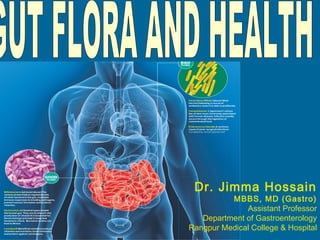
Dr. Jimma Hossain
MBBS, MD (Gastro)
Assistant Professor
Department of Gastroenterology
Rangpur Medical College & Hospital
Gut flora
 Gut flora consists of a complex of
microorganism species.
 Human intestine carries about 100 trillion
microorganisms.
 Ten times greater than total cell in body.

Gut flora
 About 500 different species live in gut.
 Bacteria makeup the majority.
 Over 99% of bacteria are anaerobes.
 Fungi, protozoa and archaea also part of gut
flora,but little is known about their activities.
Gut flora
 Most bacteria belong to genera
Bacteroids,Clostridium,Fusobacterium,Eubacterium,Ruminococcu
s,Peptococcus,Peptostreptococcus and Bifidobacterium.
 Bacteroids alone constitute 30%.
 Fungi include Candida, Saccharomyces,
Aspergillus and Penicillium.
 Archea another large class of flora important
for metabolism of bacterial products of
fermentation.
Gut flora and diet
 Association between concentration of
microbial community and dietary components.
 Prevotella with carbohydrate based diet.
 Bacteroids with animal protein diet.
 Gut flora can be changed by following a long
term diet.
Acquisition of gut flora
 At birth digestive tract is sterile.
 Colonised by microbes within first few days.
 All infants initially colonized by E.coli and
Streptococci and subsequently anaerobes
predominate.
 Breast fed babies predominated by
Bifidobacteria.
 With introducton of other foods,a diverse
microbial population develops.
Gut flora and health
 Research suggests relationship between gut
flora and humans not merely commensal ,but
rather mutualistic.
 Though people can survive without gut
flora,microorganisms perform a host of useful
functions.
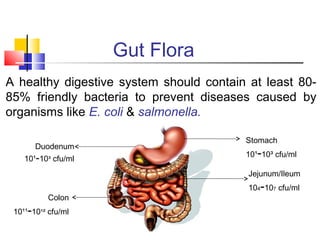
Gut Flora
A healthy digestive system should contain at least 80-
85% friendly bacteria to prevent diseases caused by
organisms like E. coli & salmonella.
Stomach
10¹-10³ cfu/ml
Jejunum/Ileum
104-107 cfu/ml
Colon
10¹¹-10¹² cfu/ml
Duodenum
10¹-10³ cfu/ml
Useful Functions
 Recycle energy by fermenting unused energy
substrate.
 Early development & training of the immune
system.
 Prevention of the growth of harmful pathogenic
bacteria.
 Regulation of the development of gut.
 Production of vitamins such as biotin, folate and
vitamin K.
Useful Functions
 Antidiabetic,anticarcinogenic,hypocholesterol
emic role.
 However,in certain conditions,some species
capable of causing disease by producing
infection,increasing cancer risk for the host.
Fermentation
 Saccharolytic - more favorable.
 Proteolytic- less favorable.
Saccharolytic fermentation
 Carbohydrates fermented into short chain
fatty acids(SCFAs).
 Acetic acid,propionic acid and butyric acid.
 These are used by enterocytes and other
cells and helps mineral absorption.
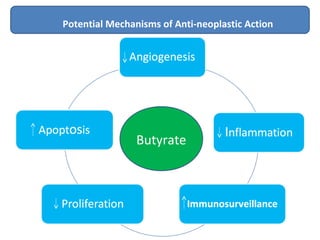
 Butyric acid provides energy to gut cells and
prevents cancer.
Butyrate
Potential Mechanisms of Anti-neoplastic Action
Proteolytic Fermentation
 Breaks down proteins like enzymes,dead host
and bacterial cells,collagen,elastin.
 Can produce toxins and carcinogens in
addition to SCFAs.
Trophic effects
 SCFAs increase growth of intestinal epithelial
cells and control proliferation and
differentiation.
 Growth of the lymphoid tissue near the gut.
 Prevents cells from injury.
 Prevents cancer.
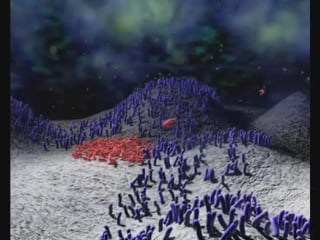
Suppression of pathogenic microbial growth
 Prevents harmful bacteria through competitive
exclusion.
 By competing for nutrition and attachment sites to
epithelium.
 Produce bacteriocins that kills harmful microbes.
 By producing acids during fermentation lowers
colonic PH and thus prevents proliferation of harmful
species and facilitating helpful species.
 By influencing mucosal barrier.
 By influencing immune function.
Immunity
 Gut flora have regulatory effects on mucosal
immune response.
 Key in promoting early development of gut’s
mucosal immune system.
 Stimulate lymphoid tissue associated with the
gut to produce antibodies to pathogens.
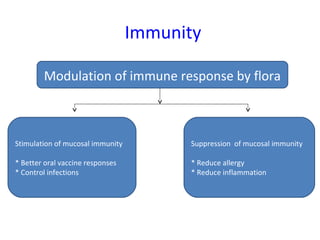
Immunity
Modulation of immune response by flora
Stimulation of mucosal immunity
* Better oral vaccine responses
* Control infections
Suppression of mucosal immunity
* Reduce allergy
* Reduce inflammation
Prevention of allergy
 Can influence tolerance of gut immune
system to antigens
 Helpful gut flora stimulate immune system
and train it to respond properly to antigens.
 Lack of these bacteria in early life leads to an
inadequately trained immune system that
over reacts to antigens.
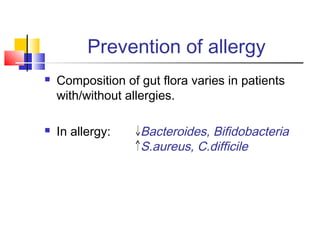
Prevention of allergy
 Composition of gut flora varies in patients
with/without allergies.
 In allergy: Bacteroides, Bifidobacteria
S.aureus, C.difficile
Prevention of inflammatory bowel disease
 SCFAs prevent IBD.
 Some form of bacteria can prevent
inflammation.
 Linked to good hygiene in youth.
 Inversely linked with poor sanitation during
first year of life.
 Antibiotics that kill native bacteria.
 High concentration probiotics decrease
inflammation.
Alteration in flora balance
 Inflammation
 Antibiotic use
 AAD

Irritating bowel directly

Changing levels of gut flora, alteration in flora balance.

Allowing pathogenic bacteria to grow

Decreased ability to ferment CHO and bile acids

Over growth of C.difficile
 Gut flora composition also changes in severe illness,
ischaemia, immune compromise.
Alteration in flora balance
 Pharmabiotics
 Generic term to encompass any form of
therapeutic exploitation of commensal flora
 Use of live probiotic bacteria,pre-
biotics,synbiotics(genetically modified
commensal).
 Pre-biotics : dietary components that foster
the growth of micro organisms in the gut
 Pregnancy.
 Wt loss.
Role in disease
 Have pathogenic properties in addition to
their health-inducing ones.
 They can produce toxins and carcinogens.
Role in disease
 Implicated in conditions as MOF,sepsis,colon
cancer and IBD.
 A major factor in health is the balance of
bacterial numbers ; if too high or low,will harm
the host.
Role in disease
 Some genera-Bacteroids and Clostridium
associated with in increase in tumor growth
rate.
 Lactobacillus and Bifidobacteria are known to
prevent tumor formation.
Role in disease
 Bacterial translocation in certain conditions
causes sepsis.
 Implicated in colitis, obesity.
Conclusion
 The gastrointestinal tract is now considered one of
the most complex microbial ecosystem on earth.
 Till to date, little is known about this ecosystem.
 Researches are going on to explore undiscovered
aspects of gut flora in health & disease.
Gut flora and health

Gut flora and health

  • 2.
    WORLD DIGESTIVE HEALTH DAY 29th May.  Bangladesh Gastroenterology Society creating awareness nation-wide.
  • 3.
  • 4.
    Dr. Jimma Hossain MBBS,MD (Gastro) Assistant Professor Department of Gastroenterology Rangpur Medical College & Hospital
  • 5.
    Gut flora  Gutflora consists of a complex of microorganism species.  Human intestine carries about 100 trillion microorganisms.  Ten times greater than total cell in body.
  • 6.
    Gut flora  About500 different species live in gut.  Bacteria makeup the majority.  Over 99% of bacteria are anaerobes.  Fungi, protozoa and archaea also part of gut flora,but little is known about their activities.
  • 7.
    Gut flora  Mostbacteria belong to genera Bacteroids,Clostridium,Fusobacterium,Eubacterium,Ruminococcu s,Peptococcus,Peptostreptococcus and Bifidobacterium.  Bacteroids alone constitute 30%.  Fungi include Candida, Saccharomyces, Aspergillus and Penicillium.  Archea another large class of flora important for metabolism of bacterial products of fermentation.
  • 8.
    Gut flora anddiet  Association between concentration of microbial community and dietary components.  Prevotella with carbohydrate based diet.  Bacteroids with animal protein diet.  Gut flora can be changed by following a long term diet.
  • 9.
    Acquisition of gutflora  At birth digestive tract is sterile.  Colonised by microbes within first few days.  All infants initially colonized by E.coli and Streptococci and subsequently anaerobes predominate.  Breast fed babies predominated by Bifidobacteria.  With introducton of other foods,a diverse microbial population develops.
  • 10.
    Gut flora andhealth  Research suggests relationship between gut flora and humans not merely commensal ,but rather mutualistic.  Though people can survive without gut flora,microorganisms perform a host of useful functions.
  • 11.
    Gut Flora A healthydigestive system should contain at least 80- 85% friendly bacteria to prevent diseases caused by organisms like E. coli & salmonella. Stomach 10¹-10³ cfu/ml Jejunum/Ileum 104-107 cfu/ml Colon 10¹¹-10¹² cfu/ml Duodenum 10¹-10³ cfu/ml
  • 12.
    Useful Functions  Recycleenergy by fermenting unused energy substrate.  Early development & training of the immune system.  Prevention of the growth of harmful pathogenic bacteria.  Regulation of the development of gut.  Production of vitamins such as biotin, folate and vitamin K.
  • 13.
    Useful Functions  Antidiabetic,anticarcinogenic,hypocholesterol emicrole.  However,in certain conditions,some species capable of causing disease by producing infection,increasing cancer risk for the host.
  • 14.
    Fermentation  Saccharolytic -more favorable.  Proteolytic- less favorable.
  • 15.
    Saccharolytic fermentation  Carbohydratesfermented into short chain fatty acids(SCFAs).  Acetic acid,propionic acid and butyric acid.  These are used by enterocytes and other cells and helps mineral absorption.  Butyric acid provides energy to gut cells and prevents cancer.
  • 16.
    Butyrate Potential Mechanisms ofAnti-neoplastic Action
  • 17.
    Proteolytic Fermentation  Breaksdown proteins like enzymes,dead host and bacterial cells,collagen,elastin.  Can produce toxins and carcinogens in addition to SCFAs.
  • 18.
    Trophic effects  SCFAsincrease growth of intestinal epithelial cells and control proliferation and differentiation.  Growth of the lymphoid tissue near the gut.  Prevents cells from injury.  Prevents cancer.
  • 19.
    Suppression of pathogenicmicrobial growth  Prevents harmful bacteria through competitive exclusion.  By competing for nutrition and attachment sites to epithelium.  Produce bacteriocins that kills harmful microbes.  By producing acids during fermentation lowers colonic PH and thus prevents proliferation of harmful species and facilitating helpful species.  By influencing mucosal barrier.  By influencing immune function.
  • 21.
    Immunity  Gut florahave regulatory effects on mucosal immune response.  Key in promoting early development of gut’s mucosal immune system.  Stimulate lymphoid tissue associated with the gut to produce antibodies to pathogens.
  • 22.
    Immunity Modulation of immuneresponse by flora Stimulation of mucosal immunity * Better oral vaccine responses * Control infections Suppression of mucosal immunity * Reduce allergy * Reduce inflammation
  • 23.
    Prevention of allergy Can influence tolerance of gut immune system to antigens  Helpful gut flora stimulate immune system and train it to respond properly to antigens.  Lack of these bacteria in early life leads to an inadequately trained immune system that over reacts to antigens.
  • 24.
    Prevention of allergy Composition of gut flora varies in patients with/without allergies.  In allergy: Bacteroides, Bifidobacteria S.aureus, C.difficile
  • 25.
    Prevention of inflammatorybowel disease  SCFAs prevent IBD.  Some form of bacteria can prevent inflammation.  Linked to good hygiene in youth.  Inversely linked with poor sanitation during first year of life.  Antibiotics that kill native bacteria.  High concentration probiotics decrease inflammation.
  • 26.
    Alteration in florabalance  Inflammation  Antibiotic use  AAD  Irritating bowel directly  Changing levels of gut flora, alteration in flora balance.  Allowing pathogenic bacteria to grow  Decreased ability to ferment CHO and bile acids  Over growth of C.difficile  Gut flora composition also changes in severe illness, ischaemia, immune compromise.
  • 27.
    Alteration in florabalance  Pharmabiotics  Generic term to encompass any form of therapeutic exploitation of commensal flora  Use of live probiotic bacteria,pre- biotics,synbiotics(genetically modified commensal).  Pre-biotics : dietary components that foster the growth of micro organisms in the gut  Pregnancy.  Wt loss.
  • 28.
    Role in disease Have pathogenic properties in addition to their health-inducing ones.  They can produce toxins and carcinogens.
  • 29.
    Role in disease Implicated in conditions as MOF,sepsis,colon cancer and IBD.  A major factor in health is the balance of bacterial numbers ; if too high or low,will harm the host.
  • 30.
    Role in disease Some genera-Bacteroids and Clostridium associated with in increase in tumor growth rate.  Lactobacillus and Bifidobacteria are known to prevent tumor formation.
  • 31.
    Role in disease Bacterial translocation in certain conditions causes sepsis.  Implicated in colitis, obesity.
  • 32.
    Conclusion  The gastrointestinaltract is now considered one of the most complex microbial ecosystem on earth.  Till to date, little is known about this ecosystem.  Researches are going on to explore undiscovered aspects of gut flora in health & disease.