PREBIOTICS (NON – DIGESTABLE
CARBOHYDRATE & RESISTANT
STARCH)
PRESENTED BY
Sowmiya Gunasekaran
PREBIOTICS
Prebiotics are
substance that
induce the growth
of microorganisms
that contribute to
the well-being of
their host.
NON – Digestible Carbohydrate
Non – digestible
carbohydrate can be
defined as those which are
not digested in the
stomach or small intestine
and are carried on into the
large intestine where they
might be utilized by gut
micro biota as substrates
resulting in a number of
metabolites.
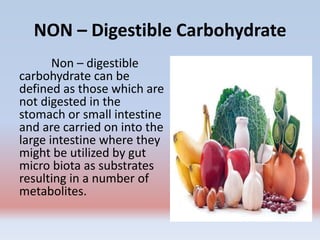
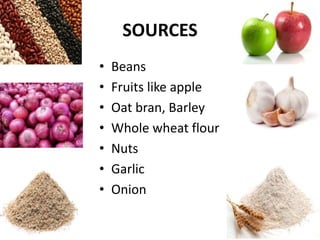
SOURCES
• Beans
• Fruits like apple
• Oat bran, Barley
• Whole wheat flour
• Nuts
• Garlic
• Onion
Physiological effects of Non -
Digestible Carbohydrate
• They are considered as the dietary fiber
because they performed many physiological
functions.
1) FOS and GOS
when consumed
Food for beneficial bacteria like
Bifidobacteria & Lactobacillus
2) FOS, GOS and Inulin
Increase the number of beneficial bacteria &
Decrease the number of harmful bacteria.
3) FOS, GOS or Inulin Supplementation
Increase the absorption of calcium &
magnesium
4) FOS, GOS or Inulin Supplementation
Increase the elimination of
toxic substances.
Effects on human health and potential
applications
1)Reduction in blood cholesterol level:
Lowers the serum triacyl glycerol &
phospholipids level.
2)Reduce Risk of Colorectal Cancer:
Non – digestible fermentation may reduce the
risk of colorectal cancer.
3)Cancer Prevention:
Bifidobacteria digest inulin in the gut flora and
produce short chain fatty acids, namely
Acetic acid
Propionic acid
Butyric acid
It is believed that these acids can help to
prevent certain forms of cancer.
4) Prevent Allergy:
The bacterial intestinal colonization is possibly
important for the development of the immune
system response of neonates and young infants.
EFFECTIVE DOSE
A Normal diet provides 5 and 10 grams of
non-digestible carbohydrate / day.
RESISTANT STARCH
Resistant starch (RS) is starch , including its
degradation products, that escapes
from digestion in the small intestine of healthy
individuals. Some types of resistant starch (RS1,
RS2 and RS3) are fermented by the large
intestinal microbiota, conferring benefits to
human health through the production of short-
chain fatty acids, increased bacterial mass, and
promotion of butyrate-producing bacteria.
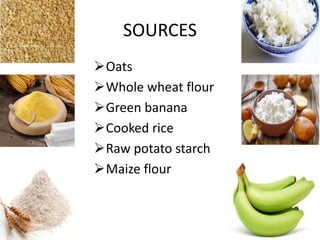
SOURCES
Oats
Whole wheat flour
Green banana
Cooked rice
Raw potato starch
Maize flour
Physiological effects of Resistant starch
• It is a most abundant dietary source of non-
digestible carbohydrate & smaller impact on
lipid and glucose metabolism.
• The physiological properties of RS can vary
depending on the source, type and dose of
resistant starch consumed.
• RS lowers the energy value of the food.
• RS can also be used to enhance the fibre
content of the foods.
• The potential RS to enhance the sound health
of the individual.
Effects on human health and potential
applications
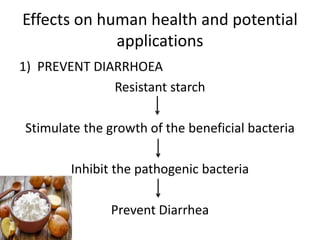
1) PREVENT DIARRHOEA
Resistant starch
Stimulate the growth of the beneficial bacteria
Inhibit the pathogenic bacteria
Prevent Diarrhea
2) PROTECT AGAINST CARCINOGENESIS
Increased the intake of RS
Colorectal adenocarcinomas are
reduced
• Protect against pathogens
• Boost immune system
• Enhance Apoptosis
• Provide satiety.
Prebiotics

Prebiotics

  • 1.
    PREBIOTICS (NON –DIGESTABLE CARBOHYDRATE & RESISTANT STARCH) PRESENTED BY Sowmiya Gunasekaran
  • 2.
    PREBIOTICS Prebiotics are substance that inducethe growth of microorganisms that contribute to the well-being of their host.
  • 3.
    NON – DigestibleCarbohydrate Non – digestible carbohydrate can be defined as those which are not digested in the stomach or small intestine and are carried on into the large intestine where they might be utilized by gut micro biota as substrates resulting in a number of metabolites.
  • 4.
    SOURCES • Beans • Fruitslike apple • Oat bran, Barley • Whole wheat flour • Nuts • Garlic • Onion
  • 5.
    Physiological effects ofNon - Digestible Carbohydrate • They are considered as the dietary fiber because they performed many physiological functions. 1) FOS and GOS when consumed Food for beneficial bacteria like Bifidobacteria & Lactobacillus
  • 6.
    2) FOS, GOSand Inulin Increase the number of beneficial bacteria & Decrease the number of harmful bacteria.
  • 7.
    3) FOS, GOSor Inulin Supplementation Increase the absorption of calcium & magnesium
  • 8.
    4) FOS, GOSor Inulin Supplementation Increase the elimination of toxic substances.
  • 9.
    Effects on humanhealth and potential applications 1)Reduction in blood cholesterol level: Lowers the serum triacyl glycerol & phospholipids level. 2)Reduce Risk of Colorectal Cancer: Non – digestible fermentation may reduce the risk of colorectal cancer. 3)Cancer Prevention: Bifidobacteria digest inulin in the gut flora and produce short chain fatty acids, namely
  • 10.
    Acetic acid Propionic acid Butyricacid It is believed that these acids can help to prevent certain forms of cancer. 4) Prevent Allergy: The bacterial intestinal colonization is possibly important for the development of the immune system response of neonates and young infants.
  • 11.
    EFFECTIVE DOSE A Normaldiet provides 5 and 10 grams of non-digestible carbohydrate / day.
  • 12.
    RESISTANT STARCH Resistant starch(RS) is starch , including its degradation products, that escapes from digestion in the small intestine of healthy individuals. Some types of resistant starch (RS1, RS2 and RS3) are fermented by the large intestinal microbiota, conferring benefits to human health through the production of short- chain fatty acids, increased bacterial mass, and promotion of butyrate-producing bacteria.
  • 13.
    SOURCES Oats Whole wheat flour Greenbanana Cooked rice Raw potato starch Maize flour
  • 14.
    Physiological effects ofResistant starch • It is a most abundant dietary source of non- digestible carbohydrate & smaller impact on lipid and glucose metabolism. • The physiological properties of RS can vary depending on the source, type and dose of resistant starch consumed. • RS lowers the energy value of the food.
  • 15.
    • RS canalso be used to enhance the fibre content of the foods. • The potential RS to enhance the sound health of the individual.
  • 16.
    Effects on humanhealth and potential applications 1) PREVENT DIARRHOEA Resistant starch Stimulate the growth of the beneficial bacteria Inhibit the pathogenic bacteria Prevent Diarrhea
  • 17.
    2) PROTECT AGAINSTCARCINOGENESIS Increased the intake of RS Colorectal adenocarcinomas are reduced
  • 18.
    • Protect againstpathogens • Boost immune system • Enhance Apoptosis • Provide satiety.