PRESENTED BY:
GROUP # 06
 Saad Maqbool (17953)
 Sidrah zulfiqar (17954)
 Wali Zahid (17956)
 Sajid ali (17957)
 Hamza (17958)
 Salahuddin khan (17958)
 Danish Hussain ( 17962)
 Aqsa Nazir (17960)
 Ayesha Riza (17964)
What are probiotics??
 According to “WHO” probiotics can be defined as…
“ probiotics are living microbes which when administered in
adequate amount confers a beneficial health effects on the host”.
 lactobacillus streptococcus and Bifidobacterium species are
the most common studied probiotic.e,g L.acidophilus and
B.bifidum etc..
 The other bacteria which can act as probiotics are
 Bacillus Cereus
 Streptococcus thermophilus
 Saccharomyces cerevisiae
 Nonpathogenic E.coli
 leuconostoc
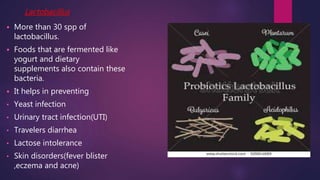
Lactobacillus
 More than 30 spp of
lactobacillus.
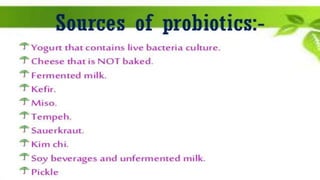
 Foods that are fermented like
yogurt and dietary
supplements also contain these
bacteria.
 It helps in preventing
• Yeast infection
• Urinary tract infection(UTI)
• Travelers diarrhea
• Lactose intolerance
• Skin disorders(fever blister
,eczema and acne)
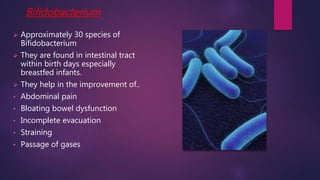
Bifidobacterium
 Approximately 30 species of
Bifidobacterium
 They are found in intestinal tract
within birth days especially
breastfed infants.
 They help in the improvement of..
• Abdominal pain
• Bloating bowel dysfunction
• Incomplete evacuation
• Straining
• Passage of gases
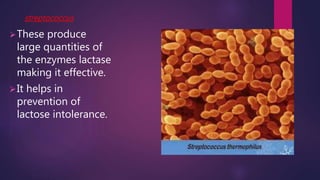
streptococcus
These produce
large quantities of
the enzymes lactase
making it effective.
It helps in
prevention of
lactose intolerance.
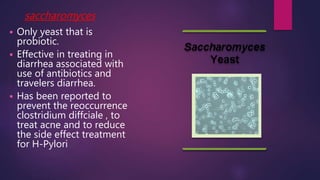
saccharomyces
 Only yeast that is
probiotic.
 Effective in treating in
diarrhea associated with
use of antibiotics and
travelers diarrhea.
 Has been reported to
prevent the reoccurrence
clostridium diffciale , to
treat acne and to reduce
the side effect treatment
for H-Pylori
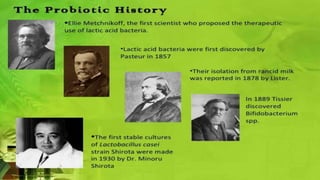
History of probiotics
 fermented foods rich in probiotics were popular since
prehistoric era e.g. yogurt ,pickled vegetables
 Metchnikoff- 1907 – yogurt with lactobacilli , prolong life.
 Parker-1974- first to use the term probiotics.
 Fuller-1989- defined probiotics first time.
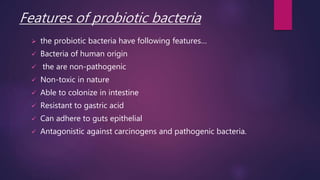
Features of probiotic bacteria
 the probiotic bacteria have following features…
 Bacteria of human origin
 the are non-pathogenic
 Non-toxic in nature
 Able to colonize in intestine
 Resistant to gastric acid
 Can adhere to guts epithelial
 Antagonistic against carcinogens and pathogenic bacteria.
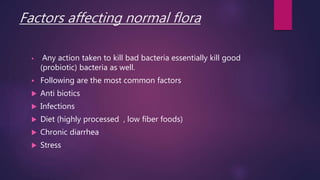
Factors affecting normal flora
 Any action taken to kill bad bacteria essentially kill good
(probiotic) bacteria as well.
 Following are the most common factors
 Anti biotics
 Infections
 Diet (highly processed , low fiber foods)
 Chronic diarrhea
 Stress
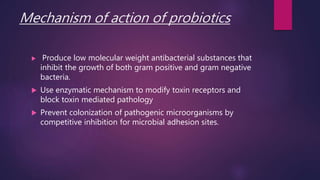
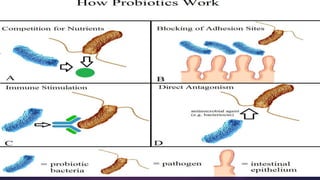
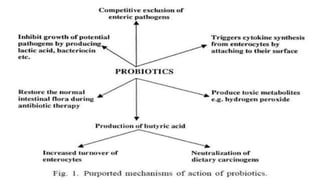
Mechanism of action of probiotics
 Produce low molecular weight antibacterial substances that
inhibit the growth of both gram positive and gram negative
bacteria.
 Use enzymatic mechanism to modify toxin receptors and
block toxin mediated pathology
 Prevent colonization of pathogenic microorganisms by
competitive inhibition for microbial adhesion sites.
Advantages of probiotics
 produce lactic acid – that lower the PH of intestine and inhibit
bacterial villains such as..
 Clostridium
 Salmonella
 E.coli ,etc.
 Decrease the production of variety of toxic or carcinogenic
metabolites.
 Add absorption of minerals , especially calcium due to
increased intestinal acidity
 Production of B - Galactosidases enzyme that break down lactose.
 Produce a wide range of antimicrobial substances i.e.
 hydrogen peroxide
 Organic acid
 Bacteriocin
 Acidophilin
 Produce vitamins especially vitamin K and vitamin B
 Act as a barrier to prevent harmful bacteria from colonizing in the
intestine.
Effects of probiotics on pathogenic
bacteria
 Probiotics reduce level of bacterial endotoxins concentration
by inhibiting translocation of bacteria across gastero
intestinal lumen into bloodstream.
 Probiotics disallow the colonization by disease provoking
bacteria through competition for nutrients, immune system
up-regulation , production of antitoxins and up-regulation of
intestinal mucin genes.
 Probiotic lower colon luminal PH and foster growth of non-
pathogenic commensal bacteria by “SCFA”(short chain fatty
acids) production.
 One SCFA i.e. Acetic acid has antimicrobial activity against
mold , yeast and bacteria.
 Probiotics exert protective effect through production
of hydrogen peroxide and benzoic acid which inhibit
many pathogenic and acid-sensitive bacteria.
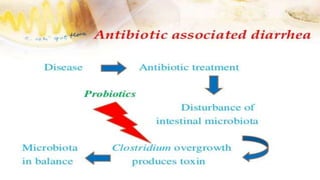
 Play also role in antibiotic associated diarrhea by
suppression of pathogenic bacteria.
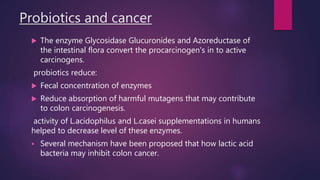
Probiotics and cancer
 The enzyme Glycosidase Glucuronides and Azoreductase of
the intestinal flora convert the procarcinogen's in to active
carcinogens.
probiotics reduce:
 Fecal concentration of enzymes
 Reduce absorption of harmful mutagens that may contribute
to colon carcinogenesis.
activity of L.acidophilus and L.casei supplementations in humans
helped to decrease level of these enzymes.
 Several mechanism have been proposed that how lactic acid
bacteria may inhibit colon cancer.
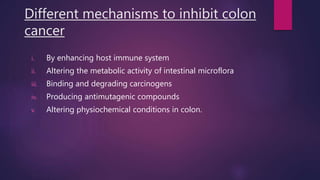
Different mechanisms to inhibit colon
cancer
i. By enhancing host immune system
ii. Altering the metabolic activity of intestinal microflora
iii. Binding and degrading carcinogens
iv. Producing antimutagenic compounds
v. Altering physiochemical conditions in colon.
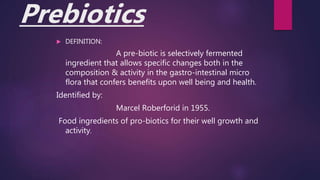
Prebiotics
 DEFINITION:
A pre-biotic is selectively fermented
ingredient that allows specific changes both in the
composition & activity in the gastro-intestinal micro
flora that confers benefits upon well being and health.
Identified by:
Marcel Roberforid in 1955.
Food ingredients of pro-biotics for their well growth and
activity.
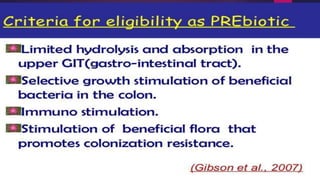
Demo: Limited.
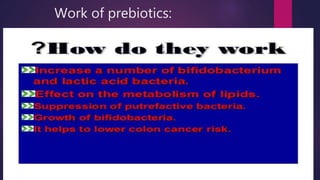
Work of prebiotics:
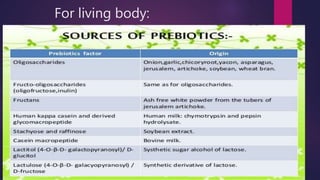
For living body:
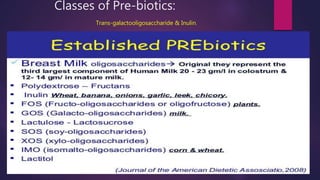
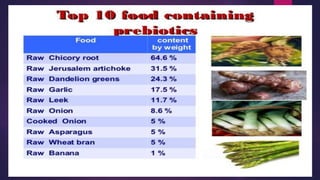
Classes of Pre-biotics:
Trans-galactooligosaccharide & Inulin.
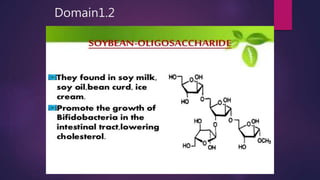
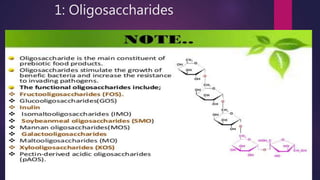
1: Oligosaccharides
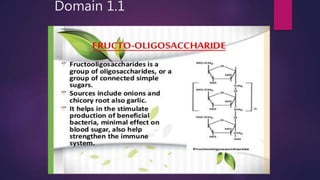
Domain 1.1
Domain1.2
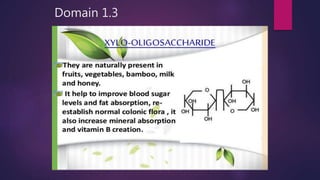
Domain 1.3
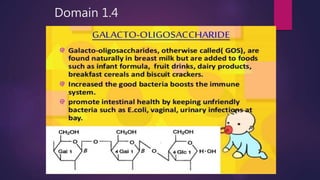
Domain 1.4
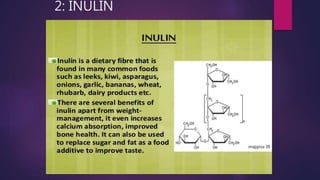
2: INULIN
Pro and prebiotics
Pro and prebiotics
Pro and prebiotics

Pro and prebiotics

  • 2.
    PRESENTED BY: GROUP #06  Saad Maqbool (17953)  Sidrah zulfiqar (17954)  Wali Zahid (17956)  Sajid ali (17957)  Hamza (17958)  Salahuddin khan (17958)  Danish Hussain ( 17962)  Aqsa Nazir (17960)  Ayesha Riza (17964)
  • 4.
    What are probiotics?? According to “WHO” probiotics can be defined as… “ probiotics are living microbes which when administered in adequate amount confers a beneficial health effects on the host”.  lactobacillus streptococcus and Bifidobacterium species are the most common studied probiotic.e,g L.acidophilus and B.bifidum etc..  The other bacteria which can act as probiotics are  Bacillus Cereus  Streptococcus thermophilus  Saccharomyces cerevisiae  Nonpathogenic E.coli  leuconostoc
  • 5.
    Lactobacillus  More than30 spp of lactobacillus.  Foods that are fermented like yogurt and dietary supplements also contain these bacteria.  It helps in preventing • Yeast infection • Urinary tract infection(UTI) • Travelers diarrhea • Lactose intolerance • Skin disorders(fever blister ,eczema and acne)
  • 6.
    Bifidobacterium  Approximately 30species of Bifidobacterium  They are found in intestinal tract within birth days especially breastfed infants.  They help in the improvement of.. • Abdominal pain • Bloating bowel dysfunction • Incomplete evacuation • Straining • Passage of gases
  • 7.
    streptococcus These produce large quantitiesof the enzymes lactase making it effective. It helps in prevention of lactose intolerance.
  • 8.
    saccharomyces  Only yeastthat is probiotic.  Effective in treating in diarrhea associated with use of antibiotics and travelers diarrhea.  Has been reported to prevent the reoccurrence clostridium diffciale , to treat acne and to reduce the side effect treatment for H-Pylori
  • 9.
    History of probiotics fermented foods rich in probiotics were popular since prehistoric era e.g. yogurt ,pickled vegetables  Metchnikoff- 1907 – yogurt with lactobacilli , prolong life.  Parker-1974- first to use the term probiotics.  Fuller-1989- defined probiotics first time.
  • 12.
    Features of probioticbacteria  the probiotic bacteria have following features…  Bacteria of human origin  the are non-pathogenic  Non-toxic in nature  Able to colonize in intestine  Resistant to gastric acid  Can adhere to guts epithelial  Antagonistic against carcinogens and pathogenic bacteria.
  • 13.
    Factors affecting normalflora  Any action taken to kill bad bacteria essentially kill good (probiotic) bacteria as well.  Following are the most common factors  Anti biotics  Infections  Diet (highly processed , low fiber foods)  Chronic diarrhea  Stress
  • 15.
    Mechanism of actionof probiotics  Produce low molecular weight antibacterial substances that inhibit the growth of both gram positive and gram negative bacteria.  Use enzymatic mechanism to modify toxin receptors and block toxin mediated pathology  Prevent colonization of pathogenic microorganisms by competitive inhibition for microbial adhesion sites.
  • 18.
    Advantages of probiotics produce lactic acid – that lower the PH of intestine and inhibit bacterial villains such as..  Clostridium  Salmonella  E.coli ,etc.  Decrease the production of variety of toxic or carcinogenic metabolites.  Add absorption of minerals , especially calcium due to increased intestinal acidity
  • 19.
     Production ofB - Galactosidases enzyme that break down lactose.  Produce a wide range of antimicrobial substances i.e.  hydrogen peroxide  Organic acid  Bacteriocin  Acidophilin  Produce vitamins especially vitamin K and vitamin B  Act as a barrier to prevent harmful bacteria from colonizing in the intestine.
  • 20.
    Effects of probioticson pathogenic bacteria  Probiotics reduce level of bacterial endotoxins concentration by inhibiting translocation of bacteria across gastero intestinal lumen into bloodstream.  Probiotics disallow the colonization by disease provoking bacteria through competition for nutrients, immune system up-regulation , production of antitoxins and up-regulation of intestinal mucin genes.  Probiotic lower colon luminal PH and foster growth of non- pathogenic commensal bacteria by “SCFA”(short chain fatty acids) production.  One SCFA i.e. Acetic acid has antimicrobial activity against mold , yeast and bacteria.
  • 21.
     Probiotics exertprotective effect through production of hydrogen peroxide and benzoic acid which inhibit many pathogenic and acid-sensitive bacteria.  Play also role in antibiotic associated diarrhea by suppression of pathogenic bacteria.
  • 23.
    Probiotics and cancer The enzyme Glycosidase Glucuronides and Azoreductase of the intestinal flora convert the procarcinogen's in to active carcinogens. probiotics reduce:  Fecal concentration of enzymes  Reduce absorption of harmful mutagens that may contribute to colon carcinogenesis. activity of L.acidophilus and L.casei supplementations in humans helped to decrease level of these enzymes.  Several mechanism have been proposed that how lactic acid bacteria may inhibit colon cancer.
  • 24.
    Different mechanisms toinhibit colon cancer i. By enhancing host immune system ii. Altering the metabolic activity of intestinal microflora iii. Binding and degrading carcinogens iv. Producing antimutagenic compounds v. Altering physiochemical conditions in colon.
  • 26.
    Prebiotics  DEFINITION: A pre-bioticis selectively fermented ingredient that allows specific changes both in the composition & activity in the gastro-intestinal micro flora that confers benefits upon well being and health. Identified by: Marcel Roberforid in 1955. Food ingredients of pro-biotics for their well growth and activity.
  • 27.
  • 28.
  • 29.
  • 30.
  • 32.
  • 33.
  • 34.
  • 35.
  • 36.
  • 37.