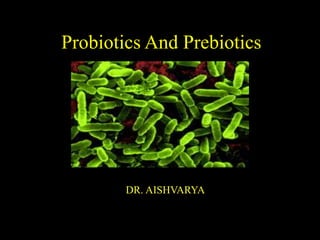
Probiotics And Prebiotics
DR. AISHVARYA
CONTENTS :-
 INTRODUCTION
 HISTORY
 PROBIOTICS
 MECHANISMS OF PROBIOTIC ACTION
 SYSTEMIC HEALTH BENEFITS OF PROBIOTICS
 POSSIBLE EFFECTS OF PROBIOTIC ON ORAL
HEALTH
 PROBIOTICS ORAL BIOFILM AND MICROFLORA
 INSTALLATION OF PROBIOTICS IN ORAL CAVITY
 PREBIOTIC
 RELATION BETWEEN PREBIOTICS AND
PROBIOTICS
 CONCLUSION
 REFERENCES
INTRODUCTION
 Increase in antibiotic resistant infections due to overuse of
antibiotics by physicians and in the livestock industry to improve
meat and dairy production, has prompted public and physicians to
seek safer ways to treat infections.
 As public health measures (vaccines, sanitary health care etc ) have
lessened the worldwide threat of death from infectious diseases
during the last few decades, we are confronted by an increase in
immune mediated disease states ( allergy and autoimmune disease)
thought to result from an inadequate exposure to colonizing
microorganisms in children because of a more sterile environment
(the "hygiene hypothesis")
 For these reasons ,an interest in the use of probiotics and prebiotics
to stimulate host defenses and to prevent / treat certain
gastrointestinal disease status has developed among physicians
and parents caring for child.
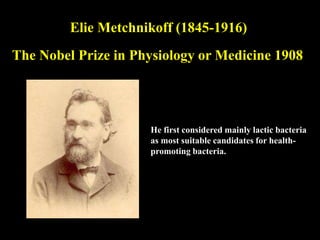
Elie Metchnikoff (1845-1916)
The Nobel Prize in Physiology or Medicine 1908
He first considered mainly lactic bacteria
as most suitable candidates for health-
promoting bacteria.
Probiotics
19th Century
Pasteur (1877)
– Observed antagonistic interaction between
bacterial strains
– Suggested that non-pathogenic bacteria
should be used to control pathogenic bacteria
Probiotics
Early 20th Century
Metchnikoff (1907)
– Observed that lactic fermentation of milk
arrested putrefaction
– Suggested that consumption of fermented
products would offer the same benefit to
humans
– Felt that longevity in Bulgarian peasants was
due to ingestion of “soured milks”
Probiotics
Mid to late 20th Century
• 1950’s, Ferdinand Vergin publishes article
discussing effects of antibiotics on
beneficial intestinal bacteria
• 1980’s Fuller establishes first definition of
probiotics
Probiotics concept
“Probiotics are living microorganisms which upon ingestion in
sufficient numbers, exert health benefits beyond basic nutrition.”
Intensive research area in the world……..
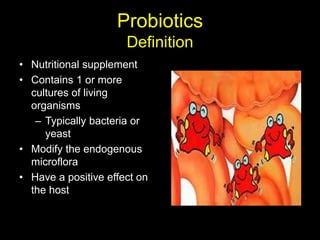
Probiotics
Definition
• Nutritional supplement
• Contains 1 or more
cultures of living
organisms
– Typically bacteria or
yeast
• Modify the endogenous
microflora
• Have a positive effect on
the host
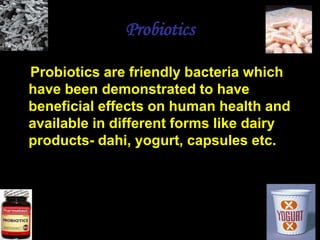
Probiotics
Probiotics are friendly bacteria which
have been demonstrated to have
beneficial effects on human health and
available in different forms like dairy
products- dahi, yogurt, capsules etc.
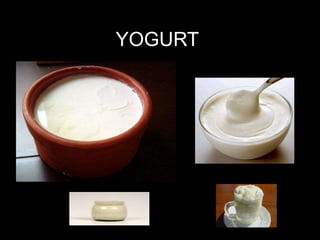
YOGURT
How can we restore the microflora balance?
• Probiotics = live beneficial bacteria
• Prebiotics = food for beneficial bacteria
• Synbiotics = combination
» Improves survivability of and
colonization by probiotics
» More effective than probiotics alone
Antibiotics or probiotics for treatment
• antibiotics: kill pathogenic bacteria after invasion
( reactive treatment); unintentionally kill “good” bacteria
too
• probiotics: reduce the chance of infection by outnumbering
“good” bacteria over pathogens (proactive prevention)
Rationale for probiotics instead of antibiotics
• broad-spectrum antibiotics damage the flora and
predispose patient to additional infections
• antibiotics increase the emergence of resistant strains
• colonization resistance: Probiotics may prevent
• colonization, overgrowth, and translocation of potential
pathogens
• probiotics may reduce the incidence of future infections
MECHANISMS OF PROBIOTIC
ACTION
• Several mechanisms have been suggested to contribute
to the probiotic action.
• Probiotics improve colonization resistance to gut
pathogens by reinforcing the mucosal barrier and
restoring normal gut micro ecology after diarrhea.
• If the intestinal micro flora is deficient, antigen transport
is increased. Probiotics have been shown to normalize
an increased permeability.
• Probiotics compete with pathogens for binding sites and
available substrates.
Mechanisms of Action
Colonization resistance or competitive
exclusion by:
• production of antimicrobial substances
• balancing pH by producing short chain fatty acids and
lactic acids
• increasing macrophage activity
• competetive inhibition for bacterial adhesion sites
• competition for nutrients
• immune modulation
• reducing procarcinogenic conversion to carcinogenic by
affecting enzyme activity
• reduction of constipation
• reduction of cholesterol level
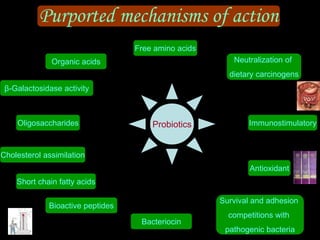
Purported mechanisms of action
Bacteriocin
Bioactive peptides
Short chain fatty acids
Neutralization of
dietary carcinogens
Free amino acids
Organic acids
β-Galactosidase activity
Oligosaccharides
Cholesterol assimilation
Survival and adhesion
competitions with
pathogenic bacteria
Antioxidant
ImmunostimulatoryProbiotics
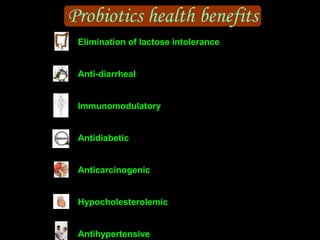
Probiotics health benefits
Elimination of lactose intolerance
Anti-diarrheal
Immunomodulatory
Antidiabetic
Anticarcinogenic
Hypocholesterolemic
Antihypertensive
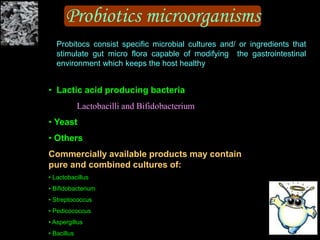
Probiotics microorganisms
• Lactic acid producing bacteria
Lactobacilli and Bifidobacterium
• Yeast
• Others
Commercially available products may contain
pure and combined cultures of:
• Lactobacillus
• Bifidobacterium
• Streptococcus
• Pedicococcus
• Aspergillus
• Bacillus
Probitocs consist specific microbial cultures and/ or ingredients that
stimulate gut micro flora capable of modifying the gastrointestinal
environment which keeps the host healthy
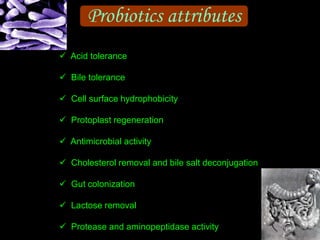
Probiotics attributes
 Acid tolerance
 Bile tolerance
 Cell surface hydrophobicity
 Protoplast regeneration
 Antimicrobial activity
 Cholesterol removal and bile salt deconjugation
 Gut colonization
 Lactose removal
 Protease and aminopeptidase activity
While defined in term as medical probiotics (microbial preparation) and other
probiotics (functional food) are provided in products in one of four basic ways:
I) As a culture concentrate and added to a beverage or food (such as fruit juice),
II) Inoculated into prebiotic fibers,
III) Inoculated into a milk-based food (dairy products such as milk drink, yoghurt,
yoghurt drink, cheese, bio drink) and
IV) As concentrated and dried cells packaged as dietary supplements.
In dairy fermentations, probiotics assist in
1) The prevention of the milk by the generation of lactic acid and possibly
antimicrobial compounds,
2) The production of flavour compounds and other metabolites that will provide a
product with the orgnoleptic properties desired by the consumer,
3) To improve the nutritional value of food, and
4) The provision of special therapeutic or prophylactic properties as cancer and
control of serum cholesterol levels.
Safety of probiotics
• Centuries of use of fermented products
• No reports of probiotic pathogens
• Safe use of active cultures in the dairy industry
• Numerous studies in thousands of subjects have
demonstrated that probiotic intake is safe
GASTRIC AND INTESTINAL TRACT EFFECT OF
PROBIOTICS
• Lactic acid bacteria can decrease the incidence,duration and severity of
some gastric and intestinal illness.
• A number of specific strains, Lactobacillus GG, Lactobacillus
reuteri,Sacc, boulardii, Bifidobacteria sp and others, have been shown
to have significant benefit for diarrhea.
• Probiotic species that show the most promise in treating diarrhoea diseases
in children include Lactobacillus sp., L. reuteri , Lactobacillus casei, Sacco
boulardii, Bifidobacterium bifidum.
• Lactic acid bacteria release various enzymes into the intestinal lumen that
exert synergistic effects on digestion, alleviating symptoms of intestinal
malabsorption.
• Probiotics appear to benefit viral diarrhea, possibly by increasing secretory
IgA and decreasing viral shedding, an immunological mechanism. Probiotics
might also inhibit the growth of pathogenic bacteria by producing
bacteriocins such as nisin .
INFLAMMATION
• Probiotic supplement has direct and indirect
effects:-
• Direct effects locally in the GI tract, including
modulation of resident bacterial colonies and
vitamin production.
• Indirect effects exerted at sites outside the G I
tract, including the joints, lungs and skin, most
likely result from an impact on immunity, via
changes in inflammatory mediaters such as
cytokines.
ALLERGIES
• May exert beneficial effect by improving mucosal barrier function
and microbial stimulation immune system, important in
downregulating inflammation associated with hyper sensitivity
reactions in patients with atopic eczema and food allergy, may
enhance endogenous barrier mechanisms of the gut and alleviate
intestinal inflammation, providing a useful tool for treating food
allergy.
• Helps in alleviating some of the symptoms of food allergies
such as those associated with milk protein, possibly degrading
these proteins to smaller peptides and amino acids, added to the
diet of infants on a hydrolysed whey formula decreased the
symptoms of atopic dermatitis. Also have been found to upregulate
antiinflammatory cytokines, such as interlukin -10, in atopic children
.
HIV AND IMMUNE FUNCTION
• The majority of evidence from animal study
suggests that probotics can enhance both
specific and nonspecific immune responses,
effects believed to be mediated through
activating macrophages, increasing levels of
cytokines, increasing natural killer cell activity
and / or increasing levels of immunoglobulins.
• Expanding the use of probiotics in immune
compromised patients appears promising.
PROTECTIVE EFFECTS IN
INFANTS
• An abnormal colonizing pattern in infants,
especially in premature infants, may contribute
to an increased susceptibility to intestinal
pathogens and the pathogenesis of intestinal
disorders such as intestinal food allergy,
inflammatory bowel disease.
• Probiotics can be used to establish a balanced
flora and to potentially prevent expression of
diseases and can lead to the improvements in
nutrition, and a reduction in the incidence of
sepsis and the use of antibiotics.
LACTOSE INTOLERANCE
• Fermented milk products or yogurt can
efficiently improve lactose digestion.
Probiotics bacteria normally contribute to
lactose digestion in the small intestine.
• Several studies have shown better lactose
digestion and less hydrogen production in
patients with lactose intolerance who
consumed non heated yogurt.
HYPERCHOLESTEROLEMIA
• Hypercholestemia is a leading cause of atherosclerosis and
cardivovascular disease.
• Diet has been identified as a means of controlling
serum cholesterol levels. Milk and particularly fermented
milk products have been shown to reduce cholesterol.
• The fermentation of food derived nondigestible
oligosaccharides by colonic bacteria causes an increased
cholesterol concentrations. Probiotics also developed the
capacity to hydrolyse conjugated bile acids are essential in
the emulsification,digestion,and absorption of lipids
HYPERTENSION
• Elderly hypertensive patients who consumed
fermented milk with a starter containing
lactobacillus helveticus and Sacc cerevisiae
experienced reduction in systolic and diastolic
blood pressure.
• Regular consumption of probiotics may provide a
modest prophylactic effect against heart disease.
CANCER
• Is caused by mutation or activation of abnormal genes that control cell
growth and division. It has been hypothesized that probiotic cultures might
decrease the exposure to chemical carcinogens by:
• Detoxifying ingested carcinogens,
• Altering the environment of the intestine and thereby decreasing
populations or metabolic activities of bacteria that may generate
carcinogenic compounds.
• Producing metabolic products which improve a cell's ability to die when it
should die,
• Producing compounds that inhibit the growth of tumour cells or
• Stimulating the immune system to better against cancer cell proliferation.
• Could be the preventive effect of probiotics on carcinogenesis by
suppressing the growth of bacteria that convert procarcinogens into
carcinogens, thereby reducing the amount of carcinogens in the intestine.
POSSIBLE EFFECTS OF PROBIOTIC ON ORAL
HEALTH
• Since the mouth represents the first part of the
gastrointestinal tract, there is every reason to believe that
at least some probiotic mechanisms may also play a role in
that part of the system.
• Mechanisms of probiotics are drawn entirely from GIT
studies, their applicability to oral health needs further
studies. It may also anticipate that resident probiotics could
exist in the oral microflora. They may function in the
complex ecosystem of dental plaque and in formation and
development of oral biofilm in general.
• Some hypothetical mechanisms of probiotics in the oral
cavity are mentioned as follows: Probiotics may act by
direct interaction or indirect interaction on oral biofilm and
microflora and vice versa.
PROBIOTICS ORAL BIOFILM
AND MICROFLORA
Direct interactions may include
• Involvement in binding of oral microorganisms to
proteins (biofilm formation).
• Action on plaque formation and on its complex
ecosystem by compromising and intervening
with bacteria to bacteria attachments.
• Involvement in metabolism of substrate
(competing with oral microorganisms of
substrates available)
• Production of chemicals that inhibit oral bacteria
(antimicrobial substances)
• Indirect interactions may include: modulating
systemic immune function effect on local
immunity, effect on non- immunologic defence
mechanisms, regulation of mucosal permeability,
selection pressure on developing oral microflora
towards colonization by less pathogenic species.
• Effect of probiotics on the induction and
maintenance of oral tolerance has been recently
studied through lactobacillus paracasei (NCC
2461), lactobacillus johnsonii (NCC 533) and
Bifidobacterium lactis Bb12 (NCC 362) on to
bovine beta-Iacto globulin (BlG) that was
investigated in mice.This study had provided
evidence that probiotics modulate the oral
tolerance to BlG in gnotobiotic mice.
Reduction of oral malodour:
• J P Burton et al belived that Salivarius strains ( bacteriocin
producing by K2 strain) have great potential for the control
of halitosis and for the prevention of oral bacterial infections.
The bacteriocins produced by strains K 12 may have
prevented re growth of key microbial particulats in the
halitosis associated ecosystem. Recent data indicates that
the bacteriocins produced by strain K 12 are autoinducible
and that they can cross stimulate bacteriocin production by
other can genous S.salivarius and related species.
COMPOSITION OF PROBIOTIC
PREPARATIONS
• The most commonly used species of lactic acid bacteria
in probiotics preparations.:-
• lactobacillus sp. - L. acidophilus, L case, L. delbueckii
sp, L. cellobiosus, L. curvatus, L. fermentum, L. lactus, L.
rectus, L. brevis, L. plantarum.
• Bifidobacterium sp. - B. bifidum, B. adelescentis, B.
animalis, B. infantis, B. thermophilum, B. longum.
• Enterococcus-Ent. faecalis, Ent. faecium,
• Streptoccus sp. - S. cremoris, Salivaris. diecetylactis,
intermedius
Current trends
 Anticarcinogenic: Colon, breast and others
 Antidiabetic
 Anti-allergic
 Anti-inflammatory Diseases: IBD, Ulcerative colitis, Crohn
disease, Pouchitis and Post-
operative complications
 Genetically modified probiotics
 Oral vaccine development
Prebiotics
“Prebiotics are non-digestible but fermentable oligosaccharides that
are specifically designed to change the composition and activity of the
intestinal microbiota with prospect to promote the health of the host.”
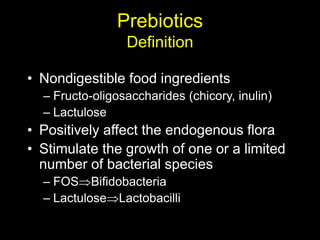
Prebiotics
Definition
• Nondigestible food ingredients
– Fructo-oligosaccharides (chicory, inulin)
– Lactulose
• Positively affect the endogenous flora
• Stimulate the growth of one or a limited
number of bacterial species
– FOSBifidobacteria
– LactuloseLactobacilli
Birth of Prebiotics ?
Also early in the sixties
Dr. Burkitt and also Dr. Trowell
made clinical observations of great importance
and pointed out
the importance of some undigestible
matter of vegetable origin in the human diet
and the role of large intestine as an active organ of
the human body
Health benefits of prebiotics
• promotion of growth of probiotics
• prevention of and/or treatment of
diarrhea/constipation
• production of short chain fatty acids
• increase of calcium absorption
• low glycemic index
RELATION BETWEEN PREBIOTICS AND
PROBIOTICS
• When prebiotics are added in combination with a
probiotic strain,can selectively stimulate the growth of
probiotics which is dose and strain dependent.
• Prebiotics can serve as a selective growth substrate for
the probiotic strain during fermentation, during the period
of storage,or during its passage through the gut.
• Combination beneficially affect the host by improving the
survival and implantation of live microbial dietary
supplements into the gastrointestinal flora and by
improving the microbial balance of the gastrointestinal
tract, effectiveness of combining probiotics and
prebiotics may be additive and synergistic.
• Oligosaccharides and glycoconjugates in breast milk
may protect infants as bacterial/viral receptor
homologous inhibiting the binding of enteropathogens to
their intestinal mucosal host receptors.
• Prebiotics in breast milk may stimulate growth of
bifidobacteria and other probiotics. The addition of
prebiotics to infant formula provides a more physical
approach to feeding infants and results in similar effect
on intestinal colonization as breast feeding. The flora
becomes predominantly bifidobactreria.
• Prebiotics can be used in Diarrhea, NEC, Constipation,
Hyperlipedimia, Calcium absorption. Colon cancer.
Osteoporosis is a major osteopathy that is increasing in
the aging population. Factors that stimulate mineral
absorption and bone mineralization might be helpful to
bone health. Prebiotics reported to effectively stimulate
mineral absorption.
Improvements for survival of probiotics
Microincapsulation : Entrapment of micro-organisms with artificial/ biological membranes/
supports/ coverings
Prebiotics : Addition of prebiotics such as inulin, fructo-oligosacchrides etc.
Other food supplements : Addition of other food additives such as fibres, vitamins etc.
Heat from pelleting and long storage of products may render the non
viability of the product. For improving the survival of probiotic cultures
following practices has been applied….
Future perspectives
 Elucidate the physiological role and mechanism of action probiotics
 Extent of influence of probiotics in human health using human feeding studies
 Studies on human populations for colon cancer or cancer recurrence
 Validate markers used for assessing probiotic function. Testing of predictions
based on biomarker studies with actual results in human clinical evaluation is
needed. Biomarker validated in the areas of immune system, cancer and gut
microbiology is especially important. Once validated biomarkers will be useful
tools to assess the dose dependence and strain specific responses.
 Assess effects of probiotics on populations and activity of gut microbes. The
application of gene based methods holds much promise in this field.
 Improve reliability and ease of taxonomic classification of probiotic bacteria.
Improve strain performance and activity.
Institutes Engaged for Probiotics Research in India
Central Food Technology and Research Institute, Mysore
National Dairy Research Institute, Karnal
Institute of Microbial Technology, Chandigarh
National Dairy Development Board, Anand
Nestle Pvt Ltd, Panipat
CONCLUSION
• There is scientific evidence that specific strains of probiotic microorganisms confer
benefits to the health of the host and are safe for human use.
• However considerable work is required to affirm benefits of probiotics. Probiotics are,
nevertheless, a new and interesting field of research in oral microbiology and oral
medicine and it is in infancy.
• The concept casts new light on the connections between diet and health, including oral
health. The mechanisms of action of probiotics in the complex interplay in developing and
developed microbial colonies and oral biofilms are also not known. Randomized
controlled trials are needed to assess the best means of administering probiotics and the
dosages needed for different preventive or therapeutic purposes.
• We also know little about the possible naturally occurring resident probiotics of the mouth.
• Further research is needed to determine how various probiotics strains are able to
prevent the growth of oral microorganisms other than the caries pathogens and Candida
investigated to date. In future, in oral immunology field probiotics are being used as
passive local immunisation vehicles against dental caries. In food technology, dairy
products containing probiotics lactobacilli in combination with prebiotics are currently
developed, useful as symbiotic functional food. Selected probiotic strain reinforces the
oral cavity, along with the gastrointestinal tract, as a source for bacterial dissemination.
Today NASA, USA carries out research into probiotics food products aimed at enabling
humans to live in space.
References
1) Dr. D. S. Mehta . Probiotics and Prebiotics in Medicine and Dentistry.
JISP 2006: 10:333-41
2) Person RG . Immune responses and vaccination against periodontal
infections. J Clin Periodontol 2005: 32;39-53
3) Caglar E, Kargul B, Tanboga I. Bacteritherapy and probiotics role on oral
health. Oral Diseases 2005:11;131-37
Eat Probiotics foods, live healthy life
So…..
Eat the “good bugs” every day……….
Invite them in………..
You will find they make very friendly
houseguests.

PRO AND PREBIOTICS

  • 1.
  • 2.
    CONTENTS :-  INTRODUCTION HISTORY  PROBIOTICS  MECHANISMS OF PROBIOTIC ACTION  SYSTEMIC HEALTH BENEFITS OF PROBIOTICS  POSSIBLE EFFECTS OF PROBIOTIC ON ORAL HEALTH  PROBIOTICS ORAL BIOFILM AND MICROFLORA  INSTALLATION OF PROBIOTICS IN ORAL CAVITY  PREBIOTIC  RELATION BETWEEN PREBIOTICS AND PROBIOTICS  CONCLUSION  REFERENCES
  • 3.
    INTRODUCTION  Increase inantibiotic resistant infections due to overuse of antibiotics by physicians and in the livestock industry to improve meat and dairy production, has prompted public and physicians to seek safer ways to treat infections.  As public health measures (vaccines, sanitary health care etc ) have lessened the worldwide threat of death from infectious diseases during the last few decades, we are confronted by an increase in immune mediated disease states ( allergy and autoimmune disease) thought to result from an inadequate exposure to colonizing microorganisms in children because of a more sterile environment (the "hygiene hypothesis")  For these reasons ,an interest in the use of probiotics and prebiotics to stimulate host defenses and to prevent / treat certain gastrointestinal disease status has developed among physicians and parents caring for child.
  • 4.
    Elie Metchnikoff (1845-1916) TheNobel Prize in Physiology or Medicine 1908 He first considered mainly lactic bacteria as most suitable candidates for health- promoting bacteria.
  • 5.
    Probiotics 19th Century Pasteur (1877) –Observed antagonistic interaction between bacterial strains – Suggested that non-pathogenic bacteria should be used to control pathogenic bacteria
  • 6.
    Probiotics Early 20th Century Metchnikoff(1907) – Observed that lactic fermentation of milk arrested putrefaction – Suggested that consumption of fermented products would offer the same benefit to humans – Felt that longevity in Bulgarian peasants was due to ingestion of “soured milks”
  • 7.
    Probiotics Mid to late20th Century • 1950’s, Ferdinand Vergin publishes article discussing effects of antibiotics on beneficial intestinal bacteria • 1980’s Fuller establishes first definition of probiotics
  • 8.
    Probiotics concept “Probiotics areliving microorganisms which upon ingestion in sufficient numbers, exert health benefits beyond basic nutrition.” Intensive research area in the world……..
  • 9.
    Probiotics Definition • Nutritional supplement •Contains 1 or more cultures of living organisms – Typically bacteria or yeast • Modify the endogenous microflora • Have a positive effect on the host
  • 10.
    Probiotics Probiotics are friendlybacteria which have been demonstrated to have beneficial effects on human health and available in different forms like dairy products- dahi, yogurt, capsules etc.
  • 11.
  • 12.
    How can werestore the microflora balance? • Probiotics = live beneficial bacteria • Prebiotics = food for beneficial bacteria • Synbiotics = combination » Improves survivability of and colonization by probiotics » More effective than probiotics alone
  • 13.
    Antibiotics or probioticsfor treatment • antibiotics: kill pathogenic bacteria after invasion ( reactive treatment); unintentionally kill “good” bacteria too • probiotics: reduce the chance of infection by outnumbering “good” bacteria over pathogens (proactive prevention)
  • 14.
    Rationale for probioticsinstead of antibiotics • broad-spectrum antibiotics damage the flora and predispose patient to additional infections • antibiotics increase the emergence of resistant strains • colonization resistance: Probiotics may prevent • colonization, overgrowth, and translocation of potential pathogens • probiotics may reduce the incidence of future infections
  • 15.
    MECHANISMS OF PROBIOTIC ACTION •Several mechanisms have been suggested to contribute to the probiotic action. • Probiotics improve colonization resistance to gut pathogens by reinforcing the mucosal barrier and restoring normal gut micro ecology after diarrhea. • If the intestinal micro flora is deficient, antigen transport is increased. Probiotics have been shown to normalize an increased permeability. • Probiotics compete with pathogens for binding sites and available substrates.
  • 16.
    Mechanisms of Action Colonizationresistance or competitive exclusion by: • production of antimicrobial substances • balancing pH by producing short chain fatty acids and lactic acids • increasing macrophage activity • competetive inhibition for bacterial adhesion sites • competition for nutrients • immune modulation • reducing procarcinogenic conversion to carcinogenic by affecting enzyme activity • reduction of constipation • reduction of cholesterol level
  • 17.
    Purported mechanisms ofaction Bacteriocin Bioactive peptides Short chain fatty acids Neutralization of dietary carcinogens Free amino acids Organic acids β-Galactosidase activity Oligosaccharides Cholesterol assimilation Survival and adhesion competitions with pathogenic bacteria Antioxidant ImmunostimulatoryProbiotics
  • 18.
    Probiotics health benefits Eliminationof lactose intolerance Anti-diarrheal Immunomodulatory Antidiabetic Anticarcinogenic Hypocholesterolemic Antihypertensive
  • 19.
    Probiotics microorganisms • Lacticacid producing bacteria Lactobacilli and Bifidobacterium • Yeast • Others Commercially available products may contain pure and combined cultures of: • Lactobacillus • Bifidobacterium • Streptococcus • Pedicococcus • Aspergillus • Bacillus Probitocs consist specific microbial cultures and/ or ingredients that stimulate gut micro flora capable of modifying the gastrointestinal environment which keeps the host healthy
  • 20.
    Probiotics attributes  Acidtolerance  Bile tolerance  Cell surface hydrophobicity  Protoplast regeneration  Antimicrobial activity  Cholesterol removal and bile salt deconjugation  Gut colonization  Lactose removal  Protease and aminopeptidase activity
  • 21.
    While defined interm as medical probiotics (microbial preparation) and other probiotics (functional food) are provided in products in one of four basic ways: I) As a culture concentrate and added to a beverage or food (such as fruit juice), II) Inoculated into prebiotic fibers, III) Inoculated into a milk-based food (dairy products such as milk drink, yoghurt, yoghurt drink, cheese, bio drink) and IV) As concentrated and dried cells packaged as dietary supplements. In dairy fermentations, probiotics assist in 1) The prevention of the milk by the generation of lactic acid and possibly antimicrobial compounds, 2) The production of flavour compounds and other metabolites that will provide a product with the orgnoleptic properties desired by the consumer, 3) To improve the nutritional value of food, and 4) The provision of special therapeutic or prophylactic properties as cancer and control of serum cholesterol levels.
  • 22.
    Safety of probiotics •Centuries of use of fermented products • No reports of probiotic pathogens • Safe use of active cultures in the dairy industry • Numerous studies in thousands of subjects have demonstrated that probiotic intake is safe
  • 23.
    GASTRIC AND INTESTINALTRACT EFFECT OF PROBIOTICS • Lactic acid bacteria can decrease the incidence,duration and severity of some gastric and intestinal illness. • A number of specific strains, Lactobacillus GG, Lactobacillus reuteri,Sacc, boulardii, Bifidobacteria sp and others, have been shown to have significant benefit for diarrhea. • Probiotic species that show the most promise in treating diarrhoea diseases in children include Lactobacillus sp., L. reuteri , Lactobacillus casei, Sacco boulardii, Bifidobacterium bifidum. • Lactic acid bacteria release various enzymes into the intestinal lumen that exert synergistic effects on digestion, alleviating symptoms of intestinal malabsorption. • Probiotics appear to benefit viral diarrhea, possibly by increasing secretory IgA and decreasing viral shedding, an immunological mechanism. Probiotics might also inhibit the growth of pathogenic bacteria by producing bacteriocins such as nisin .
  • 24.
    INFLAMMATION • Probiotic supplementhas direct and indirect effects:- • Direct effects locally in the GI tract, including modulation of resident bacterial colonies and vitamin production. • Indirect effects exerted at sites outside the G I tract, including the joints, lungs and skin, most likely result from an impact on immunity, via changes in inflammatory mediaters such as cytokines.
  • 25.
    ALLERGIES • May exertbeneficial effect by improving mucosal barrier function and microbial stimulation immune system, important in downregulating inflammation associated with hyper sensitivity reactions in patients with atopic eczema and food allergy, may enhance endogenous barrier mechanisms of the gut and alleviate intestinal inflammation, providing a useful tool for treating food allergy. • Helps in alleviating some of the symptoms of food allergies such as those associated with milk protein, possibly degrading these proteins to smaller peptides and amino acids, added to the diet of infants on a hydrolysed whey formula decreased the symptoms of atopic dermatitis. Also have been found to upregulate antiinflammatory cytokines, such as interlukin -10, in atopic children .
  • 26.
    HIV AND IMMUNEFUNCTION • The majority of evidence from animal study suggests that probotics can enhance both specific and nonspecific immune responses, effects believed to be mediated through activating macrophages, increasing levels of cytokines, increasing natural killer cell activity and / or increasing levels of immunoglobulins. • Expanding the use of probiotics in immune compromised patients appears promising.
  • 27.
    PROTECTIVE EFFECTS IN INFANTS •An abnormal colonizing pattern in infants, especially in premature infants, may contribute to an increased susceptibility to intestinal pathogens and the pathogenesis of intestinal disorders such as intestinal food allergy, inflammatory bowel disease. • Probiotics can be used to establish a balanced flora and to potentially prevent expression of diseases and can lead to the improvements in nutrition, and a reduction in the incidence of sepsis and the use of antibiotics.
  • 28.
    LACTOSE INTOLERANCE • Fermentedmilk products or yogurt can efficiently improve lactose digestion. Probiotics bacteria normally contribute to lactose digestion in the small intestine. • Several studies have shown better lactose digestion and less hydrogen production in patients with lactose intolerance who consumed non heated yogurt.
  • 29.
    HYPERCHOLESTEROLEMIA • Hypercholestemia isa leading cause of atherosclerosis and cardivovascular disease. • Diet has been identified as a means of controlling serum cholesterol levels. Milk and particularly fermented milk products have been shown to reduce cholesterol. • The fermentation of food derived nondigestible oligosaccharides by colonic bacteria causes an increased cholesterol concentrations. Probiotics also developed the capacity to hydrolyse conjugated bile acids are essential in the emulsification,digestion,and absorption of lipids
  • 30.
    HYPERTENSION • Elderly hypertensivepatients who consumed fermented milk with a starter containing lactobacillus helveticus and Sacc cerevisiae experienced reduction in systolic and diastolic blood pressure. • Regular consumption of probiotics may provide a modest prophylactic effect against heart disease.
  • 31.
    CANCER • Is causedby mutation or activation of abnormal genes that control cell growth and division. It has been hypothesized that probiotic cultures might decrease the exposure to chemical carcinogens by: • Detoxifying ingested carcinogens, • Altering the environment of the intestine and thereby decreasing populations or metabolic activities of bacteria that may generate carcinogenic compounds. • Producing metabolic products which improve a cell's ability to die when it should die, • Producing compounds that inhibit the growth of tumour cells or • Stimulating the immune system to better against cancer cell proliferation. • Could be the preventive effect of probiotics on carcinogenesis by suppressing the growth of bacteria that convert procarcinogens into carcinogens, thereby reducing the amount of carcinogens in the intestine.
  • 32.
    POSSIBLE EFFECTS OFPROBIOTIC ON ORAL HEALTH • Since the mouth represents the first part of the gastrointestinal tract, there is every reason to believe that at least some probiotic mechanisms may also play a role in that part of the system. • Mechanisms of probiotics are drawn entirely from GIT studies, their applicability to oral health needs further studies. It may also anticipate that resident probiotics could exist in the oral microflora. They may function in the complex ecosystem of dental plaque and in formation and development of oral biofilm in general. • Some hypothetical mechanisms of probiotics in the oral cavity are mentioned as follows: Probiotics may act by direct interaction or indirect interaction on oral biofilm and microflora and vice versa.
  • 33.
    PROBIOTICS ORAL BIOFILM ANDMICROFLORA Direct interactions may include • Involvement in binding of oral microorganisms to proteins (biofilm formation). • Action on plaque formation and on its complex ecosystem by compromising and intervening with bacteria to bacteria attachments. • Involvement in metabolism of substrate (competing with oral microorganisms of substrates available) • Production of chemicals that inhibit oral bacteria (antimicrobial substances)
  • 34.
    • Indirect interactionsmay include: modulating systemic immune function effect on local immunity, effect on non- immunologic defence mechanisms, regulation of mucosal permeability, selection pressure on developing oral microflora towards colonization by less pathogenic species. • Effect of probiotics on the induction and maintenance of oral tolerance has been recently studied through lactobacillus paracasei (NCC 2461), lactobacillus johnsonii (NCC 533) and Bifidobacterium lactis Bb12 (NCC 362) on to bovine beta-Iacto globulin (BlG) that was investigated in mice.This study had provided evidence that probiotics modulate the oral tolerance to BlG in gnotobiotic mice.
  • 35.
    Reduction of oralmalodour: • J P Burton et al belived that Salivarius strains ( bacteriocin producing by K2 strain) have great potential for the control of halitosis and for the prevention of oral bacterial infections. The bacteriocins produced by strains K 12 may have prevented re growth of key microbial particulats in the halitosis associated ecosystem. Recent data indicates that the bacteriocins produced by strain K 12 are autoinducible and that they can cross stimulate bacteriocin production by other can genous S.salivarius and related species.
  • 36.
    COMPOSITION OF PROBIOTIC PREPARATIONS •The most commonly used species of lactic acid bacteria in probiotics preparations.:- • lactobacillus sp. - L. acidophilus, L case, L. delbueckii sp, L. cellobiosus, L. curvatus, L. fermentum, L. lactus, L. rectus, L. brevis, L. plantarum. • Bifidobacterium sp. - B. bifidum, B. adelescentis, B. animalis, B. infantis, B. thermophilum, B. longum. • Enterococcus-Ent. faecalis, Ent. faecium, • Streptoccus sp. - S. cremoris, Salivaris. diecetylactis, intermedius
  • 37.
    Current trends  Anticarcinogenic:Colon, breast and others  Antidiabetic  Anti-allergic  Anti-inflammatory Diseases: IBD, Ulcerative colitis, Crohn disease, Pouchitis and Post- operative complications  Genetically modified probiotics  Oral vaccine development
  • 38.
    Prebiotics “Prebiotics are non-digestiblebut fermentable oligosaccharides that are specifically designed to change the composition and activity of the intestinal microbiota with prospect to promote the health of the host.”
  • 39.
    Prebiotics Definition • Nondigestible foodingredients – Fructo-oligosaccharides (chicory, inulin) – Lactulose • Positively affect the endogenous flora • Stimulate the growth of one or a limited number of bacterial species – FOSBifidobacteria – LactuloseLactobacilli
  • 40.
    Birth of Prebiotics? Also early in the sixties Dr. Burkitt and also Dr. Trowell made clinical observations of great importance and pointed out the importance of some undigestible matter of vegetable origin in the human diet and the role of large intestine as an active organ of the human body
  • 41.
    Health benefits ofprebiotics • promotion of growth of probiotics • prevention of and/or treatment of diarrhea/constipation • production of short chain fatty acids • increase of calcium absorption • low glycemic index
  • 42.
    RELATION BETWEEN PREBIOTICSAND PROBIOTICS • When prebiotics are added in combination with a probiotic strain,can selectively stimulate the growth of probiotics which is dose and strain dependent. • Prebiotics can serve as a selective growth substrate for the probiotic strain during fermentation, during the period of storage,or during its passage through the gut. • Combination beneficially affect the host by improving the survival and implantation of live microbial dietary supplements into the gastrointestinal flora and by improving the microbial balance of the gastrointestinal tract, effectiveness of combining probiotics and prebiotics may be additive and synergistic.
  • 43.
    • Oligosaccharides andglycoconjugates in breast milk may protect infants as bacterial/viral receptor homologous inhibiting the binding of enteropathogens to their intestinal mucosal host receptors. • Prebiotics in breast milk may stimulate growth of bifidobacteria and other probiotics. The addition of prebiotics to infant formula provides a more physical approach to feeding infants and results in similar effect on intestinal colonization as breast feeding. The flora becomes predominantly bifidobactreria. • Prebiotics can be used in Diarrhea, NEC, Constipation, Hyperlipedimia, Calcium absorption. Colon cancer. Osteoporosis is a major osteopathy that is increasing in the aging population. Factors that stimulate mineral absorption and bone mineralization might be helpful to bone health. Prebiotics reported to effectively stimulate mineral absorption.
  • 45.
    Improvements for survivalof probiotics Microincapsulation : Entrapment of micro-organisms with artificial/ biological membranes/ supports/ coverings Prebiotics : Addition of prebiotics such as inulin, fructo-oligosacchrides etc. Other food supplements : Addition of other food additives such as fibres, vitamins etc. Heat from pelleting and long storage of products may render the non viability of the product. For improving the survival of probiotic cultures following practices has been applied….
  • 46.
    Future perspectives  Elucidatethe physiological role and mechanism of action probiotics  Extent of influence of probiotics in human health using human feeding studies  Studies on human populations for colon cancer or cancer recurrence  Validate markers used for assessing probiotic function. Testing of predictions based on biomarker studies with actual results in human clinical evaluation is needed. Biomarker validated in the areas of immune system, cancer and gut microbiology is especially important. Once validated biomarkers will be useful tools to assess the dose dependence and strain specific responses.  Assess effects of probiotics on populations and activity of gut microbes. The application of gene based methods holds much promise in this field.  Improve reliability and ease of taxonomic classification of probiotic bacteria. Improve strain performance and activity.
  • 47.
    Institutes Engaged forProbiotics Research in India Central Food Technology and Research Institute, Mysore National Dairy Research Institute, Karnal Institute of Microbial Technology, Chandigarh National Dairy Development Board, Anand Nestle Pvt Ltd, Panipat
  • 48.
    CONCLUSION • There isscientific evidence that specific strains of probiotic microorganisms confer benefits to the health of the host and are safe for human use. • However considerable work is required to affirm benefits of probiotics. Probiotics are, nevertheless, a new and interesting field of research in oral microbiology and oral medicine and it is in infancy. • The concept casts new light on the connections between diet and health, including oral health. The mechanisms of action of probiotics in the complex interplay in developing and developed microbial colonies and oral biofilms are also not known. Randomized controlled trials are needed to assess the best means of administering probiotics and the dosages needed for different preventive or therapeutic purposes. • We also know little about the possible naturally occurring resident probiotics of the mouth. • Further research is needed to determine how various probiotics strains are able to prevent the growth of oral microorganisms other than the caries pathogens and Candida investigated to date. In future, in oral immunology field probiotics are being used as passive local immunisation vehicles against dental caries. In food technology, dairy products containing probiotics lactobacilli in combination with prebiotics are currently developed, useful as symbiotic functional food. Selected probiotic strain reinforces the oral cavity, along with the gastrointestinal tract, as a source for bacterial dissemination. Today NASA, USA carries out research into probiotics food products aimed at enabling humans to live in space.
  • 49.
    References 1) Dr. D.S. Mehta . Probiotics and Prebiotics in Medicine and Dentistry. JISP 2006: 10:333-41 2) Person RG . Immune responses and vaccination against periodontal infections. J Clin Periodontol 2005: 32;39-53 3) Caglar E, Kargul B, Tanboga I. Bacteritherapy and probiotics role on oral health. Oral Diseases 2005:11;131-37
  • 50.
    Eat Probiotics foods,live healthy life So….. Eat the “good bugs” every day………. Invite them in……….. You will find they make very friendly houseguests.