Dr. Sumona chowdhury keya
Medical officer
Department of Pediatrics
SWMCH, Sylhet.
Mfjnffckch
kfvcjvfg
yhnfxgtrfg
bgbghjuj
Ggghhhhhhgbbbbbb
bb
“PROBIOTICS”
gfbv
“PROBIOTICS”
The root of the word ‘ probiotic’ comes
from the Greek word pro, meaning
“promoting” and biotic, meaning “life”.
The Food and Agriculture Organisation
of the United Nation (FAO) defines
probiotics as“ live micro-organisms,
which, when administered in adequate
amount produce beneficial effect to the
host when taken orally”.
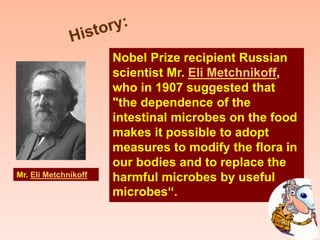
Nobel Prize recipient Russian
scientist Mr. Eli Metchnikoff,
who in 1907 suggested that
"the dependence of the
intestinal microbes on the food
makes it possible to adopt
measures to modify the flora in
our bodies and to replace the
harmful microbes by useful
microbes“.
Mr. Eli Metchnikoff
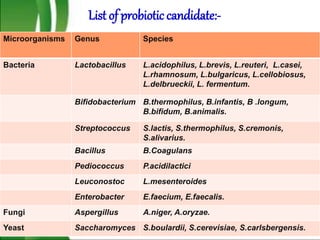
List of probiotic candidate:-
Microorganisms Genus Species
Bacteria Lactobacillus L.acidophilus, L.brevis, L.reuteri, L.casei,
L.rhamnosum, L.bulgaricus, L.cellobiosus,
L.delbrueckii, L. fermentum.
Bifidobacterium B.thermophilus, B.infantis, B .longum,
B.bifidum, B.animalis.
Streptococcus S.lactis, S.thermophilus, S.cremonis,
S.alivarius.
Bacillus B.Coagulans
Pediococcus P.acidilactici
Leuconostoc L.mesenteroides
Enterobacter E.faecium, E.faecalis.
Fungi Aspergillus A.niger, A.oryzae.
Yeast Saccharomyces S.boulardii, S.cerevisiae, S.carlsbergensis.
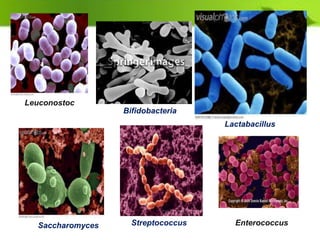
Lactabacillus
Bifidobacteria
Saccharomyces Streptococcus Enterococcus
Leuconostoc
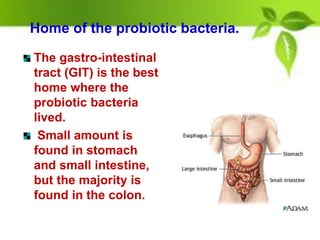
Home of the probiotic bacteria.
The gastro-intestinal
tract (GIT) is the best
home where the
probiotic bacteria
lived.
Small amount is
found in stomach
and small intestine,
but the majority is
found in the colon.
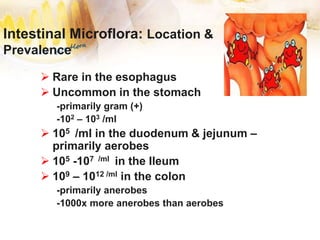
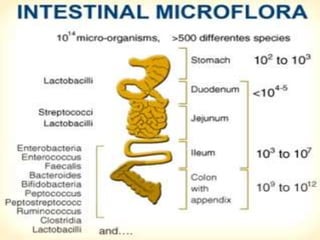
Intestinal Microflora: Location &
Prevalence
 Rare in the esophagus
 Uncommon in the stomach
-primarily gram (+)
-102 – 103 /ml
 105 /ml in the duodenum & jejunum –
primarily aerobes
 105 -107 /ml in the Ileum
 109 – 1012 /ml in the colon
-primarily anerobes
-1000x more anerobes than aerobes
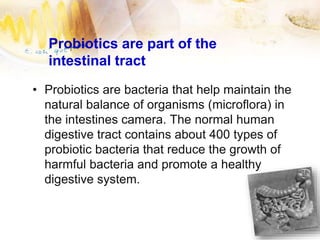
Probiotics are part of the
intestinal tract
• Probiotics are bacteria that help maintain the
natural balance of organisms (microflora) in
the intestines camera. The normal human
digestive tract contains about 400 types of
probiotic bacteria that reduce the growth of
harmful bacteria and promote a healthy
digestive system.
Cont…
• The largest group of probiotic bacteria in the
intestine is lactic acid bacteria, of which
Lactobacillus acidophilus, found in yogurt
with live cultures. Yeast is also a probiotic
substance. Probiotics are also available as
dietary supplements.
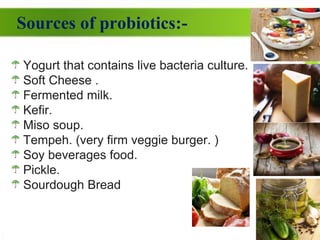
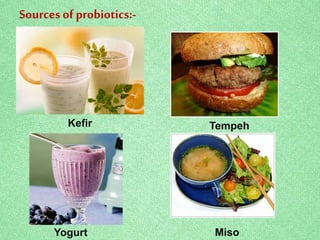
Sources of probiotics:-
Yogurt that contains live bacteria culture.
Soft Cheese .
Fermented milk.
Kefir.
Miso soup.
Tempeh. (very firm veggie burger. )
Soy beverages food.
Pickle.
Sourdough Bread
Sourcesof probiotics:-
Kefir Tempeh
Yogurt Miso
Factor affecting probiotic
bacteria:-
Intrinsic as well as extrinsic factors may
influence the survival of probiotics in food.
Importance of factor affecting viability of
probiotics are:-
Physical condition(temperature and humidity).
Chemical condition (content of oxygen
nitrogen or pH).
Characteristics of Effective
Probiotics
Probiotic microorganisms are:
 Able to survive the passage through the digestive
system.
 Able to attach to the intestinal epithelia and
colonize.
 Able to Maintain good viability.
 Able to utilize the nutrients and substrates in a
normal diet.
 Non-pathogenic and non-toxic.
 Capable of exerting a beneficial effect on the host.
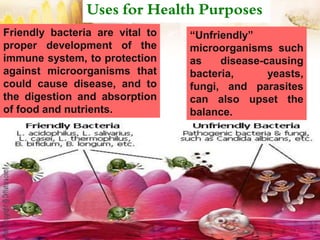
Friendly bacteria are vital to
proper development of the
immune system, to protection
against microorganisms that
could cause disease, and to
the digestion and absorption
of food and nutrients.
“Unfriendly”
microorganisms such
as disease-causing
bacteria, yeasts,
fungi, and parasites
can also upset the
balance.

Uses for Health Purposes
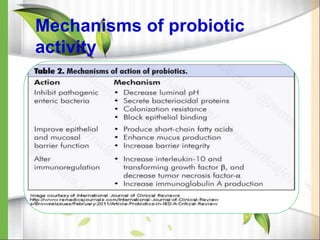
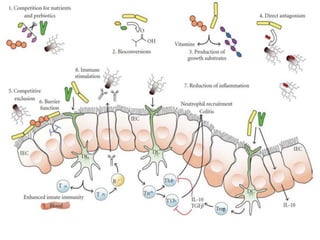
Mechanisms of probiotic
activity
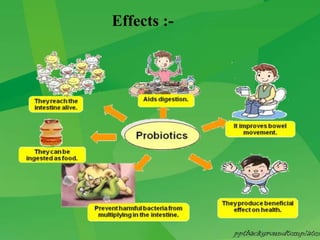
Effects :-
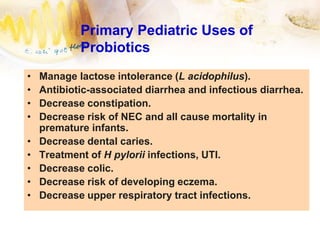
Primary Pediatric Uses of
Probiotics
• Manage lactose intolerance (L acidophilus).
• Antibiotic-associated diarrhea and infectious diarrhea.
• Decrease constipation.
• Decrease risk of NEC and all cause mortality in
premature infants.
• Decrease dental caries.
• Treatment of H pylorii infections, UTI.
• Decrease colic.
• Decrease risk of developing eczema.
• Decrease upper respiratory tract infections.
Beneficial effects of
probiotics in human:-
. Antibiotic associated diarrhea(AAD)-
Results from an imbalance in the colonic
microbiota.Probiotic treatment can reduce
the incidence and severity of AAD.Efficacy of
prevention is dependent on the probiotic
strain and dose.
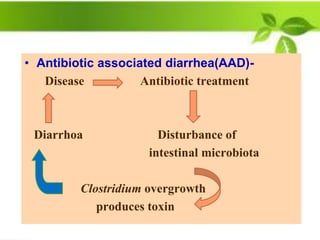
• Antibiotic associated diarrhea(AAD)-
Disease Antibiotic treatment
Diarrhoa Disturbance of
intestinal microbiota
Clostridium overgrowth
produces toxin
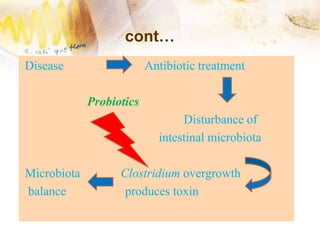
cont…
Disease Antibiotic treatment
Probiotics
Disturbance of
intestinal microbiota
Microbiota Clostridium overgrowth
balance produces toxin
Cont…
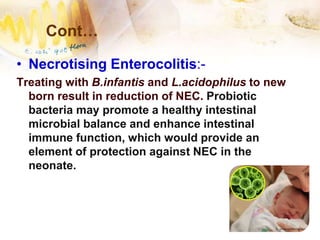
• Necrotising Enterocolitis:-
Treating with B.infantis and L.acidophilus to new
born result in reduction of NEC. Probiotic
bacteria may promote a healthy intestinal
microbial balance and enhance intestinal
immune function, which would provide an
element of protection against NEC in the
neonate.
cont….
The mechanisms by
• Optimizing microbial balance.
• Competitive exclusion of pathogens.
• Promotion of mucus secretion.
• Production of bacteriocins.
• Enhancement of barrier integrity, and
maturation of intestinal immunity.
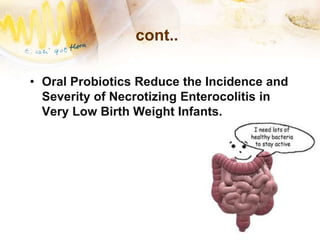
cont..
• Oral Probiotics Reduce the Incidence and
Severity of Necrotizing Enterocolitis in
Very Low Birth Weight Infants.
Cont…
• Helicobacter pylori Infections
Probiotic had an inhibitory effect to reduce
gastric inflammation. Bifidobacteria may
inhibit the growth or attachment of H. pylori.
• Irritable Bowel Syndrome(IBS):- It can
be prevented by the Lactobacillus plantarum
299V.
cont…
Urogential infection:-It can be prevented by
taking Lactobacillus fermentum and
Lactobacillus rhamnosus.
Colon cancer:-Certain probiotics
(Lactobacillus bulcaricus) may help prevent
colon cancer by preventing the breakdown
of enzymes _
(β-glucuronidase)that contribute to the
growth of cancer causing agents.
Cont…
Blood pressure:-Consumption of milk
fermented with various strains may result in
modest reductions in blood pressure, due to
the ACE inhibition-like peptides produced
during fermentation.
Cholestrol:- able to break down bile in the gut,
thus inhibiting its reabsorption (which
enter the blood as cholesterol)
Cont…
• Immune Effects of Probiotics
 Probiotics as vehicles to deliver anti-inflammatory
molecules to the Intestine.
 Enhance signaling in host cells to reduce
inflammatory response.
 Switch in immune response to reduce allergy.
 Reduce the production of inflammatory
substances.
Cont…
• Inflammation
Some strains of probiotics may modulate
inflammatory and hypersensitivity responses
by the regulation of cytokine function. How
probiotics may influence the immune system
remains unclear, but a potential mechanism
under research concerns the response of
T-lymphocytes to pro-inflammatory stimuli.
cont…
• Vitamin production
Some bacteria found in the gut produce
vitamins. For example, they produce
vitamin K, folic acid and vitamin B12.
Who needs probiotics-
 People who suffer from any kind of yeast
infections , including athlete's foot, vaginal yeast
infections and nail fungus.
People with weak immune systems,frequent
respiratory infections and congestion.
People with food or respiratory allergies.
 People suffering from inflammatory bowel
disorders, constipation or intestinal infections.
Contd…
People who travel can avoid infections from
foreign food and water by taking probiotics
with meals.
Probiotics can also be given to children and
infants to reduce the risk of infection.
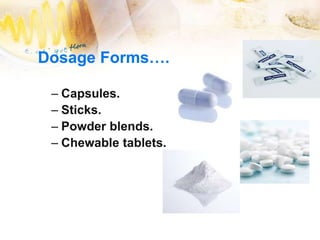
Dosage Forms….
– Capsules.
– Sticks.
– Powder blends.
– Chewable tablets.
Side effects of probiotics:-
• Use of probiotics in critically ill person may be harmful.
• Consumption of a mixture of six probiotic bacteria
increased the death rate of patients with predicted
severe acute pancreatitis.
• Probiotic are viable organisms, they may induce
infection in the hosts.
• Probiotics taken orally can be destroyed by the acidic
conditions of the stomach.
cont…
• Others,
>Diarrhea,bloating,gas.
>Rashes,acne.
>They could also cause unhealthy metabolic
activities, too much stimulation of the
immune system, or gene transfer (insertion
of genetic material into a cell).
Probiotic Products
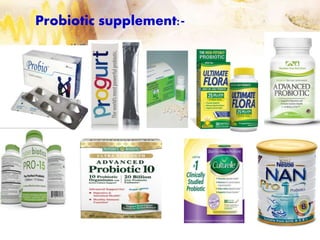
Probiotic supplement:-
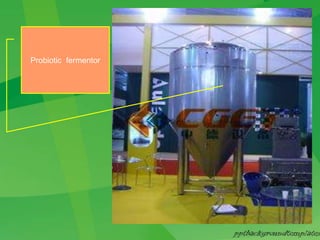
Probiotic fermentor
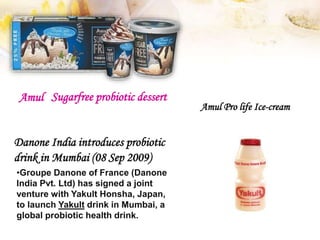
Amul Pro life Ice-cream
Sugarfree probiotic dessertAmul
Danone India introduces probiotic
drink in Mumbai (08 Sep 2009)
•Groupe Danone of France (Danone
India Pvt. Ltd) has signed a joint
venture with Yakult Honsha, Japan,
to launch Yakult drink in Mumbai, a
global probiotic health drink.
Journal about probiotics:
• European Journal of Clinical Nutrition (2011) 65, 434–439;
doi:10.1038/ejcn.2010.278; published online 19 January 2011
• Gupta V, Garg R. Probiotics. Indian J Med Microbiol [serial
online] 2009 [cited 2015 Feb 20];27:202-9. Available
from: http://www.ijmm.org/text.asp?2009/27/3/202/53201
• International Journal of Pharmacy and Pharmaceutical Sciences
JSPM, Institute of pharmacy, Hadapsar , Pune 411028,
Maharashtra, India. Email: pbshinde_2011@yahoo.co
How should people take
probiotis
Probiotic are that the microbe must be alive when
administered. It must be documented to have a
heath benefit and must be administered at levels
to confer a health benefit.The manufacturer and
consumer must pay close attention to the
conditions of storage at which the particular
microorganism will survive .
Probiotic Research
• Probiotics are under
considerable research, as the
concept holds promise for
human health and well-being,
and corresponding
commercial opportunities.
cont…
• Research into the potential health effects
of supplemental probiotics has included
cancer, and antibiotic-associated
diarrhea, travellers' diarrhea, pediatric
diarrhea, inflammatory bowel disease and
irritable bowel syndrome.
Cont…
• Probiotics in Infant Formulas with the
added protective benefit of beneficial
probiotic cultures like those naturally
promoted by breast milk, which help support
baby’s healthy immune system. High levels
of Bifidobacteria in the digestive tract are
thought to be one of the reasons why
breastfed babies are generally so healthy.
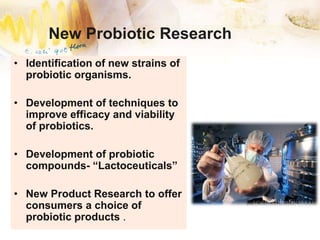
New Probiotic Research
• Identification of new strains of
probiotic organisms.
• Development of techniques to
improve efficacy and viability
of probiotics.
• Development of probiotic
compounds- “Lactoceuticals”
• New Product Research to offer
consumers a choice of
probiotic products .
(still experimental)
• Current research is focusing on the
molecular biology and genomics of
Lactobacillus strains and
bifidobacteria in immune function.
The application of modern whole
genome approaches is providing
insights into bifidobacterial evolution.
Eat Probiotics foods, live healthy life
So…..
Eat the “good bugs” every day……….
Invite them in………..
You will find they make very friendly
houseguests.
References:
• http://en.wikipedia.org/wiki/Probiotic
• http://www.mayoclinic.org/healthy-living/consumer-
health/expert-answers/probiotics/faq-20058065
• http://probiotics.mercola.com/probiotics.html
• http://www.medicinenet.com/probiotics/page2.htm
• http://probiotics.org/side-effects-of-probiotics/
• http://www.customprobiotics.com/dosage-usage.htm
• http://journal.frontiersin.org/article/10.3389/fphar.2012.00171/fu
ll
Probiotics..Dr. keya

Probiotics..Dr. keya

  • 1.
    Dr. Sumona chowdhurykeya Medical officer Department of Pediatrics SWMCH, Sylhet.
  • 2.
  • 3.
    “PROBIOTICS” The root ofthe word ‘ probiotic’ comes from the Greek word pro, meaning “promoting” and biotic, meaning “life”. The Food and Agriculture Organisation of the United Nation (FAO) defines probiotics as“ live micro-organisms, which, when administered in adequate amount produce beneficial effect to the host when taken orally”.
  • 4.
    Nobel Prize recipientRussian scientist Mr. Eli Metchnikoff, who in 1907 suggested that "the dependence of the intestinal microbes on the food makes it possible to adopt measures to modify the flora in our bodies and to replace the harmful microbes by useful microbes“. Mr. Eli Metchnikoff
  • 5.
    List of probioticcandidate:- Microorganisms Genus Species Bacteria Lactobacillus L.acidophilus, L.brevis, L.reuteri, L.casei, L.rhamnosum, L.bulgaricus, L.cellobiosus, L.delbrueckii, L. fermentum. Bifidobacterium B.thermophilus, B.infantis, B .longum, B.bifidum, B.animalis. Streptococcus S.lactis, S.thermophilus, S.cremonis, S.alivarius. Bacillus B.Coagulans Pediococcus P.acidilactici Leuconostoc L.mesenteroides Enterobacter E.faecium, E.faecalis. Fungi Aspergillus A.niger, A.oryzae. Yeast Saccharomyces S.boulardii, S.cerevisiae, S.carlsbergensis.
  • 6.
  • 7.
    Home of theprobiotic bacteria. The gastro-intestinal tract (GIT) is the best home where the probiotic bacteria lived. Small amount is found in stomach and small intestine, but the majority is found in the colon.
  • 8.
    Intestinal Microflora: Location& Prevalence  Rare in the esophagus  Uncommon in the stomach -primarily gram (+) -102 – 103 /ml  105 /ml in the duodenum & jejunum – primarily aerobes  105 -107 /ml in the Ileum  109 – 1012 /ml in the colon -primarily anerobes -1000x more anerobes than aerobes
  • 10.
    Probiotics are partof the intestinal tract • Probiotics are bacteria that help maintain the natural balance of organisms (microflora) in the intestines camera. The normal human digestive tract contains about 400 types of probiotic bacteria that reduce the growth of harmful bacteria and promote a healthy digestive system.
  • 11.
    Cont… • The largestgroup of probiotic bacteria in the intestine is lactic acid bacteria, of which Lactobacillus acidophilus, found in yogurt with live cultures. Yeast is also a probiotic substance. Probiotics are also available as dietary supplements.
  • 12.
    Sources of probiotics:- Yogurtthat contains live bacteria culture. Soft Cheese . Fermented milk. Kefir. Miso soup. Tempeh. (very firm veggie burger. ) Soy beverages food. Pickle. Sourdough Bread
  • 13.
  • 14.
    Factor affecting probiotic bacteria:- Intrinsicas well as extrinsic factors may influence the survival of probiotics in food. Importance of factor affecting viability of probiotics are:- Physical condition(temperature and humidity). Chemical condition (content of oxygen nitrogen or pH).
  • 15.
    Characteristics of Effective Probiotics Probioticmicroorganisms are:  Able to survive the passage through the digestive system.  Able to attach to the intestinal epithelia and colonize.  Able to Maintain good viability.  Able to utilize the nutrients and substrates in a normal diet.  Non-pathogenic and non-toxic.  Capable of exerting a beneficial effect on the host.
  • 16.
    Friendly bacteria arevital to proper development of the immune system, to protection against microorganisms that could cause disease, and to the digestion and absorption of food and nutrients. “Unfriendly” microorganisms such as disease-causing bacteria, yeasts, fungi, and parasites can also upset the balance. Uses for Health Purposes
  • 17.
  • 19.
  • 20.
    Primary Pediatric Usesof Probiotics • Manage lactose intolerance (L acidophilus). • Antibiotic-associated diarrhea and infectious diarrhea. • Decrease constipation. • Decrease risk of NEC and all cause mortality in premature infants. • Decrease dental caries. • Treatment of H pylorii infections, UTI. • Decrease colic. • Decrease risk of developing eczema. • Decrease upper respiratory tract infections.
  • 21.
  • 22.
    . Antibiotic associateddiarrhea(AAD)- Results from an imbalance in the colonic microbiota.Probiotic treatment can reduce the incidence and severity of AAD.Efficacy of prevention is dependent on the probiotic strain and dose.
  • 23.
    • Antibiotic associateddiarrhea(AAD)- Disease Antibiotic treatment Diarrhoa Disturbance of intestinal microbiota Clostridium overgrowth produces toxin
  • 24.
    cont… Disease Antibiotic treatment Probiotics Disturbanceof intestinal microbiota Microbiota Clostridium overgrowth balance produces toxin
  • 25.
    Cont… • Necrotising Enterocolitis:- Treatingwith B.infantis and L.acidophilus to new born result in reduction of NEC. Probiotic bacteria may promote a healthy intestinal microbial balance and enhance intestinal immune function, which would provide an element of protection against NEC in the neonate.
  • 26.
    cont…. The mechanisms by •Optimizing microbial balance. • Competitive exclusion of pathogens. • Promotion of mucus secretion. • Production of bacteriocins. • Enhancement of barrier integrity, and maturation of intestinal immunity.
  • 27.
    cont.. • Oral ProbioticsReduce the Incidence and Severity of Necrotizing Enterocolitis in Very Low Birth Weight Infants.
  • 28.
    Cont… • Helicobacter pyloriInfections Probiotic had an inhibitory effect to reduce gastric inflammation. Bifidobacteria may inhibit the growth or attachment of H. pylori. • Irritable Bowel Syndrome(IBS):- It can be prevented by the Lactobacillus plantarum 299V.
  • 29.
    cont… Urogential infection:-It canbe prevented by taking Lactobacillus fermentum and Lactobacillus rhamnosus. Colon cancer:-Certain probiotics (Lactobacillus bulcaricus) may help prevent colon cancer by preventing the breakdown of enzymes _ (β-glucuronidase)that contribute to the growth of cancer causing agents.
  • 30.
    Cont… Blood pressure:-Consumption ofmilk fermented with various strains may result in modest reductions in blood pressure, due to the ACE inhibition-like peptides produced during fermentation. Cholestrol:- able to break down bile in the gut, thus inhibiting its reabsorption (which enter the blood as cholesterol)
  • 31.
    Cont… • Immune Effectsof Probiotics  Probiotics as vehicles to deliver anti-inflammatory molecules to the Intestine.  Enhance signaling in host cells to reduce inflammatory response.  Switch in immune response to reduce allergy.  Reduce the production of inflammatory substances.
  • 32.
    Cont… • Inflammation Some strainsof probiotics may modulate inflammatory and hypersensitivity responses by the regulation of cytokine function. How probiotics may influence the immune system remains unclear, but a potential mechanism under research concerns the response of T-lymphocytes to pro-inflammatory stimuli.
  • 33.
    cont… • Vitamin production Somebacteria found in the gut produce vitamins. For example, they produce vitamin K, folic acid and vitamin B12.
  • 34.
    Who needs probiotics- People who suffer from any kind of yeast infections , including athlete's foot, vaginal yeast infections and nail fungus. People with weak immune systems,frequent respiratory infections and congestion. People with food or respiratory allergies.  People suffering from inflammatory bowel disorders, constipation or intestinal infections.
  • 35.
    Contd… People who travelcan avoid infections from foreign food and water by taking probiotics with meals. Probiotics can also be given to children and infants to reduce the risk of infection.
  • 36.
    Dosage Forms…. – Capsules. –Sticks. – Powder blends. – Chewable tablets.
  • 37.
    Side effects ofprobiotics:- • Use of probiotics in critically ill person may be harmful. • Consumption of a mixture of six probiotic bacteria increased the death rate of patients with predicted severe acute pancreatitis. • Probiotic are viable organisms, they may induce infection in the hosts. • Probiotics taken orally can be destroyed by the acidic conditions of the stomach.
  • 38.
    cont… • Others, >Diarrhea,bloating,gas. >Rashes,acne. >They couldalso cause unhealthy metabolic activities, too much stimulation of the immune system, or gene transfer (insertion of genetic material into a cell).
  • 39.
  • 40.
  • 41.
  • 42.
    Amul Pro lifeIce-cream Sugarfree probiotic dessertAmul Danone India introduces probiotic drink in Mumbai (08 Sep 2009) •Groupe Danone of France (Danone India Pvt. Ltd) has signed a joint venture with Yakult Honsha, Japan, to launch Yakult drink in Mumbai, a global probiotic health drink.
  • 43.
    Journal about probiotics: •European Journal of Clinical Nutrition (2011) 65, 434–439; doi:10.1038/ejcn.2010.278; published online 19 January 2011 • Gupta V, Garg R. Probiotics. Indian J Med Microbiol [serial online] 2009 [cited 2015 Feb 20];27:202-9. Available from: http://www.ijmm.org/text.asp?2009/27/3/202/53201 • International Journal of Pharmacy and Pharmaceutical Sciences JSPM, Institute of pharmacy, Hadapsar , Pune 411028, Maharashtra, India. Email: pbshinde_2011@yahoo.co
  • 44.
    How should peopletake probiotis Probiotic are that the microbe must be alive when administered. It must be documented to have a heath benefit and must be administered at levels to confer a health benefit.The manufacturer and consumer must pay close attention to the conditions of storage at which the particular microorganism will survive .
  • 45.
    Probiotic Research • Probioticsare under considerable research, as the concept holds promise for human health and well-being, and corresponding commercial opportunities.
  • 46.
    cont… • Research intothe potential health effects of supplemental probiotics has included cancer, and antibiotic-associated diarrhea, travellers' diarrhea, pediatric diarrhea, inflammatory bowel disease and irritable bowel syndrome.
  • 47.
    Cont… • Probiotics inInfant Formulas with the added protective benefit of beneficial probiotic cultures like those naturally promoted by breast milk, which help support baby’s healthy immune system. High levels of Bifidobacteria in the digestive tract are thought to be one of the reasons why breastfed babies are generally so healthy.
  • 48.
    New Probiotic Research •Identification of new strains of probiotic organisms. • Development of techniques to improve efficacy and viability of probiotics. • Development of probiotic compounds- “Lactoceuticals” • New Product Research to offer consumers a choice of probiotic products .
  • 49.
    (still experimental) • Currentresearch is focusing on the molecular biology and genomics of Lactobacillus strains and bifidobacteria in immune function. The application of modern whole genome approaches is providing insights into bifidobacterial evolution.
  • 50.
    Eat Probiotics foods,live healthy life So….. Eat the “good bugs” every day………. Invite them in……….. You will find they make very friendly houseguests.
  • 51.
    References: • http://en.wikipedia.org/wiki/Probiotic • http://www.mayoclinic.org/healthy-living/consumer- health/expert-answers/probiotics/faq-20058065 •http://probiotics.mercola.com/probiotics.html • http://www.medicinenet.com/probiotics/page2.htm • http://probiotics.org/side-effects-of-probiotics/ • http://www.customprobiotics.com/dosage-usage.htm • http://journal.frontiersin.org/article/10.3389/fphar.2012.00171/fu ll