Modes of Interpreting
Two Major Modes Of
Interpreting
Simultaneous Interpreting
Consecutive Interpreting
Whispering Interpreting
Relay Interpreting
SIMULTANEOUS INTERPRETING
Requires interpreters to listen and speak (or
sign) at the same time. In simultaneous
interpretation, the interpreter begins to convey
a sentences being spoken while the speaker is
still talking. Ideally, simultaneous interpreters
should be so familiar with a subject that they
are able to ancipate the end of the speaker’s
sentence.
FOR EXAMPLE SIMULTANEOUS
We can see “Penyegaran Rohani Agama Kristen“ in RCTI
every Sunday evening
CONSECUTIVE INTERPRETING
Consecutive interpretation begins only after the
speaker has verbalized a group of words or
sentences. Consecutive interpreters often take
notes while listening to the speakers, so they
must develop some type of note-taking or
shorthand system. This form of interpretation is
used most often for person-to-person
communication, during which the interpreter
sits near both parties.
FOR EXAMPLE CONSECUTIVE
INTERPRETING
PRESS CONFERENCE “LEE MIN HOO”
WHISPERING INTERPRETING
Here, an interpreter whispers the words of the
orginal speaker to the target group. With this
interpreting service, no equipment is required as
the interpreter sits or stands next to the group. This
form of interpreting is rarely used for more than
two people, due to obvious confusion if the
interpreter had to speak louder to more people. It is
often employed for a large group, where a few of
the members to not understand the target
language.
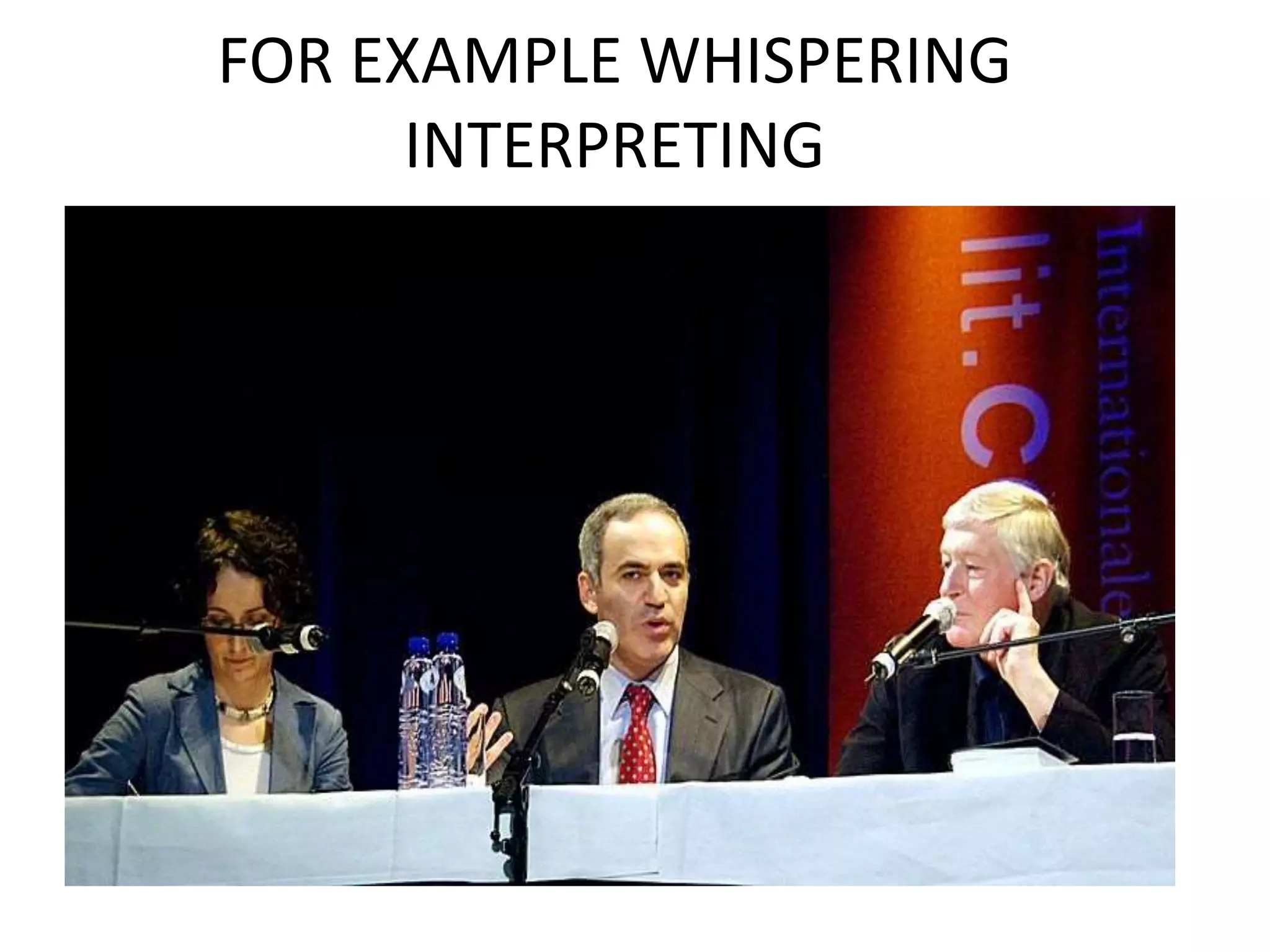
FOR EXAMPLE WHISPERING
INTERPRETING
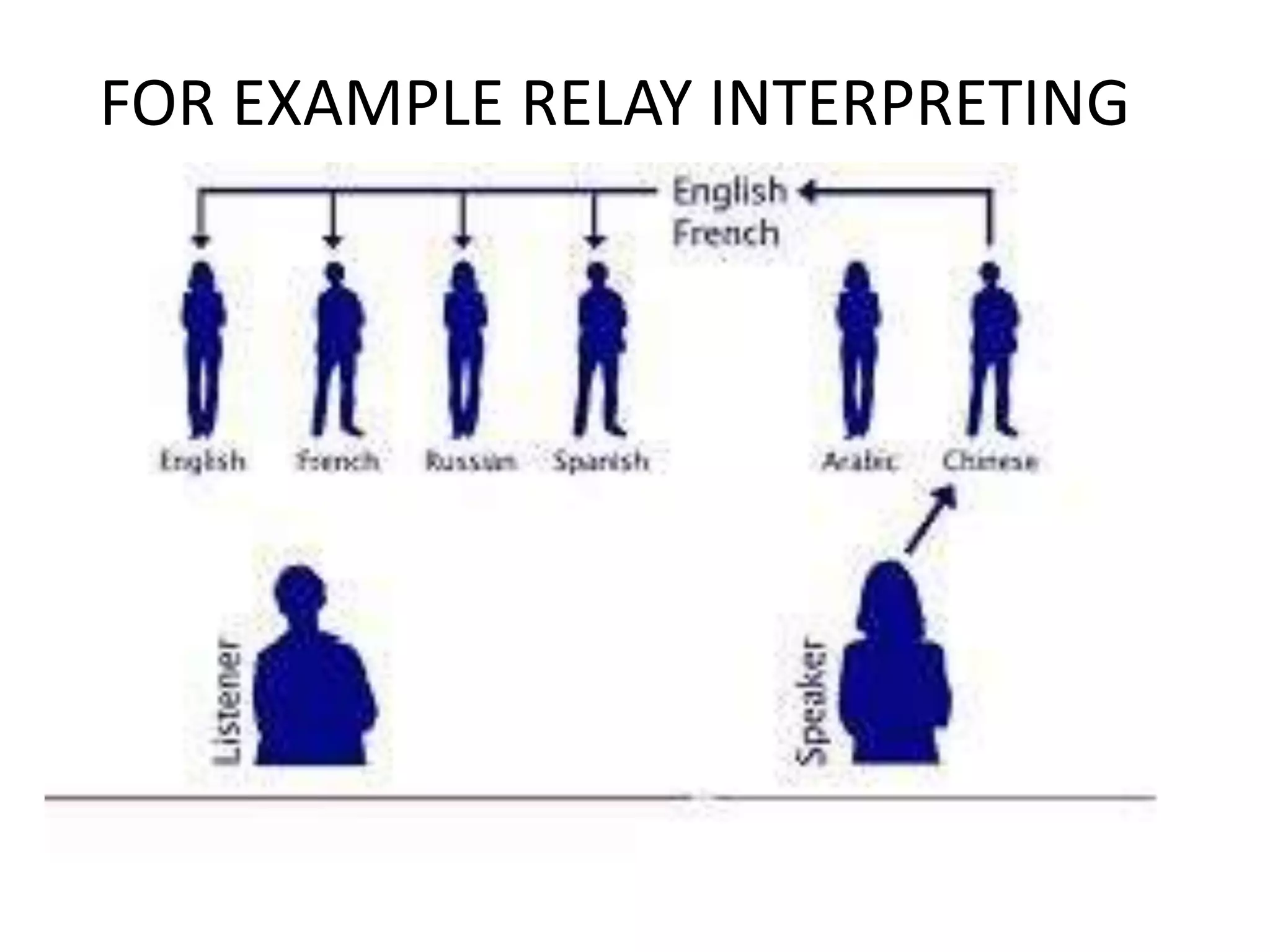
RELAY INTERPRETING
Relay interpreting is usually used when there are
several target languages. A source-language
interpreter interprets the text to a language
common to every interpreter, who then render the
message to their respective target languages.
FOR EXAMPLE RELAY INTERPRETING
For example, a Japanese source message first is
rendered to English to a group of interpreters, who
listen to the English and render the message into
Arabic, French, and Russian, the other target
languages. In heavily multilingual meetings, there may
be more than one "intermediate" language, i.e. a
Greek source language could be interpreted into
English and then from English to other languages, and,
at the same time, it may also be directly interpreted
into French, and from French into yet more languages.
This solution is most often used in the multilingual
meetings of the EU institutions.

Ppt modes of interpreting

  • 1.
  • 2.
    Two Major ModesOf Interpreting Simultaneous Interpreting Consecutive Interpreting Whispering Interpreting Relay Interpreting
  • 3.
    SIMULTANEOUS INTERPRETING Requires interpretersto listen and speak (or sign) at the same time. In simultaneous interpretation, the interpreter begins to convey a sentences being spoken while the speaker is still talking. Ideally, simultaneous interpreters should be so familiar with a subject that they are able to ancipate the end of the speaker’s sentence.
  • 4.
    FOR EXAMPLE SIMULTANEOUS Wecan see “Penyegaran Rohani Agama Kristen“ in RCTI every Sunday evening
  • 5.
    CONSECUTIVE INTERPRETING Consecutive interpretationbegins only after the speaker has verbalized a group of words or sentences. Consecutive interpreters often take notes while listening to the speakers, so they must develop some type of note-taking or shorthand system. This form of interpretation is used most often for person-to-person communication, during which the interpreter sits near both parties.
  • 6.
    FOR EXAMPLE CONSECUTIVE INTERPRETING PRESSCONFERENCE “LEE MIN HOO”
  • 7.
    WHISPERING INTERPRETING Here, aninterpreter whispers the words of the orginal speaker to the target group. With this interpreting service, no equipment is required as the interpreter sits or stands next to the group. This form of interpreting is rarely used for more than two people, due to obvious confusion if the interpreter had to speak louder to more people. It is often employed for a large group, where a few of the members to not understand the target language.
  • 8.
  • 9.
    RELAY INTERPRETING Relay interpretingis usually used when there are several target languages. A source-language interpreter interprets the text to a language common to every interpreter, who then render the message to their respective target languages.
  • 10.
    FOR EXAMPLE RELAYINTERPRETING
  • 11.
    FOR EXAMPLE RELAYINTERPRETING For example, a Japanese source message first is rendered to English to a group of interpreters, who listen to the English and render the message into Arabic, French, and Russian, the other target languages. In heavily multilingual meetings, there may be more than one "intermediate" language, i.e. a Greek source language could be interpreted into English and then from English to other languages, and, at the same time, it may also be directly interpreted into French, and from French into yet more languages. This solution is most often used in the multilingual meetings of the EU institutions.