TRANSLATION and
INTERPRETATION
Translation
• deal with written text, transforming the
source text into a comprehensible and
equivalent target text.
Interpretation
• giving understanding through spoken
language and the meaning can be caught
easily by the listeners.
• Interpreting can also called communication
processes as speech-centered.
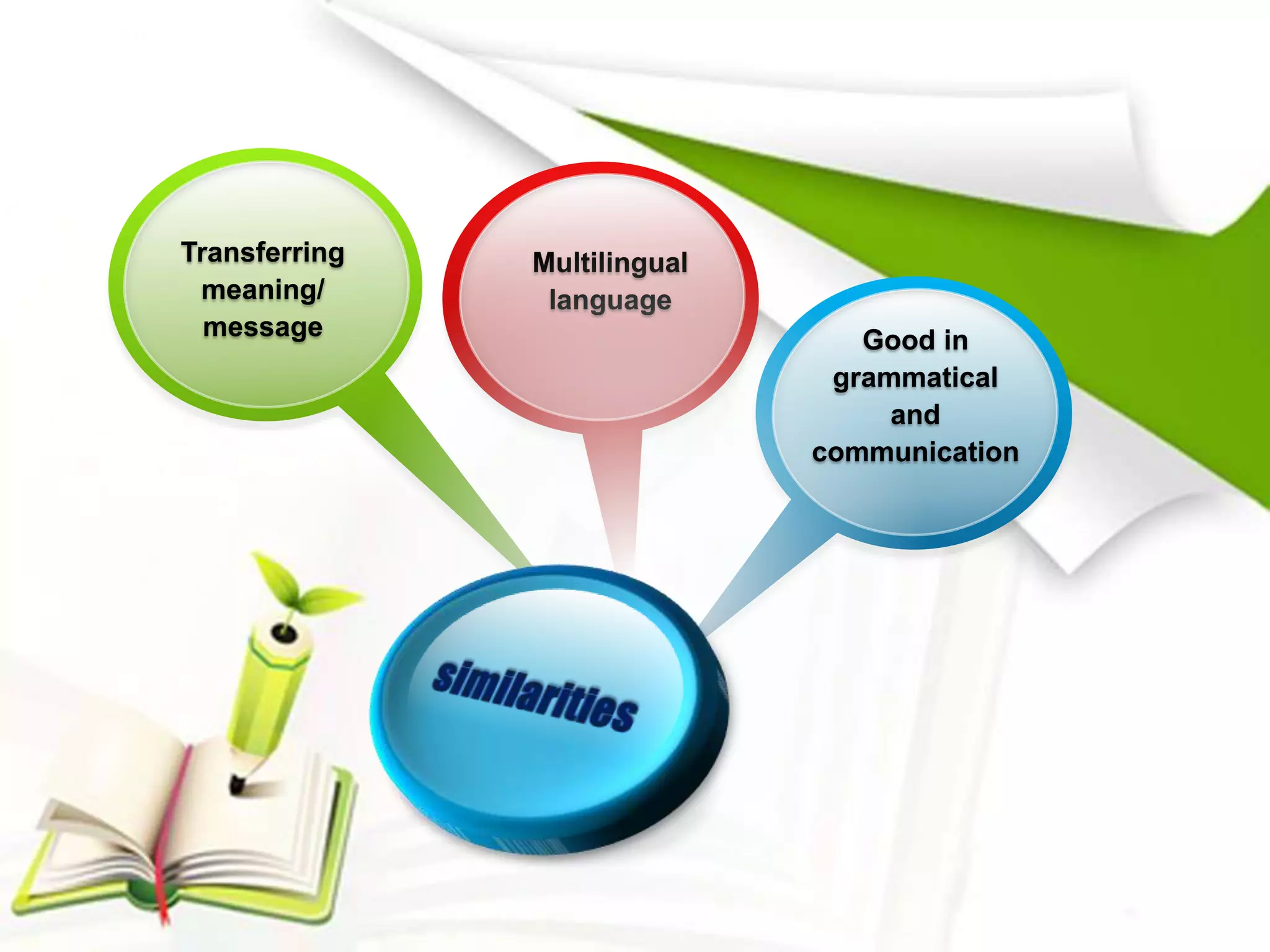
Transferring
meaning/
message
Multilingual
language
Good in
grammatical
and
communication
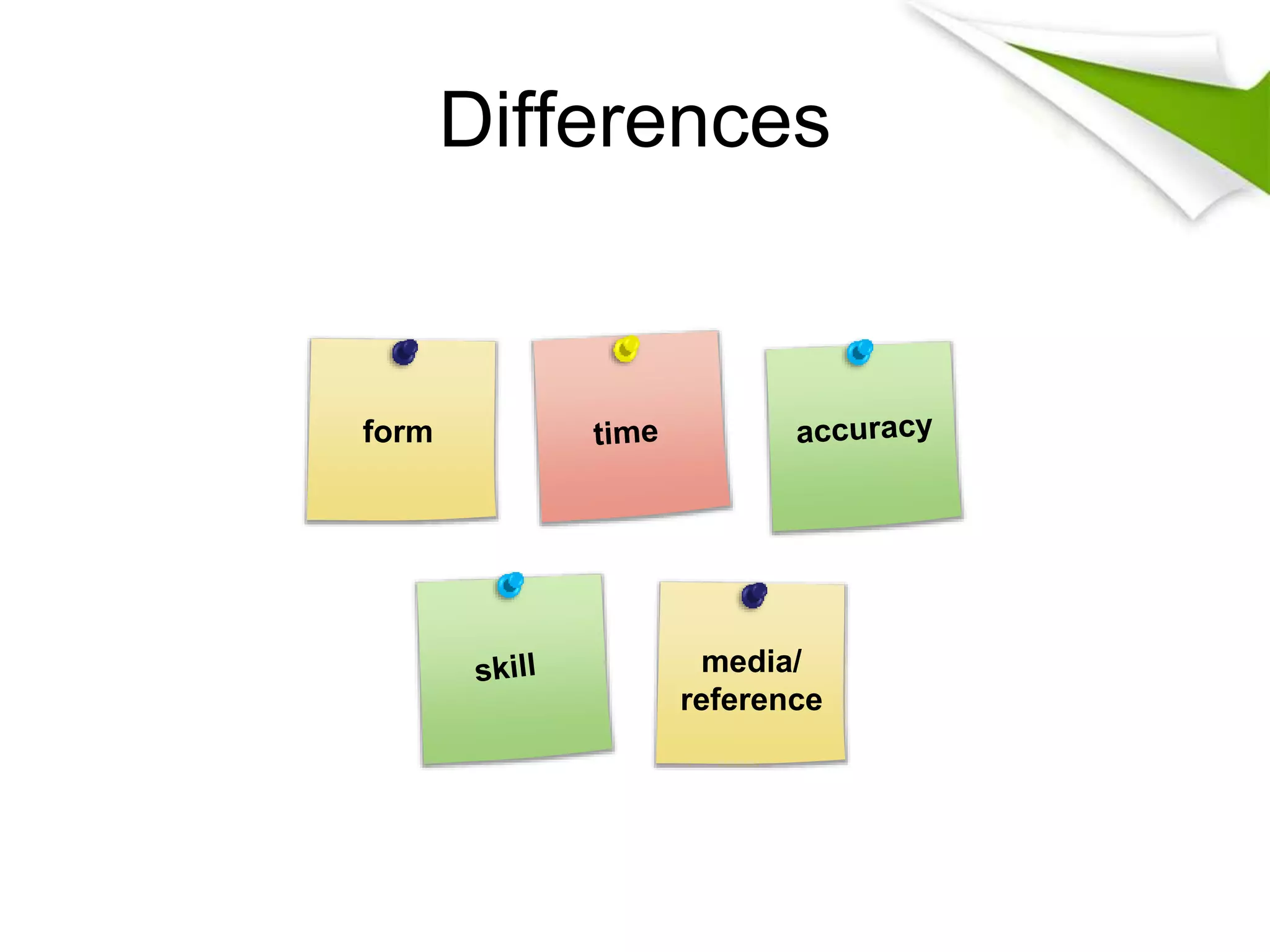
Differences
form
media/
reference
Form: spoken vs. written
• Interpretation is the transference of
meaning between spoken languages,
while
• translation is the transference of meaning
between written languages.
Time: Real time vs delayed
• Interpreting occurs in real time. It happens
in person, on the phone, or through a
television/video service.
• Translation involves the written word, it
typically takes place long after a text is
created.
Accuracy: Level of accuracy
• Interpreters aim to be completely accurate,
it’s difficult to achieve in a live conversation.
They may omit some details of the original
speech as they interpret into the target
language.
• Translators have time to evaluate and revise
each word and sentence before delivering
their product, so they can achieve a greater
level of accuracy and greater fidelity to the
original.
Skill: reading, writing, listening
and speaking
• Translators need more on reading and
writing,
• Interpreters work more on listening and
speaking.
Media/reference: using or no
• Translation involves the written word. it
typically takes place long after a text is
created, which gives the translator time to
access resources (dictionaries, glossaries,
subject matter experts, etc.)
• An interpreter must be fluent enough in both
the original language and the target language
to be able to translate in both directions, on
the spot, without any reference material.
Thank You !!

translation and interpretation

  • 1.
  • 2.
    Translation • deal withwritten text, transforming the source text into a comprehensible and equivalent target text.
  • 3.
    Interpretation • giving understandingthrough spoken language and the meaning can be caught easily by the listeners. • Interpreting can also called communication processes as speech-centered.
  • 4.
  • 5.
  • 6.
    Form: spoken vs.written • Interpretation is the transference of meaning between spoken languages, while • translation is the transference of meaning between written languages.
  • 7.
    Time: Real timevs delayed • Interpreting occurs in real time. It happens in person, on the phone, or through a television/video service. • Translation involves the written word, it typically takes place long after a text is created.
  • 8.
    Accuracy: Level ofaccuracy • Interpreters aim to be completely accurate, it’s difficult to achieve in a live conversation. They may omit some details of the original speech as they interpret into the target language. • Translators have time to evaluate and revise each word and sentence before delivering their product, so they can achieve a greater level of accuracy and greater fidelity to the original.
  • 9.
    Skill: reading, writing,listening and speaking • Translators need more on reading and writing, • Interpreters work more on listening and speaking.
  • 10.
    Media/reference: using orno • Translation involves the written word. it typically takes place long after a text is created, which gives the translator time to access resources (dictionaries, glossaries, subject matter experts, etc.) • An interpreter must be fluent enough in both the original language and the target language to be able to translate in both directions, on the spot, without any reference material.
  • 11.