IInntteerrpprreettaattiioonn 
vvss.. TTrraannssllaattiioonn 
Prof. Erika Sandoval M.A.
SSppookkeenn vveerrssuuss wwrriitttteenn 
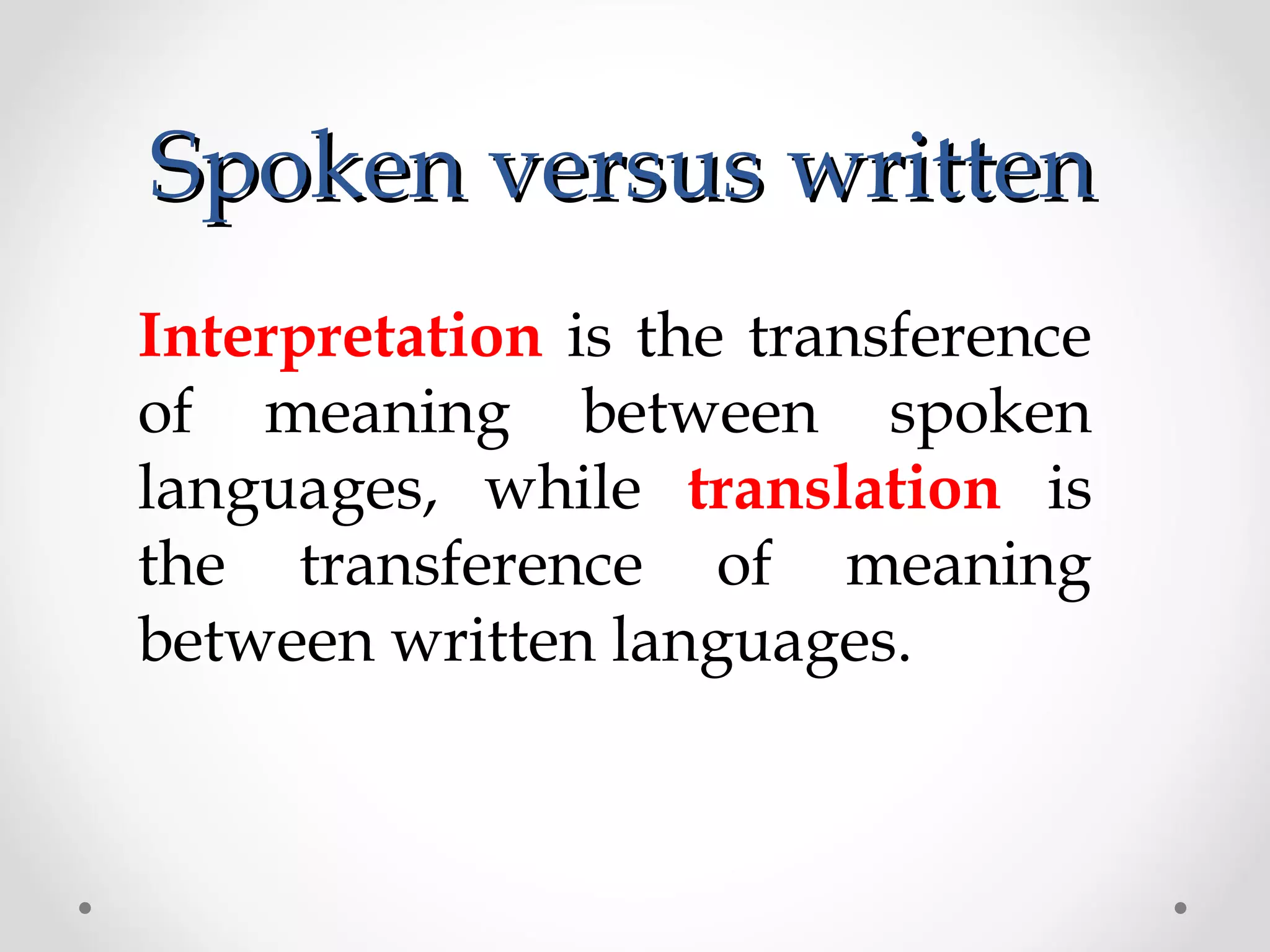
Interpretation is the transference 
of meaning between spoken 
languages, while translation is 
the transference of meaning 
between written languages.
Real time versus delayed 
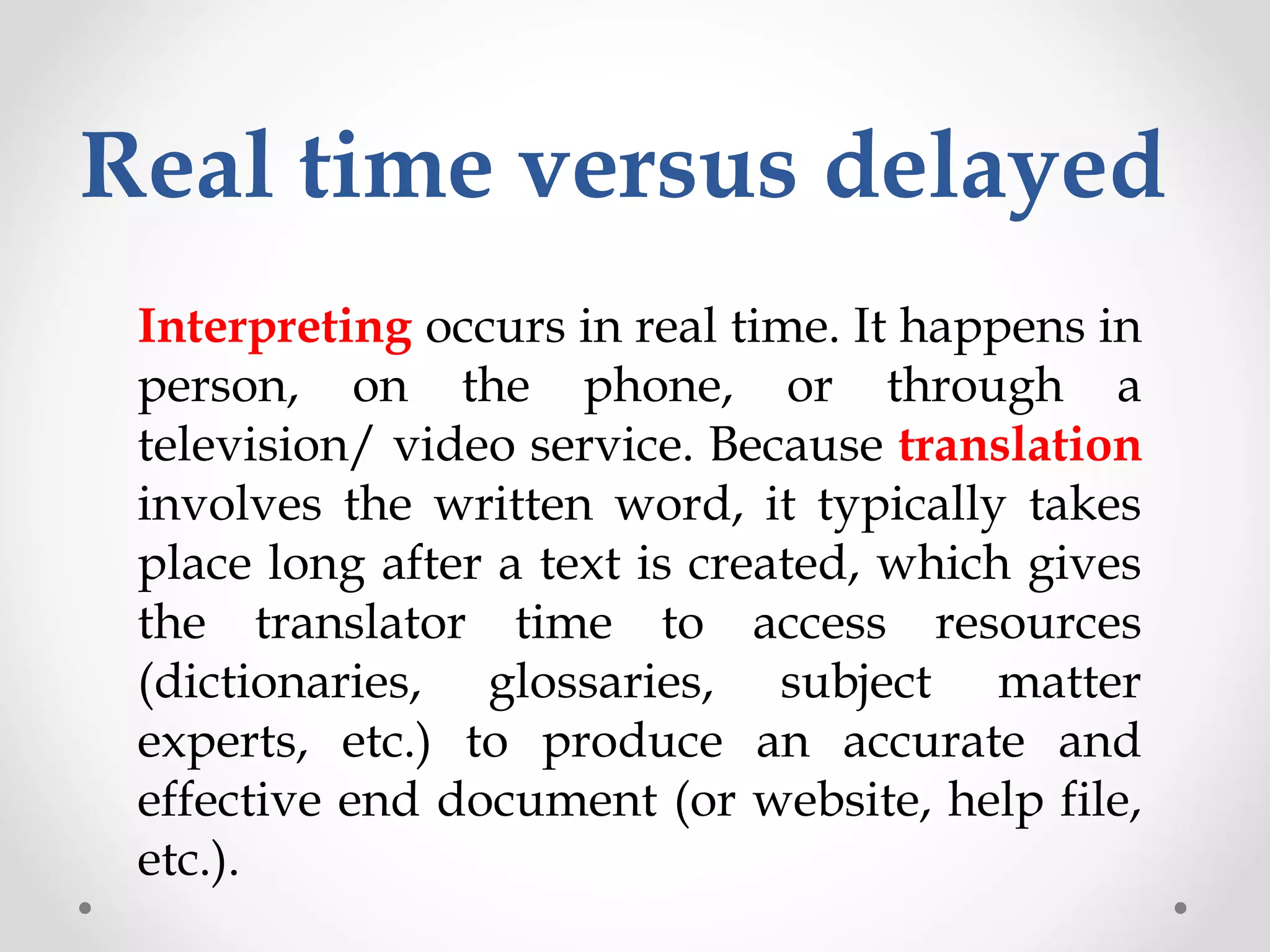
Interpreting occurs in real time. It happens in 
person, on the phone, or through a 
television/ video service. Because translation 
involves the written word, it typically takes 
place long after a text is created, which gives 
the translator time to access resources 
(dictionaries, glossaries, subject matter 
experts, etc.) to produce an accurate and 
effective end document (or website, help file, 
etc.).
Level of Accuracy 
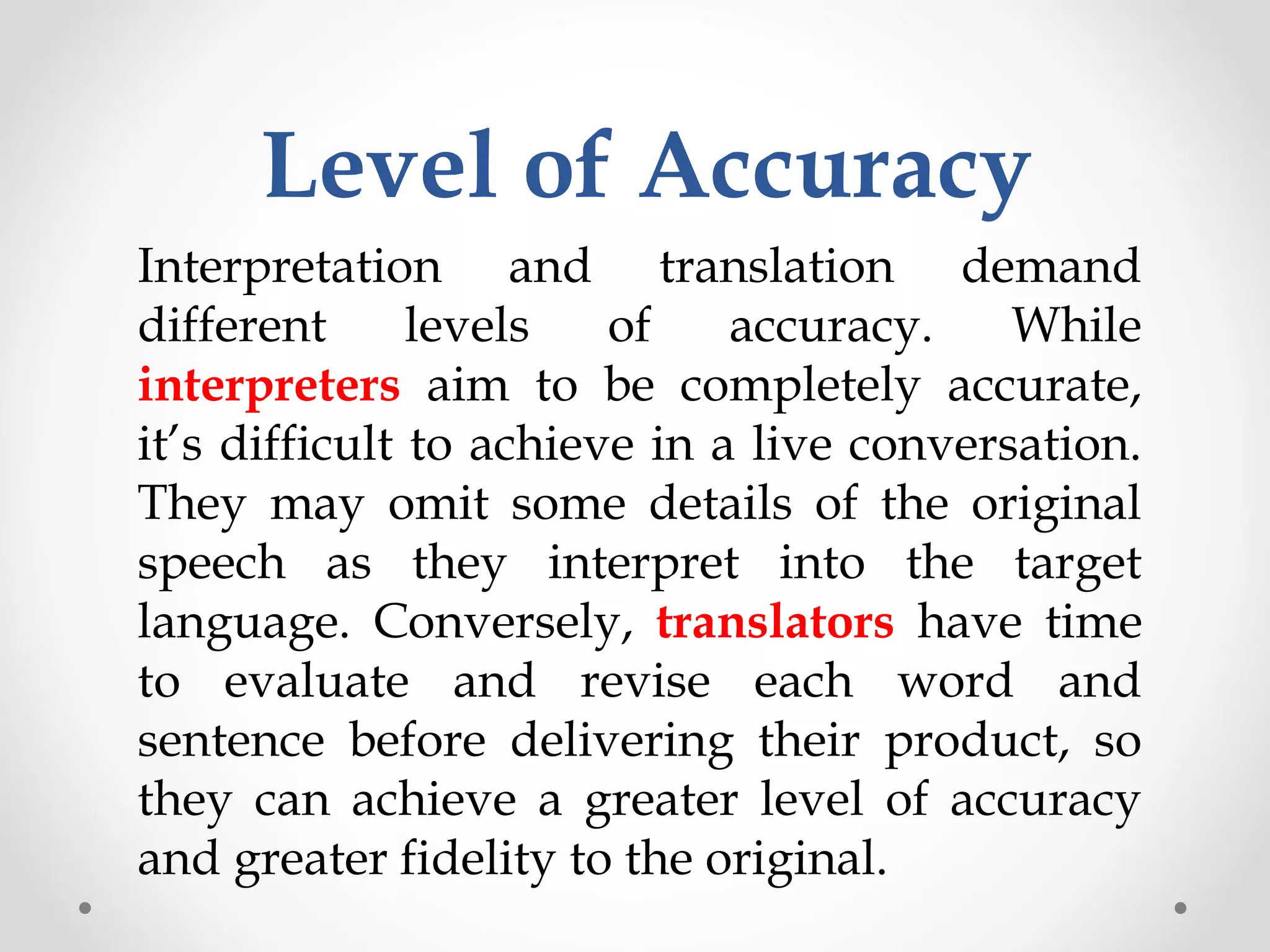
Interpretation and translation demand 
different levels of accuracy. While 
interpreters aim to be completely accurate, 
it’s difficult to achieve in a live conversation. 
They may omit some details of the original 
speech as they interpret into the target 
language. Conversely, translators have time 
to evaluate and revise each word and 
sentence before delivering their product, so 
they can achieve a greater level of accuracy 
and greater fidelity to the original.
Direction and Fluency 
An interpreter must be fluent enough in both the original 
language and the target language to be able to translate in both 
directions, on the spot, without any reference material. 
Interpreters are highly qualified people, and the work is quite 
demanding! It’s so demanding that interpreters work in pairs 
and must switch off every 20 minutes or so to prevent mental 
fatigue. Typically, professional translators only work in one 
direction— translating into their native language. As such, 
translators do not have to be as fluent in the source language 
as an interpreter must be. The key skills of a translator are to 
understand the source language and to use their knowledge of 
the target country’s cultural and language norms to create an 
effective translated product.
Intangibles 
Both translators and interpreters are faced with 
the challenge of making metaphors, analogies, 
and idioms understandable to the audience in the 
target language. However, interpreters must also 
capture tone, inflection, voice quality, and the 
other intangible elements of the spoken word 
and and convey those meaningfully to the 
audience.
KKeeeepp ggooiinngg yyoouu aarree ddooiinngg 
aa ggoooodd jjoobb!!

Interpretation vs. translation

  • 1.
  • 2.
    SSppookkeenn vveerrssuuss wwrriitttteenn Interpretation is the transference of meaning between spoken languages, while translation is the transference of meaning between written languages.
  • 3.
    Real time versusdelayed Interpreting occurs in real time. It happens in person, on the phone, or through a television/ video service. Because translation involves the written word, it typically takes place long after a text is created, which gives the translator time to access resources (dictionaries, glossaries, subject matter experts, etc.) to produce an accurate and effective end document (or website, help file, etc.).
  • 4.
    Level of Accuracy Interpretation and translation demand different levels of accuracy. While interpreters aim to be completely accurate, it’s difficult to achieve in a live conversation. They may omit some details of the original speech as they interpret into the target language. Conversely, translators have time to evaluate and revise each word and sentence before delivering their product, so they can achieve a greater level of accuracy and greater fidelity to the original.
  • 5.
    Direction and Fluency An interpreter must be fluent enough in both the original language and the target language to be able to translate in both directions, on the spot, without any reference material. Interpreters are highly qualified people, and the work is quite demanding! It’s so demanding that interpreters work in pairs and must switch off every 20 minutes or so to prevent mental fatigue. Typically, professional translators only work in one direction— translating into their native language. As such, translators do not have to be as fluent in the source language as an interpreter must be. The key skills of a translator are to understand the source language and to use their knowledge of the target country’s cultural and language norms to create an effective translated product.
  • 6.
    Intangibles Both translatorsand interpreters are faced with the challenge of making metaphors, analogies, and idioms understandable to the audience in the target language. However, interpreters must also capture tone, inflection, voice quality, and the other intangible elements of the spoken word and and convey those meaningfully to the audience.
  • 7.
    KKeeeepp ggooiinngg yyoouuaarree ddooiinngg aa ggoooodd jjoobb!!